
Member, Moore & Van Allen PLLC
A former North Carolina state representative and senator, as well as Supreme Court justice and law school dean, Bill Whichard applies his extensive judicial and legislative experience in advising and mentoring MVA litigation attorneys, focusing on appellate litigation for Moore & Van Allen clients.
He also assists with evaluating new matters, developing arguments, reviewing pleadings and documents, and supplying other trial support, giving MVA clients seasoned counsel that can materially affect dispute outcomes.
He has also served as a mediator and arbitrator in major, multimillion-dollar litigation.
Mr. Whichard has lectured and written extensively on North Carolina politics, law and history. Further, his commitment to public service and community betterment has earned him numerous honors and recognitions during his distinguished career.
Retired
Tom Gede retired in 2023 as a principal in Morgan Lewis Consulting LLC and of counsel to the firm. He currently consults on a variety of legal and policy matters for both public and private clients. Tom has a national reputation and distinguished background in federal Indian law. Prior to retirement, he represented clients in complex governmental matters in litigation, administrative and regulatory proceedings, including high-profile matters involving state governments. A former senior deputy in the California Attorney General’s office, Tom was amicus coordinator and Supreme Court counsel, and argued cases in the US Supreme Court, the California Supreme Court, and numerous state and federal appellate courts.
Tom also served as executive director of the Conference of Western Attorneys General (CWAG), coordinating activities on key legal and policy issues, such as federal Indian law, energy, environmental, public lands, financial services, and telecommunications, for the attorneys general of 18 western states and territories. In 2016, Tom was elected as a Member of the American Law Institute (ALI), and served as an Adviser on the Restatement of the Law Third - The Law of American Indians. Tom also taught federal Indian law as an adjunct law professor at the University of the Pacific - McGeorge School of Law. He served as an assistant editor for and the author of the Indian gaming chapter in CWAG’s American Indian Law Deskbook (2d & 3d eds.). He has been engaged in Indian gaming and Indian law matters for more than three decades, having focused on the gaming compacts with Indian tribes, as well as complex civil and criminal jurisdiction, land, natural resources, water and law enforcement issues in Indian country. He has testified before Congress on American Indian and Native Alaskan issues. In 2012 he was appointed by Speaker John Boehner to serve on the United States Indian Law and Order Commission, where he examined criminal justice issues in Indian country and Alaska, resulting in the issuance of an important report to the President and Congress.

Vice President for Legal Affairs, Goldwater Institute
Professor of Law and Director of Center for Trial and Appellate, Santa Clara Law School
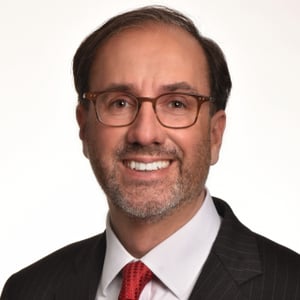
President and CEO, The Buckeye Institute
Robert Alt is the President and Chief Executive Officer of The Buckeye Institute where he has catalyzed exponential growth since he took the organization’s helm in 2012. He has since founded Buckeye’s renowned Economic Research Center and established its impactful Legal Center.
Alt is a distinguished scholar and attorney with particular expertise in legal policy, criminal justice, national security, and constitutional law. He previously worked for former U.S. Attorney General Edwin Meese III, regularly provides commentary on television and radio programs, and his writings have appeared in countless outlets.
In 2004, Alt spent five months in Iraq as an embedded war correspondent.
Alt has testified before Congress multiple times—including at the confirmation hearings for U.S. Supreme Court Justice Elena Kagan—the Federal Election Commission regarding matters of constitutional and administrative law, and numerous state legislatures.
Alt serves as an officer on the boards of The Philadelphia Society and the Federalist Society’s Columbus Lawyers Chapter. He taught national security law, criminal law, and legislation at Case Western Reserve University School of Law, as well as constitutional law and political parties and interest groups at Ashland University.
Alt earned his Doctor of Law degree from The University of Chicago Law School, where he was Symposium Editor and the winner of the Mulroy Prize for Excellence in Appellate Advocacy as well as research assistant to Professor Richard Epstein. Following law school, he clerked for Judge Alice Batchelder on the U.S. Court of Appeals for the Sixth Circuit. Alt graduated with his Bachelor of Arts in philosophy and political science magna cum laude from Azusa Pacific University where he also won the Outstanding Senior Award in Political Science.
Alt is an accomplished high-altitude alpinist and endurance athlete who has successfully climbed 6.75 of the famed Seven Summits of the World including Mount Everest. He is the creator of PROFOUND CLIMBING™ and a frequent speaker across the country and around the world on legal and public policy topics as well as effective leadership, management, decision-making, and teamwork in contexts ranging from extraordinary life/death situations to ordinary professional/business settings.

Partner, Clement & Murphy, PLLC
Paul served as the 43rd Solicitor General of the United States from June 2005 until June 2008. Before his confirmation as Solicitor General, he served as Acting Solicitor General for nearly a year and as Principal Deputy Solicitor General for over three years.
Paul has argued over 100 cases before the United States Supreme Court, including McConnell v. FEC, Tennessee v. Lane, United States v. Booker, MGM v. Grokster, Hobby Lobby v. Burwell, Epic Systems Corp. v. Lewis, Rucho v. Common Cause, Facebook v. Duguid, and TransUnion v. Ramirez. Paul has argued more Supreme Court cases since 2000 than any lawyer in or out of government. He has also argued many important cases in the lower courts, including Walker v. Cheney, United States v. Moussaoui and NFL v. Brady.
Paul’s practice focuses on appellate matters, constitutional litigation and strategic counseling. He represents a broad array of clients in the Supreme Court and in federal and state appellate courts. Last year, for example, he successfully argued Supreme Court cases involving significant issues of energy regulation, statutory interpretation, state sovereign immunity and Article III standing, and successfully argued a trademark appeal in the Fourth Circuit, and a constitutional appeal before the en banc Eleventh Circuit.
Paul focuses on high-stakes appeals. In recent years, he successfully defended a $1.2 billion jury verdict for clients in a Tenth Circuit case, while securing the reversal of an over $2 billion jury verdict for another client in the Seventh Circuit and the approval of a nearly $1 billion dollar class action settlement in the Third Circuit. He has initiated major administrative law challenges and constitutional litigation against the federal government, such as the successful challenge to the HHS drug-pricing rule and threatened challenges that led to the withdrawal of the Treasury Department’s proposed cryptocurrency regulations. He also counsels clients on a variety of strategic legal questions, whether arising from pending legislation, government inquiries or ongoing litigation.
Paul has undertaken substantial pro bono engagements in the Supreme Court, such as twice successfully representing the defendant in Bond v. United States and successfully representing the Omaha Tribe in Nebraska v. Parker, the guardian ad litem in Adoptive Couple v. Baby Girl, the defendant in Sekhar v. United States, a high school football coach in Kennedy v. Bremerton, and the Little Sisters of the Poor. Paul’s pro bono representation also precipitated the federal government’s confession of error in United States v. Rojas.
Following law school, Paul clerked for Judge Laurence H. Silberman of the U.S. Court of Appeals for the D.C. Circuit and for Associate Justice Antonin Scalia of the U.S. Supreme Court. After his clerkships, he went on to serve as Chief Counsel of the U.S. Senate Subcommittee on the Constitution, Federalism and Property Rights.
Paul is a Distinguished Lecturer in Law at the Georgetown University Law Center, where he has taught in various capacities since 1998. He also serves as a Senior Fellow of the Law Center’s Supreme Court Institute. He is the Justice Joseph Story Distinguished Practitioner in Residence at the Gray Center at Scalia Law School.
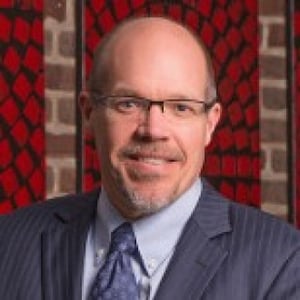
United States District Judge, Southern District of Ohio
Douglas R. Cole was nominated for the position in May 2019 by President Donald J. Trump and confirmed by the Senate in December 2019. Immediately before joining the bench, Judge Cole was a founding partner at Organ Cole, a litigation boutique in Columbus, Ohio.
Judge Cole received his J.D. from the University of Chicago Law School, where he graduated with High Honors and Order of the Coif, was an Olin Fellow in Law & Economics, and was a member of the editorial board of the University of Chicago Law Review. He clerked for Judge Frank H. Easterbrook on the United States Court of Appeals for the Seventh Circuit before joining Kirkland & Ellis in its Chicago office. He has served as a professor at the University of Oklahoma College of Law and at the Michael E. Moritz College of Law at The Ohio State University, where he taught in the fields of business law, law & economics, and intellectual property. From 2003-2006, he was the State Solicitor for the State of Ohio. In that capacity, he argued five cases at the United States Supreme Court, and multiple cases in the United States Court of Appeals for the Sixth Circuit and the Ohio Supreme Court. Before joining Organ Cole, Judge Cole was a litigation partner at the Columbus office of Jones Day, where he practiced in the Issues & Appeals group and the Intellectual Property group.
Judge Cole has undergraduate degrees in electrical engineering, mathematics, and physics, and worked as an electrical engineer before attending law school.
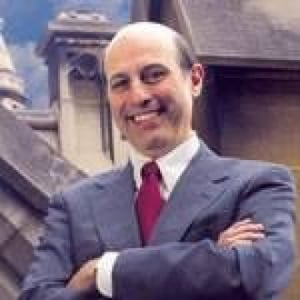
Garwood Visiting Professor and Visiting Fellow, James Madison Pr, Cleveland-Marshall College of Law
David F. Forte is Professor of Law at Cleveland State University, where he was the inaugural holder of the Charles R. Emrick, Jr.- Calfee Halter & Griswold Endowed Chair. This fall, Professor Forte will be the Garwood Visiting Professor at Princeton University in the Department of Politics, and Visiting Fellow at the James Madison Program in American Ideals and Institutions. He holds degrees from Harvard College, Manchester University, England, the University of Toronto and Columbia University.
During the Reagan administration, Professor Forte served as chief counsel to the United States delegation to the United Nations and alternate delegate to the Security Council. He has authored a number of briefs before the United States Supreme Court, and has frequently testified before the United States Congress and consulted with the Department of State on human rights and international affairs issues. His advice was specifically sought on the approval of the Genocide Convention, on world-wide religious persecution, and Islamic extremism. He has appeared and spoken frequently on radio and television, both nationally and internationally. In 2002, the Department of State sponsored a speaking tour for Professor Forte in Amman, Jordan, and he was also a featured speaker to the Meeting of Peoples in Rimini, Italy, a meeting which gathers over 500,000 people from all over Europe. He has also been called to testify before the state legislatures of Ohio, Kansas, and Idaho as well as the New York City Council. He has assisted in drafting a number of pieces of legislation for the Ohio General Assembly dealing with abortion, international trade, and federalism. He has sat as acting judge on the municipal court of Lakewood Ohio and was chairman of Professional Ethics Committee of the Cleveland Bar Association. He has received a number of awards for his public service, including the Cleveland Bar Association’s President’s Award, the Cleveland State University Award for Distinguished Service, the Cleveland State University Distinguished Teaching Award, and the Cleveland-Marshall College of Law Alumni Award for Faculty Excellence. He served as Consultor to the Pontifical Council for the Family under Pope St. John Paul II and Pope Benedict XVI. In 2003, Dr. Forte was a Distinguished Fulbright Chair at the University of Trento and returned there in 2004 as a Visiting Professor. For the academic year, 2008-2009, Professor Forte was Senior Visiting Scholar at the Center for the Study of Religion and the Constitution in at the Witherspoon Institute in Princeton, New Jersey. He was the Robert E. Henderson Constitution Day Lecturer at the Ashbrook Center at Ashland University, and he has given over 300 invited addresses and papers at more than 100 academic institutions. His work has been cited by the U.S. Supreme Court.
Professor Forte was a Bradley Scholar at the Heritage Foundation, and Visiting Scholar at the Liberty Fund. He has been President of the Ohio Association of Scholars, was on the Board of Directors of the Philadelphia Society, and is also adjunct Scholar at the Ashbrook Center. He has been appointed to the Ohio State Advisory Committee to the U.S. Commission on Civil Rights. He has also been a Civil War re-enactor and a Merit Badge Counselor for the Boy Scouts.
He writes and speaks nationally on topics such as constitutional law, religious liberty, Islamic law, the rights of families, and international affairs. He served as book review editor for the American Journal of Jurisprudence and has edited a volume entitled, Natural Law and Contemporary Public Policy, published by Georgetown University Press. His book, Islamic Law Studies: Classical and Contemporary Applications, has been published by Austin & Winfield. He is Senior Editor of The Heritage Guide to the Constitution (2006), 2d edition (2014), published by Regnery & Co, a clause by clause analysis of the Constitution of the United States.
His teaching competencies include Constitutional Law, the First Amendment, Islamic Law, Jurisprudence, Natural Law, International Law, International Human Rights, the Presidency, and Constitutional History.
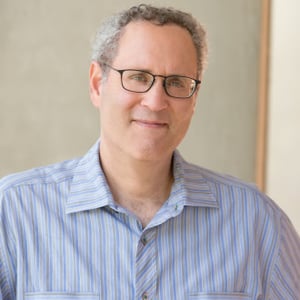
Burton Craige Distinguished Professor of Jurisprudence, UNC School of Law
Michael Gerhardt joined the Carolina Law faculty in 2005 and serves as the Burton Craige Distinguished Professor of Jurisprudence. His teaching and research focuses on constitutional conflicts between presidents and Congress. Gerhardt is the author of six books, including leading treatises on impeachment, appointments, presidential power, Supreme Court precedent, and separation of powers. He has written more than a hundred law review articles and dozens of op eds in the nation’s leading news publications, including SCOTUSblog, The New York Times, and Washington Post. His book, The Forgotten Presidents (Oxford University Press 2013), was named by The Financial Times as one of the best non-fiction books of 2013. He was inducted into the American Law Institute in 2016. Gerhardt attended the University of Chicago Law School, where he graduated order of the coif and served as a research assistant to both Phil Kurland and Cass Sunstein and as one of the two student editors of The Supreme Court Review. After law school, he clerked for Chief District Judge Robert McRae of the U.S. District Court of the Western District of Tennessee and Judge Gilbert Merritt of the U.S. Court of Appeals for the Sixth Circuit. He served as Deputy Media Director of Al Gore’s first Senate campaign, practiced law for three years for two boutique litigation firms in Washington and Atlanta, and taught for more than a decade at William & Mary Law School before joining Carolina Law.
Gerhardt’s extensive public service has included his testifying more than a dozen times before Congress, including as the only joint witness in the Clinton impeachment proceedings in the House; speaking behind closed doors to the entire House of Representatives about the history of impeachment in 1998; and serving as special counsel to the Senate Judiciary Committee for seven of the nine sitting Supreme Court justices. In 2015, he became the first legal scholar to be asked by the Library of Congress to serve as its principal adviser in revising the official United States Constitution Annotated. In 2019, the Order of the Coif named Gerhardt as its Distinguished Visitor for 2020, an award given to only one law professor each year for outstanding legal scholarship.
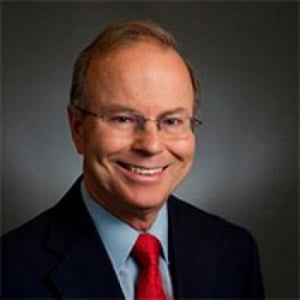
Corporate Counsel, Alliance Defending Freedom
Glen Lavy, Esq., serves as corporate counsel with Alliance Defending Freedom. He oversees corporate issues, protecting the ministry from all legal and non-legal threats. He also provides key legal counsel to the president and CEO.
From 2011-2014, Lavy was vice president of Legal Strategies and Funding. Within a few short years, Lavy and his team recruited top-notch Christian lawyers across the country. They have tripled the number of applicants who want to attend the Legal Academy and who contribute invaluable pro-bono service to advance the organization’s mission.
When joining ADF in 2001, Lavy focused his litigation efforts on protecting the legal definition of marriage as the union of one man and one woman. From 2004 to 2007, he served as senior vice-president of the Marriage Litigation Team. Lavy wrote friend-of-the-court briefs supporting marriage and family in Lawrence v. Texas and Goodridge v. Department of Public Health, two crucial cases affecting legal precedents for sexual activity and marriage. He was a pivotal player in Lewis v. Alfaro, a landmark California Supreme Court case which stopped San Francisco from issuing same-sex “marriage” licenses and voided the ones already granted by Mayor Gavin Newsom.
Lavy earned his J.D. in 1990 from Harvard Law School. He is admitted to the bar of the U.S. Supreme Court, the Arizona Supreme Court, the Texas Supreme Court, the U.S. Courts of Appeals for the 7th, 8th, and 9th Circuits. He is also admitted to the U.S. District Court of Arizona, the U.S. District Court for the Northern and Southern District of Texas, the U.S. District Court for the Eastern District of Wisconsin, as well as the Federal Claims Court and the U.S. Tax Court.
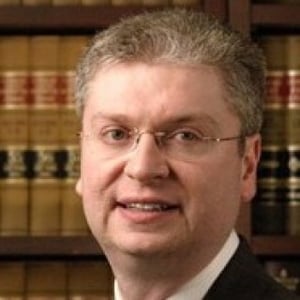
Associate Vice President & Associate Legal Director, Americans United for Separation of Church and State
Alex Luchenitser is the Associate Vice President & Associate Legal Director at Americans United for Separation of Church and State.
Alex has litigated church-state cases throughout the country for Americans United since January 2001. He has led lawsuits challenging religious proselytization of students in public schools, public funding of religious institutions, discriminatory governmental prayer practices, and government-sponsored religious displays. His successful cases include:
Alex has also authored and edited numerous friend-of-the-court briefs filed on behalf of Americans United. After the Covid-19 pandemic began, Alex led Americans United’s efforts to fight lawsuits that sought religious exemptions from public-health orders, filing fifty friend-of-the-court briefs in such cases around the country, including six in the U.S. Supreme Court.
Alex was born in Kyiv, Ukraine, in 1969 and immigrated to the United States in 1977. He received his bachelor’s degree magna cum laude in government and economics from Harvard University in 1991, and he received his Juris Doctor with distinction from Stanford Law School in 1994. After finishing law school, Alex served two one-year judicial clerkships, with Justice Warren W. Matthews Jr. of the Alaska Supreme Court and U.S. Magistrate Judge Wayne D. Brazil of the U.S. District Court for the Northern District of California. Alex then spent four years in private practice in Northern California, participating in the prosecution of class actions on behalf of investors, consumers, and trust beneficiaries.
Alex has spoken about church-state issues in many television and radio appearances and public presentations and has been quoted in numerous major newspapers. His published articles include:
Alex is an active member of the District of Columbia Bar, is an inactive member of the State Bar of California, and has been admitted to practice before the U.S. Supreme Court; the U.S. Courts of Appeals for the First, Second, Third, Fourth, Fifth, Sixth, Seventh, Eighth, Ninth, Tenth, Eleventh, Federal, and District of Columbia Circuits; and the U.S. District Courts for the District of Columbia, the Northern District of California, the District of Colorado, the Eastern District of Michigan, and the Eastern District of Wisconsin.
David R. and Sherry Kirschner Berz Research Professor of Law and, GWU Law School
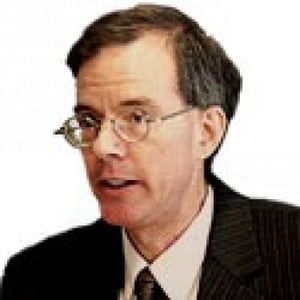
Senior Litigation Counsel, American Center for Law and Justice
Walter M. Weber is Senior Counsel for the ACLJ in the Washington, D.C. office. A highly regarded legal writer, Weber received his bachelor’s degree from Princeton University and his law degree from Yale Law School.
Weber emphasizes First Amendment law and has written briefs in many landmark cases at the Supreme Court including NOW v. Scheidler, Lamb’s Chapel v. Center Moriches School District and Bray v. Alexandria Women’s Health Clinic.
Weber has argued more than a dozen times in appeals before federal and state courts. Prior to joining the ACLJ, Weber served as a staff attorney with the Catholic League for Religious and Civil Rights.
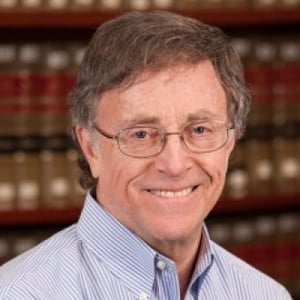
F. Elwood and Eleanor Davis Professor Emeritus of Law, The George Washington University Law School
Professor Lupu joined the law school in 1990. After graduating from law school, where he was case editor of the Harvard Law Review, he practiced law with the Boston firm of Hill & Barlow and then joined the law faculty at Boston University, where he taught from 1973 to 1989. During that time, he also served as a visiting professor at Northeastern University and at the University of California, Berkeley. In 1989–90, he was the professor-in-residence on the Appellate Staff of the Civil Division of the U.S. Department of Justice.
Professor Lupu is a nationally recognized scholar in constitutional law, with an emphasis in his writings on the religion clauses of the First Amendment. Together with his colleague Professor Robert Tuttle, Professor Lupu is the co-author of Secular Government, Religious People (Eerdmans Pub. Co., 2014) and many law journal articles.
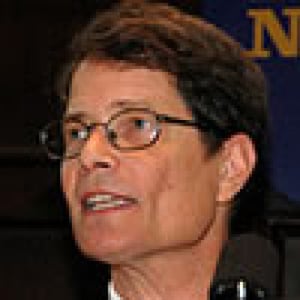
Former Adjunct Professor of Law; former Special Counsel to the President; former federal prosecutor, Georgetown Law (ret.)
Bill Otis is a former Adjunct Professor of Law at Georgetown University, a one-time federal prosecutor, and a former Special White House Counsel for President George H. W. Bush. After graduating from Stanford Law School, he started his career in the Criminal Division of the Justice Department, then became chief of appeals for the US Attorney's Office for the Eastern District of Virginia. In the 1980's he served on the Department's "Train the Trainer" team, which taught US Attorneys Offices across the county how to implement the then-new Sentencing Reform Act. He has held several posts in the federal government, including Special Assistant to the Secretary of Energy and Counselor to the head of the Drug Enforcement Administration, in addition to the White House post. He has testified before Congress on issues in criminal procedure, illegal drugs, the US Sentencing Commission, and the death penalty, and has given numerous media interviews on those and other subjects. He currently teaches a seminar at Georgetown Law titled "Conservatism in Law in America" with his wife, Federalist Society co-founder Lee Liberman Otis.
Death Penalty Policy Director of the ACLU of Northern California
Natasha Minsker is the Death Penalty Policy Director of the ACLU of Northern California. In this position, Ms. Minsker uses a multi-disciplinary approach to promote the goal of reforming capital sentencing procedures and the eventually ending the death penalty in California. Previously, Ms. Minsker spent five years at the Alameda County Public Defender’s Office, the first year as a research attorney in the Capital Defense Unit and the remaining four years as a Deputy Public Defender, handling all types of misdemeanor, felony, and juvenile cases. Ms. Minsker also served as staff attorney to the Judicial Council of California’s Task Force on Criminal Jury Instructions, helping the committee research and draft more than 700 new criminal jury instructions. She clerked for the Honorable Martha Vazquez, Chief Judge of the Federal District Court of New Mexico, and is a graduate of Stanford Law School.
The ACLU of Northern California is the largest of the ACLU affiliates, representing more than 55,000 members.
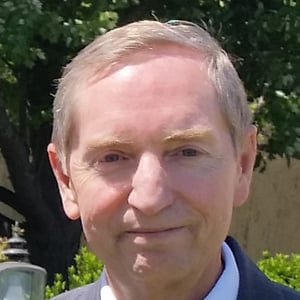
Legal Director & General Counsel, Criminal Justice Legal Foundation
Kent S. Scheidegger has been the Legal Director of the Criminal Justice Legal Foundation since December 1986. He also served as Chairman of the Criminal Law Practice Group of the Federalist Society 2003 to 2005. His articles on criminal and constitutional law have been published in law reviews, national legal publications, and congressional reports. Legal arguments authored by Mr. Scheidegger have been cited and incorporated in several precedent-setting United States Supreme Court decisions.
After receiving a degree in physics with honors from New Mexico State University in 1976, Mr. Scheidegger served for six years in the United States Air Force as a Nuclear Research Officer. He took his law degree with distinction from the University of the Pacific, McGeorge School of Law in 1982 and practiced civil law in Northern California. He was general counsel of California Cooler, Inc. from 1984 until 1986, when he joined the Foundation.
University Distinguished Professor, University of Houston Law Center
Professor Dow joined the University of Houston Law Center faculty in 1988. He graduated with a B.A. in History from Rice University, and earned his M.A. in History and his law degree from Yale. Upon graduation, he clerked for the Honorable Carolyn Dineen King, judge on the Fifth Circuit Court of Appeals.
Professor Dow has handled more than fifty appeals, including more than 25 death penalty appeals. His areas of expertise include contracts, constitutional law, and death penalty law. He has written extensively on these subjects as well as on equal protection, law and literature, and federal jurisdiction.
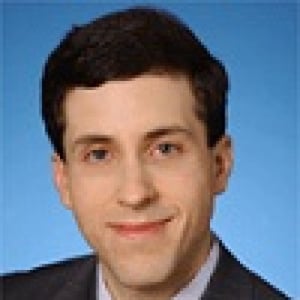
Associate, Jones Day
Shay Dvoretzky specializes in appellate advocacy, complex motions in trial courts, and legal strategy. He has argued before numerous courts, including the U.S. Courts of Appeals for the Second, Sixth, Eighth, Ninth, Eleventh, and District of Columbia Circuits. He has represented Firm clients in the Supreme Court of the United States and in federal and state courts throughout the country. His practice has spanned a wide range of subject areas, including constitutional law, Title VII, ERISA, LMRA, the NLRA, election law and voting rights, intellectual property, securities fraud, RICO, administrative law, products liability, section 1983 claims, energy law, taxation, bankruptcy, and general commercial litigation.
Shay has particular experience in labor and employment law and employment class actions. For example, he has successfully argued appeals involving the vesting of retiree health benefits and the arbitrability of disputes over such benefits after a collective bargaining agreement expires, see Crown Cork & Seal Co. v. International Association of Machinists and Aerospace Workers, __ F.3d __, 2007 WL 2701208 (8th Cir. Sept. 18, 2007); ERISA's anti-cutback and merger rules, see McCay v. Siemens Corp., 2007 WL 2119827 (11th Cir. July 25, 2007); and the denial of certification of a 3,000-member class, see Love v. Johanns, 439 F.3d 723 (D.C. Cir. 2006).
In addition, Shay maintains an active pro bono practice and has represented indigent individuals in numerous cases. For example, in Turner v. Bagley, 401 F.3d 718 (6th Cir. 2005), which Shay argued before the Sixth Circuit, the court of appeals reversed the district court's judgment and granted Jones Day's client a writ of habeas corpus based on constitutional violations related to his state conviction.
Shay regularly speaks and writes on issues including appellate advocacy, the Supreme Court, and employment law. He also serves as the D.C. Circuit editor for the ABA Appellate Practice Journal, frequently judges moot courts for various organizations, and belongs to the Edward Coke Appellate Inn of Court.
Shay joined Jones Day following clerkships on the U.S. Court of Appeals for the Fourth Circuit and the Supreme Court of the United States. Before law school he worked for several years as a management consultant.
Law Clerk to Hon. J. Michael Luttig, U.S. Court of Appeals, Fourth Circuit (2000-2001) and Law Clerk to Hon. Antonin Scalia, Supreme Court of the United States (2001-2002)
Yale University (Phi Beta Kappa; Distinction in the Political Science Major; James Bennett Prize for Outstanding Senior Thesis; B.A. summa cum laude 1995; Coker Fellow; Olin Fellow; Yale Club Scholar; William Wang Prize in Corporate Law; Yale Law Journal; J.D. 2000)
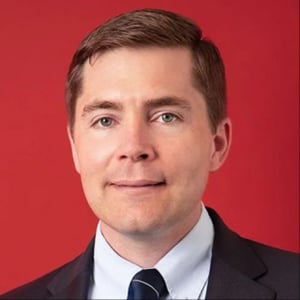
Senior Attorney, Pacific Legal Foundation
Damien Schiff is a senior attorney at Pacific Legal Foundation. He leads its environmental practice group, a unique initiative that draws broadly from PLF’s expertise and success in property rights and separation of powers litigation. Over the years, Damien has represented hundreds of landowners and property rights advocates to defend their liberties against heavy-handed and unwarranted environmental and land-use regulation. His litigation experience includes Sackett v. U.S. Environmental Protection Agency, a groundbreaking decision in which the U.S. Supreme Court upheld the right of landowners to challenge Clean Water Act compliance orders issued by EPA, and Contoski v. Norton, PLF’s successful effort to force the federal government to make good on its promise to delist the bald eagle from the Endangered Species Act.
Besides litigation, Damien has written academic articles on a variety of subjects, including the Endangered Species Act, the Clean Water Act, greenhouse gas torts, the duty to rescue, and international water law. He has appeared on a variety of television and radio programs and has been quoted in The New York Times, The Wall Street Journal, Harper’s Magazine, and The Economist, among other publications.
He obtained his law degree magna cum laude from the University of San Diego School of Law, and his undergraduate degree magna cum laude from Georgetown University. While at USD, he was a research assistant for Professor Bernard Siegan, a leading constitutional theorist and advocate for property rights and economic liberty. Immediately prior to joining PLF, Damien clerked for Judge (and former PLF attorney) Victor Wolski of the United States Court of Federal Claims. Damien credits the mentoring and examples of Professor Siegan and Judge Wolski for his decision to pursue a career in liberty-based public interest litigation.
Damien lives in Sacramento with his wife, two young sons, four chickens, and a cat named Princess. In his off hours he enjoys stamp collecting, Gregorian chant, and martinis—preferably at the same time.

North Carolina Supreme Court Judicial Candidate Forum
Robert Edmunds, Suzanne Reynolds, Willis Whichard
On October 27, 2008, the Triangle Lawyers Chapter presented the "North Carolina Supreme Court Judicial...
Rule of Law or Rule of Judges (or Both)?
Bob Egelko, Thomas F. Gede, Timothy Sandefur, Gerald Uelmen
First Annual Symposium on the California Judiciary The California Supreme Court has historically charted its...
Interpreting the Constitution: The Founders and Today
Robert Alt, Paul D. Clement, Douglas R. Cole, David F. Forte, Michael J. Gerhardt
Robert D. Alt, The Heritage Foundation Paul Clement, Former U.S. Solicitor General David Forte, Cleveland-Marshall...
In re Marriage Cases: End or Beginning
Raoul Kennedy, Glen Lavy
Our panelists will discuss the California Supreme Court's decision on gay marriage, what effect the...
SCOTUScast 7-3-08 featuring Chris Bryant
A Bryant
On June 2, 2008, the Supreme Court decided United States v. Santos, holding that the...
Minnesota: Vacation Question is Settled, But Contract Issue Surprises Employers
Samuel W. Diehl
After more than a year of confusion, Minnesota employers breathed a sigh of relief when...
Hein, One Year Later: The Future of Church-State Litigation
Alex J. Luchenitser, Robert W. Tuttle, Walter M. Weber, Ira C. “Chip” Lupu
In June 2007, the U.S. Supreme Court held, in Hein v. Freedom From Religion Foundation,...
Death Penalty
William G. Otis, Natasha Minsker, Kent Scheidegger, David Dow
On June 25, 2008 the Supreme Court decided Kennedy v. Louisiana, holding that the Eighth...
SCOTUScast 4-29-08 featuring Shay Dvoretzky
Shay Dvoretzky
*Please note that the pronunciation of Mr. Dvoretzky's name is wrong in the introduction of...
When Marks Misses the Mark: A Proposed Filler for the "Logical Subset" Vacuum
Damien Michael Schiff
The discernment of the holding, or ratio decidendi, of a case can be exceedingly difficult...