
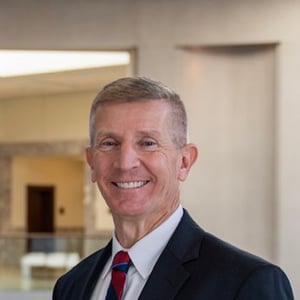
Judge, United States Court of Appeals, 8th Circuit
Leonard Steven Grasz is an American attorney and jurist serving as a United States circuit judge of the United States Court of Appeals for the Eighth Circuit.
A graduate of the University of Nebraska–Lincoln and the University of Nebraska College of Law, Grasz spent eleven years as the state of Nebraska's Chief Deputy Attorney General. He was a senior partner at the law firm of Husch Blackwell prior to his appointment to the federal judiciary.
Associate, Latham & Watkins
Jonathan Ellis is an associate in the Supreme Court & Appellate Practice in the Washington, D.C. office of Latham & Watkins. His practice focuses on appellate litigation, as well as strategic analysis and briefing in high-stakes district court litigation. Mr. Ellis’ experience includes drafting appellate briefs, dispositive motions, and other pleadings in federal and state courts and administrative agencies, as well as presenting argument in federal court.
Prior to joining Latham, Mr. Ellis served as a law clerk to Chief Justice John G. Roberts, Jr. of the United States Supreme Court and Judge A. Raymond Randolph of the United States Court of Appeals for the D.C. Circuit. He also served as a Bristow Fellow in the Office of the Solicitor General of the United States, where he worked on numerous Supreme Court cases and successfully briefed and argued an appeal in the United States Court of Appeals for the Ninth Circuit.
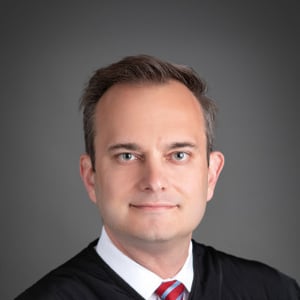
United States Magistrate Judge, Eastern District of North Carolina
Robert T. Numbers, II serves as a United States Magistrate Judge in the United States District Court for the Eastern District of North Carolina.
Judge Numbers received degrees in Political Science and Economics, with honors, from Wake Forest University. After completing his undergraduate work, Judge Numbers obtained his law degree from the University of Notre Dame where he served on the Notre Dame Law Review.
Upon his graduation from law school, Judge Numbers joined the Winston-Salem office of a large, regional law firm. From 2005 until 2010, Judge Numbers’ practice focused on civil rights claims against local municipalities and government contractors. In 2010, Judge Numbers joined the firm’s Raleigh office and concentrated his practice on complex business litigation in state and federal courts.
Milton R. Underwood Professor of Law Emeritus and Professor of History Emeritus, Vanderbilt University
James Ely is a renowned legal historian and property rights expert whose career accomplishments were recognized with both the Brigham-Kanner Property Rights Prize and the Owner's Counsel of American Crystal Eagle Award in 2006. He is the author of several books that have received widespread critical acclaim from legal scholars and historians, including The Guardian of Every Other Right: A Constitutional History of Property Rights, The Fuller Court: Justices, Rulings and Legacy in which he examines the work of the Supreme Court between 1888 and 1910, Railroads and American Law in which he systematically explores the way that the rise of the railroad shaped American legal culture, and The Contract Clause: A Constitutional History. He also is the author of numerous articles dealing with the rights of property owners. He served as an editor of both the Oxford Companion to the Supreme Court, and the second edition of the Oxford Guide to Supreme Court Decisions. Professor Ely received the Tennessee History Book Award in 2002 for A History of the Tennessee Supreme Court. Between 1987 and 1999, he served as an associate editor of the American Journal of Legal History. Since Professor Ely joined Vanderbilt faculty in 1972, he has been frequently recognized by students as one of the law school's outstanding teachers.

Donald Phillip Rothschild Research Professor, George Washington University Law School
Renée Lettow Lerner is Donald Phillip Rothschild Research Professor of Law at George Washington University Law School.
Professor Lerner works in the fields of U.S. and English legal history, civil and criminal procedure, and comparative law. She advises judges, lawyers, and government officials from the United States and countries in Europe, Latin America, and Asia about the differences between adversarial and nonadversarial legal systems.
She writes extensively about the history of American juries. Her work includes not only scholarly articles, but also online publications intended for a broader audience of legal professionals and the public. In many different settings, she has debated the role of juries with other academics and with lawyers. She has a book forthcoming with Oxford University Press in the Very Short Introduction Series entitled “The Jury.” She is also working on a book about the American civil jury, from the colonial period to the present.
She is the author, with John Langbein and Bruce Smith, of the book History of the Common Law: The Development of Anglo-American Legal Institutions (2009).
Her recent writings include a book review of Amalia D. Kessler’s Inventing American Exceptionalism: The Origins of American Adversarial Legal Culture, 1800-1877, 67 J. Legal Ed. 888 (2018); “How the Creation of Appellate Courts in England and the United States Limited Judicial Comment on Evidence to the Jury,” 40 Journal of the Legal Profession 215 (2016); “The Troublesome Inheritance of Americans in Magna Carta and Trial by Jury,” in Magna Carta and its Modern Legacy 77-98 (Robert Hazell and James Melton eds., Cambridge University Press 2015); and “The Failure of Originalism in Preserving Constitutional Rights to Civil Jury Trial,” 22 William & Mary Bill of Rights Journal 811 (2014).
Professor Lerner received an A.B. summa cum laude in history from Princeton University. She was a Rhodes Scholar at Oxford University, where she studied English legal history. At Yale Law School, she was Articles Editor of the Yale Law Journal. She served as a law clerk to Justice Anthony M. Kennedy of the U.S. Supreme Court and to Judge Stephen F. Williams of the U.S. Court of Appeals for the District of Columbia Circuit. From 2003 to 2005, she served as Deputy Assistant Attorney General in the Office of Legal Counsel at the U.S. Department of Justice.

Distinguished University Professor, Antonin Scalia Law School, George Mason University
University Professor Nelson Lund is the author of Rousseau’s Rejuvenation of Political Philosophy: A New Introduction. He has also written widely in the field of constitutional law, including articles on constitutional interpretation, federalism, separation of powers, the Second Amendment, the Commerce Clause, the Speech or Debate Clause, the Equal Protection Clause, and the Uniformity Clause. In addition, he has published articles in the fields of employment discrimination and civil rights, the legal regulation of medical ethics, and the application of economic analysis to legal institutions and legal ethics.
Professor Lund graduated from St. John's College in Annapolis, Maryland, after which he received an MA in philosophy from the Catholic University of America and a PhD in political science from Harvard University. He left the faculty of the University of Chicago to attend its law school, where he served as executive editor of the University of Chicago Law Review and chapter chairman of the Federalist Society for Law and Public Policy Studies. After law school, he held positions at the United States Department of Justice in the Office of the Solicitor General and the Office of Legal Counsel. He also served as a law clerk to the Honorable Patrick E. Higginbotham of the United States Court of Appeals for the Fifth Circuit and to the Honorable Sandra Day O'Connor of the United States Supreme Court. Following his clerkship with Justice O'Connor, Professor Lund served in the White House as associate counsel to the president from 1989 to 1992.
Since joining the faculty at George Mason University's Antonin Scalia Law School, Professor Lund has taught Constitutional Law, Legislation, Federal Election Law, Employment Discrimination, State and Local Government, and seminars on the Second Amendment and on a variety of topics in Jurisprudence.
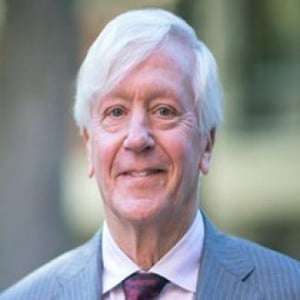
David and Mary Harrison Distinguished Professor of Law, University of Virginia School of Law
G. Edward White joined the Virginia law faculty in 1972 after a clerkship with Chief Justice Earl Warren of the Supreme Court of the United States and a year as visiting scholar at the American Bar Foundation. He was appointed John B. Minor Professor of Law and History in 1987, and held that chair until 2003, when he became David and Mary Harrison Distinguished Professor of Law. In 1992, he was appointed to a University Professorship, which he held until 2003. From 1990 until 1992 and from 2001-03, he was the Sullivan & Cromwell Research Professor; from 1994-97 the E. James Kelly Research Professor; and from 1999-2001 the Class of 1963 Research Professor. He has held visiting appointments at New York Law School, William & Mary School of Law, Brooklyn Law School, Arizona College of Law, the London School of Economics and Political Science, and Harvard Law School. He has been a Guggenheim Fellow, and twice a senior fellow of the National Endowment for the Humanities. He is a fellow of the American Academy of Arts & Sciences, a fellow of the Society of American Historians, and a member of the American Law Institute.He received the Roger and Madeleine Traynor Faculty Achievement Award in 2008.
White's 14 published books have won numerous honors and awards. These include final listing for the Pulitzer Prize in history, the Silver Gavel Award from the American Bar Association, the James Willard Hurst Prize from the Law & Society Association, the Littleton-Griswold Prize from the American Historical Association, the Scribes Award and the Association of American Law Schools' Triennial Coif Award. White's books have garnered 15 such honors and awards since 1976.
White was editor of the Studies in Legal History series for the North Carolina Press from 1980-85, and advisor on law manuscripts for Oxford University Press from 1986-96. He was on the editorial board of the Virginia Quarterly Review from 1980-2002. He has served on the Commission for Undergraduate Education in Law and the Humanities, and has taught summer humanities seminars for lawyers and judges under the auspices of the National Endowment for the Humanities.
White has delivered several endowed lectures, including the inaugural John Marshall Lecture, sponsored by the Boston Bar Association; the inaugural Jerome Hall Lecture at Hastings College of Law; the Swinford Lecture, sponsored by the University of Kentucky School of Law and the Kentucky Bar Association; the Keck Lecture at Amherst College, the Rosenthal Lectures at Northwestern University School of Law; the Neesima Lectures at Doshisha University, Japan; the Fulton Lecture at the University of Chicago School of Law and the Knowlton Distinguished Lecture at the University of South Carolina School of Law. His most recent lecture was the 2010 Hendricks Law and History Lecture at Washington & Lee Law School.
White's 1996 book, Creating the National Pastime: Baseball Transforms Itself, 1903-1953, reflects his life-long participation and interest in athletics. He lettered in four sports in college, formerly coached the Charlottesville High School girls soccer team, and has won a number of state- and citywide tournaments in doubles squash.

United States Court of Appeals, Fourth Circuit
James Harvie Wilkinson III is an Article III federal judge on the United States Court of Appeals for the Fourth Circuit. He joined the Court in 1984 after being nominated by President Ronald Reagan.
Born in New York City, New York, Wilkinson graduated from Yale University with his Bachelor's degree in 1967. Wilkinson served in the United States Army from 1968 to 1969 and received his Juris Doctor degree from the University of Virginia School of Law in 1972.
On the recommendation of Virginia U.S. Senator John Warner, Wilkinson was nominated to the United States Court of Appeals for the Fourth Circuit by President Ronald Reagan on January 30, 1984 to a seat vacated by John Butzner, Jr.,. Wilkinson was confirmed by the Senate on August 9, 1984 on a Senate vote and received commission on August 13, 1984. Wilkinson served as the Chief Judge of the Court from 1996 to 2003.

Executive Vice President of Global Governance, Chief Legal Officer and Corporate Secretary, Walmart Inc.
Rachel Brand is Walmart’s executive vice president of global governance, chief legal officer, and corporate secretary. She oversees the company’s global legal, compliance, ethics, corporate governance, digital citizenship, aviation, investigative, and corporate security functions, including Walmart’s Emergency Operations Center.
Immediately before joining Walmart, Rachel served as the United States Associate Attorney General and holds the distinction of being the first woman to serve in this role. She had previously served in the U.S. Department of Justice as the Assistant Attorney General for the Office of Legal Policy during President George W. Bush’s administration. Her other government service includes an appointment by President Obama to serve as a Member of the U.S. Privacy and Civil Liberties Oversight Board, service as an Associate Counsel to the President at the White House, and judicial clerkships with Justice Charles Fried of the Supreme Judicial Court of Massachusetts and Justice Anthony Kennedy at the Supreme Court of the United States. In the private sector, Rachel was a lawyer in private practice at two law firms in Washington, D.C. and served as the Vice President and Chief Counsel for Regulatory Litigation at the U.S. Chamber of Commerce Litigation Center.
Rachel serves on the board of directors for the Walmart Foundation and is the executive sponsor for Walmart’s Tribal Voices Associate Resource Group. Outside of Walmart, she serves on the board of directors for the International Justice Mission and is a member of The American Law Institute.
Rachel earned her Bachelor of Arts degree from the University of Minnesota-Morris and her J.D. from Harvard Law School.
William Nelson Cromwell Professor of Law, Yale School of Law
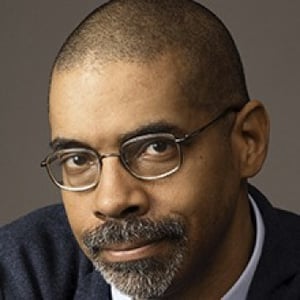
Stephen L. Carter is the William Nelson Cromwell Professor of Law at Yale Law School, where he has been a member of the faculty since 1982. Among his recent courses are Contracts, Evidence, Law and Religion, the Ethics of War, Slavery and the Law, and Libertarian Legal Theory. He is the author of fifteen books, including, among others, The Violence of Peace: America’s Wars in the Age of Obama (2010); God’s Name in Vain: The Wrongs and Rights of Religion in Politics (2000); Civility: Manners, Morals, and the Etiquette of Democracy (1998); The Dissent of the Governed: A Meditation on Law, Religion, and Loyalty (1998); The Confirmation Mess: Cleaning up the Federal Appointments Process (1994); and The Culture of Disbelief: How American Law and Politics Trivialize Religious Devotion (1993). His most recent volume, published in 2018, is Invisible: The Forgotten Story of the Black Woman Lawyer who Took Down America’s Biggest Mobster. He recently delivered the W. E. B. Du Bois Lectures at Harvard, which he is writing up for publication.
Professor Carter is also the author of six novels, including The Emperor of Ocean Park, which spent eleven weeks on the New York Times bestseller list, and The Impeachment of Abraham Lincoln, a fictional account of a trial of Lincoln in the Senate for high crimes and misdemeanors. In addition to his scholarship, he has published hundreds of opinion pieces. He was a long-time columnist for the Daily Beast and currently writes regularly for Bloomberg, mainly about law, but also about ethics and about popular culture. In addition, he formerly blogged about professional football for the Washington Post.
Professor Carter is a graduate of Stanford University and Yale Law School. He served as a law clerk for Justice Thurgood Marshall at the United States Supreme Court, and earlier for Judge Spottswood W. Robinson, III, of the United States Court of Appeals for the District of Columbia Circuit. He was the interviewer for Justice Marshall’s official oral history. Among the prizes Professor Carter’s work has received are the Louisville-Grawemeyer Award in Religion, the Anisfield-Wolf Award for Fiction, and the Paul M. Bator Award. He has also served on the Pulitzer Prize fiction jury. Professor Carter is a fellow of several learned societies and a life member of the American Law Institute. He is a trustee of the Aspen Institute, where for fifteen years he moderated seminars. He has received eight honorary degrees.

George C. Dix Professor in Constitutional Law, Northwestern University Pritzker School of Law
John O. McGinnis is a graduate of Harvard College and Harvard Law School where he was an editor of the Harvard Law Review. He also has an MA degree from Balliol College, Oxford, in philosophy and theology. Professor McGinnis clerked on the U.S. Court of Appeals for the District of Columbia. From 1987 to 1991, he was deputy assistant attorney general in the Office of Legal Counsel at the Department of Justice. He is the author of Accelerating Democracy: Transforming Government Through Technology (Princeton 2013) and Originalism and the Good Constitution (Harvard 2013) (with M. Rappaport). He is a past winner of the Paul Bator award given by the Federalist Society to an outstanding academic under 40. He has been listed by the United States on the roster of panelists who may be called upon to decide World Trade Organization Disputes.
Associate Justice, United States Supreme Court
43rd President of the United States
George Walker Bush served as the 43rd President of the United States from 2001 to 2009, and the 46th Governor of Texas from 1995 to 2000.

Fellow, National Security Institute, Antonin Scalia Law School, George Mason University
Vince Vitkowsky chaired the Executive Committee of the Federalist Society’s International and National Security Law and Policy Practice Group for over a decade. He is also a Fellow at the National Security Institute of George Mason University Law School. Vince spent 45 years in private practice, primarily in AmLaw 100/200 firms and their spin-offs. His practice included domestic and international commercial arbitration and litigation, as well as cyber risks and liabilities. Vince's current focus is on national security policy, artificial intelligence, cybersecurity, and counterterrorism. He has often written and spoken on national security and other public policy issues. Among other affiliations, Vince has been an Adjunct Fellow at the Center for Law and Counterterrorism of the Foundation for the Defense of Democracies, a member of the Executive Committee of the American Branch of the International Law Association, and Co-Chair of the Committee on Interventions and Trial Observations of the International Bar Association’s Human Rights Institute. He received his B.A. from Northwestern University and his J.D. from Cornell Law School.
Former Vice President & Director, External Relations, The Federalist Society for Law and Public Policy Studies
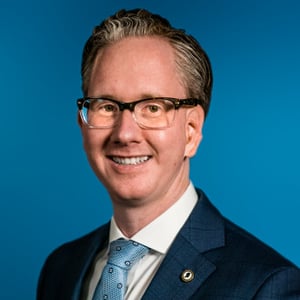
Jonathan Bunch is the former Vice President and Director of External Relations for the Federalist Society for Law and Public Policy Studies. Jonathan was responsible for a broad range of strategic, programming, and media relations decisions that were integral to the Society's mission. In addition to his work for the Society, Jonathan regularly advised other organizations and public officials on matters of legal policy and judicial selection. Before joining the Society, Jonathan ran a 501c4 in Missouri, where he had served on the staff of Missouri Governor Matt Blunt and as a law clerk for The Honorable Stephen N. Limbaugh Jr. on the Supreme Court of Missouri. Jonathan is a graduate of John Brown University and the University of Missouri School of Law. He lives in Northern Virginia with his wife, Amanda, and their four children.
Dean and Jesse H. Choper Distinguished Professor of Law, UC Berkeley School of Law
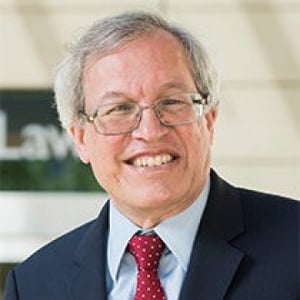
Erwin Chemerinsky became the 13th Dean of Berkeley Law on July 1, 2017, when he joined the faculty as the Jesse H. Choper Distinguished Professor of Law.
Prior to assuming this position, from 2008-2017, he was the founding Dean and Distinguished Professor of Law, and Raymond Pryke Professor of First Amendment Law, at University of California, Irvine School of Law, with a joint appointment in Political Science. Before that he was the Alston and Bird Professor of Law and Political Science at Duke University from 2004-2008, and from 1983-2004 was a professor at the University of Southern California Law School, including as the Sydney M. Irmas Professor of Public Interest Law, Legal Ethics, and Political Science. He also has taught at DePaul College of Law and UCLA Law School.
He is the author of eleven books, including leading casebooks and treatises about constitutional law, criminal procedure, and federal jurisdiction. His most recent books are, We the People: A Progressive Reading of the Constitution for the Twenty-First Century (Picador Macmillan) published in November 2018, and two books published by Yale University Press in 2017, Closing the Courthouse Doors: How Your Constitutional Rights Became Unenforceable and Free Speech on Campus (with Howard Gillman).
He also is the author of more than 200 law review articles. He writes a regular column for the Sacramento Bee, monthly columns for the ABA Journal and the Daily Journal, and frequent op-eds in newspapers across the country. He frequently argues appellate cases, including in the United States Supreme Court.
In 2016, he was named a fellow of the American Academy of Arts and Sciences. In 2017, National Jurist magazine again named Dean Chemerinsky as the most influential person in legal education in the United States.

Dr. John Eastman is the former Henry Salvatori Professor of Law & Community Service and former Dean at Chapman University's Dale E. Fowler School of Law, where he had been a member of the faculty since 1999, specializing in Constitutional Law, Legal History, and Property. He is a founding director of the Center for Constitutional Jurisprudence, a public interest law firm affiliated with the Claremont Institute that he founded in 1999. He has a Ph.D. in Government from the Claremont Graduate School and a J.D. from the University of Chicago Law School, and a B.A. in Politics and Economics from the University of Dallas. He serves as the Chairman of the Board of the National Organization for Marriage.
Prior to joining the Chapman law faculty, Dr. Eastman served as a law clerk to the Honorable Clarence Thomas, Associate Justice, Supreme Court of the United States, and to the Honorable J. Michael Luttig, Judge, United States Court of Appeals for the Fourth Circuit and practiced law with the national law firm of Kirkland & Ellis. Dr. Eastman has also represented numerous clients in important constitutional law matters and has argued before the Supreme Court. On behalf of the Claremont Institute Center for Constitutional Jurisprudence, he has participated as amicus curiae before the Supreme Court of the United States, U.S. Courts of Appeals, and State Supreme Courts in more than one hundred cases of constitutional significance, including Boy Scouts of America v. Dale, Zelman v. Simmons-Harris (the school vouchers case), Kelo v. New London, Ct. (eminent domain), and Van Orden v. Perry (the 10 Commandments case). He has also appeared as an expert legal commentator on numerous television and radio programs, including C-SPAN, Fox News, PBS, NewsHour, and The O'Reilly Factor.

Judicial Selection in Nebraska
Steven Grasz
The Federalist Society for Law and Public Policy Studies is an organization of 40,000 lawyers,...
Judicial Selection in Nebraska
The Federalist Society for Law and Public Policy Studies is an organization of 40,000 lawyers,...
North Carolina Appellate Court Decides when Municipality May Be Held Liable in Public Park Case
Jonathan Y. Ellis
In June 2007, seventeen-year-old Eric Williams died tragically at a public park in Elizabeth City,...
North Carolina Appellate Court Questions the Constitutionality of Campus Police at Universities with Religious Heritages in State v. Yencer
Robert T. Numbers
In late August, as colleges and universities across North Carolina were preparing to welcome back...
Panel I: Economic Theory, Civic Virtue and the Meaning of the Constitution
James W. Ely, Renée Lettow Lerner, G. Brinton Lucas, Nelson Lund, G. Edward White, J. Harvie Wilkinson
Justice Holmes' dissent in Lochner v. New York is well-known for the statement, "[A] constitution is not...
The Great Debate: Left vs. Right Debate the Constitutional Issues of the Day
Panel III: Confirmation Battles and Presidential Nominations
Nan Aron, Rachel L. Brand, Stephen L. Carter, John O. McGinnis, Sonia Sotomayor
The Federalist Society's Student Division presented this panel at the 2009 Annual Student Symposium on...
Remarks by the President on Judicial Accomplishments and Philosophy
George W. Bush
Hilton Cincinnati Netherland PlazaCincinnati, Ohio 3:02 P.M. EDT THE PRESIDENT: Thank you very much. (Applause.) ...
SCOTUScast 3-25-08 featuring Vince Vitkowsky
Vincent Vitkowsky
On March 17, 2008, the Supreme Court heard oral argument in Republic of the Philippines...
Missouri High Court Finds Constitutional Right To Collective Bargaining for Public Sector Employees
Jonathan Bunch
In 2002, the Independence, Missouri school board adopted new terms of employment for the employees...