
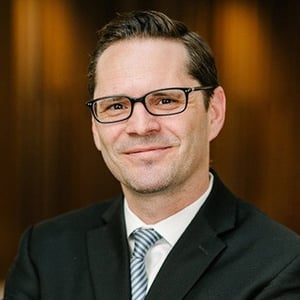
John J. Flynn Endowed Professor of Law, University of Utah S.J. Quinney College of Law
Christopher Peterson is the John J. Flynn Endowed Professor of Law at the University of Utah's S.J. Quinney College of Law. He previously served as a Special Advisor in the Office of the Director at the United States Consumer Financial Protection Bureau, as a Special Advisor in the Office of Legal Policy for Personnel and Readiness in the United States Department of Defense, and as Senior Counsel for Enforcement Policy and Strategy in the Consumer Financial Protection Bureau's Office of Enforcement. Professor Peterson has written dozens of scholarly articles and published three books on consumer finance. He has frequently testified in Congressional hearings and has presented his research to the Federal Deposit Insurance Corporation, the Federal Reserve Board of Governors, and at the White House in both Democratic and Republican administrations. He is a fellow of the American College of Consumer Financial Services Lawyers, the American Bar Association's Consumer Financial Services Committee, and serves on the community advisory board of the American Fintech Council. Professor Peterson is a recipient of the National Association of Consumer Agency Administrators’ Consumer Advocate of the Year award and the Pentagon’s Office of the Secretary of Defense Award for Excellence.
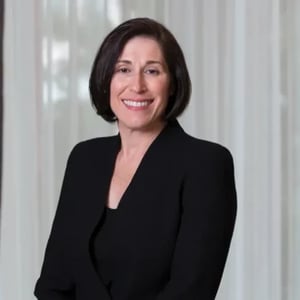
Partner, Alston & Bird
Nanci Weissgold is a co-leader of both Alston & Bird's Financial Services & Products Group and the firm’s Consumer Financial Services Team. As an acknowledged authority in her field, Nanci maintains a national practice on matters relating to consumer financial products and services and represent clients (including residential mortgage servicers, as well banks, non-bank consumer lenders, technology providers for the consumer financial services industry, AMC’s, and investors) in federal and state regulatory, supervisory, and enforcement matters. Nanci acts as regulatory counsel in connection with investments or acquisitions and perform compliance due diligence. Nanci is frequently called upon to provide litigation support and assist in the development of compliance management systems.
Nanci is a frequent speaker and presenter at legal and industry conferences and webinars, and has published numerous articles on mortgage banking, valuation, and consumer finance related topics. She served as articles editor of the Administrative Law Journal at American University. Nanci is a Fellow of the American College of Consumer Financial Services Lawyers and serves on the nominating committee for the Board of Regents. She is peer rated in the Martindale-Hubbell® directory as AV Preeminent®, the highest level of professional excellence. Nanci is nationally ranked by Chambers USA in Financial Services Regulation: Consumer Finance (Compliance), and in 2018, she was honored by the Burton Awards as a recipient of a “Law360 Distinguished Legal Writing Award.”
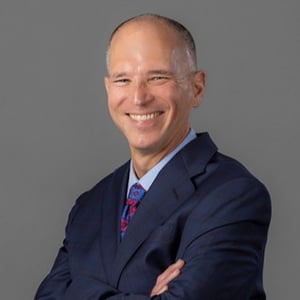
George Mason University Foundation Professor of Law, Antonin Scalia Law School, George Mason University
TODD J. ZYWICKI is George Mason University Foundation Professor of Law at Antonin Scalia Law School at George Mason University and Research Fellow of the George Mason Law and Economics Center. During the Fall 2023 semester he served as the Visiting Scholar in Conservative Thought and Policy for the Bruce Benson Center for the Study of Western Civilization at the University of Colorado-Boulder. From 2020-2021 he was Chair of the Consumer Financial Protection Bureau Taskforce on Federal Consumer Financial Law. In 2021 he was inducted to the American College of Consumer Financial Services Lawyers. He is also a Senior Fellow of the F.A. Hayek Program for the Advanced Study of Politics, Philosophy, and Economics at George Mason University and a former Senior Fellow of the Cato Institute. From 2015-2017 he was Executive Director of the George Mason Law and Economics Center. He served as Co-Editor of the Supreme Court Economic Review from 2006-2017. From 2003-2004, Professor Zywicki served as the Director of the Office of Policy Planning at the Federal Trade Commission. He has also taught at Vanderbilt University Law School, Georgetown University Law Center, Boston College Law School, Mississippi College School of Law, and China University of Political Science and Law.
Professor Zywicki clerked for Judge Jerry E. Smith of the U.S. Court of Appeals for the Fifth Circuit and worked as an associate at Alston & Bird in Atlanta, Georgia, where he practiced bankruptcy and commercial law. He received his J.D. from the University of Virginia, where he was executive editor of the Virginia Tax Review and John M. Olin Scholar in Law and Economics. Professor Zywicki also received an M.A. in Economics from Clemson University and an A.B. cum Laude with high honors in his major from Dartmouth College.
Professor Zywicki is also a Lone Mountain Fellow of the Property and Environment Research Center, a Fellow of the International Centre for Economic Research in Turin, Italy, and a former Senior Fellow of the Goldwater Institute. During the Fall 2008 Semester Professor Zywicki was the Searle Fellow of the George Mason University School of Law and was a 2008-09 W. Glenn Campbell and Rita Ricardo-Campbell National Fellow and the Arch W. Shaw National Fellow at the Hoover Institution on War, Revolution and Peace. He has lectured and consulted with government officials around the world, including Iceland, Italy, Japan, and Guatemala. In 2006 Professor Zywicki served as a Member of the United States Department of Justice Study Group on “Identifying Fraud, Abuse and Errors in the United States Bankruptcy System.”
Professor Zywicki is the author of more than 130 articles in leading law reviews and peer-reviewed economics journals. He is one of the Top 10 most-cited law professors in the field of Commercial Law and one of the Top 25 law professors on Twitter as measured by engagement levels. He is one of the Top 50 Most Downloaded Law Authors at the Social Science Research Network. He has testified multiple times before Congress on issues of consumer bankruptcy law and consumer credit and is a frequent commentator on legal issues in the print and broadcast media, including the Wall Street Journal, New York Times, The Washington Post, The Washington Times, Nightline, The Newshour with Jim Lehrer, Neil Cavuto Show, Fox & Friends, Smerconish, Fox News @ Night with Shannon Bream, Fox Business, CNN, CNBC, Bloomberg News, BBC, The Diane Rehm Show, Lou Dobbs Show, Jerry Doyle Show, and The Laura Ingraham Show.
Professor Zywicki is former Chairman and a current member of the Board of Directors of the Competitive Enterprise Institute, and is a member of the Board of Directors of the Institute for Humane Studies, Bill of Rights Institute, the Executive Committee for the Federalist Society's Financial Institutions and E-Commerce Practice Group, the Board of Trustees of the Foundation for Research on Economics and the Environment. He formerly served on the Governing Board and the Advisory Council for the Financial Services Research Program at George Washington University School of Business. He is currently the Chair of the Academic Advisory Council for the following organizations: The Bill of Rights Institute, the film “We the People in IMAX,” and the McCormick-Tribune Foundation “Freedom Museum” in Chicago, Illinois. He is a member of the Board of Visitors of Ralston College and was a member of the Board of Trustees of Yorktown University. From 2005-2009 he served as an elected Alumni Trustee of the Dartmouth College Board of Trustees.
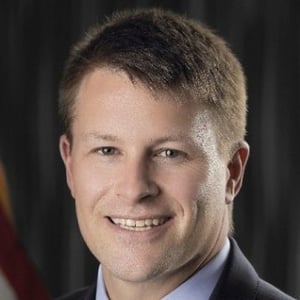
Managing Director, Banking Supervision and Regulation Group, Patomak Global Partners
Brian Johnson is Managing Director in the Banking Supervision and Regulation Group at Patomak Global Partners.
In this role, Mr. Johnson spearheads projects related to the regulation of consumer financial products under Keith Noreika, Executive Vice President and Chairman of the Banking Supervision and Regulation Group and former acting Comptroller of the Currency.
Prior to joining Patomak, Mr. Johnson was a partner in Alston & Bird LLP’s financial services and products group. There, he advised financial institutions on consumer finance regulatory issues relating to product compliance, examination, enforcement investigations, and compliance management systems, and on strategic engagement with independent federal regulatory agencies and with Congress.
Mr. Johnson previously served as Deputy Director of the Consumer Financial Protection Bureau (CFPB), where he oversaw the agency’s rulemaking, supervision, and enforcement activities. He conceived and led the creation of high-profile agency initiatives, including the Office of Innovation, Taskforce on Federal Consumer Financial Law, policy symposia series, and Start Small, Save Up emergency savings program. He also served as the CFPB representative to the Financial Stability Oversight Council Deputies’ Committee and advised on interagency matters involving the Federal Deposit Insurance Corporation and the Federal Financial Institutions Examination Council.
Mr. Johnson held various positions on Capitol Hill, including policy director and chief financial institutions counsel on the House Committee on Financial Services, where his portfolio covered consumer protection and credit, mortgage origination, credit reporting, banking, and data security. His efforts on the committee involved drafting legislation to provide regulatory relief to bank, credit union, and nondepository financial institutions, as well as conducting oversight of the activities of the CFPB, Financial Stability Oversight Council, Federal Deposit Insurance Corporation, Office of Financial Research, Office of the Comptroller of the Currency, Federal Reserve System, and National Credit Union Administration.
Mr. Johnson received his juris doctorate from the University of Virginia School of Law and his bachelor’s in economics from the University of Virginia.
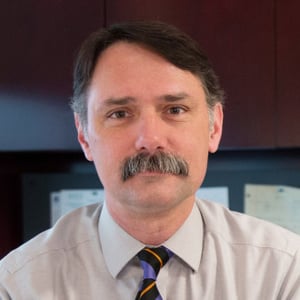
Partner, Bona Law PC
Steve Cernak is a respected leader in the international antitrust and competition law community. He served as in-house antitrust attorney at General Motors for more than 20 years, ultimately responsible for global antitrust compliance, merger reviews and litigation. As a result, Steve has experience tackling the toughest antitrust issues, and explaining them to everyone in an organization from the CEO to workers in the factories.
After leaving GM, Steve spent seven years at Schiff Hardin’s Ann Arbor office, serving clients both inside and outside the automotive community. As he did at Schiff Hardin, Steve now assists clients big and small on a wide array of competition and consumer protection matters, including compliance programs; joint efforts with competitors; pricing strategies and programs; and merger reviews and filings.
Steve has served in the leadership of the Antitrust Section of the American Bar Association for more than 20 years, and is currently the Section Chief Marketing Officer. That position keeps him connected to the global community and up-to-date on developments.
Steve is a prolific writer for The Antitrust Lawyer Blog, WoltersKluwer’s AntitrustConnect Blog and various Law360, Lexis and Westlaw publications. The second edition of his textbook of antitrust summaries and materials, Antitrust Simulations, was published in 2019 by West Academic. He updates his Antitrust in Distribution and Franchising annually for publication in the LexisNexis Antitrust Law & Strategy Series. Steve is also a frequent commenter on antitrust developments, both on social and mainstream media.
Steve is a regular teacher at both the University of Michigan Law School and the Thomas M. Cooley Law School Corporate & Finance LLM program at Western Michigan University. He also taught for three years at Wayne State University Law School.
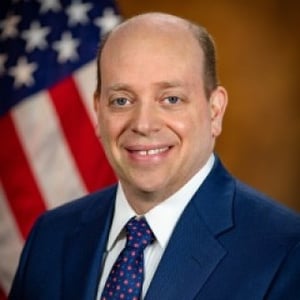
Deputy Assistant Attorney General, Antitrust Division, United States Department of Justice
Michael Kades is a Deputy Assistant Attorney General for the Antitrust Division with a focus on civil enforcement.
Prior to coming to the US Department of Justice, Michael was director for markets and competition policy at the Washington Center for Equitable Growth. His research focused on competition and antitrust enforcement, with an emphasis on consumers, wages, equality, and innovation. He testified before Congress multiple times and authored several reports and articles on antitrust policy.
Prior to joining Equitable Growth, Michael worked as antitrust counsel for Sen. Amy Klobuchar (D-MN), on detail to the from the Federal Trade Commission. He worked on the CREATES Act, the Holocaust Expropriated Art Recovery Act, and the Trade Secrets Protection Act, all of which Congress enacted. He was also the primary staffer on the Merger Filing Fee Modernization Act and the Consolidation Prevention and Competition Protection Act.
Michael spent 20 years investigating and litigating antitrust actions as an attorney at the Federal Trade Commission. From 2013-15, he was the Deputy Chief Trial Counsel for the Bureau of Competition where he participated in a number of merger investigations and litigations. From 2006-2013, served as attorney advisor to Chairman Jon Leibowitz. He oversaw the Commission’s strategy to address anticompetitive patent settlements, worked on the 2010 horizontal merger guidelines, and advised the Chairman on antitrust issues. From 1997-2006, he was an attorney in the Health Care Products Services. He argued In re Schering Plough and In re South Carolina Board of Dentistry before the Commission as well as appearing in federal court. He played a leading role in FTC v. Mylan in which the Commission obtained $100 million in disgorgement. While at the Commission, he received the Chairman’s Award and the Paul Rand Dixon Award.
Kades is a graduate of Yale University and the University of Wisconsin Law School.

Professor of Law, Antonin Scalia Law School, George Mason University
Professor of Law Bruce H. Kobayashi’s background in economics makes him a vital part of the law and economics focus at the Antonin Scalia Law School, George Mason University. Since coming to Scalia Law in 1992, he has been a frequent contributor to economics and law and economics journals. He previously served as a senior economist with the Federal Trade Commission, a senior research associate with the U.S. Sentencing Commission, and an economist with the U.S. Department of Justice. He recently served as the director of the FTC’s Bureau of Economics.
Professor Kobayashi was educated at the University of California, Los Angeles, earning his BS in Economics and System Science (1981), and his MA (1982) and PhD (1986) in Economics.
He teaches Litigation and Dispute Resolution Theory, Quantitative Forensics, and Legal and Economic Theory of Intellectual Property.
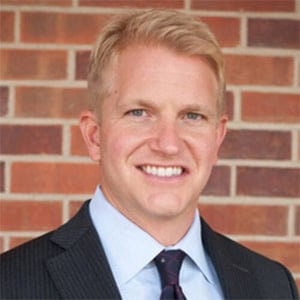
Wall Chair in Corporate Law and Governance and Professor of Law, University of Missouri School of Law
Thomas Lambert is the Wall Chair in Corporate Law and Governance and Professor of Law at the University of Missouri School of Law.
Prof. Lambert’s scholarship focuses on antitrust, corporate and regulatory matters. He is the author of How to Regulate: A Guide for Policymakers (Cambridge Univ. Press 2017) and co-author of Antitrust Law: Interpretation and Implementation (5th ed., Foundation Press, 2013). He has also authored or co-authored numerous book chapters and more than 20 journal articles in such publications as the Antitrust Bulletin, the Boston College Law Review, the Minnesota Law Review, the Texas Law Review and the Yale Journal on Regulation. He blogs regularly at Truth on the Market, a site focused on academic commentary on antitrust, business and economic legal issues.
In 2017, Professor Lambert received the University of Missouri’s Kemper Faculty Fellowship (awarded annually to five professors throughout the university for exemplary teaching). He has also received the law school’s Blackwell Sanders Award for Teaching Excellence and the university-wide Gold Chalk Award for excellence in graduate teaching. He is a three-time winner of the University of Missouri Law School’s Shook Hardy & Bacon Excellence in Research Award, which is awarded annually for most outstanding faculty scholarship.
Before entering academia, Professor Lambert practiced law in the Chicago office of Sidley Austin and was a John M. Olin Fellow at Northwestern University School of Law and the Center for the Study of American Business (now the Murray Weidenbaum Center) at Washington University. After graduating from law school, he clerked for Judge Jerry E. Smith of the U.S. Court of Appeals for the Fifth Circuit.
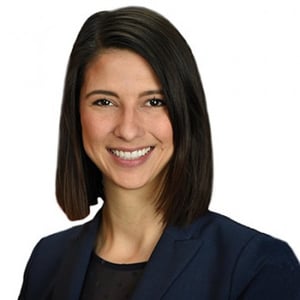
Partner, Baker Botts L.L.P.
Taylor Owings is a partner in the Antitrust and Competition Practice Group of Baker Botts L.L.P. She represents clients in civil merger and non-merger matters both in front of government agencies and in private litigation. She also counsels clients on the application of antitrust law to their business activities, with special experience in issues related to the digital economy.
Prior to joining the firm, Ms. Owings served as Senior Counsel and Chief of Staff in the Antitrust Division of the U.S. Department of Justice from 2018 to 2021. In that role, Ms. Owings was a key advisor to the Assistant Attorney General on the application of antitrust law to technology industries, including in the Department of Justice’s review of the business practices of market-leading online platforms and in the application of antitrust law to the exercise of intellectual property rights and standard setting organizations. As Chief of Staff of the Antitrust Division, Ms. Owings was responsible for ensuring the high quality of all public advocacy issued by the Division, including court filings, policy statements, and speeches.
Ms. Owings has experience crafting both trial and appellate strategy in headline-making antitrust litigations. She has argued in the First and Fourth Circuits. Earlier in her career, she clerked for the Honorable Douglas H. Ginsburg on the U.S. Court of Appeals for the D.C. Circuit, and for the Honorable Richard J. Leon on the U.S. District Court for the District of Columbia.
Ms. Owings handles all aspects of merger review. She draws on her first-hand experience investigating and reviewing mergers at the Antitrust Division to advise clients and to represent them in front of the agencies. She has special experience in merger matters with complex legal questions, for instance vertical mergers, the acquisition of a nascent or potential competitor, and the implications of a merger on innovation and data accumulation.
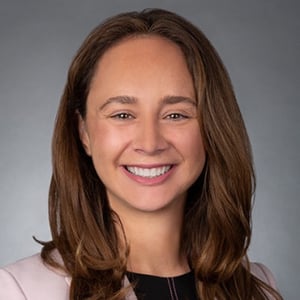
Partner, Kirkland & Ellis LLP
Elyse Dorsey is a partner in the Washington, D.C., office of Kirkland & Ellis LLP. Elyse's practice encompasses a wide array of antitrust and competition matters across the globe. She is uniquely situated to advise clients in domestic and international competition matters, given her combination of government and private practice experience.
Elyse has a focus in cutting edge competition issues, as well as privacy, data security, and consumer protection matters. She has represented clients across levels of government, from state agencies to the U.S. Supreme Court. Prior to joining Kirkland, Elyse served as Counsel to the Assistant Attorney General at the U.S. Department of Justice's Antitrust Division. Her work at the Antitrust Division covered a spectrum of legal and policy matters, including IP and technology issues, the Division's appellate and amicus brief programs, and its international and competition policy efforts. Elyse joined the Division from the U.S. Federal Trade Commission, where she served as Attorney Advisor to Commission Noah Joshua Phillips. While at the Commission, she advised on key cases, matters, and policies affecting industries across the economy--from digital and tech to pharmaceuticals and hospitals and more.
Elyse is a recognized thought leader in the antitrust and competition communities. She has been a frequent nominee and recipient of antitrust writing awards for her scholarship in this space. She has also served as an adjunct professor at George Mason University's Scalia Law School for several years, helping to launch their Antitrust LL.M. program; and she previously served as a visiting scholar at the University of Virginia.

Executive in Residence, Wake Forest University School of Business
John Allison is an Executive in Residence at the Wake Forest School of Business. He is a member of the Cato Institute’s Board of Directors and Chairman of the Executive Advisory Council of the Cato Institute’s Center for Monetary and Financial Alternatives. Allison was president and CEO of the Cato Institute from October 2012 to April 2015. Prior to joining Cato, Allison was chairman and CEO of BB&T Corporation, the 10th-largest financial services holding company headquartered in the United States. During his tenure as CEO from 1989 to 2008, BB&T grew from $4.5 billion to $152 billion in assets. He was recognized by theHarvard Business Reviewas one of the top 100 most successful CEOs in the world over the last decade.
Allison has received the Corning Award for Distinguished Leadership, been inducted into the North Carolina Business Hall of Fame, and received the Lifetime Achievement Award from theAmerican Banker. He is the author of The Financial Crisis and the Free Market Cure: Why Pure Capitalism Is the World Economy’s Only Hope and The Leadership Crisis and the Free Market Cure: Why the Future of Business Depends on the Return to Life, Liberty, and the Pursuit of Happiness. In addition, he is a former Distinguished Professor of Practice at Wake Forest University School of Business, and serves on the Board of Visitors at the business schools at Wake Forest, Duke, and the University of North Carolina–Chapel Hill.
Allison is a Phi Beta Kappa graduate of the University of North Carolina–Chapel Hill. He received his master’s degree in management from Duke University and is also a graduate of the Stonier Graduate School of Banking. Allison is the recipient of six honorary doctorate degrees.
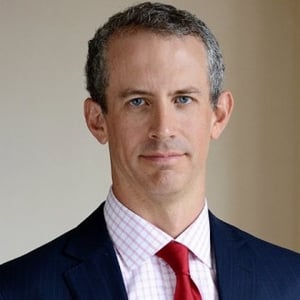
CEO, Sunstone Trust Company
Daniel Wheeler is a founder and the CEO of Sunstone Trust Company which provides high touch fiduciary and wealth management services to high net worth individuals and families. We specialize in serving first and second generation immigrant families but welcome anyone who values personal attention and responsive service.
Prior to becoming a financial services executive, Dan was a Banking and Fintech regulatory partner in the Bryan Cave Leighton Paisner international law firm and led the firm's fintech regulatory practice. For 22 years, he advised banks, crypto and blockchain companies, financial technology companies, credit unions and other financial institutions on their most important challenges and opportunities.
Dan is particularly adept at financial services innovation, including the design and upgrade of consumer and commercial financial products and business lines. Mr. Wheeler has successfully navigated many significant regulatory challenges. Sometimes this involves intervention and advocacy with the Federal Reserve, FDIC, OCC, NCUA, CFPB and state financial regulators, as well as negotiation of enforcement actions.
Dan is also the founder and adviser to Financial Technology Bank which will empower money service businesses and fintechs to better serve low and moderate income communities.
Specialties: financial innovation, banking, wealth management, cryptocurrency.
George Mason University Foundation Professor of Law, Antonin Scalia Law School, George Mason University
TODD J. ZYWICKI is George Mason University Foundation Professor of Law at Antonin Scalia Law School at George Mason University and Research Fellow of the George Mason Law and Economics Center. During the Fall 2023 semester he served as the Visiting Scholar in Conservative Thought and Policy for the Bruce Benson Center for the Study of Western Civilization at the University of Colorado-Boulder. From 2020-2021 he was Chair of the Consumer Financial Protection Bureau Taskforce on Federal Consumer Financial Law. In 2021 he was inducted to the American College of Consumer Financial Services Lawyers. He is also a Senior Fellow of the F.A. Hayek Program for the Advanced Study of Politics, Philosophy, and Economics at George Mason University and a former Senior Fellow of the Cato Institute. From 2015-2017 he was Executive Director of the George Mason Law and Economics Center. He served as Co-Editor of the Supreme Court Economic Review from 2006-2017. From 2003-2004, Professor Zywicki served as the Director of the Office of Policy Planning at the Federal Trade Commission. He has also taught at Vanderbilt University Law School, Georgetown University Law Center, Boston College Law School, Mississippi College School of Law, and China University of Political Science and Law.
Professor Zywicki clerked for Judge Jerry E. Smith of the U.S. Court of Appeals for the Fifth Circuit and worked as an associate at Alston & Bird in Atlanta, Georgia, where he practiced bankruptcy and commercial law. He received his J.D. from the University of Virginia, where he was executive editor of the Virginia Tax Review and John M. Olin Scholar in Law and Economics. Professor Zywicki also received an M.A. in Economics from Clemson University and an A.B. cum Laude with high honors in his major from Dartmouth College.
Professor Zywicki is also a Lone Mountain Fellow of the Property and Environment Research Center, a Fellow of the International Centre for Economic Research in Turin, Italy, and a former Senior Fellow of the Goldwater Institute. During the Fall 2008 Semester Professor Zywicki was the Searle Fellow of the George Mason University School of Law and was a 2008-09 W. Glenn Campbell and Rita Ricardo-Campbell National Fellow and the Arch W. Shaw National Fellow at the Hoover Institution on War, Revolution and Peace. He has lectured and consulted with government officials around the world, including Iceland, Italy, Japan, and Guatemala. In 2006 Professor Zywicki served as a Member of the United States Department of Justice Study Group on “Identifying Fraud, Abuse and Errors in the United States Bankruptcy System.”
Professor Zywicki is the author of more than 130 articles in leading law reviews and peer-reviewed economics journals. He is one of the Top 10 most-cited law professors in the field of Commercial Law and one of the Top 25 law professors on Twitter as measured by engagement levels. He is one of the Top 50 Most Downloaded Law Authors at the Social Science Research Network. He has testified multiple times before Congress on issues of consumer bankruptcy law and consumer credit and is a frequent commentator on legal issues in the print and broadcast media, including the Wall Street Journal, New York Times, The Washington Post, The Washington Times, Nightline, The Newshour with Jim Lehrer, Neil Cavuto Show, Fox & Friends, Smerconish, Fox News @ Night with Shannon Bream, Fox Business, CNN, CNBC, Bloomberg News, BBC, The Diane Rehm Show, Lou Dobbs Show, Jerry Doyle Show, and The Laura Ingraham Show.
Professor Zywicki is former Chairman and a current member of the Board of Directors of the Competitive Enterprise Institute, and is a member of the Board of Directors of the Institute for Humane Studies, Bill of Rights Institute, the Executive Committee for the Federalist Society's Financial Institutions and E-Commerce Practice Group, the Board of Trustees of the Foundation for Research on Economics and the Environment. He formerly served on the Governing Board and the Advisory Council for the Financial Services Research Program at George Washington University School of Business. He is currently the Chair of the Academic Advisory Council for the following organizations: The Bill of Rights Institute, the film “We the People in IMAX,” and the McCormick-Tribune Foundation “Freedom Museum” in Chicago, Illinois. He is a member of the Board of Visitors of Ralston College and was a member of the Board of Trustees of Yorktown University. From 2005-2009 he served as an elected Alumni Trustee of the Dartmouth College Board of Trustees.
Executive in Residence, Wake Forest University School of Business
John Allison is an Executive in Residence at the Wake Forest School of Business. He is a member of the Cato Institute’s Board of Directors and Chairman of the Executive Advisory Council of the Cato Institute’s Center for Monetary and Financial Alternatives. Allison was president and CEO of the Cato Institute from October 2012 to April 2015. Prior to joining Cato, Allison was chairman and CEO of BB&T Corporation, the 10th-largest financial services holding company headquartered in the United States. During his tenure as CEO from 1989 to 2008, BB&T grew from $4.5 billion to $152 billion in assets. He was recognized by theHarvard Business Reviewas one of the top 100 most successful CEOs in the world over the last decade.
Allison has received the Corning Award for Distinguished Leadership, been inducted into the North Carolina Business Hall of Fame, and received the Lifetime Achievement Award from theAmerican Banker. He is the author of The Financial Crisis and the Free Market Cure: Why Pure Capitalism Is the World Economy’s Only Hope and The Leadership Crisis and the Free Market Cure: Why the Future of Business Depends on the Return to Life, Liberty, and the Pursuit of Happiness. In addition, he is a former Distinguished Professor of Practice at Wake Forest University School of Business, and serves on the Board of Visitors at the business schools at Wake Forest, Duke, and the University of North Carolina–Chapel Hill.
Allison is a Phi Beta Kappa graduate of the University of North Carolina–Chapel Hill. He received his master’s degree in management from Duke University and is also a graduate of the Stonier Graduate School of Banking. Allison is the recipient of six honorary doctorate degrees.
George Mason University Foundation Professor of Law, Antonin Scalia Law School, George Mason University
TODD J. ZYWICKI is George Mason University Foundation Professor of Law at Antonin Scalia Law School at George Mason University and Research Fellow of the George Mason Law and Economics Center. During the Fall 2023 semester he served as the Visiting Scholar in Conservative Thought and Policy for the Bruce Benson Center for the Study of Western Civilization at the University of Colorado-Boulder. From 2020-2021 he was Chair of the Consumer Financial Protection Bureau Taskforce on Federal Consumer Financial Law. In 2021 he was inducted to the American College of Consumer Financial Services Lawyers. He is also a Senior Fellow of the F.A. Hayek Program for the Advanced Study of Politics, Philosophy, and Economics at George Mason University and a former Senior Fellow of the Cato Institute. From 2015-2017 he was Executive Director of the George Mason Law and Economics Center. He served as Co-Editor of the Supreme Court Economic Review from 2006-2017. From 2003-2004, Professor Zywicki served as the Director of the Office of Policy Planning at the Federal Trade Commission. He has also taught at Vanderbilt University Law School, Georgetown University Law Center, Boston College Law School, Mississippi College School of Law, and China University of Political Science and Law.
Professor Zywicki clerked for Judge Jerry E. Smith of the U.S. Court of Appeals for the Fifth Circuit and worked as an associate at Alston & Bird in Atlanta, Georgia, where he practiced bankruptcy and commercial law. He received his J.D. from the University of Virginia, where he was executive editor of the Virginia Tax Review and John M. Olin Scholar in Law and Economics. Professor Zywicki also received an M.A. in Economics from Clemson University and an A.B. cum Laude with high honors in his major from Dartmouth College.
Professor Zywicki is also a Lone Mountain Fellow of the Property and Environment Research Center, a Fellow of the International Centre for Economic Research in Turin, Italy, and a former Senior Fellow of the Goldwater Institute. During the Fall 2008 Semester Professor Zywicki was the Searle Fellow of the George Mason University School of Law and was a 2008-09 W. Glenn Campbell and Rita Ricardo-Campbell National Fellow and the Arch W. Shaw National Fellow at the Hoover Institution on War, Revolution and Peace. He has lectured and consulted with government officials around the world, including Iceland, Italy, Japan, and Guatemala. In 2006 Professor Zywicki served as a Member of the United States Department of Justice Study Group on “Identifying Fraud, Abuse and Errors in the United States Bankruptcy System.”
Professor Zywicki is the author of more than 130 articles in leading law reviews and peer-reviewed economics journals. He is one of the Top 10 most-cited law professors in the field of Commercial Law and one of the Top 25 law professors on Twitter as measured by engagement levels. He is one of the Top 50 Most Downloaded Law Authors at the Social Science Research Network. He has testified multiple times before Congress on issues of consumer bankruptcy law and consumer credit and is a frequent commentator on legal issues in the print and broadcast media, including the Wall Street Journal, New York Times, The Washington Post, The Washington Times, Nightline, The Newshour with Jim Lehrer, Neil Cavuto Show, Fox & Friends, Smerconish, Fox News @ Night with Shannon Bream, Fox Business, CNN, CNBC, Bloomberg News, BBC, The Diane Rehm Show, Lou Dobbs Show, Jerry Doyle Show, and The Laura Ingraham Show.
Professor Zywicki is former Chairman and a current member of the Board of Directors of the Competitive Enterprise Institute, and is a member of the Board of Directors of the Institute for Humane Studies, Bill of Rights Institute, the Executive Committee for the Federalist Society's Financial Institutions and E-Commerce Practice Group, the Board of Trustees of the Foundation for Research on Economics and the Environment. He formerly served on the Governing Board and the Advisory Council for the Financial Services Research Program at George Washington University School of Business. He is currently the Chair of the Academic Advisory Council for the following organizations: The Bill of Rights Institute, the film “We the People in IMAX,” and the McCormick-Tribune Foundation “Freedom Museum” in Chicago, Illinois. He is a member of the Board of Visitors of Ralston College and was a member of the Board of Trustees of Yorktown University. From 2005-2009 he served as an elected Alumni Trustee of the Dartmouth College Board of Trustees.
CEO, Sunstone Trust Company
Daniel Wheeler is a founder and the CEO of Sunstone Trust Company which provides high touch fiduciary and wealth management services to high net worth individuals and families. We specialize in serving first and second generation immigrant families but welcome anyone who values personal attention and responsive service.
Prior to becoming a financial services executive, Dan was a Banking and Fintech regulatory partner in the Bryan Cave Leighton Paisner international law firm and led the firm's fintech regulatory practice. For 22 years, he advised banks, crypto and blockchain companies, financial technology companies, credit unions and other financial institutions on their most important challenges and opportunities.
Dan is particularly adept at financial services innovation, including the design and upgrade of consumer and commercial financial products and business lines. Mr. Wheeler has successfully navigated many significant regulatory challenges. Sometimes this involves intervention and advocacy with the Federal Reserve, FDIC, OCC, NCUA, CFPB and state financial regulators, as well as negotiation of enforcement actions.
Dan is also the founder and adviser to Financial Technology Bank which will empower money service businesses and fintechs to better serve low and moderate income communities.
Specialties: financial innovation, banking, wealth management, cryptocurrency.
Partner, Bona Law PC
Steve Cernak is a respected leader in the international antitrust and competition law community. He served as in-house antitrust attorney at General Motors for more than 20 years, ultimately responsible for global antitrust compliance, merger reviews and litigation. As a result, Steve has experience tackling the toughest antitrust issues, and explaining them to everyone in an organization from the CEO to workers in the factories.
After leaving GM, Steve spent seven years at Schiff Hardin’s Ann Arbor office, serving clients both inside and outside the automotive community. As he did at Schiff Hardin, Steve now assists clients big and small on a wide array of competition and consumer protection matters, including compliance programs; joint efforts with competitors; pricing strategies and programs; and merger reviews and filings.
Steve has served in the leadership of the Antitrust Section of the American Bar Association for more than 20 years, and is currently the Section Chief Marketing Officer. That position keeps him connected to the global community and up-to-date on developments.
Steve is a prolific writer for The Antitrust Lawyer Blog, WoltersKluwer’s AntitrustConnect Blog and various Law360, Lexis and Westlaw publications. The second edition of his textbook of antitrust summaries and materials, Antitrust Simulations, was published in 2019 by West Academic. He updates his Antitrust in Distribution and Franchising annually for publication in the LexisNexis Antitrust Law & Strategy Series. Steve is also a frequent commenter on antitrust developments, both on social and mainstream media.
Steve is a regular teacher at both the University of Michigan Law School and the Thomas M. Cooley Law School Corporate & Finance LLM program at Western Michigan University. He also taught for three years at Wayne State University Law School.
Partner, Kirkland & Ellis LLP
Elyse Dorsey is a partner in the Washington, D.C., office of Kirkland & Ellis LLP. Elyse's practice encompasses a wide array of antitrust and competition matters across the globe. She is uniquely situated to advise clients in domestic and international competition matters, given her combination of government and private practice experience.
Elyse has a focus in cutting edge competition issues, as well as privacy, data security, and consumer protection matters. She has represented clients across levels of government, from state agencies to the U.S. Supreme Court. Prior to joining Kirkland, Elyse served as Counsel to the Assistant Attorney General at the U.S. Department of Justice's Antitrust Division. Her work at the Antitrust Division covered a spectrum of legal and policy matters, including IP and technology issues, the Division's appellate and amicus brief programs, and its international and competition policy efforts. Elyse joined the Division from the U.S. Federal Trade Commission, where she served as Attorney Advisor to Commission Noah Joshua Phillips. While at the Commission, she advised on key cases, matters, and policies affecting industries across the economy--from digital and tech to pharmaceuticals and hospitals and more.
Elyse is a recognized thought leader in the antitrust and competition communities. She has been a frequent nominee and recipient of antitrust writing awards for her scholarship in this space. She has also served as an adjunct professor at George Mason University's Scalia Law School for several years, helping to launch their Antitrust LL.M. program; and she previously served as a visiting scholar at the University of Virginia.
Deputy Assistant Attorney General, Antitrust Division, United States Department of Justice
Michael Kades is a Deputy Assistant Attorney General for the Antitrust Division with a focus on civil enforcement.
Prior to coming to the US Department of Justice, Michael was director for markets and competition policy at the Washington Center for Equitable Growth. His research focused on competition and antitrust enforcement, with an emphasis on consumers, wages, equality, and innovation. He testified before Congress multiple times and authored several reports and articles on antitrust policy.
Prior to joining Equitable Growth, Michael worked as antitrust counsel for Sen. Amy Klobuchar (D-MN), on detail to the from the Federal Trade Commission. He worked on the CREATES Act, the Holocaust Expropriated Art Recovery Act, and the Trade Secrets Protection Act, all of which Congress enacted. He was also the primary staffer on the Merger Filing Fee Modernization Act and the Consolidation Prevention and Competition Protection Act.
Michael spent 20 years investigating and litigating antitrust actions as an attorney at the Federal Trade Commission. From 2013-15, he was the Deputy Chief Trial Counsel for the Bureau of Competition where he participated in a number of merger investigations and litigations. From 2006-2013, served as attorney advisor to Chairman Jon Leibowitz. He oversaw the Commission’s strategy to address anticompetitive patent settlements, worked on the 2010 horizontal merger guidelines, and advised the Chairman on antitrust issues. From 1997-2006, he was an attorney in the Health Care Products Services. He argued In re Schering Plough and In re South Carolina Board of Dentistry before the Commission as well as appearing in federal court. He played a leading role in FTC v. Mylan in which the Commission obtained $100 million in disgorgement. While at the Commission, he received the Chairman’s Award and the Paul Rand Dixon Award.
Kades is a graduate of Yale University and the University of Wisconsin Law School.
Professor of Law, Antonin Scalia Law School, George Mason University
Professor of Law Bruce H. Kobayashi’s background in economics makes him a vital part of the law and economics focus at the Antonin Scalia Law School, George Mason University. Since coming to Scalia Law in 1992, he has been a frequent contributor to economics and law and economics journals. He previously served as a senior economist with the Federal Trade Commission, a senior research associate with the U.S. Sentencing Commission, and an economist with the U.S. Department of Justice. He recently served as the director of the FTC’s Bureau of Economics.
Professor Kobayashi was educated at the University of California, Los Angeles, earning his BS in Economics and System Science (1981), and his MA (1982) and PhD (1986) in Economics.
He teaches Litigation and Dispute Resolution Theory, Quantitative Forensics, and Legal and Economic Theory of Intellectual Property.
Wall Chair in Corporate Law and Governance and Professor of Law, University of Missouri School of Law
Thomas Lambert is the Wall Chair in Corporate Law and Governance and Professor of Law at the University of Missouri School of Law.
Prof. Lambert’s scholarship focuses on antitrust, corporate and regulatory matters. He is the author of How to Regulate: A Guide for Policymakers (Cambridge Univ. Press 2017) and co-author of Antitrust Law: Interpretation and Implementation (5th ed., Foundation Press, 2013). He has also authored or co-authored numerous book chapters and more than 20 journal articles in such publications as the Antitrust Bulletin, the Boston College Law Review, the Minnesota Law Review, the Texas Law Review and the Yale Journal on Regulation. He blogs regularly at Truth on the Market, a site focused on academic commentary on antitrust, business and economic legal issues.
In 2017, Professor Lambert received the University of Missouri’s Kemper Faculty Fellowship (awarded annually to five professors throughout the university for exemplary teaching). He has also received the law school’s Blackwell Sanders Award for Teaching Excellence and the university-wide Gold Chalk Award for excellence in graduate teaching. He is a three-time winner of the University of Missouri Law School’s Shook Hardy & Bacon Excellence in Research Award, which is awarded annually for most outstanding faculty scholarship.
Before entering academia, Professor Lambert practiced law in the Chicago office of Sidley Austin and was a John M. Olin Fellow at Northwestern University School of Law and the Center for the Study of American Business (now the Murray Weidenbaum Center) at Washington University. After graduating from law school, he clerked for Judge Jerry E. Smith of the U.S. Court of Appeals for the Fifth Circuit.
Partner, Baker Botts L.L.P.
Taylor Owings is a partner in the Antitrust and Competition Practice Group of Baker Botts L.L.P. She represents clients in civil merger and non-merger matters both in front of government agencies and in private litigation. She also counsels clients on the application of antitrust law to their business activities, with special experience in issues related to the digital economy.
Prior to joining the firm, Ms. Owings served as Senior Counsel and Chief of Staff in the Antitrust Division of the U.S. Department of Justice from 2018 to 2021. In that role, Ms. Owings was a key advisor to the Assistant Attorney General on the application of antitrust law to technology industries, including in the Department of Justice’s review of the business practices of market-leading online platforms and in the application of antitrust law to the exercise of intellectual property rights and standard setting organizations. As Chief of Staff of the Antitrust Division, Ms. Owings was responsible for ensuring the high quality of all public advocacy issued by the Division, including court filings, policy statements, and speeches.
Ms. Owings has experience crafting both trial and appellate strategy in headline-making antitrust litigations. She has argued in the First and Fourth Circuits. Earlier in her career, she clerked for the Honorable Douglas H. Ginsburg on the U.S. Court of Appeals for the D.C. Circuit, and for the Honorable Richard J. Leon on the U.S. District Court for the District of Columbia.
Ms. Owings handles all aspects of merger review. She draws on her first-hand experience investigating and reviewing mergers at the Antitrust Division to advise clients and to represent them in front of the agencies. She has special experience in merger matters with complex legal questions, for instance vertical mergers, the acquisition of a nascent or potential competitor, and the implications of a merger on innovation and data accumulation.

Founding Partner, Lodestar Law and Economics PLLC
Josh is the founder of Lodestar Law and Economics, PLLC. On January 1, 2013, the U.S. Senate unanimously confirmed Wright as a Commissioner of the Federal Trade Commission (FTC). He is a leading scholar in antitrust law, economics, intellectual property, regulation, and consumer protection, and has published more than 100 articles and book chapters, co-authored a leading antitrust casebook, and edited several book volumes focusing on these issues. Commentators have recognized Wright as “widely considered his generation’s greatest mind on antitrust law,” and his academic work ranks him as one of the most cited antitrust academics in the world. Wright was also awarded the Paul M. Bator Award by the Federalist Society in 2014 to “an academic who demonstrated excellence in legal scholarship, a commitment to teaching, a concern for students, and who has made a significant public impact.” Wright also served as the Executive Director of the Global Antitrust Institute, the world’s premiere academic institute focused upon antitrust education for judges and regulators and has taught hundreds of judges and thousands of regulators from dozens of countries.
Wright’s practice focuses upon helping clients solve complex competition, consumer protection, and regulatory problems by providing legal and economic analysis, strategic advice and counseling, and economic expert testimony.
Managing Director, Banking Supervision and Regulation Group, Patomak Global Partners
Brian Johnson is Managing Director in the Banking Supervision and Regulation Group at Patomak Global Partners.
In this role, Mr. Johnson spearheads projects related to the regulation of consumer financial products under Keith Noreika, Executive Vice President and Chairman of the Banking Supervision and Regulation Group and former acting Comptroller of the Currency.
Prior to joining Patomak, Mr. Johnson was a partner in Alston & Bird LLP’s financial services and products group. There, he advised financial institutions on consumer finance regulatory issues relating to product compliance, examination, enforcement investigations, and compliance management systems, and on strategic engagement with independent federal regulatory agencies and with Congress.
Mr. Johnson previously served as Deputy Director of the Consumer Financial Protection Bureau (CFPB), where he oversaw the agency’s rulemaking, supervision, and enforcement activities. He conceived and led the creation of high-profile agency initiatives, including the Office of Innovation, Taskforce on Federal Consumer Financial Law, policy symposia series, and Start Small, Save Up emergency savings program. He also served as the CFPB representative to the Financial Stability Oversight Council Deputies’ Committee and advised on interagency matters involving the Federal Deposit Insurance Corporation and the Federal Financial Institutions Examination Council.
Mr. Johnson held various positions on Capitol Hill, including policy director and chief financial institutions counsel on the House Committee on Financial Services, where his portfolio covered consumer protection and credit, mortgage origination, credit reporting, banking, and data security. His efforts on the committee involved drafting legislation to provide regulatory relief to bank, credit union, and nondepository financial institutions, as well as conducting oversight of the activities of the CFPB, Financial Stability Oversight Council, Federal Deposit Insurance Corporation, Office of Financial Research, Office of the Comptroller of the Currency, Federal Reserve System, and National Credit Union Administration.
Mr. Johnson received his juris doctorate from the University of Virginia School of Law and his bachelor’s in economics from the University of Virginia.
John J. Flynn Endowed Professor of Law, University of Utah S.J. Quinney College of Law
Christopher Peterson is the John J. Flynn Endowed Professor of Law at the University of Utah's S.J. Quinney College of Law. He previously served as a Special Advisor in the Office of the Director at the United States Consumer Financial Protection Bureau, as a Special Advisor in the Office of Legal Policy for Personnel and Readiness in the United States Department of Defense, and as Senior Counsel for Enforcement Policy and Strategy in the Consumer Financial Protection Bureau's Office of Enforcement. Professor Peterson has written dozens of scholarly articles and published three books on consumer finance. He has frequently testified in Congressional hearings and has presented his research to the Federal Deposit Insurance Corporation, the Federal Reserve Board of Governors, and at the White House in both Democratic and Republican administrations. He is a fellow of the American College of Consumer Financial Services Lawyers, the American Bar Association's Consumer Financial Services Committee, and serves on the community advisory board of the American Fintech Council. Professor Peterson is a recipient of the National Association of Consumer Agency Administrators’ Consumer Advocate of the Year award and the Pentagon’s Office of the Secretary of Defense Award for Excellence.
Partner, Alston & Bird
Nanci Weissgold is a co-leader of both Alston & Bird's Financial Services & Products Group and the firm’s Consumer Financial Services Team. As an acknowledged authority in her field, Nanci maintains a national practice on matters relating to consumer financial products and services and represent clients (including residential mortgage servicers, as well banks, non-bank consumer lenders, technology providers for the consumer financial services industry, AMC’s, and investors) in federal and state regulatory, supervisory, and enforcement matters. Nanci acts as regulatory counsel in connection with investments or acquisitions and perform compliance due diligence. Nanci is frequently called upon to provide litigation support and assist in the development of compliance management systems.
Nanci is a frequent speaker and presenter at legal and industry conferences and webinars, and has published numerous articles on mortgage banking, valuation, and consumer finance related topics. She served as articles editor of the Administrative Law Journal at American University. Nanci is a Fellow of the American College of Consumer Financial Services Lawyers and serves on the nominating committee for the Board of Regents. She is peer rated in the Martindale-Hubbell® directory as AV Preeminent®, the highest level of professional excellence. Nanci is nationally ranked by Chambers USA in Financial Services Regulation: Consumer Finance (Compliance), and in 2018, she was honored by the Burton Awards as a recipient of a “Law360 Distinguished Legal Writing Award.”
George Mason University Foundation Professor of Law, Antonin Scalia Law School, George Mason University
TODD J. ZYWICKI is George Mason University Foundation Professor of Law at Antonin Scalia Law School at George Mason University and Research Fellow of the George Mason Law and Economics Center. During the Fall 2023 semester he served as the Visiting Scholar in Conservative Thought and Policy for the Bruce Benson Center for the Study of Western Civilization at the University of Colorado-Boulder. From 2020-2021 he was Chair of the Consumer Financial Protection Bureau Taskforce on Federal Consumer Financial Law. In 2021 he was inducted to the American College of Consumer Financial Services Lawyers. He is also a Senior Fellow of the F.A. Hayek Program for the Advanced Study of Politics, Philosophy, and Economics at George Mason University and a former Senior Fellow of the Cato Institute. From 2015-2017 he was Executive Director of the George Mason Law and Economics Center. He served as Co-Editor of the Supreme Court Economic Review from 2006-2017. From 2003-2004, Professor Zywicki served as the Director of the Office of Policy Planning at the Federal Trade Commission. He has also taught at Vanderbilt University Law School, Georgetown University Law Center, Boston College Law School, Mississippi College School of Law, and China University of Political Science and Law.
Professor Zywicki clerked for Judge Jerry E. Smith of the U.S. Court of Appeals for the Fifth Circuit and worked as an associate at Alston & Bird in Atlanta, Georgia, where he practiced bankruptcy and commercial law. He received his J.D. from the University of Virginia, where he was executive editor of the Virginia Tax Review and John M. Olin Scholar in Law and Economics. Professor Zywicki also received an M.A. in Economics from Clemson University and an A.B. cum Laude with high honors in his major from Dartmouth College.
Professor Zywicki is also a Lone Mountain Fellow of the Property and Environment Research Center, a Fellow of the International Centre for Economic Research in Turin, Italy, and a former Senior Fellow of the Goldwater Institute. During the Fall 2008 Semester Professor Zywicki was the Searle Fellow of the George Mason University School of Law and was a 2008-09 W. Glenn Campbell and Rita Ricardo-Campbell National Fellow and the Arch W. Shaw National Fellow at the Hoover Institution on War, Revolution and Peace. He has lectured and consulted with government officials around the world, including Iceland, Italy, Japan, and Guatemala. In 2006 Professor Zywicki served as a Member of the United States Department of Justice Study Group on “Identifying Fraud, Abuse and Errors in the United States Bankruptcy System.”
Professor Zywicki is the author of more than 130 articles in leading law reviews and peer-reviewed economics journals. He is one of the Top 10 most-cited law professors in the field of Commercial Law and one of the Top 25 law professors on Twitter as measured by engagement levels. He is one of the Top 50 Most Downloaded Law Authors at the Social Science Research Network. He has testified multiple times before Congress on issues of consumer bankruptcy law and consumer credit and is a frequent commentator on legal issues in the print and broadcast media, including the Wall Street Journal, New York Times, The Washington Post, The Washington Times, Nightline, The Newshour with Jim Lehrer, Neil Cavuto Show, Fox & Friends, Smerconish, Fox News @ Night with Shannon Bream, Fox Business, CNN, CNBC, Bloomberg News, BBC, The Diane Rehm Show, Lou Dobbs Show, Jerry Doyle Show, and The Laura Ingraham Show.
Professor Zywicki is former Chairman and a current member of the Board of Directors of the Competitive Enterprise Institute, and is a member of the Board of Directors of the Institute for Humane Studies, Bill of Rights Institute, the Executive Committee for the Federalist Society's Financial Institutions and E-Commerce Practice Group, the Board of Trustees of the Foundation for Research on Economics and the Environment. He formerly served on the Governing Board and the Advisory Council for the Financial Services Research Program at George Washington University School of Business. He is currently the Chair of the Academic Advisory Council for the following organizations: The Bill of Rights Institute, the film “We the People in IMAX,” and the McCormick-Tribune Foundation “Freedom Museum” in Chicago, Illinois. He is a member of the Board of Visitors of Ralston College and was a member of the Board of Trustees of Yorktown University. From 2005-2009 he served as an elected Alumni Trustee of the Dartmouth College Board of Trustees.
Partner, Bona Law PC
Steve Cernak is a respected leader in the international antitrust and competition law community. He served as in-house antitrust attorney at General Motors for more than 20 years, ultimately responsible for global antitrust compliance, merger reviews and litigation. As a result, Steve has experience tackling the toughest antitrust issues, and explaining them to everyone in an organization from the CEO to workers in the factories.
After leaving GM, Steve spent seven years at Schiff Hardin’s Ann Arbor office, serving clients both inside and outside the automotive community. As he did at Schiff Hardin, Steve now assists clients big and small on a wide array of competition and consumer protection matters, including compliance programs; joint efforts with competitors; pricing strategies and programs; and merger reviews and filings.
Steve has served in the leadership of the Antitrust Section of the American Bar Association for more than 20 years, and is currently the Section Chief Marketing Officer. That position keeps him connected to the global community and up-to-date on developments.
Steve is a prolific writer for The Antitrust Lawyer Blog, WoltersKluwer’s AntitrustConnect Blog and various Law360, Lexis and Westlaw publications. The second edition of his textbook of antitrust summaries and materials, Antitrust Simulations, was published in 2019 by West Academic. He updates his Antitrust in Distribution and Franchising annually for publication in the LexisNexis Antitrust Law & Strategy Series. Steve is also a frequent commenter on antitrust developments, both on social and mainstream media.
Steve is a regular teacher at both the University of Michigan Law School and the Thomas M. Cooley Law School Corporate & Finance LLM program at Western Michigan University. He also taught for three years at Wayne State University Law School.
Partner, Kirkland & Ellis LLP
Elyse Dorsey is a partner in the Washington, D.C., office of Kirkland & Ellis LLP. Elyse's practice encompasses a wide array of antitrust and competition matters across the globe. She is uniquely situated to advise clients in domestic and international competition matters, given her combination of government and private practice experience.
Elyse has a focus in cutting edge competition issues, as well as privacy, data security, and consumer protection matters. She has represented clients across levels of government, from state agencies to the U.S. Supreme Court. Prior to joining Kirkland, Elyse served as Counsel to the Assistant Attorney General at the U.S. Department of Justice's Antitrust Division. Her work at the Antitrust Division covered a spectrum of legal and policy matters, including IP and technology issues, the Division's appellate and amicus brief programs, and its international and competition policy efforts. Elyse joined the Division from the U.S. Federal Trade Commission, where she served as Attorney Advisor to Commission Noah Joshua Phillips. While at the Commission, she advised on key cases, matters, and policies affecting industries across the economy--from digital and tech to pharmaceuticals and hospitals and more.
Elyse is a recognized thought leader in the antitrust and competition communities. She has been a frequent nominee and recipient of antitrust writing awards for her scholarship in this space. She has also served as an adjunct professor at George Mason University's Scalia Law School for several years, helping to launch their Antitrust LL.M. program; and she previously served as a visiting scholar at the University of Virginia.
Deputy Assistant Attorney General, Antitrust Division, United States Department of Justice
Michael Kades is a Deputy Assistant Attorney General for the Antitrust Division with a focus on civil enforcement.
Prior to coming to the US Department of Justice, Michael was director for markets and competition policy at the Washington Center for Equitable Growth. His research focused on competition and antitrust enforcement, with an emphasis on consumers, wages, equality, and innovation. He testified before Congress multiple times and authored several reports and articles on antitrust policy.
Prior to joining Equitable Growth, Michael worked as antitrust counsel for Sen. Amy Klobuchar (D-MN), on detail to the from the Federal Trade Commission. He worked on the CREATES Act, the Holocaust Expropriated Art Recovery Act, and the Trade Secrets Protection Act, all of which Congress enacted. He was also the primary staffer on the Merger Filing Fee Modernization Act and the Consolidation Prevention and Competition Protection Act.
Michael spent 20 years investigating and litigating antitrust actions as an attorney at the Federal Trade Commission. From 2013-15, he was the Deputy Chief Trial Counsel for the Bureau of Competition where he participated in a number of merger investigations and litigations. From 2006-2013, served as attorney advisor to Chairman Jon Leibowitz. He oversaw the Commission’s strategy to address anticompetitive patent settlements, worked on the 2010 horizontal merger guidelines, and advised the Chairman on antitrust issues. From 1997-2006, he was an attorney in the Health Care Products Services. He argued In re Schering Plough and In re South Carolina Board of Dentistry before the Commission as well as appearing in federal court. He played a leading role in FTC v. Mylan in which the Commission obtained $100 million in disgorgement. While at the Commission, he received the Chairman’s Award and the Paul Rand Dixon Award.
Kades is a graduate of Yale University and the University of Wisconsin Law School.
Professor of Law, Antonin Scalia Law School, George Mason University
Professor of Law Bruce H. Kobayashi’s background in economics makes him a vital part of the law and economics focus at the Antonin Scalia Law School, George Mason University. Since coming to Scalia Law in 1992, he has been a frequent contributor to economics and law and economics journals. He previously served as a senior economist with the Federal Trade Commission, a senior research associate with the U.S. Sentencing Commission, and an economist with the U.S. Department of Justice. He recently served as the director of the FTC’s Bureau of Economics.
Professor Kobayashi was educated at the University of California, Los Angeles, earning his BS in Economics and System Science (1981), and his MA (1982) and PhD (1986) in Economics.
He teaches Litigation and Dispute Resolution Theory, Quantitative Forensics, and Legal and Economic Theory of Intellectual Property.
Wall Chair in Corporate Law and Governance and Professor of Law, University of Missouri School of Law
Thomas Lambert is the Wall Chair in Corporate Law and Governance and Professor of Law at the University of Missouri School of Law.
Prof. Lambert’s scholarship focuses on antitrust, corporate and regulatory matters. He is the author of How to Regulate: A Guide for Policymakers (Cambridge Univ. Press 2017) and co-author of Antitrust Law: Interpretation and Implementation (5th ed., Foundation Press, 2013). He has also authored or co-authored numerous book chapters and more than 20 journal articles in such publications as the Antitrust Bulletin, the Boston College Law Review, the Minnesota Law Review, the Texas Law Review and the Yale Journal on Regulation. He blogs regularly at Truth on the Market, a site focused on academic commentary on antitrust, business and economic legal issues.
In 2017, Professor Lambert received the University of Missouri’s Kemper Faculty Fellowship (awarded annually to five professors throughout the university for exemplary teaching). He has also received the law school’s Blackwell Sanders Award for Teaching Excellence and the university-wide Gold Chalk Award for excellence in graduate teaching. He is a three-time winner of the University of Missouri Law School’s Shook Hardy & Bacon Excellence in Research Award, which is awarded annually for most outstanding faculty scholarship.
Before entering academia, Professor Lambert practiced law in the Chicago office of Sidley Austin and was a John M. Olin Fellow at Northwestern University School of Law and the Center for the Study of American Business (now the Murray Weidenbaum Center) at Washington University. After graduating from law school, he clerked for Judge Jerry E. Smith of the U.S. Court of Appeals for the Fifth Circuit.
Partner, Baker Botts L.L.P.
Taylor Owings is a partner in the Antitrust and Competition Practice Group of Baker Botts L.L.P. She represents clients in civil merger and non-merger matters both in front of government agencies and in private litigation. She also counsels clients on the application of antitrust law to their business activities, with special experience in issues related to the digital economy.
Prior to joining the firm, Ms. Owings served as Senior Counsel and Chief of Staff in the Antitrust Division of the U.S. Department of Justice from 2018 to 2021. In that role, Ms. Owings was a key advisor to the Assistant Attorney General on the application of antitrust law to technology industries, including in the Department of Justice’s review of the business practices of market-leading online platforms and in the application of antitrust law to the exercise of intellectual property rights and standard setting organizations. As Chief of Staff of the Antitrust Division, Ms. Owings was responsible for ensuring the high quality of all public advocacy issued by the Division, including court filings, policy statements, and speeches.
Ms. Owings has experience crafting both trial and appellate strategy in headline-making antitrust litigations. She has argued in the First and Fourth Circuits. Earlier in her career, she clerked for the Honorable Douglas H. Ginsburg on the U.S. Court of Appeals for the D.C. Circuit, and for the Honorable Richard J. Leon on the U.S. District Court for the District of Columbia.
Ms. Owings handles all aspects of merger review. She draws on her first-hand experience investigating and reviewing mergers at the Antitrust Division to advise clients and to represent them in front of the agencies. She has special experience in merger matters with complex legal questions, for instance vertical mergers, the acquisition of a nascent or potential competitor, and the implications of a merger on innovation and data accumulation.

Judge, United States Court of Appeals, District of Columbia Circuit
Judge Katsas was appointed to the D.C. Circuit in December 2017. He graduated from Princeton University and Harvard Law School, where he was an executive editor on the Harvard Law Review. Between 1989 and 1992, he served as a law clerk to Judge Edward Becker on the Third Circuit, to then-Judge Clarence Thomas on the D.C. Circuit, and to Justice Thomas on the Supreme Court. Between 1992 and 2001, he was an associate and then partner in the Washington office of Jones Day, where he specialized in appellate and complex civil litigation. Between 2001 and 2009, he served in many senior positions in the Department of Justice, including as Assistant Attorney General for the Civil Division and as Acting Associate Attorney General. In 2009, he returned to Jones Day. From January to December 2017, he served as Deputy Assistant to the President and Deputy Counsel to the President.
Before joining the bench, Judge Katsas argued more than 75 appeals, including three cases in the Supreme Court, 13 cases in the D.C. Circuit, and cases in every other federal court of appeals. By appointment of the Chief Justice, he served on the Advisory Committee on Appellate Rules from 2013 to 2017. In 2016, he was elected to membership in the American Academy of Appellate Lawyers.
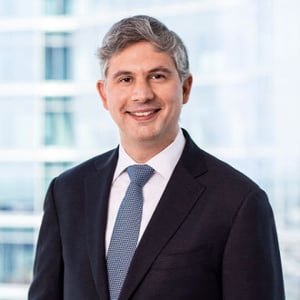
Partner, Keller Postman
Ashley Keller is one of the founding Partners of Keller Postman LLC. An experienced trial and appellate lawyer, Ashley helps set strategic direction across virtually all of the firm’s cases. He represents clients in a wide variety of practice areas and types of claims, including product-liability, antitrust, class action, and arbitration matters.
Ashley is one of the leaders of Keller Postman’s national product-liability practice. He leverages his ability to detangle complex concepts and develop novel legal theories to support individual client matters and as counsel on numerous product-liability multidistrict litigation matters. He chairs the plaintiffs’ Law & Briefing Committee in the Zantac (Ranitidine) Product Liability MDL in the U.S. District Court for the Southern District of Florida.
Ashley also litigates complex antitrust and class action matters. Among his notable cases, Ashley represents numerous States in antitrust litigation against Google for monopolizing products and services used by advertisers and publishers in online-display advertising.
Ashley also has played a central role in developing the firm’s pioneering arbitration practice, which includes pursuing individual arbitrations for clients whose claims are subject to arbitration clauses with class-action waivers. In part through managing the complexity of pursuing these individual claims simultaneously, the firm has secured millions in settlements for more than 500,000 employees and consumers.
Before launching Keller Postman, Ashley co-founded the litigation finance firm Gerchen Keller Capital, which grew to more than $1.3 billion in assets under management and was the world’s largest private investment manager focused on legal and regulatory risk prior to being acquired by Burford Capital in 2016.
Previously, Ashley was a partner at Bartlit Beck Herman Palenchar & Scott LLP, The American Lawyer’s litigation boutique of the year. While there, he handled various trial and appellate matters involving multi-billion-dollar securities and patent cases, contract disputes, mass torts, and class actions.
Ashley also worked as an analyst at Alyeska Investment Group, a Chicago-based market-neutral hedge fund, where he focused on investments in companies facing litigation and other complicated regulatory matters.
Ashley was named a 2021 Plaintiffs’ Lawyers Trailblazer by the National Law Journal. He is also listed on Lawdragon’s 500 Leading Lawyers in America, Lawdragon’s 500 Leading Plaintiff Consumer Lawyers, Lawdragon’s Leading Plaintiff Financial Lawyers, National Trial Lawyers’ Top 100, and Illinois Super Lawyers.
Ashley was a law clerk for Justice Anthony M. Kennedy at the Supreme Court of the United States and Judge Richard Posner at the U.S. Court of Appeals for the Seventh Circuit. He graduated magna cum laude from Harvard College, received his M.B.A. from the University of Chicago Booth School of Business and received his J.D. from the University of Chicago Law School, where he graduated first in his class.

Fellow, Thurman Arnold Project, Yale University
Dina Srinivasan is a researcher, lawyer, and entrepreneur. She’s also a Fellow with the Thurman Arnold Project at Yale University.
Most recently, Ms. Srinivasan’s research and economic analysis of new, tech markets provided the foundation for government enforcement of antitrust laws against two of the largest market cap companies in the world. Her 2020 research, "Why Google Dominates Advertising Markets: Competition Policy Should Lean on the Principles of Financial Market Regulation", explains how Google distorts electronically traded ad markets by engaging in conduct that lawmakers normally prohibit (e.g., conduct analogous to insider trading and front running). Her research instigated a shift in the House and Senate and a coalition of U.S. States subsequently filed suit against the company relying on the architecture of Ms. Srinivasan’s thinking. "The Antitrust Case Against Facebook", published in 2019, laid out the correlation between privacy and economics. Congress called on the U.S. Federal Trade Commission to open an investigation; and in 2020, the Federal Trade Commission and a coalition of 48 Attorneys General filed actions against Facebook. She’s been profiled by The New York Times and The Wall Street Journal. Her research and commentary on tech and competition are regularly covered in the domestic and global media.
Previously, Ms. Srinivasan founded an ad technology company whose technology was acquired by a division of WPP, Kantar Media SRDS (NASDAQ). She spent four years as an executive at WPP. In the late 1990s, she founded iMSGu, a text messaging platform that allowed users to send messages across different mobile spectrum networks (CDMA, TDMA, GSM); the company folded in 2002. Ms. Srinivasan holds a J.D. from Yale Law School, where she studied law & economics and was an Olin Fellow with the Kauffman Program in Law, Economics and Entrepreneurship. She lives in the Bay Area with her husband and their four children.
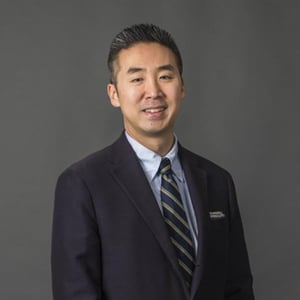
Associate Professor of Law and Director of Economic Education at the Global Antitrust Institute, George Mason University Antonin Scalia Law School
John M. Yun is an Associate Professor of Law at the Antonin Scalia Law School, George Mason University, and the Director of Economic Education at the Global Antitrust Institute (GAI). Prior to joining Scalia Law, he was an Acting Deputy Assistant Director in the Bureau of Economics, Antitrust Division, at the U.S. Federal Trade Commission (FTC). He has also taught economics at Georgetown University, Emory University, and Georgia Tech. He received his BA in economics at UCLA and his PhD in economics at Emory University.

Panel 2: What Does the CFPB's Future Hold?
Christopher L. Peterson, Nanci L. Weissgold, Todd J. Zywicki, Brian C. Johnson
On July 19, 2021, the Federalist Society's Financial Services and E-Commerce Practice Group sponsored an...
Small Group Discussion with Prof. Joshua Wright on The Antitrust Paradox
DC Young Lawyers Chapter
Washington, DCPanel 2: What Does the CFPB's Future Hold?
The CFPB Turns 10: Evaluating America’s Youngest Federal Financial Regulator
Deep Dive Episode 189 – A Dawning Era for Vertical Mergers? The New Vertical Merger Guidelines, Illumina/Grail, and More
Steve Cernak, Michael Kades, Bruce Kobayashi, Thomas Lambert, Taylor Owings, Elyse Dorsey
The antitrust agencies’ approach to vertical mergers has been the subject of significant debate —...
Cancel Culture Comes to Bank: Should Banks Be Allowed to Cancel Individuals and Industries Based on their Political or Religious Beliefs?
John A. Allison, Daniel Wheeler, Todd J. Zywicki
Bank accounts provide access not only to credit but basic banking and payment services, such...
Cancel Culture Comes to Bank: Should Banks Be Allowed to Cancel Individuals and Industries Based on their Political or Religious Beliefs?
John A. Allison, Todd J. Zywicki, Daniel Wheeler
Bank accounts provide access not only to credit but basic banking and payment services, such...
A Dawning Era for Vertical Mergers?: The New Vertical Merger Guidelines, the FTC's Challenge to Illumina/Grail, and the Future of Enforcement
A Regulatory Transparency Project Webinar
A Dawning Era for Vertical Mergers?: The New Vertical Merger Guidelines, the FTC's Challenge to Illumina/Grail, and the Future of Enforcement
Steve Cernak, Elyse Dorsey, Michael Kades, Bruce Kobayashi, Thomas Lambert, Taylor Owings
The antitrust agencies’ approach to vertical mergers has been the subject of significant debate —...
Topics
Legal Scholars Castigate the American Bar Association’s Proposed Diversity Standards
Several prominent legal scholars have recently weighed in against the American Bar Association’s pending proposal...
Tech Giants, Antitrust, and Public Discourse
Freedom of Thought Six-Part Zoom Webinar Series: Part 4
Teleforum