
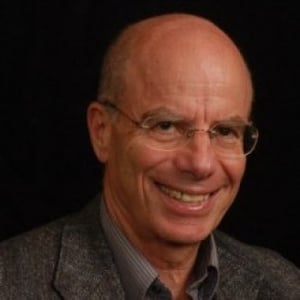
Professor of International Relations, Stanford University
Stephen D. Krasner is the Graham H. Stuart Professor of International Relations at Stanford, and a Senior Fellow at the Freeman Spogli Institute, the Hoover Institution, and at SIEPR.
From February 2005 to April 2007 he was Director of the Policy Planning Staff at the Department of State. In 2002 he served as Director for Governance and Development at the National Security Council. He is a member of the Board of Directors of the United States Institute of Peace, and was a member of the Foreign Policy Advisory Board of the Department of State from 2012 to 2014. He received his B.A. from Cornell in 1963, M.A. from Columbia in 1967, and Ph.D. from Harvard in 1972.
Before coming to Stanford in 1981 he taught at Harvard and UCLA. He was the Chair of the Political Science Department from 1984 until 1991, Senior Associate Dean for the Social Sciences from 2010-2013, and Deputy Director of the Freeman Spogli Institute from 2007 to 2013. He edited International Organization from 1986 to 1992. His writings have dealt primarily with the political determinants of international economic relations, American foreign policy, and sovereignty. He is currently investigating the impact of external actors on domestic authority structures in weak states.
He was a fellow at the Center for Advanced Studies in the Behavioral Science in 1987-88 and at the Wissenschaftskolleg zu Berlin 2000-2001. He has been a Marcator Fellow at the Free University Berlin since 2014. Professor Krasner is a Fellow of the American Academy of Arts and Sciences and a Member of the Council on Foreign Relations.
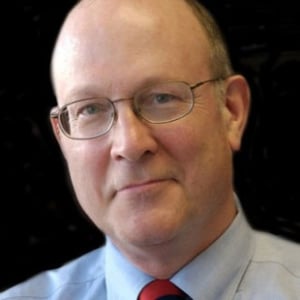
Professor Emeritus of Law, Antonin Scalia Law School, George Mason University
Jeremy A. Rabkin is a Professor Emeritus of Law at the Antonin Scalia Law School, George Mason University. Before joining the faculty in June 2007, he was for over two decades a professor in the Department of Government at Cornell University. Professor Rabkin serves on the board of directors of the Center for Individual Rights, a public interest law firm based in Washington, D.C. Previously he was a board member of the U.S. Institute of Peace and the board of academic advisors of the American Enterprise Institute.
Professor Rabkin’s books include Law Without Nations? (Princeton University Press, 2005). He authored “If You Need a Friend, Don’t Call a Cosmopolitan,” a chapter in Varieties of Sovereignty and Citizenship (Sigal R. Ben-Porath & Rogers M. Smith eds., University of Pennsylvania Press, 2012). His articles have appeared in major law reviews and political science journals and his journalistic contributions in a range of magazines and newspapers, including the Washington Post and the Wall Street Journal.
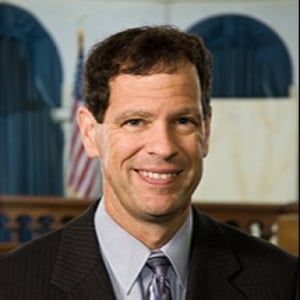
Warren Distinguished Professor of Law, University of San Diego School of Law
Michael D. Ramsey is Warren Distinguished Professor of Law at the University of San Diego School of Law, where he teaches and writes in the areas of Constitutional Law, Foreign Relations Law and International Law. He is the author of The Constitution’s Text in Foreign Affairs (Harvard University Press), co-editor of International Law in the U.S. Supreme Court: Continuity and Change (Cambridge University Press), and co-author of two casebooks, Transnational Law and Practice (2d ed., Aspen) and International Business Transactions: A Problem-Oriented Coursebook (14th ed., West). His scholarly articles have appeared in publications such as the Yale Law Journal, the University of Chicago Law Review, the Georgetown Law Journal and the American Journal of International Law. He received his B.A. magna cum laude from Dartmouth College and his J.D. summa cum laude from Stanford Law School. Prior to teaching, he served as a judicial clerk for Judge J. Clifford Wallace of the United States Court of Appeals for the Ninth Circuit and for Justice Antonin Scalia of the United States Supreme Court, and practiced law with the law firm of Latham & Watkins, where he specialized in international finance and investment. He has taught as a visiting professor at the University of California, San Diego, in the Department of Political Science and at the University of Paris – Sorbonne, in the Department of Comparative Law.
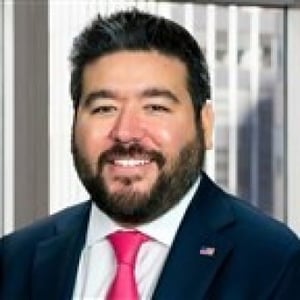
Counsel, Latham & Watkins LLP
Joshua Wu, former Deputy Assistant Attorney General (DAAG) for Appellate and Review in the Tax Division of the US Department of Justice (DOJ), counsels and advocates for companies and high net worth individuals on all aspects of tax controversies and litigation.
Mr. Wu advises on issues ranging from tax accounting disputes, to corporate and partnership transactional issues, international questions, employee benefits matters, and tax exempt controversies. He brings a unique knowledge base and skillset to his clients, drawing on his experience both in senior leadership roles in the DOJ’s Tax Division and in private practice.
Most recently, when Mr. Wu served as DAAG, he oversaw virtually all appeals in civil federal tax cases throughout the country and managed a 40-lawyer team. He also represented the United States in appellate oral arguments, evaluated and approved significant civil settlement offers, and furnished advice to the Tax Division’s trial sections in complex tax cases.
Mr. Wu previously served as DAAG for Policy and Planning, where he led the Office of Management and Administration (OMA) at DOJ. In that role, he led the operational functions of the Tax Division, and led the Office of Legislation and Policy, which works with the Department of Treasury, the IRS, and other agencies on legislative, regulatory, and policy initiatives. Prior to his government service, Mr. Wu was a partner at a large international law firm. He also worked as an associate at Latham.
Levin, Mabie & Levin Professor of Law, University of Florida Levin College of Law
Professor Gary Lawson joined the University of Florida Levin College of Law faculty on July 1, 2024, after twenty-four years at Boston University School of Law and eleven years at Northwestern University School of Law. While at Boston University, he was named a William Fairfield Warren Distinguished Professor in 2022 – the highest faculty honor within the university. He has authored or co-authored nine editions of a textbook on administrative law, a textbook on constitutional law, five university press books, one popular press book, and more than one hundred scholarly articles on topics ranging from aspects of constitutional theory and history to the proof of legal propositions. His works have been cited in more than twenty opinions of United States Supreme Court justices. He is a founding member, and serves on the Board of Directors, of the Federalist Society for Law and Public Policy Studies and is on the Editorial Advisory Board of the Heritage Guide to the Constitution.
Associate Dean for Academic Affairs, Austin E. Owen Research Scholar & Professor of Law, The University of Richmond School of Law
Dean Kristen Jakobsen Osenga teaches and writes in the areas of patent law, antitrust, and legislation and regulation. Some of her recent scholarship focuses on standard development organizations, patent eligible subject matter, patent licensing firms, litigation and remedies for patent infringement, and patent law reform. She has written numerous law review articles on these and other topics, as well as book chapters and op eds on various aspects of patent law. Additionally, she has spoken on these issues at many academic conferences and bar events. Dean Osenga is Chief Policy Counselor for the Inventors Defense Alliance, as well as an active member of the Federal Circuit Bar Association and the American Intellectual Property Law Association.
Dean Osenga received a B.S. degree in Biomedical Engineering from the University of Iowa, an M.S. degree in Electrical Engineering from Southern Illinois University – Carbondale, and a J.D. from the University of Illinois College of Law, where she graduated magna cum laude. After law school, she practiced at the law firm of Finnegan, Henderson, Farabow, Garrett, & Dunner LLP, (now Finnegan) where she did patent prosecution and litigation. She then clerked for the Judge Richard Linn of the U.S. Court of Appeals for the Federal Circuit. After clerking, she entered academia, teaching first at Chicago-Kent College of Law and then at the University of Richmond, where she has been since 2006. She has also been a Visiting Professor at Emory University School of Law and at William & Mary School of Law.
General Counsel, Unified Patents
Mr. Stroud manages Unified Patents' legal and corporate work, with a focus on Patent Trial and Appeal Board (PTAB), district court, and appellate litigation, contracting, general corporate matters, and settlement negotiations. He regularly teaches, speaks, and writes about patent and administrative law.
Previously, Mr. Stroud was a patent attorney at Finnegan, Henderson, Farabow, Garrett and Dunner LLP, where he was involved in some of the earliest post-grant review work. Before that, he examined patents on implantable medical devices at the U.S. Patent and Trademark Office (USPTO).
Mr. Stroud has been published in the the Columbia Science and Technology Law Review, the Administrative Law Review, the South Carolina Law Review, the American University Law Review, and the New Mexico Law Review, among others. Two of his articles have been selected as a "best IP article" by Thomson West, in 2014 and 2020, respectively.
Judge, U.S. Court of Appeals for the Third Circuit
Hon. Jennifer Mascott served as Associate Professor of Law and Director of the Separation of Powers Institute at The Catholic University of America’s Columbus School of Law before her appointment to the federal bench. On July 16, 2025, President Donald J. Trump nominated her to the U.S. Court of Appeals for the Third Circuit (Delaware), and she was confirmed on October 9, 2025.
Prior to her confirmation, Judge Mascott wrote extensively in administrative and constitutional law, statutory interpretation, and the separation of powers. Her scholarship—published in leading journals including the Stanford Law Review, Notre Dame Law Review, and Supreme Court Review—was cited by the U.S. Supreme Court and multiple federal courts. She also contributed Supreme Court commentary for NBC Universal.
Before joining Catholic Law, she was an Assistant Professor and Co-Director of The C. Boyden Gray Center at George Mason University’s Antonin Scalia Law School. In 2022 she became co-author of Beermann, Cass & Diver’s Administrative Law: Cases and Materials (9th ed.). In 2023 she received the Justice Joseph Story Award for excellence in scholarship, teaching, and advancing the rule of law.
Judge Mascott also served as a Council Member of the ABA’s Administrative Law Section and as a Public Member of the Administrative Conference of the United States. She frequently testified before Congress on executive power, regulatory reform, and judicial jurisdiction, and participated in multiple Supreme Court confirmation hearings.
From 2019 to 2021, she took leave from academia to serve as Deputy Assistant Attorney General in the Department of Justice’s Office of Legal Counsel and later as Associate Deputy Attorney General, where she argued federal cases and assisted with Justice Amy Coney Barrett’s confirmation. Earlier in her career, she clerked for Justice Clarence Thomas and for then-Judge Brett M. Kavanaugh on the D.C. Circuit.
Judge Mascott earned her J.D. summa cum laude from the George Washington University Law School and her B.A. from the same institution.
Levin, Mabie & Levin Professor of Law, University of Florida Levin College of Law
Professor Gary Lawson joined the University of Florida Levin College of Law faculty on July 1, 2024, after twenty-four years at Boston University School of Law and eleven years at Northwestern University School of Law. While at Boston University, he was named a William Fairfield Warren Distinguished Professor in 2022 – the highest faculty honor within the university. He has authored or co-authored nine editions of a textbook on administrative law, a textbook on constitutional law, five university press books, one popular press book, and more than one hundred scholarly articles on topics ranging from aspects of constitutional theory and history to the proof of legal propositions. His works have been cited in more than twenty opinions of United States Supreme Court justices. He is a founding member, and serves on the Board of Directors, of the Federalist Society for Law and Public Policy Studies and is on the Editorial Advisory Board of the Heritage Guide to the Constitution.
Judge, U.S. Court of Appeals for the Third Circuit
Hon. Jennifer Mascott served as Associate Professor of Law and Director of the Separation of Powers Institute at The Catholic University of America’s Columbus School of Law before her appointment to the federal bench. On July 16, 2025, President Donald J. Trump nominated her to the U.S. Court of Appeals for the Third Circuit (Delaware), and she was confirmed on October 9, 2025.
Prior to her confirmation, Judge Mascott wrote extensively in administrative and constitutional law, statutory interpretation, and the separation of powers. Her scholarship—published in leading journals including the Stanford Law Review, Notre Dame Law Review, and Supreme Court Review—was cited by the U.S. Supreme Court and multiple federal courts. She also contributed Supreme Court commentary for NBC Universal.
Before joining Catholic Law, she was an Assistant Professor and Co-Director of The C. Boyden Gray Center at George Mason University’s Antonin Scalia Law School. In 2022 she became co-author of Beermann, Cass & Diver’s Administrative Law: Cases and Materials (9th ed.). In 2023 she received the Justice Joseph Story Award for excellence in scholarship, teaching, and advancing the rule of law.
Judge Mascott also served as a Council Member of the ABA’s Administrative Law Section and as a Public Member of the Administrative Conference of the United States. She frequently testified before Congress on executive power, regulatory reform, and judicial jurisdiction, and participated in multiple Supreme Court confirmation hearings.
From 2019 to 2021, she took leave from academia to serve as Deputy Assistant Attorney General in the Department of Justice’s Office of Legal Counsel and later as Associate Deputy Attorney General, where she argued federal cases and assisted with Justice Amy Coney Barrett’s confirmation. Earlier in her career, she clerked for Justice Clarence Thomas and for then-Judge Brett M. Kavanaugh on the D.C. Circuit.
Judge Mascott earned her J.D. summa cum laude from the George Washington University Law School and her B.A. from the same institution.
Associate Dean for Academic Affairs, Austin E. Owen Research Scholar & Professor of Law, The University of Richmond School of Law
Dean Kristen Jakobsen Osenga teaches and writes in the areas of patent law, antitrust, and legislation and regulation. Some of her recent scholarship focuses on standard development organizations, patent eligible subject matter, patent licensing firms, litigation and remedies for patent infringement, and patent law reform. She has written numerous law review articles on these and other topics, as well as book chapters and op eds on various aspects of patent law. Additionally, she has spoken on these issues at many academic conferences and bar events. Dean Osenga is Chief Policy Counselor for the Inventors Defense Alliance, as well as an active member of the Federal Circuit Bar Association and the American Intellectual Property Law Association.
Dean Osenga received a B.S. degree in Biomedical Engineering from the University of Iowa, an M.S. degree in Electrical Engineering from Southern Illinois University – Carbondale, and a J.D. from the University of Illinois College of Law, where she graduated magna cum laude. After law school, she practiced at the law firm of Finnegan, Henderson, Farabow, Garrett, & Dunner LLP, (now Finnegan) where she did patent prosecution and litigation. She then clerked for the Judge Richard Linn of the U.S. Court of Appeals for the Federal Circuit. After clerking, she entered academia, teaching first at Chicago-Kent College of Law and then at the University of Richmond, where she has been since 2006. She has also been a Visiting Professor at Emory University School of Law and at William & Mary School of Law.
General Counsel, Unified Patents
Mr. Stroud manages Unified Patents' legal and corporate work, with a focus on Patent Trial and Appeal Board (PTAB), district court, and appellate litigation, contracting, general corporate matters, and settlement negotiations. He regularly teaches, speaks, and writes about patent and administrative law.
Previously, Mr. Stroud was a patent attorney at Finnegan, Henderson, Farabow, Garrett and Dunner LLP, where he was involved in some of the earliest post-grant review work. Before that, he examined patents on implantable medical devices at the U.S. Patent and Trademark Office (USPTO).
Mr. Stroud has been published in the the Columbia Science and Technology Law Review, the Administrative Law Review, the South Carolina Law Review, the American University Law Review, and the New Mexico Law Review, among others. Two of his articles have been selected as a "best IP article" by Thomson West, in 2014 and 2020, respectively.
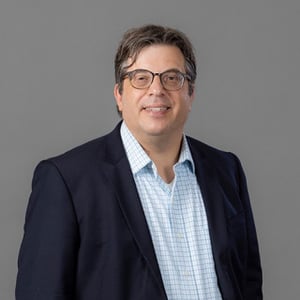
University Professor of Law and Executive Director, Liberty & Law Center, Antonin Scalia Law School, George Mason University
David Bernstein holds a University Professorship chair at the Antonin Scalia Law School, where he has been teaching since 1995. He has also been a visiting professor at the University of Michigan, Georgetown University, William & Mary, Brooklyn Law School, the University of Turin, and Hebrew University. Professor Bernstein teaches Constitutional Law, Evidence, and Products Liability.
A prolific author, Professor Bernstein often challenges the conventional wisdom with prodigious research and sharp, original analysis. He is the author of five books, and coauthor of two more. Professor Bernstein’s book Rehabilitating Lochner was praised across the political spectrum as “intellectual history in its highest form,” a “fresh perspective and a cogent analysis,” “delightful and informative,” “sharp and iconoclastic,” and “a terrific work of historical revisionism.” Columnist George Will praised Bernstein’s most recent book, Classified, The Untold Story of Racial Classification in America, as “perhaps the most consequential American book of 2022.”
Professor Bernstein has also written dozens of articles and essays published in major law reviews, including the California Law Review, Columbia Law Review, Michigan Law Review, and Yale Law Journal. An article he coauthored, Defending Daubert: It’s Time to Amend Federal Rule of Evidence 702, directly inspired a pending amendment to Rule 702.
Professor Bernstein blogs at the Instapundit.com, the Times of Israel, and the Volokh Conspiracy. He is a graduate of the Yale Law School, where he was senior editor of the Yale Law Journal and a John M. Olin Fellow in Law, Economics, and Public Policy.
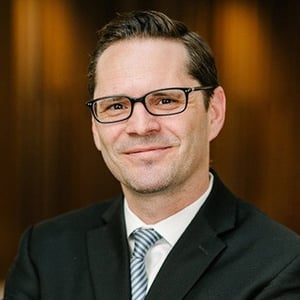
John J. Flynn Endowed Professor of Law, University of Utah S.J. Quinney College of Law
Christopher Peterson is the John J. Flynn Endowed Professor of Law at the University of Utah's S.J. Quinney College of Law. He previously served as a Special Advisor in the Office of the Director at the United States Consumer Financial Protection Bureau, as a Special Advisor in the Office of Legal Policy for Personnel and Readiness in the United States Department of Defense, and as Senior Counsel for Enforcement Policy and Strategy in the Consumer Financial Protection Bureau's Office of Enforcement. Professor Peterson has written dozens of scholarly articles and published three books on consumer finance. He has frequently testified in Congressional hearings and has presented his research to the Federal Deposit Insurance Corporation, the Federal Reserve Board of Governors, and at the White House in both Democratic and Republican administrations. He is a fellow of the American College of Consumer Financial Services Lawyers, the American Bar Association's Consumer Financial Services Committee, and serves on the community advisory board of the American Fintech Council. Professor Peterson is a recipient of the National Association of Consumer Agency Administrators’ Consumer Advocate of the Year award and the Pentagon’s Office of the Secretary of Defense Award for Excellence.
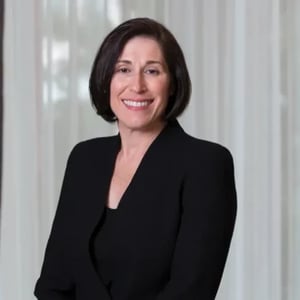
Partner, Alston & Bird
Nanci Weissgold is a co-leader of both Alston & Bird's Financial Services & Products Group and the firm’s Consumer Financial Services Team. As an acknowledged authority in her field, Nanci maintains a national practice on matters relating to consumer financial products and services and represent clients (including residential mortgage servicers, as well banks, non-bank consumer lenders, technology providers for the consumer financial services industry, AMC’s, and investors) in federal and state regulatory, supervisory, and enforcement matters. Nanci acts as regulatory counsel in connection with investments or acquisitions and perform compliance due diligence. Nanci is frequently called upon to provide litigation support and assist in the development of compliance management systems.
Nanci is a frequent speaker and presenter at legal and industry conferences and webinars, and has published numerous articles on mortgage banking, valuation, and consumer finance related topics. She served as articles editor of the Administrative Law Journal at American University. Nanci is a Fellow of the American College of Consumer Financial Services Lawyers and serves on the nominating committee for the Board of Regents. She is peer rated in the Martindale-Hubbell® directory as AV Preeminent®, the highest level of professional excellence. Nanci is nationally ranked by Chambers USA in Financial Services Regulation: Consumer Finance (Compliance), and in 2018, she was honored by the Burton Awards as a recipient of a “Law360 Distinguished Legal Writing Award.”
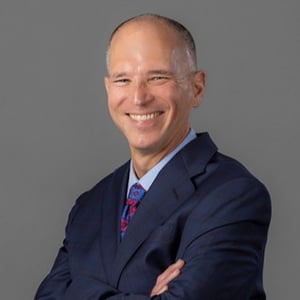
George Mason University Foundation Professor of Law, Antonin Scalia Law School, George Mason University
TODD J. ZYWICKI is George Mason University Foundation Professor of Law at Antonin Scalia Law School at George Mason University and Research Fellow of the George Mason Law and Economics Center. During the Fall 2023 semester he served as the Visiting Scholar in Conservative Thought and Policy for the Bruce Benson Center for the Study of Western Civilization at the University of Colorado-Boulder. From 2020-2021 he was Chair of the Consumer Financial Protection Bureau Taskforce on Federal Consumer Financial Law. In 2021 he was inducted to the American College of Consumer Financial Services Lawyers. He is also a Senior Fellow of the F.A. Hayek Program for the Advanced Study of Politics, Philosophy, and Economics at George Mason University and a former Senior Fellow of the Cato Institute. From 2015-2017 he was Executive Director of the George Mason Law and Economics Center. He served as Co-Editor of the Supreme Court Economic Review from 2006-2017. From 2003-2004, Professor Zywicki served as the Director of the Office of Policy Planning at the Federal Trade Commission. He has also taught at Vanderbilt University Law School, Georgetown University Law Center, Boston College Law School, Mississippi College School of Law, and China University of Political Science and Law.
Professor Zywicki clerked for Judge Jerry E. Smith of the U.S. Court of Appeals for the Fifth Circuit and worked as an associate at Alston & Bird in Atlanta, Georgia, where he practiced bankruptcy and commercial law. He received his J.D. from the University of Virginia, where he was executive editor of the Virginia Tax Review and John M. Olin Scholar in Law and Economics. Professor Zywicki also received an M.A. in Economics from Clemson University and an A.B. cum Laude with high honors in his major from Dartmouth College.
Professor Zywicki is also a Lone Mountain Fellow of the Property and Environment Research Center, a Fellow of the International Centre for Economic Research in Turin, Italy, and a former Senior Fellow of the Goldwater Institute. During the Fall 2008 Semester Professor Zywicki was the Searle Fellow of the George Mason University School of Law and was a 2008-09 W. Glenn Campbell and Rita Ricardo-Campbell National Fellow and the Arch W. Shaw National Fellow at the Hoover Institution on War, Revolution and Peace. He has lectured and consulted with government officials around the world, including Iceland, Italy, Japan, and Guatemala. In 2006 Professor Zywicki served as a Member of the United States Department of Justice Study Group on “Identifying Fraud, Abuse and Errors in the United States Bankruptcy System.”
Professor Zywicki is the author of more than 130 articles in leading law reviews and peer-reviewed economics journals. He is one of the Top 10 most-cited law professors in the field of Commercial Law and one of the Top 25 law professors on Twitter as measured by engagement levels. He is one of the Top 50 Most Downloaded Law Authors at the Social Science Research Network. He has testified multiple times before Congress on issues of consumer bankruptcy law and consumer credit and is a frequent commentator on legal issues in the print and broadcast media, including the Wall Street Journal, New York Times, The Washington Post, The Washington Times, Nightline, The Newshour with Jim Lehrer, Neil Cavuto Show, Fox & Friends, Smerconish, Fox News @ Night with Shannon Bream, Fox Business, CNN, CNBC, Bloomberg News, BBC, The Diane Rehm Show, Lou Dobbs Show, Jerry Doyle Show, and The Laura Ingraham Show.
Professor Zywicki is former Chairman and a current member of the Board of Directors of the Competitive Enterprise Institute, and is a member of the Board of Directors of the Institute for Humane Studies, Bill of Rights Institute, the Executive Committee for the Federalist Society's Financial Institutions and E-Commerce Practice Group, the Board of Trustees of the Foundation for Research on Economics and the Environment. He formerly served on the Governing Board and the Advisory Council for the Financial Services Research Program at George Washington University School of Business. He is currently the Chair of the Academic Advisory Council for the following organizations: The Bill of Rights Institute, the film “We the People in IMAX,” and the McCormick-Tribune Foundation “Freedom Museum” in Chicago, Illinois. He is a member of the Board of Visitors of Ralston College and was a member of the Board of Trustees of Yorktown University. From 2005-2009 he served as an elected Alumni Trustee of the Dartmouth College Board of Trustees.
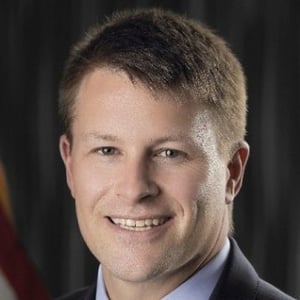
Managing Director, Banking Supervision and Regulation Group, Patomak Global Partners
Brian Johnson is Managing Director in the Banking Supervision and Regulation Group at Patomak Global Partners.
In this role, Mr. Johnson spearheads projects related to the regulation of consumer financial products under Keith Noreika, Executive Vice President and Chairman of the Banking Supervision and Regulation Group and former acting Comptroller of the Currency.
Prior to joining Patomak, Mr. Johnson was a partner in Alston & Bird LLP’s financial services and products group. There, he advised financial institutions on consumer finance regulatory issues relating to product compliance, examination, enforcement investigations, and compliance management systems, and on strategic engagement with independent federal regulatory agencies and with Congress.
Mr. Johnson previously served as Deputy Director of the Consumer Financial Protection Bureau (CFPB), where he oversaw the agency’s rulemaking, supervision, and enforcement activities. He conceived and led the creation of high-profile agency initiatives, including the Office of Innovation, Taskforce on Federal Consumer Financial Law, policy symposia series, and Start Small, Save Up emergency savings program. He also served as the CFPB representative to the Financial Stability Oversight Council Deputies’ Committee and advised on interagency matters involving the Federal Deposit Insurance Corporation and the Federal Financial Institutions Examination Council.
Mr. Johnson held various positions on Capitol Hill, including policy director and chief financial institutions counsel on the House Committee on Financial Services, where his portfolio covered consumer protection and credit, mortgage origination, credit reporting, banking, and data security. His efforts on the committee involved drafting legislation to provide regulatory relief to bank, credit union, and nondepository financial institutions, as well as conducting oversight of the activities of the CFPB, Financial Stability Oversight Council, Federal Deposit Insurance Corporation, Office of Financial Research, Office of the Comptroller of the Currency, Federal Reserve System, and National Credit Union Administration.
Mr. Johnson received his juris doctorate from the University of Virginia School of Law and his bachelor’s in economics from the University of Virginia.
Professor of International Relations, Stanford University
Stephen D. Krasner is the Graham H. Stuart Professor of International Relations at Stanford, and a Senior Fellow at the Freeman Spogli Institute, the Hoover Institution, and at SIEPR.
From February 2005 to April 2007 he was Director of the Policy Planning Staff at the Department of State. In 2002 he served as Director for Governance and Development at the National Security Council. He is a member of the Board of Directors of the United States Institute of Peace, and was a member of the Foreign Policy Advisory Board of the Department of State from 2012 to 2014. He received his B.A. from Cornell in 1963, M.A. from Columbia in 1967, and Ph.D. from Harvard in 1972.
Before coming to Stanford in 1981 he taught at Harvard and UCLA. He was the Chair of the Political Science Department from 1984 until 1991, Senior Associate Dean for the Social Sciences from 2010-2013, and Deputy Director of the Freeman Spogli Institute from 2007 to 2013. He edited International Organization from 1986 to 1992. His writings have dealt primarily with the political determinants of international economic relations, American foreign policy, and sovereignty. He is currently investigating the impact of external actors on domestic authority structures in weak states.
He was a fellow at the Center for Advanced Studies in the Behavioral Science in 1987-88 and at the Wissenschaftskolleg zu Berlin 2000-2001. He has been a Marcator Fellow at the Free University Berlin since 2014. Professor Krasner is a Fellow of the American Academy of Arts and Sciences and a Member of the Council on Foreign Relations.
Professor Emeritus of Law, Antonin Scalia Law School, George Mason University
Jeremy A. Rabkin is a Professor Emeritus of Law at the Antonin Scalia Law School, George Mason University. Before joining the faculty in June 2007, he was for over two decades a professor in the Department of Government at Cornell University. Professor Rabkin serves on the board of directors of the Center for Individual Rights, a public interest law firm based in Washington, D.C. Previously he was a board member of the U.S. Institute of Peace and the board of academic advisors of the American Enterprise Institute.
Professor Rabkin’s books include Law Without Nations? (Princeton University Press, 2005). He authored “If You Need a Friend, Don’t Call a Cosmopolitan,” a chapter in Varieties of Sovereignty and Citizenship (Sigal R. Ben-Porath & Rogers M. Smith eds., University of Pennsylvania Press, 2012). His articles have appeared in major law reviews and political science journals and his journalistic contributions in a range of magazines and newspapers, including the Washington Post and the Wall Street Journal.
Warren Distinguished Professor of Law, University of San Diego School of Law
Michael D. Ramsey is Warren Distinguished Professor of Law at the University of San Diego School of Law, where he teaches and writes in the areas of Constitutional Law, Foreign Relations Law and International Law. He is the author of The Constitution’s Text in Foreign Affairs (Harvard University Press), co-editor of International Law in the U.S. Supreme Court: Continuity and Change (Cambridge University Press), and co-author of two casebooks, Transnational Law and Practice (2d ed., Aspen) and International Business Transactions: A Problem-Oriented Coursebook (14th ed., West). His scholarly articles have appeared in publications such as the Yale Law Journal, the University of Chicago Law Review, the Georgetown Law Journal and the American Journal of International Law. He received his B.A. magna cum laude from Dartmouth College and his J.D. summa cum laude from Stanford Law School. Prior to teaching, he served as a judicial clerk for Judge J. Clifford Wallace of the United States Court of Appeals for the Ninth Circuit and for Justice Antonin Scalia of the United States Supreme Court, and practiced law with the law firm of Latham & Watkins, where he specialized in international finance and investment. He has taught as a visiting professor at the University of California, San Diego, in the Department of Political Science and at the University of Paris – Sorbonne, in the Department of Comparative Law.
Counsel, Latham & Watkins LLP
Joshua Wu, former Deputy Assistant Attorney General (DAAG) for Appellate and Review in the Tax Division of the US Department of Justice (DOJ), counsels and advocates for companies and high net worth individuals on all aspects of tax controversies and litigation.
Mr. Wu advises on issues ranging from tax accounting disputes, to corporate and partnership transactional issues, international questions, employee benefits matters, and tax exempt controversies. He brings a unique knowledge base and skillset to his clients, drawing on his experience both in senior leadership roles in the DOJ’s Tax Division and in private practice.
Most recently, when Mr. Wu served as DAAG, he oversaw virtually all appeals in civil federal tax cases throughout the country and managed a 40-lawyer team. He also represented the United States in appellate oral arguments, evaluated and approved significant civil settlement offers, and furnished advice to the Tax Division’s trial sections in complex tax cases.
Mr. Wu previously served as DAAG for Policy and Planning, where he led the Office of Management and Administration (OMA) at DOJ. In that role, he led the operational functions of the Tax Division, and led the Office of Legislation and Policy, which works with the Department of Treasury, the IRS, and other agencies on legislative, regulatory, and policy initiatives. Prior to his government service, Mr. Wu was a partner at a large international law firm. He also worked as an associate at Latham.
George Mason University Foundation Professor of Law, Antonin Scalia Law School, George Mason University
TODD J. ZYWICKI is George Mason University Foundation Professor of Law at Antonin Scalia Law School at George Mason University and Research Fellow of the George Mason Law and Economics Center. During the Fall 2023 semester he served as the Visiting Scholar in Conservative Thought and Policy for the Bruce Benson Center for the Study of Western Civilization at the University of Colorado-Boulder. From 2020-2021 he was Chair of the Consumer Financial Protection Bureau Taskforce on Federal Consumer Financial Law. In 2021 he was inducted to the American College of Consumer Financial Services Lawyers. He is also a Senior Fellow of the F.A. Hayek Program for the Advanced Study of Politics, Philosophy, and Economics at George Mason University and a former Senior Fellow of the Cato Institute. From 2015-2017 he was Executive Director of the George Mason Law and Economics Center. He served as Co-Editor of the Supreme Court Economic Review from 2006-2017. From 2003-2004, Professor Zywicki served as the Director of the Office of Policy Planning at the Federal Trade Commission. He has also taught at Vanderbilt University Law School, Georgetown University Law Center, Boston College Law School, Mississippi College School of Law, and China University of Political Science and Law.
Professor Zywicki clerked for Judge Jerry E. Smith of the U.S. Court of Appeals for the Fifth Circuit and worked as an associate at Alston & Bird in Atlanta, Georgia, where he practiced bankruptcy and commercial law. He received his J.D. from the University of Virginia, where he was executive editor of the Virginia Tax Review and John M. Olin Scholar in Law and Economics. Professor Zywicki also received an M.A. in Economics from Clemson University and an A.B. cum Laude with high honors in his major from Dartmouth College.
Professor Zywicki is also a Lone Mountain Fellow of the Property and Environment Research Center, a Fellow of the International Centre for Economic Research in Turin, Italy, and a former Senior Fellow of the Goldwater Institute. During the Fall 2008 Semester Professor Zywicki was the Searle Fellow of the George Mason University School of Law and was a 2008-09 W. Glenn Campbell and Rita Ricardo-Campbell National Fellow and the Arch W. Shaw National Fellow at the Hoover Institution on War, Revolution and Peace. He has lectured and consulted with government officials around the world, including Iceland, Italy, Japan, and Guatemala. In 2006 Professor Zywicki served as a Member of the United States Department of Justice Study Group on “Identifying Fraud, Abuse and Errors in the United States Bankruptcy System.”
Professor Zywicki is the author of more than 130 articles in leading law reviews and peer-reviewed economics journals. He is one of the Top 10 most-cited law professors in the field of Commercial Law and one of the Top 25 law professors on Twitter as measured by engagement levels. He is one of the Top 50 Most Downloaded Law Authors at the Social Science Research Network. He has testified multiple times before Congress on issues of consumer bankruptcy law and consumer credit and is a frequent commentator on legal issues in the print and broadcast media, including the Wall Street Journal, New York Times, The Washington Post, The Washington Times, Nightline, The Newshour with Jim Lehrer, Neil Cavuto Show, Fox & Friends, Smerconish, Fox News @ Night with Shannon Bream, Fox Business, CNN, CNBC, Bloomberg News, BBC, The Diane Rehm Show, Lou Dobbs Show, Jerry Doyle Show, and The Laura Ingraham Show.
Professor Zywicki is former Chairman and a current member of the Board of Directors of the Competitive Enterprise Institute, and is a member of the Board of Directors of the Institute for Humane Studies, Bill of Rights Institute, the Executive Committee for the Federalist Society's Financial Institutions and E-Commerce Practice Group, the Board of Trustees of the Foundation for Research on Economics and the Environment. He formerly served on the Governing Board and the Advisory Council for the Financial Services Research Program at George Washington University School of Business. He is currently the Chair of the Academic Advisory Council for the following organizations: The Bill of Rights Institute, the film “We the People in IMAX,” and the McCormick-Tribune Foundation “Freedom Museum” in Chicago, Illinois. He is a member of the Board of Visitors of Ralston College and was a member of the Board of Trustees of Yorktown University. From 2005-2009 he served as an elected Alumni Trustee of the Dartmouth College Board of Trustees.
Levin, Mabie & Levin Professor of Law, University of Florida Levin College of Law
Professor Gary Lawson joined the University of Florida Levin College of Law faculty on July 1, 2024, after twenty-four years at Boston University School of Law and eleven years at Northwestern University School of Law. While at Boston University, he was named a William Fairfield Warren Distinguished Professor in 2022 – the highest faculty honor within the university. He has authored or co-authored nine editions of a textbook on administrative law, a textbook on constitutional law, five university press books, one popular press book, and more than one hundred scholarly articles on topics ranging from aspects of constitutional theory and history to the proof of legal propositions. His works have been cited in more than twenty opinions of United States Supreme Court justices. He is a founding member, and serves on the Board of Directors, of the Federalist Society for Law and Public Policy Studies and is on the Editorial Advisory Board of the Heritage Guide to the Constitution.
Judge, U.S. Court of Appeals for the Third Circuit
Hon. Jennifer Mascott served as Associate Professor of Law and Director of the Separation of Powers Institute at The Catholic University of America’s Columbus School of Law before her appointment to the federal bench. On July 16, 2025, President Donald J. Trump nominated her to the U.S. Court of Appeals for the Third Circuit (Delaware), and she was confirmed on October 9, 2025.
Prior to her confirmation, Judge Mascott wrote extensively in administrative and constitutional law, statutory interpretation, and the separation of powers. Her scholarship—published in leading journals including the Stanford Law Review, Notre Dame Law Review, and Supreme Court Review—was cited by the U.S. Supreme Court and multiple federal courts. She also contributed Supreme Court commentary for NBC Universal.
Before joining Catholic Law, she was an Assistant Professor and Co-Director of The C. Boyden Gray Center at George Mason University’s Antonin Scalia Law School. In 2022 she became co-author of Beermann, Cass & Diver’s Administrative Law: Cases and Materials (9th ed.). In 2023 she received the Justice Joseph Story Award for excellence in scholarship, teaching, and advancing the rule of law.
Judge Mascott also served as a Council Member of the ABA’s Administrative Law Section and as a Public Member of the Administrative Conference of the United States. She frequently testified before Congress on executive power, regulatory reform, and judicial jurisdiction, and participated in multiple Supreme Court confirmation hearings.
From 2019 to 2021, she took leave from academia to serve as Deputy Assistant Attorney General in the Department of Justice’s Office of Legal Counsel and later as Associate Deputy Attorney General, where she argued federal cases and assisted with Justice Amy Coney Barrett’s confirmation. Earlier in her career, she clerked for Justice Clarence Thomas and for then-Judge Brett M. Kavanaugh on the D.C. Circuit.
Judge Mascott earned her J.D. summa cum laude from the George Washington University Law School and her B.A. from the same institution.
Associate Dean for Academic Affairs, Austin E. Owen Research Scholar & Professor of Law, The University of Richmond School of Law
Dean Kristen Jakobsen Osenga teaches and writes in the areas of patent law, antitrust, and legislation and regulation. Some of her recent scholarship focuses on standard development organizations, patent eligible subject matter, patent licensing firms, litigation and remedies for patent infringement, and patent law reform. She has written numerous law review articles on these and other topics, as well as book chapters and op eds on various aspects of patent law. Additionally, she has spoken on these issues at many academic conferences and bar events. Dean Osenga is Chief Policy Counselor for the Inventors Defense Alliance, as well as an active member of the Federal Circuit Bar Association and the American Intellectual Property Law Association.
Dean Osenga received a B.S. degree in Biomedical Engineering from the University of Iowa, an M.S. degree in Electrical Engineering from Southern Illinois University – Carbondale, and a J.D. from the University of Illinois College of Law, where she graduated magna cum laude. After law school, she practiced at the law firm of Finnegan, Henderson, Farabow, Garrett, & Dunner LLP, (now Finnegan) where she did patent prosecution and litigation. She then clerked for the Judge Richard Linn of the U.S. Court of Appeals for the Federal Circuit. After clerking, she entered academia, teaching first at Chicago-Kent College of Law and then at the University of Richmond, where she has been since 2006. She has also been a Visiting Professor at Emory University School of Law and at William & Mary School of Law.
General Counsel, Unified Patents
Mr. Stroud manages Unified Patents' legal and corporate work, with a focus on Patent Trial and Appeal Board (PTAB), district court, and appellate litigation, contracting, general corporate matters, and settlement negotiations. He regularly teaches, speaks, and writes about patent and administrative law.
Previously, Mr. Stroud was a patent attorney at Finnegan, Henderson, Farabow, Garrett and Dunner LLP, where he was involved in some of the earliest post-grant review work. Before that, he examined patents on implantable medical devices at the U.S. Patent and Trademark Office (USPTO).
Mr. Stroud has been published in the the Columbia Science and Technology Law Review, the Administrative Law Review, the South Carolina Law Review, the American University Law Review, and the New Mexico Law Review, among others. Two of his articles have been selected as a "best IP article" by Thomson West, in 2014 and 2020, respectively.

Taxation by International Consent?
Stephen Krasner, Jeremy A. Rabkin, Michael D. Ramsey, Joshua Wu
Finance ministers from leading industrial states have been trying, this summer, to work out an...
Topics
Harvard JLPP Celebrates Justice Thomas’s 30th Anniversary on SCOTUS, Launches Online Component
The Harvard Journal of Law & Public Policy has officially launched an online component: JLPP:...
Taxation by International Consent?
TeleforumCorporations and the Cancel Culture
Atlanta Lawyers Chapter
Atlanta, GADeep Dive Episode 193 – Arthrex: The End of Patent Exceptionalism in the Administrative State?
Gary Lawson, Kristen Osenga, Jonathan Stroud, Jenn L. Mascott
The decision in United States v. Arthrex was extremely fractured, with a mix of majority,...
Arthrex: The End of Patent Exceptionalism in the Administrative State?
A Regulatory Transparency Project Webinar
TeleforumArthrex: The End of Patent Exceptionalism in the Administrative State?
Gary Lawson, Jenn L. Mascott, Kristen Osenga, Jonathan Stroud
The decision in United States v. Arthrex was extremely fractured, with a mix of majority, concurring, and...
Topics
What’s the Purpose of the Corporation? The Revolutionary Business Roundtable Statement Two Years Later
Almost 51 years ago, on September 13, 1970, Milton Friedman published an essay in The...
Allgeyer v. Louisiana [SCOTUSbrief]
David Bernstein
While Allgeyer v. Louisiana is often regarded as the first Supreme Court decision to endorse...
Panel 2: What Does the CFPB's Future Hold?
Christopher L. Peterson, Nanci L. Weissgold, Todd J. Zywicki, Brian C. Johnson
On July 19, 2021, the Federalist Society's Financial Services and E-Commerce Practice Group sponsored an...