
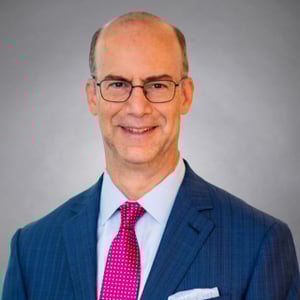
Managing Director & Head of Global Policy and Public Investment, DigitalBridge Investment Management
Jonathan S. Adelstein is a Managing Director and Head of Global Policy and Public Investment at DigitalBridge Investment Management. In this role, Mr. Adelstein works with all DigitalBridge portfolio companies on public policy and strategic regulatory matters and reviews policy impacts on potential investments.
Prior to joining DigitalBridge, Mr. Adelstein was President and CEO of the Wireless Infrastructure Association (WIA), where he represented over 200 businesses that build, own, and operate wireless infrastructure, including infrastructure owners, developers, carriers, and professional service firms.
Prior to WIA, Mr. Adelstein was nominated to positions by both President Barack Obama and President George W. Bush and confirmed unanimously for each by the U.S. Senate. Under President Obama, Mr. Adelstein headed the U.S. Department of Agriculture’s Rural Utilities Service as Administrator. There, he led the investment of nearly $7 billion under the Recovery Act in rural broadband and water infrastructure and oversaw a $60 billion loan portfolio in rural electric, telecommunications, and water infrastructure. Under President Obama, Mr. Adelstein was appointed to the White House National Science and Technology Council, which coordinates science and technology policy across the Federal government, and the White House Business Council, leading Council meetings with business leaders across America.
Mr. Adelstein was nominated by President Bush and served as Commissioner of the Federal Communications Commission (FCC) from 2002 to 2009. At the FCC, he worked to achieve bipartisan progress on issues including spectrum auctions, broadband expansion, widening access to the Internet and media diversity.
Before the FCC, Mr. Adelstein served at the U.S. Senate, in a number of legislative staff positions, culminating as a senior policy advisor to the Senate Majority Leader.
Mr. Adelstein received an M.A. in History and a B.A., with Distinction, in Political Science from Stanford University. He instructed undergraduates in history as a Teaching Fellow at Harvard University and a Teaching Assistant at Stanford University. He is a graduate of Phillips Academy, Andover.

Partner, BakerHostetler, Adjunct Fellow, The Manhattan Institute
Andrew Grossman leads BakerHostetler’s Appellate and Major Motion team. He has appeared before the U.S. Supreme Court, nearly all the federal courts of appeals, as well as some state appellate courts, litigating high-profile and complex commercial, administrative and constitutional issues.
Andrew works with practice groups across BakerHostetler to identify and tackle complex issues, advise on administrative law and strategy, tee up issues for appeal and tackle appeals. He has developed and implemented litigation and administrative strategies for clients in several fields and industries.
In addition to his practice, Andrew advises members of Congress on matters of constitutional and administrative law, having testified more than a dozen times before the House and Senate Judiciary Committees. He has been a frequent legal commentator on radio and television, having appeared on Fox News, CNN, MSNBC, CNBC, NPR and its affiliates, CBN and elsewhere. His legal commentary has also appeared in dozens of magazines and newspapers, including The Wall Street Journal, USA Today, The Washington Post, The Washington Times and many others.
Andrew is a Senior Legal Fellow at the Buckeye Institute, an Adjunct Fellow the Manhattan Institute and a member of the leadership of the Federalist Society. He previously served as an adjunct scholar at the Cato Institute’s Robert A. Levy Center for Constitutional Studies and a legal fellow at the Heritage Foundation’s Meese Center for Legal and Judicial Studies. He clerked for Judge Edith H. Jones on the U.S. Court of Appeals for the Fifth Circuit.
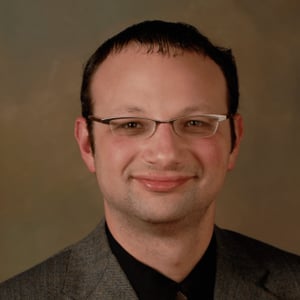
Chief Policy Counsel, Council on Criminal Justice and Senior Advisor, Right on Crime
Marc A. Levin is the Chief Policy Counsel for the Council on Criminal Justice (counciloncj.org) and Senior Advisor for Right on Crime.
An attorney and accomplished author on legal and public policy issues, Marc began the Foundation’s criminal justice program in 2005. This work contributed to nationally praised policy changes that have been followed by dramatic declines in crime and incarceration in Texas. Building on this success, in 2010, Levin developed the concept for the Right on Crime initiative, a TPPF project in partnership with Prison Fellowship and the American Conservative Union Foundation. Right on Crime has become the national clearinghouse for conservative criminal justice reforms and has contributed to the adoption of policies in dozens of states that fight crime, support victims, and protect taxpayers.
In 2014, Levin was named one of the “Politico 50” in the magazine’s annual “list of thinkers, doers, and dreamers who really matter in this age of gridlock and dysfunction.”
Marc has testified on criminal justice policy on four occasions before Congress and has testified before legislatures in states including Texas, Nevada, Kansas, Wisconsin, and California. He also has met personally with leaders such as U.S. Presidents, Speakers of the House, and the Justice Commtitee of the United Kingdom Parliament to share his ideas on criminal justice reform. In 2007, he was honored in a resolution unanimously passed by the Texas House of Representatives that stated, “Mr. Levin’s intellect is unparalleled and his research is impeccable.”
Since 2005, Marc has published dozens of policy papers on topics such as sentencing, probation, parole, reentry, and overcriminalization which are available on the TPPF website. Levin’s articles on law and public policy have been featured in publications such as the Wall Street Journal, USA Today, Texas Review of Law & Politics, National Law Journal, New York Daily News, Jerusalem Post, Toronto Star, Atlanta Journal-Constitution, Philadelphia Inquirer, San Francisco Chronicle, Washington Times, Los Angeles Daily Journal, Charlotte Observer, Dallas Morning News, Houston Chronicle, Austin American-Statesman, San Antonio Express-News and Reason Magazine.
In 1999, Marc graduated with honors from the University of Texas with a B.A. in Plan II Honors and Government. In 2002, Marc received his J.D. with honors from the University of Texas School of Law. Marc was a Charles G. Koch Summer Fellow in 1996. He served as a law clerk to Judge Will Garwood on the U.S. Court of Appeals for the Fifth Circuit and Staff Attorney at the Texas Supreme Court.

Senior Attorney, Financial Industry Regulatory Authority
John-Michael Seibler is a senior attorney at the Financial Industry Regulatory Authority (FINRA).
Prior to joining FINRA, he directed The Heritage Foundation’s project to counter abuse of the criminal law, particularly at the federal level, and was a legal fellow in Heritage's Institute for Constitutional Government. Seibler started at Heritage as a visiting fellow through the Charles Koch Institute’s Koch Associate program.
He previously clerked for the House Judiciary Committee’s Crime Subcommittee, the Goldwater Institute’s Scharf-Norton Center for Constitutional Litigation, and the National Right to Work Legal Defense Foundation. He received his law degree from Washington & Lee University School of Law.
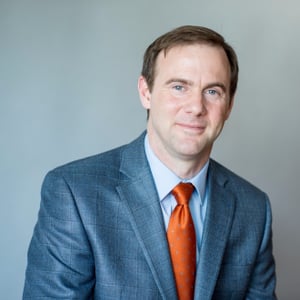
Author, Scalia Speaks: Reflections on Law, Faith, and Life Well Lived
Christopher J. Scalia is the eighth of Justice Scalia's nine children and a former professor of English. He works at a public relations firm near Washington, DC. His book reviews and political commentary have appeared in The Wall Street Journal, The Washington Post, The Weekly Standard, and elsewhere. He lives in Virginia with his wife and three children.

Distinguished Senior Fellow and Antonin Scalia Chair in Constitutional Studies, Ethics and Public Policy Center
Edward Whelan is a Distinguished Senior Fellow of the Ethics and Public Policy Center and holds EPPC’s Antonin Scalia Chair in Constitutional Studies. He is the longest-serving President in EPPC’s history, having held that position from March 2004 through January 2021.
Mr. Whelan directs EPPC’s program on The Constitution, the Courts, and the Culture. His areas of expertise include constitutional law and the judicial confirmation process. As a contributor to National Review Online’s Bench Memos blog, he has been a leading commentator on nominations to the Supreme Court and the lower courts and on issues of constitutional law. He has written essays and op-eds for leading newspapers—including the Wall Street Journal, the New York Times, and the Washington Post—opinion journals, and academic symposia and law reviews. The National Law Journal has named Mr. Whelan among its “Champions and Visionaries” in the practice of law in D.C.
Mr. Whelan is co-editor of three volumes of Supreme Court Justice Antonin Scalia’s work: Scalia Speaks: Reflections on Law, Faith, and Life Well Lived (Crown Forum, 2017), a New York Times bestselling collection of speeches by Justice Scalia; On Faith: Lessons from an American Believer (Crown Forum, 2019), a collection of Justice Scalia’s writings on faith and religion; and The Essential Scalia: On the Constitution, the Courts, and the Rule of Law (Crown Forum, 2020), a collection of Justice Scalia’s views on legal issues.
Mr. Whelan, a lawyer and a former law clerk to Justice Scalia, has served in positions of responsibility in all three branches of the federal government. From just before the terrorist attacks of September 11, 2001, until joining EPPC in 2004, Mr. Whelan was the Principal Deputy Assistant Attorney General for the Office of Legal Counsel in the U.S. Department of Justice. In that capacity, he advised the White House Counsel’s Office, the Attorney General and other senior DOJ officials, and departments and agencies throughout the executive branch on difficult and sensitive legal questions. Mr. Whelan previously served on Capitol Hill as General Counsel to the U.S. Senate Committee on the Judiciary. In addition to clerking for Justice Scalia, he was a law clerk to Judge J. Clifford Wallace of the U.S. Court of Appeals for the Ninth Circuit.
In 1981 Mr. Whelan graduated with honors from Harvard College and was inducted into Phi Beta Kappa. He received his J.D. magna cum laude in 1985 from Harvard Law School, where he was a member of the Board of Editors of the Harvard Law Review.
For more on Mr. Whelan’s background, see this interview.

Vice President for Legal Affairs, Goldwater Institute
Author, Scalia Speaks: Reflections on Law, Faith, and Life Well Lived
Christopher J. Scalia is the eighth of Justice Scalia's nine children and a former professor of English. He works at a public relations firm near Washington, DC. His book reviews and political commentary have appeared in The Wall Street Journal, The Washington Post, The Weekly Standard, and elsewhere. He lives in Virginia with his wife and three children.
Distinguished Senior Fellow and Antonin Scalia Chair in Constitutional Studies, Ethics and Public Policy Center
Edward Whelan is a Distinguished Senior Fellow of the Ethics and Public Policy Center and holds EPPC’s Antonin Scalia Chair in Constitutional Studies. He is the longest-serving President in EPPC’s history, having held that position from March 2004 through January 2021.
Mr. Whelan directs EPPC’s program on The Constitution, the Courts, and the Culture. His areas of expertise include constitutional law and the judicial confirmation process. As a contributor to National Review Online’s Bench Memos blog, he has been a leading commentator on nominations to the Supreme Court and the lower courts and on issues of constitutional law. He has written essays and op-eds for leading newspapers—including the Wall Street Journal, the New York Times, and the Washington Post—opinion journals, and academic symposia and law reviews. The National Law Journal has named Mr. Whelan among its “Champions and Visionaries” in the practice of law in D.C.
Mr. Whelan is co-editor of three volumes of Supreme Court Justice Antonin Scalia’s work: Scalia Speaks: Reflections on Law, Faith, and Life Well Lived (Crown Forum, 2017), a New York Times bestselling collection of speeches by Justice Scalia; On Faith: Lessons from an American Believer (Crown Forum, 2019), a collection of Justice Scalia’s writings on faith and religion; and The Essential Scalia: On the Constitution, the Courts, and the Rule of Law (Crown Forum, 2020), a collection of Justice Scalia’s views on legal issues.
Mr. Whelan, a lawyer and a former law clerk to Justice Scalia, has served in positions of responsibility in all three branches of the federal government. From just before the terrorist attacks of September 11, 2001, until joining EPPC in 2004, Mr. Whelan was the Principal Deputy Assistant Attorney General for the Office of Legal Counsel in the U.S. Department of Justice. In that capacity, he advised the White House Counsel’s Office, the Attorney General and other senior DOJ officials, and departments and agencies throughout the executive branch on difficult and sensitive legal questions. Mr. Whelan previously served on Capitol Hill as General Counsel to the U.S. Senate Committee on the Judiciary. In addition to clerking for Justice Scalia, he was a law clerk to Judge J. Clifford Wallace of the U.S. Court of Appeals for the Ninth Circuit.
In 1981 Mr. Whelan graduated with honors from Harvard College and was inducted into Phi Beta Kappa. He received his J.D. magna cum laude in 1985 from Harvard Law School, where he was a member of the Board of Editors of the Harvard Law Review.
For more on Mr. Whelan’s background, see this interview.

Topics
Building Article I Conservatism
The following blog was originally posted on legbranch.com about the Federalist Society's Article I Initiative...
Topics
U.S. Commission on Civil Rights Report on Educational Equity - Commentary
The U.S. Commission on Civil Rights recently released a report entitled, “Public Education Funding Inequity...
Modernizing the Tribal Consultation Process for Wireless Infrastructure Siting
Jonathan Adelstein, Wade Lindsay
Note from the Editor: This article discusses barriers to establishing wireless infrastructure, particularly with respect...
Frederick Douglass: Self-Made Man
Austin, TXFederalist Society Review, Volume 18
Administrative Law & Regulation The Risks of Regulating in the Dark, by Sofie Miller Gloucester...
Courthouse Steps: Rubin v. Islamic Republic of Iran
Andrew Grossman
On December 4th, the Supreme Court heared oral arguments in Rubin v. Islamic Republic of...
Topics
Using Tax Reform to Reveal the Hidden Cost of the Administrative State
Click here to read a shorter version of this article published by The Washington Examiner....
Scalia Speaks
Capitol Hill Chapter Event
Washington, DCMoney Bail and Pretrial Detention
Marc Levin, John-Michael Seibler
Pretrial justice policies have recently emerged as a high profile issue and have a broad...
Scalia Speaks: Reflections on Law, Faith, and Life Well Lived
Christopher J. Scalia, Edward Whelan
This definitive collection of beloved Supreme Court Justice Antonin Scalia's finest speeches covers topics as...