
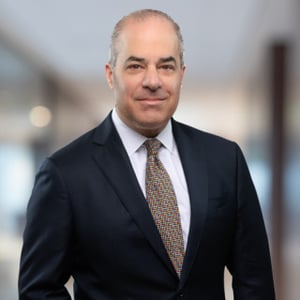
Partner, Foley & Lardner LLP
A trial and courtroom lawyer for over 30 years, Jason A. Levine is an antitrust and commercial litigation partner in the Washington, D.C. office of Foley & Lardner LLP.
Mr. Levine has served as lead counsel for clients in high-stakes and often multi-faceted business disputes. His diverse practice focuses on antitrust, complex contractual, and business tort suits. Mr. Levine tried 14 cases to judges and juries across the country, briefed and argued dozens of dispositive motions and several precedent-setting appeals, and has had an active amicus practice before the U.S. Supreme Court for nationwide trade associations. He was also lead counsel to defendants in several of the nation’s largest antitrust class actions and MDLs. Mr. Levine has perennially been recognized as a prominent litigator by Best Lawyers, SuperLawyers, Benchmark Litigation, and Global Competition Review. He also spent nearly four years as an Investment Manager at Omni Bridgeway, a global commercial litigation finance company, where he launched and led the Washington, D.C. office and led the U.S. antitrust strategy.
Mr. Levine received his B.A. summa cum laude (Phi Beta Kappa) from Brandeis University in 1991 and his J.D. cum laude from Harvard Law School in 1994, where he was Editor-in-Chief of the Harvard Journal of Law & Public Policy. Before entering private practice, Mr. Levine was a law clerk for Judge Randall Rader on the U.S. Court of Appeals for the Federal Circuit, where he focused on the court’s Takings and administrative cases.
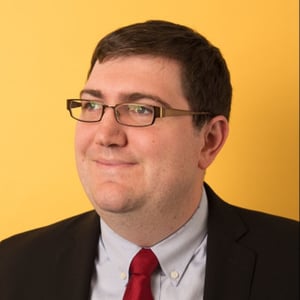
Attorney, Pacific Legal Foundation
Jeff McCoy is an attorney at Pacific Legal Foundation. Jeff joined PLF in 2017. Since then, he has focused his litigation on separation of powers and private property rights. Jeff also leads PLF’s coastal land rights initiative, which seeks to strengthen and defend statutory and constitutional protections for coastal property owners across the country.
Throughout his career, Jeff has worked for various organizations that promote individual liberty and limited government. Prior to joining PLF, Jeff was a staff attorney at Mountain States Legal Foundation in Lakewood, Colorado, for five years. His work at Mountain States included helping secure victory for a Wyoming private property owner in U.S. Supreme Court case Marvin M. Brandt Revocable Trust v. United States. Besides Mountain States, Jeff worked as an intern for the Cato Institute during the spring of 2008, and after his first year of law school, he worked as a Charles G. Koch Summer Fellow at the Institute for Justice’s Seattle office.
Jeff received his B.A. degree in political science and philosophy from the University of Colorado in 2007 and his law degree, also from the University of Colorado, in 2011. During his time at law school, Jeff had the honor of working as a judicial extern for then-Judge Neil Gorsuch at the U.S. Court of Appeals for the Tenth Circuit.
Partner, Foley & Lardner LLP
A trial and courtroom lawyer for over 30 years, Jason A. Levine is an antitrust and commercial litigation partner in the Washington, D.C. office of Foley & Lardner LLP.
Mr. Levine has served as lead counsel for clients in high-stakes and often multi-faceted business disputes. His diverse practice focuses on antitrust, complex contractual, and business tort suits. Mr. Levine tried 14 cases to judges and juries across the country, briefed and argued dozens of dispositive motions and several precedent-setting appeals, and has had an active amicus practice before the U.S. Supreme Court for nationwide trade associations. He was also lead counsel to defendants in several of the nation’s largest antitrust class actions and MDLs. Mr. Levine has perennially been recognized as a prominent litigator by Best Lawyers, SuperLawyers, Benchmark Litigation, and Global Competition Review. He also spent nearly four years as an Investment Manager at Omni Bridgeway, a global commercial litigation finance company, where he launched and led the Washington, D.C. office and led the U.S. antitrust strategy.
Mr. Levine received his B.A. summa cum laude (Phi Beta Kappa) from Brandeis University in 1991 and his J.D. cum laude from Harvard Law School in 1994, where he was Editor-in-Chief of the Harvard Journal of Law & Public Policy. Before entering private practice, Mr. Levine was a law clerk for Judge Randall Rader on the U.S. Court of Appeals for the Federal Circuit, where he focused on the court’s Takings and administrative cases.
Attorney, Pacific Legal Foundation
Jeff McCoy is an attorney at Pacific Legal Foundation. Jeff joined PLF in 2017. Since then, he has focused his litigation on separation of powers and private property rights. Jeff also leads PLF’s coastal land rights initiative, which seeks to strengthen and defend statutory and constitutional protections for coastal property owners across the country.
Throughout his career, Jeff has worked for various organizations that promote individual liberty and limited government. Prior to joining PLF, Jeff was a staff attorney at Mountain States Legal Foundation in Lakewood, Colorado, for five years. His work at Mountain States included helping secure victory for a Wyoming private property owner in U.S. Supreme Court case Marvin M. Brandt Revocable Trust v. United States. Besides Mountain States, Jeff worked as an intern for the Cato Institute during the spring of 2008, and after his first year of law school, he worked as a Charles G. Koch Summer Fellow at the Institute for Justice’s Seattle office.
Jeff received his B.A. degree in political science and philosophy from the University of Colorado in 2007 and his law degree, also from the University of Colorado, in 2011. During his time at law school, Jeff had the honor of working as a judicial extern for then-Judge Neil Gorsuch at the U.S. Court of Appeals for the Tenth Circuit.
S. Samuel Arsht Professor of Corporate Law, University of Pennsylvania Law School
David Skeel is the Caryl Louise Boies Visiting Professor of Law at New York University, and the S. Samuel Arsht Professor of Corporate Law at the University of Pennsylvania. He is the author of The New Financial Deal: Understanding the Dodd-Frank Act and its (Unintended) Consequences (Wiley, 2011); Icarus in the Boardroom: The Fundamental Flaws in Corporate America and Where They Came From (Oxford University Press, 2005); Debt’s Dominion: A History of Bankruptcy Law in America (Princeton University Press, 2001); and numerous articles on bankruptcy, corporate law, financial regulation, Christianity and law, and other topics. Professor Skeel has also written commentaries for the New York Times, Wall Street Journal, Books & Culture, The Weekly Standard, and other publications.
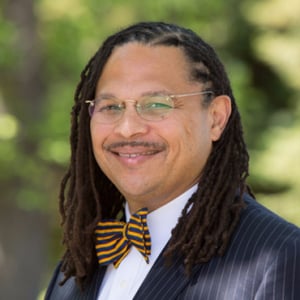
William F. Baxter-Visa International Professor of Law, Stanford Law School
Marcus Cole is a leading scholar of the empirical law and economics of commerce and finance, and teaches courses in the areas of Bankruptcy, Banking, Contracts, and Venture Capital. Professor Cole’s writings have explored questions such as why corporate bankruptcies are increasingly filed in Delaware, and what drives the financial structure of firms backed by venture capital. His current research interests involve the ways in which the world’s poor are using technology to solve their own problems, often in the face of government restrictions hindering such solutions. Professor Cole has served as a National Fellow at the Hoover Institution, and is a Fellow at the University of Amsterdam Center for Law and Economics. He has been a Visiting Professor at a number of institutions around the world, including the University of Amsterdam, the University of Vienna, the University of Leiden, Bucerius University in Hamburg, Germany, Northwestern University, Korea University, and Peking University School of Transnational Law in Shenzhen. Professor Cole has also served on the boards of several civic and charitable organizations, including that of the Central Pacific Region of the Anti-Defamation League of B’nai B’rith, and Businesses United in Lending and Development (“BUILD”). He currently serves on the Editorial Board of the Cato Supreme Court Review, the Academic Advisory Board of Bar-Bri, the Advisory Board of the Independent Institute’s Center on Culture and Civil Society, and is President of the Board of Directors of Rocketship Education, a national, non-profit charter school network, operating California’s most successful charter schools for low-income children. Before joining the Stanford Law faculty in 1997, Professor Cole was an associate with the Chicago law firm of Mayer Brown, and he clerked for Judge Morris Sheppard Arnold of the United States Court of Appeals for the Eighth Circuit.
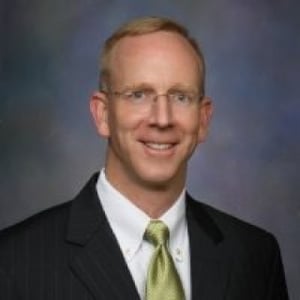
Investigative Counsel, U.S. House Committee on Education and the Workforce
Kent Talbert is a Washington, DC-based attorney with over 25 years’ experience in providing advice on education law and policy in Congress, the U.S. Department of Education, and the private sector. His practice includes legal and policy advice to colleges and universities, for-profit schools, accrediting agencies, the pre-K-12 sector, charter school organizations, trade associations, and education-focused companies, as well as service as an expert witness. He currently serves as Investigative Counsel, U.S. House Committee on Education and the Workforce.
Prior to establishing his firm, Mr. Talbert practiced at Talbert & Eitel, PLLC from 2010-2012. From 2006-2009 he served as General Counsel of the U.S. Department of Education, advising the Secretary of Education on a broad range of legal and policy matters, including the reauthorization of the Higher Education Act of 1965, the drafting and implementation of regulations under the No Child Left Behind Act of 2001, and major education law cases pending before the Supreme Court of the United States and other appellate and trial courts. During his tenure as General Counsel, Mr. Talbert served as the Chief Regulatory Officer for the Department, overseeing all documents for publication in the Federal Register.
He has provided legal and strategic advice on the No Child Left Behind Act of 2001, the Higher Education Opportunity Act of 2008, the Ensuring Continued Access to Student Loans Act of 2008, the Freedom of Information Act (FOIA), the Family Educational Rights and Privacy Act (FERPA), the Rehabilitation Act of 1973, the Americans With Disabilities Act, Title IX of the Education Amendments of 1972, the Jeanne Clery Disclosure of Campus Security Policy and Campus Crime Statistics Act ("Clery Act"), Federal Student Aid program reviews, negotiated rulemaking, and accreditation.
Prior to his service as General Counsel, Mr. Talbert served as the Department's Deputy General Counsel for Departmental and Legislative Service from 2001-2006. Earlier in his career, Mr. Talbert served for over 12 years on House and Senate staff, both as Education Policy Counsel for the Committee on Education and the Workforce in the U.S. House of Representatives, and as a professional staff member of the Committee on Labor and Human Resources (now Committee on Health, Education, Labor, and Pensions) in the U.S. Senate.
Mr. Talbert is a member of the Bars of the District of Columbia and South Carolina, the Alliance of Public Charter School Attorneys, and the National Association of College and University Attorneys where he serves on the Committee on Legal Education. He is admitted to practice before the United States Supreme Court, the United States Court of Federal Claims, the United States Court of Appeals for the District of Columbia Circuit, the United States Court of Appeals for the Fourth Circuit, and all federal courts in South Carolina and Washington, DC.
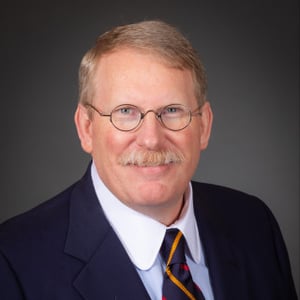
Co-Founder and President, Defense of Freedom Institute
Bob is a co-founder and President of DFI. He previously served as Senior Counselor to the Secretary of Education from 2017 through 2020 and Deputy General Counsel of the U.S. Department of Education from 2005 until 2009.
During his most recent tenure at the Department, Bob served on the Secretary’s Leadership Team as a strategic and legal adviser on higher education, civil rights, and congressional oversight matters. As the Department’s Regulatory Reform Officer, he also supervised the implementation of the Secretary’s regulatory agenda and was an architect of the Secretary’s reforms concerning Title IX and the Higher Education Act. As Deputy General Counsel, Bob advised on a wide variety of regulatory, legislative, and oversight matters.
Prior to joining the Department in 2017, Bob was vice president for regulatory compliance matters for several postsecondary institutions and practiced education and employment law in Washington, D.C. Before coming to the Department in 2005, he practiced law in New Orleans, litigating commercial, employment, and bankruptcy cases in Louisiana, Texas, and Mississippi.
Bob earned his A.B. in History from Georgetown University, studied British government and international politics at the London School of Economics and Political Science, and received his law degree from Tulane University Law School. His articles have been published by National Review, Real Clear Education, Washington Examiner, and other media outlets. Fox News has featured his work.
Bob is a member of the District of Columbia and Louisiana Bars and the Federalist Society for Law and Public Policy Studies.
Partner, Mayer Brown LLP
Howard Waltzman focuses his practice on communications and Internet law and commercial transactions in the United States and other key international markets. He represents some of the nation's leading communications service providers, manufacturers, and trade associations in commercial transactions, as well as in regulatory and legislative matters, including with respect to Internet services, spectrum policy, privacy, video programming, wireline competition, and communications-related homeland security. He also represents investors on these and other communications-related matters.
Howard's experience includes drafting regulatory pleadings, comments and license applications; legislation, Congressional testimony, and legislative history; and commercial agreements. He appears personally before Members of Congress, Cabinet department officials, FCC Commissioners, and key Congressional and FCC staff. Howard also advises clients and assists them in presenting their positions during major FCC rulemakings, throughout the legislative process, and in the context of commercial transactions. He represents clients on matters involving the International Telecommunication Union's rules and procedures.
Prior to joining Mayer Brown in 2007, Howard served as Chief Counsel, Telecommunications and the Internet, for the U.S. House Energy and Commerce Committee (2003-2006) and as Telecommunications Counsel (2001-2003). Prior to working for the House Energy and Commerce Committee, he served as General Counsel for Senator Sam Brownback (1996-2001).
Partner, Foley & Lardner LLP
A trial and courtroom lawyer for over 30 years, Jason A. Levine is an antitrust and commercial litigation partner in the Washington, D.C. office of Foley & Lardner LLP.
Mr. Levine has served as lead counsel for clients in high-stakes and often multi-faceted business disputes. His diverse practice focuses on antitrust, complex contractual, and business tort suits. Mr. Levine tried 14 cases to judges and juries across the country, briefed and argued dozens of dispositive motions and several precedent-setting appeals, and has had an active amicus practice before the U.S. Supreme Court for nationwide trade associations. He was also lead counsel to defendants in several of the nation’s largest antitrust class actions and MDLs. Mr. Levine has perennially been recognized as a prominent litigator by Best Lawyers, SuperLawyers, Benchmark Litigation, and Global Competition Review. He also spent nearly four years as an Investment Manager at Omni Bridgeway, a global commercial litigation finance company, where he launched and led the Washington, D.C. office and led the U.S. antitrust strategy.
Mr. Levine received his B.A. summa cum laude (Phi Beta Kappa) from Brandeis University in 1991 and his J.D. cum laude from Harvard Law School in 1994, where he was Editor-in-Chief of the Harvard Journal of Law & Public Policy. Before entering private practice, Mr. Levine was a law clerk for Judge Randall Rader on the U.S. Court of Appeals for the Federal Circuit, where he focused on the court’s Takings and administrative cases.
Attorney, Pacific Legal Foundation
Jeff McCoy is an attorney at Pacific Legal Foundation. Jeff joined PLF in 2017. Since then, he has focused his litigation on separation of powers and private property rights. Jeff also leads PLF’s coastal land rights initiative, which seeks to strengthen and defend statutory and constitutional protections for coastal property owners across the country.
Throughout his career, Jeff has worked for various organizations that promote individual liberty and limited government. Prior to joining PLF, Jeff was a staff attorney at Mountain States Legal Foundation in Lakewood, Colorado, for five years. His work at Mountain States included helping secure victory for a Wyoming private property owner in U.S. Supreme Court case Marvin M. Brandt Revocable Trust v. United States. Besides Mountain States, Jeff worked as an intern for the Cato Institute during the spring of 2008, and after his first year of law school, he worked as a Charles G. Koch Summer Fellow at the Institute for Justice’s Seattle office.
Jeff received his B.A. degree in political science and philosophy from the University of Colorado in 2007 and his law degree, also from the University of Colorado, in 2011. During his time at law school, Jeff had the honor of working as a judicial extern for then-Judge Neil Gorsuch at the U.S. Court of Appeals for the Tenth Circuit.
S. Samuel Arsht Professor of Corporate Law, University of Pennsylvania Law School
David Skeel is the Caryl Louise Boies Visiting Professor of Law at New York University, and the S. Samuel Arsht Professor of Corporate Law at the University of Pennsylvania. He is the author of The New Financial Deal: Understanding the Dodd-Frank Act and its (Unintended) Consequences (Wiley, 2011); Icarus in the Boardroom: The Fundamental Flaws in Corporate America and Where They Came From (Oxford University Press, 2005); Debt’s Dominion: A History of Bankruptcy Law in America (Princeton University Press, 2001); and numerous articles on bankruptcy, corporate law, financial regulation, Christianity and law, and other topics. Professor Skeel has also written commentaries for the New York Times, Wall Street Journal, Books & Culture, The Weekly Standard, and other publications.

Topics
The FCC Returns to the Law and Economics Free Zone
Relatively speaking, the last several years have been pretty good for the U.S. broadband industry....
Courthouse Steps Decision Webinar: Collins v. Yellen
Jason Alan Levine, Jeffrey McCoy
On June 23, 2021, the U.S. Supreme Court in Collins v. Yellen held 7-2 that 1) because...
Courthouse Steps Decision Webinar: Collins v. Yellen
Jason Alan Levine, Jeffrey McCoy
On June 23, 2021, the U.S. Supreme Court in Collins v. Yellen held 7-2 that 1) because...
Courthouse Steps Decision Webinar: Collins v. Yellen
Federalism & Separation of Powers and Litigation Practice Groups Teleforum
TeleforumTopics
Getting Broadband Subsidies Right This Time
With the COVID-19 pandemic drawing increased attention to the nation’s Digital Divide, many lawmakers want...
I Declare Bankruptcy?: Puerto Rico v. Franklin California Tax-Free Trust Decided - Podcast
David Skeel, Gilbert Marcus Cole
On June 13 the United States Supreme Court issued its opinion in Puerto Rico v....
I Declare Bankruptcy?: Puerto Rico v. Franklin California Tax-Free Trust Decided
TeleforumThe Road to a National Curriculum: The Legal Aspects of the Common Core Standards, Race to the Top, and Conditional Waivers
Kent D. Talbert, Robert S. Eitel
Note from the Editor: This paper examines the U.S. Department of Education’s administration of the...
National Broadband Plan
Howard Waltzman
In February 2009, as part of the American Recovery and Reinvestment Act (the “Recovery Act”),...
Engage Volume 10, Issue 2, July 2009
*Online-Only Issue* Special Edition: Templeton Debates Making Sense of the Establishment Clause Jeffrey Shulman The...