

Founder and Co-Director, James Wilson Institute
Hadley Arkes joined the faculty of Amherst College in 1966. He became the Edward Ney Professor of Jurisprudence in 1987, and held that chair until he retired officially in July 2015. But he has not retired from writing and speaking. He has carried that teaching into a new phase; he has become the Founder and Director of the James Wilson Institute on Natural Rights and the American Founding in Washington, D.C. He has written eight books, mostly with Princeton and Cambridge University Presss. Among the books at Princeton have been: The Philosopher in the City (1981), First Things (1986), Beyond the Constitution (1990), and The Return of George Sutherland (1994). With Cambridge Press he has done Natural Rights and the Right to Choose (2002), and Constitutional Illusions & Anchoring Truths: The Touchstone of the Natural Law (2010). His most recent book, with Regnery Press is Mere Natural Law (2023) His articles have appeared in professional journals, but apart from his writing in more scholarly formats, he has become known to a wider audience through his writings in the Wall Street Journal, National Review, Civitas and First Things, a journal that took its name from his book of that title.
He was the main advocate, and architect, of the bill that became known as the Born-Alive Infants’ Protection Act. The account of his experience, in moving the bill through Congress, is contained as an epilogue or memoir in his book, Natural Rights & the Right to Choose. Arkes first prepared his proposal as part of the debating kit assembled for the first George Bush in 1988. The purpose of that proposal was to offer the “most modest first step” of all in legislating on abortion, and opening a conversation even with people who called themselves “pro-choice.” Professor Arkes proposed to begin simply by preserving the life of a child who survived an abortion–contrary to the holding of one federal judge, that such a child was not protected by the laws. Professor Arkes led the testimony on the bill before the Judiciary Committee of the U.S. House in July 2000, then again in July 2001. The legislative calendar was upended in the aftermath of September 11th, but in March 2002, the bill was brought to the floor of the House, where it passed unanimously. To the surprise of Professor Arkes, the bill was brought to the floor of the Senate on July 18 by the Deputy Majority Leader, Harry Reid, and passed in the same way. On August 5, President Bush signed the bill into law with Professor Arkes in attendance.
Professor Arkes was the founder, at Amherst, of the Committee for the American Founding, a group of alumni and students seeking to preserve, at Amherst, the doctrines of “natural rights” taught by the American Founders and Lincoln. That interest has been carried over now to the founding of a new center for the jurisprudence of natural law, in Washington, D.C.: the James Wilson Institute on Natural Rights and the American Founding, named for one of the premier minds among the American Founders. Professor Arkes has drawn to this project a cluster of accomplished federal judges who have wanted to get a firmer hold on the natural law, and brought them together with some gifted teachers of philosophy and law. The new institute will be sponsoring lectures and seminars in Washington and other parts of the country. The purpose of this new James Wilson Institute is to teach anew, to lawyers, judges, and students those principles of law that furnished the guide to the American Founders as they set about framing a Constitution. And the hope is to restore, to a new generation, the furnishings of mind of the men who formed this regime.

Deputy Attorney General and Director of the Civil Rights Enforcement Division, Office of the Tennessee Attorney General

Judge, Arizona Court of Appeals, Division One
The Honorable Jennifer M. Perkins began service on the Arizona Court of Appeals, Division One, on October 30, 2017. At the time of her appointment by Governor Douglas Ducey, Judge Perkins was Assistant Solicitor General for the State of Arizona.
Judge Perkins was born in Portales, New Mexico, and primarily raised in Albuquerque. She attended the prestigious Albuquerque Academy from 1988-1995, before moving to Washington D.C. to attend the Elliott School of International Affairs at the George Washington University as a National Merit Scholar. Therafter, she relocated again to Dallas, Texas, and earned her juris doctor from the SMU Dedman School of Law, graduating cum laude in 2002.
Judge Perkins started her career at the law firm of Browning & Peifer (now Peifer, Hanson, Mullins, and Baker) in Albuquerque, New Mexico. While there, she litigated complex commercial matters including class action plaintiff and defense work, and assisted with employment and contract litigation. In 2003, the judge accompanied the Honorable James O. Browning in transitioning to the federal district court bench, serving as his first law clerk.
After her clerkship, Judge Perkins moved to Arizona to work for the Institute for Justice, Arizona Chapter, a public interest law firm. She spent five years with IJ-AZ litigating civil rights cases in Arizona and across the country. In 2009, the judge became Disciplinary Counsel for the Arizona Commission on Judicial Conduct, where she reviewed and prosecuted ethics complaints against state court judges throughout Arizona. After five years serving the state in this capacity, Judge Perkins entered private practice by joining an appellate law firm in Phoenix. While there, she worked on state and federal appeals involving a wide range of legal subjects, including complex business disputes, property rights, judicial ethics, and personal injury matters.
In January 2015, Judge Perkins joined the Office of the Arizona Attorney General to serve as the first Assistant Solicitor General; in that capacity, she was responsible for oversight of Attorney General Opinions and served as ethics counsel to the entire office. In addition to these two primary roles, the judge assisted on a variety of matters including trial and appellate litigation of election-related matters; federal appellate litigation with the Federalism Unit; state criminal appeals; and drafting amicus briefs on behalf of Arizona in state and federal courts.

Executive Vice President, Goldwater Institute
Christina Sandefur is the Executive Vice President at the Goldwater Institute. She develops policies and litigates cases advancing healthcare freedom, free enterprise, private property rights, free speech, and taxpayer rights.
Christina is a co-drafter of the Right to Try initiative, now federal law, which protects terminally ill patients' right to try safe investigational treatments that have been prescribed by their physician but are not yet FDA-approved. She has won important victories for property rights in Arizona and works nationally to promote the Institute's Private Property Rights Protection Act, a state-level reform that requires government to pay owners when regulations destroy property rights and reduce property values.
Christina is the co-author of the book Cornerstone of Liberty: Private Property Rights in 21st Century America (2016). She is a frequent guest on national television and radio programs, has provided expert legal testimony to various legislative committees, and is a frequent speaker at conferences. She is the recipient of the 2018 Buckley Award in recognition of her leadership in the freedom movement, and she is an Advisory Board Member of the Network of enlightened Women. Christina serves on the board of the Phoenix Lawyers Chapter of the Federalist Society and is a member of the executive committee for the Federalist Society's Regulatory Transparency Project: FDA & Health.
Christina is a graduate of Michigan State University College of Law and Hillsdale College.

Supreme Court & Appellate Litigation Chair, Lex Politica; Of Counsel, Alliance Defending Freedom
Erin Morrow Hawley serves as Chair of Lex Politica's Supreme Court and Appellate Practice overseeing the firm’s strategic appellate litigation and critical motions practice in the trial courts. Erin is an experienced litigator who represents clients in constitutional, regulatory, and appellate matters in federal and state courts throughout the country.
Erin has represented dozens of clients before the Supreme Court of the United States, served as lead counsel in high-profile cases raising novel constitutional and statutory issues, and authored numerous successful petitions for certiorari and briefs in opposition. She has argued in state and federal appellate and trial courts throughout the country, including the Supreme Court of the United States. Erin represents diverse clients in high-stakes litigation from state governments to faith-based nonprofits to Fortune 100 companies. She possesses expertise on a wide range of subject matters including administrative law, the First Amendment, religious liberty, federal jurisdiction, federal preemption, equitable jurisdiction, tax law, the Affordable Care Act, and Title IX.
Erin represents clients in cases where public communications strategy is paramount. She is a sought-after speaker and writer, has testified multiple times before Congress, and is a frequent presenter on constitutional and administrative law issues, including at the Oxford Union, the National Federalist Society Convention, and university campuses across the country. She is a frequent commentator to media outlets, including Fox News, MSNBC, the Wall Street Journal, WORLD, USA Today, the Federalist, and the Hill.
Erin previously oversaw Alliance Defending Freedom’s--where she still serves as Of Counsel--litigation strategies to empower women and protect the dignity of life, defend pregnancy centers’ First Amendment rights from government overreach, and safeguard Americans’ freedoms from the ever-encroaching administrative state.

White House Correspondent, The Daily Wire
Mary Margaret Olohan is a senior reporter for The Daily Wire and the author of "Detrans: True Stories of Escaping The Gender Ideology Cult." She previously wrote for The Daily Signal and for The Daily Caller News Foundation. She is a graduate of the Catholic University of America.

Vice President & Senior Legal Fellow, Defending Education
Sarah Parshall Perry is vice president and senior legal fellow at Defending Education.
Before coming to Defending Education, Sarah served as a Senior Legal Fellow for the Edwin Meese III Center for Legal and Judicial Studies, part of the Institute for Constitutional Government at Heritage, where her work centered on civil rights and the proper role of the courts.
Sarah joined Heritage after serving as Senior Counsel to the Assistant Secretary for Civil Rights at the U.S. Department of Education where she focused on policy reform, technical guidance, and the Office for Civil Rights’ (OCR) annual report to Congress. While at OCR, she was appointed by the Acting Assistant Secretary to co-chair the Employment Engagement, Diversity, & Inclusion Council and, in coordination with the Deputy Assistant Secretary for Enforcement oversee the hiring of dozens of attorneys for OCR’s 12 regional offices nationwide. Prior to her tenure at the Department of Education, she spent six years at the Family Research Council in Washington, D.C. where she was Senior Fellow for Education Reform and later, became the regular substitute host for the “Washington Watch” radio show. Her work at the Family Research Council also included the building and oversight of multiple policy coalitions geared toward the fight against antisemitism in academia, curbing tech censorship, and protecting religious liberty.
Before joining FRC, Sarah was in-house counsel and director of development for a Baltimore advertising agency, providing management of all new business transactions from pitch to contract execution for the multi-million-dollar enterprise. She began her practice at the litigation firm of Simms Showers, LLP where her work included Title VII employment discrimination, maritime/admiralty, and False Claims Act (“Qui Tam”) law. Sarah has a law degree from the University of Virginia School of Law, where she was an editor of the Virginia Journal of International Law, a recipient of the American Jurisprudence award, a Phi Delta Phi honor society member, and a student practitioner in the appellate litigation clinic where she argued before the 4th Circuit Court of Appeals. She holds a B.S. in Journalism with honors from Liberty University.
Her commentary and analysis have appeared in media outlets across the country, including the AP, BBC, Fox News, NPR, The Hill, Washington Post, Washington Times, and the New York Times. She is the mother of three children, and the author of just as many books on the trials and triumphs of parenting children on the autism spectrum. Sarah is a member of the Kirkpatrick Society at the American Enterprise Institute, and makes her home north of Baltimore, Maryland.
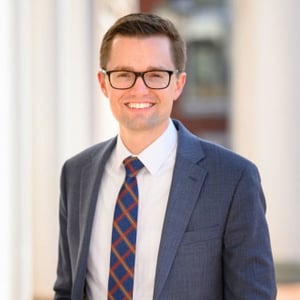
General Counsel, Center for American Liberty
Mark Trammell is the General Counsel at Center for American Liberty where he is dedicated to defending First Amendment freedoms and civil liberties.
Prior to joining the Center for American Liberty, Trammell served as in-house counsel to Young America’s Foundation, where he advocated for and defended students’ free speech rights on college campuses. He has also served as an attorney at Liberty Counsel and as an adjunct professor at Liberty University.
Trammell is a member of the Maryland bar and the Virginia bar. He is a graduate of Liberty University School of Law and Union University. Trammell currently serves on the Board of Trustees at Gateway Seminary of the Southern Baptist Convention.

Anne Fleming Research Professor and Professor of Law, Georgetown University Law Center; Faculty Director, Georgetown Center for the Constitution
Stephanie Barclay is a Professor of Law at Georgetown Law School, and the Faculty Director of the Georgetown Center for the Constitution. Her research focuses on the role our different democratic institutions play in protecting minority rights, particularly at the intersection of free speech and religious exercise. Barclay‘s work is published or is forthcoming in leading journals such as the Harvard Law Review, the Chicago Law Review, the University of Pennsylvania Law Review, and the Yale Law Journal Forum. One of her articles was also selected for the 2020 Stanford/Harvard/Yale Junior Faculty Forum. Her work has been featured in many media outlets, including The New York Times, The Wall Street Journal, The Washington Post, USA Today, Bloomberg BNA, The Hill, and Law 360. And her work has also been cited by the U.S. Supreme Court.
Prior to joining Georgetown, Barclay was twice voted Professor of the Year. Barclay has also litigated constitutional cases at both the trial and appellate level, including before the U.S. Supreme Court. Barclay served as a law clerk to Judge N. Randy Smith on the U.S. Court of Appeals for the Ninth Circuit, and to Justice Neil M. Gorsuch of the U.S. Supreme Court.
Barclay is a Faculty Affiliate at the Constitutional Law Center at Stanford Law School; and she is a Nootbaar Fellow at the Nootbaar Institute on Law, Religion, and Ethics at Pepperdine University. She currently serves as the Chair for the AALS Law and Religion Section and as a Member of the Executive Committee for the AALS Constitutional Law Section. She graduated summa cum laude from BYU Law School, where she was elected to the Order of the Coif. She is completing a Ph.D. in Law at Oxford University as a Clarendon Scholar and a Tang Scholar.
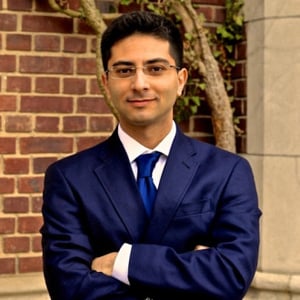
Associate Professor of Law, University of Notre Dame Law School
Sherif Girgis joined Notre Dame Law School in 2021. Prior to joining Notre Dame Law, Sherif practiced law at Jones Day in Washington, D.C., where he focused on appellate and complex civil litigation. Before that, Girgis served as a law clerk to Justice Samuel Alito, Jr., of the U.S. Supreme Court and Judge Thomas B. Griffith of the U.S. Court of Appeals for the D.C. Circuit. Now completing his Ph.D. in philosophy at Princeton, Girgis earned his J.D. at Yale Law School, where he served as an editor of the Yale Law Journal and won the Felix S. Cohen Prize for best paper in legal philosophy. Before law school, he earned a master's degree (B.Phil.) in philosophy from the University of Oxford as a Rhodes Scholar, and his bachelor's degree in philosophy from Princeton, Phi Beta Kappa and summa cum laude. Girgis is coauthor of What Is Marriage? Man and Woman: A Defense, cited in a dissent in United States v. Windsor, and Debating Religious Liberty and Discrimination, released by Oxford University Press in 2017. His work at the intersection of philosophy and law--including criminal law, constitutional liberties, and jurisprudence--has appeared in academic and popular venues including the Yale Law Journal, the Virginia Law Review, the University of Pennsylvania Law Review, the Harvard Journal of Law and Public Policy, the American Journal of Jurisprudence, the Cambridge Companion to Philosophy of Law, The New York Times, and The Wall Street Journal.

Kean Family Dean & Peter J. Liacouras Professor of Law, Temple University Beasley School of Law
Rachel Rebouché is the Kean Family Dean of Temple University Beasley School of Law and the Peter J. Liacouras Professor of Law. Prior to her appointment as Dean, she was the Associate Dean for Research, a position she held from 2017 to 2021. She is also a Faculty Fellow at Temple’s Center for Public Health Law Research.
Dean Rebouché is a leading scholar in reproductive health law and family law. She is an author of Governance Feminism: An Introduction and an editor of Governance Feminism: Notes from the Field. She is also the editor of Feminist Judgments: Family Law Opinions Rewritten, published by Cambridge University Press, and an author of the sixth edition of the casebook, Family Law. In addition, she will join the fifth edition of the casebook, Contracts: Law in Action and recently co-edited a collection of essays for Law & Contemporary Problems on the pandemic’s effects on contract law.
Dean Rebouché has served as a co-investigator on two grant-funded research projects related to reproductive health, one housed at the Emory University Rollins School of Public Health and another funded by the World Health Organization. Her recent research also includes articles in law reviews and in peer-reviewed journals on abortion law, relational contracts, gestational surrogacy, prenatal genetic testing and genetic counseling, collaborative divorce, parental involvement laws, and international reproductive rights.
Dean Rebouché received a J.D. from Harvard Law School, an LL.M. from Queen’s University, Belfast, and a B.A. from Trinity University. Prior to law school, she worked as a researcher for the Northern Ireland Human Rights Commission and the Human Rights Centre at Queen’s University, Belfast. After law school, Dean Rebouché clerked for Justice Kate O’Regan on the Constitutional Court of South Africa and practiced law in Washington, D.C., where she served as an associate director of adolescent health programs at the National Partnership for Women & Families (formerly, the Women’s Legal Defense Fund) and as a Women’s Law and Public Policy Fellow at the National Women’s Law Center.
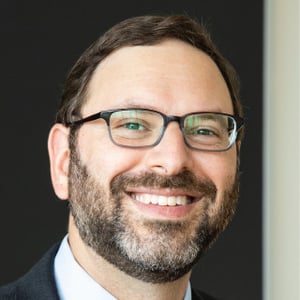
Antonin Scalia Professor of Law, Harvard Law School
Stephen E. Sachs is the Antonin Scalia Professor of Law at Harvard Law School, where he teaches civil procedure, conflict of laws, and seminars on constitutional law. His research focuses on the law and theory of constitutional interpretation, the jurisdiction of state and federal courts, the history of procedure and private law, and the role of the general common law in the U.S. legal system.
Sachs has authored numerous articles, essays, and book chapters. He is an elected member of the American Law Institute, an adviser to the ALI’s project on the Restatement of the Law (Third), Conflict of Laws, a former member of the Judicial Conference’s Advisory Committee on Appellate Rules, and a founding member of the Academic Freedom Alliance.
In 2020, Sachs received the Federalist Society’s Joseph Story Award, which recognizes a young academic who has demonstrated excellence in legal scholarship, a commitment to teaching, a concern for students, and who has made a significant public impact in a manner that advances the rule of law in a free society.
Sachs previously taught at Duke University School of Law and as a visiting professor at the University of Chicago Law School. Before entering academia, he practiced in the Washington, D.C., litigation group of Mayer Brown LLP, and he clerked for Chief Justice John G. Roberts Jr. as well as for Judge Stephen F. Williams of the U.S. Court of Appeals for the D.C. Circuit.
Sachs received his J.D. from Yale Law School, where he was executive editor of the Yale Law Journal and served both as executive editor and articles editor of the Yale Law & Policy Review. A Rhodes Scholar, he graduated from Oxford University with a first-class BA (Hons) degree in philosophy, politics, and economics. He received his A.B. degree summa cum laude in history from Harvard University, earning the Sophia Freund Prize.
Sachs is a licensed attorney in Massachusetts and the District of Columbia, and he is authorized to practice before the D.C. Circuit, the Second Circuit, the Seventh Circuit, and the Supreme Court of the United States.
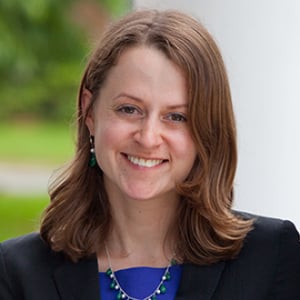
Stearns Weaver Miller Professor, Florida State University College of Law
Mary Ziegler is the Stearns Weaver Miller Professor at Florida State University College of Law. She specializes in the legal history of reproduction, the family, sexuality, and the Constitution. In the spring of 2022, she is visiting at Harvard Law School.
Her most recent book, Abortion and the Law in America: A Legal History, Roe v. Wade to the Present, was published by Cambridge University Press in 2020, and received positive reviews in outlets from the Washington Post to the Christian Science Monitor. Her new book, Dollars for Life: The Antiabortion Movement and the Fall of the Republican Establishment, will be published by Yale University Press in the summer of 2022. She also has a forthcoming book with Routledge, Reproduction and the Constitution.
Ziegler's first book, After Roe: The Lost History of the Abortion Debate, was published by Harvard University Press in 2015 and won the 2014 Harvard University Press Thomas J. Wilson Memorial Prize for best first manuscript published by the press in any discipline. Her second book, Beyond Abortion: Roe v. Wade and the Fight for Privacy, was published by Harvard University Press in 2018.
Her law review articles have appeared in leading journals, and she has served as a commentator for or been quoted in leading mass media outlets, including The Atlantic, CNN, Fox News, NBC, MSNBC, the New Republic, Newsweek, The New Yorker, The New York Times, NPR, PBS, Politico, Time, and The Washington Post. She has chaired committees for major legal history organizations, including the American Society for Legal History, the American Association of Law Schools Legal History Section and the American Bar Association’s Committee on Historic Commemorations. She is currently a member of the board of directors of the American Society for Legal History. She has also received recognition for her work in the classroom, including the 2016 Florida State University Teaching Award and the 2015 Transformation Through Teaching Award.
Senior Fellow, National Center for Policy Analysis
Senior Fellow at the National Center for Policy Analysis (NCPA) and author of Free To Choose Medicine: Better Drugs Sooner at Lower Cost

Adjunct Fellow, Competitive Enterprise Institute
Gregory Conko is an Adjunct Fellow at the Competitive Enterprise Institute and Vice President of Programs at DonorsTrust. His research at CEI focuses on health care, food and drug regulation, agriculture and agricultural trade, and nutrition and public health. He also has broad expertise in science and environmental policy and in administrative and regulatory law.
Since 2021, Conko has managed the grants and grantee programs at the donor-advised fund sponsor DonorsTrust, but he continues to research and write on policy matters for the Competitive Enterprise Institute. Before joining DonorsTrust, Conko was Deputy Director of the George Mason University Law & Economics Center, a Senior Fellow and later Executive Director of CEI.
Conko is the author or co-author of numerous books, studies, and articles, and Barron’s called his book, The Frankenfood Myth: How Protest and Politics Threaten the Biotech Revolution, co-authored with Henry I. Miller, one of the 25 best books of 2004. His other writings have appeared in such journals as Nature Biotechnology, Transgenic Research, Health Matrix: Journal of Law & Medicine, and the Cumberland Law Review, and in such newspapers as the Financial Times, The Wall Street Journal, Los Angeles Times, and USA Today.
Conko is a member of the Federalist Society’s Regulatory Transparency Project Working Group on FDA & Health, a member of the American Council on Science and Health’s Board of Scientific and Policy Advisors. He received a JD degree magna cum laude from the George Mason University School of Law and a BA in political science and history from American University. He lives in Virginia with his wife and son.
Partner, Orrick, Herrington & Sutcliffe LLP
Andy excels at solving complex problems for his clients using a variety of effective strategies. As former Chief Deputy Attorney General for the State of Wisconsin, Andy Cook has extensive experience representing businesses before state Attorneys General involving investigations and lawsuits. His strong relationships with Attorneys General and their senior staff frequently facilitate the successful resolution of client issues through diplomacy and negotiations. When litigation becomes necessary, Andy effectively advocates for clients throughout the litigation process.
Andy combines his legal expertise in numerous areas of law covered by state Attorneys General, an understanding of how state AG offices operate, and vast knowledge of legal and regulatory issues facing his clients. This substantive and comprehensive legal approach is crucial to effectively representing clients before state Attorneys General. Andy also has substantial experience drafting and enacting complex civil liability reforms before state legislatures to successfully address client goals.
Andy’s main practice focuses on advising Fortune 500 companies before state Attorneys General in the areas of antitrust, consumer protection, False Claims Act, environmental law, and cybersecurity and data privacy. Andy, in collaboration with a team of attorneys, successfully navigated a client through antitrust regulatory review by state Attorneys General in one of the nation’s largest mergers of two major telecommunication companies. Andy also worked with a team of lawyers representing a large corporation involving the multistate opioids litigation brought by state Attorneys General.
Andy gained valuable experience serving as Deputy Attorney General for the State of Wisconsin where he was the second in command of the 700-plus state agency. In his role as Chief Deputy Attorney General, Andy oversaw the day-to-day operations at the Wisconsin Department of Justice (DOJ); directed the State’s litigation strategy; negotiated, reviewed, and approved all settlements; drafted and reviewed attorney general opinions; managed the agency’s budget; oversaw civil and criminal investigations handled by DOJ; and managed DOJ’s legislative agenda.
Andy played college hockey and remains active by running, cross country skiing, and playing golf. On the weekends, Andy and his wife enjoy watching their kids’ sporting events, including soccer, baseball, gymnastics, and track. In his rare spare time, Andy reads history books.
Secretary, Galen Institute
John Hoff, founding board member of the Galen Institute, has a unique background that combines both health care policy and legal expertise. He served as the Health Attaché of the United States Mission to the United Nations Educational, Scientific and Cultural Organization (UNESCO) and the U.S. Mission to the Organization for Economic Cooperation and Development (OECD) from 2005-2009. While stationed in Paris, Mr. Hoff represented the U.S. Government on a broad range of issues of health and science policy on the international level, including intellectual property rights, health information technology, medical innovation, and comparative health systems data.
Prior to his work with UNESCO and the OECD, Mr. Hoff served as a Deputy Assistant Secretary for Planning and Evaluation at the U.S. Department of Health and Human Services. He was in charge of the Office of Disability, Aging, and Long Term Care Policy. He led the Office’s research on these issues, and also worked on additional policy initiatives such as reform of the medical malpractice litigation system, improvements in patient safety, and reform of the health care financing system.
Before joining the Government, Mr. Hoff practiced law for more than 30 years, specializing in health law and policy. He has published a number of articles and drafted legislation on health care issues, including the first bill introduced in Congress for market-based health care reform.
Mr. Hoff received his B.A. and LL.B. degrees from Harvard University. He is a member of the Bar of the District of Columbia and of the Supreme Court of the United States.
Scott K. Ginsburg Professor of Health Law & Policy, Georgetown University
David A. Hyman, M.D., J.D., is the Scott K. Ginsburg Professor of Health Law & Policy at Georgetown University. Professor Hyman focuses his research and writing on the regulation and financing of health care. He teaches or has taught health care regulation, civil procedure, insurance, medical malpractice, law & economics, professional responsibility, and tax policy.
While serving as Special Counsel to the Federal Trade Commission, Professor Hyman was principal author and project leader for the first joint report ever issued by the Federal Trade Commission and Department of Justice, “Improving Health Care: A Dose of Competition” (2004). He is also the author of Medicare Meets Mephistopheles, which was selected by the U.S. Chamber of Commerce/National Chamber Foundation as one of the top ten books of 2007, and the co-author (with Charles Silver) of Overcharged: Why Americans Pay Too Much for Health Care (2018). He has published widely in student-edited law reviews and peer-reviewed medical, health policy, law, and economics journals.

Robert L. Willett Family Professor of Law, Washington and Lee University School of Law
Timothy Stoltzfus Jost, J.D., holds the Robert L. Willett Family Professorship of Law at the Washington and Lee University School of Law. He is a coauthor of a casebook, Health Law, used widely throughout the United States in teaching health law and now in its sixth edition. He is also the author of Health Care at Risk, A Critique of the Consumer-Driven Movement, Health Care Coverage Determinations: An International Comparative Study, Readings in Comparative Health Law and Bioethics, and many articles and book chapters on health care regulation and comparative health law and policy. He has written numerous monographs on legal issues in health care reform for national organizations and blogs regularly for Health Affairs on regulatory issues. He is a consumer representative to the National Association of Insurance Commissioners and a member of the Institute of Medicine.
James R. Dougherty Chair for Faculty Excellence, University of Texas School of Law
Bill Sage, both a medical doctor and a lawyer, and a leading expert in health law and policy, joined the UT Law faculty at the beginning of the fall semester in 2006. Sage holds the James R. Dougherty Chair for Faculty Excellence and teaches courses in health law and in regulation and public policy. Sage is also the vice provost for health affairs at UT-Austin.
Sage has edited two books, including Medical Malpractice and the U.S. Health Care System (Cambridge University Press, 2006), and has written approximately 75 articles in legal, health policy, and medical publications. From 2002 through 2005, he was the principal investigator for the Project on Medical Liability in Pennsylvania funded by The Pew Charitable Trusts. In 2002, Sage served on the Institute of Medicine’s Committee on Rapid Advances in Health Care. In 1998, he received an Investigator Award in Health Policy Research from the Robert Wood Johnson Foundation. In 1993, he headed four working groups for the White House Task Force on Health Care Reform. He is an elected fellow of the Hastings Center on bioethics, and is a member of the editorial board of Health Affairs.
In 2002, Sage served on the Institute of Medicine’s Committee on Rapid Advances in Health Care. In 1998, he received an Investigator Award in Health Policy Research from the Robert Wood Johnson Foundation. In 1993, he headed four working groups for the White House Task Force on Health Care Reform. He is an elected fellow of the Hastings Center on bioethics, and is a member of the editorial board of Health Affairs.

Paula Stannard is a former deputy general counsel and acting general counsel of the U.S. Department of Health and Human Services (HHS), where she oversaw the Food and Drug, Civil Rights and Legislation divisions of the 450-attorney HHS Office of the General Counsel and provided legal advice and counsel to senior HHS officials, including the Secretary of the department, on the issues arising in their respective areas.
At Alston & Bird, Paula advises clients on regulatory questions that arise out of the on-going health care reform effort and focuses her practice on HIPAA and health information technology (including certified EHR and meaningful use issues), food and drug and other regulatory issues in the health care sector. Her HHS experience provides clients substantive knowledge of, and experience in, FDA, HIPAA, e-health and health IT, federal health insurance regulation, patient safety, and public health preparedness and emergency response issues.
Paula received her J.D. from Stanford Law School in 1990, where she was an executive editor of the Stanford Law Review, and her B.A., magna cum laude, in political science and Latin from Amherst College, where she was elected to Phi Beta Kappa. She clerked for the Honorable J.L. Edmondson of the United States Court of Appeals for the Eleventh Circuit.
Stanford University
(J.D., 1990)
Amherst College
(B.A., 1987)

Managing Director, Alvarez & Marsal Healthcare Industry Group
With prior service as Deputy General Counsel of the U.S. Department of Health and Human Services and as Executive Vice President and General Counsel of Tenet Healthcare, he brings more than 20 years of experience in addressing challenging healthcare issues in government and private industry.
Mr. Urbanowicz regularly advises boards of directors, senior management, investors and lenders of health care organizations facing significant regulatory, compliance, financial or operating challenges. His clients include healthcare providers, payors and suppliers.
Recent engagements include: serving as a federally-appointed hospital restructuring and safety monitor; compliance and operational improvements for publicly-traded and not-for-profit Medicare Advantage plans, Medicare Prescription Drug Plans (PDP) and Medicaid managed care companies; renegotiating of government debt for a major hospital system; restructuring advisory services to the Medicaid program of a large state; numerous internal and government investigations involving healthcare providers including: academic health systems, medical device companies, pharmaceutical manufacturers, long term care hospital companies, hospice providers, dental services companies and disease management companies.
Mr. Urbanowicz also serves on the board of directors of Maxim Healthcare Services, one of the nation’s largest home health services companies, and chairs the company’s compliance committee.
As Deputy General Counsel of HHS, from 2001 to 2003, Mr. Urbanowicz served as the senior legal adviser to the Secretary of Health and Human Services on significant federal healthcare policy issues including Medicare and Medicaid provider payment and fraud and abuse enforcement policy. He was part of the team that drafted the historic Medicare Prescription Drug Act of 2003.
During his tenure at Tenet, Mr. Urbanowicz was responsible for successfully resolving several major federal criminal investigations and civil lawsuits facing Tenet by the U.S. Department of Justice, the Securities and Exchange Commission, and the HHS Office of Inspector General. Prior to his government service, he was a partner in the law firm of Locke, Liddell & Sapp.
Mr. Urbanowicz earned a bachelor of arts’ degree and a Juris Doctor degree from Tulane University. He is admitted to the bars of the District of Columbia, the U.S. Supreme Court and the Louisiana Supreme Court, and is a member of the American Law Institute.
Counsel, The Judicial Confirmation Network
Wendy Long is legal counsel to the Judicial Confirmation Network. Until March 2005, she was a litigation partner in the New York office of Kirkland & Ellis LLP. Wendy was a law clerk to U.S. Supreme Court Justice Clarence Thomas and to Judge Ralph Winter of the U.S. Court of Appeals for the Second Circuit in New York. She is a graduate of Northwestern University School of Law, cum laude and Order of the Coif, where she was articles editor of the Northwestern University Law Review, and of Dartmouth College. She previously served as a press secretary in the U.S. Senate, for former U.S. Senator Bill Armstrong (R-Colo.) and former U.S. Senator Gordon Humphrey (R-N.H.).
Vice President and Legal Director, Legal Momentum

Panel IV: Mandates, Medicine, and Liberty: The Legal Battle Over Bodily Autonomy and the Right to Choose
Hadley P. Arkes, Steven J. Griffin, Jennifer Perkins, Christina Sandefur
Featuring: Prof. Hadley P. Arkes, Founder and Director, The James Wilson Institute Mr. Steven Griffin, Deputy Attorney...
Who is Liable in Detransition Cases?
Erin M. Hawley, Mary Margaret Olohan, Sarah Parshall Perry, Mark Trammell
In the first medical malpractice verdict of its kind, a New York jury awarded $2...
Luncheon Panel: Abortion Law After Dobbs
Stephanie Barclay, Sherif Girgis, Rachel Rebouché, Stephen E. Sachs, Mary Ziegler
Featuring: Prof. Stephanie Barclay, Professor of Law, Georgetown University Law Center Dean Rachel Rebouché,...
Environmental Enforcement Keynote Address by Senator Dan Sullivan
Our Nation’s environmental laws and regulations are designed to foster the responsible use of natural...
Topics
State Attorneys General Write to AG Garland
In 2021, the National School Boards Association wrote a letter to Attorney General Merrick Garland...
Free To Choose Medicine
Bartley J. Madden, Gregory Conko
Note from the Editor: This article is about the Free To Choose Medicine concept....
Tort Reform Update: Recently Enacted Legislative Reforms and State Court Challenges
Andrew Cook
Introduction Since the 2010 elections altered the makeup of many state legislative and executive branches,...
Tort Reform Update: Recently Enacted Legislative Reforms and State Court Challenges
Andrew Cook
Introduction Since the 2010 elections altered the makeup of many state legislative and executive...
Health Care Reform
John S. Hoff, David Hyman, Timothy S. Jost, William M. Sage, Paula M. Stannard, Peter Urbanowicz
Last Updated at 11:00 AM, Friday, October 27, 2009 The current debate about health care reform...
Abortion and the Courts
Wendy Long, Jennifer G. Brown
The Supreme Court has upheld the constitutionality of the Partial-Birth Abortion Ban Act, passed by...