
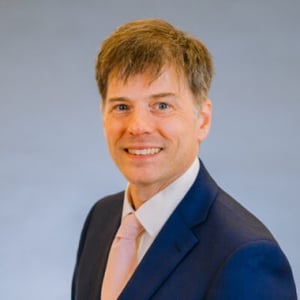
Senior Counsel, Vice President of Litigation Strategy, Alliance Defending Freedom
Jonathan Scruggs serves as senior counsel and vice president of litigation strategy with Alliance Defending Freedom. In this role, he identifies new litigation opportunities, develops new legal strategies, and improves processes across multiple litigation teams in collaboration with the chief legal counsel.
Since joining ADF in 2006, Scruggs has worked on and prevailed in a variety of cases related to Title IX, gender ideology, and people’s right to freely express their faith, including Masterpiece Cakeshop v. Colorado Civil Rights Commission, 303 Creative v. Elenis, and Brush & Nib Studio v. Phoenix, which Scruggs argued at the Arizona Supreme Court. Scruggs has argued before numerous federal appellate courts and trial courts across the country and has extensive experience litigating free-speech, religious-liberty, establishment, Title IX, and equal-protection issues on behalf of students, female athletes, businesses, professionals, and non-profit entities.
Scruggs earned his B.A., summa cum laude, from Vanderbilt University in 2003 and his J.D. at Harvard Law School in 2006. He is also a 2004 Blackstone Fellow.
A member of the bars of Arizona and Tennessee, Scruggs is admitted to the U.S. Supreme Court and multiple federal district and appellate courts.
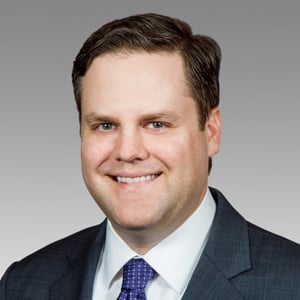
Partner, Osborn Maledon
Eric Fraser regularly handles high-profile appeals and issue litigation. He has argued major cases before the Ninth Circuit, Arizona Supreme Court, and Arizona Court of Appeals. Benchmark Litigation named him to its 40 & Under Hot List (2018-2019) and Southwest Super Lawyers lists him as a Rising Star (2013-2019) for appeals.
Before joining private practice, Fraser clerked on the U.S. Court of Appeals for the D.C. Circuit. He currently serves as a Ninth Circuit Appellate Lawyer Representative and as Chair Elect for the Appellate Practice Section of the State Bar. He also regularly writes about appeals, including contributing to SCOTUSblog, co-editing the azapp.com blog, and coauthoring a monthly column in Arizona Attorney magazine covering civil appeals. The New York Times, Arizona Republic, Bloomberg Businessweek, Fox News, and many local media outlets have featured his discussion of his cases or legal analysis.
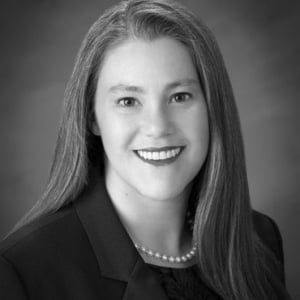
Judge, Arizona Court of Appeals, Division One
The Honorable Jennifer M. Perkins began service on the Arizona Court of Appeals, Division One, on October 30, 2017. At the time of her appointment by Governor Douglas Ducey, Judge Perkins was Assistant Solicitor General for the State of Arizona.
Judge Perkins was born in Portales, New Mexico, and primarily raised in Albuquerque. She attended the prestigious Albuquerque Academy from 1988-1995, before moving to Washington D.C. to attend the Elliott School of International Affairs at the George Washington University as a National Merit Scholar. Therafter, she relocated again to Dallas, Texas, and earned her juris doctor from the SMU Dedman School of Law, graduating cum laude in 2002.
Judge Perkins started her career at the law firm of Browning & Peifer (now Peifer, Hanson, Mullins, and Baker) in Albuquerque, New Mexico. While there, she litigated complex commercial matters including class action plaintiff and defense work, and assisted with employment and contract litigation. In 2003, the judge accompanied the Honorable James O. Browning in transitioning to the federal district court bench, serving as his first law clerk.
After her clerkship, Judge Perkins moved to Arizona to work for the Institute for Justice, Arizona Chapter, a public interest law firm. She spent five years with IJ-AZ litigating civil rights cases in Arizona and across the country. In 2009, the judge became Disciplinary Counsel for the Arizona Commission on Judicial Conduct, where she reviewed and prosecuted ethics complaints against state court judges throughout Arizona. After five years serving the state in this capacity, Judge Perkins entered private practice by joining an appellate law firm in Phoenix. While there, she worked on state and federal appeals involving a wide range of legal subjects, including complex business disputes, property rights, judicial ethics, and personal injury matters.
In January 2015, Judge Perkins joined the Office of the Arizona Attorney General to serve as the first Assistant Solicitor General; in that capacity, she was responsible for oversight of Attorney General Opinions and served as ethics counsel to the entire office. In addition to these two primary roles, the judge assisted on a variety of matters including trial and appellate litigation of election-related matters; federal appellate litigation with the Federalism Unit; state criminal appeals; and drafting amicus briefs on behalf of Arizona in state and federal courts.
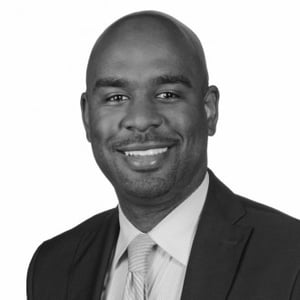
Executive Director, North America, Quilliam International
Dr. Muhammad Fraser-Rahim is the Executive Director, North America for Quilliam International.
He is an expert on violent extremism issues and a scholar on Africa. Prior to his current role, he served as a Senior Program Officer at the U.S. Institute of Peace, where he led their Horn of Africa program and served as an expert on violent extremism issues globally.
Dr. Fraser-Rahim’s areas of specialty are on transnational terrorist movements, Islamic intellectual history, Muslim communities in the West and Africa affairs. In addition, Dr. Fraser-Rahim worked for the United States Government for more than a decade for the Department of Homeland Security, Director of National Intelligence, and the National Counter-terrorism Center. There, he provided strategic advice and executive branch analytical support on violent extremism issues to the White House and the National Security Council, where he was the author or co-author of Presidential Daily Briefs and strategic assessments on extremist ideology.
Dr. Fraser-Rahim has conducted research in more than 40 countries on the African continent, and has worked and studied throughout the Middle East. He completed advanced level Arabic language certificates at various higher education institutions in the U.S., West Africa and the Middle East and he earned his Ph.D. in 2017 from Howard University in African Studies, with a focus on Islamic thought and on violent extremism issues.
Dr. Fraser-Rahim provided one of the first doctoral dissertations on the intellectual thought of African American Muslims and its nexus to the broader Islamic world using original primary sources in both Arabic and English. and focused on the American Muslim thinker, WD Mohammed, titled, ” The Making of American Islam and the Emergence of Western Islamic Intellectual Thought to Counter Violent Extremism: A Case Study of American Muslim Revivalist, Imam WD Mohammed (1933-2008.) Finally, he is also a security fellow at the Truman National Security Project.
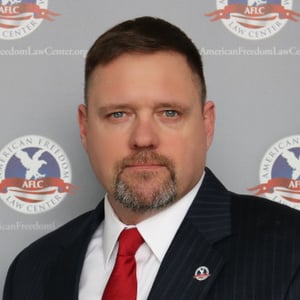
Co-Founder and Senior Counsel, American Freedom Law Center
Robert J. Muise is an expert in constitutional law. Since 2000, his law practice has been dedicated to defending religious liberties, the freedom of speech, and the right to life in state and federal trial and appellate courts all across the country. More recently, Mr. Muise has been involved in numerous cases defending American freedoms against the growing threat of sharia.
In 2012, Mr. Muise, along with David Yerushalmi, co-founded the American Freedom Law Center, a national public interest law firm dedicated to fighting for faith and freedom and defending our Judeo-Christian heritage and moral values.
In 2015, Messrs. Muise and Yerushalmi co-authored the monograph entitled, Offensive and Defensive Lawfare: Fighting Civilizational Jihad in America’s Courts as part of the Center for Security Policy’s Civilization Jihad Reader Series.
Through his work, Mr. Muise has appeared on national television programs such as The Kelly File with Megyn Kelly, the O’Reilly Factor, Hannity and Colmes, Freedom Watch, Fox and Friends, and the Glenn Beck Program, among others. He has also been interviewed on numerous local and national radio shows and for many national and local newspapers and periodicals, including the New York Times, the Los Angeles Times, the San Francisco Chronicle, and many others. He was named the “Appellate Lawyer of the Week” by the National Law Journal on August 10, 2011. Mr. Muise is also co-author of a scholarly article published in the Duke University Press’s Journal of Health Politics, Policy, and Law, entitled, “Wearing the Crown of Solomon? Chief Justice Roberts and the Affordable Care Act ‘Tax.'”
Founder and Chairman, Liberty Counsel
Mat Staver is the Founder and Chairman of Liberty Counsel, an international nonprofit litigation, education, and policy organization dedicated to advancing religious freedom, the sanctity of human life, and the family; Chairman of Liberty Counsel Action, Freedom Federation, The Salt & Light Council, and National House of Hope; Chairman of Christians in Defense of Israel; Founder and Chairman of Liberty Relief International; Vice President and Chief Counsel of the National Hispanic Christian Leadership Conference-CONEL; Director of the Hispanic Israel Leadership Coalition; former Vice President of Liberty University; former Dean and tenured professor of law at Liberty University School of Law; Trustee of The Timothy Plan, a New York and Tel-Aviv Stock Exchange-traded family of mutual funds; Trustee of the Supreme Court Historical Society; Board of Reference of The Christian Film and Television Commission; Board of Advisors of Care for Pastors; Founder and former President of Staver & Associates; and Founder and former President of The Staver Group.
Mat has over 230 published legal opinions. He has authored eight scholarly law review publications and 10 books, including Faith & Freedom: A Complete Handbook for Defending Your Religious Rights, Same-Sex Marriage: Putting Every Household at Risk, and Eternal Vigilance: Knowing and Protecting Your Religious Freedom. He has authored many booklets and brochures, along with hundreds of articles.
Mat is the host and producer of Faith and Freedom, an 11-minute daily radio program, and Freedom's Call, a 60-second daily radio program. He is a frequent guest on international and many national network and cable television and radio programs, including print and electronic media.
Mat has filed numerous briefs and argued in many federal and state courts, including the U.S. Supreme Court and has argued two landmark cases before the Supreme Court, Madsen v. Women's Health Center and McCreary County v. ACLU of Kentucky.
Mat has a B.A., Theology, cum laude, Southern Missionary College; M.A., Religion, summa cum laude, Andrews University; J.D., University of Kentucky; LL.D., honoris causa, Liberty University; D.D., honoris causa, South Florida Bible College.
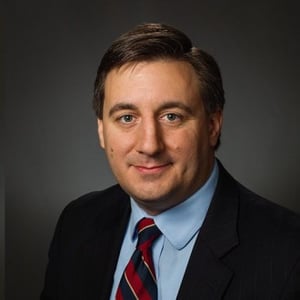
Senior Counsel, Senior Vice President of Corporate Engagement, Alliance Defending Freedom
Jeremy Tedesco serves as senior counsel and senior vice president of corporate engagement for Alliance Defending Freedom. In this role, Tedesco leads ADF’s efforts to combat corporate cancel culture and build a business ethic that respects free speech, religious freedom, and human dignity.
Immediately preceding his current role, Tedesco served as senior vice president for communications, during which time he was a lead convener of the Philadelphia Statement, a movement dedicated to restoring free speech and civil discourse. Tedesco also launched a regular video series called Freedom Matters, profiling ADF clients, cases, and issues. The program included 24 videos in its first year, which more than 31 million people viewed.
Previously, Tedesco litigated First Amendment cases at the highest levels. He was part of the legal team that represented cake artist Jack Phillips in Masterpiece Cakeshop v. Colorado Civil Rights Commission before the U.S. Supreme Court and argued Phillips’ case at the Colorado Court of Appeals. He was also the lead brief writer in two other U.S. Supreme Court wins, Reed v. Town of Gilbert and Arizona Christian School Tuition Organization v. Winn. Tedesco has also argued six times before five different federal appellate courts and founded and directed the ADF Center for Conscience Initiatives, where he led efforts to protect individuals from government-coerced speech.
Numerous media outlets, including The Wall Street Journal, Fox News, CNN, The New York Times, USA Today, PBS, NPR, and National Review, have interviewed Tedesco or published his comments.
Tedesco earned his Juris Doctor in 2004 from the Regent University School of Law.
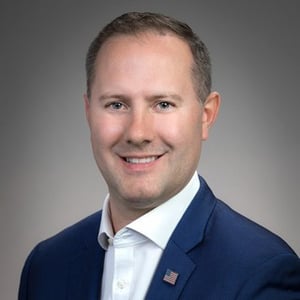
Head of Corporate Governance, Strive Asset Management
Justin Danhof is the Head of Corporate Governance at Strive Asset Management. Previously, he served as General Counsel for the National Center for Public Policy Research, as well as Director of the Center’s Free Enterprise Project. He also worked in the Miami-Dade State’s Attorney’s Office in the Economic Crimes and Cybercrimes Division, for the Massachusetts Alliance for Economic Development and at the U.S. Securities and Exchange Commission.
Mr. Danhof’s work has been widely published and quoted in major newspapers, including the Wall Street Journal, the New York Times, Politico, USA Today, the Los Angeles Times, the San Francisco Chronicle, the Boston Globe, the Christian Science Monitor, and the Washington Post. He has also appeared on the Fox News Channel, One America News Network, and the Fox Business Channel, among others.
Mr. Danhof is a member of the Federalist Society and Christian Legal Society.
Mr. Danhof is a graduate of Bentley University (Waltham, MA), where he received a Bachelor of Science in economics and finance and pitched for three seasons on the school’s NCAA Division II baseball team. Mr. Danhof completed his graduate studies at the University of Miami School of Law where he received his Juris Doctor and Master of Laws in Taxation.
Mr. Danhof is licensed to practice law in New York and Washington, D.C.
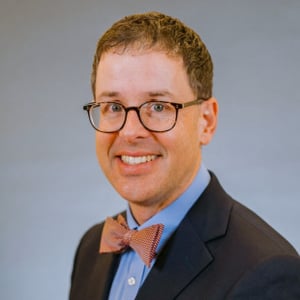
Senior Counsel and VP, Appellate Advocacy, Alliance Defending Freedom
John Bursch is senior counsel and vice president of appellate advocacy with Alliance Defending Freedom. Bursch has argued 12 U.S. Supreme Court cases and more than 30 state supreme court cases since 2011, and a recent study concluded that among all frequent Supreme Court advocates who did not work for the federal government, he had the 3rd highest success rate for persuading justices to adopt his legal position.
Bursch served as solicitor general for the state of Michigan from 2011-2013. He has argued multiple Michigan Supreme Court cases in eight of the last ten terms and has successfully litigated hundreds of matters nationwide, including six with at least $1 billion at stake. As part of his private firm, Bursch Law PLLC, he has represented Fortune 500 companies, foreign and domestic governments, top public officials, and industry associations in high-profile cases, primarily on appeal. He was inducted into the American Academy of Appellate Lawyers and serves as a member of the American Law Institute. His work has resulted in repeated listings in Michigan Super Lawyers and Best Lawyers.
Before entering private practice, Bursch served as a law clerk to the Honorable James B. Loken on the U.S. Court of Appeals for the 8th Circuit. He received his J.D. magna cum laude in 1997 from the University of Minnesota Law School, where he served as Chief Note & Comment Editor for the Minnesota Law Review. Prior to that, he attended Western Michigan University, where he received degrees in mathematics and music performance summa cum laude.
Senior Counsel and VP, Appellate Advocacy, Alliance Defending Freedom
John Bursch is senior counsel and vice president of appellate advocacy with Alliance Defending Freedom. Bursch has argued 12 U.S. Supreme Court cases and more than 30 state supreme court cases since 2011, and a recent study concluded that among all frequent Supreme Court advocates who did not work for the federal government, he had the 3rd highest success rate for persuading justices to adopt his legal position.
Bursch served as solicitor general for the state of Michigan from 2011-2013. He has argued multiple Michigan Supreme Court cases in eight of the last ten terms and has successfully litigated hundreds of matters nationwide, including six with at least $1 billion at stake. As part of his private firm, Bursch Law PLLC, he has represented Fortune 500 companies, foreign and domestic governments, top public officials, and industry associations in high-profile cases, primarily on appeal. He was inducted into the American Academy of Appellate Lawyers and serves as a member of the American Law Institute. His work has resulted in repeated listings in Michigan Super Lawyers and Best Lawyers.
Before entering private practice, Bursch served as a law clerk to the Honorable James B. Loken on the U.S. Court of Appeals for the 8th Circuit. He received his J.D. magna cum laude in 1997 from the University of Minnesota Law School, where he served as Chief Note & Comment Editor for the Minnesota Law Review. Prior to that, he attended Western Michigan University, where he received degrees in mathematics and music performance summa cum laude.
Partner, Osborn Maledon
Eric Fraser regularly handles high-profile appeals and issue litigation. He has argued major cases before the Ninth Circuit, Arizona Supreme Court, and Arizona Court of Appeals. Benchmark Litigation named him to its 40 & Under Hot List (2018-2019) and Southwest Super Lawyers lists him as a Rising Star (2013-2019) for appeals.
Before joining private practice, Fraser clerked on the U.S. Court of Appeals for the D.C. Circuit. He currently serves as a Ninth Circuit Appellate Lawyer Representative and as Chair Elect for the Appellate Practice Section of the State Bar. He also regularly writes about appeals, including contributing to SCOTUSblog, co-editing the azapp.com blog, and coauthoring a monthly column in Arizona Attorney magazine covering civil appeals. The New York Times, Arizona Republic, Bloomberg Businessweek, Fox News, and many local media outlets have featured his discussion of his cases or legal analysis.
Judge, Arizona Court of Appeals, Division One
The Honorable Jennifer M. Perkins began service on the Arizona Court of Appeals, Division One, on October 30, 2017. At the time of her appointment by Governor Douglas Ducey, Judge Perkins was Assistant Solicitor General for the State of Arizona.
Judge Perkins was born in Portales, New Mexico, and primarily raised in Albuquerque. She attended the prestigious Albuquerque Academy from 1988-1995, before moving to Washington D.C. to attend the Elliott School of International Affairs at the George Washington University as a National Merit Scholar. Therafter, she relocated again to Dallas, Texas, and earned her juris doctor from the SMU Dedman School of Law, graduating cum laude in 2002.
Judge Perkins started her career at the law firm of Browning & Peifer (now Peifer, Hanson, Mullins, and Baker) in Albuquerque, New Mexico. While there, she litigated complex commercial matters including class action plaintiff and defense work, and assisted with employment and contract litigation. In 2003, the judge accompanied the Honorable James O. Browning in transitioning to the federal district court bench, serving as his first law clerk.
After her clerkship, Judge Perkins moved to Arizona to work for the Institute for Justice, Arizona Chapter, a public interest law firm. She spent five years with IJ-AZ litigating civil rights cases in Arizona and across the country. In 2009, the judge became Disciplinary Counsel for the Arizona Commission on Judicial Conduct, where she reviewed and prosecuted ethics complaints against state court judges throughout Arizona. After five years serving the state in this capacity, Judge Perkins entered private practice by joining an appellate law firm in Phoenix. While there, she worked on state and federal appeals involving a wide range of legal subjects, including complex business disputes, property rights, judicial ethics, and personal injury matters.
In January 2015, Judge Perkins joined the Office of the Arizona Attorney General to serve as the first Assistant Solicitor General; in that capacity, she was responsible for oversight of Attorney General Opinions and served as ethics counsel to the entire office. In addition to these two primary roles, the judge assisted on a variety of matters including trial and appellate litigation of election-related matters; federal appellate litigation with the Federalism Unit; state criminal appeals; and drafting amicus briefs on behalf of Arizona in state and federal courts.
Head of Corporate Governance, Strive Asset Management
Justin Danhof is the Head of Corporate Governance at Strive Asset Management. Previously, he served as General Counsel for the National Center for Public Policy Research, as well as Director of the Center’s Free Enterprise Project. He also worked in the Miami-Dade State’s Attorney’s Office in the Economic Crimes and Cybercrimes Division, for the Massachusetts Alliance for Economic Development and at the U.S. Securities and Exchange Commission.
Mr. Danhof’s work has been widely published and quoted in major newspapers, including the Wall Street Journal, the New York Times, Politico, USA Today, the Los Angeles Times, the San Francisco Chronicle, the Boston Globe, the Christian Science Monitor, and the Washington Post. He has also appeared on the Fox News Channel, One America News Network, and the Fox Business Channel, among others.
Mr. Danhof is a member of the Federalist Society and Christian Legal Society.
Mr. Danhof is a graduate of Bentley University (Waltham, MA), where he received a Bachelor of Science in economics and finance and pitched for three seasons on the school’s NCAA Division II baseball team. Mr. Danhof completed his graduate studies at the University of Miami School of Law where he received his Juris Doctor and Master of Laws in Taxation.
Mr. Danhof is licensed to practice law in New York and Washington, D.C.
Executive Director, North America, Quilliam International
Dr. Muhammad Fraser-Rahim is the Executive Director, North America for Quilliam International.
He is an expert on violent extremism issues and a scholar on Africa. Prior to his current role, he served as a Senior Program Officer at the U.S. Institute of Peace, where he led their Horn of Africa program and served as an expert on violent extremism issues globally.
Dr. Fraser-Rahim’s areas of specialty are on transnational terrorist movements, Islamic intellectual history, Muslim communities in the West and Africa affairs. In addition, Dr. Fraser-Rahim worked for the United States Government for more than a decade for the Department of Homeland Security, Director of National Intelligence, and the National Counter-terrorism Center. There, he provided strategic advice and executive branch analytical support on violent extremism issues to the White House and the National Security Council, where he was the author or co-author of Presidential Daily Briefs and strategic assessments on extremist ideology.
Dr. Fraser-Rahim has conducted research in more than 40 countries on the African continent, and has worked and studied throughout the Middle East. He completed advanced level Arabic language certificates at various higher education institutions in the U.S., West Africa and the Middle East and he earned his Ph.D. in 2017 from Howard University in African Studies, with a focus on Islamic thought and on violent extremism issues.
Dr. Fraser-Rahim provided one of the first doctoral dissertations on the intellectual thought of African American Muslims and its nexus to the broader Islamic world using original primary sources in both Arabic and English. and focused on the American Muslim thinker, WD Mohammed, titled, ” The Making of American Islam and the Emergence of Western Islamic Intellectual Thought to Counter Violent Extremism: A Case Study of American Muslim Revivalist, Imam WD Mohammed (1933-2008.) Finally, he is also a security fellow at the Truman National Security Project.
Co-Founder and Senior Counsel, American Freedom Law Center
Robert J. Muise is an expert in constitutional law. Since 2000, his law practice has been dedicated to defending religious liberties, the freedom of speech, and the right to life in state and federal trial and appellate courts all across the country. More recently, Mr. Muise has been involved in numerous cases defending American freedoms against the growing threat of sharia.
In 2012, Mr. Muise, along with David Yerushalmi, co-founded the American Freedom Law Center, a national public interest law firm dedicated to fighting for faith and freedom and defending our Judeo-Christian heritage and moral values.
In 2015, Messrs. Muise and Yerushalmi co-authored the monograph entitled, Offensive and Defensive Lawfare: Fighting Civilizational Jihad in America’s Courts as part of the Center for Security Policy’s Civilization Jihad Reader Series.
Through his work, Mr. Muise has appeared on national television programs such as The Kelly File with Megyn Kelly, the O’Reilly Factor, Hannity and Colmes, Freedom Watch, Fox and Friends, and the Glenn Beck Program, among others. He has also been interviewed on numerous local and national radio shows and for many national and local newspapers and periodicals, including the New York Times, the Los Angeles Times, the San Francisco Chronicle, and many others. He was named the “Appellate Lawyer of the Week” by the National Law Journal on August 10, 2011. Mr. Muise is also co-author of a scholarly article published in the Duke University Press’s Journal of Health Politics, Policy, and Law, entitled, “Wearing the Crown of Solomon? Chief Justice Roberts and the Affordable Care Act ‘Tax.'”
Founder and Chairman, Liberty Counsel
Mat Staver is the Founder and Chairman of Liberty Counsel, an international nonprofit litigation, education, and policy organization dedicated to advancing religious freedom, the sanctity of human life, and the family; Chairman of Liberty Counsel Action, Freedom Federation, The Salt & Light Council, and National House of Hope; Chairman of Christians in Defense of Israel; Founder and Chairman of Liberty Relief International; Vice President and Chief Counsel of the National Hispanic Christian Leadership Conference-CONEL; Director of the Hispanic Israel Leadership Coalition; former Vice President of Liberty University; former Dean and tenured professor of law at Liberty University School of Law; Trustee of The Timothy Plan, a New York and Tel-Aviv Stock Exchange-traded family of mutual funds; Trustee of the Supreme Court Historical Society; Board of Reference of The Christian Film and Television Commission; Board of Advisors of Care for Pastors; Founder and former President of Staver & Associates; and Founder and former President of The Staver Group.
Mat has over 230 published legal opinions. He has authored eight scholarly law review publications and 10 books, including Faith & Freedom: A Complete Handbook for Defending Your Religious Rights, Same-Sex Marriage: Putting Every Household at Risk, and Eternal Vigilance: Knowing and Protecting Your Religious Freedom. He has authored many booklets and brochures, along with hundreds of articles.
Mat is the host and producer of Faith and Freedom, an 11-minute daily radio program, and Freedom's Call, a 60-second daily radio program. He is a frequent guest on international and many national network and cable television and radio programs, including print and electronic media.
Mat has filed numerous briefs and argued in many federal and state courts, including the U.S. Supreme Court and has argued two landmark cases before the Supreme Court, Madsen v. Women's Health Center and McCreary County v. ACLU of Kentucky.
Mat has a B.A., Theology, cum laude, Southern Missionary College; M.A., Religion, summa cum laude, Andrews University; J.D., University of Kentucky; LL.D., honoris causa, Liberty University; D.D., honoris causa, South Florida Bible College.
Senior Counsel, Senior Vice President of Corporate Engagement, Alliance Defending Freedom
Jeremy Tedesco serves as senior counsel and senior vice president of corporate engagement for Alliance Defending Freedom. In this role, Tedesco leads ADF’s efforts to combat corporate cancel culture and build a business ethic that respects free speech, religious freedom, and human dignity.
Immediately preceding his current role, Tedesco served as senior vice president for communications, during which time he was a lead convener of the Philadelphia Statement, a movement dedicated to restoring free speech and civil discourse. Tedesco also launched a regular video series called Freedom Matters, profiling ADF clients, cases, and issues. The program included 24 videos in its first year, which more than 31 million people viewed.
Previously, Tedesco litigated First Amendment cases at the highest levels. He was part of the legal team that represented cake artist Jack Phillips in Masterpiece Cakeshop v. Colorado Civil Rights Commission before the U.S. Supreme Court and argued Phillips’ case at the Colorado Court of Appeals. He was also the lead brief writer in two other U.S. Supreme Court wins, Reed v. Town of Gilbert and Arizona Christian School Tuition Organization v. Winn. Tedesco has also argued six times before five different federal appellate courts and founded and directed the ADF Center for Conscience Initiatives, where he led efforts to protect individuals from government-coerced speech.
Numerous media outlets, including The Wall Street Journal, Fox News, CNN, The New York Times, USA Today, PBS, NPR, and National Review, have interviewed Tedesco or published his comments.
Tedesco earned his Juris Doctor in 2004 from the Regent University School of Law.
Senior Counsel and VP, Appellate Advocacy, Alliance Defending Freedom
John Bursch is senior counsel and vice president of appellate advocacy with Alliance Defending Freedom. Bursch has argued 12 U.S. Supreme Court cases and more than 30 state supreme court cases since 2011, and a recent study concluded that among all frequent Supreme Court advocates who did not work for the federal government, he had the 3rd highest success rate for persuading justices to adopt his legal position.
Bursch served as solicitor general for the state of Michigan from 2011-2013. He has argued multiple Michigan Supreme Court cases in eight of the last ten terms and has successfully litigated hundreds of matters nationwide, including six with at least $1 billion at stake. As part of his private firm, Bursch Law PLLC, he has represented Fortune 500 companies, foreign and domestic governments, top public officials, and industry associations in high-profile cases, primarily on appeal. He was inducted into the American Academy of Appellate Lawyers and serves as a member of the American Law Institute. His work has resulted in repeated listings in Michigan Super Lawyers and Best Lawyers.
Before entering private practice, Bursch served as a law clerk to the Honorable James B. Loken on the U.S. Court of Appeals for the 8th Circuit. He received his J.D. magna cum laude in 1997 from the University of Minnesota Law School, where he served as Chief Note & Comment Editor for the Minnesota Law Review. Prior to that, he attended Western Michigan University, where he received degrees in mathematics and music performance summa cum laude.

Topics
United for Uzeugbunam
The Federalist Society is pleased to announce its Student Blog Initiative, a project of the...
State Court Docket Watch: Brush & Nib Studio v. City of Phoenix
Jonathan Scruggs
For the last decade, courts and commentators have penned many pages about anti-discrimination norms and...
Title VII and the Meaning of "Sex"
Houston Lawyers Chapter
Houston, TXA Conversation with Eisenhower Biographer Alan Sears
DC Young Lawyers Chapter
Washington, DCCompelled Speech or Public Accommodation?
Eric M. Fraser, Jennifer Perkins
On September 16, 2019, the Arizona Supreme Court issued a 4-3 decision in Brush &...
Compelled Speech or Public Accommodation?
TeleforumSouthern Poverty Law Center Controversy
Muhammud Fraser-Rahim, Robert J. Muise, Mathew D. Staver, Jeremy Tedesco, Justin Danhof
The Southern Poverty Law Center (501(c)(3)) and SPLC Action Fund (reportedly processing 501(c)(4) application) potentially...
Southern Poverty Law Center Controversy
Civil Rights Practice Group Teleforum
Litigation Update: Title VII Cases
John J. Bursch
RG & GR Harris Funeral Homes has been serving the Detroit area for more than...
Litigation Update: Title VII Cases
Teleforum