
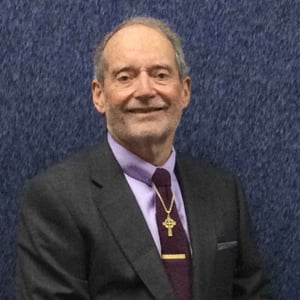
Professor of Law, University of Florida Levin College of Law
Professor Willis joined the UF Law Faculty in 1981, having taught previously in the New York University Graduate Tax Program. He teaches tax courses in both the J.D. and the Graduate Tax Programs plus Family Law Economics and Accounting and Finance for Lawyers. In the fall of 2013, Professor Willis took a sabbatical from teaching in order to lend his expertise in tax law to Hobby Lobby Stores in its religious liberty fight against the PPACA. To this end, he authored the lead article in volume 65 of the South Carolina Law Review titled: Corporations, Taxes, and Religion: The Hobby Lobby and Conestoga Contraceptive Cases. He is also the lead author for the amicus curiae brief on behalf of Freedom X in support of Hobby Lobby and Conestoga.
Professor Willis is licensed to practice law in Florida, a member of the Louisiana Bar, and a CPA (inactive) in Louisiana. He is a faculty advisor for numerous student groups such as the Christian Legal Society and the Law College Republicans. He has also honorably served as the faculty advisor for the student chapter of the UF Federalist Society since its inception.
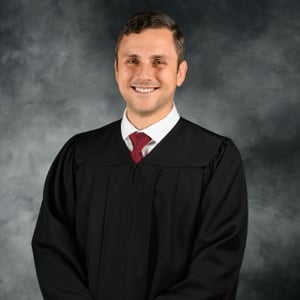
Judge, Florida Fifth District Court of Appeal
In April 2023, Judge Jordan E. Pratt was commissioned as a member of the Florida Fifth District Court of Appeal following his appointment by Governor Ron DeSantis.
Before joining the court, Judge Pratt worked as senior counsel at First Liberty Institute and served in various roles in state and federal government: as senior counsel in the U.S. Department of Justice, deputy general counsel in the U.S. Small Business Administration, and deputy solicitor general in the Florida Office of the Attorney General. As a deputy solicitor general, he defended significant Florida legislation and executive actions at every level of the state and federal court systems, with successful arguments before the U.S. Court of Appeals for the Eleventh Circuit, the Florida Supreme Court, and Florida’s First District Court of Appeal.
Judge Pratt graduated as a co-valedictorian of his undergraduate class at the University of Florida. He then received his J.D., magna cum laude, from the University of Florida College of Law, where he was a law review editor and president of the school’s Federalist Society and Christian Legal Society chapters. During law school, he interned for the Hon. Jeffrey S. Sutton on the U.S. Court of Appeals for the Sixth Circuit.
After his graduation from law school, Judge Pratt served as a law clerk to the Hon. Harvey E. Schlesinger on the U.S. District Court for the Middle District of Florida, Jacksonville Division. He then clerked for the Hon. Jennifer W. Elrod on the U.S. Court of Appeals for the Fifth Circuit.
Judge Pratt has held several fellowships, including an Olin–Searle Fellowship at Florida State University’s College of Law, and has published scholarship in the Tennessee Law Review, the Nebraska Law Review, and the Mississippi Law Journal. He is a member of the Federalist Society for Law & Public Policy Studies, and he has held several leadership roles in the organization, including service as president of its Tallahassee Lawyers Chapter from 2016 to 2019.
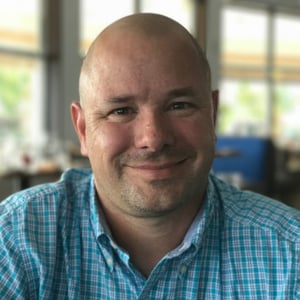
Professor of Political Science, University of Pittsburgh
Chris W. Bonneau is Professor of Political Science at the University of Pittsburgh, where he has been since 2002. His research is primarily in the areas of judicial selection (specifically, judicial elections) and judicial decisionmaking. Professor Bonneau’s work has been supported by the National Science Foundation and he has published numerous articles, including in the American Journal of Political Science and Journal of Politics. He is also the coauthor of three books: Strategic Behavior and Policy Choice on the U.S. Supreme Court (2005), In Defense of Judicial Elections (2009), and the award-winning Voters’ Verdicts: Citizens, Campaigns, and Institutions in State Supreme Court Elections (2015).
Professor Bonneau teaches undergraduate classes in constitutional law, judicial politics, and research methods, as well as graduate classes in judicial politics and research design.
Professor, Nova Southeastern University Law Center
Steven Wisotsky is a tenured professor of law at Nova Southeastern University Law Center, where he teaches white collar crimes and appellate practice. He is co-chair of the ABA Criminal Justice Section Appellate and Habeas Committee and author of Professional Judgment on Appeal (2009).
Partner, Stone Pigman Walther Wittmann LLC
Mr. Thomson concentrates his practice in white collar criminal defense, government investigations, and corporate compliance. He has tried over 50 criminal trials to verdict in federal and state courts, and has experience in appellate litigation. His practice also includes civil litigation and information security. Prior to joining Stone Pigman, Mr. Thomson had a 23 year career as a federal prosecutor with the U.S. Department of Justice. He served on special assignment with the National Security Agency, where he worked on matters involving information assurance and intelligence collection.
Prior to private practice, Mr. Thomson was recognized numerous times by government agencies, including a Special Commendation Award given by the U.S. Attorney General for completing the Justice Department's Leadership Excellence and Achievement Program; Special Commendation by FBI Director for outstanding performance for successful corruption prosecution after Hurricane Katrina; Special Award from the U.S. Postal Service for prosecution of corrupt employee; Special Award by New Orleans Police Department, ATF and U.S. Department of Justice for his contributions to Project Exile; and Special Awards for Outstanding Contributions to Drug Law Enforcement from the Drug Enforcement Administration.

Professor of Criminology and Statistics, University of Pennsylvania
Richard A. Berk is a professor in the Departments of Statistics and Criminology at the University of Pennsylvania. He has a B.A. degree in psychology from Yale University and a Ph.D. in sociology from the Johns Hopkins University. He was previously a Distinguished Professor of Statistics at UCLA. He has also been on the faculty of the University of California Santa Barbara and Northwestern University. Professor Berk is an elected fellow of the American Statistical Association, the American Association for the Advancement of Science, and the Academy of Experimental Criminology. He has served on the National Research Council Committee on Applied and Theoretical Statistics and has been on the Board of Directors of the Social Science Research Council. He is frequently employed as an expert witness in civil litigation and two cases on which he worked were ultimately decided by the U.S. Supreme Court. Professor Berk’s interests include a wide range of policy-related matters: detecting violations of environmental regulations, properly allocating prison inmates to different security levels, forecasting which individuals on parole are likely to commit violent crimes, monitoring systems for consumer protection, and the role of race in capital cases. His work in applied statistics includes machine learning, causal inference, methods for evaluating the effectiveness of social programs, and the use of statistics in litigation.
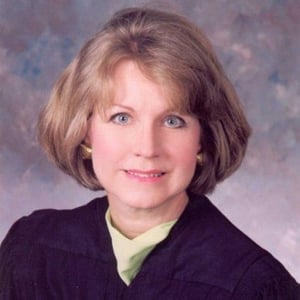
Judge, United States Court of Appeals, Fifth Circuit
Judge Edith Clement sits on the United States Court of Appeals for the Fifth Circuit. Judge Clement worked in a private practice as a maritime attorney in New Orleans, Louisiana, before being appointed in 1991 to the United States District Court for the Eastern District of Louisiana by President George H. W. Bush. In 2001, she was appointed by President George W. Bush to the United States Court of Appeals for the Fifth Circuit. Judge Clement is a member of the Maritime Law Association of the United States, the Federal Bar Association, the American Law Institute, the Federalist Society, the Tulane Law Schools Inn of Court, and the Committee on the Administrative Office of the Judicial Conference of the United States. She is a graduate of the University of Alabama and received her JD from Tulane Law School.
Partner, Krieg DeVault LLP
Deborah Daniels, former U.S. Attorney and U.S. Assistant Attorney General, has lengthy experience in criminal and civil investigations and public safety. Her work has included responsibilities at the U.S. Department of Justice directly related to the nation’s response to the September 11th attack on the U.S., data and communications interoperability, and the nation's ability to detect, prevent and respond to future terrorist acts. Ms. Daniels provides counsel to the firm’s public and private sector clients in matters affecting public safety, homeland security, disaster preparedness, leveraging of federal and state resources, federal and state regulatory compliance and internal investigations. She assists the firm’s clients in interacting with agencies of the federal government, including both the Executive Branch and the U.S. Congress, and advises clients ranging from government agencies to health care providers to other private sector entities on compliance and public policy matters.
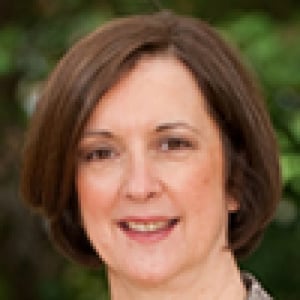
Assistant District Attorney, Philadelphia District Attorney
Sarah Hart has worked for over three decades in the criminal justice field at the federal, state and local levels.
From 1979-95, she served as a prosecutor in Philadelphia where (for 9 years) she represented the District Attorney in federal prison litigation involving mass releases of pretrial detainees. During this time, she provided substantial assistance to the U.S. Congress in drafting the Federal Prison Litigation Reform Act (PLRA).
From 1995-2001, Mrs. Hart served as the Chief Counsel for the Pennsylvania Department of Corrections where she successfully defended the constitutionality of the PLRA in the federal courts.
From 2001-2005, following unanimous Senate confirmation, she served as the Director of the National Institute of Justice (the research and evaluation arm of the U.S. Department of Justice) where, among other things, she developed the national $1 billion DNA initiative.
After an appointment as a Visiting Professor teaching graduate school courses at Rutgers University, she returned to Philadelphia to represent Philadelphia District Attorney in class action litigation concerning the Philadelphia Prison System. During this time she represented the Pennsylvania District Attorney’s Association in crafting comprehensive, bipartisan prison reform legislation in Pennsylvania that enacted sweeping changes in sentencing and parole practices. (Acts 81-84 of 2008).
Mrs. Hart previously served as Vice Chair of the Legal Affairs Committee of the American Corrections Association, a member of the Executive Committee of the Criminal Law Practice Group of the Federalist Society, a member of the Board of Directors of the Crime Victims Law Institute, and as a member of the Pennsylvania Supreme Court’s Appellate Procedural Rules Committee. She has also provided extensive training on the PLRA and corrections issues to the National Institute of Corrections, the National Association of Attorneys General, and the Association of State Correctional Administrators.
Mrs. Hart has published articles relating to corrections, forensics, and domestic violence. A recent publication focuses on the benefits and costs of prisoner class actions.
S. Hart, Evaluating Institutional Prisoners’ Rights Litigation: Costs and Benefits and Federalism Considerations, 11 U. Penn. J. Const. L. 73 (2008).
She is a graduate of Rutgers Law School and the University of Delaware.
Executive Director, Prison Law Office
Donald Specter is the Executive Director of the Prison Law Office at San Quentin, California. The Prison Law Office is a nonprofit law firm based in Berkeley, California that provides free legal services to California incarcerated offenders concerning their conditions of confinement. Mr. Specter has been lead counsel in numerous successful institutional reform cases challenging various conditions of confinement in California=s adult and juvenile prison systems. He has been chair of the California State Bar=s Commission on Corrections, was named Appellate Lawyer of the Week by the National Law Journal for his work in Brown v. Plata, 531 U.S. ___ (2011), has received the California Lawyers of the Year Award in 2006 and 2009 and was selected three times as one of the top 100 lawyers in California. Mr. Specter earned his B.A. in Economics from New College in Sarasota, Florida in 1974 and his J.D. from the University of San Francisco School of Law in 1978.
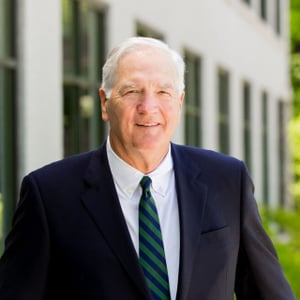
Former Senator, State of Alabama
Luther J. Strange, III is a former Republican member of the U.S. Senate from the state of Alabama. Strange was first appointed to the Senate position by Gov. Robert Bentley on February 9, 2017. He replaced Jeff Sessions, who was confirmed as United States Attorney General.
Strange is the former Republican Attorney General of Alabama. He was first elected to the statewide position in 2010 and assumed office on January 17, 2011. Strange's first four-year term ended on January 19, 2015, and he won re-election to a second term on November 4, 2014.
Prior to his election as Attorney General, Luther Strange practiced law in Birmingham, Alabama. In 2010, U.S. News-Best Lawyers "Best Law Firms" gave his firm a first-tier ranking, and the firm was named as one of the Top Ten Law Firms that Understand Economic Development by Southern Business & Development magazine.
Before establishing his own law firm, Strange was a partner with Bradley Arant Boult Cummings LLP. During his time in private practice, he was recognized in Best Lawyers in America® , named Best of the Bar by the Birmingham Business Journal, and called one of the "Best Lawyers" in Alabama by Birmingham magazine.
His tenure in office was marked by a strong emphasis on fighting public corruption, including the conviction and removal from office of the Alabama House Speaker in June 2016. He was also a leader in opposing costly overregulation and the expansion of the federal government at the expense of the states.
Luther Strange served as the court-appointed Coordinating Counsel for the Gulf Coast States in the historic Deepwater Horizon Oil spill litigation. Strange was actively involved in trying the case, which led to a landmark settlement agreement to compensate Alabama for both economic and environmental damages as a result of that disaster.
Among many civic commitments, he has served on the Advisory Board of the United States Merchant Marine Academy and as a Trustee of Talladega College, Alabama’s oldest historically black college.
An Eagle Scout since he was 13 and a recipient of the Distinguished Eagle Scout Award from the Boy Scouts of America in 2011, Strange is passionate about encouraging young people in Alabama to become involved in public service.
Strange received both his undergraduate and law degrees from Tulane University. He was a scholarship basketball player while earning his undergraduate degree at Tulane. In June of 2016, he was inducted into the Tulane Law School Hall of Fame.
Professor of Criminology and Statistics, University of Pennsylvania
Richard A. Berk is a professor in the Departments of Statistics and Criminology at the University of Pennsylvania. He has a B.A. degree in psychology from Yale University and a Ph.D. in sociology from the Johns Hopkins University. He was previously a Distinguished Professor of Statistics at UCLA. He has also been on the faculty of the University of California Santa Barbara and Northwestern University. Professor Berk is an elected fellow of the American Statistical Association, the American Association for the Advancement of Science, and the Academy of Experimental Criminology. He has served on the National Research Council Committee on Applied and Theoretical Statistics and has been on the Board of Directors of the Social Science Research Council. He is frequently employed as an expert witness in civil litigation and two cases on which he worked were ultimately decided by the U.S. Supreme Court. Professor Berk’s interests include a wide range of policy-related matters: detecting violations of environmental regulations, properly allocating prison inmates to different security levels, forecasting which individuals on parole are likely to commit violent crimes, monitoring systems for consumer protection, and the role of race in capital cases. His work in applied statistics includes machine learning, causal inference, methods for evaluating the effectiveness of social programs, and the use of statistics in litigation.
Judge, United States Court of Appeals, Fifth Circuit
Judge Edith Clement sits on the United States Court of Appeals for the Fifth Circuit. Judge Clement worked in a private practice as a maritime attorney in New Orleans, Louisiana, before being appointed in 1991 to the United States District Court for the Eastern District of Louisiana by President George H. W. Bush. In 2001, she was appointed by President George W. Bush to the United States Court of Appeals for the Fifth Circuit. Judge Clement is a member of the Maritime Law Association of the United States, the Federal Bar Association, the American Law Institute, the Federalist Society, the Tulane Law Schools Inn of Court, and the Committee on the Administrative Office of the Judicial Conference of the United States. She is a graduate of the University of Alabama and received her JD from Tulane Law School.
Partner, Krieg DeVault LLP
Deborah Daniels, former U.S. Attorney and U.S. Assistant Attorney General, has lengthy experience in criminal and civil investigations and public safety. Her work has included responsibilities at the U.S. Department of Justice directly related to the nation’s response to the September 11th attack on the U.S., data and communications interoperability, and the nation's ability to detect, prevent and respond to future terrorist acts. Ms. Daniels provides counsel to the firm’s public and private sector clients in matters affecting public safety, homeland security, disaster preparedness, leveraging of federal and state resources, federal and state regulatory compliance and internal investigations. She assists the firm’s clients in interacting with agencies of the federal government, including both the Executive Branch and the U.S. Congress, and advises clients ranging from government agencies to health care providers to other private sector entities on compliance and public policy matters.
Assistant District Attorney, Philadelphia District Attorney
Sarah Hart has worked for over three decades in the criminal justice field at the federal, state and local levels.
From 1979-95, she served as a prosecutor in Philadelphia where (for 9 years) she represented the District Attorney in federal prison litigation involving mass releases of pretrial detainees. During this time, she provided substantial assistance to the U.S. Congress in drafting the Federal Prison Litigation Reform Act (PLRA).
From 1995-2001, Mrs. Hart served as the Chief Counsel for the Pennsylvania Department of Corrections where she successfully defended the constitutionality of the PLRA in the federal courts.
From 2001-2005, following unanimous Senate confirmation, she served as the Director of the National Institute of Justice (the research and evaluation arm of the U.S. Department of Justice) where, among other things, she developed the national $1 billion DNA initiative.
After an appointment as a Visiting Professor teaching graduate school courses at Rutgers University, she returned to Philadelphia to represent Philadelphia District Attorney in class action litigation concerning the Philadelphia Prison System. During this time she represented the Pennsylvania District Attorney’s Association in crafting comprehensive, bipartisan prison reform legislation in Pennsylvania that enacted sweeping changes in sentencing and parole practices. (Acts 81-84 of 2008).
Mrs. Hart previously served as Vice Chair of the Legal Affairs Committee of the American Corrections Association, a member of the Executive Committee of the Criminal Law Practice Group of the Federalist Society, a member of the Board of Directors of the Crime Victims Law Institute, and as a member of the Pennsylvania Supreme Court’s Appellate Procedural Rules Committee. She has also provided extensive training on the PLRA and corrections issues to the National Institute of Corrections, the National Association of Attorneys General, and the Association of State Correctional Administrators.
Mrs. Hart has published articles relating to corrections, forensics, and domestic violence. A recent publication focuses on the benefits and costs of prisoner class actions.
S. Hart, Evaluating Institutional Prisoners’ Rights Litigation: Costs and Benefits and Federalism Considerations, 11 U. Penn. J. Const. L. 73 (2008).
She is a graduate of Rutgers Law School and the University of Delaware.
Executive Director, Prison Law Office
Donald Specter is the Executive Director of the Prison Law Office at San Quentin, California. The Prison Law Office is a nonprofit law firm based in Berkeley, California that provides free legal services to California incarcerated offenders concerning their conditions of confinement. Mr. Specter has been lead counsel in numerous successful institutional reform cases challenging various conditions of confinement in California=s adult and juvenile prison systems. He has been chair of the California State Bar=s Commission on Corrections, was named Appellate Lawyer of the Week by the National Law Journal for his work in Brown v. Plata, 531 U.S. ___ (2011), has received the California Lawyers of the Year Award in 2006 and 2009 and was selected three times as one of the top 100 lawyers in California. Mr. Specter earned his B.A. in Economics from New College in Sarasota, Florida in 1974 and his J.D. from the University of San Francisco School of Law in 1978.
Former Senator, State of Alabama
Luther J. Strange, III is a former Republican member of the U.S. Senate from the state of Alabama. Strange was first appointed to the Senate position by Gov. Robert Bentley on February 9, 2017. He replaced Jeff Sessions, who was confirmed as United States Attorney General.
Strange is the former Republican Attorney General of Alabama. He was first elected to the statewide position in 2010 and assumed office on January 17, 2011. Strange's first four-year term ended on January 19, 2015, and he won re-election to a second term on November 4, 2014.
Prior to his election as Attorney General, Luther Strange practiced law in Birmingham, Alabama. In 2010, U.S. News-Best Lawyers "Best Law Firms" gave his firm a first-tier ranking, and the firm was named as one of the Top Ten Law Firms that Understand Economic Development by Southern Business & Development magazine.
Before establishing his own law firm, Strange was a partner with Bradley Arant Boult Cummings LLP. During his time in private practice, he was recognized in Best Lawyers in America® , named Best of the Bar by the Birmingham Business Journal, and called one of the "Best Lawyers" in Alabama by Birmingham magazine.
His tenure in office was marked by a strong emphasis on fighting public corruption, including the conviction and removal from office of the Alabama House Speaker in June 2016. He was also a leader in opposing costly overregulation and the expansion of the federal government at the expense of the states.
Luther Strange served as the court-appointed Coordinating Counsel for the Gulf Coast States in the historic Deepwater Horizon Oil spill litigation. Strange was actively involved in trying the case, which led to a landmark settlement agreement to compensate Alabama for both economic and environmental damages as a result of that disaster.
Among many civic commitments, he has served on the Advisory Board of the United States Merchant Marine Academy and as a Trustee of Talladega College, Alabama’s oldest historically black college.
An Eagle Scout since he was 13 and a recipient of the Distinguished Eagle Scout Award from the Boy Scouts of America in 2011, Strange is passionate about encouraging young people in Alabama to become involved in public service.
Strange received both his undergraduate and law degrees from Tulane University. He was a scholarship basketball player while earning his undergraduate degree at Tulane. In June of 2016, he was inducted into the Tulane Law School Hall of Fame.

Co-Chairman, The Federalist Society for Law and Public Policy Studies
Leonard is Co-Chairman and former Executive Vice President of the Federalist Society, joining the organization over 25 years ago. Since that time he has been instrumental in helping the organization top 70,000, focusing on the growth of lawyers membership, operations and activities advancing limited, constitutional government. In addition to his work at the Society, Leonard has advised President Trump on judicial selection, assisted with the Gorsuch and Kavanaugh Supreme Court selection and confirmation process, and served as a member of the transition team. He also organized the outside coalition efforts in support of the Roberts and Alito U.S. Supreme Court confirmations. Leonard was appointed by President George W. Bush to three terms to the U.S. Commission on International Religious Freedom as chairman. He was also a U.S. Delegate to the UN Council and UN Commission on Human Rights during the Bush Administration. Leonard was the recipient of the 2009 Bradley Prize, along with the other founders and directors of the Federalist Society, for his work in advancing freedom and the rule of law. He is the coeditor of Presidential Leadership: Rating the Best and the Worst in the White House, as well as the author of opinion editorials in the New York Times,The Wall Street Journal, and Washington Post. Leonard holds degrees from Cornell University and Cornell Law School. He presently resides in Northern Virginia, where he and his wife Sally have raised their seven children.
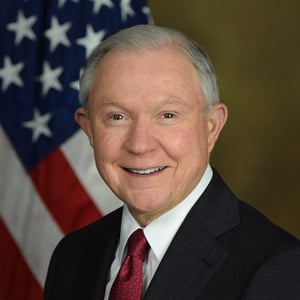
Former United States Attorney General
Jeff Sessions served as the 84th Attorney General of the United States from February 9, 2017 until November 7, 2018.
Prior to becoming Attorney General, Mr. Sessions served as a United States Senator for Alabama since 1996. As a United States Senator, he focused his energies on maintaining a strong military, upholding the rule of law, limiting the role of government, and providing tax relief to stimulate economic growth and to empower Americans to keep more of their hard-earned money.
Mr. Sessions was born in Selma, Alabama on December 24, 1946, and grew up in Hybart, the son of a country store owner. Growing up in the country, Sessions was instilled with certain core values – honesty, hard work, belief in God and parental respect – that define him today. In 1964, he became an Eagle Scout and thereafter received the Distinguished Eagle Scout Award. After attending school in nearby Camden, Sessions attended Huntingdon College in Montgomery, graduating with a Bachelor of Arts degree in 1969. He received a Juris Doctorate degree from the University of Alabama in 1973. Sessions served in the United States Army Reserve from 1973 to 1986, ultimately attaining the rank of Captain. He still considers that period to be one of the most rewarding chapters of his life.
Sessions’ interest in the law led to a distinguished legal career, first as a practicing attorney in Russellville, Alabama, and then in Mobile. Following a two-year stint as Assistant United States Attorney for the Southern District of Alabama (1975-1977), Sessions was nominated by President Reagan in 1981 and confirmed by the Senate to serve as the United States Attorney for the Southern District of Alabama, a position he held for 12 years. Sessions was elected Alabama Attorney General in 1995, serving as the State’s chief legal officer until 1996, when he entered the United States Senate.
Sessions and his wife, Mary Blackshear Sessions, originally of Gadsden, Alabama, have three children, Mary Abigail Reinhardt, Ruth Sessions Walk, and Sam. They have seven granddaughters, Jane Ritchie, Alexa, Gracie, Sophia, Hannah, Joanna, and Phoebe, and three grandsons, Jim Beau, Lewis, and Nicholas.
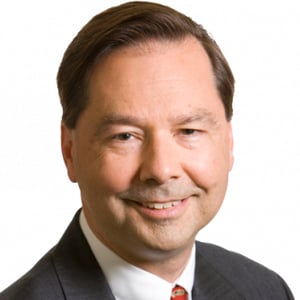
Senior Legal Fellow, Edwin Meese III Institute for the Rule of Law, Advancing American Freedom
Professor of Criminology and Statistics, University of Pennsylvania
Richard A. Berk is a professor in the Departments of Statistics and Criminology at the University of Pennsylvania. He has a B.A. degree in psychology from Yale University and a Ph.D. in sociology from the Johns Hopkins University. He was previously a Distinguished Professor of Statistics at UCLA. He has also been on the faculty of the University of California Santa Barbara and Northwestern University. Professor Berk is an elected fellow of the American Statistical Association, the American Association for the Advancement of Science, and the Academy of Experimental Criminology. He has served on the National Research Council Committee on Applied and Theoretical Statistics and has been on the Board of Directors of the Social Science Research Council. He is frequently employed as an expert witness in civil litigation and two cases on which he worked were ultimately decided by the U.S. Supreme Court. Professor Berk’s interests include a wide range of policy-related matters: detecting violations of environmental regulations, properly allocating prison inmates to different security levels, forecasting which individuals on parole are likely to commit violent crimes, monitoring systems for consumer protection, and the role of race in capital cases. His work in applied statistics includes machine learning, causal inference, methods for evaluating the effectiveness of social programs, and the use of statistics in litigation.
Judge, United States Court of Appeals, Fifth Circuit
Judge Edith Clement sits on the United States Court of Appeals for the Fifth Circuit. Judge Clement worked in a private practice as a maritime attorney in New Orleans, Louisiana, before being appointed in 1991 to the United States District Court for the Eastern District of Louisiana by President George H. W. Bush. In 2001, she was appointed by President George W. Bush to the United States Court of Appeals for the Fifth Circuit. Judge Clement is a member of the Maritime Law Association of the United States, the Federal Bar Association, the American Law Institute, the Federalist Society, the Tulane Law Schools Inn of Court, and the Committee on the Administrative Office of the Judicial Conference of the United States. She is a graduate of the University of Alabama and received her JD from Tulane Law School.
Partner, Krieg DeVault LLP
Deborah Daniels, former U.S. Attorney and U.S. Assistant Attorney General, has lengthy experience in criminal and civil investigations and public safety. Her work has included responsibilities at the U.S. Department of Justice directly related to the nation’s response to the September 11th attack on the U.S., data and communications interoperability, and the nation's ability to detect, prevent and respond to future terrorist acts. Ms. Daniels provides counsel to the firm’s public and private sector clients in matters affecting public safety, homeland security, disaster preparedness, leveraging of federal and state resources, federal and state regulatory compliance and internal investigations. She assists the firm’s clients in interacting with agencies of the federal government, including both the Executive Branch and the U.S. Congress, and advises clients ranging from government agencies to health care providers to other private sector entities on compliance and public policy matters.
Assistant District Attorney, Philadelphia District Attorney
Sarah Hart has worked for over three decades in the criminal justice field at the federal, state and local levels.
From 1979-95, she served as a prosecutor in Philadelphia where (for 9 years) she represented the District Attorney in federal prison litigation involving mass releases of pretrial detainees. During this time, she provided substantial assistance to the U.S. Congress in drafting the Federal Prison Litigation Reform Act (PLRA).
From 1995-2001, Mrs. Hart served as the Chief Counsel for the Pennsylvania Department of Corrections where she successfully defended the constitutionality of the PLRA in the federal courts.
From 2001-2005, following unanimous Senate confirmation, she served as the Director of the National Institute of Justice (the research and evaluation arm of the U.S. Department of Justice) where, among other things, she developed the national $1 billion DNA initiative.
After an appointment as a Visiting Professor teaching graduate school courses at Rutgers University, she returned to Philadelphia to represent Philadelphia District Attorney in class action litigation concerning the Philadelphia Prison System. During this time she represented the Pennsylvania District Attorney’s Association in crafting comprehensive, bipartisan prison reform legislation in Pennsylvania that enacted sweeping changes in sentencing and parole practices. (Acts 81-84 of 2008).
Mrs. Hart previously served as Vice Chair of the Legal Affairs Committee of the American Corrections Association, a member of the Executive Committee of the Criminal Law Practice Group of the Federalist Society, a member of the Board of Directors of the Crime Victims Law Institute, and as a member of the Pennsylvania Supreme Court’s Appellate Procedural Rules Committee. She has also provided extensive training on the PLRA and corrections issues to the National Institute of Corrections, the National Association of Attorneys General, and the Association of State Correctional Administrators.
Mrs. Hart has published articles relating to corrections, forensics, and domestic violence. A recent publication focuses on the benefits and costs of prisoner class actions.
S. Hart, Evaluating Institutional Prisoners’ Rights Litigation: Costs and Benefits and Federalism Considerations, 11 U. Penn. J. Const. L. 73 (2008).
She is a graduate of Rutgers Law School and the University of Delaware.
Executive Director, Prison Law Office
Donald Specter is the Executive Director of the Prison Law Office at San Quentin, California. The Prison Law Office is a nonprofit law firm based in Berkeley, California that provides free legal services to California incarcerated offenders concerning their conditions of confinement. Mr. Specter has been lead counsel in numerous successful institutional reform cases challenging various conditions of confinement in California=s adult and juvenile prison systems. He has been chair of the California State Bar=s Commission on Corrections, was named Appellate Lawyer of the Week by the National Law Journal for his work in Brown v. Plata, 531 U.S. ___ (2011), has received the California Lawyers of the Year Award in 2006 and 2009 and was selected three times as one of the top 100 lawyers in California. Mr. Specter earned his B.A. in Economics from New College in Sarasota, Florida in 1974 and his J.D. from the University of San Francisco School of Law in 1978.
Former Senator, State of Alabama
Luther J. Strange, III is a former Republican member of the U.S. Senate from the state of Alabama. Strange was first appointed to the Senate position by Gov. Robert Bentley on February 9, 2017. He replaced Jeff Sessions, who was confirmed as United States Attorney General.
Strange is the former Republican Attorney General of Alabama. He was first elected to the statewide position in 2010 and assumed office on January 17, 2011. Strange's first four-year term ended on January 19, 2015, and he won re-election to a second term on November 4, 2014.
Prior to his election as Attorney General, Luther Strange practiced law in Birmingham, Alabama. In 2010, U.S. News-Best Lawyers "Best Law Firms" gave his firm a first-tier ranking, and the firm was named as one of the Top Ten Law Firms that Understand Economic Development by Southern Business & Development magazine.
Before establishing his own law firm, Strange was a partner with Bradley Arant Boult Cummings LLP. During his time in private practice, he was recognized in Best Lawyers in America® , named Best of the Bar by the Birmingham Business Journal, and called one of the "Best Lawyers" in Alabama by Birmingham magazine.
His tenure in office was marked by a strong emphasis on fighting public corruption, including the conviction and removal from office of the Alabama House Speaker in June 2016. He was also a leader in opposing costly overregulation and the expansion of the federal government at the expense of the states.
Luther Strange served as the court-appointed Coordinating Counsel for the Gulf Coast States in the historic Deepwater Horizon Oil spill litigation. Strange was actively involved in trying the case, which led to a landmark settlement agreement to compensate Alabama for both economic and environmental damages as a result of that disaster.
Among many civic commitments, he has served on the Advisory Board of the United States Merchant Marine Academy and as a Trustee of Talladega College, Alabama’s oldest historically black college.
An Eagle Scout since he was 13 and a recipient of the Distinguished Eagle Scout Award from the Boy Scouts of America in 2011, Strange is passionate about encouraging young people in Alabama to become involved in public service.
Strange received both his undergraduate and law degrees from Tulane University. He was a scholarship basketball player while earning his undergraduate degree at Tulane. In June of 2016, he was inducted into the Tulane Law School Hall of Fame.

Pennsylvania Supreme Court Vacates Trial Court's Denial of a Minor's Application to Obtain an Abortion
Steven J. Willis, Jordan E. Pratt
On December 22, 2011, in a case of first impression,1 the Pennsylvania Supreme Court vacated...
What’s at Stake for Alabama in the Current Supreme Court Term
A Survey of Empirical Evidence Concerning Judicial Elections
Chris W. Bonneau
The election of state judges is a controversial topic. Consider, for example, this quote from...
Election Law in a Presidential Year
Birmingham, AlabamaHonest Services Fraud After Skilling v. United States
Steven Wisotsky
The mail fraud statute of 1872 may be regarded as the progenitor of what we...
A Comprehensive Strategy Targeting Recidivist Criminals with Continuous Real-Time GPS Monitoring: Is Reverse Engineering Crime Control Possible?
Peter M. Thomson
One of the most pressing criminal justice challenges facing the nation is reducing the incidence...
Criminal Law: Prisoner Releases and the Role of the Courts
Richard A. Berk, Edith Brown Clement, Deborah J. Daniels, Sarah V. Hart, Donald Specter, Luther Johnson Strange
The Criminal Law & Procedure Practice Group hosted this panel on "Prisoner Releases and the...
Criminal Law: Prisoner Releases and the Role of the Courts
Richard A. Berk, Edith Brown Clement, Deborah J. Daniels, Sarah V. Hart, Donald Specter, Luther Johnson Strange
The Criminal Law & Procedure Practice Group hosted this panel on "Prisoner Releases and the...
Criminal Law: Prisoner Releases and the Role of the Courts
2011 National Lawyers Convention
Washington, DCWelcome and Opening Address by Senator Jeff Sessions
Leonard A. Leo, Jefferson B. Sessions
United States Senator Jeff Sessions of Alabama opened the Federalist Society's 2011 National Lawyers Convention with an address...