
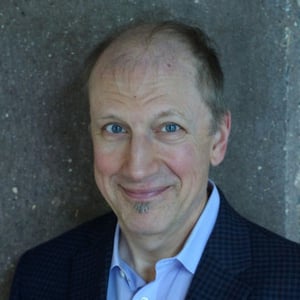
James L. Oberstar Professor of Law and Public Policy, University of St. Thomas School of Law
Erik Money is a third-year law student at the University of St. Thomas School of Law (Minnesota).
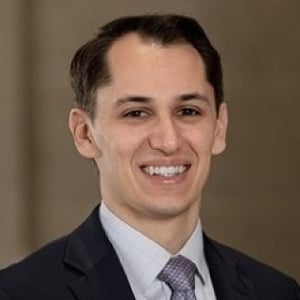
Assistant Professor of Law, Capital University Law School
Nathaniel M. Fouch is an Assistant Professor of Law at Capital University Law School in Columbus, Ohio. He previously clerked at every level of the state judiciary, including for Justice Pat DeWine of the Ohio Supreme Court. Professor Fouch was the founding president of both the Dayton Lawyers Chapter of the Federalist Society and the Dayton Catholic Lawyers Guild. He earned his B.A. from Berea College and his J.D. cum laude from the University of St. Thomas School of Law. His work on the Ohio Constitution and state constitutionalism has been cited by the Ohio Supreme Court. Professor Fouch lives in Dayton, Ohio, with his wife, Theresa, and their three young children.

Laurence A. Tisch Professor of Law and Director, Classical Liberal Institute, New York University School of Law; Director, Classical Liberal Institute, Civitas Institute University of Texas at Austin
Richard A. Epstein is the Laurence A. Tisch Professor of Law, at New York University, a senior research fellow at the Civitas Institute at the University of Texas Austin, and a senior Lecturer, the University of Chicago. He received an LL.D., h.c . from the University of Ghent, 2003 , and an LLD h.c . from the University of Siegen in 2018 and the Bradley Prize in 2011. He has been a member of the American Academy of Arts and Sciences since 1985. He has edited both the Journal of Legal Studies (1981-1991) and the Journal of Law and Economics (1991-2001). He is also a founder and director of the Classical Liberal Institute at NYU Law School. His most recent book is The Classical Liberal Constitution: The Uncertain Quest for Limited Government (2014). His other books include Takings: Private Property and the Power of Eminent Domain ( 1985); Bargaining with the State (1993); Simple Rules for a Complex World (1995); Principles for a Free Society: Reconciling Individual Liberty and the Common Good (1998); Skepticism and Freedom: A Modern Theory of Classical Liberalism (2003); Design for Liberty: Private Property, Public Administration and the Rule of Law (2011), and most recently, The Myth of Birthright citizenship—and Beyond (2026). He has taught courses in , administrative law, antitrust, constitutional, contracts, environmental law, land use planning; real property, torts and water law. He has written and spoken extensively on a wide range of topics, and is writes a regular column for Defining Ideas.
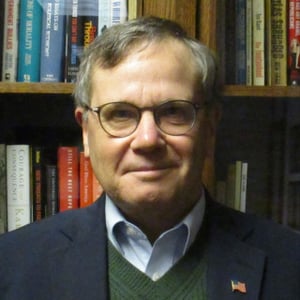
Senior Fellow in Constitutional Jurisprudence, Independence Institute
Professor Robert G. Natelson is a constitutional scholar and author.
Rob’s constitutional scholarship has been cited repeatedly by justices and parties at the U.S. Supreme Court—as well as by federal appeals courts, and at least 18 state supreme courts.
Rob’s research into the Constitution’s original meaning has carried him to libraries throughout the United States and in Britain, including four months at Oxford University. His books and articles span many different parts of the Constitution, including groundbreaking studies of the Necessary and Proper Clause, the Indian Commerce Clause, federalism, Founding-Era interpretation, regulation of elections, and the amendment process of Article V. He created the first-ever online bibliography for 18th century materials used in constitutional research. He is a contributing author to the Encyclopedia of the Supreme Court of the United States (on Magna Carta). He contributed eight essays to the third edition of the Heritage Guide to the Constitution: five on the amendment procedure and one each on the Guarantee Clause, the Postal Clause, and the Recess Appointments Clause.
U.S. Supreme Court justices have relied explicitly on Rob’s research in 41 citations in 13 separate cases.
Bruce C. Hafen Professor of Law, Brigham Young University, J. Reuben Clark Law School
Former Associate Justice, United States Supreme Court
John Paul Stevens was appointed to the Supreme Court in 1975. As the newest member of the Court, Stevens had the duty of keeping minutes and answering the door in the justices' closed conference. Stevens had to wait six years, until the appointment of Sandra Day O'Connor, before he relinquished his freshman spot. Today, Stevens is the most senior justice, both in age and years of service. In seniority, he is second only to Chief Justice John G. Roberts, Jr. Stevens now speaks second in conference after Roberts; and, Stevens can assign opinions in the event that he is in the majority and Roberts is in minority. Still, Stevens' influence remains uncertain. Many observers point to his quirky and unconventional jurisprudence as a constraint on his ability to lead the Court. They argue that Stevens' individualistic personality keeps him permanently outside the mainstream of the Court and that he lacks the characteristics of a coalition-builder. However, as the Court has turned further to the right with the appointments of Chief Justice Roberts and Justice Samuel A. Alito, Jr., Stevens has emerged as the voice of moderation on an increasing conservative bench.
John Paul Stevens was born on April 20, 1920, in Chicago, Illinois, as the youngest of Ernest and Elizabeth Stevens' four sons. Stevens grew up in a wealthy family. His father made a fortune in the insurance and hotel business and owned the Stevens Hotel, which has since become the Chicago Hilton. The Stevens lived near the University of Chicago campus and sent their sons to the university's laboratory school for preparatory education. Stevens attended college at the University of Chicago, following his father's footsteps, and joined his father's fraternity. He participated in a wide variety of campus activities and graduated Phi Beta Kappa in 1941. A year after his graduation, Stevens married Elizabeth Sheeren, with whom he had a son and three daughters.
Stevens enlisted in the Navy during World War II. In his position as part of a Navy code-breaking team, Stevens earned the Bronze Star. Following the war, he again followed his father's path and entered Northwestern University Law School to study law. Stevens distinguished himself at Northwestern by becoming editor-in-chief of the school's law review and graduating with the highest grades in the law school's history. After graduating, he served a term as law clerk to Supreme Court Justice Wiley Rutledge.
Stevens joined a prominent law firm in Chicago specializing in antitrust law and creating a reputation as a talented antitrust lawyer. He left the firm to start his own practice after three years and also began teaching law at Northwestern University and the University of Chicago law schools. His abilities in antitrust laws earned him positions with various special counsels to the House of Representatives and the U.S. Attorney General's office.
Stevens became known as a fair-minded and able counsel. Richard Nixon appointed him to the Unites States Court of Appeals for the Seventh Circuit in 1970. On the appeals court, Stevens continued to establish his reputation as a notable legal thinker. When Justice William Douglas stepped down from the Court in 1975. Attorney General Edward Levi proposed Stevens' appointment to the High Court. President Gerald Ford acted on Levi's advice and the Senate confirmed Stevens' appointment without controversy.
As a justice, Stevens has avoided simple conservative or liberal labels. As the Court moved toward the right during the Reagan and Bush presidencies, however, Stevens appeared more and more liberal relative to the make-up of the Court. Although Stevens is the difficult to predict, his approach to judicial decision-making can be summarized in a general sense. Stevens will typically examine the facts of each case carefully and on its own merits. He also seeks to defer to the judgments of others who he feels are better suited to decide. He has demonstrated considerable judicial restraint and deference to the Congress.
After 34 years, 6 months, and 11 days of service on the Court, Stevens stepped down on June 29, 2010. He is now tied with Justice Stephen J. Field for second place on the all-time list for continuous service, superseded only by Justice William O. Douglas. If Douglas is the Cal Ripken Jr. of the Supreme Court, that would make Stevens the Court's Lou Gehrig.
Justice Stevens has not departed from the spotlight, however. He has written two books --Five Chiefs: A Supreme Court Memoir and Six Amendments: How and Why We Should Change the Constitution -- and several critical book reviews and commentaries. In 2014, Stevens testified before a Senate committee to express his pointed criticism of more recent Supreme Court decisions undoing spending limits in political campaigns.

Credentials Not Required: Why an Employee’s Significant Religious Functions Should Suffice to Trigger the Ministerial Exception
Thomas C. Berg, Erik Money, Nathaniel M. Fouch
Note from the Editor: The Federalist Society takes no positions on particular legal and public...
The Supreme Court Tackles Patent Reform: Inter Partes Review Under the AIA Undermines the Structural Protections Offered by Article III Courts
Richard A. Epstein
Note from the Editor: This article criticizes Justice Clarence Thomas’ opinion in Oil States. It...
Counting to Two Thirds: How Close Are We to a Convention for Proposing Amendments to the Constitution?
Robert G. Natelson
Note from the Editor: This article argues that, in aggregating applications from states to call...
A Speaker Must Be a Member of the House
Since 1377 when the Rolls of Parliament noted that the House of Commons had a...
“Conscience Exemptions”
Lynn Wardle
Note from the Editor: This paper discusses the meaning, history, and present application of conscience...
The Great Debate: Justice John Paul Stevens - October 23, 1985
John Paul Stevens
Justice John Paul Stevens Before the Federal Bar Association October 23, 1985, Chicago, Illinois What...