

Laurence A. Tisch Professor of Law and Director, Classical Liberal Institute, New York University School of Law; Director, Classical Liberal Institute, Civitas Institute University of Texas at Austin
Richard A. Epstein is the inaugural Laurence A. Tisch Professor of Law at NYU School of Law. Prior to his joining the faculty, he was a visiting law professor at NYU from 2007 through 2009. He served as the Peter and Kirstin Bedford Senior Fellow at the Hoover Institution from 2000 to 2024. Since 2024 to the present he is a senior lecturer at the Civitas Institute at the University of Texas—Austin. Epstein is also the James Parker Hall Distinguished Service Professor of Law Emeritus and a senior lecturer at the University of Chicago. His initial law school appointment was at the University of Southern California from 1968 to 1972. Epstein received an LL.D., h.c. from the University of Ghent, 2003. He has been a member of the American Academy of Arts and Sciences since 1985 and was a Senior Fellow of the Center for Clinical Medical Ethics at the University of Chicago Division of Biological Sciences, also from 1983. to 2022 He served as editor of the Journal of Legal Studies from 1981 to 1991, and of the Journal of Law and Economics from 1991-2001. From 2001 to 2010 he was a director of the John M. Olin Program in Law and Economics at the University of Chicago.
His newest book, The Myth of Birthright Citizenship: What the Fourteenth Amendment Really Says was published in 2026 (Encounter Books). Prior to that he has published many books including, The Dubious Morality of the Modern Administrative State (Roman & Littlefield 2020).Earlier he published th Classical Liberal Constitution: The Uncertain Quest for Limited Government (Harvard 2014) iHis previous books include Design for Liberty: Private Property, Public Administration and the Rule of Law (Harvard 2011); The Case Against the Employee Free Choice Act (Hoover 2009); Supreme Neglect: How to Revive the Constitutional Protection of Property Rights (Oxford 2008); Antitrust Decrees in Theory and Practice: Why Less is More (AEI 2007); Overdose: How Excessive Government Regulation Stifles Pharmaceutical Innovation (Yale University Press. 2006); How Progressives Rewrote the Constitution (Cato 2006); Cases and Materials on Torts (Aspen Law & Business; 8th ed. 2004); Skepticism and Freedom: A Modern Case for Classical Liberalism (University of Chicago, 2003); Torts (Aspen Law & Business 1999); Principles for a Free Society: Reconciling Individual Liberty with the Common Good (Perseus Books, 1998): Mortal Peril: Our Inalienable Rights to Health Care (Addison-Wesley, 1997); Simple Rules for a Complex World (Harvard, 1995); Bargaining With the State (Princeton, 1993); Forbidden Grounds: The Case Against Employment Discrimination Laws (Harvard , 1992); Takings: Private Property and the Power of Eminent Domain (Harvard, 1985); and Modern Products Liability Law (Greenwood Press, 1980). He has also edited(with Catherine M. Sharkey) Cases and Materials on the Law of Torts (10th edition 2012).
Professor Epstein has written numerous articles on a wide range of legal and interdisciplinary subjects. He has taught courses in administrative law, antitrust law, civil procedure, communications, constitutional law, contracts, corporations, criminal law, employment discrimination law, environmental law, food and drug law health law and policy, legal history, labor law, property, real estate development and finance, jurisprudence, labor law; land use planning, patents, individual, estate and corporate taxation, Roman Law; torts, and workers' compensation.
Professor Epstein also writes a regular column for Civitas Institute, which also sponsors his podcast, The Libertarian with Charles C.W. Cooke, and Law Talk, with Cooke and John Yoo. He also does a podcast with John Batchelor. And appears regularly on the Freedom File with Judge Andrew Napolitano.
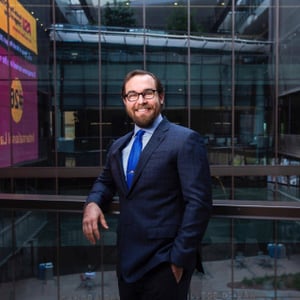
Symposium Chair, Arizona State Student Chapter
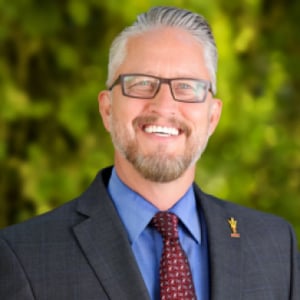
Dean, Arizona State University Sandra Day O'Connor College of Law
Douglas Sylvester is the 8th dean of the Sandra Day O’Connor College of Law at Arizona State University. Under his leadership, ASU Law reached historic heights ranked 27th in the nation (up from 40th in 2012, and 58th in 2008) and 9th among public law schools. From 2012-2017, the law school placed in the top 20 for employment (rising as high as #11 in 2014), hired more than 30 faculty members, and raised more than $70 million— twice the amount raised in the prior 45 years combined.
Professor Sylvester was also a driving force for the conceptualization and creation of the Beus Center for Law and Society in downtown Phoenix, which is now home to ASU Law and a number of other legal-related organizations including the innovative ASU Law Group and the Arizona Legal Center.
Before becoming dean, he served as associate dean for faculty research and development, responsible for building an environment that fosters faculty scholarship, organizing speaker series, mentoring junior faculty, and seeking innovative ways to increase the faculty's visibility.
In 2007, Professor Sylvester was appointed special consultant to a National Academy of Sciences panel charged with reforming the U.S. Census. He was the founding faculty director of the innovative Technology Ventures Clinic which introduces students to transactional legal practice in high-technology sectors. He also has been an expert witness in cases involving licensing, intellectual property and technology, and has advised numerous entrepreneurs in building their businesses.
Professor Sylvester has published, taught and lectured on issues of intellectual property law and commercialization, international law, emerging technologies and privacy. In 2006, he taught nanotechnology and the law, the first time such a course was offered in the country by full-time law faculty.
Prior to joining the ASU, Professor Sylvester was a Bigelow Fellow and lecturer-in-law at the University of Chicago and Northwestern University, an attorney in the Global e-Commerce Practice Group at Baker & McKenzie in Chicago, and a law clerk for U.S. District Judge C. Clyde Atkins in Florida.
Laurence A. Tisch Professor of Law and Director, Classical Liberal Institute, New York University School of Law; Director, Classical Liberal Institute, Civitas Institute University of Texas at Austin
Richard A. Epstein is the inaugural Laurence A. Tisch Professor of Law at NYU School of Law. Prior to his joining the faculty, he was a visiting law professor at NYU from 2007 through 2009. He served as the Peter and Kirstin Bedford Senior Fellow at the Hoover Institution from 2000 to 2024. Since 2024 to the present he is a senior lecturer at the Civitas Institute at the University of Texas—Austin. Epstein is also the James Parker Hall Distinguished Service Professor of Law Emeritus and a senior lecturer at the University of Chicago. His initial law school appointment was at the University of Southern California from 1968 to 1972. Epstein received an LL.D., h.c. from the University of Ghent, 2003. He has been a member of the American Academy of Arts and Sciences since 1985 and was a Senior Fellow of the Center for Clinical Medical Ethics at the University of Chicago Division of Biological Sciences, also from 1983. to 2022 He served as editor of the Journal of Legal Studies from 1981 to 1991, and of the Journal of Law and Economics from 1991-2001. From 2001 to 2010 he was a director of the John M. Olin Program in Law and Economics at the University of Chicago.
His newest book, The Myth of Birthright Citizenship: What the Fourteenth Amendment Really Says was published in 2026 (Encounter Books). Prior to that he has published many books including, The Dubious Morality of the Modern Administrative State (Roman & Littlefield 2020).Earlier he published th Classical Liberal Constitution: The Uncertain Quest for Limited Government (Harvard 2014) iHis previous books include Design for Liberty: Private Property, Public Administration and the Rule of Law (Harvard 2011); The Case Against the Employee Free Choice Act (Hoover 2009); Supreme Neglect: How to Revive the Constitutional Protection of Property Rights (Oxford 2008); Antitrust Decrees in Theory and Practice: Why Less is More (AEI 2007); Overdose: How Excessive Government Regulation Stifles Pharmaceutical Innovation (Yale University Press. 2006); How Progressives Rewrote the Constitution (Cato 2006); Cases and Materials on Torts (Aspen Law & Business; 8th ed. 2004); Skepticism and Freedom: A Modern Case for Classical Liberalism (University of Chicago, 2003); Torts (Aspen Law & Business 1999); Principles for a Free Society: Reconciling Individual Liberty with the Common Good (Perseus Books, 1998): Mortal Peril: Our Inalienable Rights to Health Care (Addison-Wesley, 1997); Simple Rules for a Complex World (Harvard, 1995); Bargaining With the State (Princeton, 1993); Forbidden Grounds: The Case Against Employment Discrimination Laws (Harvard , 1992); Takings: Private Property and the Power of Eminent Domain (Harvard, 1985); and Modern Products Liability Law (Greenwood Press, 1980). He has also edited(with Catherine M. Sharkey) Cases and Materials on the Law of Torts (10th edition 2012).
Professor Epstein has written numerous articles on a wide range of legal and interdisciplinary subjects. He has taught courses in administrative law, antitrust law, civil procedure, communications, constitutional law, contracts, corporations, criminal law, employment discrimination law, environmental law, food and drug law health law and policy, legal history, labor law, property, real estate development and finance, jurisprudence, labor law; land use planning, patents, individual, estate and corporate taxation, Roman Law; torts, and workers' compensation.
Professor Epstein also writes a regular column for Civitas Institute, which also sponsors his podcast, The Libertarian with Charles C.W. Cooke, and Law Talk, with Cooke and John Yoo. He also does a podcast with John Batchelor. And appears regularly on the Freedom File with Judge Andrew Napolitano.
Symposium Chair, Arizona State Student Chapter
Dean, Arizona State University Sandra Day O'Connor College of Law
Douglas Sylvester is the 8th dean of the Sandra Day O’Connor College of Law at Arizona State University. Under his leadership, ASU Law reached historic heights ranked 27th in the nation (up from 40th in 2012, and 58th in 2008) and 9th among public law schools. From 2012-2017, the law school placed in the top 20 for employment (rising as high as #11 in 2014), hired more than 30 faculty members, and raised more than $70 million— twice the amount raised in the prior 45 years combined.
Professor Sylvester was also a driving force for the conceptualization and creation of the Beus Center for Law and Society in downtown Phoenix, which is now home to ASU Law and a number of other legal-related organizations including the innovative ASU Law Group and the Arizona Legal Center.
Before becoming dean, he served as associate dean for faculty research and development, responsible for building an environment that fosters faculty scholarship, organizing speaker series, mentoring junior faculty, and seeking innovative ways to increase the faculty's visibility.
In 2007, Professor Sylvester was appointed special consultant to a National Academy of Sciences panel charged with reforming the U.S. Census. He was the founding faculty director of the innovative Technology Ventures Clinic which introduces students to transactional legal practice in high-technology sectors. He also has been an expert witness in cases involving licensing, intellectual property and technology, and has advised numerous entrepreneurs in building their businesses.
Professor Sylvester has published, taught and lectured on issues of intellectual property law and commercialization, international law, emerging technologies and privacy. In 2006, he taught nanotechnology and the law, the first time such a course was offered in the country by full-time law faculty.
Prior to joining the ASU, Professor Sylvester was a Bigelow Fellow and lecturer-in-law at the University of Chicago and Northwestern University, an attorney in the Global e-Commerce Practice Group at Baker & McKenzie in Chicago, and a law clerk for U.S. District Judge C. Clyde Atkins in Florida.

Associate Dean for Academic Affairs, Austin E. Owen Research Scholar & Professor of Law, The University of Richmond School of Law
Dean Kristen Jakobsen Osenga teaches and writes in the areas of patent law, antitrust, and legislation and regulation. Some of her recent scholarship focuses on standard development organizations, patent eligible subject matter, patent licensing firms, litigation and remedies for patent infringement, and patent law reform. She has written numerous law review articles on these and other topics, as well as book chapters and op eds on various aspects of patent law. Additionally, she has spoken on these issues at many academic conferences and bar events. Dean Osenga is Chief Policy Counselor for the Inventors Defense Alliance, as well as an active member of the Federal Circuit Bar Association and the American Intellectual Property Law Association.
Dean Osenga received a B.S. degree in Biomedical Engineering from the University of Iowa, an M.S. degree in Electrical Engineering from Southern Illinois University – Carbondale, and a J.D. from the University of Illinois College of Law, where she graduated magna cum laude. After law school, she practiced at the law firm of Finnegan, Henderson, Farabow, Garrett, & Dunner LLP, (now Finnegan) where she did patent prosecution and litigation. She then clerked for the Judge Richard Linn of the U.S. Court of Appeals for the Federal Circuit. After clerking, she entered academia, teaching first at Chicago-Kent College of Law and then at the University of Richmond, where she has been since 2006. She has also been a Visiting Professor at Emory University School of Law and at William & Mary School of Law.
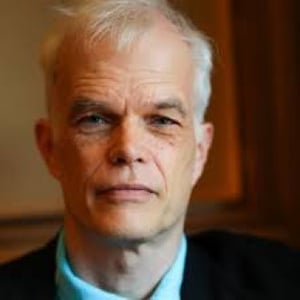
Senior Editor, National Review
Historian Richard Brookhiser is a senior editor of National Review, a senior fellow at the National Review Institute, and the author of several books, including Founders’ Son, Right Time, Right Place, George Washington on Leadership, What Would the Founders Do?, Gentleman Revolutionary, Rules of Civility, America’s First Dynasty, Alexander Hamilton, American, Founding Father: Rediscovering George Washington, Way of the WASP, and The Outside Story.
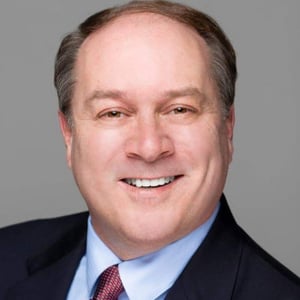
Of Counsel, Fisher & Phillips, LLP
Greg Grisham has over 25 years of successful experience counseling and representing employers in all aspects of workplace law in Tennessee and across the United States.
He has helped employers avoid claims, charges and lawsuits with a focus on preventative practices. Preventative practices include counseling in situations involving discipline, termination, demotion, promotion and other workplace changes in the terms and conditions of employment, harassment investigations, wage and hour compliance, FMLA Compliance, Reasonable Accommodation assessment, supervisor training and the review of employment policies and procedures. In addition, Greg's practice includes the representation of business entities subject to Title III of the Americans with Disabilities Act in Public Accommodation cases.
Greg has successfully litigated hundreds of administrative charges, employment lawsuits, and arbitration demands on behalf of employers, including federal and state law claims alleging discrimination, harassment, retaliation, wrongful termination, defamation, invasion of privacy, breach of contract, wage and hour violations and ERISA violations, among others. He also represents employers before the National Labor Relations Board in unfair labor practice proceedings. He represents employers in the enforcement of post-employment restrictive covenants such as non-compete, non-solicitation and non-disclosure agreements and related trade secret litigation. Greg's practice also includes the defense of property owners and property management companies in federal and state Housing Discrimination charges and litigation. He also advises Tennessee Public Charter Schools on education law and workplace compliance matters.
Greg has extensive experience working with insurance carriers and their insureds in the defense of EPLI claims. He is a regular speaker at public seminars on workplace law issues and has authored numerous articles on a variety of labor and employment law related topics.
Greg holds an AV Preeminent Peer Review rating from Martindale-Hubbell and has been selected for inclusion in Mid-South Super Lawyers and Best Lawyers in America for Employment Litigation-Management side. Greg was elected as a 2016 Fellow to the College of Labor and Employment Lawyers and has been selected to the “Top 20 Lawyers in Traditional Labor & Employment Law” list in conjunction with Human Resource Executive Magazine and LawDragon’s 2017 and 2018 “Most Powerful Employment Attorneys” lists and specialty guides. Greg was also named a Fellow in the American Bar Foundation in 2017.
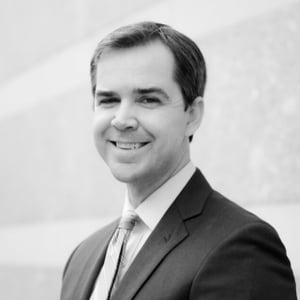
Vice President and Senior Counsel, The Becket Fund for Religious Liberty
Daniel Blomberg is vice president and senior counsel for Becket. Before joining Becket, he clerked for Chief Judge Alice M. Batchelder of the U.S. Court of Appeals for the Sixth Circuit and served as litigation counsel with the Alliance Defending Freedom. Daniel’s clients have included an international order of nuns, the world’s largest religious media organization, synagogues, members of the U.S. military, religious healthcare ministries, peaceful protestors, halfway houses, religious colleges, state legislators, homeless shelters, religious business owners, an art gallery, and churches. Daniel has represented a wide variety of faith groups, including Anglicans, Baptists, Catholics, Hindus, Hutterites, Jews, Lutherans, Mennonites, Muslims, Presbyterians, Russian Orthodox, and Sikhs. Cases on which he has served as counsel to a party include: Our Lady of Guadalupe v. Morrissey-Berru, 140 S. Ct. 2049 (2020); Roman Catholic Diocese of Brooklyn v. Cuomo, 141 S. Ct. 63 (2020); Zubik v. Burwell, 136 S. Ct. 1557 (2016); Little Sisters of the Poor v. Sebelius, 134 S. Ct. 1022 (2014); Wheaton College v. Burwell, 134 S. Ct. 2806 (2014); Fellowship of Christian Athletes v. SJUSD, 82 F.4th 664 (9th Cir. 2023) (en banc); Singh v. Berger, 56 F.4th 88 (D.C. Cir. 2022); Demkovich v. St. Andrew the Apostle Parish, 3 F.4th 968 (7th Cir. 2021) (en banc); Maxon v. Fuller Theological Seminary, 2021 WL 5882035 (9th Cir. 2021); Intervarsity Christian Fellowship/USA v. University of Iowa, 5 F.4th 855, 867 (8th Cir. 2021); Business Leaders in Christ v. University of Iowa, 991 F.3d 969 (8th Cir. 2021); Whole Woman’s Health v. Smith, 896 F.3d 362 (5th Cir. 2018); Lee v. Sixth Mount Zion Baptist Church, 903 F.3d 113 (3d Cir. 2018); Gagliardi v. TJCV, 889 F.3d 728 (11th Cir. 2018); Harvest Family Church v. FEMA, 2018 WL 386192 (5th Cir. 2018); Fratello v. Archdiocese of New York, 863 F.3d 190 (2d Cir. 2017); Eternal Word Television Network v. U.S. Dep’t of HHS, 756 F.3d 1339 (11th Cir. 2014); InterVarsity Christian Fellowship/USA v. Bd. of Governors of Wayne State Univ., 534 F. Supp. 3d 785 (E.D. Mich. 2021); and Singh v. Carter, 168 F. Supp. 3d 216 (D.D.C. 2016).
Daniel has been featured on CNN, Huffington Post Live, Fox News, EWTN Nightly News, and CBS Evening News.
He earned his J.D. from the University of South Carolina School of Law, graduating magna cum laude. While in law school, Daniel clerked for the South Carolina Attorney General’s Office, served on a South Carolina Supreme Court task force, and interned with Judge J. Michelle Childs of the Circuit Court for the Fifth Judicial Circuit as a part of the Judicial Observation and Education program. He is a Blackstone Fellow. Daniel received his undergraduate degree from Columbia International University. He and his wife have five children and too many animals.
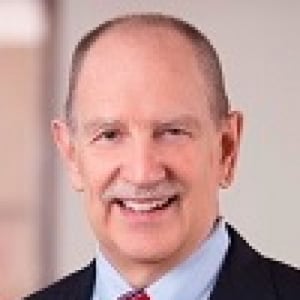
Retired
Tom Gede retired in 2023 as a principal in Morgan Lewis Consulting LLC and of counsel to the firm. He currently consults on a variety of legal and policy matters for both public and private clients. Tom has a national reputation and distinguished background in federal Indian law. Prior to retirement, he represented clients in complex governmental matters in litigation, administrative and regulatory proceedings, including high-profile matters involving state governments. A former senior deputy in the California Attorney General’s office, Tom was amicus coordinator and Supreme Court counsel, and argued cases in the US Supreme Court, the California Supreme Court, and numerous state and federal appellate courts.
Tom also served as executive director of the Conference of Western Attorneys General (CWAG), coordinating activities on key legal and policy issues, such as federal Indian law, energy, environmental, public lands, financial services, and telecommunications, for the attorneys general of 18 western states and territories. In 2016, Tom was elected as a Member of the American Law Institute (ALI), and served as an Adviser on the Restatement of the Law Third - The Law of American Indians. Tom also taught federal Indian law as an adjunct law professor at the University of the Pacific - McGeorge School of Law. He served as an assistant editor for and the author of the Indian gaming chapter in CWAG’s American Indian Law Deskbook (2d & 3d eds.). He has been engaged in Indian gaming and Indian law matters for more than three decades, having focused on the gaming compacts with Indian tribes, as well as complex civil and criminal jurisdiction, land, natural resources, water and law enforcement issues in Indian country. He has testified before Congress on American Indian and Native Alaskan issues. In 2012 he was appointed by Speaker John Boehner to serve on the United States Indian Law and Order Commission, where he examined criminal justice issues in Indian country and Alaska, resulting in the issuance of an important report to the President and Congress.
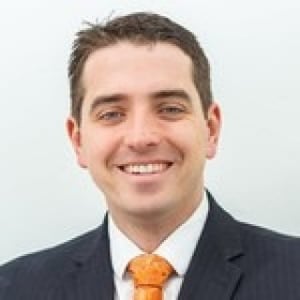
President and Chairman of the Board, Judicial Education Institute
James Heilpern is President and Chairman of the Board of the Judicial Education Institute, a
501(c)(3) organization that provides high quality judicial education seminars to judges
nationwide. He specializes in helping judges harness new technology to improve the
interpretive process. In the last three years alone, he has trained approximately 250 judges
from at least 50 different jurisdictions, as well as hundreds of practicing attorneys, on
topics related artificial intelligence, corpus linguistics, and statutory interpretation. He also
serves as counsel at the law firm Schaerr-Jaffe, where he regularly represents clients at all
three levels of the federal judiciary, as well as before state supreme courts. He was part of
the team the represented the state of Georgia in Texas v. Pennsylvania, et. al., successfully
persuading the Supreme Court to dismiss Texas’ last-ditch effort to overturn the results of
the 2020 presidential election. Heilpern’s scholarship has been cited by the Second
Circuit, the DDC, and the Virginia Supreme Court, as well as dozens of times in the merits
and amicus briefs of Trump v. Anderson. He is a Research Fellow at the Georgetown Center
for the Constitution, and previously served as a Senior Fellow at the BYU Law School; as
General Counsel of an ed-tech start up; and as a strategic advisor to an artificial
intelligence company. He graduated magna cum laude from the BYU Law School and with
highest honors and with distinction from the University of North Carolina at Chapel Hill. He
previously clerked from Judge Edith Clement on the U.S. Court of Appeals for the Fifth
Circuit and Judge Robert H. Cleland on the U.S. District Court for the Eastern District of
Michigan.

Laurence H. Silberman Chair in Constitutional Governance, American Enterprise Institute; Executive Director, Antonin Scalia Law School’s C. Boyden Gray Center for the Study of the Administrative State
Adam J. White is the Laurence H. Silberman Chair in Constitutional Governance and senior fellow at the American Enterprise Institute, where he focuses on the Supreme Court and the administrative state. He also directs the Antonin Scalia Law School’s C. Boyden Gray Center for the Study of the Administrative State.
He writes on regulation and constitutional government for a variety of publications. He practiced law in Washington, D.C., after clerking for the D.C. Circuit's Judge David Sentelle. He also has been chairman of the ABA's Administrative Law Section.
In 2021, he served on the Presidential Commission on the Supreme Court of the United States, where he criticized “Court packing” and other efforts to restructure the Supreme Court.

Opening Remarks and Welcome to Arizona
Richard A. Epstein, Grant H. Frazier, Douglas Sylvester
2019 National Student Symposium
On March 15-16, 2019, the Federalist Society's student chapter at the ASU Sandra Day O'Connor...
Opening Remarks and Welcome to Arizona
Richard A. Epstein, Grant H. Frazier, Douglas Sylvester
2019 National Student Symposium
On March 15-16, 2019, the Federalist Society's student chapter at the ASU Sandra Day O'Connor...
Iancu v. Brunetti [SCOTUSbrief]
Kristen Osenga
Short video featuring Kristen Osenga
In 2011, Los Angeles streetwear brand FUCT attempted to obtain a trademark but was refused...
John Marshall: The Man Who Made the Supreme Court [POLICYbrief]
Richard Brookhiser
Short video featuring Richard Brookhiser
What impact did Chief Justice John Marshall have on the burgeoning Supreme Court in the...
The Ministerial Exception After Hosanna-Tabor: Firmly Founded, Increasingly Refined
J. Gregory Grisham, Daniel Blomberg
Federalist Society Review, Volume 20
Note from the Editor: The Federalist Society takes no positions on particular legal and public...
Topics
American Justice 2018: Book Review
“The Shifting Supreme Court” is the latest from the University of Pennsylvania’s “American Justice” series,...
Topics
Rimini Street v. Oracle - An Engaging & Predictive Paper
On March 4th, a unanimous Supreme Court issued its opinion in Rimini Street v. Oracle...
Washington State Department of Licensing v. Cougar Den Inc. - Post-Decision
Thomas F. Gede
SCOTUScast featuring Tom Gede
On March 19, 2019, the Supreme Court decided Washington State Department of Licensing v. Cougar...
Rimini Street Inc. v. Oracle USA Inc. - Post-Decision SCOTUScast
James Heilpern
SCOTUScast featuring James Heilpern
On March 4, 2019, the Supreme Court decided Rimini Street Inc v. Oracle USA Inc.,...
Kisor v. Wilkie [SCOTUSbrief]
Adam White
Short video featuring Adam White
In 2006, Vietnam veteran James Kisor appealed the denial of his disability benefits by the...