
Partner, Gibson Dunn & Crutcher
Douglas R. Cox is a partner in the Washington, D.C. office of Gibson, Dunn & Crutcher and Vice-Chair of the firm's Crisis Management Practice Group. He practices in the areas of constitutional and general commercial litigation, appellate law, and governmental matters.
Mr. Cox has represented numerous clients in litigation before federal and state trial and appellate courts. He played a principal role in the firm's successful representation of the prevailing candidate before the Supreme Court of the United States in Bush v. Palm Beach County Canvassing Board and Bush v. Gore, stemming from the 2000 presidential election, and in other cases before the Supreme Court involving equal protection, voting rights and election law, the scope of the jury trial right under the Seventh Amendment, and other constitutional and statutory issues.
Mr. Cox successfully represented the National Association of Securities Dealers ("NASD") in a series of trial and appellate matters, including DL Capital Group, LLC v. Nasdaq Stock Market, Inc., 409 F.3d 93 (2d Cir. 2005) and Sparta Surgical Corp. v. NASD, 159 F.3d 1209 (9th Cir. 1998).
Mr. Cox frequently represents accounting firms in a variety of matters, including matters involving the SEC and PCAOB. He also has substantial experience representing clients before congressional investigating committees.
Mr. Cox previously served for five years during the Reagan and Bush Administrations in the Justice Department's Office of Legal Counsel, becoming Principal Deputy Assistant Attorney General during the Bush Administration. In that Office, he provided legal advice to Executive Branch departments; resolved legal disputes on behalf of the Attorney General between Executive Branch departments; prepared formal opinions of the Attorney General; drafted and issued opinions on legal issues of importance to the Executive Branch; and advised Congress as to the constitutionality of pending legislation.
From 1981 through 1987, Mr. Cox practiced in New York City with a national firm, representing major corporations in state and federal courts. His practice focused on intellectual property, securities, and international tax litigation.
Mr. Cox received his law degree, cum laude, from Harvard Law School in 1980, where he served as Editor-in-Chief of the Harvard Journal of Law and Public Policy from 1979-1980. He received his undergraduate degree in history, magna cum laude, from Princeton University in 1977. He attended Oxford University on a Knox Scholarship in 1980-1981.
In 2005, Chief Justice Rehnquist appointed Mr. Cox to serve as a member of the Judicial Conference Standing Committee on Rules of Practice and Procedure. In 2008 he was reappointed by Chief Justice Roberts.
Partner, Gibson Dunn & Crutcher LLP
Theodore B. Olson is a Partner in Gibson, Dunn & Crutcher’s Washington, D.C. office; a founder of the Firm’s Crisis Management, Sports Law, and Appellate and Constitutional Law Practice Groups.
Mr. Olson was Solicitor General of the United States during the period 2001-2004. From 1981-1984, he was Assistant Attorney General in charge of the Office of Legal Counsel in the U.S. Department of Justice. Except for those two intervals, he has been a lawyer with Gibson, Dunn & Crutcher in Los Angeles and Washington, D.C. since 1965.
Selected by Time magazine in 2010 as one of the 100 most influential people in the world, Mr. Olson is one of the nation’s premier appellate and United States Supreme Court advocates. He has argued 65 cases in the Supreme Court and has prevailed in over 75% of those cases. These include the two Bush v Gore cases arising out of the 2000 presidential election; Citizens United v Federal Election Commission; Hollingsworth v Perry, the case affirming the overturning of California’s Proposition 8, banning same-sex marriages; Murphy v NCAA, overturning a federal law prohibiting states from authorizing sports betting; and U.S. Dept. of Homeland Security v Regents of the Univ. of Calif., challenging the Trump Administration’s rescission of the Deferred Action for Childhood Arrivals (“DACA”). Mr. Olson’s practice is concentrated on appellate and constitutional law, federal legislation, media and commercial disputes, and assisting clients with strategies for the containment, management and resolution of major legal crises. He has handled cases at all levels of state and federal court systems throughout the United States. Mr. Olson co-authored “Redeeming the Dream, the Case for Marriage Equality” with David Boies. Both were featured in HBO’s award-winning documentary, “The Case Against 8.”
Mr. Olson's Supreme Court arguments have included cases involving separation of powers; federalism; voting rights; the Tenth Amendment; the First Amendment; the Equal Protection and Due Process Clauses; jury trial rights; punitive damages; takings of property; the Commerce Clause; administrative law; taxation; criminal law; sports wagering; copyright, patent and antitrust; securities; campaign finance; foreign sovereign immunities; telecommunications; the environment; the internet; the Supremacy Clause; and other federal constitutional and statutory questions. As Solicitor General, during the presidency of George W. Bush, Mr. Olson was the Government's principal advocate in the United States Supreme Court, responsible for supervising and coordinating all appellate litigation of the United States, and a legal adviser to the President and the Attorney General. As Assistant Attorney General for the Office of Legal Counsel during the Reagan Administration, Mr. Olson was the Executive Branch's principal legal adviser, rendering legal guidance to the President and to the heads of the Executive Branch departments on a wide range of constitutional and federal statutory questions, and assisting in formulating and articulating the Executive Branch's position on constitutional issues.
Mr. Olson has served as private counsel to two Presidents, Ronald W. Reagan and George W. Bush, in addition to serving those two Presidents in high-level positions in the Department of Justice. He has twice been awarded the United States Department of Justice's Edmund J. Randolph Award, its highest award for public service and leadership, and also received the Department of Defense's Distinguished Public Service Award, its highest civilian award, for his advocacy in the courts of the United States, including the Supreme Court. He also received the American Bar Association Medal, its highest award for “exceptionally distinguished service by a lawyer or lawyers to the cause of American jurisprudence.” Mr. Olson is to receive the 2021 Jack Valenti Friend of the White House Fellows Award in the Fall of 2021 to be presented by the White House Fellows Foundation and Association.
Mr. Olson is a member of the Commission on White House Fellowships; a member of the Board of Trustees of the Ronald Reagan Presidential Foundation; a member of the Board of Visitors of the Federalist Society; the Board of Directors of the Knight First Amendment Institute at Columbia University; and the 9/11 Pentagon Memorial Foundation. He was a visiting scholar at the National Constitution Center in 2007. He served on the President's Privacy and Civil Liberties Oversight Board from 2006 to 2008; and of the Council of the Administrative Conference of the United States from 2010 to 2020. He was Co-Chair of the Knight Commission on the Information Needs of Communities in a Democracy from 2008-2009, and served two terms on the Board of Directors of the National Center for State Courts.
Mr. Olson is a Fellow of both the American College of Trial Lawyers and the American Academy of Appellate Lawyers. He has been repeatedly listed in legal publications as one of the nation’s leading appellate lawyers. The late New York Times columnist William Safire described Mr. Olson as his generation's "most persuasive advocate" before the Supreme Court and "the most effective Solicitor General in decades.”
Mr. Olson received his law degree in 1965 from the University of California at Berkeley (Boalt Hall) where he was a member of the California Law Review and Order of the Coif. He received his bachelor's degree from the University of the Pacific, where he was recognized as the outstanding graduating student in both forensics and journalism. He has written and lectured extensively on appellate advocacy, oral communication in the courtroom, civil justice reform, and constitutional and administrative law.
Professor of Law, Ohio Northern University Pettit College of Law
Scott Gerber clerked for U.S. District Judge Ernest C. Torres of the District of Rhode Island and practiced with the Boston-based law firm Bingham, Dana & Gould. He is a member of the Massachusetts, Colorado and Virginia bars as well as the U.S. Supreme Court bar. He is the 2002, 2009, 2011 and 2012 winner of the Fowler V. Harper Award for excellence in legal scholarship and the 2004, 2013 and 2016 recipient of the Daniel S. Guy Award for excellence in legal journalism. He held the Ella & Ernest Fisher chair in law at Ohio Northern University from 2008-10. He has served on the Ohio Advisory Committee of the U.S. Commission on Civil Rights since 2008 and was appointed to the Association of American Law Schools Committee to Review Scholarly Papers for the 2018 Annual Meeting. He is an associated scholar at Brown University's Political Theory Project. StateStats.org named him one of the top law professors in Ohio. He was on sabbatical as a visiting professor at Brown University's Political Theory Project during the 2018-19 academic year.
Owen L. Coon Professor of Law, Northwestern University Pritzker School of Law
James E. Pfander has focused his teaching and research on the role of the federal judiciary under Article III of the Constitution. His latest book, Constitutional Torts and the War on Terror (Oxford U. Press 2017), documents and evaluates the failure of the federal courts to address the merits of the claims of individuals who were subjected to extraordinary rendition, military detention, and torture during the Bush Administration’s war on terror. Other books include Civil Procedure: A Modern Approach (7th ed. 2018) (with Marcus, Redish & Sherman); Federal Courts: Cases, Comments, and Questions (8th ed. 2018) (with Redish & Sherry), Principles of Federal Jurisdiction (3d ed. 2017).
Pfander’s recent scholarship explores the role of non-contentious jurisdiction in a federal system otherwise largely devoted to the resolution of disputes between adverse parties; the forgotten distinction between “cases” and “controversies” in defining the work of the federal judiciary; the lessons available from Scotland’s civil-law-inflected approach to the problem of litigant standing; the origins and meaning of the anti-injunction act of 1793; and the possible influence of the Scottish judicial system on the structure of the federal court system.
A member of the American Law Institute, Pfander recently concluded his work as reporter/consultant to the Federal-State Jurisdiction Committee of the Judicial Conference of the United States. He has served as chair of both the federal courts and civil procedure sections of the Association of American Law Schools.
Member, Caplin & Drysdale
Services
Mr. Birkenstock focuses on advising corporations, non-profit organizations, candidates, officeholders, and other clients in structuring new political efforts and administering their political, lobbying, and issue-advocacy projects. He also helps clients respond to controversies involving issues of political law such as alleged campaign finance improprieties, conflicts of interest, and real or perceived violations of other legal and ethical obligations.Highlights
While at the DNC, Mr. Birkenstock worked closely with the party's fundraisers and campaign staff to help ensure their compliance with the myriad of state and federal laws governing their activities. He took primary responsibility for responding to several investigations into Democratic Party fundraising following the 1996 presidential election. He also assisted in the litigation and public relations efforts surrounding the 2000 Florida recount and helped implement the DNC's transition to the McCain-Feingold campaign finance regime.
Executive Vice President, The Federalist Society
Dean Reuter is Executive Vice President at the Federalist Society for Law and Public Policy Studies. He has served in two federal government agency Offices of the Inspector General, as Counsel to the Inspector General and Deputy Inspector General, responsible for policing the use of federal funds granted and contracted through those agencies. As such, he helped conduct and oversee criminal investigations across the country. He is the principal author of the non-fiction book, The Hidden Nazi: The Untold Story of America's Deal with the Devil, and editor of Liberty’s Nemesis: The Unchecked Expansion of the State and Confronting Terror: 9/11 and the Future of American National Security. He was appointed by the President and served as Vice-Chairman of the Board of Directors of the Corporation for National and Community Service, and recently served as an appointee on the U.S. Commission on Presidential Scholars. He is a graduate of Hood College (BA with Honors) and the University of Maryland School of Law.
Chairman and Founder, Institute for Free Speech; Josiah H. Blackmore II/Shirley M. Nault Designated Professor of Law, Capital University Law School
Judge, United States Court of Appeals, District of Columbia Circuit
Judge Katsas was appointed to the D.C. Circuit in December 2017. He graduated from Princeton University and Harvard Law School, where he was an executive editor on the Harvard Law Review. Between 1989 and 1992, he served as a law clerk to Judge Edward Becker on the Third Circuit, to then-Judge Clarence Thomas on the D.C. Circuit, and to Justice Thomas on the Supreme Court. Between 1992 and 2001, he was an associate and then partner in the Washington office of Jones Day, where he specialized in appellate and complex civil litigation. Between 2001 and 2009, he served in many senior positions in the Department of Justice, including as Assistant Attorney General for the Civil Division and as Acting Associate Attorney General. In 2009, he returned to Jones Day. From January to December 2017, he served as Deputy Assistant to the President and Deputy Counsel to the President.
Before joining the bench, Judge Katsas argued more than 75 appeals, including three cases in the Supreme Court, 13 cases in the D.C. Circuit, and cases in every other federal court of appeals. By appointment of the Chief Justice, he served on the Advisory Committee on Appellate Rules from 2013 to 2017. In 2016, he was elected to membership in the American Academy of Appellate Lawyers.
Judge, Iowa Court of Appeals
Judge Samuel P. Langholz was appointed to the Iowa Court of Appeals by Governor Kim Reynolds in 2023. Before his appointment, he practiced law in the Iowa Executive Branch for nearly thirteen years, serving as Chief Deputy Attorney General, Assistant Solicitor General, Senior Legal Counsel to the Governor, Chief Administrative Law Judge, and State Public Defender. He also previously worked in private practice at a law firm in Des Moines. He began his legal career as a judicial law clerk to Judge Steven M. Colloton on the U.S. Court of Appeals for the Eighth Circuit.
Judge Langholz earned his law degree from the University of Iowa College of Law with highest distinction and Order of the Coif in 2008 and his undergraduate degree from Washington and Lee University magna cum laude in 2002. He was raised and graduated from high school in Clear Lake. Judge Langholz is married and has two sons.
Judge, United States Court of Appeals, District of Columbia Circuit
Judge Katsas was appointed to the D.C. Circuit in December 2017. He graduated from Princeton University and Harvard Law School, where he was an executive editor on the Harvard Law Review. Between 1989 and 1992, he served as a law clerk to Judge Edward Becker on the Third Circuit, to then-Judge Clarence Thomas on the D.C. Circuit, and to Justice Thomas on the Supreme Court. Between 1992 and 2001, he was an associate and then partner in the Washington office of Jones Day, where he specialized in appellate and complex civil litigation. Between 2001 and 2009, he served in many senior positions in the Department of Justice, including as Assistant Attorney General for the Civil Division and as Acting Associate Attorney General. In 2009, he returned to Jones Day. From January to December 2017, he served as Deputy Assistant to the President and Deputy Counsel to the President.
Before joining the bench, Judge Katsas argued more than 75 appeals, including three cases in the Supreme Court, 13 cases in the D.C. Circuit, and cases in every other federal court of appeals. By appointment of the Chief Justice, he served on the Advisory Committee on Appellate Rules from 2013 to 2017. In 2016, he was elected to membership in the American Academy of Appellate Lawyers.
Judge, Iowa Court of Appeals
Judge Samuel P. Langholz was appointed to the Iowa Court of Appeals by Governor Kim Reynolds in 2023. Before his appointment, he practiced law in the Iowa Executive Branch for nearly thirteen years, serving as Chief Deputy Attorney General, Assistant Solicitor General, Senior Legal Counsel to the Governor, Chief Administrative Law Judge, and State Public Defender. He also previously worked in private practice at a law firm in Des Moines. He began his legal career as a judicial law clerk to Judge Steven M. Colloton on the U.S. Court of Appeals for the Eighth Circuit.
Judge Langholz earned his law degree from the University of Iowa College of Law with highest distinction and Order of the Coif in 2008 and his undergraduate degree from Washington and Lee University magna cum laude in 2002. He was raised and graduated from high school in Clear Lake. Judge Langholz is married and has two sons.
Senior Of Counsel, Covington & Burling LLP and Executive Chairma, The Chertoff Group
Michael Chertoff concentrates in the area of White Collar Defense and Investigations. In recent years, he has handled a series of federal investigations, including complex criminal and civil regulatory matters. He has advised major clients on SEC and Justice Department investigations and successfully served as the independent monitor of a major national healthcare company under criminal and civil investigation.
In addition to his legal work, Mr. Chertoff is Founder and Chairman of The Chertoff Group, a security and risk management firm, where he provides high-level strategic counsel to corporate and government leaders on a broad range of security issues, from risk identification and prevention to preparedness, response and recovery.
In April of 2012, Mr. Chertoff was elected as the new Chairman of the Board of Directors of BAE Systems, Inc. He also sits on the board of directors or board of advisors of a number of companies and nonprofits.
Previously, Mr. Chertoff served as Secretary of the Department of Homeland Security. As Secretary, he led a 218,000 person department with a budget of $50 billion. Mr. Chertoff developed and implemented border security and immigration policy; promulgated homeland security regulations; and spearheaded a national cyber security strategy. He also served periodically on the National Security Council and the Homeland Security Council, and on the Committee on Foreign Investment in the United States.
Prior to his appointment to the Cabinet, Mr. Chertoff served from 2003 to 2005 on the U.S. Court of Appeals for the Third Circuit. Before becoming a federal judge, Mr. Chertoff was the Assistant Attorney General for the Criminal Division of the U.S. Department of Justice. In that position, he oversaw the investigation of the 9/11 terrorist attacks, and formed the Enron Task Force, which produced more than 20 convictions, including those of CEOs Jeffrey Skilling and Kenneth Lay.
Mr. Chertoff’s career includes more than a decade as a federal prosecutor, including service as U.S. Attorney for the District of New Jersey, First Assistant U.S. Attorney for the District of New Jersey, and Assistant U.S. Attorney for the Southern District of New York. As a federal prosecutor, Mr. Chertoff investigated and personally prosecuted significant cases of political corruption, organized crime, and corporate fraud.
From 1994-2001, Mr. Chertoff represented major corporations and individuals in numerous white collar investigations and trials. Among other matters, he successfully represented the nation’s largest hospital company in a four year, multi-jurisdictional criminal and civil investigation, represented major corporations in corruption scandals, and obtained acquittals at trial for individual criminal defendants.
Mr. Chertoff has received numerous awards including the Department of Justice Henry E. Petersen Memorial Award (2006); the Department of Justice John Marshall Award for Trial of Litigation (1987); NAACP Benjamin L. Hooks Award for Distinguished Service (2007); European Institute Transatlantic Leadership Award (2008); and two honorary doctorates. His trial experiences have been featured in over half a dozen books and many news articles.
Fellow, National Security Institute, Antonin Scalia Law School, George Mason University
Vince Vitkowsky chaired the Executive Committee of the Federalist Society’s International and National Security Law and Policy Practice Group for over a decade. He is also a Fellow at the National Security Institute of George Mason University Law School. Vince spent 45 years in private practice, primarily in AmLaw 100/200 firms and their spin-offs. His practice included domestic and international commercial arbitration and litigation, as well as cyber risks and liabilities. Vince's current focus is on national security policy, artificial intelligence, cybersecurity, and counterterrorism. He has often written and spoken on national security and other public policy issues. Among other affiliations, Vince has been an Adjunct Fellow at the Center for Law and Counterterrorism of the Foundation for the Defense of Democracies, a member of the Executive Committee of the American Branch of the International Law Association, and Co-Chair of the Committee on Interventions and Trial Observations of the International Bar Association’s Human Rights Institute. He received his B.A. from Northwestern University and his J.D. from Cornell Law School.
Senior Of Counsel, Covington & Burling LLP and Executive Chairma, The Chertoff Group
Michael Chertoff concentrates in the area of White Collar Defense and Investigations. In recent years, he has handled a series of federal investigations, including complex criminal and civil regulatory matters. He has advised major clients on SEC and Justice Department investigations and successfully served as the independent monitor of a major national healthcare company under criminal and civil investigation.
In addition to his legal work, Mr. Chertoff is Founder and Chairman of The Chertoff Group, a security and risk management firm, where he provides high-level strategic counsel to corporate and government leaders on a broad range of security issues, from risk identification and prevention to preparedness, response and recovery.
In April of 2012, Mr. Chertoff was elected as the new Chairman of the Board of Directors of BAE Systems, Inc. He also sits on the board of directors or board of advisors of a number of companies and nonprofits.
Previously, Mr. Chertoff served as Secretary of the Department of Homeland Security. As Secretary, he led a 218,000 person department with a budget of $50 billion. Mr. Chertoff developed and implemented border security and immigration policy; promulgated homeland security regulations; and spearheaded a national cyber security strategy. He also served periodically on the National Security Council and the Homeland Security Council, and on the Committee on Foreign Investment in the United States.
Prior to his appointment to the Cabinet, Mr. Chertoff served from 2003 to 2005 on the U.S. Court of Appeals for the Third Circuit. Before becoming a federal judge, Mr. Chertoff was the Assistant Attorney General for the Criminal Division of the U.S. Department of Justice. In that position, he oversaw the investigation of the 9/11 terrorist attacks, and formed the Enron Task Force, which produced more than 20 convictions, including those of CEOs Jeffrey Skilling and Kenneth Lay.
Mr. Chertoff’s career includes more than a decade as a federal prosecutor, including service as U.S. Attorney for the District of New Jersey, First Assistant U.S. Attorney for the District of New Jersey, and Assistant U.S. Attorney for the Southern District of New York. As a federal prosecutor, Mr. Chertoff investigated and personally prosecuted significant cases of political corruption, organized crime, and corporate fraud.
From 1994-2001, Mr. Chertoff represented major corporations and individuals in numerous white collar investigations and trials. Among other matters, he successfully represented the nation’s largest hospital company in a four year, multi-jurisdictional criminal and civil investigation, represented major corporations in corruption scandals, and obtained acquittals at trial for individual criminal defendants.
Mr. Chertoff has received numerous awards including the Department of Justice Henry E. Petersen Memorial Award (2006); the Department of Justice John Marshall Award for Trial of Litigation (1987); NAACP Benjamin L. Hooks Award for Distinguished Service (2007); European Institute Transatlantic Leadership Award (2008); and two honorary doctorates. His trial experiences have been featured in over half a dozen books and many news articles.
Fellow, National Security Institute, Antonin Scalia Law School, George Mason University
Vince Vitkowsky chaired the Executive Committee of the Federalist Society’s International and National Security Law and Policy Practice Group for over a decade. He is also a Fellow at the National Security Institute of George Mason University Law School. Vince spent 45 years in private practice, primarily in AmLaw 100/200 firms and their spin-offs. His practice included domestic and international commercial arbitration and litigation, as well as cyber risks and liabilities. Vince's current focus is on national security policy, artificial intelligence, cybersecurity, and counterterrorism. He has often written and spoken on national security and other public policy issues. Among other affiliations, Vince has been an Adjunct Fellow at the Center for Law and Counterterrorism of the Foundation for the Defense of Democracies, a member of the Executive Committee of the American Branch of the International Law Association, and Co-Chair of the Committee on Interventions and Trial Observations of the International Bar Association’s Human Rights Institute. He received his B.A. from Northwestern University and his J.D. from Cornell Law School.
Chairman, Cato Institute
Robert A. Levy is chairman of the Cato Institute's board of directors. He joined Cato as senior fellow in constitutional studies in 1997 after 25 years in business. He also sits on boards of the Institute for Justice, the Federalist Society, and the George Mason University School of Law. He founded CDA Investment Technologies, a major provider of financial information and software, and was its CEO until 1991. Levy clerked for Judge Royce C. Lamberth on the U.S. District Court in Washington, D.C., and for Judge Douglas H. Ginsburg on the U.S. Court of Appeals for the D.C. Circuit. From 1997 until 2004, Levy was an adjunct professor of law at Georgetown University. He has written numerous articles on investments, law, and public policy. His writing has appeared in the New York Times, Wall Street Journal, USA Today,Washington Post, National Review, and many other publications. Levy has also discussed public policy on national radio and TV programs, including ABC's Nightline, CNN's Crossfire, Fox's The O'Reilly Factor, MSNBC's Hardball, and NBC's Today Show. His latest book, co-authored with William Mellor, is The Dirty Dozen: How Twelve Supreme Court Cases Radically Expanded Government and Eroded Freedom. Levy received his Ph.D. in business from the American University and his J.D. degree from the George Mason University School of Law.
Managing Shareholder, Saltzman Mugan Dushoff, PLLC
Over the course of his twenty-plus years as an attorney in Las Vegas, Mr. Saltzman has developed a corporate law practice focused on financial institution and liquor law. He assists businesses in their formation, licensing and governance matters; he also counsels businesses on corporate mergers and acquisition matters. He assists highly regulated financial institutions and captive insurance companies in corporate and regulatory compliance matters and he has testified before the Nevada legislature as an expert on trust company legislation and drafted portions of Nevada law relating to the chartering and operation of Nevada trust companies. He has counseled trust companies and financial service firms on Blockchain and cryptocurrency related legal compliance matters.
Mr. Saltzman has developed and managed the firm’s liquor law practice into Nevada’s largest alcohol beverage specialty law practice group. He and his team of attorneys and paralegals assist a wide range of liquor retailers, wholesalers and suppliers in licensing and compliance matters in all Nevada jurisdictions. More information on Mr. Saltzman’s liquor law practice can be found at his blog: www.nvliquorlaw.com
Matthew Saltzman received a Bachelor of Arts degree in Economics and Philosophy from University of Wisconsin, Madison in 1987. In 1993, he received his Juris Doctor from University of Pittsburgh School of Law, where he was also Executive Editor of the University of Pittsburgh Law Review and served as teaching assistant for the Legal Research and Writing course.
Chairman, Cato Institute
Robert A. Levy is chairman of the Cato Institute's board of directors. He joined Cato as senior fellow in constitutional studies in 1997 after 25 years in business. He also sits on boards of the Institute for Justice, the Federalist Society, and the George Mason University School of Law. He founded CDA Investment Technologies, a major provider of financial information and software, and was its CEO until 1991. Levy clerked for Judge Royce C. Lamberth on the U.S. District Court in Washington, D.C., and for Judge Douglas H. Ginsburg on the U.S. Court of Appeals for the D.C. Circuit. From 1997 until 2004, Levy was an adjunct professor of law at Georgetown University. He has written numerous articles on investments, law, and public policy. His writing has appeared in the New York Times, Wall Street Journal, USA Today,Washington Post, National Review, and many other publications. Levy has also discussed public policy on national radio and TV programs, including ABC's Nightline, CNN's Crossfire, Fox's The O'Reilly Factor, MSNBC's Hardball, and NBC's Today Show. His latest book, co-authored with William Mellor, is The Dirty Dozen: How Twelve Supreme Court Cases Radically Expanded Government and Eroded Freedom. Levy received his Ph.D. in business from the American University and his J.D. degree from the George Mason University School of Law.
Managing Shareholder, Saltzman Mugan Dushoff, PLLC
Over the course of his twenty-plus years as an attorney in Las Vegas, Mr. Saltzman has developed a corporate law practice focused on financial institution and liquor law. He assists businesses in their formation, licensing and governance matters; he also counsels businesses on corporate mergers and acquisition matters. He assists highly regulated financial institutions and captive insurance companies in corporate and regulatory compliance matters and he has testified before the Nevada legislature as an expert on trust company legislation and drafted portions of Nevada law relating to the chartering and operation of Nevada trust companies. He has counseled trust companies and financial service firms on Blockchain and cryptocurrency related legal compliance matters.
Mr. Saltzman has developed and managed the firm’s liquor law practice into Nevada’s largest alcohol beverage specialty law practice group. He and his team of attorneys and paralegals assist a wide range of liquor retailers, wholesalers and suppliers in licensing and compliance matters in all Nevada jurisdictions. More information on Mr. Saltzman’s liquor law practice can be found at his blog: www.nvliquorlaw.com
Matthew Saltzman received a Bachelor of Arts degree in Economics and Philosophy from University of Wisconsin, Madison in 1987. In 1993, he received his Juris Doctor from University of Pittsburgh School of Law, where he was also Executive Editor of the University of Pittsburgh Law Review and served as teaching assistant for the Legal Research and Writing course.

Patrick Hotung Professor of Constitutional Law, Georgetown University Law Center; Faculty Director, Georgetown Center for the Constitution
Randy E. Barnett is the Patrick Hotung Professor of Constitutional Law at the Georgetown University Law Center and is the Faculty Director of the Georgetown Center for the Constitution. After graduating from Northwestern University and Harvard Law School, he tried many felony cases as a prosecutor in the Cook County States’ Attorney’s Office in Chicago. A recipient of a Guggenheim Fellowship in Constitutional Studies and the Bradley Prize, Professor Barnett has been a visiting professor at Penn, Northwestern and Harvard Law School.
Professor Barnett’s publications includes thirteen books, more than one hundred articles and reviews, as well as numerous op-eds. His most recent book is Felony Review: Tales of True Crime and Corruption in Chicago (2026). His other books on the Constitution include: A Life for Liberty: The Making of an American Originalist (2024); The Original Meaning of the Fourteenth Amendment: Its Letter and Spirit (2021) (with Evan Bernick); An Introduction to Constitutional Law: 100 Supreme Court Cases Everyone Should Know (2019) (with Josh Blackman); Restoring the Lost Constitution: The Presumption of Liberty (2nd ed. 2013); Our Republican Constitution: Securing the Liberty and Sovereignty of We the People (2016); and Constitutional Law: Cases in Context (5th ed. forthcoming 2027) (with Josh Blackman). His books on contracts are The Oxford Introductions to U.S. Law: Contracts (2010) and Contracts: Cases and Doctrine (7th ed. 2021) (with Nate Oman). And he is the author of The Structure of Liberty: Justice and the Rule of Law (2nd ed. 2014).
In 2004, he argued the medical marijuana case of Gonzalez v. Raich before the U.S. Supreme Court. In 2012, he was one of the lawyers representing the National Federation of Independent Business in its constitutional challenge to the Affordable Care Act in NFIB v. Sebelius. He’s appeared in numerous documentaries and portrayed a prosecutor in the 2010 science-fiction feature film, InAlienable: The Movie. On X he is @RandyEBarnett
Partner, O'Melveny & Myers LLP
Walter Dellinger is an influential authority on appellate and Supreme Court decisions, lending his experience as a former Solicitor General and decades of legal knowledge to amicus briefs, a multitude of pro bono clients, and public and private companies involved in bet-the-company litigation. A frequent commentator for the Wall Street Journal, Slate, and major television networks, Walter holds the designation of the Douglas B. Maggs Emeritus Professor of Law at Duke University. He was named one of the 100 Most Influential Lawyers in America by the National Law Journal and recognized with a Lifetime Achievement Award from the American Lawyer.
Walter, who formerly served as O’Melveny’s Diversity and Inclusion Partner, helped convince the US Supreme Court that proponents of Proposition 8, California's ban on same-sex marriage, did not have standing to appeal a court order invalidating it. That ruling, Hollingsworth v. Perry, cleared the way for marriage equality in California and eventually nationwide.
Walter served as Assistant Attorney General and head of the Office of Legal Counsel (OLC) from 1993 to 1996. He was acting Solicitor General for the 1996-97 Term of the US Supreme Court. During that time, Walter argued nine cases before the Court, the most by any Solicitor General in more than 20 years. His arguments included cases dealing with physician-assisted suicide, the line item veto, the cable television act, the Brady Act, the Religious Freedom Restoration Act, and the constitutionality of remedial services for parochial school children.
Walter has served as Special Counsel to the Board of Directors of the New York Stock Exchange in connection with the NYSE’s transformation into a publicly held company and its acquisition of an electronic trading company.
After serving in early 1993 in the White House as an advisor to the President on constitutional issues, Walter was nominated by the President to be Assistant Attorney General. He was confirmed by the Senate in October 1993 and served for three years. As head of the OLC, Walter issued opinions on a wide variety of issues, including: the President's authority to deploy United States forces in Haiti and Bosnia; whether the trade agreements required treaty ratification; and a major review of separation of powers questions. He provided extensive legal advice on questions arising out of the shutdown of the federal government, on national debt ceiling issues, and on loan guarantees for Mexico.
Walter has published articles on constitutional issues for scholarly journals including the Harvard Law Review, the Yale Law Journal, and the Duke Law Journal, and has written for the New York Times, the Washington Post, Newsweek, the New Republic, and the London Times. He has been a visiting professor at the Catholic University of Belgium and has given lectures to university faculties in Florence, Siena, Nuremberg, Copenhagen, Leiden, Utrecht, Tilburg, Mexico, and Rio de Janeiro, and has delivered major lectures at Stanford, Yale, Harvard, Michigan, Berkeley, Penn, Duke, Chicago, and other US law schools. He has testified more than 25 times before committees of Congress.
In private practice, Walter’s arguments before the United States Supreme Court have included Exxon Shipping Co. v. Baker, Morgan Stanley Capital Group Inc. v. Public Utility District No. 1 of Snohomish County, Alabama v. North Carolina, Hosanna-Tabor v. EEOC, Heller v. District of Columbia, Jackson v. Birmingham School District, Brown v. Legal Foundation of Washington, US Airways v. Barnett, Utah v. Evans, Hunt v. Cromartie, and Hunt v. Easley. His most notable Court of Appeals and state supreme court arguments include Martha Stewart v. United States, Whiteside v. United States, and Exxon v. Alabama, LCI v. Phillips.
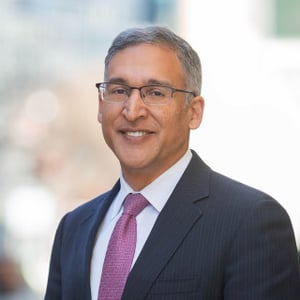
Partner, Millbank LLP
Mr. Katyal, the former Acting Solicitor General of the United States, focuses on appellate and complex litigation. He has argued 54 cases before the Supreme Court of the United States.
He has extensive experience in matters of antitrust, corporate, constitutional, securities, technology, criminal, patent, copyright, trademark, ERISA, products liability, labor, employment and tribal law. In the 2022-23 Supreme Court term, he argued five separate cases (nearly 10% of the docket), including winning the landmark voting case Moore v. Harper, which Judge Michael Luttig described as “the most important case for American democracy in the almost two and a half centuries since America’s founding.” Judge Luttig also said Mr. Katyal’s argument “was the single best oral argument I have ever heard made in the Supreme Court of the United States.” His cases include successfully striking down the Guantanamo military tribunals, successfully defending the constitutionality of the Voting Rights Act and successfully defending the Peace Cross in Maryland. His 2017 win in Bristol Myers Squibb v. Superior Court was a landmark victory for personal jurisdiction law and his 2006 win in Hamdan v. Rumsfeld was described by former Acting Solicitor General Walter Dellinger as “simply the most important decision on presidential power and the rule of law ever. Ever.”
From 2010 to 2011, Mr. Katyal served as Acting Solicitor General of the United States, where he argued several major Supreme Court cases involving a variety of issues, such as his successful defense of the constitutionality of the Voting Rights Act of 1965, his victorious defense of former Attorney General John Ashcroft for alleged abuses in the war on terror, his unanimous victory against eight states who sued the nation's leading power plants for contributing to global warming, and a variety of other matters. As Acting Solicitor General, he was responsible for representing the federal government of the United States in all appellate matters before the US Supreme Court and the Courts of Appeals throughout the nation. He served as Counsel of Record hundreds of times in the US Supreme Court. He was also the only head of the Solicitor General's office to argue a case in the US Court of Appeals for the Federal Circuit, on the important question of whether certain aspects of the human genome were patentable.
After graduating from Yale Law School, Mr. Katyal clerked for The Honorable Guido Calabresi of the US Court of Appeals for the Second Circuit as well as for The Honorable Justice Stephen G. Breyer of the US Supreme Court. He also served in the Deputy Attorney General's Office at the Justice Department as National Security Advisor and as Special Assistant to the Deputy Attorney General during 1998-1999.
Mr. Katyal is a best-selling New York Times author and has published dozens of scholarly articles in law journals (including several in the Harvard Law Review and Yale Law Journal), as well as many op-ed articles in publications such as the New York Times and the Washington Post. He has testified numerous times before various committees of both the US House of Representatives and the US Senate.
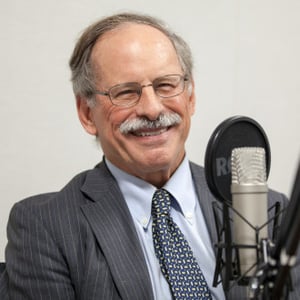
Freelance Journalist and Author
Stuart Taylor, Jr. is a Washington writer focusing on legal and policy issues and a National Journal contributing editor. He occasionally practices law.
Taylor has coauthored three books. All have been acclaimed by commentators across the ideological spectrum. In January 2017, KC Johnson and Taylor authored The Campus Rape Frenzy: The Attack on Due Process at America's Universities. In 2012, Richard Sander and Taylor authored Mismatch: How Affirmative Action Hurts Students It's Intended to Help, and Why Universities Won't Admit It. In 2007, Taylor and Johnson authored Until Proven Innocent: Political Correctness and the Shameful Injustices of the Duke Lacrosse Rape Fraud. Sander and Taylor have also filed amicus briefs in Supreme Court cases involving admissions preferences.
Since 1980, Taylor has done reporting and commentary about issues ranging from the biggest Supreme Court cases to race, voting rights, mindlessly excessive criminal penalties, guilt-presuming campus rape processes, journalistic bias, the death penalty, war powers, gerrymandering, guns, polarization, civil liberties, national security, torture, campaign finance, education, impeachment, and other issues. He has often been called one of the nation's best legal journalists and is known for challenging both liberal and conservative conventional wisdom.
Taylor was a reporter for The New York Times from 1980-1988, covering legal affairs and then the Supreme Court. He wrote commentaries and long features for The American Lawyer, Legal Times and their affiliates from 1989-1997, and for National Journal and Newsweek from 1998 through 2010. He has written (less often) on a freelance basis for numerous publications since 2010. He has written op-eds for The Washington Post, The New York Times, The Wall Street Journal, The Los Angeles Times, USA Today, and The New York Daily News and longer commentaries for RealClearPolitics, The Atlantic, The New Republic, the (late) Weekly Standard, National Review, Slate, The Daily Beast, Harper’s, Reader’s Digest, Time and other magazines. He has been interviewed on all major television and radio networks. He taught “Law and the News Media” at Stanford Law School in 2011 and 2012 and practices law on occasion.
Taylor graduated from Princeton University in 1970 with an A.B. in History. After working as a reporter for the Baltimore Evening Sun and Sun from 1971-1974, he moved to Harvard Law School, was a Harvard Law Review note editor, and graduated in 1977 at the top of his class, with high honors. He also won a Frederick Sheldon Traveling Fellowship and traveled around the world in 1977-1978 while studying freedom of the press in the United Kingdom and Kenya.
Taylor practiced law with Wilmer, Cutler & Pickering, in Washington, D.C., from 1977-1980 before returning to journalism in 1980 by joining the Washington Bureau of The New York Times.
Taylor's journalism honors include the 2009 Northern California Innocence Project Media Award for his work on the Duke lacrosse rape fraud; a 2002 National Headliner Award for best special magazine column on one subject; and a share of The American Lawyer’s National Magazine Award for a March 1990 special issue on the drug war. He was a National Magazine Award finalist in 1993 and 1997 and was nominated by The New York Times for a Pulitzer Prize in 1988.
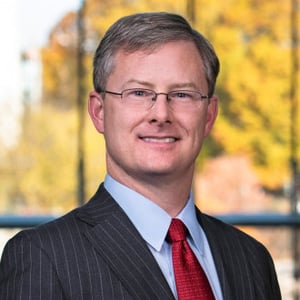
Partner, Jones Day
Kevin Marshall provides clients analysis, strategy, and advocacy involving novel or complex legal issues, particularly in white collar and other compliance matters and in civil litigation arising out of criminal matters or alleged fraud. This includes appeals, dispositive and other critical motions, and prelitigation analyses.
Kevin oversaw trial and appellate briefing, and argued on appeal, in the successful defense of lawsuits arising out of the wiretapping prosecution of a private investigator who had served Jones Day's clients. He also has overseen briefing of, and successfully argued, motions for R.J. Reynolds in connection with arbitration under the Federal Arbitration Act, and the partial settlement, of billion dollar disputes with states under the Master Settlement Agreement. His assistance with investigations and related litigation has included the Foreign Corrupt Practices Act, false claims acts, RICO, civil and criminal fraud, reckless manslaughter, and the intersection of products liability and bankruptcy. Kevin was part of the team representing the National Federation of Independent Business in challenging the constitutionality of the Patient Protection and Affordable Care Act before the Eleventh Circuit and U.S. Supreme Court. He also has advised on and briefed issues under the Consumer Product Safety Improvement Act (CPSIA).
Before joining Jones Day, Kevin was a deputy assistant attorney general in the U.S. Department of Justice's Office of Legal Counsel. He provided authoritative written legal opinions and other legal advice, throughout the executive branch, on the Constitution, treaties, international law including the law of war, and federal statutes and regulations. He also testified three times before Congress.

2012 Annual Supreme Court Round Up
Douglas R. Cox, Theodore B. Olson
Washington, DC Lawyers Chapter
On July 6, 2012, former U.S. Solicitor General Theodore Olson delivered the Annual Supreme Court Round Up...
A Distinct Judicial Power - Faculty Book Podcast
Scott D. Gerber, James E. Pfander
Faculty Division Podcast 05-22-12 featuring Scott Gerber and Jim Pfander
This Federalist Society Faculty Book Podcast features Professor Scott Gerber’s new book, A Distinct Judicial...
Applying Citizens United
Joseph M. Birkenstock, Dean Reuter, Bradley A. Smith
Free Speech and Election Law Practice Group Podcast
As the election season accelerates, our panel of experts discussed the impact of Citizens United,...
Healthcare Reform in the Supreme Court: An Insider Perspective on the Historic Constitutional Challenge to President Obama's Healthcare Legislation
Gregory G. Katsas, Samuel Langholz
Iowa Lawyers Chapter
The Iowa Lawyers Chapter hosted this event on April 17, 2012. Gregory Katsas is the...
Healthcare Reform in the Supreme Court: An Insider Perspective on the Historic Constitutional Challenge to President Obama's Healthcare Legislation
Gregory G. Katsas, Samuel Langholz
Iowa Lawyers Chapter
The Iowa Lawyers Chapter hosted this event on April 17, 2012. Gregory Katsas is the...
Luncheon Address: National Security After U.S. v. Jones
Michael Chertoff, Vincent Vitkowsky
2012 National Security Symposium
Former Secretary of Homeland Security Michael Chertoff delivered an address on "National Security After U.S....
Luncheon Address: National Security After U.S. v. Jones
Michael Chertoff, Vincent Vitkowsky
2012 National Security Symposium
Former Secretary of Homeland Security Michael Chertoff delivered an address on "National Security After U.S....
How the Supreme Court Has Subverted the Constitution
Robert A. Levy, Matthew Saltzman
Las Vegas Lawyers Chapter
The Supreme Court has endorsed an exponential growth in federal government power, often at the...
How the Supreme Court Has Subverted the Constitution
Robert A. Levy, Matthew Saltzman
Las Vegas Lawyers Chapter
The Supreme Court has endorsed an exponential growth in federal government power, often at the...
Obamacare in the Supreme Court
Randy E. Barnett, Walter E. Dellinger, Neal K. Katyal, Stuart S. Taylor, C. Kevin Marshall
Federalism & Separation of Powers Practice Group
The U.S. Supreme Court is now ready to hear oral argument in one of the...