
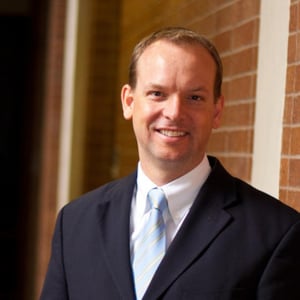
Sterling and Eleanor Colton Endowed Chair in Law; Associate Director, International Center for Law and Religion Studies, BYU Law
Professor Moore is a scholar of foreign relations law, international law, international human rights, and international development. His publications have appeared in the Harvard, Columbia, Virginia, and Northwestern Law Reviews, among others. Professor Moore has taught international law, international human rights, U.S. foreign relations law, civil procedure, legal scholarship, a plenary powers colloquium, and an international religious freedom clinic. As a teacher, he has been recognized with the University's R. Wayne Hansen Teaching and Learning Fellowship, the BYU Law Alumni Association Teacher of the Year Award, and the Student Bar Association First Year Professor of the Year Award. He is a member of the American Law Institute.
As a human rights expert, Professor Moore serves on the Organization for Security and Cooperation in Europe’s Moscow Mechanism. In 2020, he was elected to a brief term on the Human Rights Committee, a body of independent experts that oversees states’ compliance with the International Covenant on Civil and Political Rights. Professor Moore also serves as an Associate Director of the International Center for Law and Religion Studies, which seeks to secure the blessings of religious freedom and belief for everyone.
Between 2017 and 2019, Professor Moore served, variously, as the Acting Deputy Administrator and General Counsel of the U.S. Agency for International Development, the federal government’s lead agency for international development and humanitarian assistance. From 2016 to 2017, he was the Associate Dean for Research and Academic Affairs at Brigham Young University Law School. He was a Visiting Professor at the George Washington University Law School from 2008 to 2009.
Before joining BYU, Professor Moore clerked for Justice Samuel A. Alito, Jr. during the U.S. Supreme Court’s 2007 Term. From 2003 to 2007, Professor Moore was an assistant and then associate professor at the University of Kentucky College of Law. He arrived at the University of Kentucky after researching and teaching at the University of Chicago Law School as an Olin Fellow from 2001 to 2003. From 2000 to 2001, Professor Moore clerked for Judge Samuel A. Alito, Jr. on the U.S. Court of Appeals for the Third Circuit. From 1996 to 2000, he was an Honor Program trial attorney at the U.S. Department of Justice, Civil Division, Federal Programs Branch.
Professor Moore is a summa cum laude graduate of Brigham Young University Law School, where he served as Editor in Chief of the Law Review and graduated first in his class. He received his BA from Brigham Young University, where he was a Benson scholar and graduated summa cum laude, with University Honors, and as co-valedictorian of his college. He and his wife Natalie are the parents of seven wonderful children.
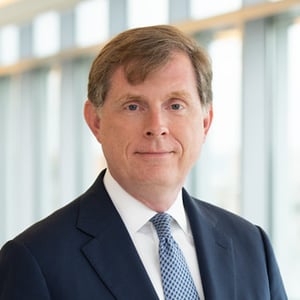
Partner, Arnold & Porter
John Elwood is the head of Arnold & Porter’s Appellate and Supreme Court practice. He has argued before the Supreme Court nine times, and appeared before most of the federal courts of appeals. He has successfully argued cases across a broad cross-section of subjects, with particular experience in environmental law, the False Claims Act, government contracting, and federal criminal law
Mr. Elwood’s work has earned him recognition as one of Washington’s top Supreme Court lawyers (Washingtonian, 2013), as one of “a small group of lawyers” with an “outsized influence at the U.S. Supreme Court” (Reuters, 2014), and as one of the country’s most innovative lawyers (Financial Times, 2014). Chambers USA reports that “[t]he much-admired John Elwood is praised for his advocacy skills” (2013), and describes Mr. Elwood as “phenomenal” (2014), “incredibly talented” (2012), and “a much-loved and widely respected lawyer who is quick on his feet” (2010).
Before joining the firm, Mr. Elwood served in senior-level positions in the U.S. Department of Justice. Beginning as an Assistant to the Solicitor General, and continuing with the firm, he has briefed more than 20 merits cases before the Supreme Court of the United States, and has briefed approximately 135 cases at the certiorari stage. As the senior Deputy in the Office of Legal Counsel, he advised the White House and federal agencies on a range of constitutional, statutory, and regulatory issues.
Attorney, Rathje Woodward LLC
Brian Murray is a first-chair trial and appellate lawyer with a nationwide practice, practicing at Rathje Woodward LLC. A former law clerk to Justice Antonin Scalia, he represents companies and individuals in complex commercial litigation, class actions and civil government enforcement and regulatory matters. In addition, Brian has briefed over a hundred appeals, and has personally argued over 30 of them — including cases before the U.S. Supreme Court, nearly every federal court of appeals, and a number of state supreme and intermediate appellate courts. Brian also served as Deputy to the Associate Attorney General for the United States Department of Justice. In this senior leadership office at the DOJ, Brian counseled Department and executive branch principals and helped formulate policies and strategies for investigating, litigating, and resolving civil regulatory and enforcement matters. Brian relies on his deep experience in guiding his clients through pressing legal challenges.
Brian is routinely called upon to present clients’ most complex and business-critical matters to tribunals nationwide. Notable first-chair jury trial wins include a full defense verdict in a sprawling civil rights class action against the City of Chicago. Key appellate wins include a victory at the Supreme Court that changed the course of CERCLA law, and multiple wins in courts across the country for pharmaceutical companies combatting consumer fraud claims related to drug pricing. Other engagements over the last twenty years have included matters involving environmental, consumer fraud, RICO, antitrust, Title VII, the FAA, and other statutory and common-law claims; enforcement litigation involving the False Claims Act, environmental, and constitutional claims; and other complex civil matters.
Brian has taught Complex Litigation and Class Actions at the University of Chicago Law School for almost a decade. He is a member of the Seventh Circuit Bar Association, the Chicago-Lincoln and Robert Jones American Inns of Court, and the Illinois Appellate Lawyers’ Association. His work has been featured in The Wall Street Journal, New York Times, Washington Post, Chicago Tribune, and on PBS’s Chicago Tonight.
Managing Partner, Schiff Hardin LLP
Ronald S. Safer concentrates in white collar criminal defense and also participates in our firm's civil litigation practice.
Mr. Safer, working with Northwestern University's Center on Wrongful Convictions, obtained a not guilty verdict for the firm's client, Julie Rea Harper. This trial involved the defense of a mother being retried for the murder of her son, even though a convicted felon in another state had confessed to the crime. Mr. Safer and his litigation team successfully discredited the prosecution's case, and her acquittal highlighted the need to reform the special prosecutor system in Illinois. ABC-TV's20/20 broadcast a feature story on this case, spotlighting Mr. Safer, in March 2007.
Mr. Safer has lectured for the U.S. Department of Justice (DOJ) on various subjects including the use of RICO, complex financial frauds, and numerous areas of trial practice.
Mr. Safer continues to lecture for the Federal Bureau of Investigation (FBI) concerning complex investigations.
Mr. Safer was an Assistant U.S. Attorney in the Northern District of Illinois from 1989 until he rejoined Schiff Hardin in 1999.
As Chief of the Criminal Division at the time he left the U.S. Attorney's Office, Mr. Safer oversaw all financial fraud cases and supervised all 100 Assistant U.S. Attorneys in the division. Earlier, he served as Deputy Chief of the Special Prosecution Section (also overseeing all financial fraud cases) and Deputy Chief of the General Crimes Division.
Mr. Safer successfully prosecuted literally hundreds of defendants during his tenure in the U.S. Attorney's Office, including:
Mr. Safer's role in the Gangster Disciples prosecution was described in a feature story in Newsweek, November 1, 1999. Mr. Safer also is spotlighted in the City Confidential and American Justice television programs produced for the A&E cable television network and on "The Prosecutors" television program produced for theDiscovery Channel.
Partner, Katten Muchin Rosenman LLP
Gil M. Soffer is Co-Chair of the firm's National White Collar Practice. He joined the Firm in August 2000, after six years as a federal prosecutor. Mr. Soffer concentrates his practice in white collar criminal litigation, particularly corporate fraud litigation; corporate investigations; insurance litigation; and anti-fraud counseling and litigation. Mr. Soffer is also involved in a wide range of matters involving reinsurance, health care, and alternative dispute resolution.
In January 2008, Mr. Soffer accepted a position as Counsel to the Deputy Attorney General in Washington, D.C., and shortly thereafter was appointed Associate Deputy Attorney General. During his year-long term with the Department of Justice, Mr. Soffer advised the Deputy Attorney General on criminal matters at the Department, with particular emphasis on corporate fraud prosecutions. He played an integral role in drafting the Department's Corporate Monitor Principles and Corporate Charging Principles, and provided training on the latter policy to U.S. Attorneys' Offices nationwide. Mr. Soffer also managed the President's Corporate Fraud Task Force and briefed members of Congress about criminal matters within the Department of Justice.
Mr. Soffer had previously served in the Department of Justice when he was an Assistant U.S. Attorney in the United States Attorney's Office in Chicago (1994 - 2000). In that capacity, he prosecuted a wide range of federal crimes, including bank, mail, wire, tax, and insurance fraud; narcotics and firearms trafficking; bank robbery; embezzlement; and money laundering. In November 1996, Mr. Soffer received the Director's Award for Superior Performance as an Assistant U.S. Attorney from then-Attorney General Janet Reno.
Mr. Soffer graduated magna cum laude from Brown University in 1986 and earned his J.D., cum laude, from Harvard Law School in 1989. Upon graduating from law school, Mr. Soffer clerked in the U.S. District Court for the Northern District of Illinois under Judge John A. Nordberg. After his clerkship, Mr. Soffer became an associate with the law firm of McCutchen, Doyle, Brown & Enersen in San Francisco, where he practiced in the general litigation department.
Mr. Soffer is a member of the American Bar Association and is admitted to practice in Illinois and California. He has served as an Adjunct Professor at Loyola University Law School, where he taught Federal Criminal Prosecution. Mr. Soffer has lectured on subjects ranging from corporate internal investigations to deferred prosecution agreements, appeared regularly as a legal expert on the ABC News Now program Guilt or Innocence, and testified before Congress about the use and selection of corporate monitors in criminal cases.
In December 2009, Mr. Soffer was appointed by Illinois Governor Quinn to serve as a Commissioner on the Illinois Executive Ethics Commission. The nine-member Commission was formed to promote ethics in the executive branch of public service and to ensure that state business is conducted with fairness and integrity. Toward that end, the Commission adjudicates alleged violations of the Illinois Ethics Act and provides guidance to the State's ethics officers.
Assistant Professor, Savannah Law School
Professor D’Agostino is an Assistant Professor teaching Torts and Evidence. He also has interests in contracts, international business law, law and philosophy, and law and science, particularly the effects of modern science on law. Formerly a Legal Fellow in the D.C. office of Congressman Tom Price of Georgia, a Researcher at Georgetown University Law Center, and a Visiting Scholar at the Southeastern Legal Foundation, he also served as a U.S. Senate Judiciary Committee Law Clerk for Senator Tom Coburn of Oklahoma and as a Legal Intern for the U.S. Attorney’s Office for the District of Columbia, Civil Division.
Professor D’Agostino was a member of the Editorial Board of the Virginia Law Review and Executive Editor of the Virginia Journal of International Law. In 2010, he served on the National Symposium Editorial Board of the Harvard Journal of Law & Public Policy and as a pro bono researcher for the U.N. Special Rapporteur on Violence Against Women. He helped to organize the Federalist Society’s 2011 National Student Symposium held at the University of Virginia School of Law and keynoted by U.S. Supreme Court Justice Clarence Thomas, a Savannah area native.
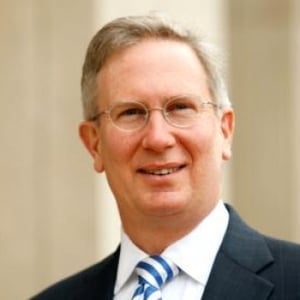
David and Mary Harrison Distinguished Professor of Law, University of Virginia School of Law
Paul G. Mahoney is a David and Mary Harrison Distinguished Professor and served as dean of the Law School from 2008-16. Mahoney's teaching and research areas are securities regulation, law and economic development, corporate finance, financial derivatives and contracts. He has published widely in law reviews and peer-reviewed finance and law and economics journals. His book, “Wasting a Crisis: Why Securities Regulation Fails,” was published by the University of Chicago Press in 2015.
Mahoney joined the Law School faculty in 1990 after practicing law with the New York firm of Sullivan & Cromwell and clerking for Judge Ralph K. Winter, Jr. of the U.S. Court of Appeals for the Second Circuit and Justice Thurgood Marshall of the U.S. Supreme Court. He served as academic associate dean at the Law School from 1999 to 2004 and has held the Albert C. BeVier Research Chair and the Brokaw Chair in Corporate Law. He has been a visiting professor at the University of Chicago Law School, the University of Southern California Law School and the University of Toronto Faculty of Law. He has also worked on legal reform projects in Kazakhstan, Kyrgyzstan, Mongolia and Nepal.
Mahoney is a member of the Council on Foreign Relations and a fellow of the American Academy of Arts and Sciences. In 2018 he joined Securities and Exchange Commission’s Investor Advisory Committee. He served as an associate editor of the Journal of Economic Perspectives from 2004 to 2007 and as a director of the American Law and Economics Association from 2002 to 2004. He is a past recipient of the All-University Outstanding Teacher Award and the Law School's Traynor Award for excellence in faculty scholarship.
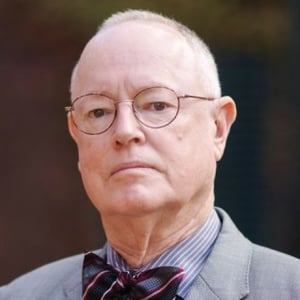
John C. Jeffries, Jr., Distinguished Professor of Law, University of Virginia School of Law
Paul B. Stephan is an expert on international business, international dispute resolution and comparative law, with an emphasis on Soviet and post-Soviet legal systems. In addition to writing prolifically in these fields, Stephan has advised governments and international organizations, taken part in cases in the Supreme Court of the United States, the federal courts, and various foreign judicial and arbitral proceedings, and lectured to professionals and scholarly groups around the world on issues raised by the globalization of the world economy. During 2006-07, he served as counselor on international law in the U.S. Department of State, and in 2020-21 as special counsel to the general counsel in the Department of Defense. He was a coordinating reporter for the American Law Institute’s Restatement (Fourth) of the Foreign Relations Law of the United States.
Stephan received his B.A. and M.A. from Yale University in 1973 and 1974, respectively, and his J.D. from the University of Virginia in 1977. Before returning to Virginia, he clerked for Judge Levin Campbell of the U.S. Court of Appeals for the First Circuit and for U.S. Supreme Court Justice Lewis F. Powell Jr. He has taught as a visiting professor at the Moscow State Institute for International Relations, the University of Vienna, Münster University, Lausanne University, Melbourne University, University of Pantheon-Assas (Paris II), Sciences Po, Paris I, the Interdisciplinary Centre Herzliya, Sydney University, the Peking University School of Transnational Law in Shenzhen, China, the University of Tartu’s Pärna College, and Liverpool University. He also has visited at Columbia Law School and Duke Law School, and served as a scholar in residence in the London office of Wilmer Hale.
After the collapse of the Soviet Union, Stephan took part in a variety of projects involving law reform in former socialist states. He worked in Russia, Georgia, Ukraine, Albania and Slovakia on behalf of the U.S. Treasury and in Kazakhstan and Azerbaijan on behalf of the International Monetary Fund. He also organized training programs for tax administrators and judges from all of the formerly socialist countries under the auspices of the Organization for Economic Cooperation and Development. His casebooks on international business, international trade and investment, and Doing Business in Emerging Markets are used at law schools both in the United States and abroad. He is the co-author, with Robert Scott, of The Limits of Leviathan: Contract Theory and the Enforcement of International Law (Cambridge University Press, 2006), and the author of The World Crisis and International Law: The Knowledge Economy and the Battle for the Future (2023). His current research focuses on the legal issues related to the Russian invasion of Ukraine and legal responses to the rise of big data.
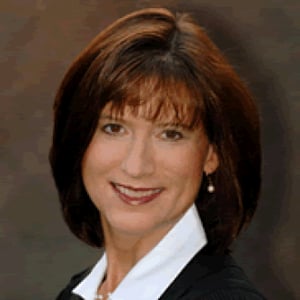
Judge, United States Court of Appeals, Seventh Circuit
Judge Sykes was nominated to the Seventh Circuit by President George W. Bush and confirmed by the Senate in 2004. Prior to her appointment to the federal bench, Judge Sykes served as a justice on the Wisconsin Supreme Court. Governor Tommy G. Thompson appointed her in September 1999 to fill a mid-term vacancy on the state supreme court, and she was elected to a full ten-year term in April 2000. From 1992-1999, Judge Sykes served on the state trial bench in Milwaukee County (elected in 1992 and re-elected in 1998). From 1985-1992, Judge Sykes practiced law with the Milwaukee firm of Whyte & Hirschboeck, S.C., and from 1984-1985, was a law clerk to Federal Judge Terence T. Evans.
Born and raised in the Milwaukee area, Judge Sykes earned a bachelor’s degree in journalism from Northwestern University in 1980 and a law degree from Marquette University Law School in 1984. Between college and law school, Judge Sykes worked as a reporter for The Milwaukee Journal.
Judge Sykes has two sons.
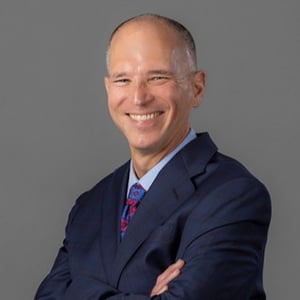
George Mason University Foundation Professor of Law, Antonin Scalia Law School, George Mason University
TODD J. ZYWICKI is George Mason University Foundation Professor of Law at Antonin Scalia Law School at George Mason University and Research Fellow of the George Mason Law and Economics Center. During the Fall 2023 semester he served as the Visiting Scholar in Conservative Thought and Policy for the Bruce Benson Center for the Study of Western Civilization at the University of Colorado-Boulder. From 2020-2021 he was Chair of the Consumer Financial Protection Bureau Taskforce on Federal Consumer Financial Law. In 2021 he was inducted to the American College of Consumer Financial Services Lawyers. He is also a Senior Fellow of the F.A. Hayek Program for the Advanced Study of Politics, Philosophy, and Economics at George Mason University and a former Senior Fellow of the Cato Institute. From 2015-2017 he was Executive Director of the George Mason Law and Economics Center. He served as Co-Editor of the Supreme Court Economic Review from 2006-2017. From 2003-2004, Professor Zywicki served as the Director of the Office of Policy Planning at the Federal Trade Commission. He has also taught at Vanderbilt University Law School, Georgetown University Law Center, Boston College Law School, Mississippi College School of Law, and China University of Political Science and Law.
Professor Zywicki clerked for Judge Jerry E. Smith of the U.S. Court of Appeals for the Fifth Circuit and worked as an associate at Alston & Bird in Atlanta, Georgia, where he practiced bankruptcy and commercial law. He received his J.D. from the University of Virginia, where he was executive editor of the Virginia Tax Review and John M. Olin Scholar in Law and Economics. Professor Zywicki also received an M.A. in Economics from Clemson University and an A.B. cum Laude with high honors in his major from Dartmouth College.
Professor Zywicki is also a Lone Mountain Fellow of the Property and Environment Research Center, a Fellow of the International Centre for Economic Research in Turin, Italy, and a former Senior Fellow of the Goldwater Institute. During the Fall 2008 Semester Professor Zywicki was the Searle Fellow of the George Mason University School of Law and was a 2008-09 W. Glenn Campbell and Rita Ricardo-Campbell National Fellow and the Arch W. Shaw National Fellow at the Hoover Institution on War, Revolution and Peace. He has lectured and consulted with government officials around the world, including Iceland, Italy, Japan, and Guatemala. In 2006 Professor Zywicki served as a Member of the United States Department of Justice Study Group on “Identifying Fraud, Abuse and Errors in the United States Bankruptcy System.”
Professor Zywicki is the author of more than 130 articles in leading law reviews and peer-reviewed economics journals. He is one of the Top 10 most-cited law professors in the field of Commercial Law and one of the Top 25 law professors on Twitter as measured by engagement levels. He is one of the Top 50 Most Downloaded Law Authors at the Social Science Research Network. He has testified multiple times before Congress on issues of consumer bankruptcy law and consumer credit and is a frequent commentator on legal issues in the print and broadcast media, including the Wall Street Journal, New York Times, The Washington Post, The Washington Times, Nightline, The Newshour with Jim Lehrer, Neil Cavuto Show, Fox & Friends, Smerconish, Fox News @ Night with Shannon Bream, Fox Business, CNN, CNBC, Bloomberg News, BBC, The Diane Rehm Show, Lou Dobbs Show, Jerry Doyle Show, and The Laura Ingraham Show.
Professor Zywicki is former Chairman and a current member of the Board of Directors of the Competitive Enterprise Institute, and is a member of the Board of Directors of the Institute for Humane Studies, Bill of Rights Institute, the Executive Committee for the Federalist Society's Financial Institutions and E-Commerce Practice Group, the Board of Trustees of the Foundation for Research on Economics and the Environment. He formerly served on the Governing Board and the Advisory Council for the Financial Services Research Program at George Washington University School of Business. He is currently the Chair of the Academic Advisory Council for the following organizations: The Bill of Rights Institute, the film “We the People in IMAX,” and the McCormick-Tribune Foundation “Freedom Museum” in Chicago, Illinois. He is a member of the Board of Visitors of Ralston College and was a member of the Board of Trustees of Yorktown University. From 2005-2009 he served as an elected Alumni Trustee of the Dartmouth College Board of Trustees.
Assistant Professor, Savannah Law School
Professor D’Agostino is an Assistant Professor teaching Torts and Evidence. He also has interests in contracts, international business law, law and philosophy, and law and science, particularly the effects of modern science on law. Formerly a Legal Fellow in the D.C. office of Congressman Tom Price of Georgia, a Researcher at Georgetown University Law Center, and a Visiting Scholar at the Southeastern Legal Foundation, he also served as a U.S. Senate Judiciary Committee Law Clerk for Senator Tom Coburn of Oklahoma and as a Legal Intern for the U.S. Attorney’s Office for the District of Columbia, Civil Division.
Professor D’Agostino was a member of the Editorial Board of the Virginia Law Review and Executive Editor of the Virginia Journal of International Law. In 2010, he served on the National Symposium Editorial Board of the Harvard Journal of Law & Public Policy and as a pro bono researcher for the U.N. Special Rapporteur on Violence Against Women. He helped to organize the Federalist Society’s 2011 National Student Symposium held at the University of Virginia School of Law and keynoted by U.S. Supreme Court Justice Clarence Thomas, a Savannah area native.
David and Mary Harrison Distinguished Professor of Law, University of Virginia School of Law
Paul G. Mahoney is a David and Mary Harrison Distinguished Professor and served as dean of the Law School from 2008-16. Mahoney's teaching and research areas are securities regulation, law and economic development, corporate finance, financial derivatives and contracts. He has published widely in law reviews and peer-reviewed finance and law and economics journals. His book, “Wasting a Crisis: Why Securities Regulation Fails,” was published by the University of Chicago Press in 2015.
Mahoney joined the Law School faculty in 1990 after practicing law with the New York firm of Sullivan & Cromwell and clerking for Judge Ralph K. Winter, Jr. of the U.S. Court of Appeals for the Second Circuit and Justice Thurgood Marshall of the U.S. Supreme Court. He served as academic associate dean at the Law School from 1999 to 2004 and has held the Albert C. BeVier Research Chair and the Brokaw Chair in Corporate Law. He has been a visiting professor at the University of Chicago Law School, the University of Southern California Law School and the University of Toronto Faculty of Law. He has also worked on legal reform projects in Kazakhstan, Kyrgyzstan, Mongolia and Nepal.
Mahoney is a member of the Council on Foreign Relations and a fellow of the American Academy of Arts and Sciences. In 2018 he joined Securities and Exchange Commission’s Investor Advisory Committee. He served as an associate editor of the Journal of Economic Perspectives from 2004 to 2007 and as a director of the American Law and Economics Association from 2002 to 2004. He is a past recipient of the All-University Outstanding Teacher Award and the Law School's Traynor Award for excellence in faculty scholarship.
John C. Jeffries, Jr., Distinguished Professor of Law, University of Virginia School of Law
Paul B. Stephan is an expert on international business, international dispute resolution and comparative law, with an emphasis on Soviet and post-Soviet legal systems. In addition to writing prolifically in these fields, Stephan has advised governments and international organizations, taken part in cases in the Supreme Court of the United States, the federal courts, and various foreign judicial and arbitral proceedings, and lectured to professionals and scholarly groups around the world on issues raised by the globalization of the world economy. During 2006-07, he served as counselor on international law in the U.S. Department of State, and in 2020-21 as special counsel to the general counsel in the Department of Defense. He was a coordinating reporter for the American Law Institute’s Restatement (Fourth) of the Foreign Relations Law of the United States.
Stephan received his B.A. and M.A. from Yale University in 1973 and 1974, respectively, and his J.D. from the University of Virginia in 1977. Before returning to Virginia, he clerked for Judge Levin Campbell of the U.S. Court of Appeals for the First Circuit and for U.S. Supreme Court Justice Lewis F. Powell Jr. He has taught as a visiting professor at the Moscow State Institute for International Relations, the University of Vienna, Münster University, Lausanne University, Melbourne University, University of Pantheon-Assas (Paris II), Sciences Po, Paris I, the Interdisciplinary Centre Herzliya, Sydney University, the Peking University School of Transnational Law in Shenzhen, China, the University of Tartu’s Pärna College, and Liverpool University. He also has visited at Columbia Law School and Duke Law School, and served as a scholar in residence in the London office of Wilmer Hale.
After the collapse of the Soviet Union, Stephan took part in a variety of projects involving law reform in former socialist states. He worked in Russia, Georgia, Ukraine, Albania and Slovakia on behalf of the U.S. Treasury and in Kazakhstan and Azerbaijan on behalf of the International Monetary Fund. He also organized training programs for tax administrators and judges from all of the formerly socialist countries under the auspices of the Organization for Economic Cooperation and Development. His casebooks on international business, international trade and investment, and Doing Business in Emerging Markets are used at law schools both in the United States and abroad. He is the co-author, with Robert Scott, of The Limits of Leviathan: Contract Theory and the Enforcement of International Law (Cambridge University Press, 2006), and the author of The World Crisis and International Law: The Knowledge Economy and the Battle for the Future (2023). His current research focuses on the legal issues related to the Russian invasion of Ukraine and legal responses to the rise of big data.
Judge, United States Court of Appeals, Seventh Circuit
Judge Sykes was nominated to the Seventh Circuit by President George W. Bush and confirmed by the Senate in 2004. Prior to her appointment to the federal bench, Judge Sykes served as a justice on the Wisconsin Supreme Court. Governor Tommy G. Thompson appointed her in September 1999 to fill a mid-term vacancy on the state supreme court, and she was elected to a full ten-year term in April 2000. From 1992-1999, Judge Sykes served on the state trial bench in Milwaukee County (elected in 1992 and re-elected in 1998). From 1985-1992, Judge Sykes practiced law with the Milwaukee firm of Whyte & Hirschboeck, S.C., and from 1984-1985, was a law clerk to Federal Judge Terence T. Evans.
Born and raised in the Milwaukee area, Judge Sykes earned a bachelor’s degree in journalism from Northwestern University in 1980 and a law degree from Marquette University Law School in 1984. Between college and law school, Judge Sykes worked as a reporter for The Milwaukee Journal.
Judge Sykes has two sons.
George Mason University Foundation Professor of Law, Antonin Scalia Law School, George Mason University
TODD J. ZYWICKI is George Mason University Foundation Professor of Law at Antonin Scalia Law School at George Mason University and Research Fellow of the George Mason Law and Economics Center. During the Fall 2023 semester he served as the Visiting Scholar in Conservative Thought and Policy for the Bruce Benson Center for the Study of Western Civilization at the University of Colorado-Boulder. From 2020-2021 he was Chair of the Consumer Financial Protection Bureau Taskforce on Federal Consumer Financial Law. In 2021 he was inducted to the American College of Consumer Financial Services Lawyers. He is also a Senior Fellow of the F.A. Hayek Program for the Advanced Study of Politics, Philosophy, and Economics at George Mason University and a former Senior Fellow of the Cato Institute. From 2015-2017 he was Executive Director of the George Mason Law and Economics Center. He served as Co-Editor of the Supreme Court Economic Review from 2006-2017. From 2003-2004, Professor Zywicki served as the Director of the Office of Policy Planning at the Federal Trade Commission. He has also taught at Vanderbilt University Law School, Georgetown University Law Center, Boston College Law School, Mississippi College School of Law, and China University of Political Science and Law.
Professor Zywicki clerked for Judge Jerry E. Smith of the U.S. Court of Appeals for the Fifth Circuit and worked as an associate at Alston & Bird in Atlanta, Georgia, where he practiced bankruptcy and commercial law. He received his J.D. from the University of Virginia, where he was executive editor of the Virginia Tax Review and John M. Olin Scholar in Law and Economics. Professor Zywicki also received an M.A. in Economics from Clemson University and an A.B. cum Laude with high honors in his major from Dartmouth College.
Professor Zywicki is also a Lone Mountain Fellow of the Property and Environment Research Center, a Fellow of the International Centre for Economic Research in Turin, Italy, and a former Senior Fellow of the Goldwater Institute. During the Fall 2008 Semester Professor Zywicki was the Searle Fellow of the George Mason University School of Law and was a 2008-09 W. Glenn Campbell and Rita Ricardo-Campbell National Fellow and the Arch W. Shaw National Fellow at the Hoover Institution on War, Revolution and Peace. He has lectured and consulted with government officials around the world, including Iceland, Italy, Japan, and Guatemala. In 2006 Professor Zywicki served as a Member of the United States Department of Justice Study Group on “Identifying Fraud, Abuse and Errors in the United States Bankruptcy System.”
Professor Zywicki is the author of more than 130 articles in leading law reviews and peer-reviewed economics journals. He is one of the Top 10 most-cited law professors in the field of Commercial Law and one of the Top 25 law professors on Twitter as measured by engagement levels. He is one of the Top 50 Most Downloaded Law Authors at the Social Science Research Network. He has testified multiple times before Congress on issues of consumer bankruptcy law and consumer credit and is a frequent commentator on legal issues in the print and broadcast media, including the Wall Street Journal, New York Times, The Washington Post, The Washington Times, Nightline, The Newshour with Jim Lehrer, Neil Cavuto Show, Fox & Friends, Smerconish, Fox News @ Night with Shannon Bream, Fox Business, CNN, CNBC, Bloomberg News, BBC, The Diane Rehm Show, Lou Dobbs Show, Jerry Doyle Show, and The Laura Ingraham Show.
Professor Zywicki is former Chairman and a current member of the Board of Directors of the Competitive Enterprise Institute, and is a member of the Board of Directors of the Institute for Humane Studies, Bill of Rights Institute, the Executive Committee for the Federalist Society's Financial Institutions and E-Commerce Practice Group, the Board of Trustees of the Foundation for Research on Economics and the Environment. He formerly served on the Governing Board and the Advisory Council for the Financial Services Research Program at George Washington University School of Business. He is currently the Chair of the Academic Advisory Council for the following organizations: The Bill of Rights Institute, the film “We the People in IMAX,” and the McCormick-Tribune Foundation “Freedom Museum” in Chicago, Illinois. He is a member of the Board of Visitors of Ralston College and was a member of the Board of Trustees of Yorktown University. From 2005-2009 he served as an elected Alumni Trustee of the Dartmouth College Board of Trustees.

Patrick Hotung Professor of Constitutional Law, Georgetown University Law Center; Faculty Director, Georgetown Center for the Constitution
Randy E. Barnett is the Patrick Hotung Professor of Constitutional Law at the Georgetown University Law Center and is the Faculty Director of the Georgetown Center for the Constitution. After graduating from Northwestern University and Harvard Law School, he tried many felony cases as a prosecutor in the Cook County States’ Attorney’s Office in Chicago. A recipient of a Guggenheim Fellowship in Constitutional Studies and the Bradley Prize, Professor Barnett has been a visiting professor at Penn, Northwestern and Harvard Law School.
Professor Barnett’s publications includes thirteen books, more than one hundred articles and reviews, as well as numerous op-eds. His most recent book is Felony Review: Tales of True Crime and Corruption in Chicago (2026). His other books on the Constitution include: A Life for Liberty: The Making of an American Originalist (2024); The Original Meaning of the Fourteenth Amendment: Its Letter and Spirit (2021) (with Evan Bernick); An Introduction to Constitutional Law: 100 Supreme Court Cases Everyone Should Know (2019) (with Josh Blackman); Restoring the Lost Constitution: The Presumption of Liberty (2nd ed. 2013); Our Republican Constitution: Securing the Liberty and Sovereignty of We the People (2016); and Constitutional Law: Cases in Context (5th ed. forthcoming 2027) (with Josh Blackman). His books on contracts are The Oxford Introductions to U.S. Law: Contracts (2010) and Contracts: Cases and Doctrine (7th ed. 2021) (with Nate Oman). And he is the author of The Structure of Liberty: Justice and the Rule of Law (2nd ed. 2014).
In 2004, he argued the medical marijuana case of Gonzalez v. Raich before the U.S. Supreme Court. In 2012, he was one of the lawyers representing the National Federation of Independent Business in its constitutional challenge to the Affordable Care Act in NFIB v. Sebelius. He’s appeared in numerous documentaries and portrayed a prosecutor in the 2010 science-fiction feature film, InAlienable: The Movie. On X he is @RandyEBarnett
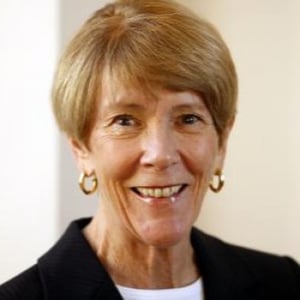
David and Mary Harrison Distinguished Professor of Law Emeritus, University of Virginia School of Law
Lillian BeVier taught constitutional law (with special emphasis on First Amendment issues), intellectual property (trademark, copyright), real property and torts from 1973-2010 at the Law School, and now teaches a January Term course on judicial philosophy.
At Stanford Law School, BeVier was revising editor for the Stanford Law Review and a member of the Order of the Coif. Before coming to Virginia, she was associate professor of law at the University of Santa Clara Law School; practiced law with Spaeth Blase Valentine & Klein in Palo Alto, Calif.; served as research associate to Professor William F. Baxter at Stanford University Law School, working on the FAA-ABA study of the legal aspects of airport noise and the sonic boom; and was assistant to the general secretary and assistant staff legal counsel for Stanford University.
BeVier received the University of Virginia Alumni Association Distinguished Professor Award in 2006. The Raven Society elected her to membership in 1993 and honored her with the faculty award in 2010. She delivered the Henry Miller Memorial Lecture at Georgia State Law School in 2005, the Coen Memorial Lecture at the University of Colorado Law School in 2000, and the David C. Baum Lecture on Civil Rights and Civil Liberties at the University of Illinois Law School in 1996. In 1999, at the invitation of the Supreme Court Historical Society, she spoke to the Society on Free Expression in the Warren and Burger Courts. Suffolk University awarded her an honorary S.J.D. degree in 1998. In the fall of 2003, she was a visiting scholar at the National Constitution Center in Philadelphia.
Having been nominated by President Bush and confirmed by the Senate in 2003, she served as vice-chair of the Board of Directors of the Legal Services Corporation until 2009. She serves on the national Board of Visitors of the Federalist Society. Within the Charlottesville community, BeVier has served as chair of the Board of Trustees of St. Anne’s-Belfield School and of the Martha Jefferson Hospital. She is currently chair of the board of the Martha Jefferson Health Services Corporation and of Piedmont CASA (Court-Appointed Special Advocates).
Judge, United States Court of Appeals, Second Circuit
Judge Livingston was appointed United States Circuit Judge for the Second Circuit on May 17, 2007 and entered on duty June 1, 2007. Prior to her appointment she was the Paul J. Kellner Professor of Law at Columbia Law School, where she also served as Vice Dean from 2005 to 2006. Judge Livingston joined the Columbia faculty in 1994. She continues to serve as a member of that faculty as the Paul J. Kellner Professor.
Judge Livingston received her B.A., magna cum laude, in 1980 from Princeton University, where she was elected to Phi Beta Kappa. She received her J.D., magna cum laude, in 1984 from Harvard Law School, where she was an editor on the Harvard Law Review. Following law school, she served as a law clerk to Judge J. Edward Lumbard of the United States Court of Appeals for the Second Circuit.
Judge Livingston was an Assistant United States Attorney in the Southern District of New York from 1986 to 1991 and she served as a Deputy Chief of Appeals in the Criminal Division from 1990 to 1991. She was an associate with the New York law firm of Paul, Weiss, Rifkind, Wharton & Garrison from 1985 to 1986 and again from 1991 to 1992, when she elected to pursue an academic career. Judge Livingston was a member of the University of Michigan's Law School faculty from 1992 until 1994.
Judge Livingston is a co-author of the casebook, Comprehensive Criminal Procedure, and has published numerous academic articles on legal topics. She has taught courses in evidence, criminal law and procedure, and national security and terrorism. From 1994 to 2003, Judge Livingston was a Commissioner on New York City's Civilian Complaint Review Board.
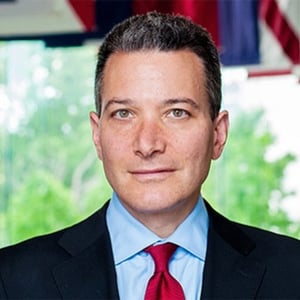
Senior Fellow, FIRE and CEO Emeritus, National Constitution Center
Jeffrey Rosen is a senior FIRE fellow as well as the host of “The Blessings of Liberty” podcast, presented by FIRE. He is also the CEO emeritus of the National Constitution Center, a professor of law at the George Washington University Law School, and a contributing editor of The Atlantic. He was previously the legal affairs editor of The New Republic and a staff writer for The New Yorker.
Rosen is the author of the New York Times bestsellers The Pursuit of Happiness and Conversations with RBG. His new book is The Pursuit of Liberty: How Hamilton vs. Jefferson Ignited the Lasting Battle Over Power in America.
Rosen is a graduate of Harvard College; Oxford University, where he was a Marshall Scholar; and Yale Law School. He is an elected member of the American Philosophical Society and the American Law Institute. In 2024, the French government recognized him as a Chevalier in the Ordre des Arts et des Lettres.
Patrick Hotung Professor of Constitutional Law, Georgetown University Law Center; Faculty Director, Georgetown Center for the Constitution
Randy E. Barnett is the Patrick Hotung Professor of Constitutional Law at the Georgetown University Law Center and is the Faculty Director of the Georgetown Center for the Constitution. After graduating from Northwestern University and Harvard Law School, he tried many felony cases as a prosecutor in the Cook County States’ Attorney’s Office in Chicago. A recipient of a Guggenheim Fellowship in Constitutional Studies and the Bradley Prize, Professor Barnett has been a visiting professor at Penn, Northwestern and Harvard Law School.
Professor Barnett’s publications includes thirteen books, more than one hundred articles and reviews, as well as numerous op-eds. His most recent book is Felony Review: Tales of True Crime and Corruption in Chicago (2026). His other books on the Constitution include: A Life for Liberty: The Making of an American Originalist (2024); The Original Meaning of the Fourteenth Amendment: Its Letter and Spirit (2021) (with Evan Bernick); An Introduction to Constitutional Law: 100 Supreme Court Cases Everyone Should Know (2019) (with Josh Blackman); Restoring the Lost Constitution: The Presumption of Liberty (2nd ed. 2013); Our Republican Constitution: Securing the Liberty and Sovereignty of We the People (2016); and Constitutional Law: Cases in Context (5th ed. forthcoming 2027) (with Josh Blackman). His books on contracts are The Oxford Introductions to U.S. Law: Contracts (2010) and Contracts: Cases and Doctrine (7th ed. 2021) (with Nate Oman). And he is the author of The Structure of Liberty: Justice and the Rule of Law (2nd ed. 2014).
In 2004, he argued the medical marijuana case of Gonzalez v. Raich before the U.S. Supreme Court. In 2012, he was one of the lawyers representing the National Federation of Independent Business in its constitutional challenge to the Affordable Care Act in NFIB v. Sebelius. He’s appeared in numerous documentaries and portrayed a prosecutor in the 2010 science-fiction feature film, InAlienable: The Movie. On X he is @RandyEBarnett
David and Mary Harrison Distinguished Professor of Law Emeritus, University of Virginia School of Law
Lillian BeVier taught constitutional law (with special emphasis on First Amendment issues), intellectual property (trademark, copyright), real property and torts from 1973-2010 at the Law School, and now teaches a January Term course on judicial philosophy.
At Stanford Law School, BeVier was revising editor for the Stanford Law Review and a member of the Order of the Coif. Before coming to Virginia, she was associate professor of law at the University of Santa Clara Law School; practiced law with Spaeth Blase Valentine & Klein in Palo Alto, Calif.; served as research associate to Professor William F. Baxter at Stanford University Law School, working on the FAA-ABA study of the legal aspects of airport noise and the sonic boom; and was assistant to the general secretary and assistant staff legal counsel for Stanford University.
BeVier received the University of Virginia Alumni Association Distinguished Professor Award in 2006. The Raven Society elected her to membership in 1993 and honored her with the faculty award in 2010. She delivered the Henry Miller Memorial Lecture at Georgia State Law School in 2005, the Coen Memorial Lecture at the University of Colorado Law School in 2000, and the David C. Baum Lecture on Civil Rights and Civil Liberties at the University of Illinois Law School in 1996. In 1999, at the invitation of the Supreme Court Historical Society, she spoke to the Society on Free Expression in the Warren and Burger Courts. Suffolk University awarded her an honorary S.J.D. degree in 1998. In the fall of 2003, she was a visiting scholar at the National Constitution Center in Philadelphia.
Having been nominated by President Bush and confirmed by the Senate in 2003, she served as vice-chair of the Board of Directors of the Legal Services Corporation until 2009. She serves on the national Board of Visitors of the Federalist Society. Within the Charlottesville community, BeVier has served as chair of the Board of Trustees of St. Anne’s-Belfield School and of the Martha Jefferson Hospital. She is currently chair of the board of the Martha Jefferson Health Services Corporation and of Piedmont CASA (Court-Appointed Special Advocates).
Judge, United States Court of Appeals, Second Circuit
Judge Livingston was appointed United States Circuit Judge for the Second Circuit on May 17, 2007 and entered on duty June 1, 2007. Prior to her appointment she was the Paul J. Kellner Professor of Law at Columbia Law School, where she also served as Vice Dean from 2005 to 2006. Judge Livingston joined the Columbia faculty in 1994. She continues to serve as a member of that faculty as the Paul J. Kellner Professor.
Judge Livingston received her B.A., magna cum laude, in 1980 from Princeton University, where she was elected to Phi Beta Kappa. She received her J.D., magna cum laude, in 1984 from Harvard Law School, where she was an editor on the Harvard Law Review. Following law school, she served as a law clerk to Judge J. Edward Lumbard of the United States Court of Appeals for the Second Circuit.
Judge Livingston was an Assistant United States Attorney in the Southern District of New York from 1986 to 1991 and she served as a Deputy Chief of Appeals in the Criminal Division from 1990 to 1991. She was an associate with the New York law firm of Paul, Weiss, Rifkind, Wharton & Garrison from 1985 to 1986 and again from 1991 to 1992, when she elected to pursue an academic career. Judge Livingston was a member of the University of Michigan's Law School faculty from 1992 until 1994.
Judge Livingston is a co-author of the casebook, Comprehensive Criminal Procedure, and has published numerous academic articles on legal topics. She has taught courses in evidence, criminal law and procedure, and national security and terrorism. From 1994 to 2003, Judge Livingston was a Commissioner on New York City's Civilian Complaint Review Board.
Senior Fellow, FIRE and CEO Emeritus, National Constitution Center
Jeffrey Rosen is a senior FIRE fellow as well as the host of “The Blessings of Liberty” podcast, presented by FIRE. He is also the CEO emeritus of the National Constitution Center, a professor of law at the George Washington University Law School, and a contributing editor of The Atlantic. He was previously the legal affairs editor of The New Republic and a staff writer for The New Yorker.
Rosen is the author of the New York Times bestsellers The Pursuit of Happiness and Conversations with RBG. His new book is The Pursuit of Liberty: How Hamilton vs. Jefferson Ignited the Lasting Battle Over Power in America.
Rosen is a graduate of Harvard College; Oxford University, where he was a Marshall Scholar; and Yale Law School. He is an elected member of the American Philosophical Society and the American Law Institute. In 2024, the French government recognized him as a Chevalier in the Ordre des Arts et des Lettres.
Patrick Hotung Professor of Constitutional Law, Georgetown University Law Center; Faculty Director, Georgetown Center for the Constitution
Randy E. Barnett is the Patrick Hotung Professor of Constitutional Law at the Georgetown University Law Center and is the Faculty Director of the Georgetown Center for the Constitution. After graduating from Northwestern University and Harvard Law School, he tried many felony cases as a prosecutor in the Cook County States’ Attorney’s Office in Chicago. A recipient of a Guggenheim Fellowship in Constitutional Studies and the Bradley Prize, Professor Barnett has been a visiting professor at Penn, Northwestern and Harvard Law School.
Professor Barnett’s publications includes thirteen books, more than one hundred articles and reviews, as well as numerous op-eds. His most recent book is Felony Review: Tales of True Crime and Corruption in Chicago (2026). His other books on the Constitution include: A Life for Liberty: The Making of an American Originalist (2024); The Original Meaning of the Fourteenth Amendment: Its Letter and Spirit (2021) (with Evan Bernick); An Introduction to Constitutional Law: 100 Supreme Court Cases Everyone Should Know (2019) (with Josh Blackman); Restoring the Lost Constitution: The Presumption of Liberty (2nd ed. 2013); Our Republican Constitution: Securing the Liberty and Sovereignty of We the People (2016); and Constitutional Law: Cases in Context (5th ed. forthcoming 2027) (with Josh Blackman). His books on contracts are The Oxford Introductions to U.S. Law: Contracts (2010) and Contracts: Cases and Doctrine (7th ed. 2021) (with Nate Oman). And he is the author of The Structure of Liberty: Justice and the Rule of Law (2nd ed. 2014).
In 2004, he argued the medical marijuana case of Gonzalez v. Raich before the U.S. Supreme Court. In 2012, he was one of the lawyers representing the National Federation of Independent Business in its constitutional challenge to the Affordable Care Act in NFIB v. Sebelius. He’s appeared in numerous documentaries and portrayed a prosecutor in the 2010 science-fiction feature film, InAlienable: The Movie. On X he is @RandyEBarnett

Clayton J. and Henry R. Barber Professor of Law, Northwestern University Pritzker School of Law and Co-Chairman, Board of Directors, The Federalist Society
STEVEN GOW CALABRESI is the Clayton J. & Henry R. Barber Professor at Northwestern Pritzker School of Law. He has also co-taught in the Fall semester at Yale Law School from 2013 to the present. Calabresi clerked for Justice Antonin Scalia and Judges Robert H. Bork and Ralph K. Winter. He was a Special Assistant to Attorney General Meese from 1985 to 1987 and worked with Ken Cribb as his deputy in 1987 on the second floor of the West Wing of the Reagan White House. Calabresi has written books on presidential power and comparative constitutional law and the origins of judicial review. He and Gary Lawson are the co-editors of a casebook on U.S. Constitutional Law, and Calabresi is also the co-editor of a casebook on comparative constitutional law. He has written over seventy law review articles since 1990.
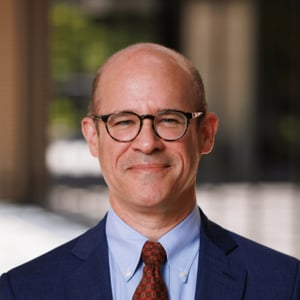
Professor of Law, Stanford Law School
Orin S. Kerr is a Professor of Law at Stanford Law School, where he teaches and writes in the areas of criminal procedure and computer crime law. Kerr earned mechanical engineering degrees from Princeton University and Stanford University before graduating with a J.D. from Harvard Law School. He is a former law clerk to Justice Anthony M. Kennedy at the United States Supreme Court and Judge Leonard I. Garth of the U.S. Court of Appeals for the Third Circuit.
Patrick Hotung Professor of Constitutional Law, Georgetown University Law Center; Faculty Director, Georgetown Center for the Constitution
Randy E. Barnett is the Patrick Hotung Professor of Constitutional Law at the Georgetown University Law Center and is the Faculty Director of the Georgetown Center for the Constitution. After graduating from Northwestern University and Harvard Law School, he tried many felony cases as a prosecutor in the Cook County States’ Attorney’s Office in Chicago. A recipient of a Guggenheim Fellowship in Constitutional Studies and the Bradley Prize, Professor Barnett has been a visiting professor at Penn, Northwestern and Harvard Law School.
Professor Barnett’s publications includes thirteen books, more than one hundred articles and reviews, as well as numerous op-eds. His most recent book is Felony Review: Tales of True Crime and Corruption in Chicago (2026). His other books on the Constitution include: A Life for Liberty: The Making of an American Originalist (2024); The Original Meaning of the Fourteenth Amendment: Its Letter and Spirit (2021) (with Evan Bernick); An Introduction to Constitutional Law: 100 Supreme Court Cases Everyone Should Know (2019) (with Josh Blackman); Restoring the Lost Constitution: The Presumption of Liberty (2nd ed. 2013); Our Republican Constitution: Securing the Liberty and Sovereignty of We the People (2016); and Constitutional Law: Cases in Context (5th ed. forthcoming 2027) (with Josh Blackman). His books on contracts are The Oxford Introductions to U.S. Law: Contracts (2010) and Contracts: Cases and Doctrine (7th ed. 2021) (with Nate Oman). And he is the author of The Structure of Liberty: Justice and the Rule of Law (2nd ed. 2014).
In 2004, he argued the medical marijuana case of Gonzalez v. Raich before the U.S. Supreme Court. In 2012, he was one of the lawyers representing the National Federation of Independent Business in its constitutional challenge to the Affordable Care Act in NFIB v. Sebelius. He’s appeared in numerous documentaries and portrayed a prosecutor in the 2010 science-fiction feature film, InAlienable: The Movie. On X he is @RandyEBarnett
Clayton J. and Henry R. Barber Professor of Law, Northwestern University Pritzker School of Law and Co-Chairman, Board of Directors, The Federalist Society
STEVEN GOW CALABRESI is the Clayton J. & Henry R. Barber Professor at Northwestern Pritzker School of Law. He has also co-taught in the Fall semester at Yale Law School from 2013 to the present. Calabresi clerked for Justice Antonin Scalia and Judges Robert H. Bork and Ralph K. Winter. He was a Special Assistant to Attorney General Meese from 1985 to 1987 and worked with Ken Cribb as his deputy in 1987 on the second floor of the West Wing of the Reagan White House. Calabresi has written books on presidential power and comparative constitutional law and the origins of judicial review. He and Gary Lawson are the co-editors of a casebook on U.S. Constitutional Law, and Calabresi is also the co-editor of a casebook on comparative constitutional law. He has written over seventy law review articles since 1990.
Professor of Law, Stanford Law School
Orin S. Kerr is a Professor of Law at Stanford Law School, where he teaches and writes in the areas of criminal procedure and computer crime law. Kerr earned mechanical engineering degrees from Princeton University and Stanford University before graduating with a J.D. from Harvard Law School. He is a former law clerk to Justice Anthony M. Kennedy at the United States Supreme Court and Judge Leonard I. Garth of the U.S. Court of Appeals for the Third Circuit.

Co-Chairman, The Federalist Society for Law and Public Policy Studies
Leonard is Co-Chairman and former Executive Vice President of the Federalist Society, joining the organization over 25 years ago. Since that time he has been instrumental in helping the organization top 70,000, focusing on the growth of lawyers membership, operations and activities advancing limited, constitutional government. In addition to his work at the Society, Leonard has advised President Trump on judicial selection, assisted with the Gorsuch and Kavanaugh Supreme Court selection and confirmation process, and served as a member of the transition team. He also organized the outside coalition efforts in support of the Roberts and Alito U.S. Supreme Court confirmations. Leonard was appointed by President George W. Bush to three terms to the U.S. Commission on International Religious Freedom as chairman. He was also a U.S. Delegate to the UN Council and UN Commission on Human Rights during the Bush Administration. Leonard was the recipient of the 2009 Bradley Prize, along with the other founders and directors of the Federalist Society, for his work in advancing freedom and the rule of law. He is the coeditor of Presidential Leadership: Rating the Best and the Worst in the White House, as well as the author of opinion editorials in the New York Times,The Wall Street Journal, and Washington Post. Leonard holds degrees from Cornell University and Cornell Law School. He presently resides in Northern Virginia, where he and his wife Sally have raised their seven children.
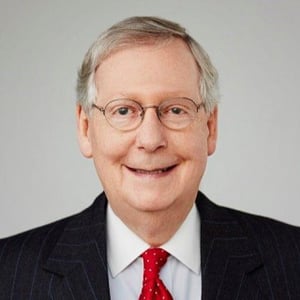
United States Senator, Kentucky
Mitch McConnell is the Senate Majority Leader. Elected to that position unanimously by his Republican colleagues first in 2014 and again in 2016, he is only the second Kentuckian to ever serve as Majority Leader in the U.S. Senate. The first, Senator Alben Barkley, led the Democrats from 1937 to 1949.
Senator McConnell has served, again by the unanimous vote of his colleagues, as the Republican Leader since the 110th Congress. He is the longest-serving Senate Republican Leader in the history of the United States. McConnell previously served in leadership as the Majority Whip in the 108th and 109th Congresses and as chairman of the National Republican Senatorial Committee during the 1998 and 2000 election cycles.
McConnell has been called “the most conservative leader of either party in the history of the Senate.” He has also earned a reputation as a “master tactician” for permanently locking in critical tax relief for working families and small businesses, and putting in place the most significant spending reduction legislation in a generation.
He has received praise from numerous media outlets for his work as Senate Majority Leader, and in 2015 TIME Magazine named McConnell one of the 100 Most Influential People in the World.
First elected to the Senate in 1984, McConnell is Kentucky’s longest-serving senator. He made history that year as the only Republican challenger in the country to defeat an incumbent Democrat and as the first Republican to win a statewide Kentucky race since 1968. On November 4, 2014, he was elected to a record sixth term by receiving broad support across Kentucky, winning 110 of the Commonwealth’s 120 counties.
McConnell graduated with honors from the University of Louisville College of Arts and Sciences, where he served as student body president. He also is a graduate of the University of Kentucky College of Law, where he was elected president of the Student Bar Association.
McConnell worked as an intern on Capitol Hill for Senator John Sherman Cooper before serving as chief legislative assistant to Senator Marlow Cook and as Deputy Assistant Attorney General to President Gerald Ford.
Before his election to the Senate, he served as judge-executive of Jefferson County, Kentucky, from 1978 until he commenced his Senate term on January 3, 1985.
McConnell currently serves as a senior member of the Appropriations, Agriculture and Rules Committees. He is the proud father of three daughters.
McConnell is married to Secretary Elaine L. Chao, the 18th U.S. Secretary of Transportation. Previously, Secretary Chao served for eight years as President George W. Bush’s U.S. Secretary of Labor. She is also a former president of the United Way of America and director of the Peace Corps.
Co-Chairman, The Federalist Society for Law and Public Policy Studies
Leonard is Co-Chairman and former Executive Vice President of the Federalist Society, joining the organization over 25 years ago. Since that time he has been instrumental in helping the organization top 70,000, focusing on the growth of lawyers membership, operations and activities advancing limited, constitutional government. In addition to his work at the Society, Leonard has advised President Trump on judicial selection, assisted with the Gorsuch and Kavanaugh Supreme Court selection and confirmation process, and served as a member of the transition team. He also organized the outside coalition efforts in support of the Roberts and Alito U.S. Supreme Court confirmations. Leonard was appointed by President George W. Bush to three terms to the U.S. Commission on International Religious Freedom as chairman. He was also a U.S. Delegate to the UN Council and UN Commission on Human Rights during the Bush Administration. Leonard was the recipient of the 2009 Bradley Prize, along with the other founders and directors of the Federalist Society, for his work in advancing freedom and the rule of law. He is the coeditor of Presidential Leadership: Rating the Best and the Worst in the White House, as well as the author of opinion editorials in the New York Times,The Wall Street Journal, and Washington Post. Leonard holds degrees from Cornell University and Cornell Law School. He presently resides in Northern Virginia, where he and his wife Sally have raised their seven children.
United States Senator, Kentucky
Mitch McConnell is the Senate Majority Leader. Elected to that position unanimously by his Republican colleagues first in 2014 and again in 2016, he is only the second Kentuckian to ever serve as Majority Leader in the U.S. Senate. The first, Senator Alben Barkley, led the Democrats from 1937 to 1949.
Senator McConnell has served, again by the unanimous vote of his colleagues, as the Republican Leader since the 110th Congress. He is the longest-serving Senate Republican Leader in the history of the United States. McConnell previously served in leadership as the Majority Whip in the 108th and 109th Congresses and as chairman of the National Republican Senatorial Committee during the 1998 and 2000 election cycles.
McConnell has been called “the most conservative leader of either party in the history of the Senate.” He has also earned a reputation as a “master tactician” for permanently locking in critical tax relief for working families and small businesses, and putting in place the most significant spending reduction legislation in a generation.
He has received praise from numerous media outlets for his work as Senate Majority Leader, and in 2015 TIME Magazine named McConnell one of the 100 Most Influential People in the World.
First elected to the Senate in 1984, McConnell is Kentucky’s longest-serving senator. He made history that year as the only Republican challenger in the country to defeat an incumbent Democrat and as the first Republican to win a statewide Kentucky race since 1968. On November 4, 2014, he was elected to a record sixth term by receiving broad support across Kentucky, winning 110 of the Commonwealth’s 120 counties.
McConnell graduated with honors from the University of Louisville College of Arts and Sciences, where he served as student body president. He also is a graduate of the University of Kentucky College of Law, where he was elected president of the Student Bar Association.
McConnell worked as an intern on Capitol Hill for Senator John Sherman Cooper before serving as chief legislative assistant to Senator Marlow Cook and as Deputy Assistant Attorney General to President Gerald Ford.
Before his election to the Senate, he served as judge-executive of Jefferson County, Kentucky, from 1978 until he commenced his Senate term on January 3, 1985.
McConnell currently serves as a senior member of the Appropriations, Agriculture and Rules Committees. He is the proud father of three daughters.
McConnell is married to Secretary Elaine L. Chao, the 18th U.S. Secretary of Transportation. Previously, Secretary Chao served for eight years as President George W. Bush’s U.S. Secretary of Labor. She is also a former president of the United Way of America and director of the Peace Corps.

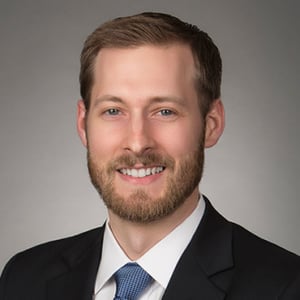
Should U.S. Courts Ignore International Law?
Christopher Chadzutko, David Moore
New England Student Chapter
In recent years a controversy has developed over the role that foreign and international law...
Honest Services Fraud: What's Left?
John P. Elwood, Brian J. Murray, Ronald S. Safer, Gil Soffer
Chicago Lawyers Chapter and Criminal Law & Procedure Practice Group
Last year, in its "Honest Services Cases" the Supreme Court purported to confine the statute...
Panel IV: Economic Uncertainty and the Role of the Courts
Joseph D'Agostino, Paul G. Mahoney, Paul B. Stephan, Diane S. Sykes, Todd J. Zywicki
2011 National Student Symposium
This panel will assess the role of the courts in an uncertain economic climate. Given...
Panel IV: Economic Uncertainty and the Role of the Courts
Joseph D'Agostino, Paul G. Mahoney, Paul B. Stephan, Diane S. Sykes, Todd J. Zywicki
2011 National Student Symposium
This panel will assess the role of the courts in an uncertain economic climate. Given...
Debate: Economic Freedoms and the Constitution
Randy E. Barnett, Lillian R. BeVier, Devin Allan DeBacker, Debra Ann Livingston, Ben Massey, Jeffrey Rosen
2011 National Student Symposium
Since West Coast Hotel Co. v. Parrish and the end of the Lochner Era, the Supreme Court has adhered...
Debate: Economic Freedoms and the Constitution
Randy E. Barnett, Lillian R. BeVier, Devin Allan DeBacker, Debra Ann Livingston, Ben Massey, Jeffrey Rosen
2011 National Student Symposium
Since West Coast Hotel Co. v. Parrish and the end of the Lochner Era, the Supreme Court has adhered...
Luncheon Debate: The Constitutionality of the Individual Mandate
Randy E. Barnett, Steven G. Calabresi, Orin S. Kerr
13th Annual Faculty Conference
Prof. Randy E. Barnett, Georgetown University Law Center Prof. Orin S. Kerr, The George Washington...
Luncheon Debate: The Constitutionality of the Individual Mandate
Randy E. Barnett, Steven G. Calabresi, Orin S. Kerr
13th Annual Faculty Conference
Prof. Randy E. Barnett, Georgetown University Law Center Prof. Orin S. Kerr, The George Washington...
Welcome and Opening Address by Mitch McConnell
Leonard A. Leo, Mitch McConnell
2010 National Lawyers Convention
Hon. Mitch McConnell, United States Senate Introduction: Mr. Leonard A. Leo, Executive Vice President, The...
Welcome and Opening Address by Mitch McConnell
Leonard A. Leo, Mitch McConnell
2010 National Lawyers Convention
Hon. Mitch McConnell, United States Senate Introduction: Mr. Leonard A. Leo, Executive Vice President, The...