

Senior Legal Fellow, Edwin Meese III Institute for the Rule of Law, Advancing American Freedom
Senior Legal Fellow, Edwin Meese III Institute for the Rule of Law, Advancing American Freedom
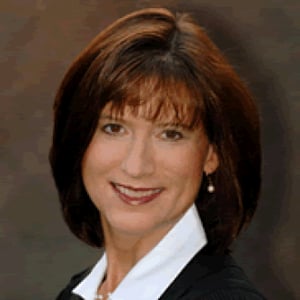
Judge, United States Court of Appeals, Seventh Circuit
Judge Sykes was nominated to the Seventh Circuit by President George W. Bush and confirmed by the Senate in 2004. Prior to her appointment to the federal bench, Judge Sykes served as a justice on the Wisconsin Supreme Court. Governor Tommy G. Thompson appointed her in September 1999 to fill a mid-term vacancy on the state supreme court, and she was elected to a full ten-year term in April 2000. From 1992-1999, Judge Sykes served on the state trial bench in Milwaukee County (elected in 1992 and re-elected in 1998). From 1985-1992, Judge Sykes practiced law with the Milwaukee firm of Whyte & Hirschboeck, S.C., and from 1984-1985, was a law clerk to Federal Judge Terence T. Evans.
Born and raised in the Milwaukee area, Judge Sykes earned a bachelor’s degree in journalism from Northwestern University in 1980 and a law degree from Marquette University Law School in 1984. Between college and law school, Judge Sykes worked as a reporter for The Milwaukee Journal.
Judge Sykes has two sons.
Publius comes from the pen name Alexander Hamilton, James Madison, and John Jay used when they wrote 85 publicly printed letters now known as the Federalist Papers. Hamilton chose “Publius” as a name that would represent friends of the newly proposed American republic - Publius Valeria Publicola was a Roman general who helped to found the Roman Republic. The Federalist Society continues the tradition of publishing things under the name Publius in celebration of our constitutional roots and recognition that author credit is not always necessary.
Publius comes from the pen name Alexander Hamilton, James Madison, and John Jay used when they wrote 85 publicly printed letters now known as the Federalist Papers. Hamilton chose “Publius” as a name that would represent friends of the newly proposed American republic - Publius Valeria Publicola was a Roman general who helped to found the Roman Republic. The Federalist Society continues the tradition of publishing things under the name Publius in celebration of our constitutional roots and recognition that author credit is not always necessary.
Publius comes from the pen name Alexander Hamilton, James Madison, and John Jay used when they wrote 85 publicly printed letters now known as the Federalist Papers. Hamilton chose “Publius” as a name that would represent friends of the newly proposed American republic - Publius Valeria Publicola was a Roman general who helped to found the Roman Republic. The Federalist Society continues the tradition of publishing things under the name Publius in celebration of our constitutional roots and recognition that author credit is not always necessary.

Managing Director, Berkeley Research Group
Dan Troy is Managing Director and an expert witness on FDA matters at Berkeley Research Group. Previously he served as Chief Counsel of the US Food and Drug Administration and General Counsel of GlaxoSmithKline PLC.
Managing Director, Berkeley Research Group
Dan Troy is Managing Director and an expert witness on FDA matters at Berkeley Research Group. Previously he served as Chief Counsel of the US Food and Drug Administration and General Counsel of GlaxoSmithKline PLC.
Publius comes from the pen name Alexander Hamilton, James Madison, and John Jay used when they wrote 85 publicly printed letters now known as the Federalist Papers. Hamilton chose “Publius” as a name that would represent friends of the newly proposed American republic - Publius Valeria Publicola was a Roman general who helped to found the Roman Republic. The Federalist Society continues the tradition of publishing things under the name Publius in celebration of our constitutional roots and recognition that author credit is not always necessary.

Increasing the Security of Elections: The Effect of Identification Requirements on Turnout of Minority Voters
Hans A. Von Spakovsky
Voter fraud is a well-documented and existing problem in the United States. While it is...
Increasing the Security of Elections: The Effect of Identification Requirements on Turnout of Minority Voters
Hans A. Von Spakovsky
Voter fraud is a well-documented and existing problem in the United States. While it is...
Reflections on the Wisconsin Supreme Court
Diane S. Sykes
Editor’s Note: This article is excerpted from the Hallows Lecture that was given by the...
A Focus On: Washington Supreme Court
Publius
Reg’l Transit Auth. v. Miller, 156 Wn.2d 403 (Wash. 2006) was the occasion for the...
Tennessee Supreme Court Rejects Challenge to Term Limits
Publius
In Bailey v. County of Shelby, No. W2005-01508-SCR11-CV, 2206 Tenn. LEXIS 208 (Tenn. March, 29,...
New York Court Limits Preemption of State’s Labor Law
Publius
Distinguishing the United States Supreme Court’s decision in Hoffman Plastic Compounds Inc. v. National Labor...
State Court Docket Watch June 2006
Table of Contents
Reflections on the Wisconsin Supreme Court A Focus On: Washington Supreme Court Tennessee Supreme Court...
State-Level Protection for Good-Faith Pharmaceutical Manufacturers
Daniel E. Troy
In 1996, the Michigan legislature enacted a common-sense proposition into law: drug-safety determinations should be...
State-Level Protection for Good-Faith Pharmaceutical Manufacturers
Daniel E. Troy
In 1996, the Michigan legislature enacted a common-sense proposition into law: drug-safety determinations should be...
The State of Eminent Domain Law
Publius
Introduction When Justice John Paul Stevens wrote the majority opinion in Kelo v. New London,...