
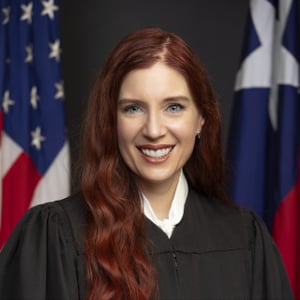
Justice, Texas First Court of Appeals
Susanna Dokupil was elected to the First Court of Appeals in November 2024. With over two decades of experience, Susanna’s career has spanned all three branches of government as well as private practice. She has been a Special Counsel and Assistant Solicitor General in the Office of the Attorney General of Texas as well as a Special Counsel to the United States Senate Judiciary Committee and a law clerk to the Hon. Jerry Smith on the U.S. Court of Appeals for the Fifth Circuit.
In her role as Special Counsel at the Texas Attorney General’s office, Susanna led teams of litigators focused on protecting Texas’s interests against agency regulations that exceeded the agency’s statutory and constitutional power. As an Assistant Solicitor General, she drafted briefs before the Fifth Circuit and United States Supreme Court, primarily focused on First Amendment issues. Susanna’s experience in private practice has combined traditional commercial litigation with advising technology companies and founders on strategic communications.
Susanna has been a prolific speaker and writer on law and public policy topics, including articles in The Harvard Journal of Law & Public Policy, The Texas Review of Law & Politics, American Enterprise, the Washington Times, and the Houston Chronicle, among others.
Susanna is a graduate of Harvard Law School and also holds degrees from The George Washington University and Baylor University. She lives in Houston and has four children.
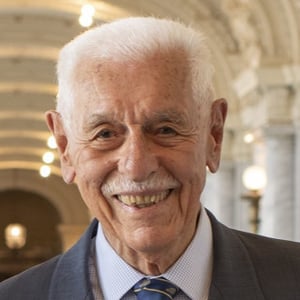
Judge, United States Court of Appeals, Ninth Circuit
Judge Carlos Bea serves as a judge on the United States Court of Appeals for the Ninth Circuit. He received his Bachelor's Degree from Stanford University in 1956 and his J.D. from Stanford Law School in 1958. Judge Bea was born in San Sebastian, Spain, and immigrated with his family to Cuba in 1939. In 1952, he represented Cuba on the Cuban National basketball team in the Helsinki Olympics. Judge Bea became a naturalized citizen of the United States in 1958. He engaged in private practice in San Francisco, principally in the area of civil trials (jury and non-jury), from 1959-75 at Dunne, Phelps & Mills and from 1975-90 at Carlos Bea, A Law Corporation. He taught courses in civil litigation advocacy at Hastings College of Law and Stanford Law School. From 1990 to 2003, Judge Bea served as a judge of the San Francisco Superior Court. He was nominated by President George W. Bush to the United States Court of Appeals for the Ninth Circuit and was confirmed in 2003.
Judge Bea and his wife Louise reside in San Francisco, where they raised their four sons, Sebastian, Alexander, Nicholas, and Dominic.
U.S. Court of Appeals, Sixth Circuit
Danny Julián Boggs is a Judge on the United States Court of Appeals for the Sixth Circuit. He was appointed to a newly created seat on that court on January 29, 1986 by President Ronald Reagan, confirmed by the U.S. Senate on March 3, and received his commission on March 25. He served as the Chief Judge of the Sixth Circuit from 2003 to 2009.
United States Court of Appeals, Second Circuit
Dennis Jacobs is the Chief Judge of the United States Court of Appeals for the Second Circuit. He became Chief Judge on October 1, 2006. At the time of his appointment in 1992, he was a partner in the New York law firm of Simpson Thacher & Bartlett.
Judge Jacobs received his B.A. degree from Queens College of the City University of New York in 1964; his M.A. degree from New York University in 1965; and his J.D. degree from the New York University School of Law in 1973.
Judge Jacobs was a lecturer in the English Department of Queens College of the City University of New York from 1967 until 1969. He was in private practice from 1973 with the New York law firm of Simpson, Thacher & Bartlett, serving as a partner there from 1980 until his judicial appointment.
In 1997-2004, Judge Jacobs was a member of the Committee on Judicial Resources of the Judicial Conference of the United States; starting in 1999 he was chair of that committee.
Judge Jacobs is a native of New York City.
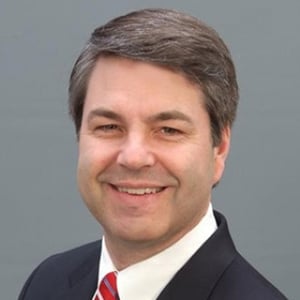
Partner and Co-Chair, Public Policy Group, Shook Hardy & Bacon LLP
Mark Behrens co-chairs Shook's Washington, DC-based Public Policy Practice Group and is a leading national expert on civil justice issues with over thirty years of experience. A substantial part of his practice is working to improve the civil litigation environment through state and federal legislation; in the courts through amicus curiae briefs; through legal scholarship and judicial education; and in the court of public opinion.
Mark is actively involved in civil justice reform efforts at the federal and state levels. He has testified before the U.S. Congress and most state legislatures on behalf of business and civil justice organizations. Mark also has an active amicus brief practice specializing in tort liability and civil justice issues. He has authored or co-authored over 150 amicus briefs in cases before the United States Supreme Court and federal and state appellate courts on behalf of business, civil justice, and defense lawyer organizations. In addition, Mark routinely files comments on behalf of business, civil justice, and defense lawyer organizations regarding potential changes to federal and state court rules. He chairs the International Association of Defense Counsel’s (IADC) Civil Justice Response Committee and serves on the Board of Directors of Lawyers for Civil Justice (LCJ).
Mark is a member of the American Law Institute (ALI). He received his J.D. in 1990 from Vanderbilt University Law School, where he was a member of the Vanderbilt Law Review. He received his B.A. in economics from the University of Wisconsin in 1987.
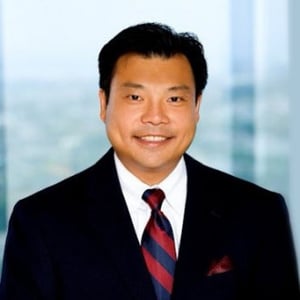
Attorney and Legal Commentator
John Shu is an attorney and legal commentator. His focus areas include constitutional law, securities & corporate law, antitrust law, administrative law, politics, and international affairs. Mr. Shu has lectured and published on a wide variety of issues.
Mr. Shu served President George H.W. Bush and President George W. Bush. He also served Judge Stanley Sporkin, U.S. District Court for the District of Columbia, who was Director of Enforcement at the U.S. Securities & Exchange Commission and General Counsel at the Central Intelligence Agency, and Judge Paul Roney, U.S. Court of Appeals for the Eleventh Circuit, who was Presiding Judge of the Foreign Intelligence Surveillance Court of Review.
Mr. Shu is a member of the National Committee on U.S. - China Relations, the Pacific Council on International Policy, and the Foreign Policy Association.
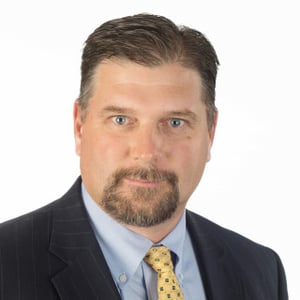
Executive Director, Ohio Dental Association
David J. Owsiany is the executive director of the Ohio Dental Association and a past president of the Columbus Lawyers Chapter of the Federalist Society.
He has served as CEO of a statewide health care association, president of the Buckeye Institute, chief of policy for the Ohio Department of Insurance, judicial law clerk for the Illinois Appellate Court, and staffer on the United State Senate Judiciary Committee.
Mr. Owsiany has written dozens of articles on legal and public policy issues for various publications, including the University of Toledo Law Review, the Federalist Society's State Court Docket Watch, Columbus Dispatch, Cincinnati Enquirer, Crain’s Cleveland Business, and Akron Beacon Journal.
Owsiany received his J.D. from Washington University School of Law in St. Louis and B.A. from the University of Michigan in Ann Arbor.
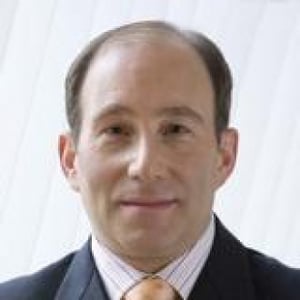
Managing Director, Berkeley Research Group
Dan Troy is Managing Director and an expert witness on FDA matters at Berkeley Research Group. Previously he served as Chief Counsel of the US Food and Drug Administration and General Counsel of GlaxoSmithKline PLC.
Publius comes from the pen name Alexander Hamilton, James Madison, and John Jay used when they wrote 85 publicly printed letters now known as the Federalist Papers. Hamilton chose “Publius” as a name that would represent friends of the newly proposed American republic - Publius Valeria Publicola was a Roman general who helped to found the Roman Republic. The Federalist Society continues the tradition of publishing things under the name Publius in celebration of our constitutional roots and recognition that author credit is not always necessary.

Texas-Sized Transformation: The Conservative Counterrevolution on the Texas Supreme Court
Meredith B. Parenti, Susanna Dokupil
Over the past twenty years, it is quite possible that no state supreme court has...
Annual Convention Luncheon: Judicial Independence
Carlos T. Bea, Danny J. Boggs, Timothy B. Dyk, Dennis Jacobs, Patricia M. Wald
2006 National Lawyers Convention
The Federalist Society presented this panel at the 2006 Annual National Lawyers Convention on Saturday,...
Michigan Supreme Court Takes Step to Address Asbestos Litigation Problems
Mark A. Behrens
Asbestos-related lawsuits filed by claimants who are not sick have occupied the courts in Michigan...
Colorado’s Immigration Reform
Gwen Benevento
On June 12, 2006, the Colorado Supreme Court refused to allow a ballot initiative that...
Same-Sex Marriage in the State Courts
John Shu
Gay marriage litigation continues to occur in several states. In the first half of 2006,...
Ohio Supreme Court Limits Eminent Domain
David J. Owsiany
Since the Supreme Court’s decision in Kelo v. New London1 last year, eminent domain and...
FDA Labeling and State Liability
Daniel E. Troy
Were state and federal courts to defer sufficiently to FDA determinations of drug safety, the...
Judicial Speech in Kansas
Publius
The Supreme Court held in Republican Party of Minnesota v. White1 that the announce clause...
The Florida Supreme Court: Judicial Activism & Judicial Self-Restraint – Some Examples
Thomas C. Marks, Pamela Buha
This paper is about judicial activism and judicial self-restraint. These terms can mean different things...
The Florida Supreme Court: Judicial Activism & Judicial Self-Restraint – Some Examples
Thomas C. Marks, Pamela Buha
This paper is about judicial activism and judicial self-restraint. These terms can mean different things...