
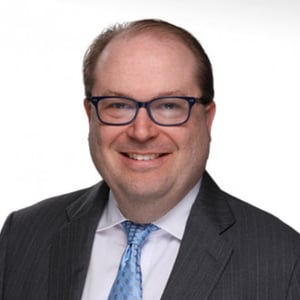
Partner, Horvitz & Levy LLP
Jeremy Rosen is nationally renowned for his proficiency in numerous issues arising under the First Amendment and California’s anti-SLAPP law. Using that knowledge, Jeremy has helped a wide variety of clients – including churches, private businesses, and individuals – defeat lawsuits that seek to impose liability on clients for exercising their rights of petition, free speech, and free exercise of religion. He has also handled hundreds of appeals in numerous appellate courts, including the Ninth Circuit Court of Appeals, the California Supreme Court, and California’s intermediate appellate courts. In addition to First Amendment and anti-SLAPP cases, his cases have involved numerous important issues regarding anti-trust, class actions, wage and hour law, employment law, breach of contract, California’s Unfair Competition Law, CEQA, the enforceability of arbitration clauses, hospital peer review, the scope of public employee whistleblower protection, and the application of the primary assumption of risk doctrine.
Jeremy is a partner at the firm, which he joined in 2001. He is a California State Bar Certified Appellate Specialist and a member of the California Academy of Appellate Lawyers.
Jeremy directed the Pepperdine University School of Law Ninth Circuit Appellate Advocacy Clinic for 6 years. The Clinic represents individuals in the Ninth Circuit who are identified by the court as needing pro bono counsel. Jeremy also previously served a three-year term where he was appointed by the Ninth Circuit to serve as one of 18 appellate lawyer representatives to the court.
Jeremy is a member of the National Chamber Litigation Center’s California Litigation Advisory Committee. Before joining the firm, Jeremy was a Litigation Associate with Munger, Tolles & Olson.
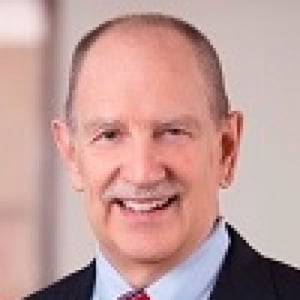
Retired
Tom Gede retired in 2023 as a principal in Morgan Lewis Consulting LLC and of counsel to the firm. He currently consults on a variety of legal and policy matters for both public and private clients. Tom has a national reputation and distinguished background in federal Indian law. Prior to retirement, he represented clients in complex governmental matters in litigation, administrative and regulatory proceedings, including high-profile matters involving state governments. A former senior deputy in the California Attorney General’s office, Tom was amicus coordinator and Supreme Court counsel, and argued cases in the US Supreme Court, the California Supreme Court, and numerous state and federal appellate courts.
Tom also served as executive director of the Conference of Western Attorneys General (CWAG), coordinating activities on key legal and policy issues, such as federal Indian law, energy, environmental, public lands, financial services, and telecommunications, for the attorneys general of 18 western states and territories. In 2016, Tom was elected as a Member of the American Law Institute (ALI), and served as an Adviser on the Restatement of the Law Third - The Law of American Indians. Tom also taught federal Indian law as an adjunct law professor at the University of the Pacific - McGeorge School of Law. He served as an assistant editor for and the author of the Indian gaming chapter in CWAG’s American Indian Law Deskbook (2d & 3d eds.). He has been engaged in Indian gaming and Indian law matters for more than three decades, having focused on the gaming compacts with Indian tribes, as well as complex civil and criminal jurisdiction, land, natural resources, water and law enforcement issues in Indian country. He has testified before Congress on American Indian and Native Alaskan issues. In 2012 he was appointed by Speaker John Boehner to serve on the United States Indian Law and Order Commission, where he examined criminal justice issues in Indian country and Alaska, resulting in the issuance of an important report to the President and Congress.
Professor, Gonzaga University School of Law
Law clerk for Justice Stephen Bistline, Idaho Supreme Court, 1979-80; in private practice with Lukins & Annis, P.S., Spokane, (1980-84); assistant professor, Oklahoma City University (1984-87); Senior Fellow, Discovery Institute, Seattle, Washington.
University of Washington School of Law
Professor Jay has taught at the UW law school since 1980. Prior to coming to Washington he taught at the University of North Carolina for two years. Before entering teaching, Professor Jay clerked for two years, first with the U.S. District Court for the District of Columbia and then for U.S. Supreme Court Justice Warren E. Burger. His teaching and research interests include constitutional law and constitutional history. Professor Jay is the author of Most Humble Servants: The Advisory Role of Early Judges (Yale 1997). He has worked extensively to assure the reproductive rights of women, particularly access to safe and legal abortions. During 1984-85 he was a visiting professor at Georgetown University Law Center.
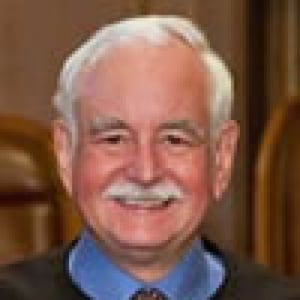
Washington State Supreme Court
Richard B. Sanders was elected to the Washington Supreme Court in 1995. During his 26 years of legal practice prior to becoming a Justice of the Supreme Court, Justice Sanders litigated more than 100 appeals (no fewer than 60 of which resulted in published opinions). Since coming to the Supreme Court he has become one of its most prolific authors and is recognized nationally for his published opinions and other writings. See www.JusticeSanders.com.
As a private practitioner he championed the civil rights of his clients and as a Justice he regards protecting our constitutionally guaranteed liberties as the first duty of our highest court. Justice Sanders believes the court must protect all the legal rights of all the citizens who come before it all the time. "We have no second class citizens," he adds. His special interest is the Washington State Constitution, and he often quotes his favorite passage: "[G]overnments . . . are established to protect and maintain individual rights." Const. art. I, § 1.
Justice Sanders is a native of Tacoma and spent the best years of his childhood there. He moved to Seattle where he graduated from Highline High School. While at Highline High he was elected president of the school's debate club, and he earned the rank of Eagle Scout. Justice Sanders received his Bachelor of Arts degree from the University of Washington after participating in the political science honors program and playing[1] in the Rose Bowl. He thereafter earned his J.D. in 1969 from the University of Washington School of Law. During his years at the University, Justice Sanders wrote "The Devil's Advocate," a weekly column of opinion in The Daily, the student newspaper.
Since taking his seat on the Supreme Court, Justice Sanders has served as an adjunct professor teaching appellate advocacy at the UW School of Law; has written articles for professional journals and texts; and has presented lectures to local, state, and national organizations on diverse topics including civil liberties, land use, the Washington State Constitution, legal ethics, and Abraham Lincoln, among others.
Justice Sanders enjoys inviting students and community groups to tour the Temple of Justice to visit with him. He is the father of Laura Sanders, a 2009 summa cum laude graduate of the University of San Francisco. Laura is enthusiastic in all her endeavors and is the light of her daddy's life.
Professor, Gonzaga University School of Law
Law clerk for Justice Stephen Bistline, Idaho Supreme Court, 1979-80; in private practice with Lukins & Annis, P.S., Spokane, (1980-84); assistant professor, Oklahoma City University (1984-87); Senior Fellow, Discovery Institute, Seattle, Washington.
University of Washington School of Law
Professor Jay has taught at the UW law school since 1980. Prior to coming to Washington he taught at the University of North Carolina for two years. Before entering teaching, Professor Jay clerked for two years, first with the U.S. District Court for the District of Columbia and then for U.S. Supreme Court Justice Warren E. Burger. His teaching and research interests include constitutional law and constitutional history. Professor Jay is the author of Most Humble Servants: The Advisory Role of Early Judges (Yale 1997). He has worked extensively to assure the reproductive rights of women, particularly access to safe and legal abortions. During 1984-85 he was a visiting professor at Georgetown University Law Center.
Washington State Supreme Court
Richard B. Sanders was elected to the Washington Supreme Court in 1995. During his 26 years of legal practice prior to becoming a Justice of the Supreme Court, Justice Sanders litigated more than 100 appeals (no fewer than 60 of which resulted in published opinions). Since coming to the Supreme Court he has become one of its most prolific authors and is recognized nationally for his published opinions and other writings. See www.JusticeSanders.com.
As a private practitioner he championed the civil rights of his clients and as a Justice he regards protecting our constitutionally guaranteed liberties as the first duty of our highest court. Justice Sanders believes the court must protect all the legal rights of all the citizens who come before it all the time. "We have no second class citizens," he adds. His special interest is the Washington State Constitution, and he often quotes his favorite passage: "[G]overnments . . . are established to protect and maintain individual rights." Const. art. I, § 1.
Justice Sanders is a native of Tacoma and spent the best years of his childhood there. He moved to Seattle where he graduated from Highline High School. While at Highline High he was elected president of the school's debate club, and he earned the rank of Eagle Scout. Justice Sanders received his Bachelor of Arts degree from the University of Washington after participating in the political science honors program and playing[1] in the Rose Bowl. He thereafter earned his J.D. in 1969 from the University of Washington School of Law. During his years at the University, Justice Sanders wrote "The Devil's Advocate," a weekly column of opinion in The Daily, the student newspaper.
Since taking his seat on the Supreme Court, Justice Sanders has served as an adjunct professor teaching appellate advocacy at the UW School of Law; has written articles for professional journals and texts; and has presented lectures to local, state, and national organizations on diverse topics including civil liberties, land use, the Washington State Constitution, legal ethics, and Abraham Lincoln, among others.
Justice Sanders enjoys inviting students and community groups to tour the Temple of Justice to visit with him. He is the father of Laura Sanders, a 2009 summa cum laude graduate of the University of San Francisco. Laura is enthusiastic in all her endeavors and is the light of her daddy's life.
Wake County District Court Judge, North Carolina
Appeals Referee, North Carolina Employment Security Commission
North Carolina Court of Appeals
Senior Research Assistant, Supreme Court of North Carolina
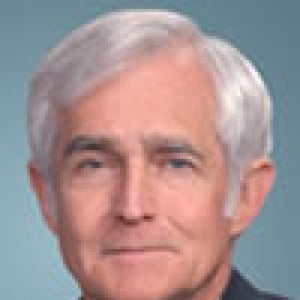
Member, Moore & Van Allen PLLC
A former North Carolina state representative and senator, as well as Supreme Court justice and law school dean, Bill Whichard applies his extensive judicial and legislative experience in advising and mentoring MVA litigation attorneys, focusing on appellate litigation for Moore & Van Allen clients.
He also assists with evaluating new matters, developing arguments, reviewing pleadings and documents, and supplying other trial support, giving MVA clients seasoned counsel that can materially affect dispute outcomes.
He has also served as a mediator and arbitrator in major, multimillion-dollar litigation.
Mr. Whichard has lectured and written extensively on North Carolina politics, law and history. Further, his commitment to public service and community betterment has earned him numerous honors and recognitions during his distinguished career.
North Carolina Court of Appeals
Wake County District Court Judge, North Carolina
Appeals Referee, North Carolina Employment Security Commission
North Carolina Court of Appeals
Senior Research Assistant, Supreme Court of North Carolina
Member, Moore & Van Allen PLLC
A former North Carolina state representative and senator, as well as Supreme Court justice and law school dean, Bill Whichard applies his extensive judicial and legislative experience in advising and mentoring MVA litigation attorneys, focusing on appellate litigation for Moore & Van Allen clients.
He also assists with evaluating new matters, developing arguments, reviewing pleadings and documents, and supplying other trial support, giving MVA clients seasoned counsel that can materially affect dispute outcomes.
He has also served as a mediator and arbitrator in major, multimillion-dollar litigation.
Mr. Whichard has lectured and written extensively on North Carolina politics, law and history. Further, his commitment to public service and community betterment has earned him numerous honors and recognitions during his distinguished career.
North Carolina Court of Appeals
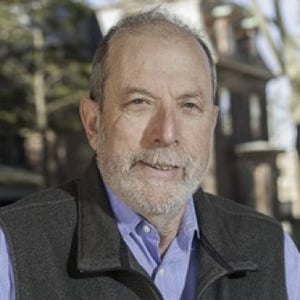
Distinguished Professor of Law, Rutgers Law School
Earl Maltz is a Distinguished Professor and the author of two books and more than 50 articles on constitutional law, statutory interpretation, the role of the courts and legal history. He teaches constitutional law, employment discrimination, conflicts of law and a seminar on the Supreme Court.
Professor Maltz is the author of Rethinking Constitutional Law: Originalism, Interventionism, and the Politics of Judicial Review (1994), Civil Rights, The Constitution and Congress, 1863-1865 (1990), and over 50 articles on constitutional law, statutory interpretation, the role of the courts and legal history. He received his B.A. from Northwestern University, where he was elected to Phi Beta Kappa, and his J.D. cum laude from Harvard. Professor Maltz teaches Constitutional Law, Employment Discrimination, Conflicts of Law, and a seminar on the Supreme Court.
Distinguished Professor of Law, Rutgers Law School
Earl Maltz is a Distinguished Professor and the author of two books and more than 50 articles on constitutional law, statutory interpretation, the role of the courts and legal history. He teaches constitutional law, employment discrimination, conflicts of law and a seminar on the Supreme Court.
Professor Maltz is the author of Rethinking Constitutional Law: Originalism, Interventionism, and the Politics of Judicial Review (1994), Civil Rights, The Constitution and Congress, 1863-1865 (1990), and over 50 articles on constitutional law, statutory interpretation, the role of the courts and legal history. He received his B.A. from Northwestern University, where he was elected to Phi Beta Kappa, and his J.D. cum laude from Harvard. Professor Maltz teaches Constitutional Law, Employment Discrimination, Conflicts of Law, and a seminar on the Supreme Court.
University of San Diego School of Law
Partner, Morrison & Foerster LLP
Partner, Horvitz & Levy LLP
Jeremy Rosen is nationally renowned for his proficiency in numerous issues arising under the First Amendment and California’s anti-SLAPP law. Using that knowledge, Jeremy has helped a wide variety of clients – including churches, private businesses, and individuals – defeat lawsuits that seek to impose liability on clients for exercising their rights of petition, free speech, and free exercise of religion. He has also handled hundreds of appeals in numerous appellate courts, including the Ninth Circuit Court of Appeals, the California Supreme Court, and California’s intermediate appellate courts. In addition to First Amendment and anti-SLAPP cases, his cases have involved numerous important issues regarding anti-trust, class actions, wage and hour law, employment law, breach of contract, California’s Unfair Competition Law, CEQA, the enforceability of arbitration clauses, hospital peer review, the scope of public employee whistleblower protection, and the application of the primary assumption of risk doctrine.
Jeremy is a partner at the firm, which he joined in 2001. He is a California State Bar Certified Appellate Specialist and a member of the California Academy of Appellate Lawyers.
Jeremy directed the Pepperdine University School of Law Ninth Circuit Appellate Advocacy Clinic for 6 years. The Clinic represents individuals in the Ninth Circuit who are identified by the court as needing pro bono counsel. Jeremy also previously served a three-year term where he was appointed by the Ninth Circuit to serve as one of 18 appellate lawyer representatives to the court.
Jeremy is a member of the National Chamber Litigation Center’s California Litigation Advisory Committee. Before joining the firm, Jeremy was a Litigation Associate with Munger, Tolles & Olson.
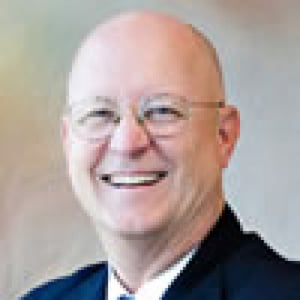
Former San Diego Superior Court Judge
Hon. Michael B. Orfield (Ret.) was a jurist for 20 years, mostly as a civil independent calendar judge. His experience and expertise as a civil judge spread widely across such diverse areas as catastrophic personal injury, medical and legal malpractice, product and construction defects, breach of warranties, easements, breach of contract, wrongful death and a variety of business disputes. His strength as a mediator "...comes from being able to call upon a broad plain of knowledge, coupled with an attention to detail, empathy for the participants, and a conviction that the resolution should be their own."
Judge Orfield retired as a member of the statewide Continuing Judicial Education Committee, and still has a passion for teaching. He currently teaches "Trying the Complicated Case: From Trial Readiness to Verdict" as well as the LexisNexis Jury Instruction computer program for both civil and criminal jury instructions. He has also taught "Leading Organizational Change" as well as the week long "Civil Overview for Judges".
Judge Orfield was appointed by Chief Justice Ronald George to the original Task Force on Civil Jury Instructions and then to the Advisory Committee on Civil Jury Instructions. Justice George also appointed him a member of the prestigious Judicial Council of the State of California. Judge Orfield has served as a member of the Judicial Council Presiding Judges and Court Executives Advisory Committee and the Judicial Needs Advisory Committee.
Judge Orfield has served on the Board of the San Diego Humane Society and chaired the North County "Bridging the Gap" program for new lawyers. Before transferring to the Vista Courthouse, he co-moderated the San Diego County Bar Association Bridging the Gap program.
In 1972, Judge Orfield earned his Bachelor of Arts degree in Biology from the University of California at San Diego, and obtained his law degree from California Western School of Law in 1977. Judge Orfield also completed one year of graduate study in Microbiology and Immunology at Duke University in 1974.
North Carolina Court of Appeals
Wake County District Court Judge, North Carolina
Appeals Referee, North Carolina Employment Security Commission
North Carolina Court of Appeals
Senior Research Assistant, Supreme Court of North Carolina
North Carolina Court of Appeals
Wake County District Court Judge, North Carolina
Appeals Referee, North Carolina Employment Security Commission
North Carolina Court of Appeals
Senior Research Assistant, Supreme Court of North Carolina

California 2010: The Courts and the Economy
Jeremy B. Rosen, Thomas F. Gede
White Paper on the California Supreme Court
With Chief Justice George’s imminent retirement and replacement by California Court of Appeal Justice Tani...
Washington Supreme Court Position 6: A Debate
Peter Callaghan, David K. DeWolf, Stewart Jay, Richard B. Sanders, Charlie Wiggins
Puget Sound Lawyers Chapter
Candidates for the Washington State Supreme Court answered questions from a panel of experts and the...
Washington Supreme Court Position 6: A Debate
Peter Callaghan, David K. DeWolf, Stewart Jay, Richard B. Sanders, Charlie Wiggins
Puget Sound Lawyers Chapter
Candidates for the Washington State Supreme Court answered questions from a panel of experts and the...
North Carolina Appellate Judicial Candidates Forum
Rick Elmore, Martha Geer, Jane Gray, Barbara Jackson, Dean R. Poirier, Robert W. Shaw, Sanford Steelman, Steven Walker, Willis Whichard, Ann Marie Calabria
Triangle Lawyers Chapter
Candidates for the North Carolina Supreme Court and Court of Appeals answered questions from the...
North Carolina Appellate Judicial Candidates Forum
Rick Elmore, Martha Geer, Jane Gray, Barbara Jackson, Dean R. Poirier, Robert W. Shaw, Sanford Steelman, Steven Walker, Willis Whichard, Ann Marie Calabria
Triangle Lawyers Chapter
Candidates for the North Carolina Supreme Court and Court of Appeals answered questions from the...
Temporary Assignments to Fill Vacancies on the New Jersey Supreme Court
Earl M. Maltz
White Paper on New Jersey Supreme Court
In the wake of Governor Chris Christie’s decision not to reappoint Justice John E. Wallace,...
Temporary Assignments to Fill Vacancies on the New Jersey Supreme Court
Earl M. Maltz
White Paper on New Jersey Supreme Court
In the wake of Governor Chris Christie’s decision not to reappoint Justice John E. Wallace,...
State Court Docket Watch Summer 2010
Shaun P. Martin, William L. Stern, H Leviant, Jeremy B. Rosen, Michael Orfield
In an effort to increase dialogue about state court jurisprudence, the Federalist Society presents State...
North Carolina Judicial Candidate Forum
Bob Buckley, Ann Marie Calabria, Rick Elmore, Martha Geer, Jane Gray, Barbara Jackson, Dean R. Poirier, Sanford Steelman, Steven Walker
Piedmont Triad Lawyers Chapter
Candidates for the North Carolina Supreme Court and Court of Appeals answered questions from moderator...
North Carolina Judicial Candidate Forum
Bob Buckley, Ann Marie Calabria, Rick Elmore, Martha Geer, Jane Gray, Barbara Jackson, Dean R. Poirier, Sanford Steelman, Steven Walker
Piedmont Triad Lawyers Chapter
Candidates for the North Carolina Supreme Court and Court of Appeals answered questions from moderator...