
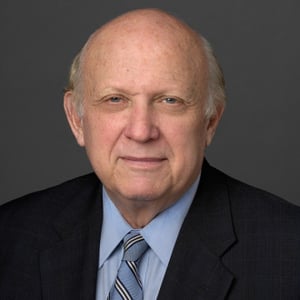
Senior Counsel, Cahill Gordon & Reindel LLP
Floyd Abrams is Senior Counsel in Cahill Gordon & Reindel LLP's litigation practice group.
Floyd has a national trial and appellate practice and extensive experience in high-visibility matters, often involving First Amendment, securities litigation, intellectual property, public policy and regulatory issues. He has argued frequently in the Supreme Court in cases raising issues as diverse as the scope of the First Amendment, the interpretation of ERISA, the nature of broadcast regulation, the impact of copyright law and the continuing viability of the Miranda rule. Most recently, Floyd prevailed in his argument before the Supreme Court on behalf of Senator Mitch McConnell as amicus curiae, defending the rights of corporations and unions to speak publicly about politics and elections in Citizens United v. Federal Election Commission. Floyd's clients have included The McGraw-Hill Companies in a large number of litigations around the country involving claims against its subsidiary, Standard & Poor’s Financial Services LLC, The New York Times in the Pentagon Papers case and others, ABC, NBC, CBS, CNN, Time Magazine, Business Week, The Nation, Reader's Digest, Hearst, AIG, and others in trials, appeals and investigations.
Floyd has represented Standard & Poor’s in litigations about its ratings; he defended the Brooklyn Museum of Art in its legal battles with Mayor Rudolph Giuliani; he represented two of the nation’s largest insurers in litigation under Section 17200 in California and he has frequently testified before congressional committees and prepared clients to do so. In 1998, he represented CNN in investigating and issuing a report on its broadcast accusing the United States of using nerve gas on a military mission in Laos in 1970, and again in 1999 in seeking to persuade the United States Senate to permit the public to view its deliberations as it determined whether or not to convict President Clinton of alleged high crimes and misdemeanors. He represented Nina Totenberg and National Public Radio in the 1992 "leak" investigation conducted by the United States Senate arising out of the confirmation hearing of Justice Clarence Thomas and, in 2004 and 2005, Judith Miller and Matthew Cooper in their efforts to avoid revealing their confidential sources.
In 2006, Floyd was elected to the American Academy of Arts & Sciences, an independent research center that conducts multidisciplinary studies of complex and emerging problems advanced by its 4,600 elected members, who are leaders in the academic disciplines, the arts, business and public affairs from around the world. In 2015, Floyd was honored by Yale Law School with its prestigious Award of Merit. Also in 2015, Floyd received the Walter Cronkite Freedom of Information Award presented by the Connecticut Foundation for Open Government. In 2011, Floyd was awarded the CUNY Graduate School of Journalism's Lifetime Achievement Award. In 1998, Floyd was the recipient of the William J. Brennan, Jr. Award for outstanding contribution to public discourse; the Learned Hand Award of the American Jewish Committee; and the Thurgood Marshall Award of the Association of the Bar of the City of New York. In November, 1999, he received the William J. Brennan, Jr. award of the Libel Defense Resource Center. Floyd was awarded, in 1997, the Milton S. Gould Award for outstanding appellate advocacy by the Office of the Appellate Defender in New York. Previously he had been awarded the Ross Essay Prize of the American Bar Association for his study of the Ninth Amendment of the United States Constitution. He has also received awards from, among others, the American Jewish Congress, Catholic University, the New York and Philadelphia Chapters of the Society of Professional Journalists, Sigma Delta Chi, the New York Civil Liberties Union, the Association for Education in Journalism and Mass Communication, and the National Broadcast Editorial Association.
In November, 2011, Yale Law School announced the formation of The Floyd Abrams Institute for Freedom of Expression, whose mission is to promote free speech, scholarship and law reform on emerging questions concerning traditional and new media. Developed in cooperation with Floyd, the Institute includes a clinic for Yale Law students to engage in litigation, draft model legislation, and advise lawmakers and policy makers on issues of media freedom and informational access.
The American Bar Association awarded Floyd its Certificate of Merit for his article published in The New York Times Magazine entitled "The New Effort to Control Information," which was described by the ABA as a "noteworthy contribution to public understanding of the American system of law and justice."
Described by Senator Daniel Patrick Moynihan as "the most significant First Amendment lawyer of our age," Floyd is top-ranked by Chambers USA. He is listed in Who’s Who Legal, Who’s Who in American Law, and has been awarded with Lifetime Achievement Awards by The New York Law Journal and The American Lawyer (2013).
Floyd, who served as chairman of Mayor Edward Koch's Committee on Appointments, New York City, served as the Chairman of the New York State Zenger Commemoration Planning Committee. Previously, he served as the Chairman of the Communications Committee of the Association of the Bar of the City of New York, as well as Chairman of the Committee on Freedom of Speech and of the Press of the Individual Rights Section of the American Bar Association and of the Committee on Freedom of Expression of the Litigation Section of the American Bar Association.
He has appeared frequently on television on Nightline, the News Hour with Jim Lehrer, Charlie Rose and other programs and has published articles and reviews in The New York Times, The Washington Post, The Yale Law Journal, The Harvard Law Review, and elsewhere.
Floyd served on the Technology and Privacy Advisory Committee of the U.S. Department of Defense in 2003-4 and as the Chair of the New York State Commission on Public Access to Court Records in 2004.
For fifteen years, Floyd was the William J. Brennan, Jr. Visiting Professor of First Amendment Law at the Columbia Graduate School of Journalism. He has, as well, been a Visiting Lecturer at Yale Law School and Columbia Law School and he is author of Friend of the Court: On the Front Lines with the First Amendment, published by Yale University Press (2013) and Speaking Freely: Trials of the First Amendment, published by Viking Press (2005).
General Counsel, Tikvah Fund
Suzanne Garment is an American scholar, writer, editor and attorney.
Garment is best known for her book, Scandal: The Culture of Mistrust in American Politics, and for her work as a aide to Ambassador Daniel Patrick Moynihan working to block the 1975 United Nations General Assembly Resolution 3379 of the United Nations that "Zionism is a form of racism and racial discrimination."
Garment holds the A.B. from Radcliffe College, the M.A. from the University of Sussex in the United Kingdom, the PhD in political science from Harvard University, the J.D. and a master of laws degree in taxation from Georgetown University
She has served as a visiting scholar at the Indiana University Center on Philanthropy at Indiana University; special counsel to Richard Ravitch, New York Lieutenant Governor and as counsel to the Task Force on the State Budget Crisis, co-chaired by Ravitch and former Federal Reserve chairman Paul Volcker. Before earning the J.D., she was a scholar at the American Enterprise Institute; associate editorial page editor of the Wall Street Journal; author of the "Capital Chronicle" column at the Wall Street Journal; and special assistant to Daniel Patrick Moynihan, U.S. ambassador to the United Nations. Garment has taught politics and public policy at Yale and Harvard Universities. She was the executive editor of Jewish Ideas Daily.
Professor of Law Emeritus, Brooklyn Law
Henry Mark Holzer received his B.A. degree from New York University where he studied Russian and political science. After graduation in 1954 he served in South Korea with United States Army intelligence, holding top secret clearance as chief order of battle analyst (Chinese Communist Forces) at Eighth Army Headquarters in Seoul. Following Professor Holzer’s military service he earned his Juris Doctor degree at New York University School of Law. After his admission to the New York bar in December 1959 he practiced constitutional and appellate law.
From 1972 to 1993 he taught full time at Brooklyn Law School, and for two years was an associate dean. His courses included Constitutional Law, Administrative Law, Civil Liberties, First Amendment and Appellate Advocacy. In the fall of 1993, he taught as a visiting professor at the University of New Mexico School of Law in Albuquerque.
He is author of approximately 300 articles, essays, and reviews. He has published legal and political commentary on current issues in print and electronic media, and has often been interviewed on radio and television.
Several of his out-of-print books are The Gold Clause: Government’s Money Monopoly; Sweet Land of Liberty? The Supreme Court and Individual Rights; Speaking Freely: The Case Against Speech Codes; Why Not Call it Treason? Korea, Vietnam, Afghanistan and Today. With his wife, Erika Holzer, he is co-author of “Aid and Comfort”: Jane Fonda in North Vietnam; and Fake Warriors: Identifying, Exposing, and Punishing Those Who Falsify Their Military Service.
His book The Supreme Court Opinions of Clarence Thomas, 1919-2006, was published in 2007. The second edition, covering the years 1991-2011 was published in 2012. Also published in 2012, in a print edition and eBook, was Professor Holzer’s book The American Constitution and Ayn Rand’s “Inner Contradiction.”
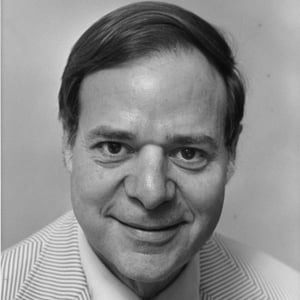
Journalist, Professor, and Author
Donald "Don" Oberdorfer Jr. (May 28, 1931 – July 23, 2015) was an American professor at the Paul H. Nitze School of Advanced International Studies (SAIS) at Johns Hopkins University with a specialty in Korea, and was a journalist for 38 years, 25 of them with The Washington Post. He is the author of five books and several academic papers. His book, Senator Mansfield: The Extraordinary Life of a Great American Statesman and Diplomat, won the D.B. Hardeman Prize in 2003.
Oberdorfer graduated from Princeton University and went to South Korea as a U.S. Army lieutenant after the signing of the armistice that ended the Korean War. In 1955 he joined The Charlotte Observer, and eventually found a job with The Washington Post. During the next 25 years, he worked for The Post, serving as White House correspondent, Northeast Asia correspondent, and diplomatic correspondent. He retired from the paper in 1993.
At the Nitze school, beyond his teaching position, Oberdorfer served as chairman of the U.S.-Korea Institute from its inauguration in 2006 and was named chairman emeritus in 2013.
Former Assistant Attorney General, U.S. Department of Justice, Civil Division
During the Reagan Administration, Richard Willard served as Assistant Attorney General in charge of the Civil Division, the largest litigation division of the US Department of Justice. There, he chaired the Reagan Administration's Tort Policy Working Group and developed its proposals for reforming civil litigation, workplace drug testing, and preventing unauthorized disclosure of classified information.
More recently, he served as senior vice president and general counsel for Bristol-Myers Squibb Co. and Gillette Company, where he led large worldwide legal departments, advised on strategic transactions, and enabled launch of new products with strong intellectual property protection.
Mr. Willard's private practice involved corporate counseling and litigation of cases raising public policy concerns. He served as lead counsel in complex litigation involving multiple claims, parties, and jurisdictions. He frequently appeared in trial and appellate courts around the country, including six arguments in the Supreme Court.
Former United States National Security Advisor
Zbigniew Brzezinski (born 1928) was assistant to the president of the United States for national security affairs during the Carter administration (1977-1980). Later he was associated with the Center for Strategic and International Studies in Washington D.C. He authored several books through which he expounded his philosophies as well as his political beliefs and ideals.
David McIntosh is a leader for the principles of limited constitutional government and individual freedom. He is president of the Club for Growth, the leading advocate for economic liberty.
Former Congressman David McIntosh represented Indiana's 2nd Congressional District in the United States Congress from 1995-2001. As a Freshman, David chaired the Subcommittee on Regulatory Relief. He passed the Congressional Review Act and held extensive oversight and field hearings to build a record of public support for regulatory relief initiatives in energy, biotechnology, pharmaceutical, healthcare, transportation and technology sectors. Another issue that he championed was the elimination of the marriage penalty in the Federal Tax Code.
David served during the Reagan administration as special assistant to Attorney General Edwin Meese III, and as special assistant to President Reagan for Domestic Affairs. During the first Bush administration, he served as executive director of the President's Council on Competitiveness and assistant to the Vice President. The Competitiveness Council coordinated the cost/benefit review of major regulations and promoted legal reform measures.
David is a co-founder of the Federalist Society for Law and Public Policy and serves on the Board of Directors. He remains active with several free market and conservative think tanks and grassroots organizations. David has also had stints at the Hudson Institute and as a Professor of Economics at Ball State School of Business.
Prior to the Club for Growth, David was a partner at Mayer Brown, LLP in Washington, DC.
David graduated from the University of Chicago Law School in 1983, and Yale University, BA, cum laude, in 1980. He and his wife, Ruthie, are the proud parents of Ellie age 17 and Davey age 13.
Former United States Secretary of Defense
Caspar Weinberger (August 18, 1917 – March 28, 2006) was an American politician and businessman. As a prominent Republican, he served in a variety of state and federal positions for three decades, including Chairman of the California Republican Party, 1962–68. Most notably he was Secretary of Defense under President Ronald Reagan from 1981 to 1987.
Former United States National Security Advisor
Zbigniew Brzezinski (born 1928) was assistant to the president of the United States for national security affairs during the Carter administration (1977-1980). Later he was associated with the Center for Strategic and International Studies in Washington D.C. He authored several books through which he expounded his philosophies as well as his political beliefs and ideals.
David McIntosh is a leader for the principles of limited constitutional government and individual freedom. He is president of the Club for Growth, the leading advocate for economic liberty.
Former Congressman David McIntosh represented Indiana's 2nd Congressional District in the United States Congress from 1995-2001. As a Freshman, David chaired the Subcommittee on Regulatory Relief. He passed the Congressional Review Act and held extensive oversight and field hearings to build a record of public support for regulatory relief initiatives in energy, biotechnology, pharmaceutical, healthcare, transportation and technology sectors. Another issue that he championed was the elimination of the marriage penalty in the Federal Tax Code.
David served during the Reagan administration as special assistant to Attorney General Edwin Meese III, and as special assistant to President Reagan for Domestic Affairs. During the first Bush administration, he served as executive director of the President's Council on Competitiveness and assistant to the Vice President. The Competitiveness Council coordinated the cost/benefit review of major regulations and promoted legal reform measures.
David is a co-founder of the Federalist Society for Law and Public Policy and serves on the Board of Directors. He remains active with several free market and conservative think tanks and grassroots organizations. David has also had stints at the Hudson Institute and as a Professor of Economics at Ball State School of Business.
Prior to the Club for Growth, David was a partner at Mayer Brown, LLP in Washington, DC.
David graduated from the University of Chicago Law School in 1983, and Yale University, BA, cum laude, in 1980. He and his wife, Ruthie, are the proud parents of Ellie age 17 and Davey age 13.
Former United States Secretary of Defense
Caspar Weinberger (August 18, 1917 – March 28, 2006) was an American politician and businessman. As a prominent Republican, he served in a variety of state and federal positions for three decades, including Chairman of the California Republican Party, 1962–68. Most notably he was Secretary of Defense under President Ronald Reagan from 1981 to 1987.
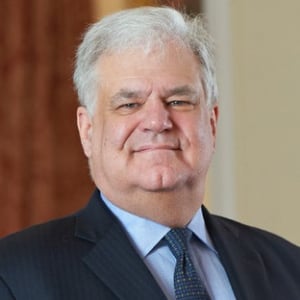
Stuyvesant P. Comfort Professor of Law; Director, Center for Financial Institutions; and Co-Director, Center for Civil Justice, New York University School of Law
Geoffrey Miller is an author or editor of a dozen books and more than 200 articles in the fields of financial institutions, contract law, corporate and securities law, constitutional law, civil procedure, legal history, jurisprudence, and ancient law. He has taught a wide range of subjects including law and economics, corporations, compliance and risk management, property, regulation of financial institutions, land development, securities law, the legal profession, and legal theory. Miller received his BA magna cum laude from Princeton in 1973 and his JD from Columbia in 1978, where he was a Stone Scholar and editor-in-chief of the Columbia Law Review. He clerked for Judge Carl McGowan of the US Court of Appeals for the District of Columbia Circuit and Justice Byron White of the US Supreme Court. After two years as an attorney adviser at the Office of Legal Counsel of the US Department of Justice and one year with a Washington, DC, law firm, he joined the faculty of the University of Chicago Law School in 1983 and NYU School of Law in 1995.
Miller has been a visiting professor or visiting scholar at Columbia University, Harvard University, University of Minnesota, University of Basel (Switzerland), University of Genoa (Italy), Collegio Carlo Alberto (Italy), Study Center Gerzensee (Switzerland), Vanderbilt University, University of St. Gallen (Switzerland), University of Frankfurt (Germany), University of Sydney (Australia), University of Auckland (New Zealand), and the Bank of Japan. Miller is a founder of the Society for Empirical Legal Studies, a scholarly organization devoted to promoting statistical and other empirical techniques in the study of legal institutions. He is founder and director of NYU School of Law’s Center for Financial Institutions, co-director of the Center for Civil Justice, co-founder of and Senior Academic Fellow at NYU's Program on Corporate Compliance and Enforcement, co-convener of the Global Economic Policy Forum, a member of the board of directors of State Farm Bank, and a fellow in the American Academy of Arts and Sciences.
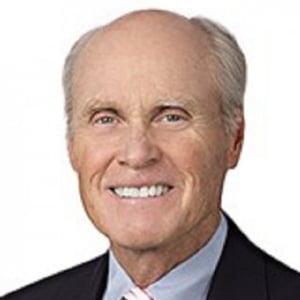
Former United States Assistant Attorney General, Civil Rights Division, United States Department of Justice
William Bradford served as the United States Assistant Attorney General for the Civil Rights Division from 1981 to 1988.
Reynolds was Senior Counsel in BakerBotts Antitrust and Competition division. He graduated with a LL.B. from Vanderbilt University Law School in 1967 where he was Order of the Coif and Editor-in-Chief of the Vanderbilt Law Review. In 1964, he received a B.A. from Yale University.
Reynolds passed away on September 14, 2019, in Seabrook Island, South Carolina at age 77.
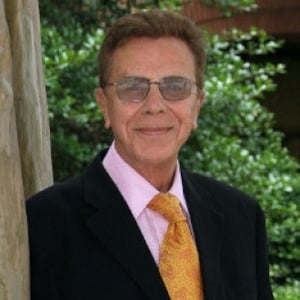
Professor of Law, Emeritus, Marshall-Wythe Law School at the College of William and Mary
William W. Van Alstyne, one of the nation's foremost constitutional law scholars, and William & Mary’s Lee Professor of Law from 2004 to 2012, died on January 29, 2019, in Southern California.
Professor Van Alstyne was appointed Lee Professor of Law at the Marshall-Wythe Law School at the College of William and Mary in 2004. He is a graduate of the University of Southern California (B.A. in philosophy, magna cum laude) and Stanford University Law School (J.D., Articles and Book Review Editor of The Stanford Law Review). Following his admission to the California Bar and brief service as Deputy Attorney General of California, he joined the Civil Rights Division of the U. S. Department of Justice handling voting rights cases in the South. After active duty with the U. S. Air Force, he was appointed to the law faculty of the Ohio State University, advancing to full professor in three years. Appointed to the Duke law faculty shortly thereafter, he was named to the William R. & Thomas S. Perkins Chair of Law in 1974.
Professor Van Alstyne’s professional writings have appeared during four decades in the principal law journals in the United States, with frequent republication in foreign journals. They address virtually every major subject in the field of constitutional law. His work has been cited in a large number of judicial opinions including those of the Supreme Court. The Journal of Legal Studies for January, 2000, named Professor Van Alstyne in the top forty most frequently cited legal scholars in the United States of the preceding half-century.
Professor Van Alstyne has also taught and given professional papers internationally, in Germany, Austria, and Denmark, in Chile, the former Soviet Union, China, Japan, Canada, and Australia. He has been a visiting faculty member on the law faculties of the University of Chicago, Stanford, California (Berkeley and UCLA), Pennsylvania, Michigan, and Illinois, a Fulbright Lecturer in Chile, a Senior Fellow at the Yale Law School, and a faculty fellow at the Hague International Court of Justice. He has appeared as counsel and as amicus curiae in constitutional litigation in the federal courts, including the Supreme Court. He has also appeared in numerous hearings before Senate and House Committees, on legislation affecting the separation of powers, war powers, constitutional amendments, impeachments, legislation affecting civil rights and civil liberties, and nominations to the Supreme Court.
In 1987, Professor Van Alstyne was selected in a poll of federal judges, lawyers, and academics by the New York Law Journal as one of three academics among "the ten most qualified" persons in the country for appointment to the Supreme Court, a distinction repeated in a similar poll by The American Lawyer, in 1991. Past National President of the American Association of University Professors, and former member of the National Board of Directors of the A.C.L.U., he was elected into the American Academy of Arts and Sciences in 1994.
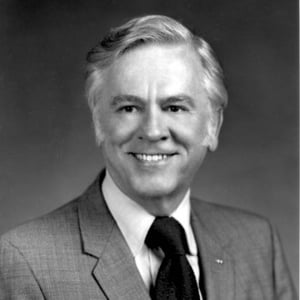
Former United States Representative, Florida
Charles Edward Bennett was a member of the United States House of Representatives from Jacksonville from 1949 to 1993. He was a Democrat.
He was born December 2, 1910 in Canton, New York and moved to Jacksonville by the end of his childhood. Bennett was an Eagle Scout and recipient of the Distinguished Eagle Scout Award from the Boy Scouts of America. He was a lawyer and a member of the United States Army during World War II before being elected to Congress from what was then the 2nd District. He was reelected 21 more times from this Jacksonville-based district. He rarely faced serious opposition even as Jacksonville fell under increasing Republican influence.
In 1951, he began proposing a code of ethics for government employees, nicknamed The Ten Commandments. After the Sherman-Adams Affair, the code was adopted as the first Code of ethics for Government Service in 1958. In 1954, he sponsored the bill that added the words “In God We Trust” to both the nation’s coins and currency.
Bennett died in Jacksonville on September 6, 2003 and is buried at Arlington National Cemetery. He is still the longest-serving member of either house of Congress in Florida’s history. The Charles E. Bennett Federal Building is named after him.
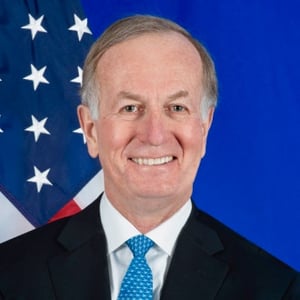
United States Ambassador to Australia
President Donald J. Trump nominated Ambassador Arthur B. (A.B.) Culvahouse Jr. to be the United States Ambassador to Australia on November 6, 2018. Confirmed by the U.S. Senate on January 2, 2019 by unanimous consent, he was formally sworn in by Vice President Mike Pence on February 19, 2019 and presented his credentials to the Governor-General, Sir Peter Cosgrove, on March 13, 2019.
Ambassador Culvahouse serves as the President’s personal representative to the government and people of Australia. He leads the U.S. Mission to Australia, which is comprised of the embassy in Canberra and three consulates in Melbourne, Sydney, and Perth.
Ambassador Culvahouse has a long and distinguished career. He is the former Chair of O’Melveny & Myers, an international law firm he was associated with for more than four decades. He began his career as Chief Legislative Assistant to United States Senator Howard H. Baker, Jr. and later served as White House Counsel to President Ronald Reagan. In 1989, President Reagan awarded Ambassador Culvahouse the Presidential Citizens’ Medal, an award to “recognize citizens who performed exemplary deeds of service for the country or their fellow citizens.” In December 1992, then-Secretary of Defense Dick Cheney awarded Ambassador Culvahouse the Defense Medal for Distinguished Public Service for his work on the Federal Advisory Committee on Nuclear Failsafe and Risk Reduction.
Both President Trump and the late-Senator John McCain tapped Ambassador Culvahouse to head the search to select their running mates.
Ambassador Culvahouse was raised in Ten Mile, Tennessee and attended the University of Tennessee and the New York University School of Law. He is the proud father of three accomplished daughters.
Former United States Representative, Florida
Charles Edward Bennett was a member of the United States House of Representatives from Jacksonville from 1949 to 1993. He was a Democrat.
He was born December 2, 1910 in Canton, New York and moved to Jacksonville by the end of his childhood. Bennett was an Eagle Scout and recipient of the Distinguished Eagle Scout Award from the Boy Scouts of America. He was a lawyer and a member of the United States Army during World War II before being elected to Congress from what was then the 2nd District. He was reelected 21 more times from this Jacksonville-based district. He rarely faced serious opposition even as Jacksonville fell under increasing Republican influence.
In 1951, he began proposing a code of ethics for government employees, nicknamed The Ten Commandments. After the Sherman-Adams Affair, the code was adopted as the first Code of ethics for Government Service in 1958. In 1954, he sponsored the bill that added the words “In God We Trust” to both the nation’s coins and currency.
Bennett died in Jacksonville on September 6, 2003 and is buried at Arlington National Cemetery. He is still the longest-serving member of either house of Congress in Florida’s history. The Charles E. Bennett Federal Building is named after him.
United States Ambassador to Australia
President Donald J. Trump nominated Ambassador Arthur B. (A.B.) Culvahouse Jr. to be the United States Ambassador to Australia on November 6, 2018. Confirmed by the U.S. Senate on January 2, 2019 by unanimous consent, he was formally sworn in by Vice President Mike Pence on February 19, 2019 and presented his credentials to the Governor-General, Sir Peter Cosgrove, on March 13, 2019.
Ambassador Culvahouse serves as the President’s personal representative to the government and people of Australia. He leads the U.S. Mission to Australia, which is comprised of the embassy in Canberra and three consulates in Melbourne, Sydney, and Perth.
Ambassador Culvahouse has a long and distinguished career. He is the former Chair of O’Melveny & Myers, an international law firm he was associated with for more than four decades. He began his career as Chief Legislative Assistant to United States Senator Howard H. Baker, Jr. and later served as White House Counsel to President Ronald Reagan. In 1989, President Reagan awarded Ambassador Culvahouse the Presidential Citizens’ Medal, an award to “recognize citizens who performed exemplary deeds of service for the country or their fellow citizens.” In December 1992, then-Secretary of Defense Dick Cheney awarded Ambassador Culvahouse the Defense Medal for Distinguished Public Service for his work on the Federal Advisory Committee on Nuclear Failsafe and Risk Reduction.
Both President Trump and the late-Senator John McCain tapped Ambassador Culvahouse to head the search to select their running mates.
Ambassador Culvahouse was raised in Ten Mile, Tennessee and attended the University of Tennessee and the New York University School of Law. He is the proud father of three accomplished daughters.
Stuyvesant P. Comfort Professor of Law; Director, Center for Financial Institutions; and Co-Director, Center for Civil Justice, New York University School of Law
Geoffrey Miller is an author or editor of a dozen books and more than 200 articles in the fields of financial institutions, contract law, corporate and securities law, constitutional law, civil procedure, legal history, jurisprudence, and ancient law. He has taught a wide range of subjects including law and economics, corporations, compliance and risk management, property, regulation of financial institutions, land development, securities law, the legal profession, and legal theory. Miller received his BA magna cum laude from Princeton in 1973 and his JD from Columbia in 1978, where he was a Stone Scholar and editor-in-chief of the Columbia Law Review. He clerked for Judge Carl McGowan of the US Court of Appeals for the District of Columbia Circuit and Justice Byron White of the US Supreme Court. After two years as an attorney adviser at the Office of Legal Counsel of the US Department of Justice and one year with a Washington, DC, law firm, he joined the faculty of the University of Chicago Law School in 1983 and NYU School of Law in 1995.
Miller has been a visiting professor or visiting scholar at Columbia University, Harvard University, University of Minnesota, University of Basel (Switzerland), University of Genoa (Italy), Collegio Carlo Alberto (Italy), Study Center Gerzensee (Switzerland), Vanderbilt University, University of St. Gallen (Switzerland), University of Frankfurt (Germany), University of Sydney (Australia), University of Auckland (New Zealand), and the Bank of Japan. Miller is a founder of the Society for Empirical Legal Studies, a scholarly organization devoted to promoting statistical and other empirical techniques in the study of legal institutions. He is founder and director of NYU School of Law’s Center for Financial Institutions, co-director of the Center for Civil Justice, co-founder of and Senior Academic Fellow at NYU's Program on Corporate Compliance and Enforcement, co-convener of the Global Economic Policy Forum, a member of the board of directors of State Farm Bank, and a fellow in the American Academy of Arts and Sciences.
Former United States Assistant Attorney General, Civil Rights Division, United States Department of Justice
William Bradford served as the United States Assistant Attorney General for the Civil Rights Division from 1981 to 1988.
Reynolds was Senior Counsel in BakerBotts Antitrust and Competition division. He graduated with a LL.B. from Vanderbilt University Law School in 1967 where he was Order of the Coif and Editor-in-Chief of the Vanderbilt Law Review. In 1964, he received a B.A. from Yale University.
Reynolds passed away on September 14, 2019, in Seabrook Island, South Carolina at age 77.
Professor of Law, Emeritus, Marshall-Wythe Law School at the College of William and Mary
William W. Van Alstyne, one of the nation's foremost constitutional law scholars, and William & Mary’s Lee Professor of Law from 2004 to 2012, died on January 29, 2019, in Southern California.
Professor Van Alstyne was appointed Lee Professor of Law at the Marshall-Wythe Law School at the College of William and Mary in 2004. He is a graduate of the University of Southern California (B.A. in philosophy, magna cum laude) and Stanford University Law School (J.D., Articles and Book Review Editor of The Stanford Law Review). Following his admission to the California Bar and brief service as Deputy Attorney General of California, he joined the Civil Rights Division of the U. S. Department of Justice handling voting rights cases in the South. After active duty with the U. S. Air Force, he was appointed to the law faculty of the Ohio State University, advancing to full professor in three years. Appointed to the Duke law faculty shortly thereafter, he was named to the William R. & Thomas S. Perkins Chair of Law in 1974.
Professor Van Alstyne’s professional writings have appeared during four decades in the principal law journals in the United States, with frequent republication in foreign journals. They address virtually every major subject in the field of constitutional law. His work has been cited in a large number of judicial opinions including those of the Supreme Court. The Journal of Legal Studies for January, 2000, named Professor Van Alstyne in the top forty most frequently cited legal scholars in the United States of the preceding half-century.
Professor Van Alstyne has also taught and given professional papers internationally, in Germany, Austria, and Denmark, in Chile, the former Soviet Union, China, Japan, Canada, and Australia. He has been a visiting faculty member on the law faculties of the University of Chicago, Stanford, California (Berkeley and UCLA), Pennsylvania, Michigan, and Illinois, a Fulbright Lecturer in Chile, a Senior Fellow at the Yale Law School, and a faculty fellow at the Hague International Court of Justice. He has appeared as counsel and as amicus curiae in constitutional litigation in the federal courts, including the Supreme Court. He has also appeared in numerous hearings before Senate and House Committees, on legislation affecting the separation of powers, war powers, constitutional amendments, impeachments, legislation affecting civil rights and civil liberties, and nominations to the Supreme Court.
In 1987, Professor Van Alstyne was selected in a poll of federal judges, lawyers, and academics by the New York Law Journal as one of three academics among "the ten most qualified" persons in the country for appointment to the Supreme Court, a distinction repeated in a similar poll by The American Lawyer, in 1991. Past National President of the American Association of University Professors, and former member of the National Board of Directors of the A.C.L.U., he was elected into the American Academy of Arts and Sciences in 1994.
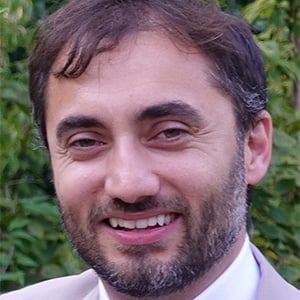
Vice President and Counsel for Privacy and Cyber Policy, CrowdStrike
Drew Bagley, CIPP/E, CrowdStrike Vice President and Counsel for Privacy and Cyber Policy, is responsible for leading CrowdStrike’s data protection initiatives, privacy strategy and global policy engagement. He serves on the Europol Advisory Group on Internet Security and the U.S. Department of State’s International Telecommunications Advisory Committee. Recently, Drew helped lead the ICANN Competition, Consumer Choice, and Consumer Trust Review Team, which assessed the expansion of the Internet’s Domain Name System. Prior to joining CrowdStrike, Drew served in the Office of the General Counsel at the Federal Bureau of Investigation. He is a member of the New York State Bar and a former German Chancellor Fellow. Drew has taught at the University of Maryland, University of Leipzig, and University of Florida and holds degrees from the University of Miami (JD) and the University of Florida (MA, BS, and BA).
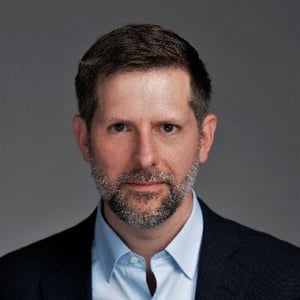
Head of AI Policy, Abundance Institute
Neil Chilson is the Head of AI Policy at the Abundance Institute. Prior to this position, he served as a Senior Research Fellow at the Center for Growth and Opportunity. Chilson is a lawyer, computer scientist, and author of the book “Getting Out of Control: Emergent Leadership in a Complex World.”
Chilson was previously the senior research fellow for Technology and Innovation at Stand Together, where he guided efforts to understand and promote the legal and cultural paradigms that best enable people to discover, innovate, and improve all our lives.
Before Stand Together, Chilson was the Chief Technologist at the Federal Trade Commission, where he focused on the economics of privacy and blockchain-related issues. Previously, he was an attorney advisor to Acting FTC Chairman Maureen K. Ohlhausen. In both roles he advised Chairman Ohlhausen and worked with staff on nearly every major technology-related case, report, workshop, or other FTC proceeding since January 2014. Neil joined the FTC from telecom firm Wilkinson Barker Knauer. Neil is frequently quoted by the press and his work has appeared in numerous news outlets, including The Wall Street Journal, The Washington Post, USAToday, and Newsweek. Neil has a J.D. from The George Washington Law School, a M.S. in computer science from University of Illinois, Urbana-Champaign, and a B.S. in computer science from Harding University.
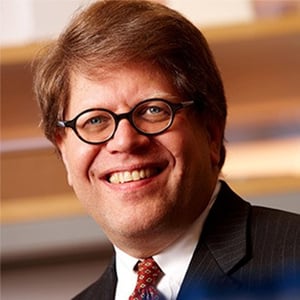
Faculty Fellow, Center for Law, Science & Innovation, Sandra Day O'Connor College of Law, Arizona State University
Dr. Klein is a Faculty Fellow at the Center for Law, Science & Innovation at the Sandra Day O'Connor College of Law at Arizona State University. He is also Principal at Roger D. Klein, MD JD Consulting and Klein & Klein Co., L.P.A. He was formerly Chief Medical Officer at OmniSeq, an oncology focused genomic profiling company that was recently acquired by LabCorp. Previously, Roger was the Medical Director at the Molecular Oncology division at the Cleveland Clinic. He was also the Chair of the Professional Relations Committee at the Association for Molecular Pathology. Prior to joining the Cleveland Clinic, he served as Medical Director of Molecular Oncology at the BloodCenter of Wisconsin where he led the center’s Diagnostic Laboratories’ initiative focused on DNA- and RNA-based testing for evaluation of cancer patients.
Dr. Klein has been an advisor to the Department of Health and Human Services (HHS), the Food and Drug Administration (FDA), the Centers for Medicare and Medicaid Services (CMS), and the Centers for Disease Control and Prevention (CDC). He has participated in and assumed leadership roles in many professional society committees and corporate advisory boards and is a policy advisor to the Heartland Institute.
Dr. Klein is licensed to practice medicine in Ohio, Florida, and Wisconsin. Additionally, he is licensed to practice law in the District of Columbia and Ohio. Roger obtained his Molecular Genetic Pathology certification at Mayo Medical School following completion of his M.D. Yale University School of Medicine. He obtained his J.D. from Yale Law School.
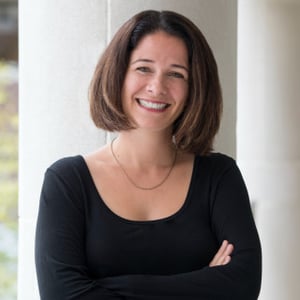
Anne Shea Ransdell and William Garland "Buck" Ransdell, Jr. Distinguished Professor of Law, University of North Carolina School of Law
Carissa Byrne Hessick joined the Carolina Law faculty in 2016. She serves as the Anne Shea Ransdell and William Garland “Buck” Ransdell, Jr. Distinguished Professor of Law and as the director of the Prosecutors and Politics Project. Her teaching and research interests include criminal law, the structure of the criminal justice system, criminal sentencing, and child pornography crimes. Hessick is the author of multiple law review articles, essays, and op eds on plea bargaining, the powers and selection of prosecutors, Sixth Amendment sentencing rights, and criminal statutes. Her work has appeared in the California Law Review, the Cornell Law Review, the L.A. Times, the UCLA Law Review, and the Virginia Law Review, among others. She founded the Prosecutors and Politics Project in 2018. And she currently serves as the Reporter for the ABA Criminal Justice Section’s Sentencing Standards Task Force.
Hessick attended Yale Law School, where she was an editor of the Yale Law Journal and winner of the Potter Stewart Prize for the Morris Tyler Moot Court of Appeals. After graduating from law school, she clerked for Judge Barbara S. Jones on the Southern District of New York and for Judge A. Raymond Randolph on the D.C. Circuit. She also worked as a litigation associate at Wachtell, Lipton, Rosen & Katz in New York City. Before joining the faculty at Carolina Law, Hessick taught on the faculties at Arizona State University’s Sandra Day O’Connor College of Law and the University of Utah’s S.J. Quinney College of Law. She also spent two years as a Climenko Fellow at Harvard Law School.
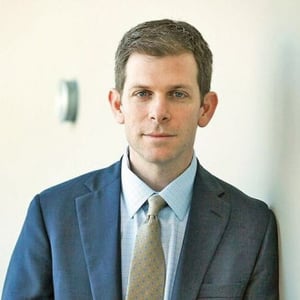
Criminal Trial and Appellate Lawyer, Markus/ Moss
David Oscar Markus is a magna cum laude graduate of Harvard Law School. David is known for his creative and unrelenting approach to cases, which leads to wins in trials and appeals. David focuses on high-stakes criminal litigation for both white collar and traditional criminal matters.
Best Lawyers named David “Lawyer of the Year” for White Collar Criminal Law in 2020 and for General Criminal Defense in 2017. And the Dade County Bar Association awarded him the “Legal Luminary” award for criminal defense, an honor voted on by members of the legal community. In 2015, the National Law Journal selected him as one of the Trailblazers for White Collar Criminal Defense in the entire country. Back when he was 29 years old (in 2002), the National Law Journal selected him as one of the top 40 litigators in the country under 40 years old, and it has recognized one of his federal trial victories as one of the top ten defense verdicts in the country that year.
In one trial victory, David not only beat all 141 counts in federal court for a doctor, but then won attorneys’ fees and costs of over $600,000 for his client in a first-of-its-kind victory. Based on that case, he was awarded the highest honor — the Rodney Thaxton “against all odds” award — by the Florida Association of Criminal Defense Lawyers. Although the 11th Circuit reversed the fee award in a number of controversial opinions, the court referred to Markus as an “elite” and “superb” attorney. In another case, David challenged the way the federal court system in Miami selected jurors (alphabetically by last name) and won, which changed the jury selection process in the District. After obtaining a fair jury, Markus’ client was found not guilty. He never stops fighting for his clients.
Based on this type of creative and unique lawyering, in 2010, David was one of eight finalists in the country for best white-collar criminal lawyer in the country by Chambers & Partners, which quoted market sources saying that David is “the whole package,” and “a creative, courageous and tenacious courtroom advocate.” And he was named to that very prestigious short list of 8 best white-collar criminal defense lawyers again in 2011 (he was the only lawyer listed who was not from a large firm). The 2012 Chambers said this: “David Markus received strong praise from peers and clients alike, who describe him as ‘a legal genius and brilliant strategist with a great demeanor.'” A recent Chambers & Partners described David as a “wickedly smart and a terrific trial lawyer. … Clients say that he is ‘thrilling’ to watch in court and that ‘his passion appreciation and enjoyment for his work are contagious.” And in 2014, that publication identified David as “one of the best trial lawyers around: very smart, highly respected and thoroughly prepared.” In 2016, Chambers said: “David Markus is one of the most talented criminal defense lawyers in Florida. He has a wealth of litigation experience and is regularly sought after for his counsel in high-stakes tax and criminal antitrust cases. Sources also describe him as an ‘extremely creative thinker and a great oral advocate’ who gets ‘tremendous results.'” Chambers has also explained: “David Markus is amazing, not only because of the strength and genius of his arguments and motions, but also because of his brilliant and astonishing performances during the hearings. Additionally, he radiates so much confidence, and that in itself soothes the usual anguish and anxiety that you endure during these types of situations. Last but not least, he is such a great human being.” In 2020, that publication said that David “is an exceptional trial lawyer,” “an incredible oral advocate” and that “he’s pretty fearless in terms of dealing with the government.”
Since 2010, David has been listed as one of the top 100 lawyers in Miami and in all of Florida by SuperLawyers. He is one of the few criminal defense lawyers to received such an honor. He is frequently named as one of the top lawyers in the Best Lawyers in America, South Florida Legal Guide, Florida Trend Magazine, Chambers & Partners, and the South Florida Business Journal. He was one of 20 lawyers named a key partner by the South Florida Business Journal in 2011 and again in 2012. The Daily Business Review named him a finalist for Most Effective Lawyer in Criminal Justice (one of three lawyers in Miami) in 2006, 2009, 2011, 2012, and 2015. He won the award in 2018. The district judges in the Southern District of Florida presented him with the Eugene Spellman Criminal Justice Act Award in 2013.
While at Harvard, David argued in front of Supreme Court Justice Anthony Kennedy who named him best oralist. David was mentored by Alan Dershowitz while in law school. After graduating from Harvard, David served as law clerk to the Honorable Edward B. Davis, then-Chief United States District Judge, Southern District of Florida. Following his clerkship, David worked as an associate at the leading criminal defense firm in the country, Williams & Connolly in Washington, D.C., and then practiced as an Assistant Federal Public Defender in Miami.
David is a past-president of the Florida Association of Criminal Defense Lawyers – Miami Chapter and past-president of the Federal Bar Association, South Florida Chapter, 2007-08. He served for ten years as the Southern District of Florida’s national representative for the Criminal Justice Act Panel, and is the vice-chair of the National Association of Criminal Defense Lawyer’s amicus committee. David also has co-authored the Fourth Amendment Forum, published in NACDL’s The Champion. He is frequently asked to serve on committees for the Southern District of Florida.
David frequently lectures on different aspects of the criminal trial and appeal. He currently teaches a White Collar Law seminar the the University of Miami School of Law and previously taught legal writing there. David also has taught Advanced Criminal Procedure and White Collar Law at Florida International University College of Law. He often speaks to other criminal defense lawyers on ethics and zealously representing criminal defendants charged with serious crimes. His lengthy list of lectures can be found on his resume.
David is often quoted in publications around the country, including The Miami Herald, The Sun-Sentinel, The Palm Beach Post, the Daily Business Review, USA Today, The New York Times, The Wall Street Journal, The Boston Globe, Law.com, and CNN.com. He has written opinion pieces for numerous publications, and is the author of the popular Southern District of Florida blog, which has been described by the New Times as “the definitive source on South Florida’s federal court system.” He recently wrote a chapter in a book for lawyers; his chapter was titled “Battling Goliath, Trying to Win in the Court of Appeals.” David is also a frequent opinion contributor, arguing for criminal justice reform and for individual rights. He has written pieces in the Washington Post, USA Today, Miami Herald, law.com Newsmax, and others.

Senior Vice President for Legal Studies, Cato Institute
Clark Neily is senior vice president for legal studies at the Cato Institute. His areas of interest include constitutional law, overcriminalization, civil forfeiture, police accountability, and gun rights. Neily is the author of Terms of Engagement: How Our Courts Should Enforce the Constitution’s Promise of Limited Government. His writing has appeared in the Wall Street Journal, Forbes, and National Review Online, as well as various law reviews, including the Harvard Journal of Law and Public Policy, George Mason Law Review, Georgetown Journal of Law and Public Policy, NYU Journal of Law and Liberty, and Texas Review of Law and Politics. Neily is a frequent guest speaker and lecturer for the Federalist Society, Institute for Humane Studies, and American Constitution Society.
Before joining Cato in 2017, Neily was a senior attorney and constitutional litigator at the Institute for Justice and director of the Institute’s Center for Judicial Engagement. He is also an adjunct professor at the University of Texas School of Law, where he teaches constitutional litigation and public-interest law.
Neily served as co-counsel in District of Columbia v. Heller, the historic case in which the Supreme Court held for the first time that the Second Amendment protects an individual right to own a gun for self-defense.
Neily began his legal career as a law clerk to Judge Royce Lamberth on the U.S. District Court for the District of Columbia. After that he spent four years in the trial department of the Dallas-based firm Thompson & Knight. Neily received his undergraduate and law degrees from the University of Texas, where he was Chief Articles Editor of the Texas Law Review.
Anne Shea Ransdell and William Garland "Buck" Ransdell, Jr. Distinguished Professor of Law, University of North Carolina School of Law
Carissa Byrne Hessick joined the Carolina Law faculty in 2016. She serves as the Anne Shea Ransdell and William Garland “Buck” Ransdell, Jr. Distinguished Professor of Law and as the director of the Prosecutors and Politics Project. Her teaching and research interests include criminal law, the structure of the criminal justice system, criminal sentencing, and child pornography crimes. Hessick is the author of multiple law review articles, essays, and op eds on plea bargaining, the powers and selection of prosecutors, Sixth Amendment sentencing rights, and criminal statutes. Her work has appeared in the California Law Review, the Cornell Law Review, the L.A. Times, the UCLA Law Review, and the Virginia Law Review, among others. She founded the Prosecutors and Politics Project in 2018. And she currently serves as the Reporter for the ABA Criminal Justice Section’s Sentencing Standards Task Force.
Hessick attended Yale Law School, where she was an editor of the Yale Law Journal and winner of the Potter Stewart Prize for the Morris Tyler Moot Court of Appeals. After graduating from law school, she clerked for Judge Barbara S. Jones on the Southern District of New York and for Judge A. Raymond Randolph on the D.C. Circuit. She also worked as a litigation associate at Wachtell, Lipton, Rosen & Katz in New York City. Before joining the faculty at Carolina Law, Hessick taught on the faculties at Arizona State University’s Sandra Day O’Connor College of Law and the University of Utah’s S.J. Quinney College of Law. She also spent two years as a Climenko Fellow at Harvard Law School.
Criminal Trial and Appellate Lawyer, Markus/ Moss
David Oscar Markus is a magna cum laude graduate of Harvard Law School. David is known for his creative and unrelenting approach to cases, which leads to wins in trials and appeals. David focuses on high-stakes criminal litigation for both white collar and traditional criminal matters.
Best Lawyers named David “Lawyer of the Year” for White Collar Criminal Law in 2020 and for General Criminal Defense in 2017. And the Dade County Bar Association awarded him the “Legal Luminary” award for criminal defense, an honor voted on by members of the legal community. In 2015, the National Law Journal selected him as one of the Trailblazers for White Collar Criminal Defense in the entire country. Back when he was 29 years old (in 2002), the National Law Journal selected him as one of the top 40 litigators in the country under 40 years old, and it has recognized one of his federal trial victories as one of the top ten defense verdicts in the country that year.
In one trial victory, David not only beat all 141 counts in federal court for a doctor, but then won attorneys’ fees and costs of over $600,000 for his client in a first-of-its-kind victory. Based on that case, he was awarded the highest honor — the Rodney Thaxton “against all odds” award — by the Florida Association of Criminal Defense Lawyers. Although the 11th Circuit reversed the fee award in a number of controversial opinions, the court referred to Markus as an “elite” and “superb” attorney. In another case, David challenged the way the federal court system in Miami selected jurors (alphabetically by last name) and won, which changed the jury selection process in the District. After obtaining a fair jury, Markus’ client was found not guilty. He never stops fighting for his clients.
Based on this type of creative and unique lawyering, in 2010, David was one of eight finalists in the country for best white-collar criminal lawyer in the country by Chambers & Partners, which quoted market sources saying that David is “the whole package,” and “a creative, courageous and tenacious courtroom advocate.” And he was named to that very prestigious short list of 8 best white-collar criminal defense lawyers again in 2011 (he was the only lawyer listed who was not from a large firm). The 2012 Chambers said this: “David Markus received strong praise from peers and clients alike, who describe him as ‘a legal genius and brilliant strategist with a great demeanor.'” A recent Chambers & Partners described David as a “wickedly smart and a terrific trial lawyer. … Clients say that he is ‘thrilling’ to watch in court and that ‘his passion appreciation and enjoyment for his work are contagious.” And in 2014, that publication identified David as “one of the best trial lawyers around: very smart, highly respected and thoroughly prepared.” In 2016, Chambers said: “David Markus is one of the most talented criminal defense lawyers in Florida. He has a wealth of litigation experience and is regularly sought after for his counsel in high-stakes tax and criminal antitrust cases. Sources also describe him as an ‘extremely creative thinker and a great oral advocate’ who gets ‘tremendous results.'” Chambers has also explained: “David Markus is amazing, not only because of the strength and genius of his arguments and motions, but also because of his brilliant and astonishing performances during the hearings. Additionally, he radiates so much confidence, and that in itself soothes the usual anguish and anxiety that you endure during these types of situations. Last but not least, he is such a great human being.” In 2020, that publication said that David “is an exceptional trial lawyer,” “an incredible oral advocate” and that “he’s pretty fearless in terms of dealing with the government.”
Since 2010, David has been listed as one of the top 100 lawyers in Miami and in all of Florida by SuperLawyers. He is one of the few criminal defense lawyers to received such an honor. He is frequently named as one of the top lawyers in the Best Lawyers in America, South Florida Legal Guide, Florida Trend Magazine, Chambers & Partners, and the South Florida Business Journal. He was one of 20 lawyers named a key partner by the South Florida Business Journal in 2011 and again in 2012. The Daily Business Review named him a finalist for Most Effective Lawyer in Criminal Justice (one of three lawyers in Miami) in 2006, 2009, 2011, 2012, and 2015. He won the award in 2018. The district judges in the Southern District of Florida presented him with the Eugene Spellman Criminal Justice Act Award in 2013.
While at Harvard, David argued in front of Supreme Court Justice Anthony Kennedy who named him best oralist. David was mentored by Alan Dershowitz while in law school. After graduating from Harvard, David served as law clerk to the Honorable Edward B. Davis, then-Chief United States District Judge, Southern District of Florida. Following his clerkship, David worked as an associate at the leading criminal defense firm in the country, Williams & Connolly in Washington, D.C., and then practiced as an Assistant Federal Public Defender in Miami.
David is a past-president of the Florida Association of Criminal Defense Lawyers – Miami Chapter and past-president of the Federal Bar Association, South Florida Chapter, 2007-08. He served for ten years as the Southern District of Florida’s national representative for the Criminal Justice Act Panel, and is the vice-chair of the National Association of Criminal Defense Lawyer’s amicus committee. David also has co-authored the Fourth Amendment Forum, published in NACDL’s The Champion. He is frequently asked to serve on committees for the Southern District of Florida.
David frequently lectures on different aspects of the criminal trial and appeal. He currently teaches a White Collar Law seminar the the University of Miami School of Law and previously taught legal writing there. David also has taught Advanced Criminal Procedure and White Collar Law at Florida International University College of Law. He often speaks to other criminal defense lawyers on ethics and zealously representing criminal defendants charged with serious crimes. His lengthy list of lectures can be found on his resume.
David is often quoted in publications around the country, including The Miami Herald, The Sun-Sentinel, The Palm Beach Post, the Daily Business Review, USA Today, The New York Times, The Wall Street Journal, The Boston Globe, Law.com, and CNN.com. He has written opinion pieces for numerous publications, and is the author of the popular Southern District of Florida blog, which has been described by the New Times as “the definitive source on South Florida’s federal court system.” He recently wrote a chapter in a book for lawyers; his chapter was titled “Battling Goliath, Trying to Win in the Court of Appeals.” David is also a frequent opinion contributor, arguing for criminal justice reform and for individual rights. He has written pieces in the Washington Post, USA Today, Miami Herald, law.com Newsmax, and others.
Senior Vice President for Legal Studies, Cato Institute
Clark Neily is senior vice president for legal studies at the Cato Institute. His areas of interest include constitutional law, overcriminalization, civil forfeiture, police accountability, and gun rights. Neily is the author of Terms of Engagement: How Our Courts Should Enforce the Constitution’s Promise of Limited Government. His writing has appeared in the Wall Street Journal, Forbes, and National Review Online, as well as various law reviews, including the Harvard Journal of Law and Public Policy, George Mason Law Review, Georgetown Journal of Law and Public Policy, NYU Journal of Law and Liberty, and Texas Review of Law and Politics. Neily is a frequent guest speaker and lecturer for the Federalist Society, Institute for Humane Studies, and American Constitution Society.
Before joining Cato in 2017, Neily was a senior attorney and constitutional litigator at the Institute for Justice and director of the Institute’s Center for Judicial Engagement. He is also an adjunct professor at the University of Texas School of Law, where he teaches constitutional litigation and public-interest law.
Neily served as co-counsel in District of Columbia v. Heller, the historic case in which the Supreme Court held for the first time that the Second Amendment protects an individual right to own a gun for self-defense.
Neily began his legal career as a law clerk to Judge Royce Lamberth on the U.S. District Court for the District of Columbia. After that he spent four years in the trial department of the Dallas-based firm Thompson & Knight. Neily received his undergraduate and law degrees from the University of Texas, where he was Chief Articles Editor of the Texas Law Review.
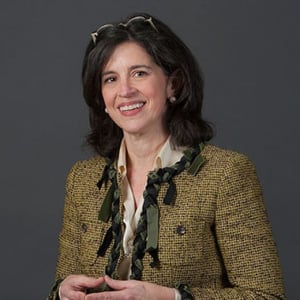
Professor of Law, Antonin Scalia Law School, George Mason University
Helen Alvaré is a Professor of Law at Antonin Scalia Law School, George Mason University, where she teaches Family Law, Law and Religion, and Property Law. She publishes on matters concerning marriage, parenting, non-marital households, and the First Amendment religion clauses. She is faculty advisor to the law school’s Civil Rights Law Journal, and the Latino/a Law Student Association, a Member of the Holy See’s Dicastery for Laity, Family and Life (Vatican City), a board member of Catholic Relief Services, a member of the Executive Committee of the AALS’ Section on Law and Religion, and an ABC news consultant. She cooperates with the Permanent Observer Mission of the Holy See to the United Nations as a speaker and a delegate to various United Nations conferences concerning women and the family.
In addition to her books, and her publications in law reviews and other academic journals, Professor Alvaré publishes regularly in news outlets including the New York Times, the Washington Post, the Huffington Post, and CNN.com. She also speaks at academic and professional conferences in the United States, Europe, Latin America and Australia.
Prior to joining the faculty of Scalia Law, Professor Alvaré taught at the Columbus School of Law at the Catholic University of America; represented the U.S. Conference of Catholic Bishops before legislative bodies, academic audiences and the media; and was a litigation attorney for the Philadelphia law firm of Stradley, Ronon, Stevens & Young.
Professor Alvaré received her law degree from Cornell University School of Law and her master’s degree in Systematic Theology from the Catholic University of America.
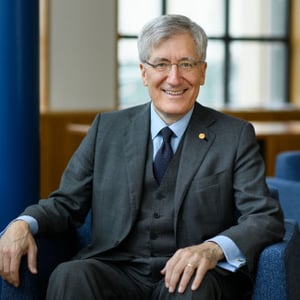
McCormick Professor of Jurisprudence; Director, James Madison Program, Princeton University
Robert P. George is McCormick Professor of Jurisprudence and Director of the James Madison Program in American Ideals and Institutions at Princeton University. He has several times been a Visiting Professor at Harvard Law School. He has served as Chairman of the U.S. Commission on International Religious Freedom and on the U.S. Commission on Civil Rights and the President’s Council on Bioethics. He has also served as the U.S. member of UNESCO’s World Commission on the Ethics of Scientific Knowledge and Technology. He was a Judicial Fellow at the Supreme Court of the United States, where he received the Justice Tom C. Clark Award. A Phi Beta Kappa graduate of Swarthmore, he holds the degrees of J.D. and M.T.S. from Harvard University and the degrees of D.Phil., B.C.L., D.C.L., and D.Litt. from Oxford University, in addition to twenty-one honorary doctorates. He is a recipient of the U.S. Presidential Citizens Medal, the Honorific Medal for the Defense of Human Rights of the Republic of Poland, the Canterbury Medal of the Becket Fund for Religious Liberty, the Bradley Prize, the Irving Kristol Award of the American Enterprise Institute, and Princeton University’s President’s Award for Distinguished Teaching. His books include Making Men Moral: Civil Liberties and Public Morality and In Defense of Natural Law (both published by Oxford University Press), as well as The Clash of Orthodoxies and Conscience and Its Enemies (both published by ISI Books).
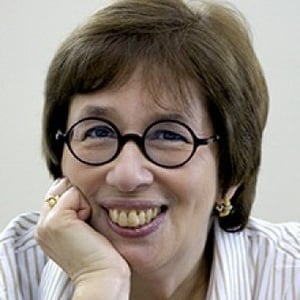
Senior Research Scholar in Law, Yale Law School
Linda Greenhouse is Senior Research Scholar in Law at Yale Law School. She covered the Supreme Court for The New York Times between 1978 and 2008 and writes a biweekly op-ed column on law as a contributing columnist. Ms. Greenhouse received several major journalism awards during her 40-year career at the Times, including the Pulitzer Prize (1998) and the Goldsmith Career Award for Excellence in Journalism from Harvard University’s Kennedy School (2004). In 2002, the American Political Science Association gave her its Carey McWilliams Award for “a major journalistic contribution to our understanding of politics.” Her books include a biography of Justice Harry A. Blackmun, Becoming Justice Blackmun; Before Roe v. Wade: Voices That Shaped the Abortion Debate Before the Supreme Court's Ruling (with Reva B. Siegel); The U.S. Supreme Court, A Very Short Introduction, published by Oxford University Press in 2012; and The Burger Court and the Rise of the Judicial Right, with Michael J. Graetz, published in 2016. Her latest book is Just a Journalist: Reflections on the Press, Life, and the Spaces Between, published by Harvard University Press in 2017. In her extracurricular life, Ms. Greenhouse is president of the American Philosophical Society, the country's oldest learned society, which in 2005 awarded her its Henry Allen Moe Prize for writing in jurisprudence and the humanities. She also serves on the council of the American Academy of Arts and Sciences, the national Senate of Phi Beta Kappa, and is one of two non-lawyer honorary members elected to the American Law Institute, which in 2002 awarded her its Henry J. Friendly Medal. She has been awarded thirteen honorary degrees. She is a 1968 graduate of Radcliffe College (Harvard) and earned a Master of Studies in Law degree from Yale Law School (1978), which she attended on a Ford Foundation fellowship. She is married to Eugene R. Fidell, Florence Rogatz Lecturer in Law at Yale. Their daughter, Hannah, is a filmmaker in Los Angeles.
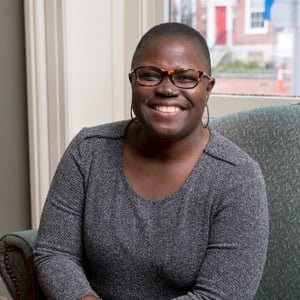
Co-Dean and Professor of Law, Rutgers Law School in Camden
Kimberly Mutcherson is Co-Dean and Professor of Law at Rutgers Law School in Camden. Her scholarly work is at the intersection of family law, health law, and bioethics. She writes on issues related to reproductive justice, with a focus on assisted reproduction, abortion, and maternal-fetal decision-making.
Professor Mutcherson teaches Family Law, Torts, South African Constitutional Law, and Bioethics, Babies, & Babymaking. She has served as a Senior Fellow/Sabbatical Visitor at the Center for Gender and Sexuality Law at Columbia Law School, a Visiting Scholar at the Center for Bioethics at the University of Pennsylvania, and as a fellow at the Institute for Research on Women at Rutgers University. She won a Center for Reproductive Rights Innovation in Scholarship Award in 2013 and a Chancellor’s Teaching Excellence Award in 2011.
She received her B.A. in history from the University of Pennsylvania and her J.D. from Columbia Law School where she was a Stone Scholar. At Columbia, she received the Samuel I. Rosenman Prize for excellence in public law courses and outstanding qualities of citizenship and leadership in the law school. She also received the Kirkland and Ellis Fellowship for post-graduate public interest work. Prior to joining the faculty at Rutgers School of Law in 2002, Professor Mutcherson was an Acting Assistant Professor of Lawyering at the New York University School of Law, a consulting attorney at the Center for Reproductive Law and Policy (now the Center for Reproductive Rights), and a Staff Attorney at the HIV Law Project.
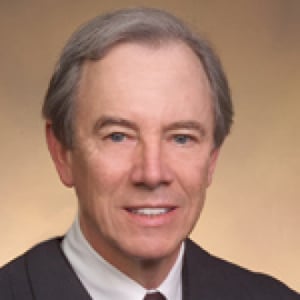
Judge, United States Court of Appeals, D.C. Circuit
Judge Randolph was confirmed by the Senate and appointed to the United States Court of Appeals for the District of Columbia Circuit by President George H. W. Bush in July 1990.
Judge Randolph received his B.S. degree in 1966 from Drexel University, majoring in economics and basic engineering. At Drexel, he was president of the debate society, vice president of the Student Senate, and a member of the varsity wrestling squad. In 1969, he received his J.D. from the University of Pennsylvania, summa cum laude. Judge Randolph ranked first in his law school class all three years and was managing editor of the Law Review.
After graduation, Judge Randolph served as a law clerk to Judge Henry J. Friendly of the United States Court of Appeals for the Second Circuit in New York.
Admitted to the California Bar in 1970 (and to the District of Columbia bar in 1973), Judge Randolph worked as Assistant to the Solicitor General, U.S. Department of Justice, in Washington, D.C., 1970-1973.
After two years in private practice, Judge Randolph was named Deputy Solicitor General of the United States, a position he held from 1975-1977.
In 1979, Judge Randolph was appointed Special Counsel to the Committee on Standards of Official Conduct (the Ethics Committee) of the United States House of Representatives, remaining in this position until 1980.
In the 1980s, Judge Randolph held a number of positions while in private practice, including Special Assistant Attorney General for the states of New Mexico (1985 90), Utah (1986-1990) and Montana (1983-1990). He also served as a Member of the Advisory Panel of the Federal Courts Study Committee.
From 1971-1990, Judge Randolph argued 23 times in the United States Supreme Court, winning 20 of his cases.
As an Adjunct Professor of Law at Georgetown University Law Center from 1974-1978 he taught courses in civil procedure and injunctions. In 1992 he taught a course in constitutional law. He is a Distinguished Adjunct Professor of Law at George Mason School of Law and for the past ten years has been teaching First Amendment law. He also serves on the Judicial Advisory Board of the George Mason University Law and Economics Center.
From 1993 through 1995 Judge Randolph was a member of the Committee on Codes of Conduct of the Judicial Conference of the United States, and from 1995 to 1998 served as the Committee's chairman. He also served as the judicial liaison to the American Bar Association’s Administrative Law Section.
Judge Randolph is a member of the Board of Visitors at Drexel University Law School and was named to the “Drexel One Hundred” as a leading alumnus. In 2002 he was presented the James Wilson Award by the University of Pennsylvania Law School. In November 2005 he delivered the Fifth Annual Barbara K. Olson Memorial Lecture at the Annual Lawyers Convention of the Federalist Society. He has published numerous articles, the most recent of which is in the June 2006 issue of the Harvard Journal of Law and Public Policy.
Judge Randolph is married to the Honorable Eileen J. O’Connor, formerly Assistant Attorney General, Tax Division, U.S. Department of Justice. His son John Trevor Randolph is an investment banker in New York. His daughter Cynthia Lee Randolph is an artist living in San Francisco.
Former United States National Security Advisor
Zbigniew Brzezinski (born 1928) was assistant to the president of the United States for national security affairs during the Carter administration (1977-1980). Later he was associated with the Center for Strategic and International Studies in Washington D.C. He authored several books through which he expounded his philosophies as well as his political beliefs and ideals.

Panel II: The First Amendment and National Security [Archive Collection]
Floyd Abrams, Suzanne Garment, Henry Mark Holzer, Don Oberdorfer, Richard K. Willard
Foreign Affairs and the Constitution
On November 6-7, 1987, The Federalist Society held a symposium at the Grand Hyatt Hotel...
Address by Secretary of Defense Caspar Weinberger [Archive Collection]
Zbigniew Brzezinski, David M. McIntosh, Caspar W. Weinberger
Foreign Affairs and the Constitution
On November 6-7, 1987, The Federalist Society held a symposium at the Grand Hyatt Hotel...
Address by Secretary of Defense Caspar Weinberger [Archive Collection]
Zbigniew Brzezinski, David M. McIntosh, Caspar W. Weinberger
Foreign Affairs and the Constitution
On November 6-7, 1987, The Federalist Society held a symposium at the Grand Hyatt Hotel...
Panel I: The President's Powers as Commander-in-Chief vs. Congress's War Power and Appropriations Power [Archive Collection]
Geoffrey P. Miller, Wm. Bradford Reynolds, William Van Alstyne, Charles E. Bennett, A.B. Culvahouse
Foreign Affairs and the Constitution
On November 6-7, 1987, The Federalist Society held a symposium at the Grand Hyatt Hotel...
Panel I: The President's Powers as Commander-in-Chief vs. Congress's War Power and Appropriations Power [Archive Collection]
Charles E. Bennett, A.B. Culvahouse, Geoffrey P. Miller, Wm. Bradford Reynolds, William Van Alstyne
Foreign Affairs and the Constitution
On November 6-7, 1987, The Federalist Society held a symposium at the Grand Hyatt Hotel...
Deep Dive Episode 117 – How to Approach Data Collection and Breaches in the Age of COVID-19
Drew Bagley, Neil Chilson, Roger D. Klein
Regulatory Transparency Project Teleforum
In an effort to combat the spread of COVID-19 and contain its impact, nations across...
Clash of the Titans: General Michael Flynn & Judge Emmett Sullivan - Does the DOJ have Unfettered Discretion to Dismiss the Flynn Prosecution?
Carissa Byrne Hessick, David Oscar Markus, Clark Neily
Miami Lawyers Chapter - Online Event
On June 4, 2020, the Miami Lawyers Chapter of the Federalist Society hosted an online...
Clash of the Titans: General Michael Flynn & Judge Emmett Sullivan - Does the DOJ have Unfettered Discretion to Dismiss the Flynn Prosecution?
Carissa Byrne Hessick, David Oscar Markus, Clark Neily
Miami Lawyers Chapter - Online Event
On June 4, 2020, the Miami Lawyers Chapter of the Federalist Society hosted an online...
Roe v. Wade: Abortion in New York [Short Film]
Helen Alvaré, Robert P. George, Linda Greenhouse, Kimberly Mutcherson, A. Raymond Randolph
Documentary short from Coronation Media and FedSoc Films
As one of the first states to repeal its abortion statute before Roe v. Wade legalized...
Opening Address by Dr. Zbigniew Brzezinski [Archive Collection]
Zbigniew Brzezinski
Foreign Affairs and the Constitution
On November 6-7, 1987, The Federalist Society held a symposium at the Grand Hyatt Hotel...