
Professor of Law, Antonin Scalia Law School, George Mason University
Helen Alvaré is a Professor of Law at Antonin Scalia Law School, George Mason University, where she teaches Family Law, Law and Religion, and Property Law. She publishes on matters concerning marriage, parenting, non-marital households, and the First Amendment religion clauses. She is faculty advisor to the law school’s Civil Rights Law Journal, and the Latino/a Law Student Association, a Member of the Holy See’s Dicastery for Laity, Family and Life (Vatican City), a board member of Catholic Relief Services, a member of the Executive Committee of the AALS’ Section on Law and Religion, and an ABC news consultant. She cooperates with the Permanent Observer Mission of the Holy See to the United Nations as a speaker and a delegate to various United Nations conferences concerning women and the family.
In addition to her books, and her publications in law reviews and other academic journals, Professor Alvaré publishes regularly in news outlets including the New York Times, the Washington Post, the Huffington Post, and CNN.com. She also speaks at academic and professional conferences in the United States, Europe, Latin America and Australia.
Prior to joining the faculty of Scalia Law, Professor Alvaré taught at the Columbus School of Law at the Catholic University of America; represented the U.S. Conference of Catholic Bishops before legislative bodies, academic audiences and the media; and was a litigation attorney for the Philadelphia law firm of Stradley, Ronon, Stevens & Young.
Professor Alvaré received her law degree from Cornell University School of Law and her master’s degree in Systematic Theology from the Catholic University of America.
University Professor of Law and Executive Director, Liberty & Law Center, Antonin Scalia Law School, George Mason University
David Bernstein holds a University Professorship chair at the Antonin Scalia Law School, where he has been teaching since 1995. He has also been a visiting professor at the University of Michigan, Georgetown University, William & Mary, Brooklyn Law School, the University of Turin, and Hebrew University. Professor Bernstein teaches Constitutional Law, Evidence, and Products Liability.
A prolific author, Professor Bernstein often challenges the conventional wisdom with prodigious research and sharp, original analysis. He is the author of five books, and coauthor of two more. Professor Bernstein’s book Rehabilitating Lochner was praised across the political spectrum as “intellectual history in its highest form,” a “fresh perspective and a cogent analysis,” “delightful and informative,” “sharp and iconoclastic,” and “a terrific work of historical revisionism.” Columnist George Will praised Bernstein’s most recent book, Classified, The Untold Story of Racial Classification in America, as “perhaps the most consequential American book of 2022.”
Professor Bernstein has also written dozens of articles and essays published in major law reviews, including the California Law Review, Columbia Law Review, Michigan Law Review, and Yale Law Journal. An article he coauthored, Defending Daubert: It’s Time to Amend Federal Rule of Evidence 702, directly inspired a pending amendment to Rule 702.
Professor Bernstein blogs at the Instapundit.com, the Times of Israel, and the Volokh Conspiracy. He is a graduate of the Yale Law School, where he was senior editor of the Yale Law Journal and a John M. Olin Fellow in Law, Economics, and Public Policy.
McCormick Professor of Jurisprudence; Director, James Madison Program, Princeton University
Robert P. George is McCormick Professor of Jurisprudence and Director of the James Madison Program in American Ideals and Institutions at Princeton University. He has several times been a Visiting Professor at Harvard Law School. He has served as Chairman of the U.S. Commission on International Religious Freedom and on the U.S. Commission on Civil Rights and the President’s Council on Bioethics. He has also served as the U.S. member of UNESCO’s World Commission on the Ethics of Scientific Knowledge and Technology. He was a Judicial Fellow at the Supreme Court of the United States, where he received the Justice Tom C. Clark Award. A Phi Beta Kappa graduate of Swarthmore, he holds the degrees of J.D. and M.T.S. from Harvard University and the degrees of D.Phil., B.C.L., D.C.L., and D.Litt. from Oxford University, in addition to twenty-one honorary doctorates. He is a recipient of the U.S. Presidential Citizens Medal, the Honorific Medal for the Defense of Human Rights of the Republic of Poland, the Canterbury Medal of the Becket Fund for Religious Liberty, the Bradley Prize, the Irving Kristol Award of the American Enterprise Institute, and Princeton University’s President’s Award for Distinguished Teaching. His books include Making Men Moral: Civil Liberties and Public Morality and In Defense of Natural Law (both published by Oxford University Press), as well as The Clash of Orthodoxies and Conscience and Its Enemies (both published by ISI Books).
Senior Research Scholar in Law, Yale Law School
Linda Greenhouse is Senior Research Scholar in Law at Yale Law School. She covered the Supreme Court for The New York Times between 1978 and 2008 and writes a biweekly op-ed column on law as a contributing columnist. Ms. Greenhouse received several major journalism awards during her 40-year career at the Times, including the Pulitzer Prize (1998) and the Goldsmith Career Award for Excellence in Journalism from Harvard University’s Kennedy School (2004). In 2002, the American Political Science Association gave her its Carey McWilliams Award for “a major journalistic contribution to our understanding of politics.” Her books include a biography of Justice Harry A. Blackmun, Becoming Justice Blackmun; Before Roe v. Wade: Voices That Shaped the Abortion Debate Before the Supreme Court's Ruling (with Reva B. Siegel); The U.S. Supreme Court, A Very Short Introduction, published by Oxford University Press in 2012; and The Burger Court and the Rise of the Judicial Right, with Michael J. Graetz, published in 2016. Her latest book is Just a Journalist: Reflections on the Press, Life, and the Spaces Between, published by Harvard University Press in 2017. In her extracurricular life, Ms. Greenhouse is president of the American Philosophical Society, the country's oldest learned society, which in 2005 awarded her its Henry Allen Moe Prize for writing in jurisprudence and the humanities. She also serves on the council of the American Academy of Arts and Sciences, the national Senate of Phi Beta Kappa, and is one of two non-lawyer honorary members elected to the American Law Institute, which in 2002 awarded her its Henry J. Friendly Medal. She has been awarded thirteen honorary degrees. She is a 1968 graduate of Radcliffe College (Harvard) and earned a Master of Studies in Law degree from Yale Law School (1978), which she attended on a Ford Foundation fellowship. She is married to Eugene R. Fidell, Florence Rogatz Lecturer in Law at Yale. Their daughter, Hannah, is a filmmaker in Los Angeles.
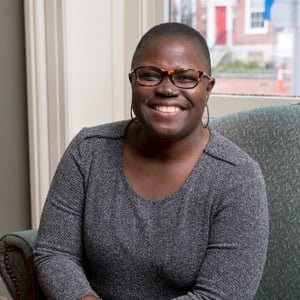
Co-Dean and Professor of Law, Rutgers Law School in Camden
Kimberly Mutcherson is Co-Dean and Professor of Law at Rutgers Law School in Camden. Her scholarly work is at the intersection of family law, health law, and bioethics. She writes on issues related to reproductive justice, with a focus on assisted reproduction, abortion, and maternal-fetal decision-making.
Professor Mutcherson teaches Family Law, Torts, South African Constitutional Law, and Bioethics, Babies, & Babymaking. She has served as a Senior Fellow/Sabbatical Visitor at the Center for Gender and Sexuality Law at Columbia Law School, a Visiting Scholar at the Center for Bioethics at the University of Pennsylvania, and as a fellow at the Institute for Research on Women at Rutgers University. She won a Center for Reproductive Rights Innovation in Scholarship Award in 2013 and a Chancellor’s Teaching Excellence Award in 2011.
She received her B.A. in history from the University of Pennsylvania and her J.D. from Columbia Law School where she was a Stone Scholar. At Columbia, she received the Samuel I. Rosenman Prize for excellence in public law courses and outstanding qualities of citizenship and leadership in the law school. She also received the Kirkland and Ellis Fellowship for post-graduate public interest work. Prior to joining the faculty at Rutgers School of Law in 2002, Professor Mutcherson was an Acting Assistant Professor of Lawyering at the New York University School of Law, a consulting attorney at the Center for Reproductive Law and Policy (now the Center for Reproductive Rights), and a Staff Attorney at the HIV Law Project.
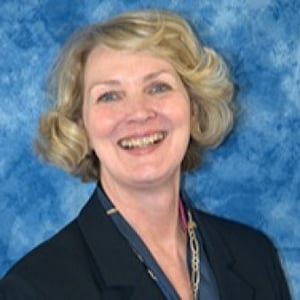
Professor and Director, Prolife Center, University of St. Thomas School of Law
Teresa Collett, J.D., is professor at the University of St. Thomas School of Law, where she serves as director of the school's Prolife Center. Collett received her doctorate at the University of Oklahoma College of Law. As a well-known advocate for the protection of human life and the family, Collett specializes in the subjects of marriage, religion and bioethics in her research.
Collett has published numerous legal articles and is the co-author of a law casebook on professional responsibility and co-editor of a collection of essays exploring “catholic” and “Catholic” perspectives on American law. She is an elected member of the American Law Institute, and has testified before committees of the U.S. Senate and House of Representatives, as well as before legislative committees in several states.
In 2009, Pope Benedict XVI appointed Collett to a five-year term on the Pontifical Council for the Family. Her appointment was renewed by His Holiness Pope Francis until 2016 when the responsibilities of the Council were assumed by the Dicastery for the Laity, Family and Life. In 2013, she served as a delegate to the International Conference on Population and Development (ICPD) for the Mission of the Holy See to the United Nations.
She represented Congressman Ron Paul and various medical groups in the defense of the U.S. federal ban of partial-birth abortion, and the governors of Minnesota and North Dakota defending the N.H. requirement of state parental involvement prior to performance of an abortion on a minor before the U.S. Supreme Court. Collett is often asked to represent the interests of government officials before federal appellate courts. She has served as special attorney general for the states of Oklahoma and Kansas, as well as assisting other state attorneys general in defending laws protecting human life and marriage. Prior to joining St. Thomas in 2003, Collett taught at the South Texas College of Law, where she established the nation's first annual symposium on legal ethics.
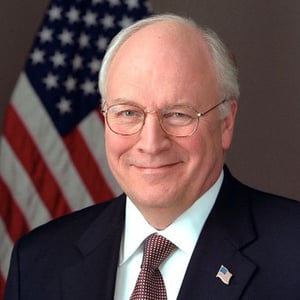
Former Vice President of the United States
Vice President Richard B. Cheney has had a distinguished career as a businessman and public servant, serving four Presidents and as an elected official. Throughout his service, Mr. Cheney served with duty, honor, and unwavering leadership, gaining him the respect of the American people during trying military times.
Mr. Cheney was born in Lincoln, Nebraska, on January 30, 1941 and grew up in Casper, Wyoming. He earned his bachelor's and master's of arts degrees from the University of Wyoming. His career in public service began in 1969 when he joined the Nixon Administration, serving in a number of positions at the Cost of Living Council, at the Office of Economic Opportunity, and within the White House.
When Gerald Ford assumed the Presidency in August 1974, Mr. Cheney served on the transition team and later as Deputy Assistant to the President. In November 1975, he was named Assistant to the President and White House Chief of Staff, a position he held throughout the remainder of the Ford Administration.
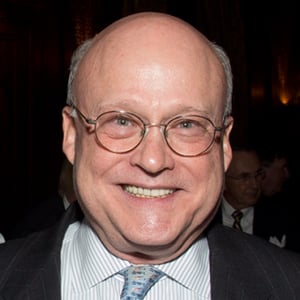
President Emeritus, Intercollegiate Studies Institute
T. Kenneth Cribb Jr. is the former president of the Intercollegiate Studies Institute. Mr. Cribb was Assistant to the President for Domestic Affairs in the Reagan administration, serving as President Reagan’s top adviser on domestic matters. Earlier in the administration he held the position of Counselor to the Attorney General. He also served as Vice Chairman of the Fulbright Foreign Scholarship Board from 1989 to 1992.
Former Vice President of the United States
Vice President Richard B. Cheney has had a distinguished career as a businessman and public servant, serving four Presidents and as an elected official. Throughout his service, Mr. Cheney served with duty, honor, and unwavering leadership, gaining him the respect of the American people during trying military times.
Mr. Cheney was born in Lincoln, Nebraska, on January 30, 1941 and grew up in Casper, Wyoming. He earned his bachelor's and master's of arts degrees from the University of Wyoming. His career in public service began in 1969 when he joined the Nixon Administration, serving in a number of positions at the Cost of Living Council, at the Office of Economic Opportunity, and within the White House.
When Gerald Ford assumed the Presidency in August 1974, Mr. Cheney served on the transition team and later as Deputy Assistant to the President. In November 1975, he was named Assistant to the President and White House Chief of Staff, a position he held throughout the remainder of the Ford Administration.
President Emeritus, Intercollegiate Studies Institute
T. Kenneth Cribb Jr. is the former president of the Intercollegiate Studies Institute. Mr. Cribb was Assistant to the President for Domestic Affairs in the Reagan administration, serving as President Reagan’s top adviser on domestic matters. Earlier in the administration he held the position of Counselor to the Attorney General. He also served as Vice Chairman of the Fulbright Foreign Scholarship Board from 1989 to 1992.
Senior Fellow, Technology Policy, Cato Institute
Jennifer’s research focuses on the intersection of emerging technology and law with a particular interest in the interactions between technology and the administrative state. Her work covers topics including judicial deference, liability protection for Internet platforms, autonomous vehicles and other disruptive transportation technologies, the regulation of data privacy, and the benefits of technology and innovation. Her work has appeared in USA Today, the Chicago Tribune, the New York Daily News, the Sacramento Bee, the Washington Times, Real Clear Policy, and U.S. News and World Report. Jennifer has a JD from the University of Alabama School of Law and a BA in political science at Wellesley College.
Clinical Professor, University of Colorado Law School
Blake E. Reid studies, teaches, and practices in the intersection of law, policy, and technology. He serves as the Director of the Samuelson-Glushko Technology Law & Policy Clinic (TLPC) and a faculty director at the Silicon Flatirons Center. Before joining Colorado Law, he was a staff attorney and graduate fellow in First Amendment and media law at the Institute for Public Representation at Georgetown Law and a law clerk for Justice Nancy E. Rice on the Colorado Supreme Court.
Senior Fellow, R Street Institute
Prior to R Street, Adam spent 12 years as a senior fellow at the Mercatus Center at George Mason University. Before the Mercatus Center, he served as the president of the Progress and Freedom Foundation. Adam has also worked for the Adam Smith Institute, the Heritage Foundation and the Cato Institute.
Adam has published 10 books on a wide range of topics, including online child safety, internet governance, intellectual property, telecommunications policy, media regulation and federalism.
In 2008, Adam received the Family Online Safety Institute’s “Award for Outstanding Achievement.”
Former Chief Counsel, Federal Aviation Administration
Reggie Govan is former Chief Counsel of the Federal Aviation Administration’s (FAA). The Office of the Chief Counsel provides legal advice in support of the FAA Administrator and all aspects of agency operations at headquarters, regions, and centers and works closely with the Department of Transportation’s Office of General Counsel on issues of national significance to the aviation industry.
Mr. Govan previously served as a corporate counsel, litigator, and legislative counsel. Prior to joining the FAA, he served as Managing Associate General Counsel of Freddie Mac. He also served as Counsel to Chairmen Augustus H. Hawkins and William D. Ford of the United States (U.S.) House of Representatives Committee on Education and Labor, and as Counsel to the then-Chairman (now Vice President) Joseph R. Biden of the U.S. Senate Committee on the Judiciary. His litigation experience includes service as an Assistant District Attorney in Manhattan and as plaintiffs’ counsel in federal civil rights litigation, including school desegregation and voting rights cases.
After acquiring a Bachelor’s degree in Economics and Philosophy from Carnegie-Mellon University and a Juris Doctor from the University of Pennsylvania Law School, he clerked for the Honorable Nathaniel Jones of U.S. Court of Appeals for Sixth Circuit.
Mr. Govan is the author of several professional journal and law review articles. He lives in the District of Columbia.
Innovation, Cyber, and National Security Analyst, Lincoln Network
Alexiaa Jordan is a South-Side Chicagoan and new D.C transplant from Bologna, Italy. She recently attained her master’s degree from The Johns Hopkins School of Advanced International Studies (SAIS). There she focused on international economics, Strategic Studies, and Portuguese. During her time at Johns Hopkins, she started working with the international strategic consulting firm RiceHadleyGatesManuel, LLC. Before Hopkins, she’s served as a Chief of Staff within the Illinois House of Representatives and as the youngest female campaign manager in Chicago’s history; prior to that, she served with City Year Chicago to teach inner city students. As an undergraduate, she majored in molecular and cellular biology at the University of Illinois; successfully published several pieces of health policy research. With her unique intersection of STEM, economics, national security, and government affairs, she looks forward to bridging public-private relationships to improve the national security of the United States. Aside from work, she enjoys spending time with her younger sister, working with Alpha Kappa Alpha Sorority Incorporated, serving on various boards to increase the participation of women and people of color into national security spaces.
Legal Fellow, Center for Constitutional Studies, Cato Institute
Brent Skorup is a legal fellow in the Cato Institute’s Robert A. Levy Center for Constitutional Studies.
Before joining Cato, he was a senior research fellow at the Mercatus Center at the George Mason University. His research areas include free speech, technology law, Fourth Amendment protections, regulation, and property law. Skorup has published pieces in economics and law journals and in popular media, including The Wall Street Journal, The New York Times, Bloomberg Law, Reuters, and Wired. He’s appeared as a TV and radio interview guest for news outlets like C‑SPAN, NPR, CBS News, ABC News, and CNBC Asia.
The Pennsylvania Supreme Court, a dissenting opinion at the Illinois Supreme Court, and the ALI's Restatement of the Law of Property have cited his legal research and he has testified as a technology and legal expert in legislative hearings in several states. Skorup has been appointed to several federal and state advisory bodies and he is currently a member of the Texas Advanced Air Mobility Advisory Committee.
Skorup has a BA in economics from Wheaton College and a law degree from the George Mason University School of Law, where he was articles editor for the Civil Rights Law Journal. He was a legal clerk at the FCC’s wireless bureau and Office of General Counsel and at the Energy and Commerce Committee in the U.S. House of Representatives.
Executive Director, International Center for Law & Economics
Ian Adams joined ICLE as Executive Director in April 2020. He is responsible for ICLE’s strategic planning, programmatic implementation, and organizational growth. Ian’s substantive policy work focuses on the disruptive impact of burgeoning technologies on law and regulation, with a particular concentration on automation and the future of work, privacy and insurance.
Earlier in his career, Ian was Vice President of Policy at TechFreedom. Before that, he worked as Associate Vice President of Government Affairs at the R Street Institute and held staff roles in the California and Oregon state legislatures. Ian is also a public policy attorney at the international law firm of Orrick, Herrington & Sutcliffe LLP.
Ian is a graduate of Seattle University, with bachelor’s degrees in history and philosophy, and received his juris doctor from the University of Oregon. He is a member of the California, District of Columbia, and Illinois bars.
Senior Policy Analyst for Technology and Innovation, Americans for Prosperity
Billy Easley is Americans for Prosperity’s Senior Policy Analyst for technology and innovation. In this role, he reviews state and federal policy on digital free speech, privacy, government surveillance, autonomous vehicles and related policies. Previously he served as a legislative specialist for the United States Sentencing Commission where he authored a paper on the relationship between age and recidivism among federal prisoners. Billy started his career working for the Senate Homeland Security and Governmental Affairs Committee and as Senator Rand Paul’s legal counsel for technology and criminal justice policy.
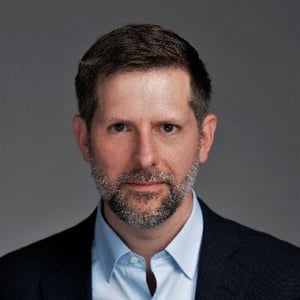
Head of AI Policy, Abundance Institute
Neil Chilson is the Head of AI Policy at the Abundance Institute. Prior to this position, he served as a Senior Research Fellow at the Center for Growth and Opportunity. Chilson is a lawyer, computer scientist, and author of the book “Getting Out of Control: Emergent Leadership in a Complex World.”
Chilson was previously the senior research fellow for Technology and Innovation at Stand Together, where he guided efforts to understand and promote the legal and cultural paradigms that best enable people to discover, innovate, and improve all our lives.
Before Stand Together, Chilson was the Chief Technologist at the Federal Trade Commission, where he focused on the economics of privacy and blockchain-related issues. Previously, he was an attorney advisor to Acting FTC Chairman Maureen K. Ohlhausen. In both roles he advised Chairman Ohlhausen and worked with staff on nearly every major technology-related case, report, workshop, or other FTC proceeding since January 2014. Neil joined the FTC from telecom firm Wilkinson Barker Knauer. Neil is frequently quoted by the press and his work has appeared in numerous news outlets, including The Wall Street Journal, The Washington Post, USAToday, and Newsweek. Neil has a J.D. from The George Washington Law School, a M.S. in computer science from University of Illinois, Urbana-Champaign, and a B.S. in computer science from Harding University.
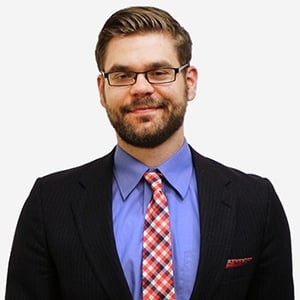
Senior Research Fellow, Center for Growth and Opportunity
William Rinehart is a Senior Research Fellow at the Center for Growth and Opportunity at Utah State University.
He specializes in telecommunication, Internet, and data policy, with a focus on emerging technologies and innovation. His work has appeared in The Wall Street Journal, Bloomberg, Wired, Morning Consult, The Hill, Forbes, Reason, Marginal Revolution, Overlawyered, and on BBC Radio and NPR, just to name a few. Rinehart speaks regularly on topics related to tech policy and has been cited in regulatory orders from the FCC as well as Supreme Court petitions.
Rinehart came to the Center from the American Action Forum, where he served as Director of Technology and Innovation Policy. He was also previously a Research Fellow at TechFreedom and the Director of Operations at the International Center for Law & Economics. Additionally, he worked for the Institute for Policy and Civic Engagement as the Research Assistant in Technology and Civic Engagement. Rinehart is currently a Frédéric Bastiat Fellow at the Mercatus Center and previously a Fellow at the Internet Law & Policy Foundry. Additionally, he served on the Federal Communications Commission’s Broadband Deployment Committee and Consumer Advocacy Committee.
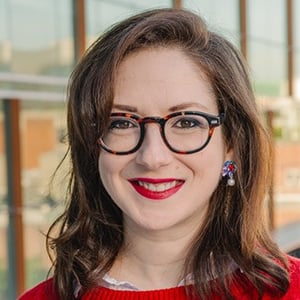
Technology Director, Surveillance Technology Oversight Project
Liz O’Sullivan is the Technology Director of the Surveillance Technology Oversight Project (S.T.O.P.). She’s also co-founder and vice president of commercial operations at an AI explainability and bias monitoring startup called Arthur AI. She has been featured in articles on ethical AI in the NY Times, The Intercept, and The Register, and has written about AI for the ACLU and The Campaign to Stop Killer Robots. She has spent 10 years in tech, mainly in the AI space, most recently as the head of image annotations for computer vision startup, Clarifai. She has held various leadership roles in NYC startups, ranging from Customer Delivery and Support to Sales and Solutions Architecture. Her passion for ethics springs from her degree in Philosophy from UNC Chapel Hill.
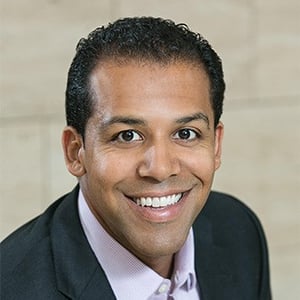
EPIC Senior Counsel and Director, EPIC Domestic Surveillance Project
Jeramie Scott is Senior Counsel at EPIC and Director of the EPIC Domestic Surveillance Project. His work focuses on the privacy issues implicated by domestic surveillance programs with a particular focus on drones, cybersecurity, biometrics, and social media monitoring. Mr. Scott regularly litigates open government cases and cases arising under the Administrative Procedure Act. He is also a co-editor of “Privacy in the Modern Age: The Search for Solutions” and the author of a recently published essay entitled “Social Media and Government Surveillance: The Case for Better Privacy Protections of Our Newest Public Space.” Prior to joining EPIC, Mr. Scott graduated from the New York University Law School where he was a clinic intern at the Brennan Center’s Liberty and National Security Program. His work at the Brennan Center focused on civil liberty issues arising from local law enforcement surveillance. He also served as a research assistant for Professor Ira Rubinstein, focusing on the role of privacy-enhancing technologies in alleviating consumer privacy issues. Mr. Scott holds a Bachelor of Science in Symbolic Systems and a Master’s degree in Philosophy, both from Stanford University. He is a member of the bar of D.C. and New York State.
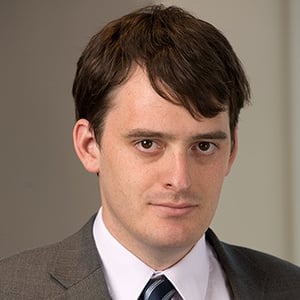
Head of Tech & Innovation, Centre for Policy Studies
Matthew Feeney is Head of Tech & Innovation at Centre for Policy Studies. Before joining CPS, Matthew was the director of Cato Institute’s Project on Emerging Technologies. His writing has appeared in The New York Times, The Washington Post, City A.M., and others. He received both his BA and MA in philosophy from the University of Reading.
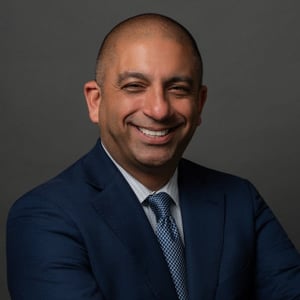
Founder and Executive Director, National Security Institute; Assistant Professor of Law, Antonin Scalia Law School, George Mason University
Jamil N. Jaffer is the Founder and Executive Director of the National Security Institute at the Antonin Scalia Law School at George Mason University where he also serves as an Assistant Professor of Law, Director of the National Security Law and Policy Program, and Director of the Cyber, Intelligence, and National Security LLM Program. Jamil also teaches classes on counterterrorism, intelligence, surveillance, cybersecurity, and other national security matters, as well as a summer course held abroad with U.S. Supreme Court Justice Neil M. Gorsuch. Jamil is also affiliated with Stanford University’s Center for International Security and Cooperation and previously served as a Visiting Fellow at the Hoover Institution from 2016 to 2019.
Jamil is also a Venture Partner with Paladin Capital Group, where he assists the firm with investments across the full range of its themes and theses, including a focus on dual-use national security technologies. Jamil also serves on the board of directors of RangeForce, a cybersecurity training and readiness platform startup and Tozny, a digital identity startup, and on the advisory boards of U.S. Strategic Metals, North America’s largest primary producer of cobalt, a critical mineral used in EV batteries, aerospace, and other national security applications; and Constella Intelligence, a deep and dark web intelligence startup. Jamil also serves as an advisor to Beacon Global Strategies, a strategic advisory firm and Duco, a technology platform startup that connects corporations with geopolitical and international business experts. Jamil is also the managing director of Trigraph Caveat Capital, a private investment vehicle.
Among other things, Jamil currently serves on the Board of Directors for the Greater Washington Board of Trade, the Board of Advisors for the Global Cyber Alliance, and the Advisory Board of the Foundation for the Defense of Democracies’ Center on Cyber and Tech Innovation, the Executive Committee of the Reagan Institute Strategy Group. Jamil is also a Fellow at the Academy for Judaic, Christian, and Islamic Studies, an advisor to the Concordia Summit, and is a member of the Board of Directors for the Center for Intelligence Policy, the Board of Directors of Speech First, and the Executive Committee of the International Law and National Security Practice Group of the Federalist Society.
Immediately prior to his current positions, from 2015-2021, Jamil served as a senior business leader at IronNet Cybersecurity, helping take the company from a bootstrapped first-year technology products startup through two rounds of venture capital fundraising, growing from 40 employees to over 300, and through its listing on New York Stock Exchange. In his role as IronNet's Senior Vice President for Strategy, Partnerships & Corporate Development, Jamil worked directly for the co-CEOs of the company, Gen (ret.) Keith B. Alexander, the former Director of the National Security Agency and Founding Commander of U.S. Cyber Command, and Bill Welch, the former COO of Zscaler and Duo; in that role, Jamil led all of the company’s strategic and technology partnership efforts, including developing go-to-market and technology integration plans with some of the largest cloud platforms and cybersecurity companies in the market, evaluating potential acquisition targets, and developing overall corporate strategy and thought leadership around collective security and collaborative defense in the cyber arena.
Prior to his time at IronNet, Jamil served on the leadership team of the Senate Foreign Relations Committee as Chief Counsel and Senior Advisor under Chairman Bob Corker (R-TN), where he worked on key national security and foreign policy issues, including leading the drafting of the proposed Authorization for the Use of Military Force against ISIS in 2014 and 2015, the AUMF against Syria in 2013, and revisions to the 9/11 AUMF against al Qaeda. Jamil was also the lead architect of the Iran Nuclear Agreement Review Act and two sanctions laws against Russia for its first intervention in Ukraine.
Prior to joining SFRC, Jamil served as Senior Counsel to the House Permanent Select Committee on Intelligence under Chairman Mike Rogers (R-MI) where he led the committee’s oversight of NSA surveillance, NRO intelligence issues, and NGA analytic and collection matters, as well as intelligence community-wide counterterrorism issues. Jamil was also the lead architect of the Cyber Intelligence Sharing and Protection Act, the nation’s first cyber threat intelligence sharing legislation that was signed into law in 2015.
In the Bush Administration, Jamil served in the White House as an Associate Counsel to the President, handling Defense Department, State Department, and intelligence community matters, and serving as one of the White House Counsel’s primary representatives to the National Security Council Deputies Committee.
Prior to the White House, Jamil served on the leadership team of the Justice Department’s National Security Division as Counsel to the Assistant Attorney General for National Security, where he focused on counterterrorism and intelligence matters. At NSD, Jamil helped lead the division’s work on In re: Directives, the first ever two-party litigated matter in the FISA Court and the second case before the FISA Court of Review in its 30-year history. Jamil also led NSD’s efforts on the President’s Comprehensive National Cybersecurity Initiative (CNCI), including the drafting of NSPD-54/HSPD-23, and related classified matters, and advised the National Security Agency (NSA) and U.S. Cyber Command’s predecessor organization, the Joint Function Component Command for Network Warfare (JFCC-NW), on matters related to cyber intelligence collection and offensive cyber activities. For his work on these matters, Jamil was awarded the Assistant Attorney General’s Award for Special Initiative and was among the group of lawyers awarded the Director of National Intelligence’s 2008 Legal Award (Team of the Year – Cyber Legal).
Jamil also served in other positions in the Justice Department, including in the Office of Legal Policy, where he worked on the confirmations of Chief Justice John G. Roberts, Jr. and Justice Samuel A. Alito, Jr. to the United States Supreme Court.
Jamil also served as a lawyer in private practice at Kellogg Huber, a Washington, DC-based litigation boutique, as a policy advisor to Congressman Bob Goodlatte (R-VA), and as a staff member or senior advisor on a number of political campaigns, including two presidential campaigns and a presidential transition team. While in law school, Jamil was a member of the University of Chicago Law Review, managing editor of the Chicago Journal of International Law, and National Symposium Editor of the Harvard Journal of Law & Public Policy. Following law school, Jamil served as a law clerk to Judge Edith H. Jones of the United States Court of Appeals for the Fifth Circuit and, later in his career, as a law clerk to then-Judge Neil M. Gorsuch when he first joined the United States Court of Appeals for the Tenth Circuit as well as a law clerk to Justice Neil Gorsuch when he joined the U.S. Supreme Court.
Jamil has published multiple op-eds and academic articles on national security, foreign policy, cybersecurity, counterterrorism, encryption, and intelligence matters, and is the co-author of a book chapter with former NSA Director Gen. (Ret.) Keith B. Alexander on national security and the press in National Security, Leaks, and the Freedom of the Press: The Pentagon Papers Fifty Years On (2021) and a book chapter with former CIA Director Gen. (ret.) Mike Hayden on ISIS, al Qaeda, and other international terrorist groups in Choosing to Lead: American Foreign Policy for a Disordered World (2015). Jamil has also written book chapters on cybersecurity and surveillance, as well as op-eds and policy papers with former Attorney General Michael B. Mukasey, former National Counterterrorism Center Director Matt Olsen, and Congressman Mike Waltz (R-FL), among others.
Jamil has previously taught graduate-level courses in intelligence law and policy at George Washington University’s Elliott School of International Affairs and the National Intelligence University, served an outside advisor to the Cyberspace Solarium Commission, and has recently testified before committees of the U.S. Senate and House of Representatives on China, cybersecurity, counterterrorism, and other national security matters. Jamil has also recently appeared on a range of national television and radio outlets including CNN, Fox News, Fox Business, MSNBC, Bloomberg, PBS, Voice of America, and National Public Radio, and in various print and online publications, including the Wall Street Journal, New York Times, and the Washington Post on a range of national security matters including cybersecurity, counterterrorism, surveillance, encryption, privacy, and foreign policy issues.
Jamil holds degrees from UCLA (BA, cum laude), the University of Chicago Law School (JD, with honors), and the United States Naval War College (MA, with distinction).
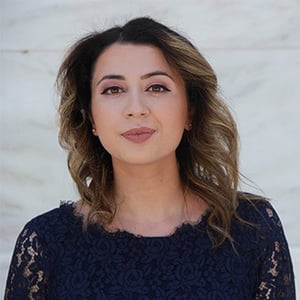
Senior Legal Fellow, The Future of Free Speech, Vanderbilt University
Ashkhen Kazaryan is a renowned expert in First Amendment law and technology policy, specializing in digital free speech, artificial intelligence, and the intersection of constitutional rights with emerging technologies. As a Senior Legal Fellow at the Future of Free Speech at Vanderbilt University, she leads initiatives to protect free expression and shape policies that uphold the First Amendment in the digital age.
Previously, Ashkhen was the lead for North and Latin America on the content regulation team at Meta, where she also served as the company’s policy lead on Section 230. She has also been a Senior Fellow at Stand Together and the Director of Civil Liberties at TechFreedom, where she worked extensively on platform liability, free speech, and internet governance. She is currently Fellow for the First Amendment at the Freedom Forum.
Ashkhen earned her specialist in law degree summa cum laude from Lomonosov Moscow State University in 2012 and later received a master of law degree from Yale Law School in 2016. During her time at Yale, she contributed as an articles editor for the Yale Journal of Law and Feminism, a senior editor for the Yale Law and Policy Review, and an editor for the Yale Journal of Law and Technology, while also serving as co-chair of the Public Interest Fellowship.
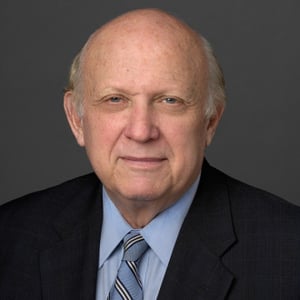
Senior Counsel, Cahill Gordon & Reindel LLP
Floyd Abrams is Senior Counsel in Cahill Gordon & Reindel LLP's litigation practice group.
Floyd has a national trial and appellate practice and extensive experience in high-visibility matters, often involving First Amendment, securities litigation, intellectual property, public policy and regulatory issues. He has argued frequently in the Supreme Court in cases raising issues as diverse as the scope of the First Amendment, the interpretation of ERISA, the nature of broadcast regulation, the impact of copyright law and the continuing viability of the Miranda rule. Most recently, Floyd prevailed in his argument before the Supreme Court on behalf of Senator Mitch McConnell as amicus curiae, defending the rights of corporations and unions to speak publicly about politics and elections in Citizens United v. Federal Election Commission. Floyd's clients have included The McGraw-Hill Companies in a large number of litigations around the country involving claims against its subsidiary, Standard & Poor’s Financial Services LLC, The New York Times in the Pentagon Papers case and others, ABC, NBC, CBS, CNN, Time Magazine, Business Week, The Nation, Reader's Digest, Hearst, AIG, and others in trials, appeals and investigations.
Floyd has represented Standard & Poor’s in litigations about its ratings; he defended the Brooklyn Museum of Art in its legal battles with Mayor Rudolph Giuliani; he represented two of the nation’s largest insurers in litigation under Section 17200 in California and he has frequently testified before congressional committees and prepared clients to do so. In 1998, he represented CNN in investigating and issuing a report on its broadcast accusing the United States of using nerve gas on a military mission in Laos in 1970, and again in 1999 in seeking to persuade the United States Senate to permit the public to view its deliberations as it determined whether or not to convict President Clinton of alleged high crimes and misdemeanors. He represented Nina Totenberg and National Public Radio in the 1992 "leak" investigation conducted by the United States Senate arising out of the confirmation hearing of Justice Clarence Thomas and, in 2004 and 2005, Judith Miller and Matthew Cooper in their efforts to avoid revealing their confidential sources.
In 2006, Floyd was elected to the American Academy of Arts & Sciences, an independent research center that conducts multidisciplinary studies of complex and emerging problems advanced by its 4,600 elected members, who are leaders in the academic disciplines, the arts, business and public affairs from around the world. In 2015, Floyd was honored by Yale Law School with its prestigious Award of Merit. Also in 2015, Floyd received the Walter Cronkite Freedom of Information Award presented by the Connecticut Foundation for Open Government. In 2011, Floyd was awarded the CUNY Graduate School of Journalism's Lifetime Achievement Award. In 1998, Floyd was the recipient of the William J. Brennan, Jr. Award for outstanding contribution to public discourse; the Learned Hand Award of the American Jewish Committee; and the Thurgood Marshall Award of the Association of the Bar of the City of New York. In November, 1999, he received the William J. Brennan, Jr. award of the Libel Defense Resource Center. Floyd was awarded, in 1997, the Milton S. Gould Award for outstanding appellate advocacy by the Office of the Appellate Defender in New York. Previously he had been awarded the Ross Essay Prize of the American Bar Association for his study of the Ninth Amendment of the United States Constitution. He has also received awards from, among others, the American Jewish Congress, Catholic University, the New York and Philadelphia Chapters of the Society of Professional Journalists, Sigma Delta Chi, the New York Civil Liberties Union, the Association for Education in Journalism and Mass Communication, and the National Broadcast Editorial Association.
In November, 2011, Yale Law School announced the formation of The Floyd Abrams Institute for Freedom of Expression, whose mission is to promote free speech, scholarship and law reform on emerging questions concerning traditional and new media. Developed in cooperation with Floyd, the Institute includes a clinic for Yale Law students to engage in litigation, draft model legislation, and advise lawmakers and policy makers on issues of media freedom and informational access.
The American Bar Association awarded Floyd its Certificate of Merit for his article published in The New York Times Magazine entitled "The New Effort to Control Information," which was described by the ABA as a "noteworthy contribution to public understanding of the American system of law and justice."
Described by Senator Daniel Patrick Moynihan as "the most significant First Amendment lawyer of our age," Floyd is top-ranked by Chambers USA. He is listed in Who’s Who Legal, Who’s Who in American Law, and has been awarded with Lifetime Achievement Awards by The New York Law Journal and The American Lawyer (2013).
Floyd, who served as chairman of Mayor Edward Koch's Committee on Appointments, New York City, served as the Chairman of the New York State Zenger Commemoration Planning Committee. Previously, he served as the Chairman of the Communications Committee of the Association of the Bar of the City of New York, as well as Chairman of the Committee on Freedom of Speech and of the Press of the Individual Rights Section of the American Bar Association and of the Committee on Freedom of Expression of the Litigation Section of the American Bar Association.
He has appeared frequently on television on Nightline, the News Hour with Jim Lehrer, Charlie Rose and other programs and has published articles and reviews in The New York Times, The Washington Post, The Yale Law Journal, The Harvard Law Review, and elsewhere.
Floyd served on the Technology and Privacy Advisory Committee of the U.S. Department of Defense in 2003-4 and as the Chair of the New York State Commission on Public Access to Court Records in 2004.
For fifteen years, Floyd was the William J. Brennan, Jr. Visiting Professor of First Amendment Law at the Columbia Graduate School of Journalism. He has, as well, been a Visiting Lecturer at Yale Law School and Columbia Law School and he is author of Friend of the Court: On the Front Lines with the First Amendment, published by Yale University Press (2013) and Speaking Freely: Trials of the First Amendment, published by Viking Press (2005).
General Counsel, Tikvah Fund
Suzanne Garment is an American scholar, writer, editor and attorney.
Garment is best known for her book, Scandal: The Culture of Mistrust in American Politics, and for her work as a aide to Ambassador Daniel Patrick Moynihan working to block the 1975 United Nations General Assembly Resolution 3379 of the United Nations that "Zionism is a form of racism and racial discrimination."
Garment holds the A.B. from Radcliffe College, the M.A. from the University of Sussex in the United Kingdom, the PhD in political science from Harvard University, the J.D. and a master of laws degree in taxation from Georgetown University
She has served as a visiting scholar at the Indiana University Center on Philanthropy at Indiana University; special counsel to Richard Ravitch, New York Lieutenant Governor and as counsel to the Task Force on the State Budget Crisis, co-chaired by Ravitch and former Federal Reserve chairman Paul Volcker. Before earning the J.D., she was a scholar at the American Enterprise Institute; associate editorial page editor of the Wall Street Journal; author of the "Capital Chronicle" column at the Wall Street Journal; and special assistant to Daniel Patrick Moynihan, U.S. ambassador to the United Nations. Garment has taught politics and public policy at Yale and Harvard Universities. She was the executive editor of Jewish Ideas Daily.
Professor of Law Emeritus, Brooklyn Law
Henry Mark Holzer received his B.A. degree from New York University where he studied Russian and political science. After graduation in 1954 he served in South Korea with United States Army intelligence, holding top secret clearance as chief order of battle analyst (Chinese Communist Forces) at Eighth Army Headquarters in Seoul. Following Professor Holzer’s military service he earned his Juris Doctor degree at New York University School of Law. After his admission to the New York bar in December 1959 he practiced constitutional and appellate law.
From 1972 to 1993 he taught full time at Brooklyn Law School, and for two years was an associate dean. His courses included Constitutional Law, Administrative Law, Civil Liberties, First Amendment and Appellate Advocacy. In the fall of 1993, he taught as a visiting professor at the University of New Mexico School of Law in Albuquerque.
He is author of approximately 300 articles, essays, and reviews. He has published legal and political commentary on current issues in print and electronic media, and has often been interviewed on radio and television.
Several of his out-of-print books are The Gold Clause: Government’s Money Monopoly; Sweet Land of Liberty? The Supreme Court and Individual Rights; Speaking Freely: The Case Against Speech Codes; Why Not Call it Treason? Korea, Vietnam, Afghanistan and Today. With his wife, Erika Holzer, he is co-author of “Aid and Comfort”: Jane Fonda in North Vietnam; and Fake Warriors: Identifying, Exposing, and Punishing Those Who Falsify Their Military Service.
His book The Supreme Court Opinions of Clarence Thomas, 1919-2006, was published in 2007. The second edition, covering the years 1991-2011 was published in 2012. Also published in 2012, in a print edition and eBook, was Professor Holzer’s book The American Constitution and Ayn Rand’s “Inner Contradiction.”
Journalist, Professor, and Author
Donald "Don" Oberdorfer Jr. (May 28, 1931 – July 23, 2015) was an American professor at the Paul H. Nitze School of Advanced International Studies (SAIS) at Johns Hopkins University with a specialty in Korea, and was a journalist for 38 years, 25 of them with The Washington Post. He is the author of five books and several academic papers. His book, Senator Mansfield: The Extraordinary Life of a Great American Statesman and Diplomat, won the D.B. Hardeman Prize in 2003.
Oberdorfer graduated from Princeton University and went to South Korea as a U.S. Army lieutenant after the signing of the armistice that ended the Korean War. In 1955 he joined The Charlotte Observer, and eventually found a job with The Washington Post. During the next 25 years, he worked for The Post, serving as White House correspondent, Northeast Asia correspondent, and diplomatic correspondent. He retired from the paper in 1993.
At the Nitze school, beyond his teaching position, Oberdorfer served as chairman of the U.S.-Korea Institute from its inauguration in 2006 and was named chairman emeritus in 2013.
Former Assistant Attorney General, U.S. Department of Justice, Civil Division
During the Reagan Administration, Richard Willard served as Assistant Attorney General in charge of the Civil Division, the largest litigation division of the US Department of Justice. There, he chaired the Reagan Administration's Tort Policy Working Group and developed its proposals for reforming civil litigation, workplace drug testing, and preventing unauthorized disclosure of classified information.
More recently, he served as senior vice president and general counsel for Bristol-Myers Squibb Co. and Gillette Company, where he led large worldwide legal departments, advised on strategic transactions, and enabled launch of new products with strong intellectual property protection.
Mr. Willard's private practice involved corporate counseling and litigation of cases raising public policy concerns. He served as lead counsel in complex litigation involving multiple claims, parties, and jurisdictions. He frequently appeared in trial and appellate courts around the country, including six arguments in the Supreme Court.

Roe v. Wade: A Legal History [Full Documentary]
Helen Alvaré, David Bernstein, Robert P. George, Linda Greenhouse, Kimberly Mutcherson, Teresa Stanton Collett
Documentary by FedSoc Films and Coronation Media
As one of the most consequential decisions in the history of the Supreme Court, Roe...
Address by Secretary of Defense Richard Cheney [Archive Collection]
Richard B. Cheney, T. Kenneth Cribb
The Presidency and Congress
On January 19-20, 1990, The Federalist Society hosted a conference at the Mayflower Hotel in...
Address by Secretary of Defense Richard Cheney [Archive Collection]
Richard B. Cheney, T. Kenneth Cribb
The Presidency and Congress
On January 19-20, 1990, The Federalist Society hosted a conference at the Mayflower Hotel in...
Deep Dive Episode 154 – Tech Policy Under the Biden Administration and 117th Congress
Jennifer Huddleston, Blake Reid, Adam Thierer
Regulatory Transparency Project's Fourth Branch Podcast
In this episode, an expert panel looks at what the new year may bring regarding the...
Deep Dive Episode 153 – Reboot Conversations: The Future of Drone Policy
Reggie Govan, Alexiaa Jordan, Brent Skorup
Regulatory Transparency Project's Fourth Branch Podcast
There are nearly 500,000 commercial drones registered in the United States, far exceeding recent FAA...
Explainer Episode 21 – How is Insurance Regulated?
Ian David Adams
Regulatory Transparency Project's Fourth Branch Podcast
How is insurance regulated in the United States? How are emerging technologies disrupting the industry? And...
State Court Docket Watch: State of New Jersey v. Robert Andrews
Billy Easley
State Court Docket Watch: 2020 Edition
Can law enforcement compel you to unlock your smartphone to access your texts, phone logs,...
The Price of Privacy: A Debate over Corporate Surveillance
Neil Chilson, William Rinehart, Liz O?Sullivan, Jeramie Scott
Regulatory Transparency Project's Fourth Branch Video
Data is being collected on each of us every day by the apps that we...
Tech Roundup Episode 11 – TikTok's Running Clock
Matthew Feeney, Jamil N. Jaffer, Ashkhen Kazaryan
Regulatory Transparency Project's Fourth Branch Podcast
Citing national security concerns, the Trump administration has ordered TikTok's Chinese parent company, Bytedance Ltd.,...
Panel II: The First Amendment and National Security [Archive Collection]
Floyd Abrams, Suzanne Garment, Henry Mark Holzer, Don Oberdorfer, Richard K. Willard
Foreign Affairs and the Constitution
On November 6-7, 1987, The Federalist Society held a symposium at the Grand Hyatt Hotel...