

Head of AI Policy, Abundance Institute
Neil Chilson is the Head of AI Policy at the Abundance Institute. Prior to this position, he served as a Senior Research Fellow at the Center for Growth and Opportunity. Chilson is a lawyer, computer scientist, and author of the book “Getting Out of Control: Emergent Leadership in a Complex World.”
Chilson was previously the senior research fellow for Technology and Innovation at Stand Together, where he guided efforts to understand and promote the legal and cultural paradigms that best enable people to discover, innovate, and improve all our lives.
Before Stand Together, Chilson was the Chief Technologist at the Federal Trade Commission, where he focused on the economics of privacy and blockchain-related issues. Previously, he was an attorney advisor to Acting FTC Chairman Maureen K. Ohlhausen. In both roles he advised Chairman Ohlhausen and worked with staff on nearly every major technology-related case, report, workshop, or other FTC proceeding since January 2014. Neil joined the FTC from telecom firm Wilkinson Barker Knauer. Neil is frequently quoted by the press and his work has appeared in numerous news outlets, including The Wall Street Journal, The Washington Post, USAToday, and Newsweek. Neil has a J.D. from The George Washington Law School, a M.S. in computer science from University of Illinois, Urbana-Champaign, and a B.S. in computer science from Harding University.

Senior Legal Fellow, The Future of Free Speech, Vanderbilt University
Ashkhen Kazaryan is a renowned expert in First Amendment law and technology policy, specializing in digital free speech, artificial intelligence, and the intersection of constitutional rights with emerging technologies. As a Senior Legal Fellow at the Future of Free Speech at Vanderbilt University, she leads initiatives to protect free expression and shape policies that uphold the First Amendment in the digital age.
Previously, Ashkhen was the lead for North and Latin America on the content regulation team at Meta, where she also served as the company’s policy lead on Section 230. She has also been a Senior Fellow at Stand Together and the Director of Civil Liberties at TechFreedom, where she worked extensively on platform liability, free speech, and internet governance. She is currently Fellow for the First Amendment at the Freedom Forum.
Ashkhen earned her specialist in law degree summa cum laude from Lomonosov Moscow State University in 2012 and later received a master of law degree from Yale Law School in 2016. During her time at Yale, she contributed as an articles editor for the Yale Journal of Law and Feminism, a senior editor for the Yale Law and Policy Review, and an editor for the Yale Journal of Law and Technology, while also serving as co-chair of the Public Interest Fellowship.
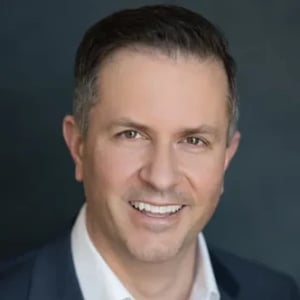
Founder and CEO, Chamber of Progress
Adam Kovacevich (Kuh-VACK-uh-VITCH) is the Founder and CEO of Chamber of Progress, a center-left tech industry policy coalition promoting technology’s progressive future.
Chamber of Progress – which Adam founded in March 2021 – works to ensure that all Americans benefit from technological leaps, and that the tech industry operates responsibly and fairly. It has been called “one of the most powerful tech lobby groups,” (New York Times), “one of the tech industry’s most prominent allies in Washington,” (Washington Post) and “a significant voice in the progressive movement” (Washingtonian).
Adam is a veteran Democratic tech industry leader who has had a front row seat for more than 20 years in the tech industry’s political maturation. He is an expert in helping lead technology companies through today’s challenging political environment.

Senior Fellow, R Street Institute
Prior to R Street, Adam spent 12 years as a senior fellow at the Mercatus Center at George Mason University. Before the Mercatus Center, he served as the president of the Progress and Freedom Foundation. Adam has also worked for the Adam Smith Institute, the Heritage Foundation and the Cato Institute.
Adam has published 10 books on a wide range of topics, including online child safety, internet governance, intellectual property, telecommunications policy, media regulation and federalism.
In 2008, Adam received the Family Online Safety Institute’s “Award for Outstanding Achievement.”
Head of AI Policy, Abundance Institute
Neil Chilson is the Head of AI Policy at the Abundance Institute. Prior to this position, he served as a Senior Research Fellow at the Center for Growth and Opportunity. Chilson is a lawyer, computer scientist, and author of the book “Getting Out of Control: Emergent Leadership in a Complex World.”
Chilson was previously the senior research fellow for Technology and Innovation at Stand Together, where he guided efforts to understand and promote the legal and cultural paradigms that best enable people to discover, innovate, and improve all our lives.
Before Stand Together, Chilson was the Chief Technologist at the Federal Trade Commission, where he focused on the economics of privacy and blockchain-related issues. Previously, he was an attorney advisor to Acting FTC Chairman Maureen K. Ohlhausen. In both roles he advised Chairman Ohlhausen and worked with staff on nearly every major technology-related case, report, workshop, or other FTC proceeding since January 2014. Neil joined the FTC from telecom firm Wilkinson Barker Knauer. Neil is frequently quoted by the press and his work has appeared in numerous news outlets, including The Wall Street Journal, The Washington Post, USAToday, and Newsweek. Neil has a J.D. from The George Washington Law School, a M.S. in computer science from University of Illinois, Urbana-Champaign, and a B.S. in computer science from Harding University.
Senior Legal Fellow, The Future of Free Speech, Vanderbilt University
Ashkhen Kazaryan is a renowned expert in First Amendment law and technology policy, specializing in digital free speech, artificial intelligence, and the intersection of constitutional rights with emerging technologies. As a Senior Legal Fellow at the Future of Free Speech at Vanderbilt University, she leads initiatives to protect free expression and shape policies that uphold the First Amendment in the digital age.
Previously, Ashkhen was the lead for North and Latin America on the content regulation team at Meta, where she also served as the company’s policy lead on Section 230. She has also been a Senior Fellow at Stand Together and the Director of Civil Liberties at TechFreedom, where she worked extensively on platform liability, free speech, and internet governance. She is currently Fellow for the First Amendment at the Freedom Forum.
Ashkhen earned her specialist in law degree summa cum laude from Lomonosov Moscow State University in 2012 and later received a master of law degree from Yale Law School in 2016. During her time at Yale, she contributed as an articles editor for the Yale Journal of Law and Feminism, a senior editor for the Yale Law and Policy Review, and an editor for the Yale Journal of Law and Technology, while also serving as co-chair of the Public Interest Fellowship.
Founder and CEO, Chamber of Progress
Adam Kovacevich (Kuh-VACK-uh-VITCH) is the Founder and CEO of Chamber of Progress, a center-left tech industry policy coalition promoting technology’s progressive future.
Chamber of Progress – which Adam founded in March 2021 – works to ensure that all Americans benefit from technological leaps, and that the tech industry operates responsibly and fairly. It has been called “one of the most powerful tech lobby groups,” (New York Times), “one of the tech industry’s most prominent allies in Washington,” (Washington Post) and “a significant voice in the progressive movement” (Washingtonian).
Adam is a veteran Democratic tech industry leader who has had a front row seat for more than 20 years in the tech industry’s political maturation. He is an expert in helping lead technology companies through today’s challenging political environment.
Senior Fellow, R Street Institute
Prior to R Street, Adam spent 12 years as a senior fellow at the Mercatus Center at George Mason University. Before the Mercatus Center, he served as the president of the Progress and Freedom Foundation. Adam has also worked for the Adam Smith Institute, the Heritage Foundation and the Cato Institute.
Adam has published 10 books on a wide range of topics, including online child safety, internet governance, intellectual property, telecommunications policy, media regulation and federalism.
In 2008, Adam received the Family Online Safety Institute’s “Award for Outstanding Achievement.”
Senior Fellow, R Street Institute
Prior to R Street, Adam spent 12 years as a senior fellow at the Mercatus Center at George Mason University. Before the Mercatus Center, he served as the president of the Progress and Freedom Foundation. Adam has also worked for the Adam Smith Institute, the Heritage Foundation and the Cato Institute.
Adam has published 10 books on a wide range of topics, including online child safety, internet governance, intellectual property, telecommunications policy, media regulation and federalism.
In 2008, Adam received the Family Online Safety Institute’s “Award for Outstanding Achievement.”

Professor of Law, University of Michigan Law School
Christopher J. Walker is a Professor of Law at the University of Michigan. Prior to joining Michigan law faculty in 2022, he spent a decade teaching at The Ohio State University Moritz College of Law. He previously clerked for Justice Anthony Kennedy of the U.S. Supreme Court, worked on the Civil Appellate Staff at the U.S. Department of Justice, and served on the Senate Judiciary Committee staff for the Gorsuch Supreme Court confirmation. Professor Walker’s research focuses on administrative law, regulation, and law and policy at the agency level. Outside the law school, he chaired the American Bar Association’s Section of Administrative Law and Regulatory Practice in 2020-21 and served as one of forty Public Members of the Administrative Conference of the United States from 2016-2022, and he continues to serve in both organizations in various capacities. He also works of counsel at the U.S. Chamber Litigation Center. In 2022, he received the Federalist Society’s Joseph Story Award.
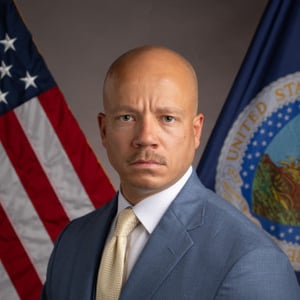
Assistant Secretary for Civil Rights, U.S. Department of Agriculture
Devon Westhill is the Assistant Secretary for Civil Rights at the U.S. Department of Agriculture. The U.S. Senate confirmed President Donald Trump’s nomination of Westhill on October 7, 2025.
Westhill returns to the USDA where he previously headed the civil rights office as Deputy Assistant Secretary in President Trump’s first term. His previous government appointments also include service at the U.S. Department of Labor, liaison to the Administrative Conference of the U.S., and liaison to the White House Initiative on Historically Black Colleges and Universities. Prior to returning to government service, Westhill was President and General Counsel of a nonprofit civil rights organization.
Westhill has testified on civil rights matters before Congress, federal agencies, and as an expert witness in federal court. He has spoken hundreds of times at college campuses, conferences, and on radio and TV programs, and he is frequently quoted in print publications, and his writing has appeared in numerous national outlets. A U.S. Navy veteran, Westhill earned his BA from the University of North Carolina at Chapel Hill and his JD from the University of Florida.

Associate Professor of Political Science, Public Policy and Public Administration, and International Affairs, George Washington University
Steven Balla is Associate Professor of Political Science, Public Policy and Public Administration, and International Affairs, and a Senior Scholar at the George Washington Regulatory Studies Center. He researches government consultation and public participation in policymaking in the United States and China. He has on two occasions served as a consultant to the Administrative Conference of the United States, drawing on his research on public commenting in the U.S. rulemaking process to make recommendations for how to improve regulatory policymaking. He has twice served as a Fulbright Scholar in China, at Peking University in Beijing and Nankai University in Tianjin. He is currently working on projects on congressional oversight of regulatory policymaking, polarization in public commenting on proposed rules, and the responsiveness of Chinese government officials to public feedback on draft laws and regulations.

Director, GW Regulatory Studies Center & Distinguished Professor of Practice, Trachtenberg School of Public Policy & Public Administration, The George Washington University
Susan Dudley is the Founder and Director of the George Washington University Regulatory Studies Center, established in 2009 to raise awareness of regulations’ effects and improve regulatory policy through research, education, and outreach. She is also a distinguished professor of practice in the Trachtenberg School of Public Policy and Public Administration. She is past-president of the Society for Benefit Cost Analysis, a senior fellow of the Administrative Conference of the United States, and on the Regulatory Transparency Project Regulatory Practice Working Group. Her book, Regulation: A Primer, with Jerry Brito, is available on Amazon.com.
From April 2007 through January 2009, Professor Dudley served as the Presidentially-appointed Administrator of the Office of Information and Regulatory Affairs in the U.S. Office of Management and Budget and was responsible for the review of draft executive branch regulations under Executive Order 12866, the collection of federal-government-wide information under the Paperwork Reduction Act, the development and implementation of government-wide policies in the areas of information policy, privacy, and statistical policy, and international regulatory cooperation efforts.
Prior to OIRA, she directed the Regulatory Studies Program at the Mercatus Center at George Mason University, and taught courses on regulation at the George Mason University School of Law. Earlier in her career, Professor Dudley served as an economist at OIRA, as well as the Environmental Protection Agency and the Commodity Futures Trading Commission. She was also a consultant to government and private clients at Economists Incorporated. She holds a Master of Science degree from the Sloan School of Management at MIT and a Bachelor of Science degree (summa cum laude) in Resource Economics from the University of Massachusetts, Amherst.
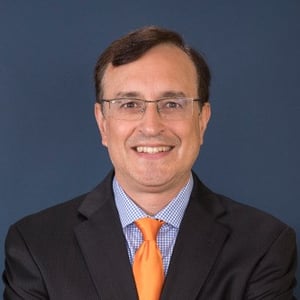
President, Center for Individual Rights
Todd Gaziano is the President of the Center for Individual Rights. Mr. Gaziano received his J.D. in 1988 from the University of Chicago Law School, where he was a John M. Olin Fellow in Law and Economics. He received his B.A. from West Virginia University, summa cum laude in 1985. He was selected as a Truman Scholar from West Virginia while an undergraduate.
Mr. Gaziano’s previous legal work includes service as a law clerk for U.S. Court of Appeals for the Fifth Circuit Judge Edith Jones, as an attorney in the U.S. Department of Justice Office of Legal Counsel, as a chief subcommittee counsel in the U.S. House of Representatives, as a Houston trial attorney, and as a chief corporate legal officer. He also served a six-year term as commissioner on the U.S. Commission on Civil Rights (2008-2013), where he helped conduct oversight and investigations of civil rights agencies.
For most of the last 25 years, Mr. Gaziano was a legal scholar and public interest law leader, promoting individual liberty in the Supreme Court and Congress. From 1997 to 2013, he was the founding director of the Edwin Meese Center for Legal and Judicial Studies at The Heritage Foundation. From 2014 until he joined CIR, he was the Chief of Legal Policy and Strategic Research, and Director of the Center for the Separation of Powers, at Pacific Legal Foundation.

Staff Director, US Senate
Staff Director at United States Senate, Subcommittee on Government Operations and Border Management.
Associate Professor of Political Science, Public Policy and Public Administration, and International Affairs, George Washington University
Steven Balla is Associate Professor of Political Science, Public Policy and Public Administration, and International Affairs, and a Senior Scholar at the George Washington Regulatory Studies Center. He researches government consultation and public participation in policymaking in the United States and China. He has on two occasions served as a consultant to the Administrative Conference of the United States, drawing on his research on public commenting in the U.S. rulemaking process to make recommendations for how to improve regulatory policymaking. He has twice served as a Fulbright Scholar in China, at Peking University in Beijing and Nankai University in Tianjin. He is currently working on projects on congressional oversight of regulatory policymaking, polarization in public commenting on proposed rules, and the responsiveness of Chinese government officials to public feedback on draft laws and regulations.
Director, GW Regulatory Studies Center & Distinguished Professor of Practice, Trachtenberg School of Public Policy & Public Administration, The George Washington University
Susan Dudley is the Founder and Director of the George Washington University Regulatory Studies Center, established in 2009 to raise awareness of regulations’ effects and improve regulatory policy through research, education, and outreach. She is also a distinguished professor of practice in the Trachtenberg School of Public Policy and Public Administration. She is past-president of the Society for Benefit Cost Analysis, a senior fellow of the Administrative Conference of the United States, and on the Regulatory Transparency Project Regulatory Practice Working Group. Her book, Regulation: A Primer, with Jerry Brito, is available on Amazon.com.
From April 2007 through January 2009, Professor Dudley served as the Presidentially-appointed Administrator of the Office of Information and Regulatory Affairs in the U.S. Office of Management and Budget and was responsible for the review of draft executive branch regulations under Executive Order 12866, the collection of federal-government-wide information under the Paperwork Reduction Act, the development and implementation of government-wide policies in the areas of information policy, privacy, and statistical policy, and international regulatory cooperation efforts.
Prior to OIRA, she directed the Regulatory Studies Program at the Mercatus Center at George Mason University, and taught courses on regulation at the George Mason University School of Law. Earlier in her career, Professor Dudley served as an economist at OIRA, as well as the Environmental Protection Agency and the Commodity Futures Trading Commission. She was also a consultant to government and private clients at Economists Incorporated. She holds a Master of Science degree from the Sloan School of Management at MIT and a Bachelor of Science degree (summa cum laude) in Resource Economics from the University of Massachusetts, Amherst.
President, Center for Individual Rights
Todd Gaziano is the President of the Center for Individual Rights. Mr. Gaziano received his J.D. in 1988 from the University of Chicago Law School, where he was a John M. Olin Fellow in Law and Economics. He received his B.A. from West Virginia University, summa cum laude in 1985. He was selected as a Truman Scholar from West Virginia while an undergraduate.
Mr. Gaziano’s previous legal work includes service as a law clerk for U.S. Court of Appeals for the Fifth Circuit Judge Edith Jones, as an attorney in the U.S. Department of Justice Office of Legal Counsel, as a chief subcommittee counsel in the U.S. House of Representatives, as a Houston trial attorney, and as a chief corporate legal officer. He also served a six-year term as commissioner on the U.S. Commission on Civil Rights (2008-2013), where he helped conduct oversight and investigations of civil rights agencies.
For most of the last 25 years, Mr. Gaziano was a legal scholar and public interest law leader, promoting individual liberty in the Supreme Court and Congress. From 1997 to 2013, he was the founding director of the Edwin Meese Center for Legal and Judicial Studies at The Heritage Foundation. From 2014 until he joined CIR, he was the Chief of Legal Policy and Strategic Research, and Director of the Center for the Separation of Powers, at Pacific Legal Foundation.
Staff Director, US Senate
Staff Director at United States Senate, Subcommittee on Government Operations and Border Management.

Adjunct Professor of Law, Scalia Law; Google, Corporate Counsel
Kathryn Ciano Mauler currently serves as a Corporate Counsel at Google. Prior to Google, Kathryn was Senior Regulatory Counsel at Uber Technologies, and also spent three years at i360, LLC as General Counsel. Before this, she also worked at a boutique law firm in Washington, D.C. and at the Institute for Justice.
She received her B.A. from the University of Florida. She also received her business degree from the University of Florida - Warrington College of Business, studying at the Ecole supérieure de Commerce de Toulouse in France. Kathryn's J.D. is from the George Mason University School of Law.
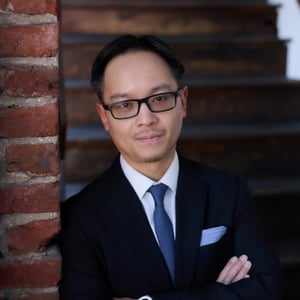
Partner, Vantage Legal
Eric Wang is a renowned and respected authority on political law. His practice is notable for its breadth and depth. Eric’s professional experience includes serving as counsel to a commissioner at the Federal Election Commission, serving as in-house counsel to Americans for Prosperity, and practicing political law at one of D.C.’s largest law firms. These varied interactions with the law—as a regulator, client, adviser, and advocate—inform Eric’s practical approach to helping clients achieve their goals while navigating a thicket of complex laws.
Eric’s mastery of campaign finance laws is not limited to the federal level: he also has advised clients on the campaign finance laws in all 50 states and in many municipalities. In addition, he has guided clients through federal, state, and local lobbying, government ethics, and “pay-to-play” laws.
Eric is frequently published on political law issues in USA Today, Roll Call, The Hill, Politico, The Washington Times, and the Washington Examiner. Since 2013, Eric has been a pro bono Senior Fellow at the Institute for Free Speech, where he helps advocate for reducing the regulatory burden on clients exercising their First Amendment rights.

Policy Director, Fulcrun Foundation
Reeve T. Bull is Director of the Virginia Office of Regulatory Management. In this position, he leads the Commonwealth's efforts to streamline regulations and promote a transparent permitting process and to develop and implement artificial intelligence policy. Prior to this role, he was the Research Director of the Administrative Conference of the United States. In his time at ACUS, Mr. Bull worked on projects related to international regulatory cooperation, the use of science by administrative agencies, presidential review of agency rulemaking, and regulatory benefit-cost analysis, among other things.
Mr. Bull is an elected member of the American Law Institute. Mr. Bull has served on the Council of the ABA Administrative Law and Regulatory Practice Section and also co-chairs the Section's Rulemaking Committee. Mr. Bull serves as an Adjunct Professor at George Washington University, where he teaches a class on regulatory law. He has also served as an Adjunct Professor at George Mason University Law School, teaching a course on Legislation and Statutory Interpretation.
Mr. Bull has published a number of articles in leading law journals, including the Administrative Law Review, George Washington Law Review, and Law and Contemporary Problems. His articles explore enhanced judicial review of agency regulatory impact analysis, removing unnecessary trade barriers through enhanced international regulatory cooperation, and reducing regulatory burdens through retrospective review of existing rules, among other topics. For a list of these publications, please visit his SSRN page.
Mr. Bull previously worked in the private sector as an associate with the law firm Gibson, Dunn & Crutcher LLP and in government service as a law clerk to the Honorable Alvin A. Schall of the Federal Circuit Court of Appeals. During his time as an associate with Gibson Dunn, Mr. Bull worked on a variety of litigation and regulatory matters. He participated in cases appearing before the United States Supreme Court, several federal Courts of Appeals, and numerous federal district courts and state trial courts. His experience spanned a variety of practice areas, including administrative, constitutional, intellectual property, antitrust, environmental, securities, and white collar criminal law. During his clerkship for Judge Schall, Mr. Bull assisted with appeals in cases spanning a variety of areas, with particular emphasis on administrative and patent law.
Mr. Bull attended law school at Duke University, where he graduated with highest honors and was inducted into the Order of the Coif. He was one of two recipients of the Willis Smith Award for compiling the most outstanding academic record in the graduating class and the recipient of the James S. Bidlake Memorial Award for achieving the highest grade in his first year legal writing section. Mr. Bull also served as a Note Editor on the Duke Law Journal. Prior to law school, Mr. Bull attended the University of Oklahoma, where he graduated summa cum laude with a Bachelors in Chemistry and was inducted into Phi Beta Kappa.

Alex J. Adams, PharmD, MPH, serves as director of the Idaho Department of Health and Welfare. He was appointed to lead the department by Gov. Brad Little in May 2024.
Prior to leading the department, Dr. Adams spent more than five years as Governor Little’s budget and regulatory director. In this capacity, he oversaw the state’s first upgrade to a AAA credit rating with both Fitch Ratings and Moody’s. He helped lead development of major policy initiatives such as Idaho LAUNCH and the financing of $1.5 billion in school facility infrastructure improvements. He helped build the rainy-day funds to the largest fund balance in state history. He also led the Governor’s zero-based regulation initiative, which led to Idaho becoming the least regulated state in the nation, eliminating more than 2,700 pages of regulations.
He earned his bachelor’s degree and Doctor of Pharmacy degree from the University of Toledo in Ohio, graduating as class valedictorian, and his Master of Public Health degree from Johns Hopkins University Bloomberg School of Public Health in Baltimore. Dr. Adams lives in Eagle with his wife, Jennifer, and daughter, Emerson.

Will Skillman Fellow in Education, Center for Education Policy, The Heritage Foundation
Jonathan Butcher is the Will Skillman Fellow in Education at The Heritage Foundation. He is the author of Splintered: Critical Race Theory and the Progressive War on Truth (Bombardier Books, April 2022). He co-edited and wrote chapters in The Critical Classroom (The Heritage Foundation, 2022), discussing the racial prejudice that comes from the application of critical race theory in K-12 schools. In 2021, South Carolina Gov. Henry McMaster nominated Jonathan to serve on the board of the South Carolina Public Charter School District, a statewide charter school authorizer. He has researched and testified on education policy around the U.S.
Jonathan co-edited and wrote chapters in the book The Not-So-Great Society, which provides conservative solutions to the problems created by the ever-expanding federal footprint in preschool, K-12, and higher education.
In 2018 the Federal Commission on School Safety cited comments from his testimony in the commission’s final report. He has appeared on local and national TV outlets, including C-SPAN, Fox News, and HBO’s Vice News Tonight, and he has been a guest on many radio programs. His commentary has appeared nationally in places such as the Wall Street Journal, Education Week, National Review Online, Newsweek.com, and Forbes.com, along with newspapers around the country.
In 2017 he was a co-recipient of the State Policy Network’s Bob Williams Award for Most Influential Research for a proposal to protect free speech on campus, alongside Stanley Kurtz of the Ethics and Public Policy Center and Jim Manley of the Goldwater Institute.
Jonathan previously served as the education director at the Goldwater Institute, where he remains a senior fellow. He was a member of the Arizona Department of Education’s first Steering Committee for Empowerment Scholarship Accounts, the nation’s first education savings account program. He is also a Senior Fellow with The Beacon Center of Tennessee, a nonpartisan research organization, and a contributing scholar for the Georgia Center for Opportunity.
Prior to joining Goldwater, Jonathan was the director of accountability for the South Carolina Public Charter School District. Jonathan previously studied education policy at the Department of Education Reform at the University of Arkansas and worked with the School Choice Demonstration Project, the research team that evaluated voucher programs in Washington, D.C. and Milwaukee, Wisc.
Jonathan holds a B.A. in English from Furman University and an M.A. in economics from the University of Arkansas.

Vice President for Litigation & General Counsel, Goldwater Institute
Jon Riches is the Vice President for Litigation for the Goldwater Institute’s Scharf-Norton Center for Constitutional Litigation and General Counsel for the Institute. He litigates in federal and state trial and appellate courts in the areas of economic liberty, regulatory reform, free speech, taxpayer protections, public labor issues, government transparency, and school choice, among others.
Jon has developed and authored several pieces of legislation, including the landmark Right to Earn a Living Act, which provides some of the greatest protections in the country to job-seekers and entrepreneurs facing arbitrary licensing regulations. He also developed legislation eliminating deference to administrative agencies in Arizona—a first-of-its-kind regulatory reform that can serve as a model for the rest of the country.
His work at the Institute has been covered by national media, including the Wall Street Journal, New York Times, CBS This Morning, Bloomberg News, and Politico. Jon is also a member of the Federalist Society’s Regulatory Transparency Project: State and Local Working Group.
Prior to joining the Goldwater Institute, Jon served on active duty in the U.S. Navy Judge Advocate General’s (JAG) Corps. While on active duty, Jon represented hundreds of clients, litigated dozens of court-martial cases, and advised commanders on a vast array of legal issues.
He previously clerked for Sen. Jon Kyl on the U.S. Senate Judiciary Committee, worked for the Rules Committee in the Arizona State Senate, and clerked in the Office of Counsel to the President at the White House. Jon received his B.A. from Boston College, where he graduated magna cum laude and Phi Beta Kappa. He earned his J.D. from the University of Arizona, James E. Rogers College of Law.
Jon served as a presidentially appointed Panel Member on the Federal Service Impasses Panel. He is an officer in the U.S. Navy Reserve and an Adjunct Professor at Arizona State University School of Law. Jon is a native of Phoenix.
Attorney, Pacific Legal Foundation
Luke A. Wake is an attorney at the Pacific Legal Foundation. Prior to joining PLF, he was a senior staff attorney at the NFIB Small Business Legal Center.
Wake has particular expertise on environmental and land use issues, and has worked on numerous other constitutional issues and matters of importance to small business owners. He is an ardent defender of private property rights, which he believes are essential to the free enterprise system and the foundation of American liberty. As a strong advocate of individual rights and economic liberties, he has built his career defending small business interests.
Wake has focused on a whole host of issues, from employment law matters to regulatory compliance. In addition to serving as a resource for small business owners, Wake is committed to ensuring that the voice of small business is heard in the nation’s courts. As an appellate practitioner, Wake has focused particularly on informing the courts on matters of administrative law and on issues under the Fifth Amendment’s Takings Clause. He is also working to advance small business interests in law review articles, and was recently published in the Berkeley Journal of Law & Ecology. See R.S. Radford & Luke A. Wake, Deciphering and Extrapolating: Searching for Sense in Penn Central, 38 Ecology L.Q. 731, 746-747 (2011).
Before joining the Legal Center’s team, Wake completed a prestigious two-year fellowship as an attorney in the Pacific Legal Foundation’s College of Public Interest Law. Wake is a graduate of Case Western Reserve University School of Law in Cleveland Ohio, and is a member of the California Bar. He completed his undergraduate studies at Elon University in North Carolina in 2006 where he focused on political theory and corporate communications.

What Should the Next Administration Do About AI?
Neil Chilson, Ashkhen Kazaryan, Adam Kovacevich, Adam Thierer
This virtual event explored the potential trajectories of AI policy under the upcoming shift in presidential...
What Should the Next Administration Do About AI?
Neil Chilson, Ashkhen Kazaryan, Adam Kovacevich, Adam Thierer
This virtual event explored the potential trajectories of AI policy under the upcoming shift in presidential...
Shaped – A Journey Through Invisible Boundaries [Teaser]
Adam Thierer
A Regulatory Transparency Project Fourth Branch Video
Invisible forces shape the world around us. Rules and regulations determine everything from the cars...
The Major Questions Doctrine: A Question or an Answer for Administrative Law?
Christopher J. Walker
A Regulatory Transparency Project Fourth Branch Video
Recent Supreme Court decisions have invoked what is being called the “Major Questions Doctrine.” In...
Disparate Impact: Is Equal Outcome the Same as Equal Opportunity?
Devon Westhill
A Regulatory Transparency Project Fourth Branch Video
Everyone agrees that discriminating against people based on factors like race or sex is wrong....
Will the Congressional Review Act Be Revived in 2025?
Steven Balla, Susan E. Dudley, Todd F. Gaziano, Anthony Papian
Regulatory Transparency Project
Federal regulators were busy in April 2024, with agencies publishing a record-breaking 66 significant new...
Will the Congressional Review Act Be Revived in 2025?
Steven Balla, Susan E. Dudley, Todd F. Gaziano, Anthony Papian
Regulatory Transparency Project
Federal regulators were busy in April 2024, with agencies publishing a record-breaking 66 significant new...
Explainer Episode 73 - Changing Presidential Candidates
Kathryn Ciano Mauler, Eric Wang
RTP's Fourth Branch Podcast
Kathryn Ciano Mauler and Eric Wang join the podcast to discuss the FEC rules behind...
Explainer Episode 71 - Regulatory Modernization in Idaho and Virginia: What lessons can be learned?
Reeve T. Bull, Alex J. Adams
RTP's Fourth Branch Podcast
Alex J. Adams, Director of Idaho's Department of Health and Welfare is joined by Reeve...
Explainer Episode 72 - Parental Rights & Student Privacy in Education
Jonathan Butcher, Jonathan Riches, Luke A. Wake
RTP's Fourth Branch Podcast
Legal experts Jonathan Butcher and Jon Riches discuss the debate between parental rights and children’s...