
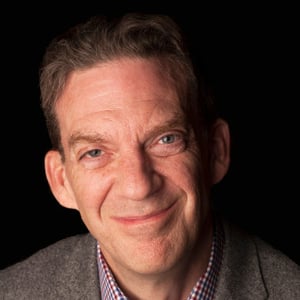
Partner, McCarter & English, LLP
Daniel Kelly brings over thirty years of experience to the firm’s government contracts group. His practice combines both counseling and acting as an advocate on behalf of clients doing business in the government marketplace. Dan has knowledge of the government contracting process both on a federal and state level, and the specific laws, regulations, contract clauses and dispute resolution mechanisms in this specialized area. He provides advice and guidance to clients who are in the government supply chain, either as prime contractors, subcontractors or vendors. He reviews government solicitations with clients, prepares proposals, and negotiates teaming arrangements and subcontracts with other suppliers. He helps clients build and enhance their compliance programs. He assists clients in protecting their intellectual property and proprietary information concerning their businesses when doing business with the government. He advocates for clients who wrongfully were passed over for a contract award. He prepares claims arising under government contracts as a result of change orders, delays, and terminations for default or convenience. Dan’s practice extends to a broad spectrum of industries and federal and state authorities for whom they supply research, products and services, including emerging and established biomedical, intelligence, pharma, security, and textile R&D, manufacturing and production houses working under prime and subcontracts, SBIRs, CRADAs, OTAs, and grants for DoD and civilian agencies; Medicare and Medicaid audit and investigation service providers; commercial software developers who modify their software for military applications; professional services providers; and raw materials and component suppliers to large military prime contractors.
Dan is the author of the August 2018 edition Thomson Reuters’ Briefing Papers, which provides a comprehensive review of patent rights under “Other Transaction Agreements” (OTAs) with DoD and NASA. Heavily promoted by Congress, and only partially understood by industry, OTAs are quickly becoming DoD’s and NASA’s contractual vehicle of choice to lure commercial companies to sell the Government their latest and greatest technologies. However, OTAs are not governed by standard government contracts laws and regulations, meaning there are significant changes to the common provisions of ownership and license rights incident to government contracts and grants. The Briefing Paper should be required reading before entities enter into an OTA as a vehicle for developing new technologies for NASA and DoD to ensure their company’s intellectual property efforts are properly protected
In the matters, AdvanceMed Corporation, B-415360,B-415360.2,B-415360.3 (Dec 19, 2017), and AdvanceMed Corporation, B-414373.3 (Jan 10, 2018) Dan and the Government Contracts team at McCarter successfully defended its client Health Integrity, LLC (now Qlarant) against protests launched at the Government Accountability Office challenging awards by the Centers for Medicare and Medicaid Services (CMS) for Medicare and Medicaid audit and program integrity services.
Dan serves on the Board of Directors for NCMA Boston (National Contract Management Association) and NDIA New England (National Defense Industrial Association), and is a frequent speaker at NCMA and NDIA events.
Dan serves as an adjunct member of the faculty at Suffolk University Law School where he has taught Government Contracts.
Dan receives Mentor of the Year Award in recognition of his contributions and support to NCMA Boston Chapter’s 2017-2018 Program Year.

Partner, McCarter & English, LLP
Alexander Major is a partner and co-leader of the firm’s Government Contracts & Export Controls Practice Group. Mr. Major focuses his practice on federal procurement, cybersecurity liability and risk management, and litigation. A prolific author and thought leader in the area of cybersecurity, his professional experience involves a wide variety of litigation and counseling matters dealing with procurement laws and federal regulations and standards. His diverse experience includes complex litigation in federal court under the qui tam provisions of the False Claims Act and bid protest actions. He counsels all sizes of companies on issues relating to compliance with government regulations including, among other things, cybersecurity (NIST, FIPS, FedRAMP, and DFARS) requirements, multiple award schedule compliance, Section 508 issues, country of origin requirements under the Buy American and Trade Agreements Acts, cost accounting, and small business requirements. He also regularly conducts internal investigations to assist companies ensure that they are in full compliance with the law.
Mr. Major is a contributing author to Computer Software Protection-Liability-Law-Forms, “Chapter 21 - Cloud Computing” (Thomson Reuters), 2018-present. He was also a founding editor and contributing author to the Cloud Computing Legal Deskbook (Thomson Reuters), an annual publication addressing cloud computing issues and solutions for commercial and government end users and suppliers.
Mr. Major is a retired U.S. Air Force intelligence officer who most recently served as a U.S. Air Force Academy Admissions Liaison Officer for the state of Maryland in the Air Force Reserves.
Mr. Major has experience handling commercial and government contract compliance and litigation matters, including cases involving False Claims Act, fraud, embezzlement, and RICO. Mr. Major has also managed complex electronic discovery and pre-trial civil matters on behalf of Fortune 500 companies and individuals in diverse state and federal civil and criminal proceedings.
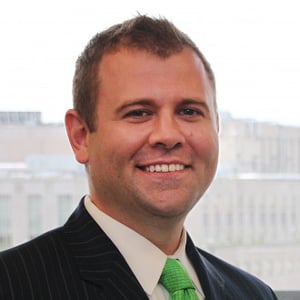
Partner, McCarter & English, LLP
Franklin Turner is a Partner and Co-Leader of the Government Contracts & Export Controls Practice Group. He is an innovative business lawyer with significant experience resolving complex government contracts issues for a broad array of companies – ranging from multinational Fortune 100 corporations to mid‑market and small businesses. Mr. Turner routinely represents clients in the aerospace, defense, information technology, health care and industrial supply sectors.
Mr. Turner’s multifaceted practice includes assisting companies with comprehensive claims for payment, prosecuting and defending bid protests, counseling companies regarding small business regulations and related issues, conducting internal investigations to ensure his clients’ compliance with federal procurement regulations and related statutes, preparing and submitting mandatory and voluntary disclosures, counseling prime contractors and subcontractors regarding disputes, defending companies against False Claims Act allegations, counseling companies regarding issues of cost allowability, allocability and reasonableness, designing and implementing comprehensive regulatory compliance programs, and assisting government contractors in connection with mergers and acquisitions due diligence.
Mr. Turner is a prolific author and lecturer and is routinely called upon by national and international news organizations to offer his insight regarding developments in the federal procurement industry.
Over the course of his career, Mr. Turner has represented clients in connection with disputes involving a multitude of federal government entities, including the: General Services Administration, Department of Homeland Security, Department of the Navy, Department of the Air Force, Department of the Army, Department of State, Department of Health and Human Services, Department of Justice, Department of the Interior, Department of the Coast Guard, National Aeronautics and Space Administration, Defense Information Systems Agency, National Reconnaissance Office, United States Postal Service, Defense Contract Audit Agency and Defense Contract Management Agency.
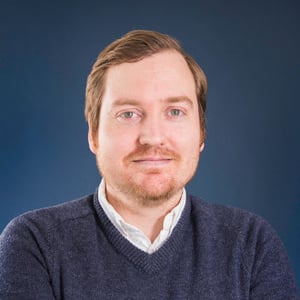
Vice President of Law & Policy, Property and Environment Research Center
Jonathan Wood is vice president of law and policy at the Property and Environment Research Center (PERC). An attorney, Jonathan has litigated environmental and property-rights cases in the Supreme Court of the United States, federal and state appellate courts, and trial courts across the country. His writing has appeared in the Wall Street Journal, Washington Post, National Review, Reason, and other outlets. And his research has been published in journals such as Environmental Law Reporter, Yale Journal on Regulation Notice & Comment, Pace Environmental Law Review, and California Western Law Review.
Prior to coming to PERC, Jonathan was a senior attorney at Pacific Legal Foundation, where he litigated cases concerning the Endangered Species Act, Clean Water Act, and other federal environmental laws. He was co-counsel for forest landowners in Weyerhaeuser Co. v. U.S. Fish and Wildlife Service, in which the Supreme Court ruled unanimously that private land could not be arbitrarily regulated as critical habitat under the ESA. He also led a successful effort to reform regulation of threatened species to better align the incentives of private landowners with the interests of rare species.
Jonathan has testified before several congressional committees on wildlife conservation and endangered species topics. He has also appeared on national television and radio, including NPR’s All Things Considered, C-Span’s Washington Journal, Stossel, Fox News, and Hill.TV.
Jonathan has a law degree from the New York University School of Law, a masters degree in economic policy from the London School of Economics, and a bachelor’s degree in economics from the University of Texas. He is on the executive committee for the Federalist Society’s Environmental Law and Property Rights Practice Group and a steering committee member for the Environmental Law Institute’s Emerging Leaders Initiative.
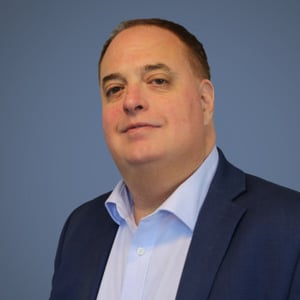
Director of the Center for Energy and Environment and Senior Fellow, Competitive Enterprise Institute
Daren Bakst is Director of the Competitive Enterprise Institute’s Center for Energy and Environment and a Senior Fellow. In this role, he manages, develops, and leads the coalition, advocacy, and research activities of the Center, which is one of the most effective advocates for Free Market Environmentalism.
Before joining CEI as Deputy Director in March, 2023, Daren was a Senior Research Fellow in Environmental Policy and Regulation at the Heritage Foundation, where he played a leading role in the launch of the organization’s new energy and environment center, and created and hosted the Heritage Foundation’s energy and environment podcast the “PowerCast.” During his decade at Heritage, Daren wrote about energy and environmental policy, food and agricultural policy (including editing and co-authoring the book Farms and Free Enterprise), regulation, and trade among other topics.
Daren also worked on environmental policy and regulation at the U.S. Chamber of Commerce, where he was a policy counsel and served as the executive to the association’s Government Oversight, Operations & Consumer Affairs committee, which was responsible for issues such as regulatory process reform. Daren has significant state level experience, working for seven years at the Raleigh, N.C.-based John Locke Foundation, one of the largest state-based, free-market think tanks. As director of legal and regulatory studies, his broad portfolio included energy and environmental policy, regulatory reform, and property rights.
Daren has testified numerous times before Congress, regularly submits comments to federal agencies and has appeared in or been quoted by a wide range of media outlets such as The Wall Street Journal, USA Today, The Washington Times, CNN, Fox Business News, Al-Jazeera America, and U.S. News and World Report. He is a member of the Federalist Society’s Environmental Law and Property Rights Executive Committee and serves on the College Level Advisory Board for Constituting America, an organization that informs and educates about the importance of the U.S. Constitution.
Daren, who hails from Florida, received his bachelor’s and master’s degrees from George Washington University. A licensed attorney, he holds a law degree from the University of Miami and a master of laws degree from American University.
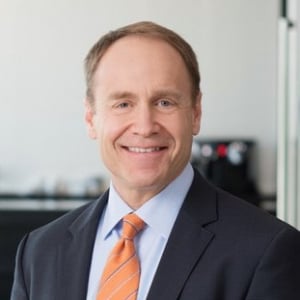
Partner, Bracewell LLP
Jeffrey Holmstead, former assistant administrator of the United States Environmental Protection Agency for Air and Radiation, is one of the nation’s leading climate change lawyers as recognized by Chambers USA (2008-2016) and heads the environmental strategies group (ESG) at Bracewell. The ESG is a multi-disciplinary group that includes environmental and energy attorneys, public policy advocates and strategic communications experts – most of whom have had high-level government experience. Under Jeffrey’s leadership, they work together on a daily basis to advise and defend companies and business groups confronting major environmental and energy-development challenges, both domestically and globally.
From his time in both the government and the private sector, Jeffrey is very familiar with the environmental and energy challenges facing the business community. He advises clients dealing with an increasingly complex regulatory, legal and public relations landscape, drawing on his experience in policy development, administrative and legislative advocacy, litigation and strategic communications. He has worked with clients in a number of industries on issues related to climate change, Clean Air Act policy and enforcement, and energy policy — including the development of new coal-fired power plants, refineries, renewable energy sources, and electric transmission infrastructure.
Jeffrey headed the EPA’s Office of Air and Radiation from 2001 to 2005, longer than anyone in EPA history. During his tenure, he was the architect of several of the agency’s most important initiatives, including the Clean Air Interstate Rule, the Clean Air Diesel Rule, the Mercury Rule for power plants and the reform of the New Source Review program. He also oversaw the development of the Bush Administration’s Clear Skies Legislation and key parts of its Global Climate Change Initiative. Between 1989 and 1993, Jeffrey served on the White House Staff as Associate Counsel to former President George H.W. Bush. In that capacity, he was involved in the passage of the Clean Air Act Amendments of 1990 and the key steps taken to implement those amendments. From 1987 to 1988, he served as a law clerk to Judge Douglas H. Ginsburg on the U.S. Court of Appeals for the District of Columbia.
He received his B.A. from Brigham Young University, summa cum laude, and his J.D. from Yale Law School.

Partner, Donahue & Goldberg LLP
Megan M. Herzog is a Massachusetts-based attorney whose practice is focused on environmental, natural resources, and energy litigation and administrative advocacy. She is a member of the bar of the Commonwealth of Massachusetts, and practices in state and federal appellate courts.
Megan is a 2011 graduate of Stanford Law School, where she was Co-Editor-in-Chief of the Journal of Law, Science & Policy. She also holds an M.S. in Environment and Resources from Stanford University. Megan began her legal career with fellowships at the Environmental Law Institute in Washington, D.C. and at UCLA Law School's Emmett Institute on Climate Change and the Environment, where she advised state and local governments on climate change mitigation and adaptation policy. From 2016 to 2018, she served as staff attorney at Conservation Law Foundation's Boston office, where she worked on clean energy, ocean, and fisheries matters, including litigation in federal courts and before state public utilities commissions. Megan then spent nearly five years in the Massachusetts Office of the Attorney General, Energy and Environment Bureau, advocating before federal agencies and litigating cases concerning state and federal air, climate, energy, and natural resources laws. She led state government coalitions in several actions in the U.S. Supreme Court and the U.S. Court of Appeals for the D.C. Circuit, and before the Federal Energy Regulatory Commission.
Megan has published on a variety of environmental law topics, including climate change adaptation and federal regulation of greenhouse gas emissions. She has taught courses in environmental law, climate law, and ocean and coastal law at UCLA Law School and Tufts University. She has testified before legislative committees and given dozens of presentations on critical issues in environmental law, including for the American Law Institute, Energy Bar Association, California State Bar Association Environmental Law Section, and multiple law review symposia.
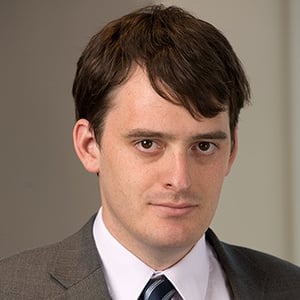
Head of Tech & Innovation, Centre for Policy Studies
Matthew Feeney is Head of Tech & Innovation at Centre for Policy Studies. Before joining CPS, Matthew was the director of Cato Institute’s Project on Emerging Technologies. His writing has appeared in The New York Times, The Washington Post, City A.M., and others. He received both his BA and MA in philosophy from the University of Reading.
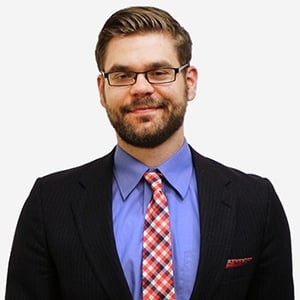
Senior Research Fellow, Center for Growth and Opportunity
William Rinehart is a Senior Research Fellow at the Center for Growth and Opportunity at Utah State University.
He specializes in telecommunication, Internet, and data policy, with a focus on emerging technologies and innovation. His work has appeared in The Wall Street Journal, Bloomberg, Wired, Morning Consult, The Hill, Forbes, Reason, Marginal Revolution, Overlawyered, and on BBC Radio and NPR, just to name a few. Rinehart speaks regularly on topics related to tech policy and has been cited in regulatory orders from the FCC as well as Supreme Court petitions.
Rinehart came to the Center from the American Action Forum, where he served as Director of Technology and Innovation Policy. He was also previously a Research Fellow at TechFreedom and the Director of Operations at the International Center for Law & Economics. Additionally, he worked for the Institute for Policy and Civic Engagement as the Research Assistant in Technology and Civic Engagement. Rinehart is currently a Frédéric Bastiat Fellow at the Mercatus Center and previously a Fellow at the Internet Law & Policy Foundry. Additionally, he served on the Federal Communications Commission’s Broadband Deployment Committee and Consumer Advocacy Committee.
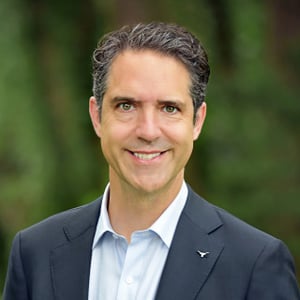
James A. Baker III Chair in the Rule of Law and World Affairs and Associate Dean for Academic Affairs, The University of Texas at Austin School of Law
Bobby Chesney holds the James Baker Chair and also serves as the Associate Dean for Academic Affairs at the University of Texas School of Law. In addition, he is the Director of the Robert S. Strauss Center for International Security and Law, a University-wide research unit bridging across disciplines to improve understanding of international security issues.
In 2009, Professor Chesney served in the Justice Department in connection with the Detention Policy Task Force created by Executive Order 13493. He also previously served the Intelligence Community as an associate member of the Intelligence Science Board and as a member of the Advanced Technology Board. In addition to his current positions at the University of Texas, he is a member of the American Law Institute, and a senior editor for the Journal of National Security Law & Policy, and a former non-resident Senior Fellow of the Brookings Institution.
Professor Chesney is a co-founder and contributor to www.lawfareblog.com, the leading source for analysis, commentary, and news relating to law and national security. In addition to his blogging at Lawfare, those interested in national security law should consider following Professor Chesney on Twitter (@bobbychesney) as well as subscribing to the National Security Law Podcast (which he co-hosts with his colleague Steve Vladeck). Professor Chesney's scholarship focuses on U.S. national security policies and institutions, encompassing both domestic and international law issues. His articles may be downloaded from SSRN here.
Professor Chesney is a magna cum laude graduate of both Texas Christian University and Harvard Law School. After law school he clerked for the Honorable Lewis A. Kaplan of the United States District Court for the Southern District of New York and the Honorable Robert D. Sack of the United States Court of Appeals for the Second Circuit. He then practiced with the firm Davis Polk & Wardwell in New York (litigation), before beginning his academic career with Wake Forest University School of Law. There he received a teacher of the year award from the student body in one year, and from the school's dean in another. In 2008 he came to the University of Texas School of Law as a visiting professor, and then joined UT on a permanent basis in 2009. He became the Associate Dean for Academic Affairs in 2011.
Professor Chesney teaches a variety of courses, including: Constitutional Law, National Security Law, Foundations of Cybersecurity: Law, Institutions, and Policy; Law of the Intelligence Community; History of U.S. Counterterrorism Law & Policy: 1970 to Present; Evidence, Civil Procedure, and an array of seminars. He is from San Antonio.
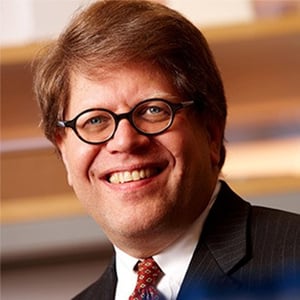
Faculty Fellow, Center for Law, Science & Innovation, Sandra Day O'Connor College of Law, Arizona State University
Dr. Klein is a Faculty Fellow at the Center for Law, Science & Innovation at the Sandra Day O'Connor College of Law at Arizona State University. He is also Principal at Roger D. Klein, MD JD Consulting and Klein & Klein Co., L.P.A. He was formerly Chief Medical Officer at OmniSeq, an oncology focused genomic profiling company that was recently acquired by LabCorp. Previously, Roger was the Medical Director at the Molecular Oncology division at the Cleveland Clinic. He was also the Chair of the Professional Relations Committee at the Association for Molecular Pathology. Prior to joining the Cleveland Clinic, he served as Medical Director of Molecular Oncology at the BloodCenter of Wisconsin where he led the center’s Diagnostic Laboratories’ initiative focused on DNA- and RNA-based testing for evaluation of cancer patients.
Dr. Klein has been an advisor to the Department of Health and Human Services (HHS), the Food and Drug Administration (FDA), the Centers for Medicare and Medicaid Services (CMS), and the Centers for Disease Control and Prevention (CDC). He has participated in and assumed leadership roles in many professional society committees and corporate advisory boards and is a policy advisor to the Heartland Institute.
Dr. Klein is licensed to practice medicine in Ohio, Florida, and Wisconsin. Additionally, he is licensed to practice law in the District of Columbia and Ohio. Roger obtained his Molecular Genetic Pathology certification at Mayo Medical School following completion of his M.D. Yale University School of Medicine. He obtained his J.D. from Yale Law School.
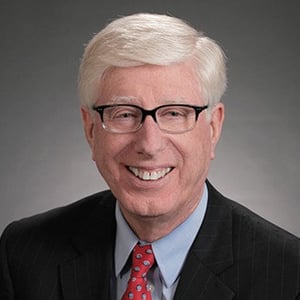
Attorney General, Iowa
Attorney General Tom Miller is serving in his 10th four-year term as Attorney General of Iowa. He is the longest currently serving attorney general in the nation.
He was born in Dubuque on August 11, 1944, the son of the late Elmer and Betty Miller. Tom Miller grew up in Dubuque, where his father was the longtime county assessor and an inspiration for Tom's early interest in public service. He graduated from Wahlert High School in 1962 and Loras College in 1966, and received his law degree from Harvard Law School in 1969.
After law school, Mr. Miller served as a VISTA volunteer in Baltimore, Maryland, for two years, and then as legislative assistant to U.S. Representative John C. Culver (D-IA). He returned to the Baltimore Legal Aid Bureau as legal education director, and he also taught part-time at the Maryland School of Law.
In 1973, Mr. Miller returned to live in Iowa. He opened a law practice in McGregor in northeast Iowa and served as city attorney of McGregor and Marquette.
Attorney General Miller has served in office since he was first elected in 1978, except for four years (1991-94) when he was in private practice.

Psychiatrist and Lecturer, Yale University School of Medicine
Dr. Sally Satel is a resident scholar at AEI and the staff psychiatrist at a local methadone clinic in D.C. Dr. Satel was an assistant professor of psychiatry at Yale University from 1988 to 1993 and remains a lecturer at Yale. From 1993 to 1994 she was a Robert Wood Johnson policy fellow with the Senate Labor and Human Resources Committee.
She has written widely in academic journals on topics in psychiatry and medicine, and has published articles on cultural aspects of medicine and science in numerous magazines and journals. She has testified before Congress on veterans’ issues, mental health policy, drug courts, and health disparities.
Dr. Satel is author of Drug Treatment: The Case for Coercion (AEI Press, 1999), and PC, M.D.: How Political Correctness Is Corrupting Medicine (Basic Books, 2001). She is coauthor of One Nation under Therapy (St. Martin’s Press, 2005), co-author of The Health Disparity Myth (AEI Press, 2006), and editor of When Altruism Isn’t Enough: The Case for Compensating Kidney Donors (AEI Press, 2009). Her recent book, co-authored with Emory psychologist Scott Lilienfeld is Brainwashed: The Seductive Appeal of Mindless Neuroscience (Basic, 2013). Brainwashed was a finalist for the 2013 Los Angeles TimesBook Prize in Science.
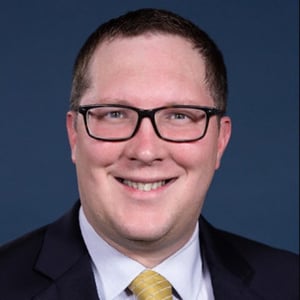
Attorney, Pacific Legal Foundation
Luke A. Wake is an attorney at the Pacific Legal Foundation. Prior to joining PLF, he was a senior staff attorney at the NFIB Small Business Legal Center.
Wake has particular expertise on environmental and land use issues, and has worked on numerous other constitutional issues and matters of importance to small business owners. He is an ardent defender of private property rights, which he believes are essential to the free enterprise system and the foundation of American liberty. As a strong advocate of individual rights and economic liberties, he has built his career defending small business interests.
Wake has focused on a whole host of issues, from employment law matters to regulatory compliance. In addition to serving as a resource for small business owners, Wake is committed to ensuring that the voice of small business is heard in the nation’s courts. As an appellate practitioner, Wake has focused particularly on informing the courts on matters of administrative law and on issues under the Fifth Amendment’s Takings Clause. He is also working to advance small business interests in law review articles, and was recently published in the Berkeley Journal of Law & Ecology. See R.S. Radford & Luke A. Wake, Deciphering and Extrapolating: Searching for Sense in Penn Central, 38 Ecology L.Q. 731, 746-747 (2011).
Before joining the Legal Center’s team, Wake completed a prestigious two-year fellowship as an attorney in the Pacific Legal Foundation’s College of Public Interest Law. Wake is a graduate of Case Western Reserve University School of Law in Cleveland Ohio, and is a member of the California Bar. He completed his undergraduate studies at Elon University in North Carolina in 2006 where he focused on political theory and corporate communications.
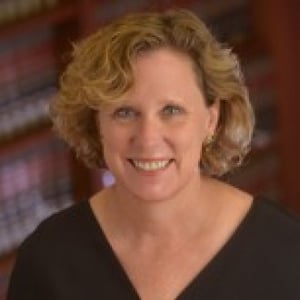
Shirley Shapiro Professor of Environmental Law and Faculty Co-Director of the Emmett Institute on Climate Change and the Environment, UCLA School of Law
Ann Carlson is the Shirley Shapiro Professor of Environmental Law and the Faculty Co-Director of the Emmett Institute on Climate Change and the Environment at UCLA School of Law. She is a leading scholar of climate change and air pollution law and policy, the co-author of a top casebook on Environmental Law (with Dan Farber and William Boyd), and the co-editor, with Dallas Burtraw, of a book from Cambridge University Press, Lessons from the Clean Air Act: Building Durability and Flexibility into U.S. Climate and Energy Policy. She has published numerous articles in leading law reviews, including California, Harvard, Michigan, Northwestern, and UCLA. Carlson is currently serving as the Speaker of the California Assembly’s representative to the Independent Emissions Market Advisory Committee. She is a frequent media commentator and blogs at Legal Planet. She is the recipient of the UCLA Distinguished Teaching Award, the Eby Award for the Art of Teaching and the Rutter Award for Excellence in Teaching, and is the 2017 University of California Sustainability Champion. Carlson is a magna cum laude graduate of both UC Santa Barbara and Harvard Law School.
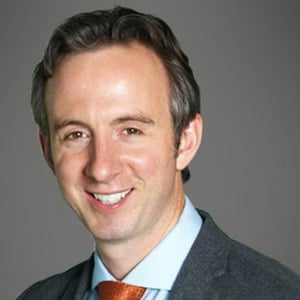
Professor of Law, University of Minnesota Law School
Professor James W. Coleman is a scholar of energy law. He specializes in North American energy infrastructure, transport, and trade. He is also a nonresident senior fellow at the American Enterprise Institute focused on energy policy.
Professor Coleman has testified before Congress on steps to speed up energy infrastructure permits. He also worked with a team of experts as part of Alberta's Royalty Review to revise the Canadian province's management of its vast oil and gas resources.
Before joining Minnesota, Professor Coleman taught at Southern Methodist University's Dedman School of Law, the University of Calgary’s law and business schools, and Harvard Law School. Earlier, he practiced environmental and appellate law at Sidley Austin in Washington, D.C., and clerked for the Honorable Steven M. Colloton of the U.S. Court of Appeals for the Eighth Circuit.
Professor Coleman received two degrees from Harvard University—a J.D. (cum laude) and B.A. in biology (magna cum laude with highest honors in the field). As a result of his undergraduate thesis on butterfly genetics, which required fieldwork in Central Asia, a species of lycaenid butterfly was named after him—Agrodiaetus ripartii colemani.

Topics
Key Points in the Treasury's Fannie/Freddie Paper
The important parts of the Treasury's new paper on Fannie and Freddie reform are not...
DoD’s Supply Chain in the Crosshairs: Is the Regulatory Process Being Evaded to Satisfy DoD Concerns About Cybersecurity Breaches by its Contractors?
Daniel J. Kelly, Alexander Major, Franklin Turner
Adopting safeguards to protect contractor information systems and reporting breach incidents have been part of...
Deep Dive Episode 67 – The New Endangered Species Act Regulations
Jonathan Wood, Daren Bakst
Regulatory Transparency Project's Fourth Branch Podcast
The Endangered Species Act has been credited with preventing extinctions but criticized for failing to...
Topics
We Three Kings: Lacking Representation in Index Fund Corporate Governance
Do you know who the largest investor in 9 out of 10 public companies is?...
Explainer Episode 3 – EPA's New Clean Air Act Rules
Jeffrey Holmstead, Megan Herzog
Regulatory Transparency Project's Fourth Branch Podcast
In this episode, Jeff Holmstead and Megan Herzog discuss the recent rule change from the...
Tech Roundup Episode 1 – The Brave New World of Deep Fakes
Matthew Feeney, William Rinehart, Robert Chesney
Regulatory Transparency Project's Fourth Branch Podcast
In this inaugural Tech Roundup podcast, experts discuss various questions raised by "deep fake" technology,...
Topics
Climate and the Courts: Juliana Oral Arguments
How much can the federal courts do on a climate change? If you want more...
E-Cigarettes: Smoke & Mirrors
Roger D. Klein, Tom Miller, Sally Satel
Regulatory Transparency Project's Fourth Branch Video
In this Fourth Branch video, legal and healthcare experts debate how federal and state agencies...
Explainer Episode 2 – The Dynamex Decision and its Implications for Independent Contractors
Luke A. Wake
Regulatory Transparency Project's Fourth Branch Podcast
In 2018, the California Superior Court announced a new test for determining whether a worker...
Explainer Episode 1 – The Green New Deal
Ann Carlson, James W. Coleman
Regulatory Transparency Project's Fourth Branch Podcast
In this inaugural episode of the Regulatory Transparency Project's Explainer podcast series, Ann Carlson and...