
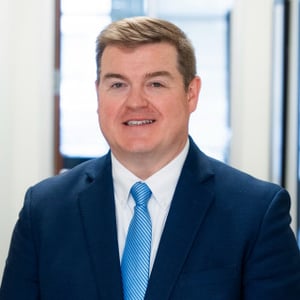
Vice President, Networks, The Federalist Society for Law and Public Policy Studies
Nathan Kaczmarek is Vice President for Networks at the Federalist Society. He began his legal career in Detroit representing nationwide clients in all phases of healthcare litigation and complex medical malpractice claims. He has since served as a Senior Legal and Policy Advisor in the U.S. House of Representatives and as Counsel for the Subcommittee on Regulatory Affairs and Federal Management in the U.S. Senate. Prior to overseeing the Networks, he was Director of the Practice Groups, the Regulatory Transparency Project, and the Article I Initiative for the Federalist Society.
Nathan holds degrees from Hillsdale College and Thomas M. Cooley Law School. He is a Liaison Representative for The Administrative Conference of the United States. He also serves as Vice President of the Associates of St. John Bosco, a Virginia based non-profit dedicated to Catholic high school and college students.
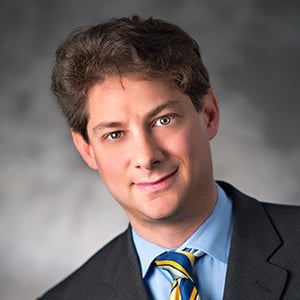
Fellow in Economic Studies and Policy Director, Center on Regulation and Markets, Brookings Institution
Aaron Klein is a fellow in Economic Studies at the Brookings Institution, where he also serves as policy director of the Center on Regulation and Markets. He focuses on financial regulation and technology, macroeconomics, and infrastructure finance and policy. Previously, Klein directed the Bipartisan Policy Center’s Financial Regulatory Reform Initiative. Klein served as Deputy Assistant Secretary for Economic Policy at the U.S. Treasury Department from 2009-2012. While at Treasury, Klein worked on multiple issues ranging from implementing aspects of the financial recovery program to developing new policy for financial regulation, housing finance, transportation and infrastructure, and Native American issues.
Prior to his appointment, he served as Chief Economist of the Senate Banking, Housing and Urban Affairs Committee for Chairmen Chris Dodd (D-CT) and Paul Sarbanes (D-MD). While working in the Senate Klein played a key role in a series of major legislation including, the Economic Emergency Stabilization Act of 2008 (better known as TARP), the Housing and Economic Recovery Act of 2008, the SAFETEA Act of 2005 that re-wrote America's surface transportation policy, the Check Truncation Act of 2003, the Terrorism Risk Insurance Act of 2002, and the Sarbanes-Oxley Act of 2002. A graduate of Dartmouth College and Princeton University, Klein lives in his hometown of Silver Spring, MD with his wife and two daughters.
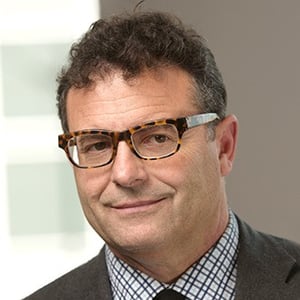
Senior Fellow and Director, Center for Monetary and Financial Alternatives, Cato Institute
George Selgin is a senior fellow and director of the Center for Monetary and Financial Alternatives at the Cato Institute and Professor Emeritus of Economics at the University of Georgia. He is the author of The Theory of Free Banking (Rowman & Littlefield, 1988), Bank Deregulation and Monetary Order (Routledge, 1996), Good Money: Birmingham Button Makers, the Royal Mint, and the Beginnings of Modern Coinage (University of Michigan Press, 2008), Money: Free and Unfree (The Cato Institute, 2015), Less Than Zero: The Case for a Falling Price Level in a Growing Economy (The Cato Institute, 2018), and Floored! How a Misguided Fed Experiment Deepened and Prolonged the Great Recession (The Cato Institute 2018). Selgin holds a B.A. in economics and zoology from Drew University, and a Ph.D. in economics from New York University.
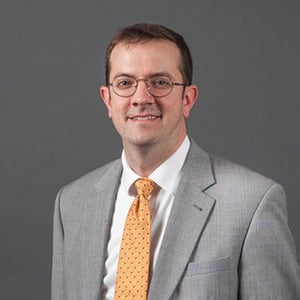
Associate Professor of Law, Antonin Scalia Law School, George Mason University
Associate Professor of Law J.W. Verret joined the Antonin Scalia Law School, George Mason University faculty in 2008. In 2013, he took leave for two years to serve as the Chief Economist and Senior Counsel for the U.S. House Committee on Financial Services. He received his JD and MA in Public Policy from Harvard Law School and the Harvard Kennedy School of Government, respectively, in 2006. While in law school, Professor Verret served an Olin Fellowship in Law and Economics at the Harvard Program on Corporate Governance under the guidance of Prof. Lucian Bebchuk.
Professor Verret then served as a law clerk for Vice-Chancellor John W. Noble of the Delaware Court of Chancery. Prior to joining the faculty at Scalia Law, Professor Verret was an associate in the SEC Enforcement Defense Practice Group at Skadden, Arps in Washington, D.C. He has written extensively on corporate law topics, including Delaware's Guidance, co-written with Chief Justice Myron T. Steele of the Delaware Supreme Court. His academic work has been featured in the Yale Journal on Regulation, The Business Lawyer, the Delaware Journal of Corporate Law, the Stanford Law Review, the University of Pennsylvania Journal of Business Law, and the Virginia Law and Business Review. Professor Verret was selected by the Northwestern Law School Searle Center on Law, Regulation, and Economic Growth for a 2009-2010 Searle-Kaufmann Research Fellowship.
Professor Verret is also a Senior Scholar at the Mercatus Center Working Group on Financial Markets, where he regularly briefs Congressional staff, members of Congress, SEC Commissioners and other financial regulatory agencies on financial regulation topics. He also directs the Corporate Federalism Initiative, where he obtains research grants for a network of students and faculty scholars who study the division between states and the federal government as sources of corporate law. Professor Verret has been invited to testify before various House and Senate Committees four times during the financial crisis of 2009 regarding all of the central provisions of the Obama Administration's 2009 financial regulatory reform proposals. For a full list of Professor Verret's C-Span appearances, including testimony before the U.S. House of Representatives and the U.S. Senate, see http://www.c-spanvideo.org/jwverret.
Professor Verret has been an invited panelist for various television appearances, including an interview on The NewsHour with Jim Lehrer. Professor Verret has been quoted in various media on financial regulation and corporate law topics, including the New York Times, CNN Money, the CNN Political Ticker, CNBC, ABC News, Investor's Business Daily, ESPN.com, The American Banker, The American Lawyer, The Huffington Post, CBS.com, and AP News. Professor Verret's op-eds have been featured in Forbes, The Chicago Tribune, The Orange County Register, and The Wall Street Journal. Professor Verret is also a regular guest contributor to three of the most noted corporate law and financial regulation law blogs: the Harvard Law School Corporate Governance and Financial Regulation Forum, Deallawyers.com, and The Conglomerate.
Chief Counsel, Constitutional Accountability Center
Brianne is Constitutional Accountability Center’s Chief Counsel. Brianne joined CAC from private practice at O'Melveny & Myers (OMM), where she was Counsel in the firm’s Supreme Court and appellate practice. From 2009-11, prior to joining OMM, Brianne was an Attorney-Adviser in the Office of Legal Counsel at the U.S. Department of Justice. She also served as a law clerk for Justice Stephen Breyer on the U.S. Supreme Court, a law clerk for Judge Robert A. Katzmann on the U.S. Court of Appeals for the Second Circuit, and a law clerk for Judge Jed S. Rakoff on the U.S. District Court for the Southern District of New York. Brianne’s academic writings have appeared in the Yale Law Journal, the Duke Law Journal, the Northwestern University Law Review, the Washington Law Review, the American University Law Review, and the Yale Law & Policy Review. Brianne received her J.D. from Yale Law School and her M.A./B.S. from Emory University. Her master's thesis in political science examined judicial behavior on the U.S. Supreme Court.
Partner, BakerHostetler, Adjunct Fellow, The Manhattan Institute
Andrew Grossman leads BakerHostetler’s Appellate and Major Motion team. He has appeared before the U.S. Supreme Court, nearly all the federal courts of appeals, as well as some state appellate courts, litigating high-profile and complex commercial, administrative and constitutional issues.
Andrew works with practice groups across BakerHostetler to identify and tackle complex issues, advise on administrative law and strategy, tee up issues for appeal and tackle appeals. He has developed and implemented litigation and administrative strategies for clients in several fields and industries.
In addition to his practice, Andrew advises members of Congress on matters of constitutional and administrative law, having testified more than a dozen times before the House and Senate Judiciary Committees. He has been a frequent legal commentator on radio and television, having appeared on Fox News, CNN, MSNBC, CNBC, NPR and its affiliates, CBN and elsewhere. His legal commentary has also appeared in dozens of magazines and newspapers, including The Wall Street Journal, USA Today, The Washington Post, The Washington Times and many others.
Andrew is a Senior Legal Fellow at the Buckeye Institute, an Adjunct Fellow the Manhattan Institute and a member of the leadership of the Federalist Society. He previously served as an adjunct scholar at the Cato Institute’s Robert A. Levy Center for Constitutional Studies and a legal fellow at the Heritage Foundation’s Meese Center for Legal and Judicial Studies. He clerked for Judge Edith H. Jones on the U.S. Court of Appeals for the Fifth Circuit.
Partner, Bracewell LLP
Jeffrey Holmstead, former assistant administrator of the United States Environmental Protection Agency for Air and Radiation, is one of the nation’s leading climate change lawyers as recognized by Chambers USA (2008-2016) and heads the environmental strategies group (ESG) at Bracewell. The ESG is a multi-disciplinary group that includes environmental and energy attorneys, public policy advocates and strategic communications experts – most of whom have had high-level government experience. Under Jeffrey’s leadership, they work together on a daily basis to advise and defend companies and business groups confronting major environmental and energy-development challenges, both domestically and globally.
From his time in both the government and the private sector, Jeffrey is very familiar with the environmental and energy challenges facing the business community. He advises clients dealing with an increasingly complex regulatory, legal and public relations landscape, drawing on his experience in policy development, administrative and legislative advocacy, litigation and strategic communications. He has worked with clients in a number of industries on issues related to climate change, Clean Air Act policy and enforcement, and energy policy — including the development of new coal-fired power plants, refineries, renewable energy sources, and electric transmission infrastructure.
Jeffrey headed the EPA’s Office of Air and Radiation from 2001 to 2005, longer than anyone in EPA history. During his tenure, he was the architect of several of the agency’s most important initiatives, including the Clean Air Interstate Rule, the Clean Air Diesel Rule, the Mercury Rule for power plants and the reform of the New Source Review program. He also oversaw the development of the Bush Administration’s Clear Skies Legislation and key parts of its Global Climate Change Initiative. Between 1989 and 1993, Jeffrey served on the White House Staff as Associate Counsel to former President George H.W. Bush. In that capacity, he was involved in the passage of the Clean Air Act Amendments of 1990 and the key steps taken to implement those amendments. From 1987 to 1988, he served as a law clerk to Judge Douglas H. Ginsburg on the U.S. Court of Appeals for the District of Columbia.
He received his B.A. from Brigham Young University, summa cum laude, and his J.D. from Yale Law School.
Professor of Law and Executive Director, Law and Economics Center, Antonin Scalia Law School, George Mason University
Donald Kochan is Professor of Law and Executive Director of the Law & Economics Center (LEC). Professor Kochan is an elected member of the American Law Institute (ALI) and serves as an Adviser to ALI's Restatement of the Law Fourth, Property project. Professor Kochan is a Nonresident Scholar at the Center for the Constitution at Georgetown University Law Center, where he was a Visiting Scholar in residence during Fall 2018. Before joining the Antonin Scalia Law School faculty, he was the Parker S. Kennedy Professor in Law at Chapman University’s Dale E. Fowler School of Law from 2004 to 2020. From 2003 to 2004, Professor Kochan was an Olin Fellow at the University of Virginia School of Law. During 2002-2003, he was a Visiting Assistant Professor of Law at George Mason’s Scalia Law School.
Professor Kochan’s scholarship focuses on areas of property law, constitutional law, administrative law, local government law, natural resources and environmental law, and law & economics. He has published several books and more than 50 scholarly articles and essays in well-regarded law journals. His work has been cited in more than a dozen state and federal court opinions, in more than 75 briefs filed in state and federal courts including more than 25 filed in the U.S. Supreme Court, in dozens of books and treatises, and in more than 800 scholarly articles.
Professor Kochan received his JD from Cornell Law School, where he was a John M. Olin Scholar in Law and Economics and managing editor of the Cornell International Law Journal. During law school, he also served as editor and executive editor of the Harvard Journal of Law & Public Policy symposium issues in 1997 and 1998. He received his BA from Western Michigan University, magna cum laude, with majors in both political science and philosophy, where he studied as the John W. Gill Medallion Scholar and was honored as the Presidential Scholar (awarded to the top graduate in the political science department).
After graduating from law school, Professor Kochan was a law clerk to The Honorable Richard F. Suhrheinrich of the United States Court of Appeals for the Sixth Circuit. Following his clerkship, Professor Kochan was an associate with the firm of Crowell & Moring LLP in Washington, D.C., where he specialized in natural resources & environmental law as well as tort, products, and consumer civil litigation & legislative affairs.
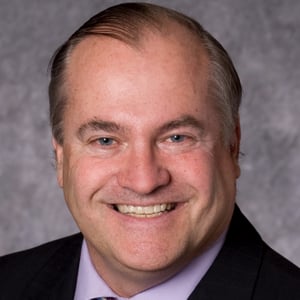
Robert F. Stanton Professor of Law, University of Maryland Carey School of Law
Robert V. Percival is the Robert F. Stanton Professor of Law and the Director of the Environmental Law Program at the University of Maryland School of Law. He received a B.A. summa cum laude from Macalester College, a J.D. from Stanford Law School and an M.A. in economics from Stanford University. At Stanford Percival was named the Nathan Abbott Scholar for graduating first in his law school class. Following graduation, he served as a law clerk for Judge Shirley M. Hufstedler of the U.S. Court of Appeals for the Ninth Circuit and for U.S. Supreme Court Justice Byron R. White. He joined the Maryland faculty in 1987 after serving as a senior attorney for the Environmental Defense Fund. Percival has served as a visiting professor of law at Harvard Law School, Georgetown University Law Center, the China University of Political Science and Law (Beijing), and Comenius University (Bratislava). He is the principal author of a leading environmental law casebook, now in its 9th edition, and the author of several articles about the Supreme Court and presidential authority over executive agencies. Percival wrote one of the first articles on the propriety of consent decrees to effectuate and enforce federal law “The Bounds of Consent: Consent Decrees, Settlements and Federal Environmental Policymaking,” 1987 Univ. Chic. Leg. F. 327 (1987). He also is the author of the first comprehensive analyses of what the papers of the late Justices Thurgood Marshall and Harry Blackmun reveal about the Supreme Court’s handling of environmental cases (“Environmental Law in the Supreme Court: Highlights from the Blackmun Papers,” 35 ELR 10637 (2005), and “Environmental Law in the Supreme Court: Highlights from the Marshall Papers,” 13 ELR 10606 (Oct. 1993)).
Chief Counsel, Constitutional Accountability Center
Brianne is Constitutional Accountability Center’s Chief Counsel. Brianne joined CAC from private practice at O'Melveny & Myers (OMM), where she was Counsel in the firm’s Supreme Court and appellate practice. From 2009-11, prior to joining OMM, Brianne was an Attorney-Adviser in the Office of Legal Counsel at the U.S. Department of Justice. She also served as a law clerk for Justice Stephen Breyer on the U.S. Supreme Court, a law clerk for Judge Robert A. Katzmann on the U.S. Court of Appeals for the Second Circuit, and a law clerk for Judge Jed S. Rakoff on the U.S. District Court for the Southern District of New York. Brianne’s academic writings have appeared in the Yale Law Journal, the Duke Law Journal, the Northwestern University Law Review, the Washington Law Review, the American University Law Review, and the Yale Law & Policy Review. Brianne received her J.D. from Yale Law School and her M.A./B.S. from Emory University. Her master's thesis in political science examined judicial behavior on the U.S. Supreme Court.
Partner, BakerHostetler, Adjunct Fellow, The Manhattan Institute
Andrew Grossman leads BakerHostetler’s Appellate and Major Motion team. He has appeared before the U.S. Supreme Court, nearly all the federal courts of appeals, as well as some state appellate courts, litigating high-profile and complex commercial, administrative and constitutional issues.
Andrew works with practice groups across BakerHostetler to identify and tackle complex issues, advise on administrative law and strategy, tee up issues for appeal and tackle appeals. He has developed and implemented litigation and administrative strategies for clients in several fields and industries.
In addition to his practice, Andrew advises members of Congress on matters of constitutional and administrative law, having testified more than a dozen times before the House and Senate Judiciary Committees. He has been a frequent legal commentator on radio and television, having appeared on Fox News, CNN, MSNBC, CNBC, NPR and its affiliates, CBN and elsewhere. His legal commentary has also appeared in dozens of magazines and newspapers, including The Wall Street Journal, USA Today, The Washington Post, The Washington Times and many others.
Andrew is a Senior Legal Fellow at the Buckeye Institute, an Adjunct Fellow the Manhattan Institute and a member of the leadership of the Federalist Society. He previously served as an adjunct scholar at the Cato Institute’s Robert A. Levy Center for Constitutional Studies and a legal fellow at the Heritage Foundation’s Meese Center for Legal and Judicial Studies. He clerked for Judge Edith H. Jones on the U.S. Court of Appeals for the Fifth Circuit.
Partner, Bracewell LLP
Jeffrey Holmstead, former assistant administrator of the United States Environmental Protection Agency for Air and Radiation, is one of the nation’s leading climate change lawyers as recognized by Chambers USA (2008-2016) and heads the environmental strategies group (ESG) at Bracewell. The ESG is a multi-disciplinary group that includes environmental and energy attorneys, public policy advocates and strategic communications experts – most of whom have had high-level government experience. Under Jeffrey’s leadership, they work together on a daily basis to advise and defend companies and business groups confronting major environmental and energy-development challenges, both domestically and globally.
From his time in both the government and the private sector, Jeffrey is very familiar with the environmental and energy challenges facing the business community. He advises clients dealing with an increasingly complex regulatory, legal and public relations landscape, drawing on his experience in policy development, administrative and legislative advocacy, litigation and strategic communications. He has worked with clients in a number of industries on issues related to climate change, Clean Air Act policy and enforcement, and energy policy — including the development of new coal-fired power plants, refineries, renewable energy sources, and electric transmission infrastructure.
Jeffrey headed the EPA’s Office of Air and Radiation from 2001 to 2005, longer than anyone in EPA history. During his tenure, he was the architect of several of the agency’s most important initiatives, including the Clean Air Interstate Rule, the Clean Air Diesel Rule, the Mercury Rule for power plants and the reform of the New Source Review program. He also oversaw the development of the Bush Administration’s Clear Skies Legislation and key parts of its Global Climate Change Initiative. Between 1989 and 1993, Jeffrey served on the White House Staff as Associate Counsel to former President George H.W. Bush. In that capacity, he was involved in the passage of the Clean Air Act Amendments of 1990 and the key steps taken to implement those amendments. From 1987 to 1988, he served as a law clerk to Judge Douglas H. Ginsburg on the U.S. Court of Appeals for the District of Columbia.
He received his B.A. from Brigham Young University, summa cum laude, and his J.D. from Yale Law School.
Professor of Law and Executive Director, Law and Economics Center, Antonin Scalia Law School, George Mason University
Donald Kochan is Professor of Law and Executive Director of the Law & Economics Center (LEC). Professor Kochan is an elected member of the American Law Institute (ALI) and serves as an Adviser to ALI's Restatement of the Law Fourth, Property project. Professor Kochan is a Nonresident Scholar at the Center for the Constitution at Georgetown University Law Center, where he was a Visiting Scholar in residence during Fall 2018. Before joining the Antonin Scalia Law School faculty, he was the Parker S. Kennedy Professor in Law at Chapman University’s Dale E. Fowler School of Law from 2004 to 2020. From 2003 to 2004, Professor Kochan was an Olin Fellow at the University of Virginia School of Law. During 2002-2003, he was a Visiting Assistant Professor of Law at George Mason’s Scalia Law School.
Professor Kochan’s scholarship focuses on areas of property law, constitutional law, administrative law, local government law, natural resources and environmental law, and law & economics. He has published several books and more than 50 scholarly articles and essays in well-regarded law journals. His work has been cited in more than a dozen state and federal court opinions, in more than 75 briefs filed in state and federal courts including more than 25 filed in the U.S. Supreme Court, in dozens of books and treatises, and in more than 800 scholarly articles.
Professor Kochan received his JD from Cornell Law School, where he was a John M. Olin Scholar in Law and Economics and managing editor of the Cornell International Law Journal. During law school, he also served as editor and executive editor of the Harvard Journal of Law & Public Policy symposium issues in 1997 and 1998. He received his BA from Western Michigan University, magna cum laude, with majors in both political science and philosophy, where he studied as the John W. Gill Medallion Scholar and was honored as the Presidential Scholar (awarded to the top graduate in the political science department).
After graduating from law school, Professor Kochan was a law clerk to The Honorable Richard F. Suhrheinrich of the United States Court of Appeals for the Sixth Circuit. Following his clerkship, Professor Kochan was an associate with the firm of Crowell & Moring LLP in Washington, D.C., where he specialized in natural resources & environmental law as well as tort, products, and consumer civil litigation & legislative affairs.
Robert F. Stanton Professor of Law, University of Maryland Carey School of Law
Robert V. Percival is the Robert F. Stanton Professor of Law and the Director of the Environmental Law Program at the University of Maryland School of Law. He received a B.A. summa cum laude from Macalester College, a J.D. from Stanford Law School and an M.A. in economics from Stanford University. At Stanford Percival was named the Nathan Abbott Scholar for graduating first in his law school class. Following graduation, he served as a law clerk for Judge Shirley M. Hufstedler of the U.S. Court of Appeals for the Ninth Circuit and for U.S. Supreme Court Justice Byron R. White. He joined the Maryland faculty in 1987 after serving as a senior attorney for the Environmental Defense Fund. Percival has served as a visiting professor of law at Harvard Law School, Georgetown University Law Center, the China University of Political Science and Law (Beijing), and Comenius University (Bratislava). He is the principal author of a leading environmental law casebook, now in its 9th edition, and the author of several articles about the Supreme Court and presidential authority over executive agencies. Percival wrote one of the first articles on the propriety of consent decrees to effectuate and enforce federal law “The Bounds of Consent: Consent Decrees, Settlements and Federal Environmental Policymaking,” 1987 Univ. Chic. Leg. F. 327 (1987). He also is the author of the first comprehensive analyses of what the papers of the late Justices Thurgood Marshall and Harry Blackmun reveal about the Supreme Court’s handling of environmental cases (“Environmental Law in the Supreme Court: Highlights from the Blackmun Papers,” 35 ELR 10637 (2005), and “Environmental Law in the Supreme Court: Highlights from the Marshall Papers,” 13 ELR 10606 (Oct. 1993)).
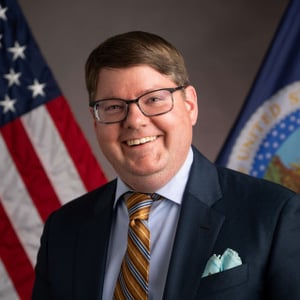
Deputy Secretary of Agriculture, U.S. Department of Agriculture
Judge Stephen Alexander Vaden was appointed as the Deputy Secretary of the U.S. Department of Agriculture on July 7, 2025. Alongside Secretary Brooke L. Rollins, Deputy Secretary Vaden leads the Department’s operations and implements policies that support America’s food and farm systems. A native of Union City, Tennessee, Deputy Secretary Vaden brings expertise in agricultural policy, law, and rural development. Previously, he served as a judge on the U.S. Court of International Trade and as General Counsel of USDA. Throughout Deputy Secretary Vaden’s time as General Counsel, he led successful Supreme Court litigation, advanced regulatory reform, and supported the implementation of the 2018 Farm Bill. He is a graduate of Yale Law School and Vanderbilt University. A public servant with strong agricultural roots, Deputy Secretary Vaden is committed to revitalizing rural America and ensuring an abundant, affordable, and safe U.S. food supply.

President, Harned Strategies LLC
Karen Harned is President at Harned Strategies LLC. Previously, she served as Executive Director of the National Federation of Independent Business Small Business Legal Center, a post she held from 2002-2022. Prior to joining the Legal Center, Ms. Harned was an attorney at a Washington, D.C. law firm specializing in food and drug law, where she represented several small and large businesses and their respective trade associations before Congress and federal agencies. She also served as Assistant Press Secretary to U.S. Senator Don Nickles of Oklahoma from August of 1989 to March of 1993. Ms. Harned received her B.A. from the University of Oklahoma in 1989 and her J.D. from The George Washington University National Law Center in 1995. She is admitted to practice in the District of Columbia.
As Executive Director of the NFIB Small Business Legal Center, Ms. Harned commented regularly on small business cases before federal and state courts, as well as the U.S. Supreme Court. She has appeared on Fox News, Fox Business, NBC Nightly News, CNN, CNBC and MSNBC, as well as National Public Radio, CBS Radio, and radio outlets across the country. Her opinion editorials and articles regarding healthcare, lawsuit abuse, regulation, and other issues important to small business have been published in newspapers and other publications nationwide.
Ms. Harned has testified before Congress on the small business impact of regulation and the civil justice system. Additionally, she has conducted numerous webinars and legal compliance seminars for small business owners across the country on issues relating to employment law, including unionization and immigration.
President, Harned Strategies LLC
Karen Harned is President at Harned Strategies LLC. Previously, she served as Executive Director of the National Federation of Independent Business Small Business Legal Center, a post she held from 2002-2022. Prior to joining the Legal Center, Ms. Harned was an attorney at a Washington, D.C. law firm specializing in food and drug law, where she represented several small and large businesses and their respective trade associations before Congress and federal agencies. She also served as Assistant Press Secretary to U.S. Senator Don Nickles of Oklahoma from August of 1989 to March of 1993. Ms. Harned received her B.A. from the University of Oklahoma in 1989 and her J.D. from The George Washington University National Law Center in 1995. She is admitted to practice in the District of Columbia.
As Executive Director of the NFIB Small Business Legal Center, Ms. Harned commented regularly on small business cases before federal and state courts, as well as the U.S. Supreme Court. She has appeared on Fox News, Fox Business, NBC Nightly News, CNN, CNBC and MSNBC, as well as National Public Radio, CBS Radio, and radio outlets across the country. Her opinion editorials and articles regarding healthcare, lawsuit abuse, regulation, and other issues important to small business have been published in newspapers and other publications nationwide.
Ms. Harned has testified before Congress on the small business impact of regulation and the civil justice system. Additionally, she has conducted numerous webinars and legal compliance seminars for small business owners across the country on issues relating to employment law, including unionization and immigration.
Deputy Secretary of Agriculture, U.S. Department of Agriculture
Judge Stephen Alexander Vaden was appointed as the Deputy Secretary of the U.S. Department of Agriculture on July 7, 2025. Alongside Secretary Brooke L. Rollins, Deputy Secretary Vaden leads the Department’s operations and implements policies that support America’s food and farm systems. A native of Union City, Tennessee, Deputy Secretary Vaden brings expertise in agricultural policy, law, and rural development. Previously, he served as a judge on the U.S. Court of International Trade and as General Counsel of USDA. Throughout Deputy Secretary Vaden’s time as General Counsel, he led successful Supreme Court litigation, advanced regulatory reform, and supported the implementation of the 2018 Farm Bill. He is a graduate of Yale Law School and Vanderbilt University. A public servant with strong agricultural roots, Deputy Secretary Vaden is committed to revitalizing rural America and ensuring an abundant, affordable, and safe U.S. food supply.
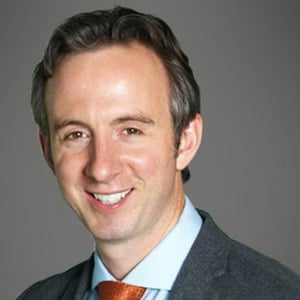
Professor of Law, University of Minnesota Law School
Professor James W. Coleman is a scholar of energy law. He specializes in North American energy infrastructure, transport, and trade. He is also a nonresident senior fellow at the American Enterprise Institute focused on energy policy.
Professor Coleman has testified before Congress on steps to speed up energy infrastructure permits. He also worked with a team of experts as part of Alberta's Royalty Review to revise the Canadian province's management of its vast oil and gas resources.
Before joining Minnesota, Professor Coleman taught at Southern Methodist University's Dedman School of Law, the University of Calgary’s law and business schools, and Harvard Law School. Earlier, he practiced environmental and appellate law at Sidley Austin in Washington, D.C., and clerked for the Honorable Steven M. Colloton of the U.S. Court of Appeals for the Eighth Circuit.
Professor Coleman received two degrees from Harvard University—a J.D. (cum laude) and B.A. in biology (magna cum laude with highest honors in the field). As a result of his undergraduate thesis on butterfly genetics, which required fieldwork in Central Asia, a species of lycaenid butterfly was named after him—Agrodiaetus ripartii colemani.
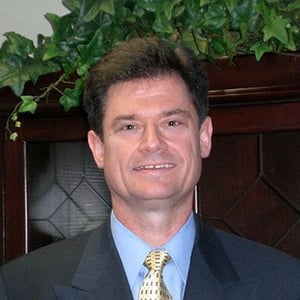
President and CEO, Frontiers of Freedom
Since 1998, George Landrith has served as the President and CEO of Frontiers of Freedom – a public policy think tank devoted to promoting a strong national defense, free markets, individual liberty, and constitutionally limited government. Frontiers of Freedom is recognized as a national leader on many of the most important issues facing America today – including: national security and defense, constitutional freedoms, market-based environmental solutions, energy, tax reform, property rights, and regulatory reform.
Previously, Landrith served as the Vice President and General Counsel to the National Legal Center for the Public Interest — now associated with the American Enterprise Institute. Landrith is a graduate of the University of Virginia School of Law, where he was the Business Editor of the Virginia Journal of Law and Politics. He also graduated, magna cum laude, from Brigham Young University studying political science and economics. Landrith is admitted to the bar in Virginia and California and is a member of the United States Supreme Court bar.
In 1994 and 1996, Landrith was the Republican candidate for the U.S. House of Representatives from Virginia’s Fifth Congressional District. He also served on the Albemarle County (Virginia) School Board from 1992 through 1995. He was appointed by then Governor George Allen and confirmed by the General Assembly to serve on the Virginia Workforce 2000 Advocacy Council. As an adjunct professor at the George Mason School of Law, Landrith has taught constitutional law, appellate advocacy, and legal writing. Landrith also teaches at the Leadership Institute’s candidate school.
Landrith appears frequently on television and radio news programs. He has been quoted or referenced in many of the nation’s leading newspapers, including: New York Times, Wall Street Journal, and Washington Post. Landrith’s work has been printed in over 100 newspapers across the nation, including: Washington Times, Chicago Tribune, LA Daily News, National Review, Sacramento Bee, Ft. Worth Star-Telegram, Providence Journal, Daily Caller, Washington Examiner, Townhall, and Human Events. In 2004, Landrith published a book, On Politics and Policy: Views on Freedom from an American Conservative.
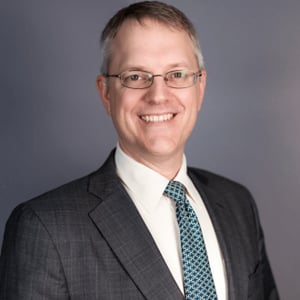
President and General Counsel, New Civil Liberties Alliance
NCLA’s President and General Counsel, Mark Chenoweth, has observed the administrative state up close and personal from perches in all four branches of the federal government. Mark served as the first chief of staff to Congressman Mike Pompeo, as legal counsel to Commissioner Anne Northup at the U.S. Consumer Product Safety Commission, as an attorney advisor in the Office of Legal Policy at the U.S. Department of Justice, and as a law clerk to the Hon. Danny J. Boggs on the U.S. Court of Appeals for the Sixth Circuit.
Mark has worked in several different roles in the private sector as well. He began his legal career in D.C. as a regulatory associate at Wilmer, Cutler & Pickering. He then returned to his home state of Kansas to serve as in-house counsel for Koch Industries. Most recently he spent over four years as general counsel of the Washington Legal Foundation.
Mark is a graduate of Yale College and the University of Chicago Law School, where he co-founded the Institute for Justice Clinic on Entrepreneurship and became a Tony Patiño Fellow. Mark has been widely quoted and/or published in newspapers and websites including the New York Times, San Francisco Chronicle, New Hampshire Union Leader, and Metropolitan Corporate Counsel. He has also had recurring op-eds in the Los Angeles Daily Journal, and at Forbes.com.

Tazewell Taylor Professor of Law and William H. Cabell Research Professor, William & Mary Law School
Jonathan H. Adler joined the William & Mary law faculty as the Tazwell Taylor Professor of Law and William H. Cabell Research Professor in 2025. Prior to joining the faculty, he was the inaugural Johan Verheij Memorial Professor of Law and the founding Director of the Coleman P. Burke Center for Environmental Law at the Case Western Reserve University School of Law.
Professor Adler is the author or editor of seven books, including Climate Liberalism: Perspectives on Liberty, Property and Pollution (Palgrave, 2023), Marijuana Federalism: Uncle Sam and Mary Jane (Brookings Institution Press, 2020), Business and the Roberts Court (Oxford University Press, 2016) and Rebuilding the Ark: New Perspectives on Endangered Species Act Reform (AEI Press, 2011).
His articles have appeared in publications ranging from the Harvard Environmental Law Review and Yale Journal on Regulation to the Wall Street Journal, New York Times, and Washington Post. He has testified before Congress a dozen times, and his work has been cited in the U.S. Supreme Court. A 2024 study identified Professor Adler as the seventh most cited legal academic in administrative and environmental law from 2019 to 2023.
Professor Adler is a contributing editor to Civitas Outlook and a regular contributor to the popular legal blog, The Volokh Conspiracy. A regular commentator on constitutional and regulatory issues, he has appeared on numerous radio and television programs, ranging from the PBS Newshour and National Public Radio to the Fox News Channel and Entertainment Tonight.
Professor Adler is a senior fellow at the Property & Environment Research Center in Bozeman, Montana. In 2018, Professor Adler was elected to membership in the American Law Institute and helped co-found the organization Checks and Balances. In 2024, Professor Adler was appointed a public member of the Administrative Conference of the United States.
Professor Adler clerked for the Honorable David B. Sentelle on the U.S. Court of Appeals for the District of Columbia Circuit.
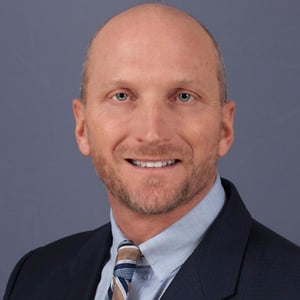
Distinguished Professor of Law, Widener University Delaware Law School
James R. May is Distinguished Professor of Law, and Chief Sustainability Officer, Widener University (USA). He also serves as co-Director of the Environmental Rights Institute and co-Director of the Dignity Rights Project at Widener University Delaware Law School. May is also an Adjunct Professor of Graduate Engineering, and founded and co-chairs a program on marine policy. May is the editor of Principles of Constitutional Environmental Law (American Bar Association), and co-editor of Shale Gas and the Future of Energy (Edward Elgar), Global Environmental Constitutionalism (Cambridge), Environmental Constitutionalism in Context (Edward Elgar), New Frontiers in Environmental Constitutionalism (United National Environment Programme, forthcoming), Implementing Environmental Constitutionalism(Cambridge, forthcoming), Standards of Environmental Constitutionalism (Cambridge, forthcoming), and Human Rights and the Environment: Indivisibility, Dignity and Legality (Edward Elgar, forthcoming). May is also author or co-author of more than 100 articles and book chapters, and numerous amicus briefs to the U.S. Supreme Court and U.S. federal courts of appeal on issues including environmental law, constitutional law, comparative constitutional, international environmental law, environmental rights, and human dignity.
May founded two non-profit environmental organizations (the Mid-Atlantic and the Eastern Environmental Law Centers), and has litigated more than 200 public interest environmental claims, including cases throughout the Mid-Atlantic to restore water and air quality, conserve rare species and habitats, and protect biodiversity.
May is a Member of Faculty to the National Judicial College, and a Fellow of the American College of Environmental Lawyers, for whom he has served as a delegate to Haiti and China. May has also served as a consultant to the U.S. Embassy on legal education in the Philippines, and to the Hungarian Embassy and the Moroccan Human Rights Council on constitutional reform. May is a member of Phi Kappa Phi, serves on numerous boards, and has won numerous awards, including from Pace University, Sierra Club, and the American Canoe Association. He earned his B.S. in Mechanical Engineering from the University of Kansas (Bowman Scholar), J.D. from the University of Kansas (Appellate Advocacy Scholar and national moot court champion), and LL.M. in Environmental Law from Pace University, where he was the Feldshuh Fellow and graduated first in class.
May is a member of the bar in the State of Pennsylvania, several federal courts of appeal, and the U.S. Supreme Court.
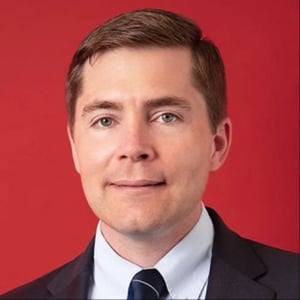
Senior Attorney, Pacific Legal Foundation
Damien Schiff is a senior attorney at Pacific Legal Foundation. He leads its environmental practice group, a unique initiative that draws broadly from PLF’s expertise and success in property rights and separation of powers litigation. Over the years, Damien has represented hundreds of landowners and property rights advocates to defend their liberties against heavy-handed and unwarranted environmental and land-use regulation. His litigation experience includes Sackett v. U.S. Environmental Protection Agency, a groundbreaking decision in which the U.S. Supreme Court upheld the right of landowners to challenge Clean Water Act compliance orders issued by EPA, and Contoski v. Norton, PLF’s successful effort to force the federal government to make good on its promise to delist the bald eagle from the Endangered Species Act.
Besides litigation, Damien has written academic articles on a variety of subjects, including the Endangered Species Act, the Clean Water Act, greenhouse gas torts, the duty to rescue, and international water law. He has appeared on a variety of television and radio programs and has been quoted in The New York Times, The Wall Street Journal, Harper’s Magazine, and The Economist, among other publications.
He obtained his law degree magna cum laude from the University of San Diego School of Law, and his undergraduate degree magna cum laude from Georgetown University. While at USD, he was a research assistant for Professor Bernard Siegan, a leading constitutional theorist and advocate for property rights and economic liberty. Immediately prior to joining PLF, Damien clerked for Judge (and former PLF attorney) Victor Wolski of the United States Court of Federal Claims. Damien credits the mentoring and examples of Professor Siegan and Judge Wolski for his decision to pursue a career in liberty-based public interest litigation.
Damien lives in Sacramento with his wife, two young sons, four chickens, and a cat named Princess. In his off hours he enjoys stamp collecting, Gregorian chant, and martinis—preferably at the same time.
Tazewell Taylor Professor of Law and William H. Cabell Research Professor, William & Mary Law School
Jonathan H. Adler joined the William & Mary law faculty as the Tazwell Taylor Professor of Law and William H. Cabell Research Professor in 2025. Prior to joining the faculty, he was the inaugural Johan Verheij Memorial Professor of Law and the founding Director of the Coleman P. Burke Center for Environmental Law at the Case Western Reserve University School of Law.
Professor Adler is the author or editor of seven books, including Climate Liberalism: Perspectives on Liberty, Property and Pollution (Palgrave, 2023), Marijuana Federalism: Uncle Sam and Mary Jane (Brookings Institution Press, 2020), Business and the Roberts Court (Oxford University Press, 2016) and Rebuilding the Ark: New Perspectives on Endangered Species Act Reform (AEI Press, 2011).
His articles have appeared in publications ranging from the Harvard Environmental Law Review and Yale Journal on Regulation to the Wall Street Journal, New York Times, and Washington Post. He has testified before Congress a dozen times, and his work has been cited in the U.S. Supreme Court. A 2024 study identified Professor Adler as the seventh most cited legal academic in administrative and environmental law from 2019 to 2023.
Professor Adler is a contributing editor to Civitas Outlook and a regular contributor to the popular legal blog, The Volokh Conspiracy. A regular commentator on constitutional and regulatory issues, he has appeared on numerous radio and television programs, ranging from the PBS Newshour and National Public Radio to the Fox News Channel and Entertainment Tonight.
Professor Adler is a senior fellow at the Property & Environment Research Center in Bozeman, Montana. In 2018, Professor Adler was elected to membership in the American Law Institute and helped co-found the organization Checks and Balances. In 2024, Professor Adler was appointed a public member of the Administrative Conference of the United States.
Professor Adler clerked for the Honorable David B. Sentelle on the U.S. Court of Appeals for the District of Columbia Circuit.
Distinguished Professor of Law, Widener University Delaware Law School
James R. May is Distinguished Professor of Law, and Chief Sustainability Officer, Widener University (USA). He also serves as co-Director of the Environmental Rights Institute and co-Director of the Dignity Rights Project at Widener University Delaware Law School. May is also an Adjunct Professor of Graduate Engineering, and founded and co-chairs a program on marine policy. May is the editor of Principles of Constitutional Environmental Law (American Bar Association), and co-editor of Shale Gas and the Future of Energy (Edward Elgar), Global Environmental Constitutionalism (Cambridge), Environmental Constitutionalism in Context (Edward Elgar), New Frontiers in Environmental Constitutionalism (United National Environment Programme, forthcoming), Implementing Environmental Constitutionalism(Cambridge, forthcoming), Standards of Environmental Constitutionalism (Cambridge, forthcoming), and Human Rights and the Environment: Indivisibility, Dignity and Legality (Edward Elgar, forthcoming). May is also author or co-author of more than 100 articles and book chapters, and numerous amicus briefs to the U.S. Supreme Court and U.S. federal courts of appeal on issues including environmental law, constitutional law, comparative constitutional, international environmental law, environmental rights, and human dignity.
May founded two non-profit environmental organizations (the Mid-Atlantic and the Eastern Environmental Law Centers), and has litigated more than 200 public interest environmental claims, including cases throughout the Mid-Atlantic to restore water and air quality, conserve rare species and habitats, and protect biodiversity.
May is a Member of Faculty to the National Judicial College, and a Fellow of the American College of Environmental Lawyers, for whom he has served as a delegate to Haiti and China. May has also served as a consultant to the U.S. Embassy on legal education in the Philippines, and to the Hungarian Embassy and the Moroccan Human Rights Council on constitutional reform. May is a member of Phi Kappa Phi, serves on numerous boards, and has won numerous awards, including from Pace University, Sierra Club, and the American Canoe Association. He earned his B.S. in Mechanical Engineering from the University of Kansas (Bowman Scholar), J.D. from the University of Kansas (Appellate Advocacy Scholar and national moot court champion), and LL.M. in Environmental Law from Pace University, where he was the Feldshuh Fellow and graduated first in class.
May is a member of the bar in the State of Pennsylvania, several federal courts of appeal, and the U.S. Supreme Court.
Senior Attorney, Pacific Legal Foundation
Damien Schiff is a senior attorney at Pacific Legal Foundation. He leads its environmental practice group, a unique initiative that draws broadly from PLF’s expertise and success in property rights and separation of powers litigation. Over the years, Damien has represented hundreds of landowners and property rights advocates to defend their liberties against heavy-handed and unwarranted environmental and land-use regulation. His litigation experience includes Sackett v. U.S. Environmental Protection Agency, a groundbreaking decision in which the U.S. Supreme Court upheld the right of landowners to challenge Clean Water Act compliance orders issued by EPA, and Contoski v. Norton, PLF’s successful effort to force the federal government to make good on its promise to delist the bald eagle from the Endangered Species Act.
Besides litigation, Damien has written academic articles on a variety of subjects, including the Endangered Species Act, the Clean Water Act, greenhouse gas torts, the duty to rescue, and international water law. He has appeared on a variety of television and radio programs and has been quoted in The New York Times, The Wall Street Journal, Harper’s Magazine, and The Economist, among other publications.
He obtained his law degree magna cum laude from the University of San Diego School of Law, and his undergraduate degree magna cum laude from Georgetown University. While at USD, he was a research assistant for Professor Bernard Siegan, a leading constitutional theorist and advocate for property rights and economic liberty. Immediately prior to joining PLF, Damien clerked for Judge (and former PLF attorney) Victor Wolski of the United States Court of Federal Claims. Damien credits the mentoring and examples of Professor Siegan and Judge Wolski for his decision to pursue a career in liberty-based public interest litigation.
Damien lives in Sacramento with his wife, two young sons, four chickens, and a cat named Princess. In his off hours he enjoys stamp collecting, Gregorian chant, and martinis—preferably at the same time.

What is the Regulatory Transparency Project?
Nathan Kaczmarek
Regulatory Transparency Project's Fourth Branch Video
The Regulatory Transparency Project promotes a national conversation about the benefits and costs of federal,...
Deep Dive Episode 64 – The Federal Reserve and Real-Time Payment Systems
Aaron Klein, George Selgin, J.W. Verret
Regulatory Transparency Project Teleforum
The Federal Reserve plays a central role in the nation’s payment systems. Reserve banks keep...
Agency Rulemaking: Unnecessary Delegation or Indispensable Assistance?
Brianne Gorod, Andrew Grossman, Jeffrey Holmstead, Donald J. Kochan, Robert V. Percival
Article I Initiative and Regulatory Transparency Project
On June 18, 2019, the Federalist Society's Article I Initiative and Regulatory Transparency Project hosted...
Agency Rulemaking: Unnecessary Delegation or Indispensable Assistance?
Brianne Gorod, Andrew Grossman, Jeffrey Holmstead, Donald J. Kochan, Robert V. Percival
Article I Initiative and Regulatory Transparency Project
On June 18, 2019, the Federalist Society's Article I Initiative and Regulatory Transparency Project hosted...
Deep Dive Episode 62 – An Update on Kisor v. Wilkie
Stephen Alexander Vaden, Karen Harned
Regulatory Transparency Project's Fourth Branch Podcast
Last week the Supreme Court decided the much-anticipated Kisor v. Wilkie case. The Court had...
Judicial Deference Determined: Kisor v. Wilkie
Karen Harned, Stephen Alexander Vaden
This morning the Supreme Court decided the much-anticipated Kisor v. Wilkie case. The Court had granted...
The Jones Act: Debating the Lingering Effects of a 100-Year-Old Law
James W. Coleman, George Landrith
Regulatory Transparency Project's Fourth Branch Video
Passed into law in 1920, the Jones Act is a ban on transport between two...
Deep Dive Episode 61 – Gundy v. United States: Revisiting the Nondelegation Doctrine, or Not?
Mark Chenoweth
Regulatory Transparency Project's Fourth Branch Podcast
The U.S. Supreme Court’s decision in Gundy v. United States disappointed some observers who were hoping...
Deep Dive Episode 60 – Juliana v. United States
Jonathan H. Adler, James R. May, Damien Michael Schiff
Regulatory Transparency Project's Fourth Branch Podcast
On June 4, 2019, a Ninth Circuit panel heard oral argument in a high-profile interlocutory...
Litigation Update: Juliana v. United States
Jonathan H. Adler, James R. May, Damien Michael Schiff
On June 4, 2019, a Ninth Circuit panel heard oral argument in a high-profile interlocutory...