
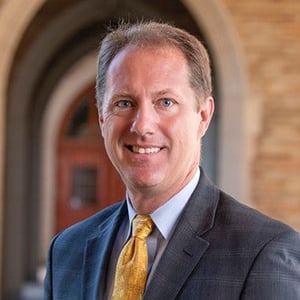
Professor of Law, Notre Dame University
Roger P. Alford joined the Notre Dame Law faculty in January 2012. Alford teaches and writes in a wide range of subject-matter areas, including international trade, international arbitration, international antitrust, and comparative law.
Alford earned his B.A. with Honors from Baylor in 1985, his J.D. with Honors from New York University, and his LL.M. from Edinburgh University. Before entering the legal academy, he served as a law clerk to Judge James Buckley of the United States Court of Appeals for the D.C. Circuit, and Judge Richard Allison of the Iran-United States Claims Tribunal in The Hague, Netherlands. He practiced law with Hogan & Hartson (now Hogan Lovells) in Washington, D.C., and was also a senior legal advisor to the Claims Resolution Tribunal for Dormant Activities in Zurich, Switzerland.
In addition to publishing widely in leading law reviews and journals, Alford is the general editor of Kluwer Arbitration Blog and on the Executive Committee of the Institute for Transnational Arbitration.
He is Concurrent Professor at the Keough School of Global Affairs, a Faculty Fellow at the Kellogg Institute for International Studies, and a Faculty Fellow at the Nanovic Institute for European Studies. He was the Academic Director of the London Global Gateway from 2016-2017 and Associate Dean for Graduate and International Programs from 2013-2017.
He served as the Deputy Assistant Attorney General for International Affairs with the Antitrust Division of the U.S. Department of Justice from 2017-2019.
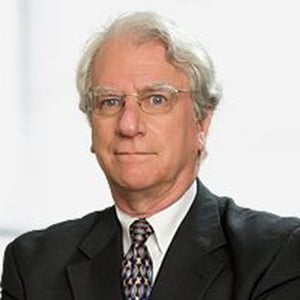
Partner, Labaton Sucharow LLP
Jay Himes is a partner in the New York office of Labaton Sucharow LLP and co-chair of the Firm's Antitrust and Competition Litigation Practice. With more than 40 years of experience, Jay is experienced in all facets of antitrust and complex litigation generally. He focuses on representing plaintiffs in price-fixing class action cases and protecting businesses from anticompetitive activities.
A past recipient of the New York State Bar Association’s William T. Lifland Service Award for distinguished service, Jay has been described by Chambers USA as “a walking encyclopedia of case law…thoughtful, well read and a first-rate lawyer," and The Legal 500 called him "a very solid and highly experienced antitrust lawyer."
Jay was appointed by United States District Judge Orrick to serve as the monitoring trustee under the final judgment in United States of America v. Bazaarvoice, Inc. Upon completion of the four-year appointment, the Court thanked him for having “diligently and effectively monitored the defendant’s compliance,” and for having “worked through innumerable complex issues . . . with obvious skill and sensitivity.”
A regular speaker at conferences focusing on such subjects as antitrust, class actions, international litigation and arbitration, trade law and data protection, Jay has authored many conference papers and published articles. He has lectured annually on U.S. cartel and private action enforcement at the Zurich University of Applied Science's international competition and compliance programs, offered in Geneva, Winterthur and Zurich, Switzerland, to foreign competition law officials and practitioners. He also has presented at conferences in Europe (Amsterdam, Berlin, Dublin, Krakow, Lisbon, Paris, Stockholm, Vienna, Winterthur, and Zurich), Latin America (Antigua and Sao Paolo), and the Far East (Hanoi, Seoul, and Tokyo), as well as in Montreal and the United States.
Prior to joining Labaton Sucharow, Jay served for nearly eight years as the Antitrust Bureau Chief in the New York Attorney General's office. In that role, he was the States’ principal representative in the marathon 2001 negotiations that led to settlement of the governments’ landmark monopolization case against Microsoft. Thereafter, Jay partnered with US DOJ officials to lead the Microsoft judgment monitoring and enforcement effort, an activity that continued throughout his time at the Attorney General's office.
During his tenure as New York's chief antitrust official, Jay also led significant, high-profile antitrust investigations and enforcement actions. These cases included: In re Buspirone Antitrust Litigation ($100 million settlement); In re Cardizem CD Antitrust Litigation ($80 million settlement); and In re Compact Disc Antitrust Litigation ($67 million settlement). Under Jay's leadership, the New York Bureau secured the two largest antitrust civil penalties recoveries ever achieved under the State's antitrust statute.
Before serving in the Attorney General's office, Jay practiced complex litigation for 25 years at Paul, Weiss, Rifkind, Wharton & Garrison LLP. There, he represented the 12 Federal Reserve Banks as plaintiffs in a price-fixing case against the nation's leading armored car companies, and defended a Revlon healthcare company in a series of price-fixing cases that spanned nearly a decade. Additionally, Jay handled a wide range of litigation, including securities class actions as well as contract, construction, constitutional, entertainment, environmental, real property, and tax litigation. Active in pro bono matters, Jay worked with the New York Civil Liberties Union, NAACP, and National Coalition for the Homeless, while also representing inmate and immigration asylum clients.
Jay is a member of the American Antitrust Institute advisory board, the U.S. advisory board of the Loyola University Chicago School of Law's Institute of Consumer Antitrust Studies, the MLex advisory board, the editorial advisory group of the Antitrust Chronicle, the steering committee of the American Economic Liberties Project, and the board of the Lawyers’ Committee for Civil Rights Under Law.
Effective June 1, 2020, Jay will chair the New York State Bar Association’s (NYSBA’s) International Section, which has more than 2,000 members worldwide. Jay is a representative to NYSBA’s sections caucus, and co-chairs the antitrust committees of both the State Bar's Commercial and Federal Litigation and International sections. Jay is also a member of antitrust, litigation, and intellectual property groups in the American Bar Association. He also is a past chair of NYSBA’s Antitrust Section, and served a four-year term as the Section's delegate to the House of Delegates.
Jay earned his Juris Doctor, magna cum laude, from the University of Wisconsin Law School, where he served as the Articles Editor of the Wisconsin Law Review. Following law school, he pursued independent study at the University of Oxford in England.
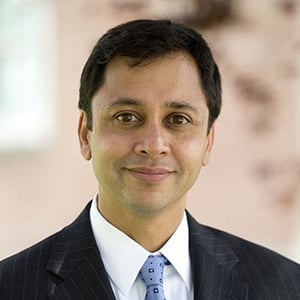
Charles Klein Professor of Law and Government, Director of the LL.M. in Asian Law, Temple University School of Law
Professor Salil Mehra joined the Temple Law faculty in 2000. His research focuses on antitrust/competition law and technology. A sample of Professor Mehra’s publications can be found below and on his publications page.
Professor Mehra is a past Chair of the AALS Section on Antitrust and Economic Regulation, and is a nongovernmental advisor to the International Competition Network. He is a former Abe Fellow of Japan’s Center for Global Partnership and the Social Science Research Center.
Prior to his career with Temple Law, Professor Mehra clerked for Chief Judge Juan R. Torruella of the U.S. Court of Appeals for the First Circuit, and then worked at the Antitrust Division of the Department of Justice, and then subsequently at the New York law firm of Wachtell, Lipton, Rosen & Katz, where his practice included antitrust, first amendment, and takeover defense litigation.
Professor Mehra graduated with honors, Order of the Coif, from the University of Chicago Law School, where he was on the law review and was named an Olin Student Fellow. In 2016, Professor Mehra won the University Lindback Award for Distinguished Teaching.
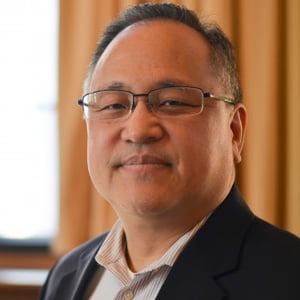
John H. Chestnut Professor of Law, Communication, and Computer & Information Science; Founding Director, Center for Technology, Innovation and Competition, University of Pennsylvania Law School
Christopher S. Yoo is the John H. Chestnut Professor of Law and a Professor at the Annenberg School for Communication and in the Computer & Information Science Department of School of Engineering and Applied Science at the University of Pennsylvania, where he is also the Founding Director of the Center for Technology, Innovation and Competition. He is the author of over one hundred scholarly works and has taught at over a dozen universities around the world. Professor Yoo received his A.B. from Harvard, his M.B.A. from UCLA, and his J.D. from Northwestern University. Before entering the academy, Professor Yoo clerked for Justice Anthony M. Kennedy of the Supreme Court of the United States and practiced law with the predecessor firm to Hogan Lovells under the supervision of now-Chief Justice John G. Roberts, Jr. Before joining the University of Pennsylvania, he taught for eight years at the Vanderbilt Law School. He is frequently called to testify before the U.S. Congress, Federal Trade Commission, Department of Justice Antitrust Division, Federal Communications Commission, foreign governments, and international organizations.
Professor of Law, Notre Dame University
Roger P. Alford joined the Notre Dame Law faculty in January 2012. Alford teaches and writes in a wide range of subject-matter areas, including international trade, international arbitration, international antitrust, and comparative law.
Alford earned his B.A. with Honors from Baylor in 1985, his J.D. with Honors from New York University, and his LL.M. from Edinburgh University. Before entering the legal academy, he served as a law clerk to Judge James Buckley of the United States Court of Appeals for the D.C. Circuit, and Judge Richard Allison of the Iran-United States Claims Tribunal in The Hague, Netherlands. He practiced law with Hogan & Hartson (now Hogan Lovells) in Washington, D.C., and was also a senior legal advisor to the Claims Resolution Tribunal for Dormant Activities in Zurich, Switzerland.
In addition to publishing widely in leading law reviews and journals, Alford is the general editor of Kluwer Arbitration Blog and on the Executive Committee of the Institute for Transnational Arbitration.
He is Concurrent Professor at the Keough School of Global Affairs, a Faculty Fellow at the Kellogg Institute for International Studies, and a Faculty Fellow at the Nanovic Institute for European Studies. He was the Academic Director of the London Global Gateway from 2016-2017 and Associate Dean for Graduate and International Programs from 2013-2017.
He served as the Deputy Assistant Attorney General for International Affairs with the Antitrust Division of the U.S. Department of Justice from 2017-2019.
Partner, Labaton Sucharow LLP
Jay Himes is a partner in the New York office of Labaton Sucharow LLP and co-chair of the Firm's Antitrust and Competition Litigation Practice. With more than 40 years of experience, Jay is experienced in all facets of antitrust and complex litigation generally. He focuses on representing plaintiffs in price-fixing class action cases and protecting businesses from anticompetitive activities.
A past recipient of the New York State Bar Association’s William T. Lifland Service Award for distinguished service, Jay has been described by Chambers USA as “a walking encyclopedia of case law…thoughtful, well read and a first-rate lawyer," and The Legal 500 called him "a very solid and highly experienced antitrust lawyer."
Jay was appointed by United States District Judge Orrick to serve as the monitoring trustee under the final judgment in United States of America v. Bazaarvoice, Inc. Upon completion of the four-year appointment, the Court thanked him for having “diligently and effectively monitored the defendant’s compliance,” and for having “worked through innumerable complex issues . . . with obvious skill and sensitivity.”
A regular speaker at conferences focusing on such subjects as antitrust, class actions, international litigation and arbitration, trade law and data protection, Jay has authored many conference papers and published articles. He has lectured annually on U.S. cartel and private action enforcement at the Zurich University of Applied Science's international competition and compliance programs, offered in Geneva, Winterthur and Zurich, Switzerland, to foreign competition law officials and practitioners. He also has presented at conferences in Europe (Amsterdam, Berlin, Dublin, Krakow, Lisbon, Paris, Stockholm, Vienna, Winterthur, and Zurich), Latin America (Antigua and Sao Paolo), and the Far East (Hanoi, Seoul, and Tokyo), as well as in Montreal and the United States.
Prior to joining Labaton Sucharow, Jay served for nearly eight years as the Antitrust Bureau Chief in the New York Attorney General's office. In that role, he was the States’ principal representative in the marathon 2001 negotiations that led to settlement of the governments’ landmark monopolization case against Microsoft. Thereafter, Jay partnered with US DOJ officials to lead the Microsoft judgment monitoring and enforcement effort, an activity that continued throughout his time at the Attorney General's office.
During his tenure as New York's chief antitrust official, Jay also led significant, high-profile antitrust investigations and enforcement actions. These cases included: In re Buspirone Antitrust Litigation ($100 million settlement); In re Cardizem CD Antitrust Litigation ($80 million settlement); and In re Compact Disc Antitrust Litigation ($67 million settlement). Under Jay's leadership, the New York Bureau secured the two largest antitrust civil penalties recoveries ever achieved under the State's antitrust statute.
Before serving in the Attorney General's office, Jay practiced complex litigation for 25 years at Paul, Weiss, Rifkind, Wharton & Garrison LLP. There, he represented the 12 Federal Reserve Banks as plaintiffs in a price-fixing case against the nation's leading armored car companies, and defended a Revlon healthcare company in a series of price-fixing cases that spanned nearly a decade. Additionally, Jay handled a wide range of litigation, including securities class actions as well as contract, construction, constitutional, entertainment, environmental, real property, and tax litigation. Active in pro bono matters, Jay worked with the New York Civil Liberties Union, NAACP, and National Coalition for the Homeless, while also representing inmate and immigration asylum clients.
Jay is a member of the American Antitrust Institute advisory board, the U.S. advisory board of the Loyola University Chicago School of Law's Institute of Consumer Antitrust Studies, the MLex advisory board, the editorial advisory group of the Antitrust Chronicle, the steering committee of the American Economic Liberties Project, and the board of the Lawyers’ Committee for Civil Rights Under Law.
Effective June 1, 2020, Jay will chair the New York State Bar Association’s (NYSBA’s) International Section, which has more than 2,000 members worldwide. Jay is a representative to NYSBA’s sections caucus, and co-chairs the antitrust committees of both the State Bar's Commercial and Federal Litigation and International sections. Jay is also a member of antitrust, litigation, and intellectual property groups in the American Bar Association. He also is a past chair of NYSBA’s Antitrust Section, and served a four-year term as the Section's delegate to the House of Delegates.
Jay earned his Juris Doctor, magna cum laude, from the University of Wisconsin Law School, where he served as the Articles Editor of the Wisconsin Law Review. Following law school, he pursued independent study at the University of Oxford in England.
Charles Klein Professor of Law and Government, Director of the LL.M. in Asian Law, Temple University School of Law
Professor Salil Mehra joined the Temple Law faculty in 2000. His research focuses on antitrust/competition law and technology. A sample of Professor Mehra’s publications can be found below and on his publications page.
Professor Mehra is a past Chair of the AALS Section on Antitrust and Economic Regulation, and is a nongovernmental advisor to the International Competition Network. He is a former Abe Fellow of Japan’s Center for Global Partnership and the Social Science Research Center.
Prior to his career with Temple Law, Professor Mehra clerked for Chief Judge Juan R. Torruella of the U.S. Court of Appeals for the First Circuit, and then worked at the Antitrust Division of the Department of Justice, and then subsequently at the New York law firm of Wachtell, Lipton, Rosen & Katz, where his practice included antitrust, first amendment, and takeover defense litigation.
Professor Mehra graduated with honors, Order of the Coif, from the University of Chicago Law School, where he was on the law review and was named an Olin Student Fellow. In 2016, Professor Mehra won the University Lindback Award for Distinguished Teaching.
John H. Chestnut Professor of Law, Communication, and Computer & Information Science; Founding Director, Center for Technology, Innovation and Competition, University of Pennsylvania Law School
Christopher S. Yoo is the John H. Chestnut Professor of Law and a Professor at the Annenberg School for Communication and in the Computer & Information Science Department of School of Engineering and Applied Science at the University of Pennsylvania, where he is also the Founding Director of the Center for Technology, Innovation and Competition. He is the author of over one hundred scholarly works and has taught at over a dozen universities around the world. Professor Yoo received his A.B. from Harvard, his M.B.A. from UCLA, and his J.D. from Northwestern University. Before entering the academy, Professor Yoo clerked for Justice Anthony M. Kennedy of the Supreme Court of the United States and practiced law with the predecessor firm to Hogan Lovells under the supervision of now-Chief Justice John G. Roberts, Jr. Before joining the University of Pennsylvania, he taught for eight years at the Vanderbilt Law School. He is frequently called to testify before the U.S. Congress, Federal Trade Commission, Department of Justice Antitrust Division, Federal Communications Commission, foreign governments, and international organizations.
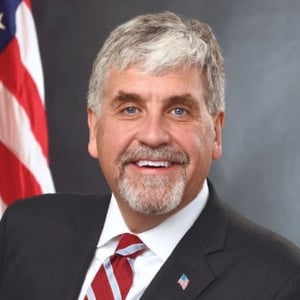
Founder & CEO of The Hargan Group
Eric D. Hargan is the Founder and CEO of The Hargan Group, a healthcare consulting firm. Eric previously served as the Deputy Secretary of the Department of Health and Human Services (HHS) from 2017 to 2021; he also served as Acting Secretary for several months in 2017-2018. HHS is the largest department in the federal government and has an annual budget of more than $1.3 trillion and over 80,000 employees across 26 divisions. As Deputy Secretary, he oversaw the development and approval of all HHS, CMS and FDA regulations and significant guidances, as well as the day-to-day operations and management of the department, and he led policy and strategy development. From 2003 to 2007, Mr. Hargan also served at HHS in a variety of capacities, including holding the position of Acting Deputy Secretary.
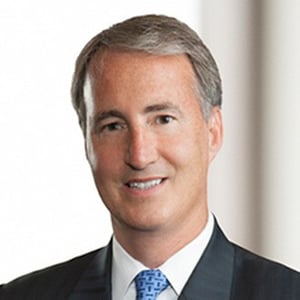
Partner, Foley & Lardner LLP
Ed Burbach is a Partner at Foley & Lardner LLP.
As a focused litigation lawyer, Ed Burbach represents corporations, individuals and governmental entities in matters involving local, state and federal governments – with emphasis on the state of Texas. He has special experience as a Medicaid fraud attorney, with deceptive trade practices, FTC, FOIA litigation /Public Information Act litigation and attorney general opinions. Ed also has nearly 30 years of experience litigating significant government, energy, maritime, insurance, financial services, pharmaceutical, health care provider, retailer, corporate, multistate and class action claims.
Appointed by now-Texas Governor Greg Abbott as his original Deputy Attorney General for Litigation, Ed served as Texas’ lead litigator and directly supervised all of Attorney General Abbott’s 11 civil litigation divisions, including 250 attorneys, over 600 employees and a $35 million budget. Ed also served as Texas’ main litigation liaison with the National Association of Attorneys General during Attorney General Abbott’s first and second terms. Ed maintained a heavy litigation docket representing the state and its leadership in high-profile litigation, such as Medicaid fraud, energy, financial services, environmental, Public Information Act, the historic Texas Tobacco Settlement, school finance, congressional redistricting and election law challenges brought by major political candidates. Upon announcing Ed’s return to private practice Governor Abbott advised:
“For more than three years, Ed Burbach has been a trusted advisor whose expert legal skills and careful management have yielded real results for the State of Texas,” said Attorney General Abbott.
“Under Ed’s leadership, our Consumer Protection Division obtained tens of millions of dollars in restitution for Texas consumers, and our Civil Medicaid Fraud Division uncovered more than a hundred million dollars in fraudulent Medicaid overpayments. Ed also guided the State through its most difficult legal disputes, including lawsuits challenging the Texas tobacco settlement and the state’s school funding plan. We all appreciate Ed’s distinguished service to this agency and wish him well on his return to the private sector.”
Ed’s clients often face costly, multiyear, high-stakes claims. For example, in State of Texas v. Petroleum Wholesale, et al., Ed defended claims brought by the state of Texas alleging $200 million in civil penalties for allegedly misrepresenting the amount of fuel delivered at retail gasoline and diesel pumps in Texas. He also served as lead counsel in the defense of the state Multidistrict Litigation Panel proceeding and as lead counsel in defense of various state purported class action litigation.
Ed serves as the Austin Office Chair for Corporate, and he remains active with the attorney’s general offices throughout the United States.
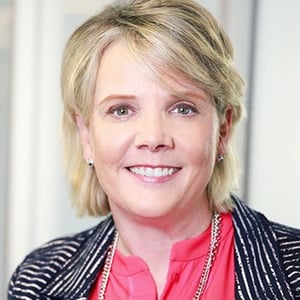
Co-CEO, Neora
Deborah Heisz is the Co-CEO of Neora, a Texas-based global relationship marketing company offering proprietary age-fighting skincare and wellness products.
With more than 20 years of leadership experience in a variety of roles within the multibillion dollar direct selling industry, Deborah Heisz has successfully built and led strong teams to achieve strategic goals.
Deborah has successfully chaired Neora’s global steering committee and directed the leadership team to position the company for new growth domestically and internationally. Deborah is driven to ensure that Neora continues to move forward as a unique model of positivity, diversity, innovation and integrity in the worldwide direct selling industry.
In addition to her position as Neora’s Co-CEO, Deborah maintains her role as Chief Executive Officer of Live Happy, LLC. Deborah is the co-founder and editorial director of the positive lifestyle magazine Live Happy and the happiness movement. A graduate of Texas Tech University with a bachelor’s degree in English, Deborah also holds an MBA from The University of Dallas.
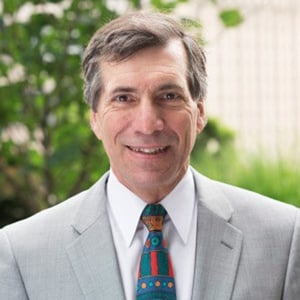
Partner, Bricklin & Newman LLP
David Bricklin is a Partner at Bricklin & Newman LLP.
Bricklin has extensive litigation experience representing environmental groups, individuals, municipalities, and Tribes in a wide variety of environmental, land use, and condemnation matters. Bricklin argued Robertson v. Methow Valley Citizens case in the United States Supreme Court. He frequently appears before the Growth Management Hearings Boards, Shorelines Hearings Board, and other judicial and administrative tribunals. He provides consultation services to municipalities in the development of land use regulations and comprehensive plans and defending municipalities when challenged by dissatisfied land use applicants.
Adjunct Professor of Real Estate, Portland State University
Bill Reid is currently an Adjunct Professor of Real Estate at Portland State University.
Bill Reid has been a land use, real estate, economic development, and public finance consultant for over 20 years to both private and public sector interests throughout the Pacific Northwest and other U.S. markets. He has particular experience with complex market and financial determinants of economic and community development objectives, real estate holdings, and land use regulations in the Pacific Northwest, California, and Alaska.
Director, Seattle For Growth
Roger Valdez is the Director of Seattle For Growth. Over the past two decades Roger has worked at the state, regional, and local level on issues ranging from public education to public health. He was Neighborhood Development Manager for the City of Seattle and managed King County’s efforts to implement Washington’s ban on smoking in bars, restaurants, and other work places. Most recently he was housing director at a local non-profit, managing and developing affordable housing.
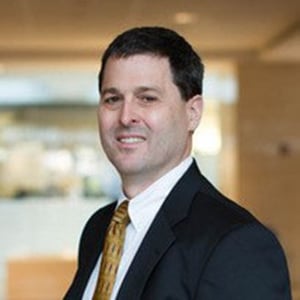
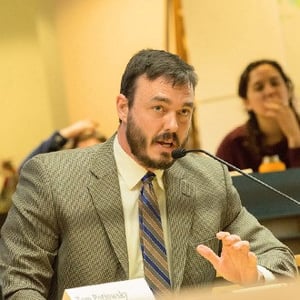
Scott K. Ginsburg Professor of Health Law & Policy, Georgetown University
David A. Hyman, M.D., J.D., is the Scott K. Ginsburg Professor of Health Law & Policy at Georgetown University. Professor Hyman focuses his research and writing on the regulation and financing of health care. He teaches or has taught health care regulation, civil procedure, insurance, medical malpractice, law & economics, professional responsibility, and tax policy.
While serving as Special Counsel to the Federal Trade Commission, Professor Hyman was principal author and project leader for the first joint report ever issued by the Federal Trade Commission and Department of Justice, “Improving Health Care: A Dose of Competition” (2004). He is also the author of Medicare Meets Mephistopheles, which was selected by the U.S. Chamber of Commerce/National Chamber Foundation as one of the top ten books of 2007, and the co-author (with Charles Silver) of Overcharged: Why Americans Pay Too Much for Health Care (2018). He has published widely in student-edited law reviews and peer-reviewed medical, health policy, law, and economics journals.
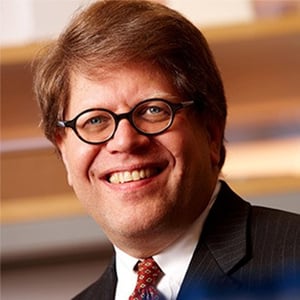
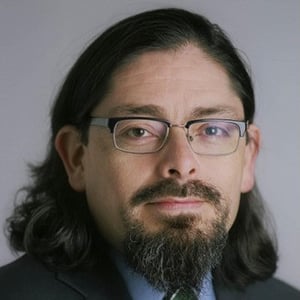
Faculty Fellow, Center for Law, Science & Innovation, Sandra Day O'Connor College of Law, Arizona State University
Dr. Klein is a Faculty Fellow at the Center for Law, Science & Innovation at the Sandra Day O'Connor College of Law at Arizona State University. He is also Principal at Roger D. Klein, MD JD Consulting and Klein & Klein Co., L.P.A. He was formerly Chief Medical Officer at OmniSeq, an oncology focused genomic profiling company that was recently acquired by LabCorp. Previously, Roger was the Medical Director at the Molecular Oncology division at the Cleveland Clinic. He was also the Chair of the Professional Relations Committee at the Association for Molecular Pathology. Prior to joining the Cleveland Clinic, he served as Medical Director of Molecular Oncology at the BloodCenter of Wisconsin where he led the center’s Diagnostic Laboratories’ initiative focused on DNA- and RNA-based testing for evaluation of cancer patients.
Dr. Klein has been an advisor to the Department of Health and Human Services (HHS), the Food and Drug Administration (FDA), the Centers for Medicare and Medicaid Services (CMS), and the Centers for Disease Control and Prevention (CDC). He has participated in and assumed leadership roles in many professional society committees and corporate advisory boards and is a policy advisor to the Heartland Institute.
Dr. Klein is licensed to practice medicine in Ohio, Florida, and Wisconsin. Additionally, he is licensed to practice law in the District of Columbia and Ohio. Roger obtained his Molecular Genetic Pathology certification at Mayo Medical School following completion of his M.D. Yale University School of Medicine. He obtained his J.D. from Yale Law School.
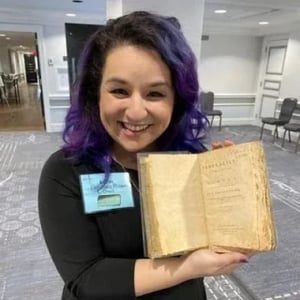
Director, Digital Media, Communications and Fellow, R Street Institute
Shoshana Weissmann manages R Street’s social media, email marketing and other digital assets. She also works on occupational licensing reform, social media regulatory policy, Section 230 and other issues, and has written for various publications, including The Wall Street Journal and USA Today.
Shoshana most recently managed digital communications for Opportunity Lives, a group that highlighted positive stories and policy solutions. Before that, she managed social media and wrote for The Weekly Standard. Earlier in her career, she managed digital communications for the America Rising PAC, where her strategy was highlighted in a piece that appeared in The New York Times.
She is on the board of The Conservation Coalition and a member of the Federalist Society’s Regulatory Transparency Project’s state and local and emerging technology working groups.
She lives in Washington, D.C. and has a stuffed sloth named James Madisloth, and she enjoys the Snapchat hot dog.
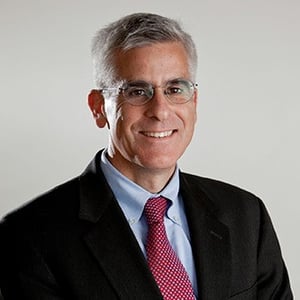
Resident Fellow and Milton Friedman Chair, American Enterprise Institute
James C. Capretta is a resident fellow and holds the Milton Friedman Chair at the American Enterprise Institute (AEI), where he studies health care, entitlement, and US budget policy, as well as global trends in aging, health, and retirement programs.
Concurrently, Mr. Capretta serves as a senior adviser to the Bipartisan Policy Center and, since 2011, as a member of the Advisory Board of the National Institute for Health Care Management Foundation.
He spent more than 16 years in public service before joining AEI. As an associate director at the White House’s Office of Management and Budget from 2001 to 2004, he was responsible for all health care, Social Security, welfare, and labor and education issues. Earlier, he served as a senior health policy analyst at the US Senate Budget Committee and at the US House Committee on Ways and Means. From 2006 to 2016, Mr. Capretta was a fellow, and later a senior fellow, at the Ethics & Public Policy Center.
Mr. Capretta is also a contributor to RealClearPolicy, where he regularly publishes commentary on public policy issues.
He is the author and coauthor of many published essays and reports, including “Toward Meaningful Price Transparency in Health Care” (AEI Economic Perspectives, 2019); “Increasing the Effectiveness and Sustainability of the Nation’s Entitlement Programs” (AEI, 2016) and “Improving Health and Health Care: An Agenda for Reform” (AEI, 2015). In addition, his book chapters include “Medicaid” in “A Safety Net That Works: Improving Federal Programs for Low-Income Americans” (AEI Press, 2017) and “Reforming Medicaid” in “The Economics of Medicaid: Assessing the Costs and Consequences” (Mercatus Center, 2014).
Mr. Capretta has been widely published in newspapers, magazines, and trade journals, including Health Affairs (where he is a member of the Editorial Board), The JAMA Network, National Affairs, National Review, The New York Times, and The Wall Street Journal. His television appearances include “PBS NewsHour,” Fox News Sunday, C-SPAN’s “Washington Journal,” CNBC, and Bloomberg Television.
Mr. Capretta has an MA in public policy studies from Duke University and a BA in government from the University of Notre Dame.
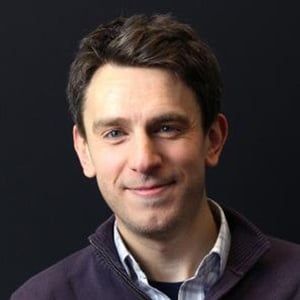
Senior Fellow, Manhattan Institute
Chris Pope is a senior fellow at the Manhattan Institute. Previously, he was director of policy research at West Health, a nonprofit medical research organization; health-policy fellow at the U.S. House Committee on Energy and Commerce; and research manager at the American Enterprise Institute. Pope’s research focuses on healthcare payment policy, and he has recently published reports on hospital-market regulation, entitlement design, and insurance-market reform. His work has appeared in, among others, the Wall Street Journal, Health Affairs, US News and World Report, and Politico.
Pope holds a B.Sc. in government and economics from the London School of Economics and an M.A. and Ph.D. in political science from Washington University in St. Louis.

Executive Vice President, Goldwater Institute
Christina Sandefur is the Executive Vice President at the Goldwater Institute. She develops policies and litigates cases advancing healthcare freedom, free enterprise, private property rights, free speech, and taxpayer rights.
Christina is a co-drafter of the Right to Try initiative, now federal law, which protects terminally ill patients' right to try safe investigational treatments that have been prescribed by their physician but are not yet FDA-approved. She has won important victories for property rights in Arizona and works nationally to promote the Institute's Private Property Rights Protection Act, a state-level reform that requires government to pay owners when regulations destroy property rights and reduce property values.
Christina is the co-author of the book Cornerstone of Liberty: Private Property Rights in 21st Century America (2016). She is a frequent guest on national television and radio programs, has provided expert legal testimony to various legislative committees, and is a frequent speaker at conferences. She is the recipient of the 2018 Buckley Award in recognition of her leadership in the freedom movement, and she is an Advisory Board Member of the Network of enlightened Women. Christina serves on the board of the Phoenix Lawyers Chapter of the Federalist Society and is a member of the executive committee for the Federalist Society's Regulatory Transparency Project: FDA & Health.
Christina is a graduate of Michigan State University College of Law and Hillsdale College.
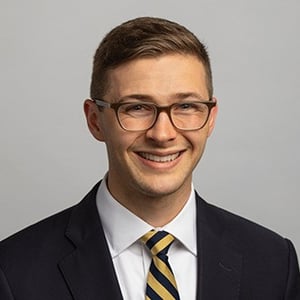
Attorney, Institute for Justice
Josh Windham is an attorney at the Institute for Justice.
Originally from Charlotte, Josh joined the Institute’s headquarters office in 2016. He received his law degree in 2016 from the University of North Carolina School of Law, where he served as president of the Federalist Society and as judicial extern to the Honorable Robert Numbers in the Eastern District of North Carolina. Josh graduated summa cum laude from North Carolina State University in 2013 with a Bachelor of Arts in History. He is an avid sports fan and dessert lover.
Josh is licensed in North Carolina.

Laurence A. Tisch Professor of Law and Director, Classical Liberal Institute, New York University School of Law; Director, Classical Liberal Institute, Civitas Institute University of Texas at Austin
Richard A. Epstein is the Laurence A. Tisch Professor of Law, at New York University, a senior research fellow at the Civitas Institute at the University of Texas Austin, and a senior Lecturer, the University of Chicago. He received an LL.D., h.c . from the University of Ghent, 2003 , and an LLD h.c . from the University of Siegen in 2018 and the Bradley Prize in 2011. He has been a member of the American Academy of Arts and Sciences since 1985. He has edited both the Journal of Legal Studies (1981-1991) and the Journal of Law and Economics (1991-2001). He is also a founder and director of the Classical Liberal Institute at NYU Law School. His most recent book is The Classical Liberal Constitution: The Uncertain Quest for Limited Government (2014). His other books include Takings: Private Property and the Power of Eminent Domain ( 1985); Bargaining with the State (1993); Simple Rules for a Complex World (1995); Principles for a Free Society: Reconciling Individual Liberty and the Common Good (1998); Skepticism and Freedom: A Modern Theory of Classical Liberalism (2003); Design for Liberty: Private Property, Public Administration and the Rule of Law (2011), and most recently, The Myth of Birthright citizenship—and Beyond (2026). He has taught courses in , administrative law, antitrust, constitutional, contracts, environmental law, land use planning; real property, torts and water law. He has written and spoken extensively on a wide range of topics, and is writes a regular column for Defining Ideas.
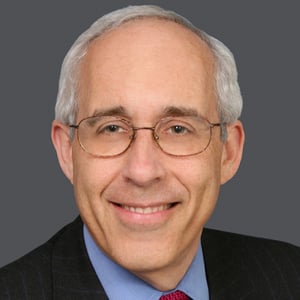
Partner, Mayer Brown LLP
Andrew Pincus is a partner in Mayer Brown LLP resident in Washington, D.C. His practice focuses on Supreme Court and appellate litigation.
Andy has argued 29 cases in the Supreme Court of the United States, including Lamps Plus, Inc. v. Varela and Frank v. Gaos in the October 2018 Term; as well as his recent victories in Impression Products, Inc. v. Lexmark International, Inc. (2017); Kindred Nursing Home Centers Limited Partnership v. Clark (2017); and Spokeo, Inc. v. Robins (2016). Law360 ranked Andy’s victory in AT&T Mobility v. Concepcion (2011), as the most important Supreme Court class action decision of the last 15 years.
Andy appears regularly before federal and state appellate courts and federal district courts. His practice also includes written and oral advocacy before Congress, other legislative bodies, and regulatory agencies regarding a variety of policy and legal issues.
A former Assistant to the Solicitor General in the United States Department of Justice (1984-1988), Andy co-founded and serves as co-director of the Yale Law School's Supreme Court Advocacy Clinic (2006-present), which provides pro bono representation in 10-15 Supreme Court cases each year.
While serving as General Counsel of the United States Department of Commerce (1997-2000), Andy had principal responsibility for the Digital Millennium Copyright Act and the Electronic Signatures in Global and National Commerce Act. He also participated in formulation of policy concerning privacy, domain name management, taxation of electronic commerce, export controls, international trade, and consumer protection.
Andy is a graduate of Yale College and Columbia Law School, where he was a Notes & Comments Editor of the Columbia Law Review. He served as Law Clerk to the Honorable Harold H. Greene, United States District Court for the District of Columbia (1981-1982).

Do We Need to Rethink Antitrust for Big Tech?
Roger P. Alford, Jay Himes, Salil Mehra, Christopher S. Yoo
Penn Law Federalist Society Symposium: Regulating Big Tech
On March 4, 2020, the Regulatory Transparency Project sponsored a symposium with the University of...
Do We Need to Rethink Antitrust for Big Tech?
Roger P. Alford, Jay Himes, Salil Mehra, Christopher S. Yoo
Penn Law Federalist Society Symposium: Regulating Big Tech
On March 4, 2020, the Regulatory Transparency Project sponsored a symposium with the University of...
Capital Conversations: Eric Hargan, Deputy Secretary of the Department of Health and Human Services (HHS)
Eric D. Hargan
Join us as the U.S. Department of Health and Human Services Deputy Secretary Eric Hargan...
Deep Dive Episode 101 – Litigation Update: Neora v. FTC
Ed Burbach, Deborah Heisz
Regulatory Transparency Project Teleforum
On November 1, 2019, Neora, a Texas-based healthcare products multi-level marketing (MLM) business, filed suit...
Topics
Relax, a Capital Idea
The Federal Reserve Board began the second quarter of the year by relaxing part of...
Big Cities and Zoning: The Search for Affordable Housing
David Bricklin, Bill Reid, Roger Valdez
Regulatory Transparency Project's Fourth Branch Video
Across the country, housing in larger cities is becoming more expensive. Lower and middle-class families...
Deep Dive Episode 98 – Regulatory Reforms and the COVID Pandemic
David Hyman, Roger D. Klein, Shoshana Weissmann
Regulatory Transparency Project Teleforum
Governments at all levels are figuring out how to make sure sick people are treated...
Deep Dive Episode 99 – Promoting a More Adaptable Physician Pipeline
James C. Capretta, Chris Pope
Regulatory Transparency Project Teleforum
The COVID-19 pandemic has the medical community scrambling to address shortages of supplies and some...
Deep Dive Episode 97 – Certificate of Need Laws and Healthcare Access
Christina Sandefur, Josh Windham
38 states have certificate of need (CON) laws which make it illegal for healthcare providers...
Deep Dive Episode 96 – New York’s “Rent Stabilization” Law
Richard A. Epstein, Andrew J. Pincus
Does New York’s “rent stabilization” law violate the federal Constitution? The law, which regulates approximately...