

Laurence A. Tisch Professor of Law and Director, Classical Liberal Institute, New York University School of Law; Director, Classical Liberal Institute, Civitas Institute University of Texas at Austin
Richard A. Epstein is the Laurence A. Tisch Professor of Law, at New York University, a senior research fellow at the Civitas Institute at the University of Texas Austin, and a senior Lecturer, the University of Chicago. He received an LL.D., h.c . from the University of Ghent, 2003 , and an LLD h.c . from the University of Siegen in 2018 and the Bradley Prize in 2011. He has been a member of the American Academy of Arts and Sciences since 1985. He has edited both the Journal of Legal Studies (1981-1991) and the Journal of Law and Economics (1991-2001). He is also a founder and director of the Classical Liberal Institute at NYU Law School. His most recent book is The Classical Liberal Constitution: The Uncertain Quest for Limited Government (2014). His other books include Takings: Private Property and the Power of Eminent Domain ( 1985); Bargaining with the State (1993); Simple Rules for a Complex World (1995); Principles for a Free Society: Reconciling Individual Liberty and the Common Good (1998); Skepticism and Freedom: A Modern Theory of Classical Liberalism (2003); Design for Liberty: Private Property, Public Administration and the Rule of Law (2011), and most recently, The Myth of Birthright citizenship—and Beyond (2026). He has taught courses in , administrative law, antitrust, constitutional, contracts, environmental law, land use planning; real property, torts and water law. He has written and spoken extensively on a wide range of topics, and is writes a regular column for Defining Ideas.
Partner, Vinson & Elkins LLP
Eric Groten is an accomplished Clean Air Act practitioner with nearly 35 years of experience navigating state and federal air quality laws. His work covers the full array of legal work generated by air quality laws, including defending enforcement actions, applying for the permits they require, transacting emissions rights, counseling clients on compliance and lobbying to change rules and the laws themselves. He has represented upstream, midstream and petrochemical facilities, power generators, and extractive industries in enforcement actions brought by EPA, by state agencies and by citizen groups.
Chambers USA described Eric as “a highly experienced air emissions lawyer, distinguished in the market by the sizable volume of contested air permitting work he undertakes,” and “creative in thinking through how to find an interpretation that’s going to get you the result you need” (2019). Indeed, Eric relishes the opportunity to help a client that’s willing to actively defend itself when it believes it has operated within the law. And to find a way through permitting disputes that stand in the way of capital projects that modernize our industrial base.
Senior Fellow for Law, Economics, and Technology, The Heritage Foundation; Professor, Florida International University
Mario Loyola is a Senior Fellow for Law, Economics, and Technology at The Heritage Foundation.
Loyola served in the Trump Administration as Associate Director for Regulatory Reform at the White House Council on Environmental Quality. In that role, he was one of the principal drafters of the One Federal Decision policy, which helped to streamline the permitting and environmental review of large infrastructure projects. While at CEQ, he was a member of the U.S. delegation to the USMCA free trade negotiations with Mexico and Canada, as well as the United Nations conference on biodiversity on the high seas. Loyola initially joined the White House in February 2017 as a Presidential Speechwriter, employing his expertise in many areas of foreign and domestic policy.
After beginning his career in M&A and corporate finance law, Loyola served in the Bush 43 Administration as a special assistant to the Undersecretary of Defense for Policy. He left that position to start writing on national defense issues in magazines such as National Review and The Weekly Standard, reporting from the front lines of the war on terrorism in Lebanon, Israel, and Iraq. He finished the Bush Administration as Foreign and Defense Counsel to the U.S. Senate Republican Policy Committee, then under the chairmanship of Senator Kay Bailey Hutchison of Texas. He subsequently moved to Texas and joined the Texas Public Policy Foundation, where he specialized in energy, environment, and federalism.
Loyola is a frequent contributor to The Wall Street Journal, National Review, and The Atlantic, among others. He teaches environmental and administrative law at Florida International University, where he is Founding Director of the Environmental Finance and Risk Management program in FIU’s prestigious Institute of Environment. He received a bachelor’s degree in European history from the University of Wisconsin–Madison and a J.D. from Washington University School of Law.
Professor Emeritus of Law and C. William Trout Senior Fellow in Public Interest Law, Shepard Broad College of Law, Nova Southeastern University
Joel Mintz has been a faculty member at Nova Southeastern University Shepard Broad College of Law since 1982. He teaches courses in Environmental Law, Torts, and Environmental Enforcement, and he has taught courses and seminars in Land Use Planning, State and Local Government Law, and Comparative Environmental Law.
Professor Mintz’s scholarship focuses primarily on environmental law and policy, environmental enforcement, sustainable development, regulation of hazardous wastes, and state and local taxation and finance. Mintz is the author of a well-received monograph, Enforcement at the EPA: High Stakes and Hard Choices (University of Texas Press, 1995) (revised edition, 2012), and a treatise on the federal environmental liabilities of state and local governments; and he has co-authored two casebooks, a “law-in-a-nutshell” work, and a handbook for attorneys on municipal finance. His law review articles have appeared in numerous journals and his articles and book contributions have been widely cited, quoted, and excerpted in texts, scholarly books, and articles. He has also published op-ed articles, perspective pieces, book reviews, and other works.
Prior to joining the College of Law faculty, Professor Mintz was an attorney and chief attorney with the U.S. Environmental Protection Agency in Chicago and Washington, D.C. He is an elected member of the American Law Institute, a Fellow of the American Bar Foundation, a member scholar of the Center for Progressive Reform and the President of the Board of Directors of the Everglades Law Center, a not-for-profit environmental public interest law firm.
Mintz received his B.A. from Columbia University, his J.D. from N.Y.U. School of Law, and his LL.M. and J.S.D. from Columbia Law School. He serves as the newsletter editor of the Association of American Law School’s Section on State and Local Government Law, and he is an elected member of both the Commission on Environmental Law of the International Union for the Conservation of Nature and the International Council of Environmental Law. He is also a member of the bar of the State of New York and of several federal courts.
Professor Mintz’s outside interests include spending time with his family, canoeing, bicycling, reading, and attending concerts, films, and sporting events.
General Counsel, Office of Sen. Marsha Blackburn
Jon Adame serves as General Counsel to Senator Marsha Blackburn, where he advises her on all tech-related issues across her committee assignments (Commerce, Judiciary, Armed Services). He previously worked for her on the House Energy & Commerce Committee. Jon graduated from the University of Colorado School of Law, and received his B.A. from the University of New Mexico.
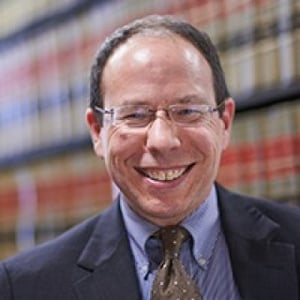
Professor of Law, Michigan State University (currently serving as FCC General Counsel)
Professor Candeub joined the MSU Law faculty in fall 2004. He is also a Fellow with MSU's Institute of Public Utilities. Prior to joining MSU, he served as an advisor at the Federal Communications Commission (FCC). From 1998 to 2000, Professor Candeub was a litigation associate for the Washington D.C. firm of Jones, Day, Reavis & Pogue and also has served as a corporate associate with Cleary, Gottlieb, Steen & Hamilton, also in Washington, D.C. Immediately following law school, he clerked for Chief Judge J. Clifford Wallace, U.S. Court of Appeals for the Ninth Circuit. While in law school, Professor Candeub was an articles editor for the University of Pennsylvania Law Review.
Professor Candeub's scholarly interests focus on the law and regulation of communications, internet, technology. His numerous law review articles and scholarly papers have placed him at the center of legal and policy controversies, and he often writes for popular outlets such as the Wall Street Journal and US News. Federal courts, including the U.S. Supreme Court, have cited and relied upon his work.
He joined the Trump administration in 2019 as Deputy Assistant Secretary of Commerce for Telecommunications and Information and assumed the role of Acting Assistant Secretary. He later joined the Department of Justice as Deputy Associate Attorney General.
Professor Candeub is a senior fellow at the D.C.-based Center of Renewing America.
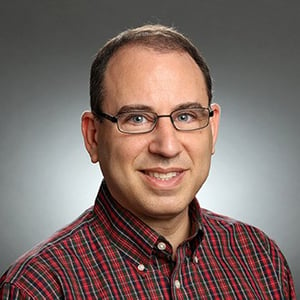
Professor of Law and Co-Director, High Tech Law Institute, Santa Clara University School of Law
Eric Goldman is a Professor of Law, and Co-Director of the High Tech Law Institute, at Santa Clara University School of Law. Before he became a full-time academic in 2002, he practiced Internet law for 8 years in the Silicon Valley. His research and teaching focuses on Internet, IP and advertising law topics, and he blogs on these topics at the Technology & Marketing Law Blog [http://blog.ericgoldman.org]. Managing IP magazine has twice named him to a shortlist of North American “IP Thought Leaders,” and he has been named an “IP Vanguard” by the California State Bar’s IP Section.
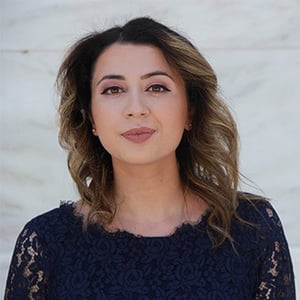
Senior Legal Fellow, The Future of Free Speech, Vanderbilt University
Ashkhen Kazaryan is a renowned expert in First Amendment law and technology policy, specializing in digital free speech, artificial intelligence, and the intersection of constitutional rights with emerging technologies. As a Senior Legal Fellow at the Future of Free Speech at Vanderbilt University, she leads initiatives to protect free expression and shape policies that uphold the First Amendment in the digital age.
Previously, Ashkhen was the lead for North and Latin America on the content regulation team at Meta, where she also served as the company’s policy lead on Section 230. She has also been a Senior Fellow at Stand Together and the Director of Civil Liberties at TechFreedom, where she worked extensively on platform liability, free speech, and internet governance. She is currently Fellow for the First Amendment at the Freedom Forum.
Ashkhen earned her specialist in law degree summa cum laude from Lomonosov Moscow State University in 2012 and later received a master of law degree from Yale Law School in 2016. During her time at Yale, she contributed as an articles editor for the Yale Journal of Law and Feminism, a senior editor for the Yale Law and Policy Review, and an editor for the Yale Journal of Law and Technology, while also serving as co-chair of the Public Interest Fellowship.
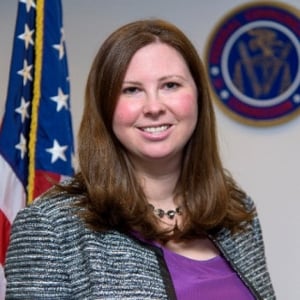
Legislative Director for Senator Marsha Blackburn, U.S. Senate
Jamie Susskind is the Legislative Director for Senator Marsha Blackburn (R-TN). Prior to becoming Legislative Director, she served for two years as the Senator’s Technology Policy Advisor. In that role, she advised on issues such as data privacy, cybersecurity, broadband, spectrum, content moderation, and antitrust, in addition to staffing the Senator on the Senate Commerce Subcommittee on Consumer Protection, Product Safety, and Data Security. Susskind previously worked on the Hill as Chief Counsel to Senator Deb Fischer (R-NE) and as an FCC Detailee for the Senate Committee on Commerce, Science, and Transportation. She also served as Chief of Staff to FCC Commissioner Brendan Carr and as Vice President of Policy and Regulatory Affairs at the Consumer Technology Association. A native Michigander, Susskind earned a Juris Doctor from the Antonin Scalia Law School and a Bachelor of Arts degree from the University of Michigan (Go Blue!).
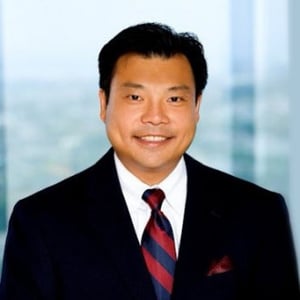
Attorney and Legal Commentator
John Shu is an attorney and legal commentator. His focus areas include constitutional law, securities & corporate law, antitrust law, administrative law, politics, and international affairs. Mr. Shu has lectured and published on a wide variety of issues.
Mr. Shu served President George H.W. Bush and President George W. Bush. He also served Judge Stanley Sporkin, U.S. District Court for the District of Columbia, who was Director of Enforcement at the U.S. Securities & Exchange Commission and General Counsel at the Central Intelligence Agency, and Judge Paul Roney, U.S. Court of Appeals for the Eleventh Circuit, who was Presiding Judge of the Foreign Intelligence Surveillance Court of Review.
Mr. Shu is a member of the National Committee on U.S. - China Relations, the Pacific Council on International Policy, and the Foreign Policy Association.

Tazewell Taylor Professor of Law and William H. Cabell Research Professor, William & Mary Law School
Jonathan H. Adler joined the William & Mary law faculty as the Tazwell Taylor Professor of Law and William H. Cabell Research Professor in 2025. Prior to joining the faculty, he was the inaugural Johan Verheij Memorial Professor of Law and the founding Director of the Coleman P. Burke Center for Environmental Law at the Case Western Reserve University School of Law.
Professor Adler is the author or editor of seven books, including Climate Liberalism: Perspectives on Liberty, Property and Pollution (Palgrave, 2023), Marijuana Federalism: Uncle Sam and Mary Jane (Brookings Institution Press, 2020), Business and the Roberts Court (Oxford University Press, 2016) and Rebuilding the Ark: New Perspectives on Endangered Species Act Reform (AEI Press, 2011).
His articles have appeared in publications ranging from the Harvard Environmental Law Review and Yale Journal on Regulation to the Wall Street Journal, New York Times, and Washington Post. He has testified before Congress a dozen times, and his work has been cited in the U.S. Supreme Court. A 2024 study identified Professor Adler as the seventh most cited legal academic in administrative and environmental law from 2019 to 2023.
Professor Adler is a contributing editor to Civitas Outlook and a regular contributor to the popular legal blog, The Volokh Conspiracy. A regular commentator on constitutional and regulatory issues, he has appeared on numerous radio and television programs, ranging from the PBS Newshour and National Public Radio to the Fox News Channel and Entertainment Tonight.
Professor Adler is a senior fellow at the Property & Environment Research Center in Bozeman, Montana. In 2018, Professor Adler was elected to membership in the American Law Institute and helped co-found the organization Checks and Balances. In 2024, Professor Adler was appointed a public member of the Administrative Conference of the United States.
Professor Adler clerked for the Honorable David B. Sentelle on the U.S. Court of Appeals for the District of Columbia Circuit.
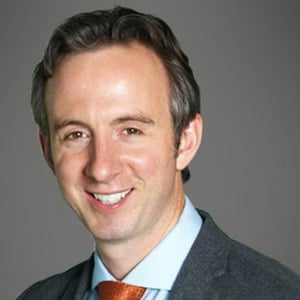
Professor of Law, University of Minnesota Law School
Professor James W. Coleman is a scholar of energy law. He specializes in North American energy infrastructure, transport, and trade. He is also a nonresident senior fellow at the American Enterprise Institute focused on energy policy.
Professor Coleman has testified before Congress on steps to speed up energy infrastructure permits. He also worked with a team of experts as part of Alberta's Royalty Review to revise the Canadian province's management of its vast oil and gas resources.
Before joining Minnesota, Professor Coleman taught at Southern Methodist University's Dedman School of Law, the University of Calgary’s law and business schools, and Harvard Law School. Earlier, he practiced environmental and appellate law at Sidley Austin in Washington, D.C., and clerked for the Honorable Steven M. Colloton of the U.S. Court of Appeals for the Eighth Circuit.
Professor Coleman received two degrees from Harvard University—a J.D. (cum laude) and B.A. in biology (magna cum laude with highest honors in the field). As a result of his undergraduate thesis on butterfly genetics, which required fieldwork in Central Asia, a species of lycaenid butterfly was named after him—Agrodiaetus ripartii colemani.
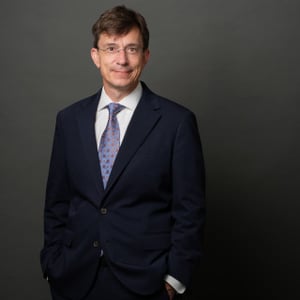
Professor of Law and Executive Director, Law and Economics Center, Antonin Scalia Law School, George Mason University
Donald Kochan is Professor of Law and Executive Director of the Law & Economics Center (LEC). Professor Kochan is an elected member of the American Law Institute (ALI) and serves as an Adviser to ALI's Restatement of the Law Fourth, Property project. Professor Kochan is a Nonresident Scholar at the Center for the Constitution at Georgetown University Law Center, where he was a Visiting Scholar in residence during Fall 2018. Before joining the Antonin Scalia Law School faculty, he was the Parker S. Kennedy Professor in Law at Chapman University’s Dale E. Fowler School of Law from 2004 to 2020. From 2003 to 2004, Professor Kochan was an Olin Fellow at the University of Virginia School of Law. During 2002-2003, he was a Visiting Assistant Professor of Law at George Mason’s Scalia Law School.
Professor Kochan’s scholarship focuses on areas of property law, constitutional law, administrative law, local government law, natural resources and environmental law, and law & economics. He has published several books and more than 50 scholarly articles and essays in well-regarded law journals. His work has been cited in more than a dozen state and federal court opinions, in more than 75 briefs filed in state and federal courts including more than 25 filed in the U.S. Supreme Court, in dozens of books and treatises, and in more than 800 scholarly articles.
Professor Kochan received his JD from Cornell Law School, where he was a John M. Olin Scholar in Law and Economics and managing editor of the Cornell International Law Journal. During law school, he also served as editor and executive editor of the Harvard Journal of Law & Public Policy symposium issues in 1997 and 1998. He received his BA from Western Michigan University, magna cum laude, with majors in both political science and philosophy, where he studied as the John W. Gill Medallion Scholar and was honored as the Presidential Scholar (awarded to the top graduate in the political science department).
After graduating from law school, Professor Kochan was a law clerk to The Honorable Richard F. Suhrheinrich of the United States Court of Appeals for the Sixth Circuit. Following his clerkship, Professor Kochan was an associate with the firm of Crowell & Moring LLP in Washington, D.C., where he specialized in natural resources & environmental law as well as tort, products, and consumer civil litigation & legislative affairs.
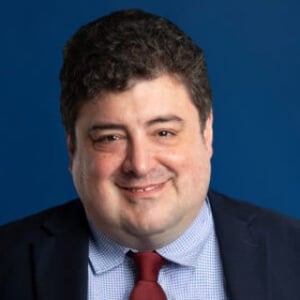
Senior Fellow and Director of Finance Policy, Competitive Enterprise Institute
John Berlau is a senior fellow and Director of Finance Policy at the Competitive Enterprise Institute. His work focuses on how public policy affects access to capital, entrepreneurship, and investments made by the public and business community alike. In recent years, he has studied the consequences of financial reform efforts passed by Congress like the Sarbanes-Oxley Act, the government’s response to the 2008 financial crisis including the Dodd-Frank Act, the placement of Fannie Mae and Freddie Mac into conservatorship, and the rise of cryptocurrency.
He is also the author of the book George Washington: Entrepreneur: How Our Founding Father’s Private Business Pursuits Changed America and the World. The book received rave reviews in the Wall Street Journal and other forums, and was endorsed by eminent historians and scholars such as Richard Brookhiser, Amity Shlaes, and Craig Shirley.
Berlau is a contributing writer for Forbes. His work has been published and cited in The Wall Street Journal, The New York Times, The Washington Post, Financial Times, Bloomberg News, The Atlantic, Politico, Daily Caller, Washington Examiner, Investor’s Business Daily, National Journal, National Review, American Spectator, Reason Magazine, and more. He is a frequent guest on radio and television programs, including CNBC’s “The Call,” “Power Lunch” and “Closing Bell,” Fox News’ “Fox & Friends” and “Your World with Neil Cavuto,” and Fox Business’ “Cavuto.”
He has testified on the impact of financial regulation before the House Committee on Financial Services and the House Committee on Energy and Commerce. A recognized expert on the phenomenon of crowdfunding, Berlau has spoken at prominent conferences such as South by Southwest Interactive in Austin, Money 20/20 in Las Vegas, the FinTech Global Expo in San Diego, the CFGE Crowdfund Banking and Lending Summit in San Francisco and the Crowdfund Intermediary Regulatory Advocates (CFIRA) Summit in Washington, D.C. He is also author of the widely cited paper “Declaration of Crowdfunding Independence: Finance of the People, by the People, and for the People.”
Berlau is an award-winning financial and political journalist. He served as Washington correspondent for Investor’s Business Daily and as a staff writer for Insight magazine, published by The Washington Times. In 2002, he received the Sandy Hume Memorial Award for Excellence in Political Journalism from Washington’s National Press Club. He was a media fellow at the Hoover Institution in 2003. He graduated from the University of Missouri-Columbia in 1994 with degrees in journalism and economics.
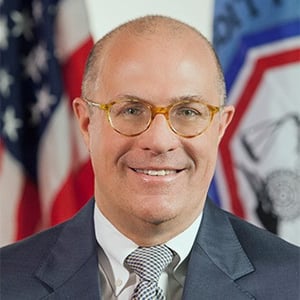
Senior Counsel, Willkie Farr & Gallagher LLP
J. Christopher “Chris” Giancarlo is senior counsel at Willkie Farr & Gallagher LLP, based in the firm’s New York office. Chris served as the thirteenth Chairman of the U.S. Commodity Futures Trading Commission (CFTC), where he oversaw regulation of the futures, options and swaps derivatives markets. Chris was also a successful entrepreneur helping GFI Group Inc. grow into a leading trading platform and technology vendor to global markets for OTC swaps and other derivatives and managing GFI’s successful private equity financing and IPO.
Chris is a renowned blockchain technology advocate and key contributor to the global discourse on cryptocurrencies and digital assets. During his tenure at the CFTC (2014-2019), Chris oversaw the first bitcoin futures products entering the marketplace and applied a “Do No Harm” regulatory approach towards blockchain technology.
Chris has testified often about financial and derivatives markets before the U.S. Congress and EU Parliament and is a frequent guest on broadcast radio and television, including BloombergTV, CNBC, Fox Business and the BBC, as well as podcasts such as “Unchained” and “CoinDesk.” Chris has written and spoken extensively on public policy, legal and other matters involving technology and the financial markets and has authored numerous white papers, articles and op-eds that have been published in The Wall Street Journal, Financial Times, Cato Journal, New York Law Journal, Les Echos and Coinbase.
Chris has over 45,000 followers on Twitter as @giancarloMKTS where he is known as “CryptoDad.”
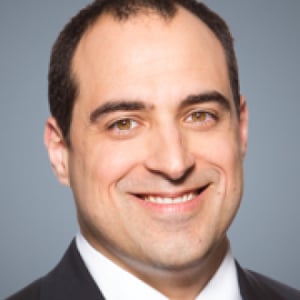
Vice President and Director, Center for Monetary and Financial Alternatives, Cato Institute
Norbert Michel is vice president and director of the Cato Institute’s Center for Monetary and Financial Alternatives, where he specializes on issues pertaining to financial markets and monetary policy. Michel was most recently the Director for Data Analysis at the Heritage Foundation where he edited, and contributed chapters, to two books: The Case Against Dodd–Frank: How the “Consumer Protection” Law Endangers Americans, and Prosperity Unleashed: Smarter Financial Regulation
Michel was previously a tenured professor at Nicholls State University’s College of Business, teaching finance, economics and statistics. Before that, he worked at Heritage as a tax policy analyst in the think tank’s Center for Data Analysis from 2002 to 2005. He previously was with the global energy company Entergy, where he worked on models to help predict bankruptcies of commercial clients.
Michel holds a doctoral degree in financial economics from the University of New Orleans. He received his bachelor of business administration degree in finance and economics from Loyola University. He currently resides in Virginia.
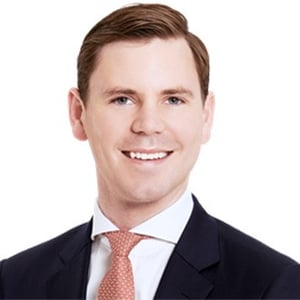
Associate, Latham & Watkins LLP
Charlie Beller is an associate in the Washington, D.C. office of Latham & Watkins.
Mr. Beller represents companies in antitrust and competition matters, including merger clearance, antitrust litigation, government investigations, and corporate counseling.
He advises clients on a variety of antitrust issues, with specific experience in the defense, aviation, chemicals, and music and book publishing industries.
Mr. Beller maintains an active pro bono practice, providing tax-exempt counseling to non-profit institutions. He has also supported successful litigation to overturn state occupational licensing restrictions.
Mr. Beller serves as a Young Lawyer Representative on the American Bar Association (ABA) Antitrust Section’s Pricing Conduct Committee, and as a co-editor of the Section’s forthcoming Price Discrimination Handbook. He authored updates to the Air Transportation chapter of Antitrust Law Developments.
Mr. Beller was previously a management consultant in Germany supporting companies with pricing strategy.
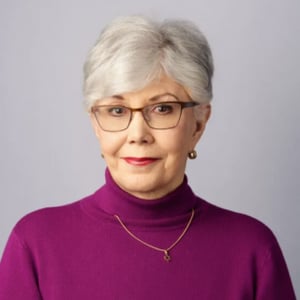
Chairman, Center for Equal Opportunity
Linda Chavez is Chairman of the Center for Equal Opportunity. She has published opinions and columns in newspapers across the country and appears regularly on cable news. Chavez is the author of the three books: Out of the Barrio: Toward a New Politics of Hispanic Assimilation, An Unlikely Conservative: The Transformation of an Ex-Liberal, and Betrayal: How Union Bosses Shake Down Their Members and Corrupt American Politics. She has been honored by the Library of Congress as a "Living Legend" and as nominee for Secretary of Labor by President George W. Bush.
Chavez has held many appointed positions and has served on numerous corporate and nonprofit boards. Among her appointed positions has been Chairman, National Commission on Migrant Education (1988-1992); White House Director of Public Liaison (1985); Staff Director of the U.S. Commission on Civil Rights (1983-1985); and member of the Administrative Conference of the United States (1984-1986). Chavez was also the Republican nominee for U.S. Senator from Maryland in 1986 and was elected by the United Nations' Human Rights Commission to serve a four-year term as U.S. Expert to the U.N. Sub-commission on the Prevention of Discrimination and Protection of Minorities.
Chavez earned her BA from the University of Colorado.
Professor of History, Brooklyn College and the CUNY Graduate Center
KC Johnson is professor of history at Brooklyn College and the CUNY Graduate Center, where he has taught since 1999. He has written 13 books on topics in U.S. political history, U.S. foreign policy, and legal and policy debates surrounding campus due process and civil liberties. His Duke lacrosse case blog, Durham-in-Wonderland, was named ABA Journal’s Best Ethics Blog in 2007; and he continues to blog on higher-ed matters at the blog Minding the Campus.
Freelance Journalist and Author
Stuart Taylor, Jr. is a Washington writer focusing on legal and policy issues and a National Journal contributing editor. He occasionally practices law.
Taylor has coauthored three books. All have been acclaimed by commentators across the ideological spectrum. In January 2017, KC Johnson and Taylor authored The Campus Rape Frenzy: The Attack on Due Process at America's Universities. In 2012, Richard Sander and Taylor authored Mismatch: How Affirmative Action Hurts Students It's Intended to Help, and Why Universities Won't Admit It. In 2007, Taylor and Johnson authored Until Proven Innocent: Political Correctness and the Shameful Injustices of the Duke Lacrosse Rape Fraud. Sander and Taylor have also filed amicus briefs in Supreme Court cases involving admissions preferences.
Since 1980, Taylor has done reporting and commentary about issues ranging from the biggest Supreme Court cases to race, voting rights, mindlessly excessive criminal penalties, guilt-presuming campus rape processes, journalistic bias, the death penalty, war powers, gerrymandering, guns, polarization, civil liberties, national security, torture, campaign finance, education, impeachment, and other issues. He has often been called one of the nation's best legal journalists and is known for challenging both liberal and conservative conventional wisdom.
Taylor was a reporter for The New York Times from 1980-1988, covering legal affairs and then the Supreme Court. He wrote commentaries and long features for The American Lawyer, Legal Times and their affiliates from 1989-1997, and for National Journal and Newsweek from 1998 through 2010. He has written (less often) on a freelance basis for numerous publications since 2010. He has written op-eds for The Washington Post, The New York Times, The Wall Street Journal, The Los Angeles Times, USA Today, and The New York Daily News and longer commentaries for RealClearPolitics, The Atlantic, The New Republic, the (late) Weekly Standard, National Review, Slate, The Daily Beast, Harper’s, Reader’s Digest, Time and other magazines. He has been interviewed on all major television and radio networks. He taught “Law and the News Media” at Stanford Law School in 2011 and 2012 and practices law on occasion.
Taylor graduated from Princeton University in 1970 with an A.B. in History. After working as a reporter for the Baltimore Evening Sun and Sun from 1971-1974, he moved to Harvard Law School, was a Harvard Law Review note editor, and graduated in 1977 at the top of his class, with high honors. He also won a Frederick Sheldon Traveling Fellowship and traveled around the world in 1977-1978 while studying freedom of the press in the United Kingdom and Kenya.
Taylor practiced law with Wilmer, Cutler & Pickering, in Washington, D.C., from 1977-1980 before returning to journalism in 1980 by joining the Washington Bureau of The New York Times.
Taylor's journalism honors include the 2009 Northern California Innocence Project Media Award for his work on the Duke lacrosse rape fraud; a 2002 National Headliner Award for best special magazine column on one subject; and a share of The American Lawyer’s National Magazine Award for a March 1990 special issue on the drug war. He was a National Magazine Award finalist in 1993 and 1997 and was nominated by The New York Times for a Pulitzer Prize in 1988.
H.H. Macaulay Endowed Professor of Economics, Clemson College of Business
Thomas Hazlett is the Hugh H. Macaulay Endowed Professor of Economics at Clemson University. He has previously held faculty positions at George Mason University, the University of California, Davis, and the Wharton School, and served as Chief Economist of the Federal Communications Commission. A noted expert in regulatory economics and information markets, his research has appeared in academic forums such as the Journal of Law & Economics, RAND Journal of Economics, the Journal of Financial Economics, the University of Pennsylvania Law Review and the Columbia Law Review. He has also written for such popular periodicals as the Wall Street Journal, The Economist, Slate, the N.Y. Times, N.Y. Daily News, Reuters.com, Business Week, The New Republic and the Financial Times. His most recent book, The Political Spectrum: The Tumultuous Liberation of Wireless Technology, from Herbert Hoover to the Smartphone, (Yale, 2017), was featured as one of the top tech books of the year at CES 2018.
Senior Fellow, Technology Policy, Cato Institute
Jennifer’s research focuses on the intersection of emerging technology and law with a particular interest in the interactions between technology and the administrative state. Her work covers topics including judicial deference, liability protection for Internet platforms, autonomous vehicles and other disruptive transportation technologies, the regulation of data privacy, and the benefits of technology and innovation. Her work has appeared in USA Today, the Chicago Tribune, the New York Daily News, the Sacramento Bee, the Washington Times, Real Clear Policy, and U.S. News and World Report. Jennifer has a JD from the University of Alabama School of Law and a BA in political science at Wellesley College.
Managing Director, Econ One
Hal Singer is an expert in antitrust, consumer protection, and regulation. He has researched, published, and testified on competition-related issues in a wide variety of industries, including media, pharmaceuticals, sports, and finance. He has extensive experience providing expert economic and policy advice to regulatory agencies in the United States and Canada, as well as before congressional committees.
Dr. Singer is also a Senior Fellow at the George Washington Institute of Public Policy and an Adjunct Professor at Georgetown University, McDonough School of Business, where he teaches advanced pricing to MBA candidates. In 2018, the American Antitrust Institute honored Dr. Singer with an antitrust enforcement award for his work in the Lidoderm antitrust litigation.

Deep Dive Episode 129 – Environmental Citizen Suits and SEPs: Do Constitutional and Nondelegation Concerns Outweigh Environmental Benefits?
Richard A. Epstein, Eric Groten, Mario Loyola, Joel Mintz
A Regulatory Transparency Project Teleforum
Environmental laws such as the Clean Air Act allow private plaintiffs and environmental advocacy groups...
Free Speech in the Digital Era: Section 230 and the Federal Communications Commission
Jon Adame, Adam Candeub, Eric Goldman, Ashkhen Kazaryan, Jamie Susskind
Section 230 of the Communications Decency Act provides liability protection to platforms, internet service providers,...
FTC v. Qualcomm: The Ninth Circuit on Tech Antitrust
John Shu
Please join us for a teleforum discussing the Ninth Circuit’s recent opinion in this important case,...
Deep Dive Episode 128 – Can States Trump Interstate Commerce?
Jonathan H. Adler, James W. Coleman, Donald J. Kochan
A Regulatory Transparency Project Teleforum
Asserting their sovereign interests or “states' rights,” many states are increasingly attempting to inject state...
Deep Dive Episode 127 – Should the Fed Create Fedcoin, Digital Dollars, and Fed Accounts?
John Berlau, J. Christopher Giancarlo, Norbert J. Michel
A Regulatory Transparency Project Teleforum
As cryptocurrencies have proliferated in the private sector, central banks are now contemplating getting into...
When Do Low Prices Hurt Competition?
Charlie Beller
Regulatory Transparency Project's Fourth Branch Video
Lower prices are generally assumed to benefit consumers. However, predatory pricing – which artificially lowers...
Topics
Big Tech and The Whole First Amendment
That's Debatable is a new blog initiative bringing together legal and policy experts with differing perspectives...
Deep Dive Episode 125 – The New Title IX Rules
Linda L. Chavez, KC Johnson, Stuart S. Taylor
A Regulatory Transparency Project Teleforum
In 2017 the Department of Education withdrew the Obama administration’s guidance documents on Title IX sexual...
Topics
FCC's O'Rielly on First Amendment & Fairness Doctrine Dangers
That's Debatable is a new blog initiative bringing together legal and policy experts with differing perspectives...
Deep Dive Episode 123 – Antitrust Investigations into Big Tech Companies
Thomas Hazlett, Jennifer Huddleston, Hal Singer
A Regulatory Transparency Project Teleforum
American tech companies like Google, Apple, Facebook, and Amazon are some of the most successful...