
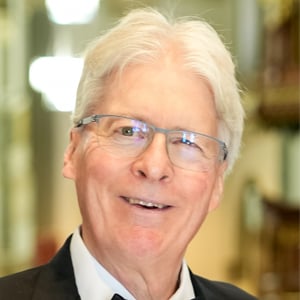
General Counsel, James Madison Center for Free Speech

Judge, United States Court of Appeals, Third Circuit
Judge Hardiman was appointed to the United States Court of Appeals for the Third Circuit on January 9, 2007 and was confirmed by the Senate (95-0) on March 15, 2007. Prior to becoming an appellate judge, Judge Hardiman served as a trial judge on the United States District Court for the Western District of Pennsylvania as of November 1, 2003. In 2008, Chief Justice John Roberts appointed Judge Hardiman to the Information Technology Committee of the Judicial Conference of the United States. Judge Hardiman was appointed Chairman of the IT Committee in 2013 and served in that capacity until September 2021. In 2021 he was appointed by the Director of the Administrative Office of the United States Courts to serve as Chair of the Judiciary IT Security Task Force, which completed its work in fall 2023. Chief Justice Roberts appointed Judge Hardiman to the Board of the Federal Judicial Center to serve from March 2020 until March 2024. As part of his work with the Center, Judge Hardiman now serves as Editor in Chief for the Manual for Complex Civil Litigation, Fifth.
Before entering judicial service, Judge Hardiman handled a wide variety of litigation matters in state and federal trial and appellate courts as a partner at Reed Smith LLP (1999-2003), a partner at Titus & McConomy LLP (1996-1999), and as an associate with its predecessor firm, Cindrich & Titus (1992-1996). Judge Hardiman began his legal career as an associate in the Washington, D.C. office of Skadden, Arps, Slate, Meagher & Flom (1990-1992).
A 1987 honors graduate of the University of Notre Dame, Judge Hardiman received his law degree in 1990 from the Georgetown University Law Center, where he served as a Notes and Comments Editor on the Georgetown Law Journal. In 2012, Judge Hardiman was elected as a member of the American Law Institute and was elected to its Council in 2019 and its Executive Committee in 2025. Judge Hardiman regularly teaches a seminar on Advanced Constitutional Law at Duquesne University School of Law and a one-week course entitled “Constitutional Law: the First and Second Amendments” at Georgetown University Law Center.
A native of Waltham, Massachusetts, Judge Hardiman has chambers in Pittsburgh, Pennsylvania. He and his wife Lori married in 1992 and have three children.
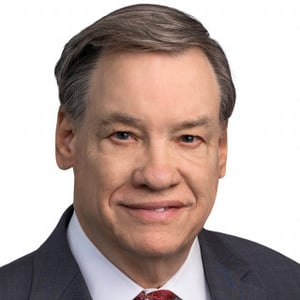
Partner, Baker Botts L.L.P.
Thomas R. Phillips is a partner in the Austin office of Baker Botts L.L.P.,
concentrating in general litigation, including appellate, trial strategy, and alternate
dispute resolution. He was appointed and then elected Chief Justice of the Supreme
Court of Texas in 1988, being one of the first four Republicans (along with Kent Hance,
Eugene Cook, and Bathan Hecht) to win a down-ballot statewide race since
Reconstruction. He was re-elected in 1990, 1996, and 2002 before leaving the Court in
2004.
While in office, Phillips served as president of the Conference of Chief Justices in
1997-98 and as a member of the Federal-State Relations Committee of the
Administrative Conference of the United States and the Institutions of Democracy
Judicial Branch Commission of the Annenberg Public Policy Center. After returning to
private life, he served on the Carter-Baker Commission on Federal Election Reform, the
Texas Historical Commission, the Texas State Historical Society, and the Judicial
Districts Board.
A native of Dallas, Phillips earned a B.A. from Baylor University in 1971 and a
J.D. from Harvard Law School in 1974. He has been awarded honorary doctoral
degrees from St. Edward’s University and Texas Tech University. Prior to becoming
Chief Justice, he practiced law in Houston and served as judge of the 280th District
Court in Harris County. Texas.
He resides with his wife, Dr. Lyn B. Phillips, in a historic home in Bastrop.
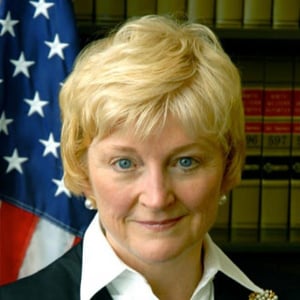
Chief Justice, Wisconsin Supreme Court
Justice Patience Drake Roggensack was elected to the Supreme Court in 2003. She was the first Wisconsin Court of Appeals judge ever elected to the Supreme Court, and continues to be the only Supreme Court justice to have served on the intermediate appellate court.
Born in Joliet, Ill., Justice Roggensack received a bachelor's degree in zoology in 1962 from Drake University. She worked as a research associate at several universities prior to entering the UW Law School, where she earned a law degree in 1977.
Before joining the Supreme Court, Justice Roggensack was elected to the Court of Appeals in 1996 and re-elected in 2002. Prior to becoming a judge, Justice Roggensack practiced law for 16 years in Madison.
During her career, Justice Roggensack has been a member of a variety of law-related organizations including the American Judicature Society and the Fellows of the American Bar Foundation. She is past president of the Western District of Wisconsin Bar Association and a past member of the State Bar of Wisconsin Bench-Bar Committee. She also has served frequently as a guest lecturer at the UW Law School and MATC.
Justice Roggensack also has served on the boards of a number of non-profit organizations, including the YMCA, YWCA, Olbrich Botanical Society, Wisconsin Center for Academically Talented Youth, Friends of the Arboretum, A Fund for Women, and the International Women's Forum, of which she is a past president.
Justice Roggensack is married and has three children. Her current term expires July 31, 2013.
Justice in Residence and Visiting Professor of Law, Ave Maria School of Law
Professor Taylor is a retired Chief Justice of the Michigan Supreme Court and served over 16 years as an appellate judge in Michigan. He is a graduate of the University of Michigan and received his J.D. from George Washington University Law School. After service as an officer in the US Navy, he began his legal career as an Assistant Prosecuting Attorney in Michigan and then practiced in a Lansing, Michigan, law firm, Denfield, Timmer and Taylor, for 19 years earning the highest ratings as to competence and character. He has lectured at law schools across the United States, been published in numerous law reviews and was the co-author of a three volume Michigan Practice Guide on Torts. He has served on the Board of Directors of the National Conference of Chief Justices, was a member, and then President, of the Michigan State Board of Law Examiners and served on the Board of Directors of the George Mason University Law School's Law and Economics Center.
General Counsel, James Madison Center for Free Speech
Judge, United States Court of Appeals, Third Circuit
Judge Hardiman was appointed to the United States Court of Appeals for the Third Circuit on January 9, 2007 and was confirmed by the Senate (95-0) on March 15, 2007. Prior to becoming an appellate judge, Judge Hardiman served as a trial judge on the United States District Court for the Western District of Pennsylvania as of November 1, 2003. In 2008, Chief Justice John Roberts appointed Judge Hardiman to the Information Technology Committee of the Judicial Conference of the United States. Judge Hardiman was appointed Chairman of the IT Committee in 2013 and served in that capacity until September 2021. In 2021 he was appointed by the Director of the Administrative Office of the United States Courts to serve as Chair of the Judiciary IT Security Task Force, which completed its work in fall 2023. Chief Justice Roberts appointed Judge Hardiman to the Board of the Federal Judicial Center to serve from March 2020 until March 2024. As part of his work with the Center, Judge Hardiman now serves as Editor in Chief for the Manual for Complex Civil Litigation, Fifth.
Before entering judicial service, Judge Hardiman handled a wide variety of litigation matters in state and federal trial and appellate courts as a partner at Reed Smith LLP (1999-2003), a partner at Titus & McConomy LLP (1996-1999), and as an associate with its predecessor firm, Cindrich & Titus (1992-1996). Judge Hardiman began his legal career as an associate in the Washington, D.C. office of Skadden, Arps, Slate, Meagher & Flom (1990-1992).
A 1987 honors graduate of the University of Notre Dame, Judge Hardiman received his law degree in 1990 from the Georgetown University Law Center, where he served as a Notes and Comments Editor on the Georgetown Law Journal. In 2012, Judge Hardiman was elected as a member of the American Law Institute and was elected to its Council in 2019 and its Executive Committee in 2025. Judge Hardiman regularly teaches a seminar on Advanced Constitutional Law at Duquesne University School of Law and a one-week course entitled “Constitutional Law: the First and Second Amendments” at Georgetown University Law Center.
A native of Waltham, Massachusetts, Judge Hardiman has chambers in Pittsburgh, Pennsylvania. He and his wife Lori married in 1992 and have three children.
Partner, Baker Botts L.L.P.
Thomas R. Phillips is a partner in the Austin office of Baker Botts L.L.P.,
concentrating in general litigation, including appellate, trial strategy, and alternate
dispute resolution. He was appointed and then elected Chief Justice of the Supreme
Court of Texas in 1988, being one of the first four Republicans (along with Kent Hance,
Eugene Cook, and Bathan Hecht) to win a down-ballot statewide race since
Reconstruction. He was re-elected in 1990, 1996, and 2002 before leaving the Court in
2004.
While in office, Phillips served as president of the Conference of Chief Justices in
1997-98 and as a member of the Federal-State Relations Committee of the
Administrative Conference of the United States and the Institutions of Democracy
Judicial Branch Commission of the Annenberg Public Policy Center. After returning to
private life, he served on the Carter-Baker Commission on Federal Election Reform, the
Texas Historical Commission, the Texas State Historical Society, and the Judicial
Districts Board.
A native of Dallas, Phillips earned a B.A. from Baylor University in 1971 and a
J.D. from Harvard Law School in 1974. He has been awarded honorary doctoral
degrees from St. Edward’s University and Texas Tech University. Prior to becoming
Chief Justice, he practiced law in Houston and served as judge of the 280th District
Court in Harris County. Texas.
He resides with his wife, Dr. Lyn B. Phillips, in a historic home in Bastrop.
Chief Justice, Wisconsin Supreme Court
Justice Patience Drake Roggensack was elected to the Supreme Court in 2003. She was the first Wisconsin Court of Appeals judge ever elected to the Supreme Court, and continues to be the only Supreme Court justice to have served on the intermediate appellate court.
Born in Joliet, Ill., Justice Roggensack received a bachelor's degree in zoology in 1962 from Drake University. She worked as a research associate at several universities prior to entering the UW Law School, where she earned a law degree in 1977.
Before joining the Supreme Court, Justice Roggensack was elected to the Court of Appeals in 1996 and re-elected in 2002. Prior to becoming a judge, Justice Roggensack practiced law for 16 years in Madison.
During her career, Justice Roggensack has been a member of a variety of law-related organizations including the American Judicature Society and the Fellows of the American Bar Foundation. She is past president of the Western District of Wisconsin Bar Association and a past member of the State Bar of Wisconsin Bench-Bar Committee. She also has served frequently as a guest lecturer at the UW Law School and MATC.
Justice Roggensack also has served on the boards of a number of non-profit organizations, including the YMCA, YWCA, Olbrich Botanical Society, Wisconsin Center for Academically Talented Youth, Friends of the Arboretum, A Fund for Women, and the International Women's Forum, of which she is a past president.
Justice Roggensack is married and has three children. Her current term expires July 31, 2013.
Justice in Residence and Visiting Professor of Law, Ave Maria School of Law
Professor Taylor is a retired Chief Justice of the Michigan Supreme Court and served over 16 years as an appellate judge in Michigan. He is a graduate of the University of Michigan and received his J.D. from George Washington University Law School. After service as an officer in the US Navy, he began his legal career as an Assistant Prosecuting Attorney in Michigan and then practiced in a Lansing, Michigan, law firm, Denfield, Timmer and Taylor, for 19 years earning the highest ratings as to competence and character. He has lectured at law schools across the United States, been published in numerous law reviews and was the co-author of a three volume Michigan Practice Guide on Torts. He has served on the Board of Directors of the National Conference of Chief Justices, was a member, and then President, of the Michigan State Board of Law Examiners and served on the Board of Directors of the George Mason University Law School's Law and Economics Center.
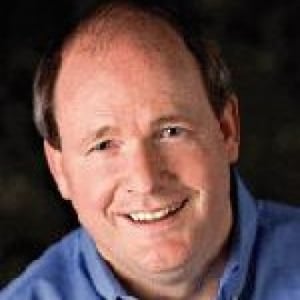
Regent’s Professor of Law and Director for the Center for Law, Science and Innovation, ASU Sandra Day O’Connor College of Law
Gary Marchant is a Regent's Professor of Law and director of the Center for Law, Science and Innovation. His research interests include legal aspects of genomics and personalized medicine, the use of genetic information in environmental regulation, risk and the precautionary principle, and governance of emerging technologies such as nanotechnology, neuroscience, biotechnology and artificial intelligence.
He teaches courses in Law, Science and Technology, Genetics and the Law, Biotechnology: Science, Law and Policy, Health Technologies and Innovation, Privacy, Big Data and Emerging Technologies, and Artificial Intelligence: Law and Ethics. He was named a Regents' Professor in 2011 and also is a professor in ASU’s School of Life Sciences, a Distinguished Sustainability Scientist in ASU’s Julie Ann Wrigley Global Institute of Sustainability, and is a Lincoln Professor of Emerging Technologies Law and Ethics with the Lincoln Center for Applied Ethics at ASU.
Prior to joining ASU in 1999, Professor Marchant was a partner at the Washington, D.C., office of Kirkland & Ellis, where his practice focused on environmental and administrative law. During law school, he was Editor-in-Chief of the Harvard Journal of Law & Technology and editor of the Harvard Environmental Law Review and was awarded the Fay Diploma (awarded to top graduating student at Harvard Law School).
Professor Marchant frequently lectures about the intersection of law and science at national and international conferences. He has authored more than 150 articles and book chapters on various issues relating to emerging technologies. Among other activities, he has served on five National Academy of Sciences committees, has been the principal investigator on several major grants, and has organized numerous academic conferences on law and science issues.

Executive Vice President, The Federalist Society
Dean Reuter is Executive Vice President at the Federalist Society for Law and Public Policy Studies. He has served in two federal government agency Offices of the Inspector General, as Counsel to the Inspector General and Deputy Inspector General, responsible for policing the use of federal funds granted and contracted through those agencies. As such, he helped conduct and oversee criminal investigations across the country. He is the principal author of the non-fiction book, The Hidden Nazi: The Untold Story of America's Deal with the Devil, and editor of Liberty’s Nemesis: The Unchecked Expansion of the State and Confronting Terror: 9/11 and the Future of American National Security. He was appointed by the President and served as Vice-Chairman of the Board of Directors of the Corporation for National and Community Service, and recently served as an appointee on the U.S. Commission on Presidential Scholars. He is a graduate of Hood College (BA with Honors) and the University of Maryland School of Law.
Regent’s Professor of Law and Director for the Center for Law, Science and Innovation, ASU Sandra Day O’Connor College of Law
Gary Marchant is a Regent's Professor of Law and director of the Center for Law, Science and Innovation. His research interests include legal aspects of genomics and personalized medicine, the use of genetic information in environmental regulation, risk and the precautionary principle, and governance of emerging technologies such as nanotechnology, neuroscience, biotechnology and artificial intelligence.
He teaches courses in Law, Science and Technology, Genetics and the Law, Biotechnology: Science, Law and Policy, Health Technologies and Innovation, Privacy, Big Data and Emerging Technologies, and Artificial Intelligence: Law and Ethics. He was named a Regents' Professor in 2011 and also is a professor in ASU’s School of Life Sciences, a Distinguished Sustainability Scientist in ASU’s Julie Ann Wrigley Global Institute of Sustainability, and is a Lincoln Professor of Emerging Technologies Law and Ethics with the Lincoln Center for Applied Ethics at ASU.
Prior to joining ASU in 1999, Professor Marchant was a partner at the Washington, D.C., office of Kirkland & Ellis, where his practice focused on environmental and administrative law. During law school, he was Editor-in-Chief of the Harvard Journal of Law & Technology and editor of the Harvard Environmental Law Review and was awarded the Fay Diploma (awarded to top graduating student at Harvard Law School).
Professor Marchant frequently lectures about the intersection of law and science at national and international conferences. He has authored more than 150 articles and book chapters on various issues relating to emerging technologies. Among other activities, he has served on five National Academy of Sciences committees, has been the principal investigator on several major grants, and has organized numerous academic conferences on law and science issues.
Executive Vice President, The Federalist Society
Dean Reuter is Executive Vice President at the Federalist Society for Law and Public Policy Studies. He has served in two federal government agency Offices of the Inspector General, as Counsel to the Inspector General and Deputy Inspector General, responsible for policing the use of federal funds granted and contracted through those agencies. As such, he helped conduct and oversee criminal investigations across the country. He is the principal author of the non-fiction book, The Hidden Nazi: The Untold Story of America's Deal with the Devil, and editor of Liberty’s Nemesis: The Unchecked Expansion of the State and Confronting Terror: 9/11 and the Future of American National Security. He was appointed by the President and served as Vice-Chairman of the Board of Directors of the Corporation for National and Community Service, and recently served as an appointee on the U.S. Commission on Presidential Scholars. He is a graduate of Hood College (BA with Honors) and the University of Maryland School of Law.
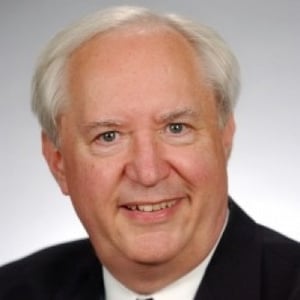
Oppenheim Professor Emeritus of Antitrust and Trade Regulation Law, George Washington University Law School
Thomas D. Morgan is Oppenheim Professor of Antitrust and Trade Regulation Law Emeritus at George Washington University. He was Dean of the Emory University School of Law and on the faculties of the University of Illinois and Brigham Young University. He is co-author of Problems and Materials on Professional Responsibility (14th Ed. 2022), with Professors Mitt Regan and John Dzienkowski. Professor Morgan served as an Associate Reporter for both the American Law Institute’s Restatement of the Law (Third): The Law Governing Lawyers and the American Bar Association’s Ethics 2000 Commission. He is an Executive Committee member of the Federalist Society’s Professional Responsibility and Legal Education Practice Group and a member of the ABA Business Law Section’s Professional Responsibility committee. His book, “The Vanishing American Lawyer” (2010), was published by Oxford University Press.
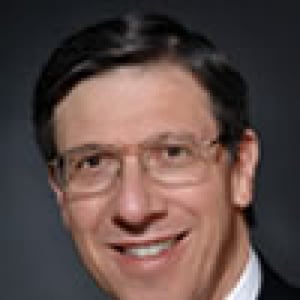
Executive Director, Argos Remembers
Anthony Davis is best described as a lawyer's lawyer. Mr. Davis is a member of the Lawyers for the Profession® practice group and his practice focuses on the laws that govern lawyers. He advises attorneys and law firms on legal professional and ethics issues, law firm creation, merger and dissolution, and issues relating to risk management and loss control.
Mr. Davis joined Hinshaw & Culbertson LLP in February 2003. He is a Past President of the Association of Professional Responsibility Lawyers (APRL). He is also a Member and Immediate Past Chair of the Committee on Legal Education and Admission to the Bar, a Member of the Special Committee on the Bar Exam and of the Law Practice Management Committee of the New York State Bar Association; a Member of the Committee on Professional Responsibility of the New York City Bar; a Fellow of the College of Law Practice Management; a Member of the American Law Institute; and a Fellow of the American Bar Foundation.
Mr. Davis is a Lecturer-in-Law at the Columbia University School of Law, teaching "Anatomy of Large Law Firms." As an Adjunct Professor of Law, Mr. Davis taught "Legal Profession" at Brooklyn Law School for many years.
Mr. Davis is the co-author of "Risk Management: Survival Tools for Law Firms, 2nd Edition," and of "The Essential Formbook: Comprehensive Practice Management Tools for Lawyers," both published by the American Bar Association.
In addition to his books, he has written and lectured widely on a variety of legal profession and ethics issues, including a regular bi-monthly column on professional responsibility in the New York Law Journal.
Mr. Davis is also a popular lecturer and panelist, drawing on his many years of teaching experience when speaking to bar associations and law firms throughout the United States on all aspects of professional responsibility, the law as it affects lawyers, law practice and risk management.
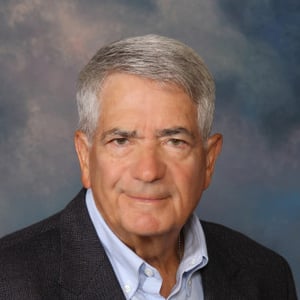
Professor Emeritus of Law, Indiana University; Co-Author, The Law of Lawyering
After graduating with honors from Harvard College in 1966, and from Rutgers Law School with highest honors in 1969, W. William Hodes began practice in a small civil rights and personal injury firm in New Orleans, where he had lived as a child. During the next eight years, he worked in Newark, New Jersey, first for the Kenneth Gibson administration, and then as senior staff attorney for the Education Law Center, a public interest law firm funded by the Ford Foundation.
In 1979, Hodes returned to the legal academy, first as a Bigelow Teaching Fellow at the University of Chicago Law School, and then as a Professor of Law at the Indiana University School of Law in Indianapolis. For the next twenty years, Professor Hodes taught in the areas of Civil Procedure, Constitutonal Law, Federal Courts, Administrative Law, and Professional Responsibility. He gained a national reputation as a scholar, consultant, and expert witness in the areas of Legal Ethics and Professional Responsbility, as they were then known.
Beginning in 1985 however, those subjects began to be known as "The Law of Lawyering," after a book of that name was published, co-authored by Professor Hodes and Professor Geoffrey C. Hazard, Jr., who had served as the Reporter to the Kutak Commission that developed the Model Rules of Professional Conduct. The treatise, which is now in its fourth edition and updated twice a year by Hodes and new co-author Peter R. Jarvis of Portland, Oregon, has become a mainstay resource for both the practicing bar and the academic community, and is often cited in court and ethics committee opinions.
While in the academy, Professor Hodes took two unusual sabbatical leaves. In the Spring of 1989, Hodes, who had spent his junior high school years in Beijing and is still fluent in Chinese, was a Visiting Scholar and Lecturer at the China University of Politics and Law, teaching a course in American Civil Procedure and conducting research into Chinese People's Mediation. (The course was suspended in April, when the events leading to the June 4th Tiananmen Massacre began to unfold, and Professor Hodes began to accompany his students on protest marches.)
During the October 1996 Term of the United States Supreme Court, Professor Hodes served as law clerk to Justice Ruth Bader Ginsburg, who had been his Civil Procedure and Conflicts of Law professor some thirty years earlier, during her Rutgers days. According to knowledgeable sources, Hodes was the oldest person to have served as a law clerk since the early 19th Century.
In 1999, W. William Hodes retired from law teaching (at age 56) in order to establish the William Hodes Professional Corporation, which was later renamed The William Hodes Law Firm; he became Professor Emeritus of Law at Indiana University as the new century began. Through this solo practice, Hodes can now devote full time to providing representation, consultation, expert testimony, legal opinions, and other counsel and assistance to lawyers in the areas of The Law of Lawyering, and Constitutional, Appellate, Supreme Court, and other complex litigation.
Professor of Law, Yeshiva University Benjamin N. Cardozo School of Law
Professor Brickman teaches Contracts, Professional Responsibility, and Land Use, among other courses. His areas of expertise include legal ethics, contingency fees, mass torts, and asbestos litigation. His writings on these and other subjects are widely cited and he is frequently quoted in the press.
Milton R. Underwood Chair in Free Enterprise, Vanderbilt University Law School
Brian Fitzpatrick is the Milton R. Underwood Chair in Free Enterprise and Professor of Law at Vanderbilt Law School, where his research focuses on class action litigation, federal courts, judicial selection, and constitutional law. He is best known for his empirical studies of class action settlements as well as his book The Conservative Case for Class Actions (University of Chicago Press, 2019). Professor Fitzpatrick joined Vanderbilt's law faculty in 2007 after serving as the John M. Olin Fellow at New York University School of Law. He graduated first in his class from Harvard Law School and went on to clerk for Judge Diarmuid O'Scannlain on the U.S. Court of Appeals for the Ninth Circuit and Justice Antonin Scalia on the U.S. Supreme Court. After his clerkships, Professor Fitzpatrick practiced commercial and appellate litigation for several years at Sidley Austin in Washington, D.C., and served as Special Counsel for Supreme Court Nominations to U.S. Senator John Cornyn. Before earning his law degree, Fitzpatrick graduated summa cum laude with a bachelor's of science in chemical engineering from the University of Notre Dame. He has received the Hall-Hartman Outstanding Professor Award, which recognizes excellence in classroom teaching, for his Civil Procedure and Federal Courts courses.
Professor of Law, Western New England College School of Law
Prior to coming to Western New England College in 1980, Professor Miller worked for the National Senior Citizens Law Center, Los Angeles, California, specializing in social security and private pension litigation in the federal courts. Before that, he was an attorney with the U.S. Department of Health, Education, and Welfare. He teaches constitutional law and other public law and litigation related subjects. Professor Miller's primary areas of interest focus on the challenges to the rule of law that have emerged as a result of the attacks of September 11, 2001, and on legal issues that especially affect poor people. He is president of No More Guantanamos, a non-profit advocacy group, and serves on the board of the Rosenberg Fund for Children.
Professor of Law, Yeshiva University Benjamin N. Cardozo School of Law
Professor Brickman teaches Contracts, Professional Responsibility, and Land Use, among other courses. His areas of expertise include legal ethics, contingency fees, mass torts, and asbestos litigation. His writings on these and other subjects are widely cited and he is frequently quoted in the press.
Milton R. Underwood Chair in Free Enterprise, Vanderbilt University Law School
Brian Fitzpatrick is the Milton R. Underwood Chair in Free Enterprise and Professor of Law at Vanderbilt Law School, where his research focuses on class action litigation, federal courts, judicial selection, and constitutional law. He is best known for his empirical studies of class action settlements as well as his book The Conservative Case for Class Actions (University of Chicago Press, 2019). Professor Fitzpatrick joined Vanderbilt's law faculty in 2007 after serving as the John M. Olin Fellow at New York University School of Law. He graduated first in his class from Harvard Law School and went on to clerk for Judge Diarmuid O'Scannlain on the U.S. Court of Appeals for the Ninth Circuit and Justice Antonin Scalia on the U.S. Supreme Court. After his clerkships, Professor Fitzpatrick practiced commercial and appellate litigation for several years at Sidley Austin in Washington, D.C., and served as Special Counsel for Supreme Court Nominations to U.S. Senator John Cornyn. Before earning his law degree, Fitzpatrick graduated summa cum laude with a bachelor's of science in chemical engineering from the University of Notre Dame. He has received the Hall-Hartman Outstanding Professor Award, which recognizes excellence in classroom teaching, for his Civil Procedure and Federal Courts courses.
Professor of Law, Western New England College School of Law
Prior to coming to Western New England College in 1980, Professor Miller worked for the National Senior Citizens Law Center, Los Angeles, California, specializing in social security and private pension litigation in the federal courts. Before that, he was an attorney with the U.S. Department of Health, Education, and Welfare. He teaches constitutional law and other public law and litigation related subjects. Professor Miller's primary areas of interest focus on the challenges to the rule of law that have emerged as a result of the attacks of September 11, 2001, and on legal issues that especially affect poor people. He is president of No More Guantanamos, a non-profit advocacy group, and serves on the board of the Rosenberg Fund for Children.
Associate Dean for Administration and Professor of Law, Chapman University School of Law
Legal Scholar and Solo Practitioner
Jack received his B.A. in History from the University of Virginia in 1977, graduating with Highest Distinction. After graduating Yale Law School in 1980, he served active duty in the U.S. Army's JAG Corps, rising to the rank of Major, where he represented the United States in more than 250 cases.
He practiced for a decade as an Associate for Bradley Arant in Birmingham, Alabama. He proudly served the State of Alabama in the Office of the Attorney General, both as Deputy and Assistant Attorney General, handling complex civil and criminal litigation cases for the people of Alabama. In 2000, he won the "Best Brief Award" from the National Association of Attorneys General for his brief in a case decided by the U.S. Supreme Court, James Alexander v. Martha Sandoval – a case he won. He was Special Assistant to the Inspector General for the Corporation for National and Community Service, Visiting Legal Fellow for the Center for Judicial and Legal Studies for the Heritage Foundation, Of Counsel at Strickland Brockington Lewis, a solo practitioner, and General Counsel for Indigo Energy.
Most recently, he "re-upped" for military service, volunteering his legal services to the Georgia State Defense Force where twice each month he provided legal services for National Guardsmen who were being deployed. He wore his military uniform for the last time in October 2024.
Jack Park passed away on March 16, 2026.
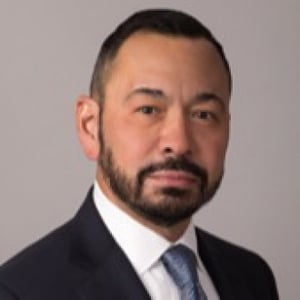
Partner, Gibson Dunn & Crutcher LLP
Miguel A. Estrada is a partner in the Washington, D.C. office of Gibson, Dunn & Crutcher.
Mr. Estrada has represented clients before federal and state courts throughout the country in a broad range of matters. He has argued 24 cases before the United States Supreme Court, and briefed many others. He has also argued dozens of appeals in the lower federal courts.
Best Lawyers® recognized Mr. Estrada as a 2020 Lawyer of the Year in Intellectual Property Litigation and as a Lawyer of the Year in Appellate Practice. He has been recognized by Benchmark Litigation as a 2020 U.S. Appellate Litigation “Star”. In 2014, The American Lawyer named Mr. Estrada a “Litigator of the Year,” praising his “brains and tenacity” and noting he is the lawyer to call for “a tough, potentially unwinnable case.” From 2014-2021, Chambers & Partners has named him as one of a handful of attorneys that it ranked in the top tier among the nation’s leading appellate lawyers. Chambers & Partners noted that “clients are impressed by his intellect and ability, with one saying, ‘His papers are just blindingly clear in what they say and devastating in how they marshal the arguments.’” The Atlantic described his oral argument in a 2014 high-profile separation-of-powers case as “one of the most dazzling arguments the marble chamber has heard in many years.”
Mr. Estrada was selected by his peers for inclusion in the 2020 edition of The Best Lawyers in America® in the area of Appellate Law, in addition to previous recognition by the publication in the specialties of Bet-the-Company Litigation, Commercial Litigation and Criminal Defense: White Collar, Intellectual Property Litigation, and Regulatory Enforcement Litigation in the areas of SEC, Telecom, and Energy. In 2017, he was elected as a member of the American Law Institute. In 2021, Mr. Estrada was named among the Lawdragon 500 Leading Lawyers in America. In 2004, Legal Times named him one of the top 12 appellate litigators in the D.C. area, noting that “people who follow appellate practice in Washington have known for several years that Estrada . . . is one of the best around.” Also in 2004, Washingtonian Magazine named him one of the top constitutional law lawyers “who could become one of the legends of the Supreme Court bar.”
Mr. Estrada joined Gibson Dunn in 1997, after serving for five years as Assistant to the Solicitor General of the United States. He previously served as Assistant U.S. Attorney and Deputy Chief of the Appellate Section, U.S. Attorney’s Office, Southern District of New York. In those capacities, Mr. Estrada represented the government in numerous jury trials and in many appeals before the U.S. Court of Appeals for the Second Circuit. Before joining the U.S. Attorney’s Office, Mr. Estrada practiced corporate law in New York with Wachtell, Lipton, Rosen & Katz.
Mr. Estrada is a Trustee of the Supreme Court Historical Society. He was formerly a member of the Board of Visitors of Harvard Law School.
Mr. Estrada served as a law clerk to the Honorable Anthony M. Kennedy in the U.S. Supreme Court from 1988 to 1989 and to the Honorable Amalya L. Kearse in the U.S. Court of Appeals for the Second Circuit from 1986 to 1987. He received a J.D. degree magna cum laude in 1986 from Harvard Law School, where he was editor of the Harvard Law Review. Mr. Estrada graduated with an A.B. degree magna cum laude and Phi Beta Kappa in 1983 from Columbia College, New York. He is fluent in Spanish and proficient in French.
Representative Supreme Court matters include:
In 2011, the Supreme Court appointed Mr. Estrada to brief and argue two criminal cases –Dorsey v. United States and Hill v. United States – in which the Solicitor General declined to defend the judgments of the court of appeals. Mr. Estrada was appointed to argue the position that the Solicitor General had declined to defend.
Mr. Estrada was also part of the team that successfully presented then Governor Bush’s position to the Supreme Court in Bush v. Gore (2000). Other cases that Mr. Estrada handled in the Supreme Court include Granholm v. Heald (2005) (dormant Commerce Clause and Twenty-First Amendment), Vermont Agency of Natural Resources v. United States ex rel. Stevens (2000) (False Claims Act, Article III standing and Eleventh Amendment immunity), Old Chief v. United States (1997) (rules of evidence), United States v. Mezzanatto (1995) (evidence and plea bargaining), United States v. Robertson (1995) (constitutional limits on Congress’s Commerce Clause powers), Citizens Bank of Maryland v. Strumpf (1995) (bankruptcy law), and NOW, Inc. v. Scheidler (1994) (RICO).
Recent Court of Appeals matters include:
In addition, Mr. Estrada is lead appellate counsel to Vivendi S.A. in two securities-fraud appeals from jury verdicts that are currently pending in the Second Circuit, and to the National Association of Broadcasters in a challenge to certain procedures promulgated by the FCC in connection with the upcoming Spectrum Auction. Mr. Estrada also recently presented argument before the D.C. Circuit on behalf of the tobacco industry in a first amendment challenge to certain compelled disclosures that were imposed as part of the government’s long-running civil RICO case against the industry.
Other matters:
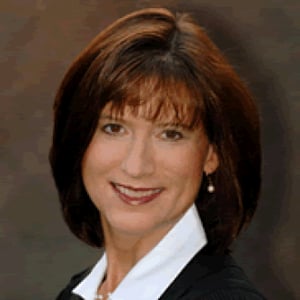
Judge, United States Court of Appeals, Seventh Circuit
Judge Sykes was nominated to the Seventh Circuit by President George W. Bush and confirmed by the Senate in 2004. Prior to her appointment to the federal bench, Judge Sykes served as a justice on the Wisconsin Supreme Court. Governor Tommy G. Thompson appointed her in September 1999 to fill a mid-term vacancy on the state supreme court, and she was elected to a full ten-year term in April 2000. From 1992-1999, Judge Sykes served on the state trial bench in Milwaukee County (elected in 1992 and re-elected in 1998). From 1985-1992, Judge Sykes practiced law with the Milwaukee firm of Whyte & Hirschboeck, S.C., and from 1984-1985, was a law clerk to Federal Judge Terence T. Evans.
Born and raised in the Milwaukee area, Judge Sykes earned a bachelor’s degree in journalism from Northwestern University in 1980 and a law degree from Marquette University Law School in 1984. Between college and law school, Judge Sykes worked as a reporter for The Milwaukee Journal.
Judge Sykes has two sons.
Partner, Gibson Dunn & Crutcher LLP
Miguel A. Estrada is a partner in the Washington, D.C. office of Gibson, Dunn & Crutcher.
Mr. Estrada has represented clients before federal and state courts throughout the country in a broad range of matters. He has argued 24 cases before the United States Supreme Court, and briefed many others. He has also argued dozens of appeals in the lower federal courts.
Best Lawyers® recognized Mr. Estrada as a 2020 Lawyer of the Year in Intellectual Property Litigation and as a Lawyer of the Year in Appellate Practice. He has been recognized by Benchmark Litigation as a 2020 U.S. Appellate Litigation “Star”. In 2014, The American Lawyer named Mr. Estrada a “Litigator of the Year,” praising his “brains and tenacity” and noting he is the lawyer to call for “a tough, potentially unwinnable case.” From 2014-2021, Chambers & Partners has named him as one of a handful of attorneys that it ranked in the top tier among the nation’s leading appellate lawyers. Chambers & Partners noted that “clients are impressed by his intellect and ability, with one saying, ‘His papers are just blindingly clear in what they say and devastating in how they marshal the arguments.’” The Atlantic described his oral argument in a 2014 high-profile separation-of-powers case as “one of the most dazzling arguments the marble chamber has heard in many years.”
Mr. Estrada was selected by his peers for inclusion in the 2020 edition of The Best Lawyers in America® in the area of Appellate Law, in addition to previous recognition by the publication in the specialties of Bet-the-Company Litigation, Commercial Litigation and Criminal Defense: White Collar, Intellectual Property Litigation, and Regulatory Enforcement Litigation in the areas of SEC, Telecom, and Energy. In 2017, he was elected as a member of the American Law Institute. In 2021, Mr. Estrada was named among the Lawdragon 500 Leading Lawyers in America. In 2004, Legal Times named him one of the top 12 appellate litigators in the D.C. area, noting that “people who follow appellate practice in Washington have known for several years that Estrada . . . is one of the best around.” Also in 2004, Washingtonian Magazine named him one of the top constitutional law lawyers “who could become one of the legends of the Supreme Court bar.”
Mr. Estrada joined Gibson Dunn in 1997, after serving for five years as Assistant to the Solicitor General of the United States. He previously served as Assistant U.S. Attorney and Deputy Chief of the Appellate Section, U.S. Attorney’s Office, Southern District of New York. In those capacities, Mr. Estrada represented the government in numerous jury trials and in many appeals before the U.S. Court of Appeals for the Second Circuit. Before joining the U.S. Attorney’s Office, Mr. Estrada practiced corporate law in New York with Wachtell, Lipton, Rosen & Katz.
Mr. Estrada is a Trustee of the Supreme Court Historical Society. He was formerly a member of the Board of Visitors of Harvard Law School.
Mr. Estrada served as a law clerk to the Honorable Anthony M. Kennedy in the U.S. Supreme Court from 1988 to 1989 and to the Honorable Amalya L. Kearse in the U.S. Court of Appeals for the Second Circuit from 1986 to 1987. He received a J.D. degree magna cum laude in 1986 from Harvard Law School, where he was editor of the Harvard Law Review. Mr. Estrada graduated with an A.B. degree magna cum laude and Phi Beta Kappa in 1983 from Columbia College, New York. He is fluent in Spanish and proficient in French.
Representative Supreme Court matters include:
In 2011, the Supreme Court appointed Mr. Estrada to brief and argue two criminal cases –Dorsey v. United States and Hill v. United States – in which the Solicitor General declined to defend the judgments of the court of appeals. Mr. Estrada was appointed to argue the position that the Solicitor General had declined to defend.
Mr. Estrada was also part of the team that successfully presented then Governor Bush’s position to the Supreme Court in Bush v. Gore (2000). Other cases that Mr. Estrada handled in the Supreme Court include Granholm v. Heald (2005) (dormant Commerce Clause and Twenty-First Amendment), Vermont Agency of Natural Resources v. United States ex rel. Stevens (2000) (False Claims Act, Article III standing and Eleventh Amendment immunity), Old Chief v. United States (1997) (rules of evidence), United States v. Mezzanatto (1995) (evidence and plea bargaining), United States v. Robertson (1995) (constitutional limits on Congress’s Commerce Clause powers), Citizens Bank of Maryland v. Strumpf (1995) (bankruptcy law), and NOW, Inc. v. Scheidler (1994) (RICO).
Recent Court of Appeals matters include:
In addition, Mr. Estrada is lead appellate counsel to Vivendi S.A. in two securities-fraud appeals from jury verdicts that are currently pending in the Second Circuit, and to the National Association of Broadcasters in a challenge to certain procedures promulgated by the FCC in connection with the upcoming Spectrum Auction. Mr. Estrada also recently presented argument before the D.C. Circuit on behalf of the tobacco industry in a first amendment challenge to certain compelled disclosures that were imposed as part of the government’s long-running civil RICO case against the industry.
Other matters:
Judge, United States Court of Appeals, Seventh Circuit
Judge Sykes was nominated to the Seventh Circuit by President George W. Bush and confirmed by the Senate in 2004. Prior to her appointment to the federal bench, Judge Sykes served as a justice on the Wisconsin Supreme Court. Governor Tommy G. Thompson appointed her in September 1999 to fill a mid-term vacancy on the state supreme court, and she was elected to a full ten-year term in April 2000. From 1992-1999, Judge Sykes served on the state trial bench in Milwaukee County (elected in 1992 and re-elected in 1998). From 1985-1992, Judge Sykes practiced law with the Milwaukee firm of Whyte & Hirschboeck, S.C., and from 1984-1985, was a law clerk to Federal Judge Terence T. Evans.
Born and raised in the Milwaukee area, Judge Sykes earned a bachelor’s degree in journalism from Northwestern University in 1980 and a law degree from Marquette University Law School in 1984. Between college and law school, Judge Sykes worked as a reporter for The Milwaukee Journal.
Judge Sykes has two sons.

Professional Responsibility: The Bloody Crossroads: Republican Party of Minnesota v. White Runs Into Caperton v. Massey
James Bopp, Thomas M. Hardiman, Thomas R. Phillips, Patience D. Roggensack, Clifford W. Taylor
2010 National Lawyers Convention
Mr. James Bopp, Jr., Bopp, Coleson, and Bostrom and General Counsel, James Madison Center for...
Professional Responsibility: The Bloody Crossroads: Republican Party of Minnesota v. White Runs Into Caperton v. Massey
James Bopp, Thomas M. Hardiman, Thomas R. Phillips, Patience D. Roggensack, Clifford W. Taylor
2010 National Lawyers Convention
Mr. James Bopp, Jr., Bopp, Coleson, and Bostrom and General Counsel, James Madison Center for...
Address: "Emerging Technologies: The Future of Law"
Gary E. Marchant, Dean Reuter
2010 National Lawyers Convention
Prof. Gary E. Marchant, Lincoln Professor of Emerging Technologies, Law and Ethics, Arizona State University...
Address: "Emerging Technologies: The Future of Law"
Gary E. Marchant, Dean Reuter
2010 National Lawyers Convention
Prof. Gary E. Marchant, Lincoln Professor of Emerging Technologies, Law and Ethics, Arizona State University...
The Vanishing American Lawyer
Thomas D. Morgan, Anthony M. Davis, William Hodes
Professional Responsibility & Legal Education Practice Group Podcast
Prof. Thomas D. Morgan recently wrote a book, The Vanishing American Lawyer, which examines the...
Do Class Action Lawyers Make Too Much Money?
Lester Brickman, Brian T. Fitzpatrick, Isaac Mass, Bruce K. Miller
Western New England Student Chapter
On September 1, 2010, the Western New England Student Chapter of the Federalist Society hosted...
Do Class Action Lawyers Make Too Much Money?
Lester Brickman, Brian T. Fitzpatrick, Isaac Mass, Bruce K. Miller
Western New England Student Chapter
On September 1, 2010, the Western New England Student Chapter of the Federalist Society hosted...
The Politically Correct University
Richard E. Redding, John J. Park
Professional Responsibility & Legal Education Practice Group
Professor Richard E. Redding, Associate Dean for Administration and Professor of Law at Chapman University...
Professional Responsibility: The Role of Government Attorneys and the Global War on Terror
Miguel A. Estrada, Diane S. Sykes, Bradley Wendel
2009 National Lawyers Convention
In the aftermath of the attacks of September 11, 2001, government attorneys in the White...
Professional Responsibility: The Role of Government Attorneys and the Global War on Terror
Miguel A. Estrada, Diane S. Sykes, Bradley Wendel
2009 National Lawyers Convention
In the aftermath of the attacks of September 11, 2001, government attorneys in the White...