
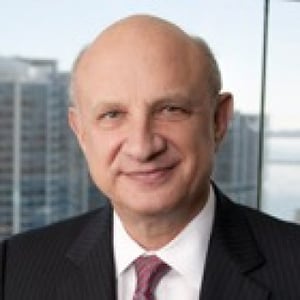
Shareholder, Carlton Fields
Bruce Berman focuses his nationwide practice on large and complex commercial disputes in federal and state trial and appellate courts, and in domestic and international arbitration tribunals. He represents U.S. and international clients in cases spanning a wide range of substantive law including aviation, corporate finance, securities, mergers and acquisitions, health law, intellectual property (copyright, trademark and unfair competition), and real estate and commercial lending (real estate, asset-based and lease financing). Mr. Berman heads the firm’s Aviation Industry Group.
A legal scholar and author of a leading state treatise, "Berman’s Florida Civil Procedure" (published annually by West), Mr. Berman has been recognized by the Florida Supreme Court and The Florida Bar by long-term appointment to numerous committees, including the Committee on Standard Jury Instructions in Civil Cases, the Civil Procedure Rules Committee and the Rules of Judicial Administration Committee.
Mr. Berman has been recognized as a leading lawyer, internationally, nationally, and locally, by, among others, Chambers USA (for commercial litigation, since first issuing Florida rankings), the National Corporate Counsel Edition of Super Lawyers (for Florida Business Litigation), Florida Trend’s Legal Elite and Florida Super Lawyers, in addition to being selected for biographical reference in Who’s Who in the World, Who’s Who in America, and Who’s Who in American Law.
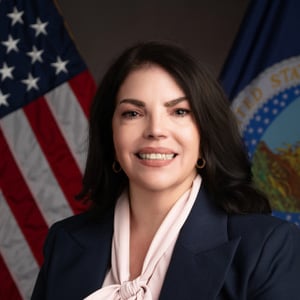
Chief of Staff, USDA, Office of Assistant Secretary for Civil Rights
Elena Crosby is an executive with over 20 years of experience in compliance, corporate governance, and government relations within both publicly-held and private corporations. She currently serves as the Chief of Staff for the Office of the Assistant Secretary for Civil Rights at the USDA.
Previously, Elena worked for U.S. Senator Marco Rubio for ten years, holding various positions, with her most recent role being State Director. Prior to that, she was the Deputy State Director for Constituent Services, where she oversaw the constituent services team across Florida, managed state projects, and maintained relationships with federal agencies. Additionally, Elena acted as a liaison between federal agencies in Washington, D.C., and state government agencies and leaders in Tallahassee.
Before entering the legislative realm, she spent five years at AdventHealth handling research compliance and healthcare law. Before that, Elena held leadership positions with Digital Fusion, Inc., a publicly-held information technology firm providing services to government and commercial customers, as Corporate Secretary and Director of Legal and Government Affairs, responsible for its corporate governance and public policy efforts. Elena also worked for Connextions, Inc., a technology and business services provider to the healthcare industry, where she served as Compliance and Contracts Officer.
Elena served as President of the Orlando Lawyers Chapter of the Federalist Society for seven years and as a member of the James Madison Institute's Regional Leadership Council. She serves by appointment as the Chair of the Orange County Minority and Women Business Enterprise Advisory Board. Elena received her law degree from Barry University, Dwayne O. Andreas School of Law.
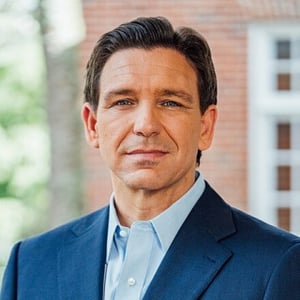
Governor, Florida
Ron DeSantis is the 46th Governor of the State of Florida. Since taking office in January 2019, he has worked hard to expand education opportunities, improve Florida’s water resources and Everglades, champion vocational training, bolster public safety, foster innovation in health care, assist with hurricane recovery, promote infrastructure development and support veterans – all while lowering taxes and being fiscally responsible.
A native Floridian, Governor DeSantis worked his way through Yale University, where he captained the university baseball team and graduated magna cum laude. He also gradated with honors from Harvard Law School. While at Harvard, he earned a commission in the U.S. Navy as a JAG Officer. During his active duty service, then- Lieutenant DeSantis deployed to Iraq as an advisor to a U.S. Navy SEAL Commander in support of the SEAL mission in Iraq. His military decorations include the Iraq Campaign Medal of the Bronze Star Medal (meritorious service).
Prior to serving as Governor, DeSantis served as the U.S. Congressman for Florida’s 6th District. As Chairman of the National Security Subcommittee, DeSantis spearheaded efforts to reform the UA, combat terrorism, identify government waste and relocate the American Embassy in Israel to Jerusalem. As a Congressman, DeSantis championed term limits, fiscal responsibility with a strong national defense.
Governor DeSantis is married to First Lady Casey DeSantis, a former Emmy Award winning television host. They are the proud parents of two children, Madison and Mason. They are the youngest family living in the Florida Governor’s Mansion in nearly fifty years.
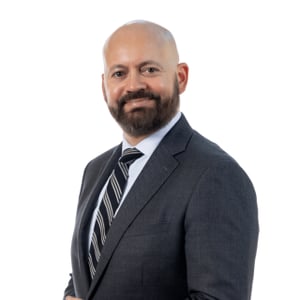
Milton R. Underwood Chair in Free Enterprise, Vanderbilt University Law School
Brian Fitzpatrick is the Milton R. Underwood Chair in Free Enterprise and Professor of Law at Vanderbilt Law School, where his research focuses on class action litigation, federal courts, judicial selection, and constitutional law. He is best known for his empirical studies of class action settlements as well as his book The Conservative Case for Class Actions (University of Chicago Press, 2019). Professor Fitzpatrick joined Vanderbilt's law faculty in 2007 after serving as the John M. Olin Fellow at New York University School of Law. He graduated first in his class from Harvard Law School and went on to clerk for Judge Diarmuid O'Scannlain on the U.S. Court of Appeals for the Ninth Circuit and Justice Antonin Scalia on the U.S. Supreme Court. After his clerkships, Professor Fitzpatrick practiced commercial and appellate litigation for several years at Sidley Austin in Washington, D.C., and served as Special Counsel for Supreme Court Nominations to U.S. Senator John Cornyn. Before earning his law degree, Fitzpatrick graduated summa cum laude with a bachelor's of science in chemical engineering from the University of Notre Dame. He has received the Hall-Hartman Outstanding Professor Award, which recognizes excellence in classroom teaching, for his Civil Procedure and Federal Courts courses.
Partner, Conroy Simberg
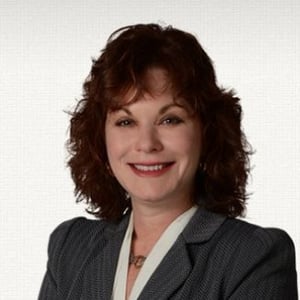
Hinda Klein is a partner with the firm and has been the head of Conroy Simberg’s appellate department since she joined the firm in 1991. She was one of the first attorneys in Florida to become board certified in appellate practice.
Hinda supervises all of the appellate attorneys at the firm, and has been involved in more than 500 civil appeals and extraordinary writs. She practices in all District Courts of Appeal and the Florida Supreme Court. Hinda also handles dispositive motions and trial support, including the preparation of jury instructions, and often attends hearings motions in limine and charge conferences in order to ensure that the record has been properly preserved for appeal.
Judge, United States Court of Appeals, Eleventh Circuit
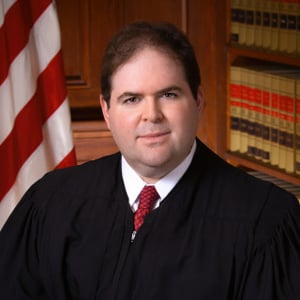
On November 19, 2019, Judge Robert J. Luck was appointed to the United States Court of Appeals for the Eleventh Circuit by President Donald Trump. Prior to serving on the federal bench, he was appointed to the Florida Supreme Court by Governor Ron DeSantis on January 14, 2019. He previously served on the Third District Court of Appeal in Miami after his appointment there by Governor Rick Scott in March 2017.
Earlier, Judge Luck served on the Eleventh Judicial Circuit Court of Florida from September 2013 to March 2017. He presided in the Criminal, Civil, and Appellate Divisions. Judge Luck, in his years as a trial court judge, tried seventy jury trials, and heard dozens of appeals from the county court and municipal agencies. Judge Luck was appointed to the circuit court in 2013 and was elected by the voters of Miami-Dade County to retain his seat in 2016.
Prior to his service on the bench, Judge Luck was an Assistant United States Attorney for the Southern District of Florida. In his years as a federal prosecutor, he was assigned to the Appeals, Major Crimes, and Economic Crimes Sections of the U.S. Attorney’s Office. Judge Luck tried nineteen jury trials before the federal district court and argued three appeals to the United States Court of Appeals for the Eleventh Circuit. In his final year in the Office, he was a Deputy Chief in the Major Crimes Section.
Earlier in his career, Judge Luck was a legislative correspondent for two United States Senators, a law clerk and staff attorney to Circuit Judge Edward E. Carnes on the United States Court of Appeals for the Eleventh Circuit, and a part of the Greenberg Traurig firm’s appellate section. Judge Luck received his Juris Doctor from the University of Florida Levin College of Law magna cum laude and was asked to join the Order of the Coif. Judge Luck also served as Editor-in-Chief of the Florida Law Review. Judge Luck received his Bachelor of Arts in Economics from the University of Florida with highest honors.
Senior Partner, Reed Smith LLP
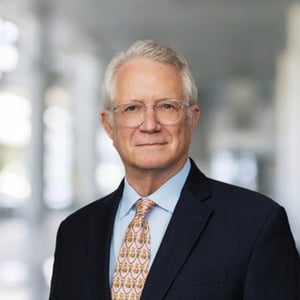
Hugh has both written and lectured extensively on insurance issues, including as a presenter on scores of occasions for various national and local bar associations, insurance brokers, and educational institutions.
Chief Financial Officer, State of Florida
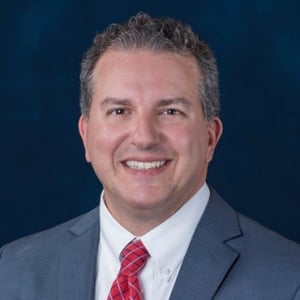
Jimmy Patronis is a native Floridian born and raised in Panama City. He earned his associate degree in restaurant management from Gulf Coast Community College and a bachelor’s degree in political science from Florida State University. He is a partner in a family-owned seafood restaurant called Captain Anderson’s that will celebrate its 50th anniversary in 2017. His public service career began with experience as an intern in the Florida Senate and the United Kingdom’s House of Commons. Following his college graduation, Governor Lawton Chiles appointed him to the Florida Elections Commission, and he was later reappointed by Governor Jeb Bush.
He served in the Florida House of Representatives from 2006 to 2014, representing his hometown region in the Florida Panhandle. He was appointed to serve on Florida’s Public Service Commission, as well as the Constitution Revision Commission, which meets once every twenty years to propose changes to the state constitution.
He is recognized for outstanding leadership in his hometown of Panama City and throughout Florida. Committed to active civic engagement and business development, he has chaired the Greater Panama City Beach Chamber of Commerce’s Economic Development Council, served on the board of the Bay County Economic Development Alliance, the Salvation Army Advisory Board, the Bay County Chapter of the Florida Restaurant and Lodging Association, and as national president for the Florida Vocational Industrial Clubs of America. He is a former trustee of the Gulf Coast Medical Center, and former director of the Bay Medical Center’s Foundation and Gulf Coast Community College Foundation Board.
He was instrumental in the establishment of the Northwest Florida Beaches International Airport in Panama City and has served as chairman and a board member of Bay County-Panama City International Airport and Industrial District.
He and wife Katie are proud parents to two sons, Jimmy Theo III and John Michael.
Shareholder, Carlton Fields
Bruce Berman focuses his nationwide practice on large and complex commercial disputes in federal and state trial and appellate courts, and in domestic and international arbitration tribunals. He represents U.S. and international clients in cases spanning a wide range of substantive law including aviation, corporate finance, securities, mergers and acquisitions, health law, intellectual property (copyright, trademark and unfair competition), and real estate and commercial lending (real estate, asset-based and lease financing). Mr. Berman heads the firm’s Aviation Industry Group.
A legal scholar and author of a leading state treatise, "Berman’s Florida Civil Procedure" (published annually by West), Mr. Berman has been recognized by the Florida Supreme Court and The Florida Bar by long-term appointment to numerous committees, including the Committee on Standard Jury Instructions in Civil Cases, the Civil Procedure Rules Committee and the Rules of Judicial Administration Committee.
Mr. Berman has been recognized as a leading lawyer, internationally, nationally, and locally, by, among others, Chambers USA (for commercial litigation, since first issuing Florida rankings), the National Corporate Counsel Edition of Super Lawyers (for Florida Business Litigation), Florida Trend’s Legal Elite and Florida Super Lawyers, in addition to being selected for biographical reference in Who’s Who in the World, Who’s Who in America, and Who’s Who in American Law.
Chief of Staff, USDA, Office of Assistant Secretary for Civil Rights
Elena Crosby is an executive with over 20 years of experience in compliance, corporate governance, and government relations within both publicly-held and private corporations. She currently serves as the Chief of Staff for the Office of the Assistant Secretary for Civil Rights at the USDA.
Previously, Elena worked for U.S. Senator Marco Rubio for ten years, holding various positions, with her most recent role being State Director. Prior to that, she was the Deputy State Director for Constituent Services, where she oversaw the constituent services team across Florida, managed state projects, and maintained relationships with federal agencies. Additionally, Elena acted as a liaison between federal agencies in Washington, D.C., and state government agencies and leaders in Tallahassee.
Before entering the legislative realm, she spent five years at AdventHealth handling research compliance and healthcare law. Before that, Elena held leadership positions with Digital Fusion, Inc., a publicly-held information technology firm providing services to government and commercial customers, as Corporate Secretary and Director of Legal and Government Affairs, responsible for its corporate governance and public policy efforts. Elena also worked for Connextions, Inc., a technology and business services provider to the healthcare industry, where she served as Compliance and Contracts Officer.
Elena served as President of the Orlando Lawyers Chapter of the Federalist Society for seven years and as a member of the James Madison Institute's Regional Leadership Council. She serves by appointment as the Chair of the Orange County Minority and Women Business Enterprise Advisory Board. Elena received her law degree from Barry University, Dwayne O. Andreas School of Law.
Governor, Florida
Ron DeSantis is the 46th Governor of the State of Florida. Since taking office in January 2019, he has worked hard to expand education opportunities, improve Florida’s water resources and Everglades, champion vocational training, bolster public safety, foster innovation in health care, assist with hurricane recovery, promote infrastructure development and support veterans – all while lowering taxes and being fiscally responsible.
A native Floridian, Governor DeSantis worked his way through Yale University, where he captained the university baseball team and graduated magna cum laude. He also gradated with honors from Harvard Law School. While at Harvard, he earned a commission in the U.S. Navy as a JAG Officer. During his active duty service, then- Lieutenant DeSantis deployed to Iraq as an advisor to a U.S. Navy SEAL Commander in support of the SEAL mission in Iraq. His military decorations include the Iraq Campaign Medal of the Bronze Star Medal (meritorious service).
Prior to serving as Governor, DeSantis served as the U.S. Congressman for Florida’s 6th District. As Chairman of the National Security Subcommittee, DeSantis spearheaded efforts to reform the UA, combat terrorism, identify government waste and relocate the American Embassy in Israel to Jerusalem. As a Congressman, DeSantis championed term limits, fiscal responsibility with a strong national defense.
Governor DeSantis is married to First Lady Casey DeSantis, a former Emmy Award winning television host. They are the proud parents of two children, Madison and Mason. They are the youngest family living in the Florida Governor’s Mansion in nearly fifty years.
Milton R. Underwood Chair in Free Enterprise, Vanderbilt University Law School
Brian Fitzpatrick is the Milton R. Underwood Chair in Free Enterprise and Professor of Law at Vanderbilt Law School, where his research focuses on class action litigation, federal courts, judicial selection, and constitutional law. He is best known for his empirical studies of class action settlements as well as his book The Conservative Case for Class Actions (University of Chicago Press, 2019). Professor Fitzpatrick joined Vanderbilt's law faculty in 2007 after serving as the John M. Olin Fellow at New York University School of Law. He graduated first in his class from Harvard Law School and went on to clerk for Judge Diarmuid O'Scannlain on the U.S. Court of Appeals for the Ninth Circuit and Justice Antonin Scalia on the U.S. Supreme Court. After his clerkships, Professor Fitzpatrick practiced commercial and appellate litigation for several years at Sidley Austin in Washington, D.C., and served as Special Counsel for Supreme Court Nominations to U.S. Senator John Cornyn. Before earning his law degree, Fitzpatrick graduated summa cum laude with a bachelor's of science in chemical engineering from the University of Notre Dame. He has received the Hall-Hartman Outstanding Professor Award, which recognizes excellence in classroom teaching, for his Civil Procedure and Federal Courts courses.
Partner, Conroy Simberg
Hinda Klein is a partner with the firm and has been the head of Conroy Simberg’s appellate department since she joined the firm in 1991. She was one of the first attorneys in Florida to become board certified in appellate practice.
Hinda supervises all of the appellate attorneys at the firm, and has been involved in more than 500 civil appeals and extraordinary writs. She practices in all District Courts of Appeal and the Florida Supreme Court. Hinda also handles dispositive motions and trial support, including the preparation of jury instructions, and often attends hearings motions in limine and charge conferences in order to ensure that the record has been properly preserved for appeal.
Judge, United States Court of Appeals, Eleventh Circuit
On November 19, 2019, Judge Robert J. Luck was appointed to the United States Court of Appeals for the Eleventh Circuit by President Donald Trump. Prior to serving on the federal bench, he was appointed to the Florida Supreme Court by Governor Ron DeSantis on January 14, 2019. He previously served on the Third District Court of Appeal in Miami after his appointment there by Governor Rick Scott in March 2017.
Earlier, Judge Luck served on the Eleventh Judicial Circuit Court of Florida from September 2013 to March 2017. He presided in the Criminal, Civil, and Appellate Divisions. Judge Luck, in his years as a trial court judge, tried seventy jury trials, and heard dozens of appeals from the county court and municipal agencies. Judge Luck was appointed to the circuit court in 2013 and was elected by the voters of Miami-Dade County to retain his seat in 2016.
Prior to his service on the bench, Judge Luck was an Assistant United States Attorney for the Southern District of Florida. In his years as a federal prosecutor, he was assigned to the Appeals, Major Crimes, and Economic Crimes Sections of the U.S. Attorney’s Office. Judge Luck tried nineteen jury trials before the federal district court and argued three appeals to the United States Court of Appeals for the Eleventh Circuit. In his final year in the Office, he was a Deputy Chief in the Major Crimes Section.
Earlier in his career, Judge Luck was a legislative correspondent for two United States Senators, a law clerk and staff attorney to Circuit Judge Edward E. Carnes on the United States Court of Appeals for the Eleventh Circuit, and a part of the Greenberg Traurig firm’s appellate section. Judge Luck received his Juris Doctor from the University of Florida Levin College of Law magna cum laude and was asked to join the Order of the Coif. Judge Luck also served as Editor-in-Chief of the Florida Law Review. Judge Luck received his Bachelor of Arts in Economics from the University of Florida with highest honors.
Senior Partner, Reed Smith LLP
Hugh has both written and lectured extensively on insurance issues, including as a presenter on scores of occasions for various national and local bar associations, insurance brokers, and educational institutions.
Chief Financial Officer, State of Florida
Jimmy Patronis is a native Floridian born and raised in Panama City. He earned his associate degree in restaurant management from Gulf Coast Community College and a bachelor’s degree in political science from Florida State University. He is a partner in a family-owned seafood restaurant called Captain Anderson’s that will celebrate its 50th anniversary in 2017. His public service career began with experience as an intern in the Florida Senate and the United Kingdom’s House of Commons. Following his college graduation, Governor Lawton Chiles appointed him to the Florida Elections Commission, and he was later reappointed by Governor Jeb Bush.
He served in the Florida House of Representatives from 2006 to 2014, representing his hometown region in the Florida Panhandle. He was appointed to serve on Florida’s Public Service Commission, as well as the Constitution Revision Commission, which meets once every twenty years to propose changes to the state constitution.
He is recognized for outstanding leadership in his hometown of Panama City and throughout Florida. Committed to active civic engagement and business development, he has chaired the Greater Panama City Beach Chamber of Commerce’s Economic Development Council, served on the board of the Bay County Economic Development Alliance, the Salvation Army Advisory Board, the Bay County Chapter of the Florida Restaurant and Lodging Association, and as national president for the Florida Vocational Industrial Clubs of America. He is a former trustee of the Gulf Coast Medical Center, and former director of the Bay Medical Center’s Foundation and Gulf Coast Community College Foundation Board.
He was instrumental in the establishment of the Northwest Florida Beaches International Airport in Panama City and has served as chairman and a board member of Bay County-Panama City International Airport and Industrial District.
He and wife Katie are proud parents to two sons, Jimmy Theo III and John Michael.
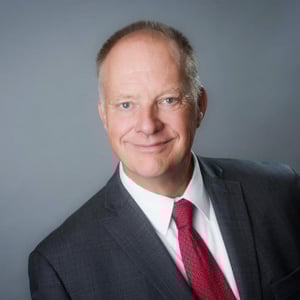
Associate Justice, Minnesota Supreme Court (ret.)
Former Minnesota Supreme Court Justice Barry Anderson is a 1976 graduate of Gustavus Adolphus College in St. Peter, Minnesota and a 1979 graduate of the University of Minnesota Law School. He was a member of the Minnesota Court of Appeals from August 1998 until his appointment to the Supreme Court. He was sworn in and joined the court on October 13, 2004, and served through to his retirement on May 10, 2024.
He previously was a partner in the Minneapolis and Hutchinson law firm of Arnold, Anderson & Dove, PLLP, and also served the City of Hutchinson as City Attorney from 1987 to 1998. He is certified by the Minnesota State Bar Association as a civil trial specialist.
Justice Anderson’s background includes substantial public service including as a board member and chair of variety of community organizations including service clubs, task forces and a local public access channel as well as a wide variety of other community activities.
Justice Anderson also served on the Minnesota Judicial Council, the managing body for the Minnesota Judicial Branch. He is also a frequent contributor to continuing legal education efforts on both appellate advocacy issues as well as general trial practice.
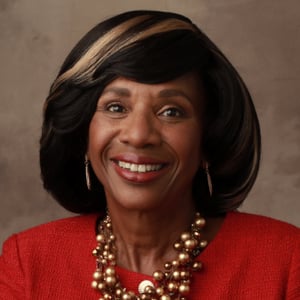
Partner, Locke Lord LLP
Paulette Brown, a partner in the Labor & Employment group of Locke Lord LLP was the first woman of color to lead the American Bar Association in its 137 year history. Brown simultaneously served as the first person of color to Chair the Labor & Employment Section of the New Jersey State Bar Association. Brown has been honored by the National Law Journal as one of the 50 Most Influential Minority Lawyers in the US and by US News as one of the Best Lawyers in America. She is also nationally recognized for her efforts relating to diversity & inclusion.
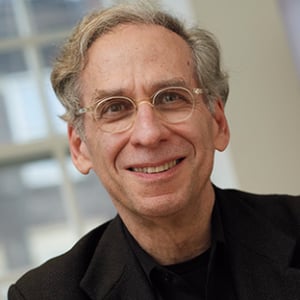
Elihu Root Professor of Law, New York University School of Law
Stephen Gillers has been a professor of law at New York University School of Law since 1978 and Vice Dean from 1999-2004. He holds the Elihu Root chair. He does most of his research and writing on the regulation of the legal profession. His courses include Regulation of Lawyers, Evidence, and Law and Literature (with University Professor Catharine Stimpson, former dean of the graduate school).
Professor Gillers has written widely on legal and judicial ethics in law reviews and in the legal and popular press. He has taught legal ethics as a visitor at other law schools and has spoken on lawyer regulatory issues at hundreds of events in the U.S. and in Europe, Asia, and South America - often for legal ethics CLE credit - including at federal and state judicial conferences, law firms, corporate general counsel's offices, government law offices, ABA meetings, state and city bar meetings nationwide, in oral and written submissions to Congress, and in law school lectureships. For many years, four or five times each year, he has lectured on legal ethics at the New York City Bar Association CLEs.
Professor Gillers is the author of Regulation of Lawyers: Problems of Law and Ethics, a widely used law school casebook first published by Little, Brown (now Aspen) in 1985 with a 10th edition in 2015. With Roy Simon (and Andrew Perlman as of 2008 and Dana Remus as of 2016), he has edited Regulation of Lawyers: Statutes and Standards, published annually by Little, Brown, then Aspen, since 1989. He is also the author of Regulation of the Legal Profession (Aspen 2009)(the "Essentials" series).
From 2000-2002, Professor Gillers was a member of the ABA's Multijurisdictional Practice Commission which proposed rule changes (all of them accepted) to recognize the cross-border nature of legal practice. In 2009, Professor Gillers was selected to be a member of the ABA 20/20 Commission, 2010-2013, which studied the effects of technology and globalization on the regulation of lawyers leading to amendments to the Model Rules and recommended rule changes all of which were accepted. He was chair of the Policy Implementation Committee of the ABA's Center for Professional Responsibility (2004-2008) and was a member from 2002-2010. He was a member of the International Issues Committee of the ABA Section on Legal Education (2008-2009) and
In 2011, he received the Michael Franck Award from the ABA’s Center for Professional Responsibility. The Award is given annually for “significant contributions to the work of the organized bar….noteworthy scholarly contributions made in academic settings, [and] creative judicial or legislative initiatives undertaken to advance the professionalism of lawyers…are also given consideration.” The American Bar Foundation gave him the Outstanding Scholar Award in 2015.
Following a clerkship with Chief Judge Gus J. Solomon in Federal District Court in Portland, Oregon, Professor Gillers practiced law for nine years in various settings in New York City before joining the NYU Law School faculty. He is often quoted on issues of legal ethics in the legal and popular media.
Professor Gillers' latest scholarship is A Rule to Forbid Bias and Harassment in Law Practice: A Guide for State Courts Considering Model Rule 8.4(g), 30 Geo. J. Legal Ethics ____ (2017); Guns, Fruits, Drugs, and Documents: A Criminal Defense Lawyer's Responsibility for Real Evidence, 63 Stan. L. Rev. 813 (2011); A Profession, If You Can Keep It: How Information Technology and Fading Borders Are Reshaping the Law Marketplace and What We Should Do About It, 63 Hastings L. J. 953 (2012); How To Make Rules for Lawyers: The Professional Responsibility of the Legal Profession, 40 Pepperdine L. Rev. 365 (2013)(Symposium issue on The Lawyer of the Future); and Lowering the Bar: How Lawyer Discipline in New York Fails to Protect the Public, 17 J. Legis. & Public Policy 485 (2014).
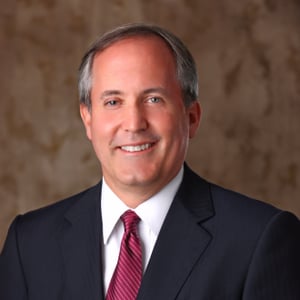
State Attorney General, Texas
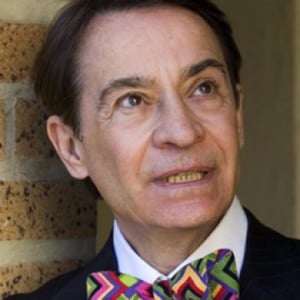
Doy & Dee Henley Chair and Distinguished Professor of Jurisprude, Chapman University Dale E. Fowler School of Law
Ronald D. Rotunda was the Doy & Dee Henley Chair and Distinguished Professor of Jurisprudence, at Chapman University, the Dale E. Fowler School of Law. He joined the faculty in 2008. Before that, he was University Professor and Professor of Law at George Mason University School of Law. From 2002 to 2006, he was the George Mason University Foundation Professor of Law. Before that, he was the Albert E. Jenner, Jr. Professor of Law, at the University of Illinois. He was a magna cum laude graduate of both Harvard College and Harvard Law School, where he was a member of Harvard Law Review. He joined the University of Illinois faculty in 1974 after clerking for Judge Walter R. Mansfield of the United States Court of Appeals for the Second Circuit, practicing law in Washington, D.C., and serving as assistant majority counsel for the Senate Watergate Committee. He has co-authored the most widely used course book on legal ethics, Problems and Materials on Professional Responsibility(Foundation Press, 12th ed. 2014) and was the author of a leading course book on constitutional law, Modern Constitutional Law (West Academic Co., 11th ed. 2015)(Abridged & Unabridged editions). He was the coauthor of, Legal Ethics: The Lawyer's Deskbook on Professional Responsibility (ABA- West/Thompson Reuters Publishing, St. Paul, Minnesota, 2016-2017 ed.) (Jointly published by the ABA and West/Thompson Reuters Publishing) (with John Dzienkowski). Rotunda also co-authored (with John Nowak) the six-volume Treatise on Constitutional Law (West/Thompson Reuters Publishing, 5th ed. 2012)(with annual updates), and a one volume Treatise on Constitutional Law (West Academic, 8th ed. 2010). He was also the author of several other books and more than 500 articles in various law reviews, journals, newspapers, and books in this country and abroad. His works have been translated into French, Portuguese German, Romanian, Czech, Russian, Japanese, and Korean. These books and articles have been cited more than 2000 times by law reviews, by state and federal courts at every level, from trial courts to the U.S. Supreme Court, and by foreign courts in Europe, Africa, Asia, and South America. He has been interviewed on radio and television on legal issues, both in this country and abroad. In 1993 he was the Constitutional Law Adviser to the Supreme National Council of Cambodia and assisted that country in writing its first democratic constitution. He has consulted with various new democracies in Eastern Europe and the former Soviet Union, including Moldova, Romania, and Ukraine, on their proposed constitutions and judicial codes. He chaired the subcommittee that drafted the American Bar Association's Model Rules for Lawyer Disciplinary Enforcement; was a member of the Publications Board of the A.B.A. Center for Professional Responsibility from 1994 to 2016; was a member of the A.B.A. Standing Committee on Professional Discipline (1991-1997); and was Liaison to the A.B.A. Standing Committee on Ethics and Professional Responsibility (1994-1997). He was a Fulbright Professor in Venezuela in 1986 and a Fulbright Research Scholar in Italy in 1981. In 1996 he assisted the Czech Republic in drafting the first Rules of Ethics for lawyers in that country. During the Spring, 1999 semester, he was Visiting Professor at the University of Alabama School of Law, holding the John S. Stone Endowed Chair of Law. During the summer and fall of 2000, he was the Visiting Senior Fellow in Constitutional Studies at the Cato Institute, in Washington, DC. In the fall of 2001, he was visiting professor at George Mason University School of Law. During November-December, 2002, he was Visiting Scholar, Katholieke Universiteit Leuven, Faculty of Law, Leuven, Belgium. In May, 2004, and December, 2005, he was visiting lecturer at the Institute of Law and Economics, Institut für Recht und Ökonomik, at the University of Hamburg. From early June 2004 to May 2005, he was the Special Counsel to the Department of Defense. He was on the Panel of Contributing Editors that produced, Black's Law Dictionary (West/Thompson Reuters Publishing, 8th ed. 2004; Thomson-Reuters, 10th ed. 2014). From 2005-2006, he was a member of the Task Force on Judicial Functions of the Commission on Virginia Courts in the 21st Century: To Benefit All, to Exclude None.
In May, 2000, American Law Media, publisher of The American Lawyer, the National Law Journal, and the Legal Times picked Professor Rotunda as one of the ten most influential Illinois Lawyers. Also in 2000, a lengthy study that the University of Chicago Press published, which sought to determine the influence, productivity, and reputations of law professors over the last several decades, listed Professor Rotunda as the 17th highest in the nation. The 2002-2003 New Educational Quality Ranking of U.S. Law Schools (EQR) [the last year for which such records are available] ranks Professor Rotunda as the eleventh most cited of all law faculty in the United States. Seehttp://www.leiterrankings.com/faculty/2002faculty_impact_cites.shtml.
In July, 2007, he was one of the main speakers at the International Judicial Conference hosted by the United States Embassy, the Supreme Court of Latvia, and the Latvian Ministry of Justice. The other main speakers were Justice Samuel Alito, the President of Latvia, the Prime Minister of Latvia, the Chief Justice of Latvia, and the Minister of Justice of Latvia. On February 27, 2008, President George W. Bush nominated Ronald D. Rotunda to become a member of the Privacy and Civil Liberties Oversight Board (PCLOB) for an initial four-year term and sent his nomination to the Senate Committee on Homeland Security and Governmental Affairs for confirmation hearings on the nominees. He was selected the Best Lawyer in Washington, DC, in 2009 in Ethics and Professional Responsibility Law, as published in November 2008 in the Washington Post in association with the Legal Times. When he moved to California, he was also selected as one of the Best Lawyers in Southern California, in 2009, 2010, 2011, 2012, 2013, 2014, 2015, 2016, 2017, also in Ethics and Professional Responsibility Law as published in the Los Angeles Times, U.S. News, and American Law Media. On June 17, 2009, he became a Commissioner of the Fair Political Practices Commission, a state regulatory agency (analogous to the Federal Election Commission) that is California's independent political watchdog. He served until January 31, 2013, when his term expired. In 2012, he became a Distinguished International Research Fellow at the World Engagement Institute, a non-profit, multidisciplinary and academically-based non-governmental organization with the mission to facilitate professional global engagement for international development and poverty reduction http://www.weinstitute.org/fellows.html. In 2012, Chapman University honored him with The Chapman University Excellence In Scholarly/Creative Work Award, 2011-2012. Since 2014, he has been a member of the Editorial Board of, The International Journal of Sustainable Human Security (IJSHS), a peer-reviewed publication of the World Engagement Institute (WEI). Rotunda was a Member of the Editorial Board of ABA's Journal of Legal Education (2014 to 2016).
Associate Justice, Minnesota Supreme Court (ret.)
Former Minnesota Supreme Court Justice Barry Anderson is a 1976 graduate of Gustavus Adolphus College in St. Peter, Minnesota and a 1979 graduate of the University of Minnesota Law School. He was a member of the Minnesota Court of Appeals from August 1998 until his appointment to the Supreme Court. He was sworn in and joined the court on October 13, 2004, and served through to his retirement on May 10, 2024.
He previously was a partner in the Minneapolis and Hutchinson law firm of Arnold, Anderson & Dove, PLLP, and also served the City of Hutchinson as City Attorney from 1987 to 1998. He is certified by the Minnesota State Bar Association as a civil trial specialist.
Justice Anderson’s background includes substantial public service including as a board member and chair of variety of community organizations including service clubs, task forces and a local public access channel as well as a wide variety of other community activities.
Justice Anderson also served on the Minnesota Judicial Council, the managing body for the Minnesota Judicial Branch. He is also a frequent contributor to continuing legal education efforts on both appellate advocacy issues as well as general trial practice.
Partner, Locke Lord LLP
Paulette Brown, a partner in the Labor & Employment group of Locke Lord LLP was the first woman of color to lead the American Bar Association in its 137 year history. Brown simultaneously served as the first person of color to Chair the Labor & Employment Section of the New Jersey State Bar Association. Brown has been honored by the National Law Journal as one of the 50 Most Influential Minority Lawyers in the US and by US News as one of the Best Lawyers in America. She is also nationally recognized for her efforts relating to diversity & inclusion.
Elihu Root Professor of Law, New York University School of Law
Stephen Gillers has been a professor of law at New York University School of Law since 1978 and Vice Dean from 1999-2004. He holds the Elihu Root chair. He does most of his research and writing on the regulation of the legal profession. His courses include Regulation of Lawyers, Evidence, and Law and Literature (with University Professor Catharine Stimpson, former dean of the graduate school).
Professor Gillers has written widely on legal and judicial ethics in law reviews and in the legal and popular press. He has taught legal ethics as a visitor at other law schools and has spoken on lawyer regulatory issues at hundreds of events in the U.S. and in Europe, Asia, and South America - often for legal ethics CLE credit - including at federal and state judicial conferences, law firms, corporate general counsel's offices, government law offices, ABA meetings, state and city bar meetings nationwide, in oral and written submissions to Congress, and in law school lectureships. For many years, four or five times each year, he has lectured on legal ethics at the New York City Bar Association CLEs.
Professor Gillers is the author of Regulation of Lawyers: Problems of Law and Ethics, a widely used law school casebook first published by Little, Brown (now Aspen) in 1985 with a 10th edition in 2015. With Roy Simon (and Andrew Perlman as of 2008 and Dana Remus as of 2016), he has edited Regulation of Lawyers: Statutes and Standards, published annually by Little, Brown, then Aspen, since 1989. He is also the author of Regulation of the Legal Profession (Aspen 2009)(the "Essentials" series).
From 2000-2002, Professor Gillers was a member of the ABA's Multijurisdictional Practice Commission which proposed rule changes (all of them accepted) to recognize the cross-border nature of legal practice. In 2009, Professor Gillers was selected to be a member of the ABA 20/20 Commission, 2010-2013, which studied the effects of technology and globalization on the regulation of lawyers leading to amendments to the Model Rules and recommended rule changes all of which were accepted. He was chair of the Policy Implementation Committee of the ABA's Center for Professional Responsibility (2004-2008) and was a member from 2002-2010. He was a member of the International Issues Committee of the ABA Section on Legal Education (2008-2009) and
In 2011, he received the Michael Franck Award from the ABA’s Center for Professional Responsibility. The Award is given annually for “significant contributions to the work of the organized bar….noteworthy scholarly contributions made in academic settings, [and] creative judicial or legislative initiatives undertaken to advance the professionalism of lawyers…are also given consideration.” The American Bar Foundation gave him the Outstanding Scholar Award in 2015.
Following a clerkship with Chief Judge Gus J. Solomon in Federal District Court in Portland, Oregon, Professor Gillers practiced law for nine years in various settings in New York City before joining the NYU Law School faculty. He is often quoted on issues of legal ethics in the legal and popular media.
Professor Gillers' latest scholarship is A Rule to Forbid Bias and Harassment in Law Practice: A Guide for State Courts Considering Model Rule 8.4(g), 30 Geo. J. Legal Ethics ____ (2017); Guns, Fruits, Drugs, and Documents: A Criminal Defense Lawyer's Responsibility for Real Evidence, 63 Stan. L. Rev. 813 (2011); A Profession, If You Can Keep It: How Information Technology and Fading Borders Are Reshaping the Law Marketplace and What We Should Do About It, 63 Hastings L. J. 953 (2012); How To Make Rules for Lawyers: The Professional Responsibility of the Legal Profession, 40 Pepperdine L. Rev. 365 (2013)(Symposium issue on The Lawyer of the Future); and Lowering the Bar: How Lawyer Discipline in New York Fails to Protect the Public, 17 J. Legis. & Public Policy 485 (2014).
State Attorney General, Texas
Doy & Dee Henley Chair and Distinguished Professor of Jurisprude, Chapman University Dale E. Fowler School of Law
Ronald D. Rotunda was the Doy & Dee Henley Chair and Distinguished Professor of Jurisprudence, at Chapman University, the Dale E. Fowler School of Law. He joined the faculty in 2008. Before that, he was University Professor and Professor of Law at George Mason University School of Law. From 2002 to 2006, he was the George Mason University Foundation Professor of Law. Before that, he was the Albert E. Jenner, Jr. Professor of Law, at the University of Illinois. He was a magna cum laude graduate of both Harvard College and Harvard Law School, where he was a member of Harvard Law Review. He joined the University of Illinois faculty in 1974 after clerking for Judge Walter R. Mansfield of the United States Court of Appeals for the Second Circuit, practicing law in Washington, D.C., and serving as assistant majority counsel for the Senate Watergate Committee. He has co-authored the most widely used course book on legal ethics, Problems and Materials on Professional Responsibility(Foundation Press, 12th ed. 2014) and was the author of a leading course book on constitutional law, Modern Constitutional Law (West Academic Co., 11th ed. 2015)(Abridged & Unabridged editions). He was the coauthor of, Legal Ethics: The Lawyer's Deskbook on Professional Responsibility (ABA- West/Thompson Reuters Publishing, St. Paul, Minnesota, 2016-2017 ed.) (Jointly published by the ABA and West/Thompson Reuters Publishing) (with John Dzienkowski). Rotunda also co-authored (with John Nowak) the six-volume Treatise on Constitutional Law (West/Thompson Reuters Publishing, 5th ed. 2012)(with annual updates), and a one volume Treatise on Constitutional Law (West Academic, 8th ed. 2010). He was also the author of several other books and more than 500 articles in various law reviews, journals, newspapers, and books in this country and abroad. His works have been translated into French, Portuguese German, Romanian, Czech, Russian, Japanese, and Korean. These books and articles have been cited more than 2000 times by law reviews, by state and federal courts at every level, from trial courts to the U.S. Supreme Court, and by foreign courts in Europe, Africa, Asia, and South America. He has been interviewed on radio and television on legal issues, both in this country and abroad. In 1993 he was the Constitutional Law Adviser to the Supreme National Council of Cambodia and assisted that country in writing its first democratic constitution. He has consulted with various new democracies in Eastern Europe and the former Soviet Union, including Moldova, Romania, and Ukraine, on their proposed constitutions and judicial codes. He chaired the subcommittee that drafted the American Bar Association's Model Rules for Lawyer Disciplinary Enforcement; was a member of the Publications Board of the A.B.A. Center for Professional Responsibility from 1994 to 2016; was a member of the A.B.A. Standing Committee on Professional Discipline (1991-1997); and was Liaison to the A.B.A. Standing Committee on Ethics and Professional Responsibility (1994-1997). He was a Fulbright Professor in Venezuela in 1986 and a Fulbright Research Scholar in Italy in 1981. In 1996 he assisted the Czech Republic in drafting the first Rules of Ethics for lawyers in that country. During the Spring, 1999 semester, he was Visiting Professor at the University of Alabama School of Law, holding the John S. Stone Endowed Chair of Law. During the summer and fall of 2000, he was the Visiting Senior Fellow in Constitutional Studies at the Cato Institute, in Washington, DC. In the fall of 2001, he was visiting professor at George Mason University School of Law. During November-December, 2002, he was Visiting Scholar, Katholieke Universiteit Leuven, Faculty of Law, Leuven, Belgium. In May, 2004, and December, 2005, he was visiting lecturer at the Institute of Law and Economics, Institut für Recht und Ökonomik, at the University of Hamburg. From early June 2004 to May 2005, he was the Special Counsel to the Department of Defense. He was on the Panel of Contributing Editors that produced, Black's Law Dictionary (West/Thompson Reuters Publishing, 8th ed. 2004; Thomson-Reuters, 10th ed. 2014). From 2005-2006, he was a member of the Task Force on Judicial Functions of the Commission on Virginia Courts in the 21st Century: To Benefit All, to Exclude None.
In May, 2000, American Law Media, publisher of The American Lawyer, the National Law Journal, and the Legal Times picked Professor Rotunda as one of the ten most influential Illinois Lawyers. Also in 2000, a lengthy study that the University of Chicago Press published, which sought to determine the influence, productivity, and reputations of law professors over the last several decades, listed Professor Rotunda as the 17th highest in the nation. The 2002-2003 New Educational Quality Ranking of U.S. Law Schools (EQR) [the last year for which such records are available] ranks Professor Rotunda as the eleventh most cited of all law faculty in the United States. Seehttp://www.leiterrankings.com/faculty/2002faculty_impact_cites.shtml.
In July, 2007, he was one of the main speakers at the International Judicial Conference hosted by the United States Embassy, the Supreme Court of Latvia, and the Latvian Ministry of Justice. The other main speakers were Justice Samuel Alito, the President of Latvia, the Prime Minister of Latvia, the Chief Justice of Latvia, and the Minister of Justice of Latvia. On February 27, 2008, President George W. Bush nominated Ronald D. Rotunda to become a member of the Privacy and Civil Liberties Oversight Board (PCLOB) for an initial four-year term and sent his nomination to the Senate Committee on Homeland Security and Governmental Affairs for confirmation hearings on the nominees. He was selected the Best Lawyer in Washington, DC, in 2009 in Ethics and Professional Responsibility Law, as published in November 2008 in the Washington Post in association with the Legal Times. When he moved to California, he was also selected as one of the Best Lawyers in Southern California, in 2009, 2010, 2011, 2012, 2013, 2014, 2015, 2016, 2017, also in Ethics and Professional Responsibility Law as published in the Los Angeles Times, U.S. News, and American Law Media. On June 17, 2009, he became a Commissioner of the Fair Political Practices Commission, a state regulatory agency (analogous to the Federal Election Commission) that is California's independent political watchdog. He served until January 31, 2013, when his term expired. In 2012, he became a Distinguished International Research Fellow at the World Engagement Institute, a non-profit, multidisciplinary and academically-based non-governmental organization with the mission to facilitate professional global engagement for international development and poverty reduction http://www.weinstitute.org/fellows.html. In 2012, Chapman University honored him with The Chapman University Excellence In Scholarly/Creative Work Award, 2011-2012. Since 2014, he has been a member of the Editorial Board of, The International Journal of Sustainable Human Security (IJSHS), a peer-reviewed publication of the World Engagement Institute (WEI). Rotunda was a Member of the Editorial Board of ABA's Journal of Legal Education (2014 to 2016).
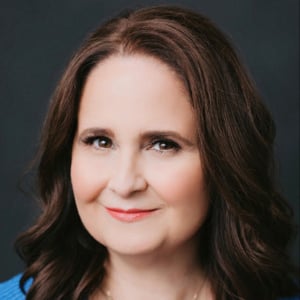
Chief Judge, United States Court of Appeals, Fifth Circuit
Jennifer Walker Elrod is the Chief Judge of the United States Court of Appeals for the Fifth Circuit. She was nominated to the Fifth Circuit in 2007, and she served as a Circuit Judge on the court until assuming the role of Chief Judge in October 2024. Prior to serving as a Circuit Judge, Chief Judge Elrod was appointed and then twice elected Judge of the 190th District Court of Harris County, Texas, where she spent over five years presiding over more than 200 jury and non-jury trials.
Chief Judge Elrod graduated cum laude from Harvard Law School, where she was an active member of the Harvard Federalist Society, an Ames Moot Court finalist, and a Senior Editor of the Harvard Journal of Law & Public Policy. She clerked for the Honorable Sim Lake in the Southern District of Texas. Before serving as a judge, Chief Judge Elrod worked in private practice, focusing on civil litigation, antitrust, and employment matters.
She has been repeatedly recognized for her work as a jurist, as well as for her pro bono work and contributions to the community. She has been named the 2022 Texas Review of Law & Politics’ Jurist of the Year, the 2018 Harvard Federalist Society’s Alumni of the Year, the 2016–17 Texas Association of Civil Trial and Appellate Specialists’ Appellate Judge of the Year, and the 2008 Mexican-American Bar Association of Texas’s Judge of the Year.
Chief Judge Elrod is actively engaged in the academic and legal communities. Chief Judge Elrod currently serves on the Board of Directors and as the Jurist-in-Residence at the South Texas College of Law, where she teaches civil procedure and First Amendment law. She is also a member of the American Law Institute and of the Board of Advisors for the Harvard Journal of Law & Public Policy, and she is a former member of the Board of Regents of her alma mater, Baylor University, and the Board of Visitors at Brigham Young University Law School. She previously served as the Chair of the Codes of Conduct Committee for the Judicial Conference of the United States. She has also served as the M.D. Anderson Visiting Public Service Professor at the Texas Tech University School of Law and as Jurist-in-Residence at Brigham Young University Law School, and she has taught legal writing at the University of Houston Law Center. She presented the Lewis F. Powell, Jr. Distinguished Lecture at the Washington and Lee University School of Law and is a frequent speaker on the topics of trial and appellate procedure, ethics, employment law, and constitutional law. Chief Judge Elrod also serves on the board of the Garland R. Walker Inn of Court, and co-produces an annual musical CLE, for which her pupilage group has won multiple national awards.
Chief Judge Elrod’s publications include: Trial by Siri: AI Comes to the Courtroom; Don’t Mess with Texas Judges: In Praise of the State Judiciary; For Good: Enriching Your Practice and Your Life Through Pro Bono and Community Service; Is the Jury Still Out?: A Case for the Continued Viability of the American Jury; and W(h)ither the Jury? The Diminishing Role of the Jury Trial in our Legal System.
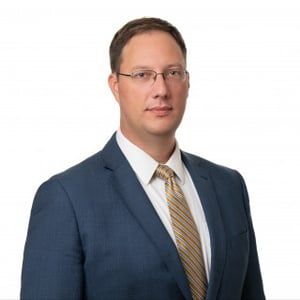
Laurence H. Silberman Chair in Constitutional Governance, American Enterprise Institute; Executive Director, Antonin Scalia Law School’s C. Boyden Gray Center for the Study of the Administrative State
Adam J. White is the Laurence H. Silberman Chair in Constitutional Governance and senior fellow at the American Enterprise Institute, where he focuses on the Supreme Court and the administrative state. He also directs the Antonin Scalia Law School’s C. Boyden Gray Center for the Study of the Administrative State.
He writes on regulation and constitutional government for a variety of publications. He practiced law in Washington, D.C., after clerking for the D.C. Circuit's Judge David Sentelle. He also has been chairman of the ABA's Administrative Law Section.
In 2021, he served on the Presidential Commission on the Supreme Court of the United States, where he criticized “Court packing” and other efforts to restructure the Supreme Court.
Chief Judge, United States Court of Appeals, Fifth Circuit
Jennifer Walker Elrod is the Chief Judge of the United States Court of Appeals for the Fifth Circuit. She was nominated to the Fifth Circuit in 2007, and she served as a Circuit Judge on the court until assuming the role of Chief Judge in October 2024. Prior to serving as a Circuit Judge, Chief Judge Elrod was appointed and then twice elected Judge of the 190th District Court of Harris County, Texas, where she spent over five years presiding over more than 200 jury and non-jury trials.
Chief Judge Elrod graduated cum laude from Harvard Law School, where she was an active member of the Harvard Federalist Society, an Ames Moot Court finalist, and a Senior Editor of the Harvard Journal of Law & Public Policy. She clerked for the Honorable Sim Lake in the Southern District of Texas. Before serving as a judge, Chief Judge Elrod worked in private practice, focusing on civil litigation, antitrust, and employment matters.
She has been repeatedly recognized for her work as a jurist, as well as for her pro bono work and contributions to the community. She has been named the 2022 Texas Review of Law & Politics’ Jurist of the Year, the 2018 Harvard Federalist Society’s Alumni of the Year, the 2016–17 Texas Association of Civil Trial and Appellate Specialists’ Appellate Judge of the Year, and the 2008 Mexican-American Bar Association of Texas’s Judge of the Year.
Chief Judge Elrod is actively engaged in the academic and legal communities. Chief Judge Elrod currently serves on the Board of Directors and as the Jurist-in-Residence at the South Texas College of Law, where she teaches civil procedure and First Amendment law. She is also a member of the American Law Institute and of the Board of Advisors for the Harvard Journal of Law & Public Policy, and she is a former member of the Board of Regents of her alma mater, Baylor University, and the Board of Visitors at Brigham Young University Law School. She previously served as the Chair of the Codes of Conduct Committee for the Judicial Conference of the United States. She has also served as the M.D. Anderson Visiting Public Service Professor at the Texas Tech University School of Law and as Jurist-in-Residence at Brigham Young University Law School, and she has taught legal writing at the University of Houston Law Center. She presented the Lewis F. Powell, Jr. Distinguished Lecture at the Washington and Lee University School of Law and is a frequent speaker on the topics of trial and appellate procedure, ethics, employment law, and constitutional law. Chief Judge Elrod also serves on the board of the Garland R. Walker Inn of Court, and co-produces an annual musical CLE, for which her pupilage group has won multiple national awards.
Chief Judge Elrod’s publications include: Trial by Siri: AI Comes to the Courtroom; Don’t Mess with Texas Judges: In Praise of the State Judiciary; For Good: Enriching Your Practice and Your Life Through Pro Bono and Community Service; Is the Jury Still Out?: A Case for the Continued Viability of the American Jury; and W(h)ither the Jury? The Diminishing Role of the Jury Trial in our Legal System.
Laurence H. Silberman Chair in Constitutional Governance, American Enterprise Institute; Executive Director, Antonin Scalia Law School’s C. Boyden Gray Center for the Study of the Administrative State
Adam J. White is the Laurence H. Silberman Chair in Constitutional Governance and senior fellow at the American Enterprise Institute, where he focuses on the Supreme Court and the administrative state. He also directs the Antonin Scalia Law School’s C. Boyden Gray Center for the Study of the Administrative State.
He writes on regulation and constitutional government for a variety of publications. He practiced law in Washington, D.C., after clerking for the D.C. Circuit's Judge David Sentelle. He also has been chairman of the ABA's Administrative Law Section.
In 2021, he served on the Presidential Commission on the Supreme Court of the United States, where he criticized “Court packing” and other efforts to restructure the Supreme Court.
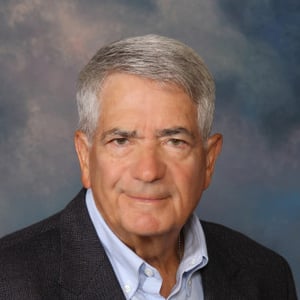
Professor Emeritus of Law, Indiana University; Co-Author, The Law of Lawyering
After graduating with honors from Harvard College in 1966, and from Rutgers Law School with highest honors in 1969, W. William Hodes began practice in a small civil rights and personal injury firm in New Orleans, where he had lived as a child. During the next eight years, he worked in Newark, New Jersey, first for the Kenneth Gibson administration, and then as senior staff attorney for the Education Law Center, a public interest law firm funded by the Ford Foundation.
In 1979, Hodes returned to the legal academy, first as a Bigelow Teaching Fellow at the University of Chicago Law School, and then as a Professor of Law at the Indiana University School of Law in Indianapolis. For the next twenty years, Professor Hodes taught in the areas of Civil Procedure, Constitutonal Law, Federal Courts, Administrative Law, and Professional Responsibility. He gained a national reputation as a scholar, consultant, and expert witness in the areas of Legal Ethics and Professional Responsbility, as they were then known.
Beginning in 1985 however, those subjects began to be known as "The Law of Lawyering," after a book of that name was published, co-authored by Professor Hodes and Professor Geoffrey C. Hazard, Jr., who had served as the Reporter to the Kutak Commission that developed the Model Rules of Professional Conduct. The treatise, which is now in its fourth edition and updated twice a year by Hodes and new co-author Peter R. Jarvis of Portland, Oregon, has become a mainstay resource for both the practicing bar and the academic community, and is often cited in court and ethics committee opinions.
While in the academy, Professor Hodes took two unusual sabbatical leaves. In the Spring of 1989, Hodes, who had spent his junior high school years in Beijing and is still fluent in Chinese, was a Visiting Scholar and Lecturer at the China University of Politics and Law, teaching a course in American Civil Procedure and conducting research into Chinese People's Mediation. (The course was suspended in April, when the events leading to the June 4th Tiananmen Massacre began to unfold, and Professor Hodes began to accompany his students on protest marches.)
During the October 1996 Term of the United States Supreme Court, Professor Hodes served as law clerk to Justice Ruth Bader Ginsburg, who had been his Civil Procedure and Conflicts of Law professor some thirty years earlier, during her Rutgers days. According to knowledgeable sources, Hodes was the oldest person to have served as a law clerk since the early 19th Century.
In 1999, W. William Hodes retired from law teaching (at age 56) in order to establish the William Hodes Professional Corporation, which was later renamed The William Hodes Law Firm; he became Professor Emeritus of Law at Indiana University as the new century began. Through this solo practice, Hodes can now devote full time to providing representation, consultation, expert testimony, legal opinions, and other counsel and assistance to lawyers in the areas of The Law of Lawyering, and Constitutional, Appellate, Supreme Court, and other complex litigation.
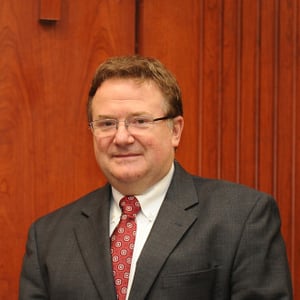
Professor of Law & Dean John F. Sutton, Jr. Chair in Lawyering a, Texas Law
John S. Dzienkowski is a summa cum laude graduate of the University of Miami with a Bachelor of Business Administration and a high honors graduate of the University of Texas School of Law. While in law school, Mr. Dzienkowski served as the editor-in-chief of the Texas Law Review and he received the honors of a member in the UT Chancellors and the Order of the Coif. He served as a judicial law clerk for Ninth Circuit Court of Appeals Judge Joseph Sneed in 1983-84 and for District of Massachusetts Judge Robert Keeton in 1984-85. Mr. Dzienkowski began his teaching career at Tulane Law School in New Orleans and he joined the Texas faculty in 1988. John was a visiting professor at the George Washington University School of Law in 1992-93 and at Cornell Law School in 1995. In Spring 2002, Mr. Dzienkowski visited the University of Florida Levin College of Law as the Hurst Eminent Visiting Scholar, and in Fall 2002, he visited the University of Alabama School of Law as the Francis Hare Visiting Chair in Tort Law.
Mr. Dzienkowski teaches and writes in the areas of professional responsibility of lawyers, real property, international energy transactions, and oil and gas taxation. He is widely regarded as one of the most dynamic and effective speakers on topics of professional responsibility and he has delivered almost one hundred ethics presentations to in-house corporate departments, large and small law firms, state bar continuing legal education programs, and law faculties throughout this country. In 2005, Mr. Dzienkowski received the Texas Exes Faculty Teaching Award for excellence in teaching. He is a four-term member of the drafting committee of the Multistate Professional Responsibility Examination.
In the area of professional responsibility of lawyers, John has authored leading articles on topics relating to conflicts of interest in lawyering: "Positional Conflicts of Interest" (71 Texas Law Review 457), "Lawyers as Intermediaries" (1992 Illinois Law Review 741), "Multidisciplinary Practice of Law" (69 Fordham Law Review 83) (with Bob Peroni), and "Lawyer Equity Investments in Clients" (81 Texas Law Review 405) (with Bob Peroni). He is the editor of the leading statutory supplement on PROFESSIONAL RESPONSIBILITY: STANDARDS, RULES, AND STATUTES and a co-author of a casebook on PROFESSIONAL RESPONSIBILITY OF LAWYERS (1988 and 2002) (with John Sutton). In 2005, Mr. Dzienkowski joined Ronald Rotunda as a co-author of Legal Ethics: A Lawyer's Deskbook on Professional Responsibility (2005). In the area of natural resources, Mr. Dzienkowski is a founding co-author of the first commercially produced casebooks on NATURAL RESOURCES TAXATION (1988) and INTERNATIONAL PETROLEUM TRANSACTIONS (1993 and 2000). He is also a co-author of a leading treatise on oil and gas law and taxation, HEMINGWAY'S OIL AND GAS LAW AND TAXATION (2004). Mr. Dzienkowski is also the co-chair of a bi-annual UT Program on Oil and Gas Taxation co-sponsored with the Internal Revenue Service. Mr. Dzienkowski, along with John Steele and Bradley Wendel, have co-founded www.legalethicsforum.com, a leading blog on issues related to legal ethics.
Doy & Dee Henley Chair and Distinguished Professor of Jurisprude, Chapman University Dale E. Fowler School of Law
Ronald D. Rotunda was the Doy & Dee Henley Chair and Distinguished Professor of Jurisprudence, at Chapman University, the Dale E. Fowler School of Law. He joined the faculty in 2008. Before that, he was University Professor and Professor of Law at George Mason University School of Law. From 2002 to 2006, he was the George Mason University Foundation Professor of Law. Before that, he was the Albert E. Jenner, Jr. Professor of Law, at the University of Illinois. He was a magna cum laude graduate of both Harvard College and Harvard Law School, where he was a member of Harvard Law Review. He joined the University of Illinois faculty in 1974 after clerking for Judge Walter R. Mansfield of the United States Court of Appeals for the Second Circuit, practicing law in Washington, D.C., and serving as assistant majority counsel for the Senate Watergate Committee. He has co-authored the most widely used course book on legal ethics, Problems and Materials on Professional Responsibility(Foundation Press, 12th ed. 2014) and was the author of a leading course book on constitutional law, Modern Constitutional Law (West Academic Co., 11th ed. 2015)(Abridged & Unabridged editions). He was the coauthor of, Legal Ethics: The Lawyer's Deskbook on Professional Responsibility (ABA- West/Thompson Reuters Publishing, St. Paul, Minnesota, 2016-2017 ed.) (Jointly published by the ABA and West/Thompson Reuters Publishing) (with John Dzienkowski). Rotunda also co-authored (with John Nowak) the six-volume Treatise on Constitutional Law (West/Thompson Reuters Publishing, 5th ed. 2012)(with annual updates), and a one volume Treatise on Constitutional Law (West Academic, 8th ed. 2010). He was also the author of several other books and more than 500 articles in various law reviews, journals, newspapers, and books in this country and abroad. His works have been translated into French, Portuguese German, Romanian, Czech, Russian, Japanese, and Korean. These books and articles have been cited more than 2000 times by law reviews, by state and federal courts at every level, from trial courts to the U.S. Supreme Court, and by foreign courts in Europe, Africa, Asia, and South America. He has been interviewed on radio and television on legal issues, both in this country and abroad. In 1993 he was the Constitutional Law Adviser to the Supreme National Council of Cambodia and assisted that country in writing its first democratic constitution. He has consulted with various new democracies in Eastern Europe and the former Soviet Union, including Moldova, Romania, and Ukraine, on their proposed constitutions and judicial codes. He chaired the subcommittee that drafted the American Bar Association's Model Rules for Lawyer Disciplinary Enforcement; was a member of the Publications Board of the A.B.A. Center for Professional Responsibility from 1994 to 2016; was a member of the A.B.A. Standing Committee on Professional Discipline (1991-1997); and was Liaison to the A.B.A. Standing Committee on Ethics and Professional Responsibility (1994-1997). He was a Fulbright Professor in Venezuela in 1986 and a Fulbright Research Scholar in Italy in 1981. In 1996 he assisted the Czech Republic in drafting the first Rules of Ethics for lawyers in that country. During the Spring, 1999 semester, he was Visiting Professor at the University of Alabama School of Law, holding the John S. Stone Endowed Chair of Law. During the summer and fall of 2000, he was the Visiting Senior Fellow in Constitutional Studies at the Cato Institute, in Washington, DC. In the fall of 2001, he was visiting professor at George Mason University School of Law. During November-December, 2002, he was Visiting Scholar, Katholieke Universiteit Leuven, Faculty of Law, Leuven, Belgium. In May, 2004, and December, 2005, he was visiting lecturer at the Institute of Law and Economics, Institut für Recht und Ökonomik, at the University of Hamburg. From early June 2004 to May 2005, he was the Special Counsel to the Department of Defense. He was on the Panel of Contributing Editors that produced, Black's Law Dictionary (West/Thompson Reuters Publishing, 8th ed. 2004; Thomson-Reuters, 10th ed. 2014). From 2005-2006, he was a member of the Task Force on Judicial Functions of the Commission on Virginia Courts in the 21st Century: To Benefit All, to Exclude None.
In May, 2000, American Law Media, publisher of The American Lawyer, the National Law Journal, and the Legal Times picked Professor Rotunda as one of the ten most influential Illinois Lawyers. Also in 2000, a lengthy study that the University of Chicago Press published, which sought to determine the influence, productivity, and reputations of law professors over the last several decades, listed Professor Rotunda as the 17th highest in the nation. The 2002-2003 New Educational Quality Ranking of U.S. Law Schools (EQR) [the last year for which such records are available] ranks Professor Rotunda as the eleventh most cited of all law faculty in the United States. Seehttp://www.leiterrankings.com/faculty/2002faculty_impact_cites.shtml.
In July, 2007, he was one of the main speakers at the International Judicial Conference hosted by the United States Embassy, the Supreme Court of Latvia, and the Latvian Ministry of Justice. The other main speakers were Justice Samuel Alito, the President of Latvia, the Prime Minister of Latvia, the Chief Justice of Latvia, and the Minister of Justice of Latvia. On February 27, 2008, President George W. Bush nominated Ronald D. Rotunda to become a member of the Privacy and Civil Liberties Oversight Board (PCLOB) for an initial four-year term and sent his nomination to the Senate Committee on Homeland Security and Governmental Affairs for confirmation hearings on the nominees. He was selected the Best Lawyer in Washington, DC, in 2009 in Ethics and Professional Responsibility Law, as published in November 2008 in the Washington Post in association with the Legal Times. When he moved to California, he was also selected as one of the Best Lawyers in Southern California, in 2009, 2010, 2011, 2012, 2013, 2014, 2015, 2016, 2017, also in Ethics and Professional Responsibility Law as published in the Los Angeles Times, U.S. News, and American Law Media. On June 17, 2009, he became a Commissioner of the Fair Political Practices Commission, a state regulatory agency (analogous to the Federal Election Commission) that is California's independent political watchdog. He served until January 31, 2013, when his term expired. In 2012, he became a Distinguished International Research Fellow at the World Engagement Institute, a non-profit, multidisciplinary and academically-based non-governmental organization with the mission to facilitate professional global engagement for international development and poverty reduction http://www.weinstitute.org/fellows.html. In 2012, Chapman University honored him with The Chapman University Excellence In Scholarly/Creative Work Award, 2011-2012. Since 2014, he has been a member of the Editorial Board of, The International Journal of Sustainable Human Security (IJSHS), a peer-reviewed publication of the World Engagement Institute (WEI). Rotunda was a Member of the Editorial Board of ABA's Journal of Legal Education (2014 to 2016).
Indiana University School of Law
Professor Geyh's teaching and scholarship focus on the operation of state and federal courts in relation to the political branches of government and the legal profession. He is the author of "When Courts and Congress Collide: The Struggle for Control of America's Judicial System" (University of Michigan Press 2006), coauthor of "Judicial Conduct and Ethics" (Fourth ed., Lexis Law Publishing 2007) (With Alfini, Lubet and Shaman), and "Disqualification: An Analysis Under Federal Law (2d ed. Federal Judicial Center, forthcoming 2010). His work on judicial independence, accountability, administration and ethics has appeared in over 40 books, articles, book chapters and reports.
Geyh currently chairs the editorial committee for the journalJudicature, and is Director of the ABA Judicial Disqualification Project and has previously served as Reporter to four ABA Commissions (the Joint Commission to Evaluate the Model Code of Judicial Conduct, the Commission on the 21st Century Judiciary, the Commission on the Public Financing of Judicial Campaigns, and the Commission on the Separation of Powers and Judicial Independence). He has likewise served on the Board of Directors of the Justice at Stake Campaign; as Reporter to the Constitution Project Task Force on the Distinction Between Intimidation and Legitimate Criticism of Judges; as Director of the American Judicature Society's Center for Judicial Independence; as Consultant to the Parliamentary Development Project on Judicial Independence and Administration for the Supreme Rada of Ukraine; as assistant special counsel to the Pennsylvania House of Representatives on the impeachment and removal of Pennsylvania Supreme Court Justice Rolf Larsen; as Consultant to the National Commission on Judicial Discipline & Removal; and as legislative liaison to the Federal Courts Study Committee. He is a member of the American Law Institute.
A recipient of the Leon Wallace Teaching Award and a two-time recipient of the IU Trustees' Teaching Award, Geyh teaches courses on civil procedure, legal ethics, federal courts, and the relationship between courts and legislatures.
Following graduation from University of Wisconsin Law School, he clerked for Judge Thomas A. Clark of the U.S. Court of Appeals for the Eleventh Circuit. He then worked as an associate at Covington & Burling in Washington, D.C., and served as counsel to the U.S. House of Representatives Committee on the Judiciary. Professor Geyh began his teaching career in 1991 at the Widener University School of Law and joined the law faculty at Indiana in 1998.
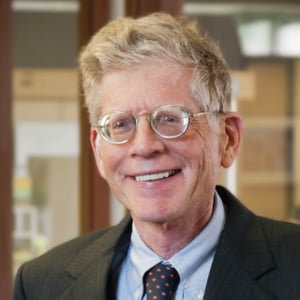
Professor of Law, University of Pittsburgh School of Law
Arthur D. Hellman, a professor of law (emeritus) at the University of Pittsburgh, is a nationally recognized scholar of the federal courts who has also written in the area of the First Amendment. His publications include numerous articles and several books, including casebooks in both areas, Federal Courts: Cases and Materials on Judicial Federalism and the Lawyering Process (5th edition 2022) (with David R. Stras, Ryan W. Scott, F. Andrew Hessick, and Derek T. Muller); and First Amendment Law: Freedom of Speech and Freedom of Religion (5th edition 2022) (with William D. Araiza, Thomas E. Baker, and Ashutosh A. Bhagwat).
In addition to his casebooks and academic writing, Processor Hellman has worked with the Judiciary Committees in the House and Senate in drafting federal courts legislation, including the most recent (2002) revision of the Judicial Conduct and Disability Act (Title 28, Chapter 16). The legislative histories of two major jurisdictional statutes – the Federal Courts Jurisdiction and Venue Clarification Act of 2011 and the “Holmes Group Fix” (enacted as part of the America Invents Act) – acknowledge his contributions.
Professor Hellman has testified as an invited witness at numerous hearings of both Judiciary Committees. His testimony has focused on a wide variety of legislative issues related to the federal courts, including the jurisdiction of the Supreme Court; proposals to divide the Ninth Circuit Court of Appeals; federal judicial discipline; unpublished appellate opinions; and the constitutionality of legislative restrictions on the powers of the federal courts.
In 2005 Professor Hellman was appointed as the inaugural holder of the Sally Ann Semenko Endowed Chair at the University. In 2002 he received the Chancellor’s Distinguished Research Award “as a faculty member who has an outstanding and continuing record of research and scholarly activity.”
U.S. Court of Appeals, Eighth Circuit
Lavenski R. Smith is a federal judge on the United States Court of Appeals for the Eighth Circuit. He joined the court in 2002 after being nominated by former President George W. Bush.

Thomas M. Siebel Senior Fellow, The Hoover Institution, Stanford University; Gary T. Schwartz Distinguished Professor of Law Emeritus, UCLA School of Law
Eugene Volokh is the Thomas M. Siebel Senior Fellow at the Hoover Institution (Stanford), as well as the Gary T. Schwartz Distinguished Professor of Law Emeritus and Distinguished Research Professor at UCLA School of Law. He recently retired from teaching at UCLA, after 30 years there, and is now focusing on research.
Volokh is the author of the textbooks The First Amendment and Related Statutes (8th ed. 2023), and Academic Legal Writing (5th ed. 2016), as well as over 100 academic law journal articles, mostly on First Amendment law. He is a member of The American Law Institute; the editor-in-chief of the Journal of Free Speech Law; and the creator and coauthor of The Volokh Conspiracy, a leading legal blog founded in 2002 (hosted at the Washington Post from 2014 to 2017 and now at Reason Magazine).
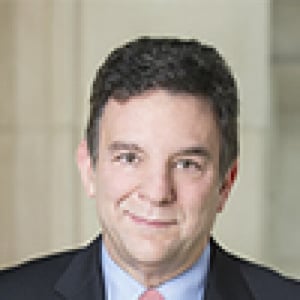
Partner, Arnold & Porter Kaye Scholer LLP
Rob Weiner has significant experience as a trial lawyer, appellate advocate, and legal strategist in complex litigation. He is skilled in developing creative legal approaches to bring cases to a quick, cheap and successful resolution. Mr. Weiner’s long experience representing business and sovereign clients in litigation, and his three tours of duty as a government lawyer, have honed his ability to deal with the regulatory, tactical, and constitutional issues arising when the federal government is, or may become, a party in litigation. From 2010-2012, Mr. Weiner was Associate Deputy Attorney General at the US Department of Justice, where his principal responsibility was to oversee the defense of the Affordable Care Act. He also handled sensitive negotiations with a foreign government involving bank secrecy, and dealt with or headed-off difficult issues across the range of the Department’s matters. Mr. Weiner also has served as Senior Counsel in the White House Counsel’s Office, and as an Associate Independent Counsel. He began his career as a law clerk for The Honorable Henry J. Friendly and for Justice Thurgood Marshall.
At the firm, Mr. Weiner has litigated major administrative and constitutional cases; served as national coordinating and trial counsel in product liability and toxic tort cases; represented clients in media-intensive Congressional regulatory, criminal, and disciplinary investigations; and was lead counsel for the State of Israel in litigation involving national security policies. In addition, clients frequently seek him out to author briefs in the US Supreme Court and other forums.

Departures from the American Rule on Attorney’s Fees
Bruce J. Berman, Elena Isabel Crosby, Ron DeSantis, Brian T. Fitzpatrick, Hinda Klein, Robert J. Luck, Richard Hugh Lumpkin, Jimmy Patronis
2018 Annual Florida Chapters Conference
2018 Annual Florida Chapters Conference Welcome and Opening Remarks: Elena Crosby - Director of Constituent...
Departures from the American Rule on Attorney’s Fees
Bruce J. Berman, Elena Isabel Crosby, Ron DeSantis, Brian T. Fitzpatrick, Hinda Klein, Robert J. Luck, Richard Hugh Lumpkin, Jimmy Patronis
2018 Annual Florida Chapters Conference
2018 Annual Florida Chapters Conference Welcome and Opening Remarks: Elena Crosby - Director of Constituent...
Using the Licensing Power of the Administrative State: Model Rule 8.4(g)
Barry Anderson, Paulette Brown, Stephen Gillers, Ken Paxton, Ronald D. Rotunda
2017 National Lawyers Convention
At its August 2016 meeting in San Francisco, the American Bar Association approved a major...
Using the Licensing Power of the Administrative State: Model Rule 8.4(g)
Barry Anderson, Paulette Brown, Stephen Gillers, Ken Paxton, Ronald D. Rotunda
2017 National Lawyers Convention
At its August 2016 meeting in San Francisco, the American Bar Association approved a major...
Topics
NLC: Using the Licensing Power of the Administrative State | Model Rule 8.4(g)
On Saturday, November 18, 2017, the Federalist Society’s Professional Responsibility and Legal Education Practice Group...
Panel Two: Ethics in the Executive Branch
Jennifer Walker Elrod, Adam White
2017 Annual Texas Chapters Conference
The greater the power of the Executive, the greater the imperative to adhere to the...
Panel Two: Ethics in the Executive Branch
Jennifer Walker Elrod, Adam White
2017 Annual Texas Chapters Conference
The greater the power of the Executive, the greater the imperative to adhere to the...
Ethics CLE Teleforum 2017: Recent Developments Impacting the Ethical Practice of Law
William Hodes, John S. Dzienkowski
Professional Responsibilities & Legal Education Practice Group Podcast
Our panel of three experts in legal and judicial ethics will discuss several recent cases...
Judicial Disability: Can the Federal Courts Inquire into Mental Fitness?
Ronald D. Rotunda, Charles Gardner Geyh, Arthur D. Hellman
Professional Responsibilities & Legal Education Practice Group Teleforum
On August 14, 2017, the Committee on Judicial Conduct and Disability of the Judicial Conference...
Debate: ABA Model Rule 8.4
Lavenski Smith, Eugene Volokh, Robert N. Weiner
2017 National Student Symposium
In August 2016, the American Bar Association (ABA) added new anti-discrimination guidelines for lawyers to...