Note from the Editor: The Federalist Society takes no positions on particular legal and public policy matters. Any expressions of opinion are those of the author. We welcome responses to the views presented here. To join the debate, please email us at info@fedsoc.org.
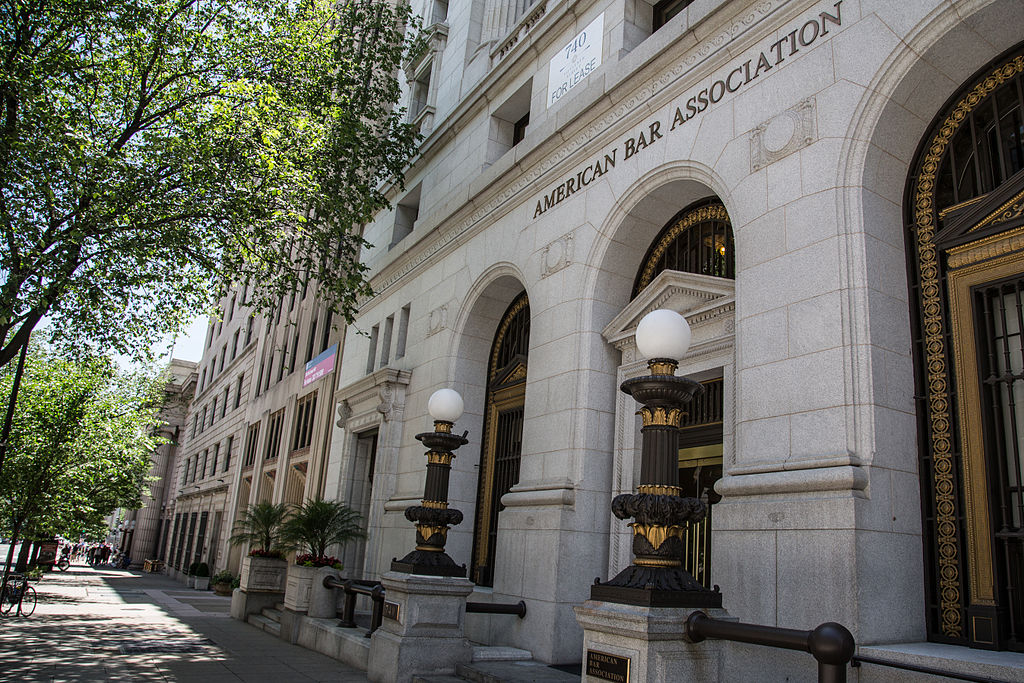
On Saturday, November 18, 2017, the Federalist Society’s Professional Responsibility and Legal Education Practice Group will present a discussion on the merits and demerits of the ABA’s new version of Model Rule 8.4(g). That new Rule, adopted at the ABA’s August 2016 meeting in San Francisco, represents a major change. It would make it professional misconduct for a lawyer to “harass or knowingly discriminate against persons on the basis of race, sex, religion, national origin, ethnicity, disability, age, sexual orientation, gender identity, marital status, or socioeconomic status.”
The new Rule applies to “conduct related to the practice of law” which (1) represents an expansion from the present conduct performed “in the course of representing a client” and (2) new Comment 3 defines to “include[e] the operation and management of a law firm or law practice.” The latter “would include conduct at activities such as law firm dinners and events at which the lawyers were present because of their association with the law firm.”
Because the ABA’s Model Rules are not self-executing, the States will have to decide whether to adopt it as written, modify it, or reject it outright. Several have already acted, and one of our panelists, Hon. Ken Paxton, put out a letter that was harshly critical of it.
What should your State do? How far does the new Rule reach? Does it have First Amendment implications?
The discussion will address these and other questions and will feature the following panelists:
- Ms. Paulette Brown, Partner, Locke Lord LLP; Immediate Past President, American Bar Association
- Mr. Stephen Gillers, Elihu Root Professor of Law, New York University School of Law
- Prof. Ronald D. Rotunda, Professor, Doy and Dee Henley Chair and Distinguished Professor of Jurisprudence, Dale E. Fowler school of Law, Chapman University
- Hon. Ken Paxton, State Attorney General of Texas
- Moderator: Hon. G. Barry Anderson, Associate Justice, Minnesota Supreme Court
The panel will be held on Saturday, November 18, 2017 from 11:00 – 12:30 PM in the Chinese Room of The Mayflower Hotel as part of the Federalist Society’s 2017 National Lawyers Convention. The topic of this year’s convention is: Administrative Agencies and the Regulatory State.
Registration is required to attend the panel. Click here for more information about the conference including the schedule, registration, and lodging information. Online registration ends Monday, November 13.