
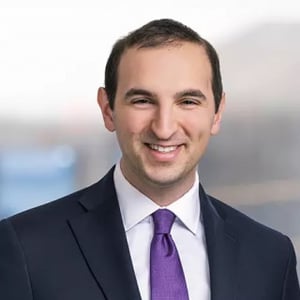
Associate, Covington & Burling LLP
Eli Nachmany is an associate at Covington & Burling LLP in the Washington, DC, office. He clerked for Judge Steven J. Menashi of the U.S. Court of Appeals for the Second Circuit. Eli graduated magna cum laude from Harvard Law School, where he was Editor-in-Chief of the Harvard Journal of Law & Public Policy. Prior to law school, Eli served as the speechwriter to the U.S. Secretary of the Interior and as a domestic policy aide in the White House Office of American Innovation. He graduated summa cum laude from New York University with a B.S. in Sports Management. Eli’s scholarship on administrative law and executive power has appeared in the BYU Law Review, George Mason Law Review, Wake Forest Law Review, and Yale Law Journal Forum.

Counsel, Cause of Action Institute
Ryan P. Mulvey has worked as policy counsel at Americans for Prosperity Foundation since December 2019. He previously worked as Counsel as Cause of Action Institute (2013-2019) and continues to volunteer in that position. Ryan’s practice touches on various aspects of government oversight, civic engagement, and administrative and constitutional law. He regularly lectures on government transparency matters and litigates cases under the Freedom of Information Act and Administrative Procedure Act. Ryan has helped to prosecute state public records requests, too, and provided amicus support at various levels of state and federal courts, including the Supreme Court, on various matters. As a policy expert, he regularly advises congressional staff about FOIA reform and cutting-edge transparency issues.
Ryan was graduated from the University of San Diego (2010) summa cum laude with an honors degree in history and political science. He earned his JD and MA in philosophy from Boston University (2013). While a law student, Ryan completed internships at the Cato Institute’s Center for Constitutional Studies, as well as the Office of the General Counsel of the Roman Catholic Archdiocese of Boston. He served as Executive Editor for Notes and Comments at the Review of Banking & Financial Law and worked as a research assistant for the second revised edition of the Heritage Foundation’s Guide to the Constitution (2014).
Ryan is admitted to the practice of law in New York State, the District of Columbia, and the Commonwealth of Virginia. In addition to his work at AFPF, Ryan is the president of the American Society of Access Professionals and a contributor at FOIA Advisor.

Donald M. Ephraim Professor of Law and Economics, University of Chicago Law School
Tony Casey is an expert on business law, finance, and corporate bankruptcy. His research—which has been published in the Yale Law Journal, the Columbia Law Review, the Supreme Court Review, and the University of Chicago Law Review—examines the intersection of finance and law. He has also written about the role of intellectual property law in the organization and financing of creative projects and about how technological innovation is changing the foundations of our legal system more generally.
Before entering academics, Professor Casey was a partner at Kirkland and Ellis, LLP. Before joining Kirkland & Ellis, he was an associate at Wachtell, Lipton, Rosen & Katz. His legal practice focused on corporate bankruptcy, merger litigation, white-collar investigations, securities litigation, and complex class actions. Casey also served as a law clerk for Chief Judge Joel M. Flaum of the United States Court of Appeals for the Seventh Circuit.
Professor Casey received his JD with High Honors in 2002 from the University of Chicago Law School. He received the John M. Olin Prize for the outstanding student of law and economics.
Professor Casey teaches courses and seminars in corporate governance, business law, bankruptcy and reorganization, finance, litigation strategy, civil procedure, and law and technology.
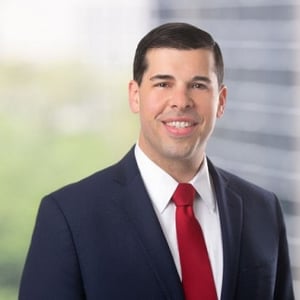
Partner, Boies Schiller Flexner LLP
Jesse, the former third-ranking official at the U.S. Department of Justice, helps clients with their most difficult litigation and regulatory issues─whether that means defending against an enforcement action, pursuing high-stakes litigation and appeals, navigating regulatory thickets at federal and state agencies, or crafting a comprehensive strategy to manage a crisis. He approaches these problems with the knowledge gained both from his broad private-practice experience and from having served at the highest levels of federal and state government.
Jesse has experience across a range of substantive and regulatory areas. He has sued the federal government and has also been one of its top law-enforcement officials; he has represented states and has also navigated their regulatory agencies on behalf of clients; and he has represented companies in business disputes, both as defendants and plaintiffs.
Before joining the firm, Jesse was the Acting Associate Attorney General at the United States Department of Justice. In that role, he oversaw the civil and criminal work of the Antitrust, Civil, Civil Rights, Environment and Natural Resources, and Tax Divisions. During Jesse’s tenure, the Associate’s office closely managed the Department’s most significant litigation, including matters involving large financial institutions, healthcare companies, automakers, energy companies, and state and local governments. In addition, Jesse served as Chair of DOJ’s Regulatory Reform Task Force and Vice Chair of DOJ’s Task Force on Market Integrity and Consumer Fraud. Jesse regularly provided legal and strategic advice to the highest-level decision makers in the federal government, including the Attorney General and Deputy Attorney General, general counsels across the spectrum of federal agencies, and White House officials.
Jesse served for three years as the secretary of Florida’s labor, economic-development, and land-use agency, the Florida Department of Economic Opportunity. Before that, he served as Governor (now Senator) Rick Scott’s general counsel.
Jesse maintains offices in both Washington D.C. and Florida. From Washington, he focuses on federal litigation and crisis management. In Florida, in addition to federal litigation, Jesse employs his knowledge of state government and regulation to help clients in courts across the state, from trial through the Florida Supreme Court.
Jesse currently serves on the Florida Supreme Court Judicial Nominating Commission, the body that provides the governor with nominees for appointment to the Florida Supreme Court. Jesse is also a fellow at the Center for the Study of the Administrative State at the Scalia Law School at George Mason University, where he writes and speaks about administrative law.

Executive Vice President for Bankruptcy Compliance, AIS
Cliff assists clients in effectively administering their portfolios of default loans and implementing systems that meet the highest standards of excellence and legal compliance. For 17 years, White led the United States Trustee Program (USTP), the Department of Justice's "watchdog" of the bankruptcy system. He retired March 2022, after 42 years of federal service. He is the recipient of two Presidential Rank Awards - the highest recognition accorded to senior career executives - by President George W. Bush and President Barack Obama. As Director of the USTP, his accomplishments include the implementation of key provisions of the Bankruptcy Abuse Prevention and Consumer Protection Act of 2005 and the Small Business Reorganization Act of 2019.
Donald M. Ephraim Professor of Law and Economics, University of Chicago Law School
Tony Casey is an expert on business law, finance, and corporate bankruptcy. His research—which has been published in the Yale Law Journal, the Columbia Law Review, the Supreme Court Review, and the University of Chicago Law Review—examines the intersection of finance and law. He has also written about the role of intellectual property law in the organization and financing of creative projects and about how technological innovation is changing the foundations of our legal system more generally.
Before entering academics, Professor Casey was a partner at Kirkland and Ellis, LLP. Before joining Kirkland & Ellis, he was an associate at Wachtell, Lipton, Rosen & Katz. His legal practice focused on corporate bankruptcy, merger litigation, white-collar investigations, securities litigation, and complex class actions. Casey also served as a law clerk for Chief Judge Joel M. Flaum of the United States Court of Appeals for the Seventh Circuit.
Professor Casey received his JD with High Honors in 2002 from the University of Chicago Law School. He received the John M. Olin Prize for the outstanding student of law and economics.
Professor Casey teaches courses and seminars in corporate governance, business law, bankruptcy and reorganization, finance, litigation strategy, civil procedure, and law and technology.
Partner, Boies Schiller Flexner LLP
Jesse, the former third-ranking official at the U.S. Department of Justice, helps clients with their most difficult litigation and regulatory issues─whether that means defending against an enforcement action, pursuing high-stakes litigation and appeals, navigating regulatory thickets at federal and state agencies, or crafting a comprehensive strategy to manage a crisis. He approaches these problems with the knowledge gained both from his broad private-practice experience and from having served at the highest levels of federal and state government.
Jesse has experience across a range of substantive and regulatory areas. He has sued the federal government and has also been one of its top law-enforcement officials; he has represented states and has also navigated their regulatory agencies on behalf of clients; and he has represented companies in business disputes, both as defendants and plaintiffs.
Before joining the firm, Jesse was the Acting Associate Attorney General at the United States Department of Justice. In that role, he oversaw the civil and criminal work of the Antitrust, Civil, Civil Rights, Environment and Natural Resources, and Tax Divisions. During Jesse’s tenure, the Associate’s office closely managed the Department’s most significant litigation, including matters involving large financial institutions, healthcare companies, automakers, energy companies, and state and local governments. In addition, Jesse served as Chair of DOJ’s Regulatory Reform Task Force and Vice Chair of DOJ’s Task Force on Market Integrity and Consumer Fraud. Jesse regularly provided legal and strategic advice to the highest-level decision makers in the federal government, including the Attorney General and Deputy Attorney General, general counsels across the spectrum of federal agencies, and White House officials.
Jesse served for three years as the secretary of Florida’s labor, economic-development, and land-use agency, the Florida Department of Economic Opportunity. Before that, he served as Governor (now Senator) Rick Scott’s general counsel.
Jesse maintains offices in both Washington D.C. and Florida. From Washington, he focuses on federal litigation and crisis management. In Florida, in addition to federal litigation, Jesse employs his knowledge of state government and regulation to help clients in courts across the state, from trial through the Florida Supreme Court.
Jesse currently serves on the Florida Supreme Court Judicial Nominating Commission, the body that provides the governor with nominees for appointment to the Florida Supreme Court. Jesse is also a fellow at the Center for the Study of the Administrative State at the Scalia Law School at George Mason University, where he writes and speaks about administrative law.
Executive Vice President for Bankruptcy Compliance, AIS
Cliff assists clients in effectively administering their portfolios of default loans and implementing systems that meet the highest standards of excellence and legal compliance. For 17 years, White led the United States Trustee Program (USTP), the Department of Justice's "watchdog" of the bankruptcy system. He retired March 2022, after 42 years of federal service. He is the recipient of two Presidential Rank Awards - the highest recognition accorded to senior career executives - by President George W. Bush and President Barack Obama. As Director of the USTP, his accomplishments include the implementation of key provisions of the Bankruptcy Abuse Prevention and Consumer Protection Act of 2005 and the Small Business Reorganization Act of 2019.
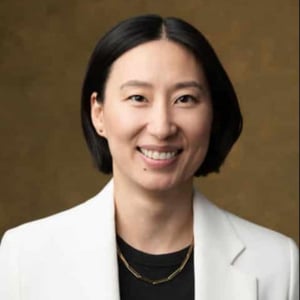
Senior State Policy Counsel, Pacific Legal Foundation
Jaimie Cavanaugh is senior state policy counsel at Pacific Legal Foundation, where she works with legislators around the country to end burdensome laws and create opportunities for individuals to thrive.
Jaimie’s prior work as a litigator led to the recognition of the right to economic liberty by the Georgia Supreme Court and ended New Jersey’s ban on selling cottage food. In Minnesota, she secured a victory for vintners who wanted to make wine with ingredients from other states and eased needlessly restrictive continuing legal education requirements for attorneys.
But there are many ways to advance liberty, and Jaimie has also spent several years assisting legislators in reforming or repealing certificate of need laws, which make it difficult or impossible to open healthcare facilities. She has published reports on certificate of need laws and written extensively about their harms. Her experience has established her as a national policy expert.
Growing up outside of Detroit, Jaimie learned that people, not government, know what’s best for themselves and their families. That’s why her work also promotes protections for private property, equality, and economic opportunity.
Jaimie studied linguistics and German at the University of Michigan before earning her J.D. from the University of Colorado. After law school, she completed a judicial fellowship with Justice Monica Márquez before spending five years as an attorney with Mountain States Legal Foundation and five years as an attorney with Institute for Justice.

Renée Flaherty is an attorney with the Institute for Justice. She joined the Institute in 2013 and litigates cases to secure property rights, economic liberty and school choice in federal and state courts.
Renée successfully represented families in defense of North Carolina’s Opportunity Scholarship Program, which was upheld by the North Carolina Supreme Court in July 2015.
Renée’s views have been published in USA Today and The Wall Street Journal.
Prior to joining the Institute for Justice, Renée worked in private practice as a tax controversy associate at the Washington, D.C., office of Bingham McCutchen, LLP. She received her law degree from Harvard Law School in 2011, where she was an editor of the Harvard Negotiation Law Review and served on the Executive Board of the Federalist Society. Renée graduated from the University of Texas at Austin with a Bachelor of Arts in Philosophy and a Bachelor of Business Administration. Renée is originally from Odessa, Texas.
Renée Flaherty is a member of the D.C. bar.
Senior State Policy Counsel, Pacific Legal Foundation
Jaimie Cavanaugh is senior state policy counsel at Pacific Legal Foundation, where she works with legislators around the country to end burdensome laws and create opportunities for individuals to thrive.
Jaimie’s prior work as a litigator led to the recognition of the right to economic liberty by the Georgia Supreme Court and ended New Jersey’s ban on selling cottage food. In Minnesota, she secured a victory for vintners who wanted to make wine with ingredients from other states and eased needlessly restrictive continuing legal education requirements for attorneys.
But there are many ways to advance liberty, and Jaimie has also spent several years assisting legislators in reforming or repealing certificate of need laws, which make it difficult or impossible to open healthcare facilities. She has published reports on certificate of need laws and written extensively about their harms. Her experience has established her as a national policy expert.
Growing up outside of Detroit, Jaimie learned that people, not government, know what’s best for themselves and their families. That’s why her work also promotes protections for private property, equality, and economic opportunity.
Jaimie studied linguistics and German at the University of Michigan before earning her J.D. from the University of Colorado. After law school, she completed a judicial fellowship with Justice Monica Márquez before spending five years as an attorney with Mountain States Legal Foundation and five years as an attorney with Institute for Justice.
Renée Flaherty is an attorney with the Institute for Justice. She joined the Institute in 2013 and litigates cases to secure property rights, economic liberty and school choice in federal and state courts.
Renée successfully represented families in defense of North Carolina’s Opportunity Scholarship Program, which was upheld by the North Carolina Supreme Court in July 2015.
Renée’s views have been published in USA Today and The Wall Street Journal.
Prior to joining the Institute for Justice, Renée worked in private practice as a tax controversy associate at the Washington, D.C., office of Bingham McCutchen, LLP. She received her law degree from Harvard Law School in 2011, where she was an editor of the Harvard Negotiation Law Review and served on the Executive Board of the Federalist Society. Renée graduated from the University of Texas at Austin with a Bachelor of Arts in Philosophy and a Bachelor of Business Administration. Renée is originally from Odessa, Texas.
Renée Flaherty is a member of the D.C. bar.

Litigation Update: Loper Bright Enterprises v. Raimondo
Eli Nachmany, Ryan Patrick Mulvey
A Regulatory Transparency Project Webinar
For the past thirty years, the Magnuson-Stevens Act (MSA) has given the National Marine Fisheries...
Topics
Testing the Testers: The Supreme Court is Set to Consider the Standing of Private Citizens Who Sue to Enforce the Americans with Disabilities Act
On October 4, the Supreme Court will hear arguments in Acheson Hotels LLC v. Laufer....
Topics
The Georgia Fake Electors Scheme: What Does Legal and Political History Tell Us About These Charges?
Five of the 19 defendants indicted by Fulton County District Attorney Fani Willis are alleged...
Topics
Mahmoud v. Montgomery County Public Schools: A Religious Liberty Controversy to Watch
In Maryland’s Montgomery County Public Schools, parents are forbidden to know when their elementary-school children...
Topics
Responding to Flawed Arguments Against Bankruptcy Releases
This post is reprinted with permission from Creditor Rights Coalition. As the bankruptcy of Purdue...
Courthouse Steps Preview: Harrington v. Purdue Pharma
Anthony J. Casey, Jesse Panuccio, Clifford J. White
The Supreme Court is scheduled to hear Harrington v. Purdue Pharma in December 2023. The case...
Courthouse Steps Preview: Harrington v. Purdue Pharma
Anthony J. Casey, Jesse Panuccio, Clifford J. White
The Supreme Court is scheduled to hear Harrington v. Purdue Pharma in December 2023. The case...
Litigation Update: Jackson v. Raffensperger
Jaimie N. Cavanaugh, Renée Flaherty
In Jackson v. Raffensperger, 316 Ga. 383 (2023), the Supreme Court of Georgia struck down...
Litigation Update: Jackson v. Raffensperger
Jaimie N. Cavanaugh, Renée Flaherty
In Jackson v. Raffensperger, 316 Ga. 383 (2023), the Supreme Court of Georgia struck down...
Litigation Update: Louisiana v. EPA
Efforts to achieve “environmental justice” have been a top priority of the Biden Administration and...