

U.S. Court of Appeals, Seventh Circuit
Frank H. Easterbrook is a judge of the United States Court of Appeals for the Seventh Circuit and a Senior Lecturer at the Law School of the University of Chicago. He was Chief Judge from 2006–2013. Before joining the court in 1985, he was the Lee andBrena Freeman Professor of Law at the University of Chicago, where he taught and wrote in antitrust, securities, corporate law, jurisprudence, and criminal procedure. He has published The Economic Structure of Corporate Law (with Daniel R. Fischel) and about 100 scholarly articles. He served as Co-Editor of the Journal of Law and Economics from 1982 to 1991 and as a member of the Judicial Conference’s Standing Committee on Rules of Practice and Procedure from 1991 to 1997. Before joining the faculty of the Law School in 1979, Judge Easterbrook was Deputy Solicitor General of the United States. He holds degrees from Swarthmore College (B.A. with high honors, 1970) and the University of Chicago (J.D. cum laude, 1973), and is a member of the American Academy of Arts and Sciences, the American Law Institute, the Mont Pelerin Society, Phi Beta Kappa, and the Order of the Coif.

Founding Partner, Boyden Gray & Associates
Ambassador C. Boyden Gray is the founding partner of Boyden Gray & Associates, a law and strategy firm in Washington, D.C., focused on constitutional and regulatory issues.
Mr. Gray worked in the White House for twelve years, first as counsel to the Vice President during the Reagan administration and then as White House Counsel to President George H.W. Bush. In the Reagan administration, he was Counsel to the Presidential Task Force on Regulatory Relief, for which he wrote the original Executive Order 12291 requiring cost-benefit analysis and White House review of regulations (later renumbered as current EO 12866). In the George H.W. Bush Administration, Mr. Gray was in charge of judicial selection and was also instrumental in the enactment of the Clean Air Act Amendments of 1990, the Energy Policy Act of 1992, and a cap-and-trade system for acid rain emissions. In 1993, he received the Presidential Citizens Medal. Under President George W. Bush, Mr. Gray was U.S. Ambassador to the European Union and U.S. Special Envoy to Europe for Eurasian Energy.
Mr. Gray practiced law for 25 years at the law firm of Wilmer, Cutler & Pickering and was chairman of the Administrative Law and Regulatory Practice Section of the American Bar Association from 2000 to 2002. Early in his career, Mr. Gray helped to develop the Business Roundtable and served as its first counsel. He is an adjunct professor at Antonin Scalia Law School and a former adjunct professor at NYU Law School (teaching energy and environmental law). Mr. Gray is on the Board of Directors of the Atlantic Council, the Federalist Society, Reason Foundation, and the Trust for the National Mall.
Mr. Gray earned his A.B. magna cum laude from Harvard, where he was an editor of the Crimson, and his J.D. with high honors from the University of North Carolina at Chapel Hill, where he was editor-in-chief of the Law Review. Mr. Gray served in the United States Marine Corps, and after law school, he clerked for Earl Warren, Chief Justice of the United States Supreme Court.
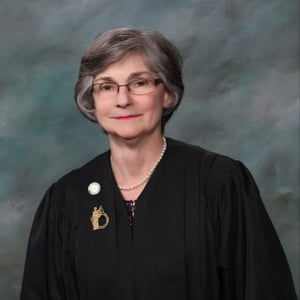
Judge, United States Court of Appeals, Fifth Circuit
Edith Jones graduated from Alamo Heights High School, where she was a National Merit Scholar. In 1971, she received her B.A. in Economics from Cornell University, graduating with honors. In 1974, she was awarded her J.D. at the University of Texas Law School, where she was a law review editor and received the Order of the Coif.
Judge Jones was the first female partner at Andrews, Kurth, Campbell & Jones (now Hunton Andrews Kurth) where she practiced various types of litigation and bankruptcy cases. Judge Jones went on the federal bench on June 1, 1985.
Judge Jones served as a former member of the National Bankruptcy Review Commission, and as a member of the Judicial Conference Commission on Bankruptcy Rules. Judge Jones served on the White House Fellows Commission. Judge Jones served on the board of the Sam Houston Area Council of the Boy Scouts of America. She has been a member of the Garland Walker Inn of Court in Houston for more than 20 years and its President for at least ten years. Judge Jones is also on the Board of the Calvin Coolidge Presidential Foundation.
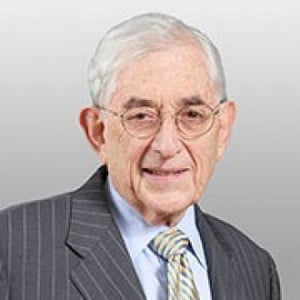
Retired Partner, Covington & Burling LLP
With the exception of two periods of United States Government service, Harris Weinstein practiced law with Covington's Washington office as an associate, partner, and senior counsel between 1962 and his retirement from practice in 2009. He was with the Department of Justice during the period 1967-1969 as an Assistant to the Solicitor General of the United States and with the Department of the Treasury during 1990-1992 as Chief Counsel of the then Office of Thrift Supervision. Before joining Covington, Mr. Weinstein was law clerk to Judge William H. Hastie of the United States Court of Appeals for the Third Circuit.
His private practice focused on civil litigation, including disputes under antitrust, securities, tax and banking laws, and patent and related trade issues. He has appeared in federal trial and appellate courts throughout the United States and, as a government attorney, argued nine cases in the United States Supreme Court.
From January 2007 through December 2016, Mr. Weinstein served as a Distinguished Lecturer on the faculty of the Columbus School of Law of The Catholic University of America, teaching International Commercial Arbitration as well as other subjects. He also coached the law school’s team in the Willem C. Vis International Commercial Arbitration Moot. He has taught the arbitration course at the University of California, Davis and lectured on the subject at Penn State Law School and the University of Lisbon, Portugal.
Mr. Weinstein’s teaching activity has included lectures on banking law or corporate fiduciary issues at American University, George Washington University, and the Universities of Illinois, Michigan and Virginia. He has also taught one-week courses on Banking and International Arbitration under United States Law as part of Catholic University’s American Law program at the Jagiellonian University in Krakow, Poland.
In his pro bono work, Mr. Weinstein was a member of the Administrative Conference of the United States and chaired the Conference’s Committee on Government Processes. He also has been a member of the Corporation of the Massachusetts Institute of Technology, President of its alumni/ae association, and Chair of its Alumni/ae Fund; Counsel to the Contests and Credentials Committees of the Republican National Conventions of 1984 and 1988; and a member of the initial advisory committee of the Commonwealth Institute (Richmond, VA).
His law degree is from Columbia University, where he was editor-in-chief of the Columbia Law Review. He received S.B. and S.M. degrees in mathematics from M.I.T. and was elected an associate member of the Sigma Xi science honorary society.
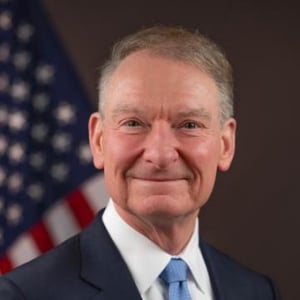
Chairman of the Securities and Exchange Commission
Paul S. Atkins was sworn into office as the 34th Chairman of the Securities and Exchange Commission on April 21, 2025, after being nominated by President Donald J. Trump on January 20, 2025, and confirmed by the U.S. Senate on April 9, 2025.
Prior to returning to the SEC, Chairman Atkins was most recently chief executive of Patomak Global Partners, a company he founded in 2009. Chairman Atkins helped lead efforts to develop best practices for the digital asset sector. He served as an independent director and non-executive chairman of the board of BATS Global Markets, Inc. from 2012 to 2015.
Chairman Atkins was appointed by President George W. Bush to serve as a Commissioner of the SEC from 2002 to 2008. During his tenure, he advocated for transparency, consistency, and the use of cost-benefit analysis at the agency. Chairman Atkins also represented the SEC at meetings of the President’s Working Group on Financial Markets and the U.S.-EU Transatlantic Economic Council. From 2009 to 2010, he was appointed a member of the Congressional Oversight Panel for the Troubled Asset Relief Program.
Before serving as an SEC Commissioner, Chairman Atkins was a consultant on securities and investment management industry matters, especially regarding issues of strategy, regulatory compliance, risk management, new product development, and organizational control.
From 1990 to 1994, Chairman Atkins served on the staff of two chairmen of the SEC, Richard C. Breeden and Arthur Levitt, ultimately as chief of staff and counselor, respectively. He received the SEC’s 1992 Law and Policy Award for work regarding corporate governance matters.
Chairman Atkins began his career as a lawyer in New York, focusing on a wide range of corporate transactions for U.S. and foreign clients, including public and private securities offerings and mergers and acquisitions. He was resident for 2½ years in his firm's Paris office and admitted as conseil juridique in France.
A member of the New York and Florida bars, Chairman Atkins received his J.D. from Vanderbilt University School of Law in 1983 and was Senior Student Writing Editor of the Vanderbilt Law Review. He received his A.B., Phi Beta Kappa, from Wofford College in 1980.
Originally from Lillington, North Carolina, Chairman Atkins grew up in Tampa, Florida. He and his wife Sarah have three sons.
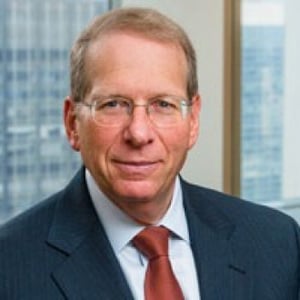
Senior Counsel, Willkie Farr & Gallagher
Barry P. Barbash is senior counsel in the firm’s Asset Management Group and has been a practitioner in the asset management area for over 35 years. He combines deep private practice experience with extensive knowledge of the regulation of the asset management business, having, among other things, served from September 1993 until October 1998, as the Director of the Securities and Exchange Commission’s Division of Investment Management.
Barry has a diverse practice covering all aspects of the asset management business. He regularly advises investment managers and fiduciaries, independent directors and trustees, and mutual fund, exchange-traded fund, hedge fund, private equity fund and venture capital fund clients on a variety of transactional, compliance and regulatory matters. His areas of experience include investment adviser operations, compliance procedures and policies and fund governance matters. He regularly represents buyers and sellers in asset management merger and acquisition transactions and restructurings and advises asset managers of all types in connection with administrative and court actions brought by securities regulators. He has particular experience dealing with “status” issues arising under the Investment Advisers Act of 1940 and the Investment Company Act of 1940. He has, in addition to serving as the Director of the SEC’s Division of Investment Management, held staff attorney positions with the Division of Investment Management and the Plan Benefits Security Division of the Office of the Solicitor of the U.S. Department of Labor, which has responsibility for the administration of the fiduciary responsibility provisions of the U.S. federal employee benefit plans law. His practice has been focused on investment advisers, fiduciaries and securities regulation since 1978.
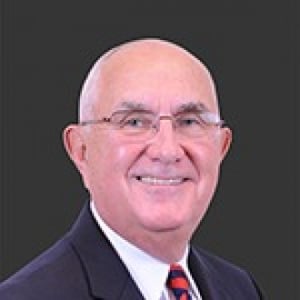
Andrew J. Donohue, widely known as Buddy Donohue, has over 40 years of experience in both senior government and private sector roles, having recently served as SEC Chief of Staff to Chair Mary Jo White (2015-2017). He is best known for his service as Director of the SEC’s Division of Investment Management (2006-2010) (where he was effectively the most senior regulator for the U.S. funds industry). Buddy was most recently at the law firm of Shearman & Sterling LLP (2017-2019) and also served as Global General Counsel at Merrill Lynch Investment Managers (2003-2006), Executive Vice President and General Counsel at OppenheimerFunds Inc. (1991 – 2001) and Investment Company General Counsel at Goldman Sachs (2012-2015).
Buddy is currently an independent Director of certain BNY Mellon Funds (2019 to present) and has been an officer, director and counsel for numerous investment advisers, broker-dealers, commodity trading advisors, transfer agents and insurance companies. He also has served on the boards of business development companies, registered open-end funds, closed-end funds, exchange-traded funds, Cayman funds and Dublin-based and Luxembourg-based UCITS. He has served as Chairman of the ABA Investment Companies and Investment Advisers Subcommittee, and as an Editor of the ABA Guide for Fund Directors. He also sits on the Board of the Mutual Funds Directors Forum (2018 to present).
Buddy is an acknowledged and highly respected thought leader within the industry, having published, lectured and delivered talks on a variety of investment fund topics. He currently is also an Adjunct Professor teaching investment management law at Brooklyn Law School.

Partner, Eversheds Sutherland
Brian Rubin is the Washington office leader of the Eversheds Sutherland (US) Litigation group and the head of the firm’s Securities and Exchange Commission (SEC), Financial Industry Regulatory Authority (FINRA) and state securities enforcement practice. With more than 20 years of experience in federal securities law, first prosecuting and now defending, Brian represents clients being examined, investigated and prosecuted by the SEC, FINRA, other self-regulatory organizations and states. As former NASD (now FINRA) Deputy Chief Counsel of Enforcement and Senior Enforcement Counsel at the SEC, he brings an insider’s perspective to defending broker-dealers, investment advisers, investment companies, public companies and individuals in examinations, investigations, enforcement proceedings, litigation, arbitrations and in counseling.

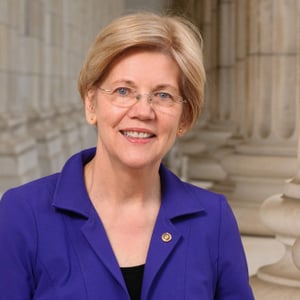
Socialization of Risk: Bankruptcy Law & Financial Institutions [Archive Collection]
Frank H. Easterbrook, C. Boyden Gray, Edith H. Jones, Elizabeth Warren, Harris Weinstein
1991 Annual Lawyers Convention
On September 13-14, 1991, the Federalist Society held its Fifth Annual National Lawyers Convention on...
Topics
The FDIC Refinery
It was a busy day at the Federal Deposit Insurance Corporation (FDIC). The agency took...
Agency Staff Regulatory Guidance
Paul S. Atkins, Barry P. Barbash, Andrew (Buddy) Donahue, Brian Rubin
Financial Services Practice Group Teleforum
Agency staff regulatory guidance, speeches, and settled enforcement actions can be helpful to the regulated...
Topics
Key Points in the Treasury's Fannie/Freddie Paper
The important parts of the Treasury's new paper on Fannie and Freddie reform are not...
Topics
We Three Kings: Lacking Representation in Index Fund Corporate Governance
Do you know who the largest investor in 9 out of 10 public companies is?...
Topics
Money and the Constitution: Money, Credit, and Interest Rates
In a previous post, I explained that at this year’s National Lawyers Convention, in November,...
Topics
Of Class Actions and Usury - Shrinking Credit in the Second Circuit
Federal law provides that a bank extending credit is only subject to the usury laws...
Topics
Money and the Constitution: What About Inflation?
Happy to see that my colleague, Bert Ely, has started a conversation about “Money and...
Topics
Money and the Constitution
At this year’s National Lawyers Convention, in November, the Federalist Society’s Financial Services and E-Commerce...
Topics
Corporate Finance for Law—Essential and Ethical
Legal finance as it has evolved in the U.S. over the last decade reflects a...