
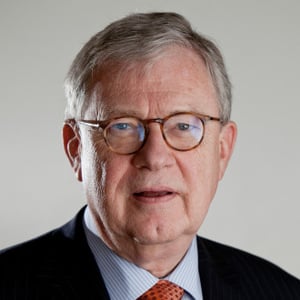
Senior Political Analyst, Washington Examiner
Michael Barone is a Senior Political Analyst for the Washington Examiner, where he writes a twice-weekly column and contributes to their Beltway Confidential blog. He is also a frequent contributor during Fox News Channel's election coverage.
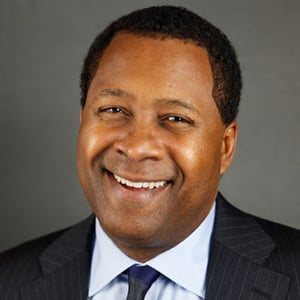
Partner, Kirkland & Ellis LLP
Reginald “Reg” Brown is a partner in the Washington, D.C., office of Kirkland & Ellis LLP. He has a vibrant and diverse crisis and governmental investigations practice, and regularly counsels financial institutions and other industry-leading clients facing complex and significant regulatory, enforcement and reputational matters.
Reg provides investigations-related guidance, strategic counsel and crisis management assistance to a broad range of companies and senior executives confronting challenges and opportunities at the intersection of government, law, media and public policy. He has assisted leading institutions and high-profile individual clients with more than a hundred congressional inquiries, as well as numerous federal, state and global government investigations and crisis avoidance and mitigation matters.
Reg leads teams of lawyers responding to some of the most challenging Department of Justice (DOJ), Consumer Financial Protection Bureau (CFPB), State Attorneys General and other regulatory or enforcement matters for financial institutions. Many of his clients are among the world's most prominent banks, hedge funds, private equity and venture firms, energy companies, government contractors, healthcare institutions and technology firms, as well as CEOs and high-ranking public officials. Reg has also assisted prospective and incumbent high-level public officials in connection with complex ethics agreements and governmental controversies.
Prior to joining Kirkland, Reg was a partner at WilmerHale, where he served as chairman of the firm's Financial Institutions Group and led the firm's congressional investigations practice as vice chair of the Crisis Management and Strategic Response Group. He previously served in the White House Counsel's office, where he was the White House's principal legal liaison to the Departments of Treasury and Housing and Urban Development, as well as many independent financial services agencies. In this role, he provided counsel on a wide variety of issues. Among other things, Reg served as a counselor for the White House Office of Political Affairs, Presidential Personnel Office and the National Economic Council.
Prior to his government service, Reg served as assistant to the CEO and vice president of corporate strategy at Nationwide Mutual Insurance Company, and as the deputy general counsel to former Florida Governor Jeb Bush. He served as a Peace Corps volunteer in the Federated States of Micronesia early in his professional career.
Senior Political Analyst, Washington Examiner
Michael Barone is a Senior Political Analyst for the Washington Examiner, where he writes a twice-weekly column and contributes to their Beltway Confidential blog. He is also a frequent contributor during Fox News Channel's election coverage.
Partner, Kirkland & Ellis LLP
Reginald “Reg” Brown is a partner in the Washington, D.C., office of Kirkland & Ellis LLP. He has a vibrant and diverse crisis and governmental investigations practice, and regularly counsels financial institutions and other industry-leading clients facing complex and significant regulatory, enforcement and reputational matters.
Reg provides investigations-related guidance, strategic counsel and crisis management assistance to a broad range of companies and senior executives confronting challenges and opportunities at the intersection of government, law, media and public policy. He has assisted leading institutions and high-profile individual clients with more than a hundred congressional inquiries, as well as numerous federal, state and global government investigations and crisis avoidance and mitigation matters.
Reg leads teams of lawyers responding to some of the most challenging Department of Justice (DOJ), Consumer Financial Protection Bureau (CFPB), State Attorneys General and other regulatory or enforcement matters for financial institutions. Many of his clients are among the world's most prominent banks, hedge funds, private equity and venture firms, energy companies, government contractors, healthcare institutions and technology firms, as well as CEOs and high-ranking public officials. Reg has also assisted prospective and incumbent high-level public officials in connection with complex ethics agreements and governmental controversies.
Prior to joining Kirkland, Reg was a partner at WilmerHale, where he served as chairman of the firm's Financial Institutions Group and led the firm's congressional investigations practice as vice chair of the Crisis Management and Strategic Response Group. He previously served in the White House Counsel's office, where he was the White House's principal legal liaison to the Departments of Treasury and Housing and Urban Development, as well as many independent financial services agencies. In this role, he provided counsel on a wide variety of issues. Among other things, Reg served as a counselor for the White House Office of Political Affairs, Presidential Personnel Office and the National Economic Council.
Prior to his government service, Reg served as assistant to the CEO and vice president of corporate strategy at Nationwide Mutual Insurance Company, and as the deputy general counsel to former Florida Governor Jeb Bush. He served as a Peace Corps volunteer in the Federated States of Micronesia early in his professional career.
Partner, Murtha Cullina LLP
Proloy K. Das is the chair of the Appellate Practice Group. He has argued over sixty appeals before the Connecticut Supreme Court, Connecticut Appellate Court, and U.S. Court of Appeals for the Second Circuit. Attorney Das has advanced legal doctrines in cases of first impression in several areas including election law, tort liability, municipal law, contract law, insurance coverage, and felony prosecutions.
He has been named as one of the Connecticut Law Tribune’s New Leaders of the Law (2005), the Hartford Business Journal’s “40 Under Forty” (2007); the National Asian Pacific American Bar Association’s (NAPABA) Best Under 40 (2011); the “Super Lawyers Rising Stars” list of Connecticut appellate lawyers (2008-2012); and the “Super Lawyers” list of top appellate lawyers in New England from 2013-2017. In 2015, the Connecticut Law Tribune named the appellate department chaired by Attorney Das at his prior law firm as its “2015 Appellate Litigation Department of the Year.” In 2017, 2018, 2019 and 2020 the publication named Murtha Cullina’s appellate practice group as its “Litigation Department of the Year.”
The U. S. Court of Appeals for the Second Circuit has appointed Attorney Das to its pro bono panel of appellate advocates for indigent appellants. Prior to private practice, Attorney Das served as Assistant State’s Attorney in the Appellate Bureau of the Chief State’s Attorney’s Office. He earned his undergraduate degree from Boston College and his law degree from the Indiana University Maurer School of Law.
Attorney Das is the Connecticut State Chair of the Republican National Lawyers Association.
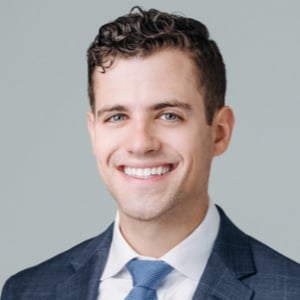
Attorney, Paul, Weiss
An associate in the Restructuring Department, Joshua advises debtors, creditors, sponsors and shareholders, and distressed investment funds in chapter 11 cases, out-of-court restructurings, cross-border insolvency matters, and in bankruptcy litigation at both the trial and appellate courts. He also has significant experience representing the Financial Oversight & Management Board for Puerto Rico, as representative of the Commonwealth of Puerto Rico and certain of its instrumentalities, in their proceedings under Title III of the Puerto Rico Oversight, Management, and Economic Stability Act (PROMESA).
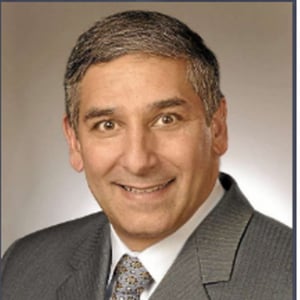
Republican Minority Leader (34th District) and Partner, Fasano, Ippolito, Lee & Florentine, LLC
State Senator Len Fasano has represented the 34th Senate District communities of Durham, East Haven, North Haven and Wallingford since 2003.
In the General Assembly, Len Fasano has served as leader of the Senate Republican Caucus since 2014. He has championed bipartisan policies to benefit taxpayers, promote fiscal stability, and protect core services for the most vulnerable. Recent legislative accomplishments include developing first-in-the-nation legislation to make prescription drugs more affordable and bring transparency to health care, passing historic bipartisan state budgets with spending caps and bonding caps, and developing proposals to reform criminal justice, education funding, and bring more opportunities to Connecticut cities.
As leader of the Senate Republican Caucus, Senator Fasano is committed to making state government more cost-effective and efficient. He rallied bipartisan support to implement a spending cap, after decades of attempts by lawmakers to define the cap approved over 25 years ago. He also championed a bonding cap and volatility cap to reduce state debt and create more stability in state finances.
Senator Fasano established an urban affairs initiative within the Senate Republican Caucus in 2014 to start a dialogue between Republican lawmakers and Connecticut cities to enhance educational and economic opportunities. He has also proposed plans to reform the state’s justice system, to reduce recidivism and help people access the tools they need to succeed in all aspects of life.
As an advocate for the most vulnerable, Sen. Fasano has been named a “Children’s Champion” by the Connecticut Early Childhood Alliance and has proposed legislation to reform the state’s child welfare agency to better protect, monitor and support the children in its care. Senator Fasano has also worked closely with advocates for individuals with disabilities, passing legislation to address the growing needs of individuals on the state’s waitlist for services and legislation to better protect children with disabilities who are suspected or documented victims of abuse and neglect.
Senator Fasano is the co-creator of the Bipartisan Round Table on Hospitals and Health Care, established in 2014 in partnership with Senate President Martin Looney to help ensure continued access to affordable quality care in Connecticut. Senator Fasano, whose father was a doctor in New Haven, has advocated for legislation that seeks to remedy the problems caused by the rapid consolidation of physician practices in Connecticut and the resulting impacts on health care costs and patient choice. He was also successful in passing bipartisan legislation to bring more transparency to medical expenses and to ban “gag clauses” that prevented pharmacists from telling consumers if cheaper prescription drug alternatives were available.
Senator Fasano is the President and Founder of Fasano, Ippolito, Lee, & Florentine, a law firm with offices in New Haven and Branford. He is also an East Haven business owner. Fasano earned his Bachelor of Science Degree from Yale University in 1981, a Juris Doctorate from Quinnipiac Law School in 1984, and an L.L.M. Degree in Taxation from Boston University Law School in 1985. He played football at Yale under legendary coach, Carm Cozza.
Senator Fasano has spent all of his life in New Haven and surrounding communities. He has three adult children and two grandchildren. He currently resides in North Haven with his wife, Jill.
Partner, Murtha Cullina LLP
Proloy K. Das is the chair of the Appellate Practice Group. He has argued over sixty appeals before the Connecticut Supreme Court, Connecticut Appellate Court, and U.S. Court of Appeals for the Second Circuit. Attorney Das has advanced legal doctrines in cases of first impression in several areas including election law, tort liability, municipal law, contract law, insurance coverage, and felony prosecutions.
He has been named as one of the Connecticut Law Tribune’s New Leaders of the Law (2005), the Hartford Business Journal’s “40 Under Forty” (2007); the National Asian Pacific American Bar Association’s (NAPABA) Best Under 40 (2011); the “Super Lawyers Rising Stars” list of Connecticut appellate lawyers (2008-2012); and the “Super Lawyers” list of top appellate lawyers in New England from 2013-2017. In 2015, the Connecticut Law Tribune named the appellate department chaired by Attorney Das at his prior law firm as its “2015 Appellate Litigation Department of the Year.” In 2017, 2018, 2019 and 2020 the publication named Murtha Cullina’s appellate practice group as its “Litigation Department of the Year.”
The U. S. Court of Appeals for the Second Circuit has appointed Attorney Das to its pro bono panel of appellate advocates for indigent appellants. Prior to private practice, Attorney Das served as Assistant State’s Attorney in the Appellate Bureau of the Chief State’s Attorney’s Office. He earned his undergraduate degree from Boston College and his law degree from the Indiana University Maurer School of Law.
Attorney Das is the Connecticut State Chair of the Republican National Lawyers Association.
Attorney, Paul, Weiss
An associate in the Restructuring Department, Joshua advises debtors, creditors, sponsors and shareholders, and distressed investment funds in chapter 11 cases, out-of-court restructurings, cross-border insolvency matters, and in bankruptcy litigation at both the trial and appellate courts. He also has significant experience representing the Financial Oversight & Management Board for Puerto Rico, as representative of the Commonwealth of Puerto Rico and certain of its instrumentalities, in their proceedings under Title III of the Puerto Rico Oversight, Management, and Economic Stability Act (PROMESA).
Republican Minority Leader (34th District) and Partner, Fasano, Ippolito, Lee & Florentine, LLC
State Senator Len Fasano has represented the 34th Senate District communities of Durham, East Haven, North Haven and Wallingford since 2003.
In the General Assembly, Len Fasano has served as leader of the Senate Republican Caucus since 2014. He has championed bipartisan policies to benefit taxpayers, promote fiscal stability, and protect core services for the most vulnerable. Recent legislative accomplishments include developing first-in-the-nation legislation to make prescription drugs more affordable and bring transparency to health care, passing historic bipartisan state budgets with spending caps and bonding caps, and developing proposals to reform criminal justice, education funding, and bring more opportunities to Connecticut cities.
As leader of the Senate Republican Caucus, Senator Fasano is committed to making state government more cost-effective and efficient. He rallied bipartisan support to implement a spending cap, after decades of attempts by lawmakers to define the cap approved over 25 years ago. He also championed a bonding cap and volatility cap to reduce state debt and create more stability in state finances.
Senator Fasano established an urban affairs initiative within the Senate Republican Caucus in 2014 to start a dialogue between Republican lawmakers and Connecticut cities to enhance educational and economic opportunities. He has also proposed plans to reform the state’s justice system, to reduce recidivism and help people access the tools they need to succeed in all aspects of life.
As an advocate for the most vulnerable, Sen. Fasano has been named a “Children’s Champion” by the Connecticut Early Childhood Alliance and has proposed legislation to reform the state’s child welfare agency to better protect, monitor and support the children in its care. Senator Fasano has also worked closely with advocates for individuals with disabilities, passing legislation to address the growing needs of individuals on the state’s waitlist for services and legislation to better protect children with disabilities who are suspected or documented victims of abuse and neglect.
Senator Fasano is the co-creator of the Bipartisan Round Table on Hospitals and Health Care, established in 2014 in partnership with Senate President Martin Looney to help ensure continued access to affordable quality care in Connecticut. Senator Fasano, whose father was a doctor in New Haven, has advocated for legislation that seeks to remedy the problems caused by the rapid consolidation of physician practices in Connecticut and the resulting impacts on health care costs and patient choice. He was also successful in passing bipartisan legislation to bring more transparency to medical expenses and to ban “gag clauses” that prevented pharmacists from telling consumers if cheaper prescription drug alternatives were available.
Senator Fasano is the President and Founder of Fasano, Ippolito, Lee, & Florentine, a law firm with offices in New Haven and Branford. He is also an East Haven business owner. Fasano earned his Bachelor of Science Degree from Yale University in 1981, a Juris Doctorate from Quinnipiac Law School in 1984, and an L.L.M. Degree in Taxation from Boston University Law School in 1985. He played football at Yale under legendary coach, Carm Cozza.
Senator Fasano has spent all of his life in New Haven and surrounding communities. He has three adult children and two grandchildren. He currently resides in North Haven with his wife, Jill.
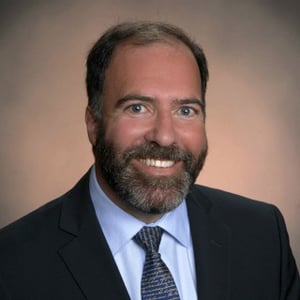
Professor of Law, Widener University Commonwealth Law School
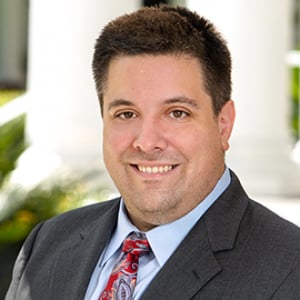
Sheila M. McDevitt Professor of Law and Faculty Director of the Election Law Center, Florida State University College of Law
Professor Morley joined FSU Law in 2018, and teaches and writes in the areas of election law, constitutional law, remedies, and the federal courts. He is best known for his work on election emergencies and post-election litigation, nationwide and other defendant-oriented injunctions, the jurisdiction of the federal courts and their equitable powers more generally. He has testified before congressional committees, made presentations to election officials for the U.S. Election Assistance Commission and participated in bipartisan blue-ribbon groups to develop election reforms. The governor of Florida also appointed Professor Morley to the Criminal Punishment Code Task Force, to propose potential revisions to the legislature.
The U.S. Supreme Court has cited several of his articles, and he was counsel of record for the successful Petitioner in a landmark campaign finance case. Professor Morley has appeared on C-SPAN, Court TV, Fox News and numerous local news programs, and has been quoted in the Washington Post, Los Angeles Times, Roll Call, Politico, U.S. News and World Report, and a wide range of other national publications. His work has been published in many of the nation’s top law reviews, including the Georgetown Law Journal, Northwestern University Law Review, Boston University Law Review and Emory Law Journal.
Before joining FSU Law, Professor Morley was a Climenko Fellow and Lecturer in Law at Harvard Law School. Prior to his experience in academia, he served in government as special assistant to the General Counsel of the Army at the Pentagon, as well as a law clerk for Judge Gerald B. Tjoflat of the U.S. Court of Appeals for the Eleventh Circuit. During his tenure with the Army General Counsel’s office, he was awarded the Meritorious Civilian Service Award and the Army Staff Lapel Pin. He also worked as an associate at Williams & Connolly LLP and the Supreme Court & Appellate group of Winston & Strawn, LLP, both in Washington, D.C.
Professor Morley earned his J.D. from Yale Law School in 2003, where he was a senior editor on the Yale Law Journal; served on the moot court board; and received the Thurman Arnold Prize for Best Oralist in the Morris Tyler Moot Court of Appeals.
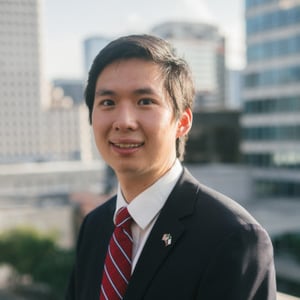
State District Judge, Austin, Texas
Cory Liu is a state district judge in Austin, Texas. He previously served as assistant general counsel to Texas Governor Greg Abbott. Mr. Liu clerked for Judge Andrew Oldham on the U.S. Court of Appeals for the Fifth Circuit and Judge Danny Boggs on the U.S. Court of Appeals for the Sixth Circuit. He was Editor-in-Chief of the Harvard Journal of Law & Public Policy and is a graduate of Harvard Law School and the University of Chicago.
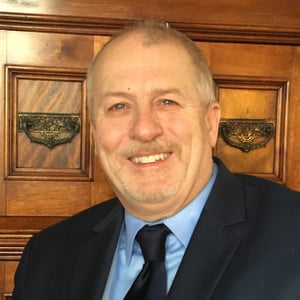
Founder, President, and General Counsel, Wisconsin Institute for Law & Liberty
Rick Esenberg is the founder and current President and General Counsel of the Wisconsin Institute for Law & Liberty, a rapidly expanding law and policy organization headquartered in Milwaukee. Under Rick’s leadership, WILL has grown into one of the more active state-based think tanks and litigation centers in the country. Rick is a frequent litigator in state and federal courts and nationally recognized scholar and commentator on constitutional law, particularly the First Amendment’s guarantees of freedom of speech and religion. He is one of the leading experts on the Wisconsin Constitution and a frequent advocate before the Wisconsin Supreme Court. Rick’s work seeks to advance the rule of law and individual liberty, formed by a robust civil society that forms individual and community character, preserving the wisdom of the past and an openness to the future.
Rick’s commentary has been featured in such outlets as the Wall Street Journal, National Review, Weekly Standard, Real Clear Politics, Milwaukee Journal Sentinel and Washington Examiner. Formerly on the faculty of Marquette University Law School, his scholarship has appeared in such publications as the Harvard Law Review, Harvard Journal of Law & Public Policy, Wake Forest Law Review and William & Mary Bill of Rights Journal. Back when they were a thing, he operated a blog called Shark and Shepherd where he tried to suggest something about the duality of man – “the Jungian thing.”
Rick holds a J.D., magna cum laude, from Harvard Law School, where he was an editor of the Harvard Law Review, and a B.A., summa cum laude, in political science from the University of Wisconsin-Milwaukee. In addition to service on the Marquette Faculty, he was formerly a litigation partner at Foley & Lardner and General Counsel of an international manufacturing firm headquartered in Wisconsin. He lives in Mequon Wisconsin with his wife Karen, golden retrievers Cooper and Riley and more books than he can find places for.
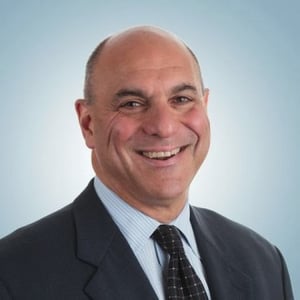
Senior Partner, Pines Bach LLP
Lester Pines is a Senior Partner in the firm.
A Fellow of the American College of Trial Lawyers, he is a respected civil and criminal litigator and appellate advocate. In his over 40 years of practice, he has appeared in trial and appellate courts throughout Wisconsin, in numerous federal district courts, and before the federal 7th Circuit Court of Appeals. After a recent trial, one of Lester’s clients wrote:
"Seeing you in action was like watching an artist create a classic painting from a blank canvas but instead of paint you used facts, figures and, most importantly, words to achieve a masterpiece in the courtroom."
His wide-ranging civil trial practice encompasses commercial claims, employment disputes, constitutional and civil rights matters, personal injury and intellectual property cases. His criminal defense work has involved many high profile cases, especially involving teachers, police officers and other public employees. He is counsel to Madison Teachers Inc., which represents the employees of the Madison Metropolitan School District.
Recently, Lester was featured in a cover story in Isthmus, a Madison weekly newspaper, " Activist Attorney – Lester Pines draws on faith and family in his practice and beyond."
Recent challenges to the constitutionality of newly enacted laws that Lester brought on behalf of his clients include:
Previously, in cases in which he was appointed by former Wisconsin Governor Jim Doyle, Lester defended Wisconsin’s law creating domestic partnerships for same sex couples and stopped an attempt by then Attorney General J.B. Van Hollen to suppress voting in the 2008 Presidential election.
Among the many cases Lester has argued before the Wisconsin Supreme Court, two in particular have shaped Wisconsin law. In 2010 he represented the Zurich American Insurance Company inMiller v. Hanover Insurance, securing the reversal of a $2,000,000 default judgment against his client and achieving a significant change in Wisconsin law regarding relief from such judgments. In an original action in 1996, he successfully argued the case of Thompson v. Craney, which delineated the constitutionally vested powers of the State Superintendent of Public Instruction and protected them from being altered by the Legislature, which the Wisconsin Supreme Court reaffirmed in 2016 in Coyne v. Walker.
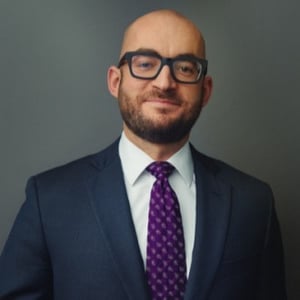
Partner, Eimer Stahl LLP
Ryan is a partner at Eimer Stahl LLP and is based in the firm’s Madison office. He focuses his practice on appellate and complex litigation in a wide variety of areas, including antitrust, constitutional law, corporate law, environmental, ERISA, products liability, and white collar. As part of his practice, Ryan devotes significant time to matters of legal strategy and the art of written and oral advocacy.
Ryan previously served as Chief Deputy Solicitor General of Wisconsin, securing numerous wins in the Supreme Court of the United States, in three federal courts of appeal, and in the state supreme court. Ryan built national, bipartisan coalitions of attorneys general and agencies in support of several lawsuits and briefing efforts, including a Wisconsin-led, 12-state coalition whose suit against the Federal Communications Commission prompted that agency to reverse a major new rule. When he left government, Ryan had a perfect win record in all of his cases to have reached final judgment.
Earlier in his career, Ryan worked in Washington D.C. as an associate in the appellate group of one of the world’s largest law firms.
Ryan also served as a law clerk on the U.S. Supreme Court for the Honorable Antonin Scalia and on the U.S. Court of Appeals for the Ninth Circuit for the Honorable Diarmuid F. O’Scannlain.
Ryan was named to Forbes’ “30 Under 30: Law and Policy” list in 2017. His briefing has won awards from the National Association of Attorneys General and the International Municipal Lawyers Association. He has also won a “best brief” accolade from the State Bar of Wisconsin in the civil category for his written work defending Wisconsin’s right-to-work law.
Founder, President, and General Counsel, Wisconsin Institute for Law & Liberty
Rick Esenberg is the founder and current President and General Counsel of the Wisconsin Institute for Law & Liberty, a rapidly expanding law and policy organization headquartered in Milwaukee. Under Rick’s leadership, WILL has grown into one of the more active state-based think tanks and litigation centers in the country. Rick is a frequent litigator in state and federal courts and nationally recognized scholar and commentator on constitutional law, particularly the First Amendment’s guarantees of freedom of speech and religion. He is one of the leading experts on the Wisconsin Constitution and a frequent advocate before the Wisconsin Supreme Court. Rick’s work seeks to advance the rule of law and individual liberty, formed by a robust civil society that forms individual and community character, preserving the wisdom of the past and an openness to the future.
Rick’s commentary has been featured in such outlets as the Wall Street Journal, National Review, Weekly Standard, Real Clear Politics, Milwaukee Journal Sentinel and Washington Examiner. Formerly on the faculty of Marquette University Law School, his scholarship has appeared in such publications as the Harvard Law Review, Harvard Journal of Law & Public Policy, Wake Forest Law Review and William & Mary Bill of Rights Journal. Back when they were a thing, he operated a blog called Shark and Shepherd where he tried to suggest something about the duality of man – “the Jungian thing.”
Rick holds a J.D., magna cum laude, from Harvard Law School, where he was an editor of the Harvard Law Review, and a B.A., summa cum laude, in political science from the University of Wisconsin-Milwaukee. In addition to service on the Marquette Faculty, he was formerly a litigation partner at Foley & Lardner and General Counsel of an international manufacturing firm headquartered in Wisconsin. He lives in Mequon Wisconsin with his wife Karen, golden retrievers Cooper and Riley and more books than he can find places for.
Senior Partner, Pines Bach LLP
Lester Pines is a Senior Partner in the firm.
A Fellow of the American College of Trial Lawyers, he is a respected civil and criminal litigator and appellate advocate. In his over 40 years of practice, he has appeared in trial and appellate courts throughout Wisconsin, in numerous federal district courts, and before the federal 7th Circuit Court of Appeals. After a recent trial, one of Lester’s clients wrote:
"Seeing you in action was like watching an artist create a classic painting from a blank canvas but instead of paint you used facts, figures and, most importantly, words to achieve a masterpiece in the courtroom."
His wide-ranging civil trial practice encompasses commercial claims, employment disputes, constitutional and civil rights matters, personal injury and intellectual property cases. His criminal defense work has involved many high profile cases, especially involving teachers, police officers and other public employees. He is counsel to Madison Teachers Inc., which represents the employees of the Madison Metropolitan School District.
Recently, Lester was featured in a cover story in Isthmus, a Madison weekly newspaper, " Activist Attorney – Lester Pines draws on faith and family in his practice and beyond."
Recent challenges to the constitutionality of newly enacted laws that Lester brought on behalf of his clients include:
Previously, in cases in which he was appointed by former Wisconsin Governor Jim Doyle, Lester defended Wisconsin’s law creating domestic partnerships for same sex couples and stopped an attempt by then Attorney General J.B. Van Hollen to suppress voting in the 2008 Presidential election.
Among the many cases Lester has argued before the Wisconsin Supreme Court, two in particular have shaped Wisconsin law. In 2010 he represented the Zurich American Insurance Company inMiller v. Hanover Insurance, securing the reversal of a $2,000,000 default judgment against his client and achieving a significant change in Wisconsin law regarding relief from such judgments. In an original action in 1996, he successfully argued the case of Thompson v. Craney, which delineated the constitutionally vested powers of the State Superintendent of Public Instruction and protected them from being altered by the Legislature, which the Wisconsin Supreme Court reaffirmed in 2016 in Coyne v. Walker.
Partner, Eimer Stahl LLP
Ryan is a partner at Eimer Stahl LLP and is based in the firm’s Madison office. He focuses his practice on appellate and complex litigation in a wide variety of areas, including antitrust, constitutional law, corporate law, environmental, ERISA, products liability, and white collar. As part of his practice, Ryan devotes significant time to matters of legal strategy and the art of written and oral advocacy.
Ryan previously served as Chief Deputy Solicitor General of Wisconsin, securing numerous wins in the Supreme Court of the United States, in three federal courts of appeal, and in the state supreme court. Ryan built national, bipartisan coalitions of attorneys general and agencies in support of several lawsuits and briefing efforts, including a Wisconsin-led, 12-state coalition whose suit against the Federal Communications Commission prompted that agency to reverse a major new rule. When he left government, Ryan had a perfect win record in all of his cases to have reached final judgment.
Earlier in his career, Ryan worked in Washington D.C. as an associate in the appellate group of one of the world’s largest law firms.
Ryan also served as a law clerk on the U.S. Supreme Court for the Honorable Antonin Scalia and on the U.S. Court of Appeals for the Ninth Circuit for the Honorable Diarmuid F. O’Scannlain.
Ryan was named to Forbes’ “30 Under 30: Law and Policy” list in 2017. His briefing has won awards from the National Association of Attorneys General and the International Municipal Lawyers Association. He has also won a “best brief” accolade from the State Bar of Wisconsin in the civil category for his written work defending Wisconsin’s right-to-work law.
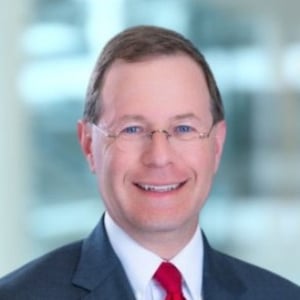
Partner, Holtzman Vogel Baran Torchinsky & Josefiak PLLC
Jason Torchinsky is a partner at Holtzman Vogel Josefiak PLLC, specializing in campaign finance, election law, lobbying disclosure and issue advocacy groups. Politico recently named him one of the “50 Politicos to Watch,” and in 2007, Campaigns and Elections Magazine named him a “Rising Star of Politics.”
In addition to his practice counseling clients on compliance with campaign finance, ethics laws, lobbying disclosure and election laws, Mr. Torchinsky has served as lead counsel in a number of litigation matters. Representative matters in the redistricting area include Louisiana House of Representatives v. Holder (D.D.C.) (Section 5 pre-clearance action), City of Sandy Springs v. Holder (D.D.C.) (Section 5 bailout action), and Fletcher v. Lamone (D. Md.) (challenging Maryland’s Congressional Districting map). In the campaign finance context, he is currently representing clients in Alliance for America’s Future v. State (Nevada Supreme Court) and Van Hollen v. Federal Election Commission (D.D.C.) (Representing intervenor defendants). He has also represented Virginia candidates in recounts and voter registration challenges before various Virginia Circuit Courts.
Mr. Torchinsky frequently lectures on campaign finance redistricting and ethics related subjects and provides commentary to the media on election related matters.
Prior to joining the firm, Mr. Torchinsky was Counsel to the Assistant Attorney General for the Civil Rights Division at the United States Department of Justice. During the 2004 election cycle, he served as Deputy General Counsel to Bush-Cheney ’04 and Deputy General Counsel to the 2005 Presidential Inaugural Committee.
He holds a B.A. in Government and Public Policy from the College of William and Mary and a J.D. from the College of William and Mary School of Law. He is a member of the Virginia Bar, the District of Columbia Bar, the Republican National Lawyers Association and the Federalist Society.
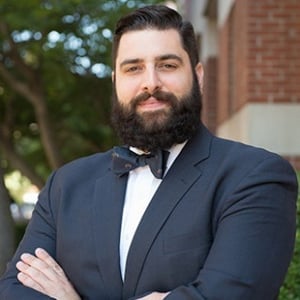
Associate, Holtzman Vogel Josefiak Torchinsky PLLC
Dennis Polio is an associate with the law firm Holtzman Vogel Josefiak Torchinsky PLLC. Dennis’s practice focuses on First Amendment, redistricting, and election-related litigation and appeals as well as lobbying, ethics, and tax-exempt organizations’ compliance. Dennis regularly co-authors amicus briefs and appellate briefs in the Supreme Court of the United States, the various federal courts of appeals, and state supreme courts. Dennis has also authored and co-authored several articles in academic journals and with the Congressional Research Service in the Library of Congress.

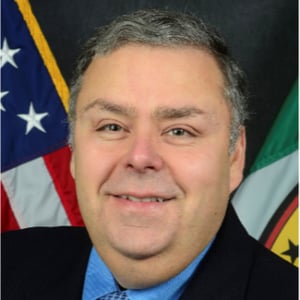
October 2020 DC Lunch with Michael Barone
Michael Barone, Reginald J. Brown
Washington, DC Lawyers Chapter
On October 23, 2020, The Federalist Society's Washington DC Lawyers Chapter held a virtual luncheon...
October 2020 DC Lunch with Michael Barone
Michael Barone, Reginald J. Brown
Washington, DC Lawyers Chapter
On October 23, 2020, The Federalist Society's Washington DC Lawyers Chapter held a virtual luncheon...
Absentee Balloting in Connecticut- The Law and Practice of Conducting Fair and Secure Elections this November
Proloy K. Das, Fred DeCaro, Joshua Adam Esses, Leonard A. Fasano
Connecticut Lawyers Chapter - Online Event
On October 7, 2020, the Federalist Society's Connecticut Lawyers Chapter hosted a webinar panel on...
Absentee Balloting in Connecticut- The Law and Practice of Conducting Fair and Secure Elections this November
Proloy K. Das, Fred DeCaro, Joshua Adam Esses, Leonard A. Fasano
Connecticut Lawyers Chapter - Online Event
On October 7, 2020, the Federalist Society's Connecticut Lawyers Chapter hosted a webinar panel on...
Carney v. Adams - Post-Argument SCOTUScast
Michael R. Dimino
featuring Michael R. Dimino
On October 5, 2020, the Supreme Court heard oral arguments regarding Carney v. Adams, a...
Faithless Electors & the Electoral College [POLICYbrief]
Michael T. Morley
Short video featuring Michael Morley
When people vote in a presidential election, they are selecting a representative who will cast...
State Court Docket Watch: In Re State of Texas
Cory R. Liu
State Court Docket Watch: 2020 Edition
In In re State of Texas, the Texas Supreme Court held that a voter’s lack...
Wisconsin Election Law Panel
Rick M. Esenberg, Lester A. Pines, Ryan J. Walsh
2020 Wisconsin Lawyers Chapters Conference
On September 1, 2020, the Federalist Society's Wisconsin lawyers chapters hosted their annual conference via...
Wisconsin Election Law Panel
Rick M. Esenberg, Lester A. Pines, Ryan J. Walsh
2020 Wisconsin Lawyers Chapters Conference
On September 1, 2020, the Federalist Society's Wisconsin lawyers chapters hosted their annual conference via...
State Court Docket Watch: Fisher v. Hagett and Lay v. Goins
Jason Torchinsky, Dennis W. Polio
In Fisher v. Hagett and Lay v. Goins, a majority of the Supreme Court of...