
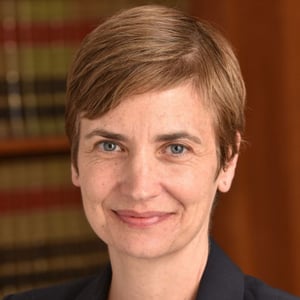
Vice Dean for Faculty Development and Professor of Law, UCLA Law
Joanna Schwartz is Vice Dean for Faculty Development and Professor of Law at UCLA School of Law. She teaches Civil Procedure and a variety of courses on police accountability and public interest lawyering. In 2015, she received UCLA's Distinguished Teaching Award.
Professor Schwartz is one of the country's leading experts on police misconduct litigation. Professor Schwartz additionally studies the dynamics of modern civil litigation. She is co-author, with Stephen Yeazell, of a leading casebook, Civil Procedure (9th Edition), and her scholarship has appeared in the New York University Law Review, the Texas Law Review, the UCLA Law Review, and the Yale Law Journal, among others.
Professor Schwartz is a graduate of Brown University and Yale Law School. After law school, Professor Schwartz clerked for Judge Denise Cote of the Southern District of New York and Judge Harry Pregerson of the Ninth Circuit Court of Appeals. She was then associated with Emery Celli Brinckerhoff & Abady LLP, in New York City, where she specialized in police misconduct, prisoners' rights, and First Amendment litigation.
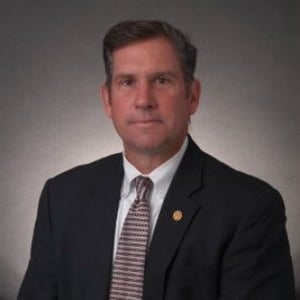
Police Auditor, Fairfax County, Virginia
Richard Schott is Fairfax County's first independent police auditor. He assumed the position in April 2017.
Schott has spent his entire 27-year FBI career as a special agent working with local law enforcement officers, and for the past 16 years has provided training to members of state and local law enforcement agencies, including legal issues associated with police officers’ use of force and deadly force.
He has extensive experience with Color of Law violations, including reviewing police reports and citizen complaints, recommending to U.S. Department of Justice attorneys whether or not to proceed with investigations and conducting the ensuing investigations.
Schott is also an instructor at the FBI Academy in Quantico, where he has taught thousands of new agents on basic constitutional criminal procedure and the legal ramifications involved when an agent uses force.
He was previously the associate division counsel for the Atlanta Division of the FBI, where he supervised the division’s forfeiture program. As a special agent for the Birmingham Division, he orchestrated security for the 1996 Summer Olympic Games’ soccer events in the area.
Schott has published 12 articles on various legal topics and is a member of the United States Supreme Court Bar and the International Association of Chiefs of Police. Schott is also an adjunct faculty member for the University of Virginia.
Schott received a bachelor’s degree in political science from the University of New Orleans and his juris doctorate from the Loyola University School of Law in New Orleans.
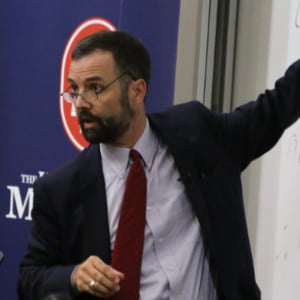
Professor of Law and Jamie L. Whitten Chair in Law and Government, University of Mississippi School of Law
Christopher Green (https://law.olemiss.edu/faculty-directory/christopher-green/) is Professor of Law and Jamie L. Whitten Chair in Law and Government at the University of Mississippi, where he has taught since 2006. He is a graduate of Princeton University and Yale Law School, and has a PhD in philosophy from the University of Notre Dame. He clerked for Judge Rhesa H. Barksdale on the Fifth Circuit and is the author of Equal Citizenship, Civil Rights, and the Constitution: The Original Sense of the Privileges or Immunities Clause (2015) and a large number of articles and essays on constitutional theory and the Fourteenth Amendment, including the two-part Original Sense of the (Equal) Protection Clause and Clarity and Reasonable Doubt in Early State-Constitutional Judicial Review. He is an affiliated scholar with the University of San Diego Center for the Study of Constitutional Originalism.
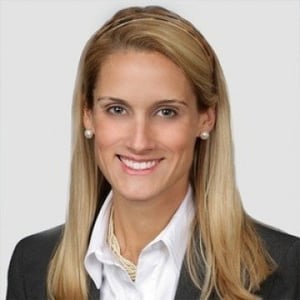
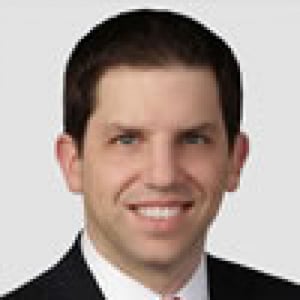
Partner, Wiley Rein
Brandon defends companies and their executives in complex civil and criminal cases involving alleged healthcare fraud, the False Claims Act (FCA), whistleblower allegations, the Foreign Corrupt Practices Act (FCPA), antitrust, regulatory violations, and contract and procurement fraud. She has extensive experience shepherding life sciences companies, government contractors, not-for-profits, and technology companies through internal investigations and responding to subpoenas and civil investigative demands (CIDs). She also advises a broad range of companies on compliance programs, privacy, telecommunications, compliance, Team Telecom, and new media issues.
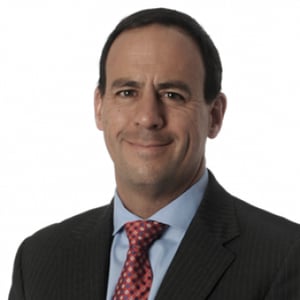
Partner, Wiley Rein LLP
Mark represents government contractors and telecommunications companies facing federal investigations, whistleblower complaints, and civil enforcement actions. He navigates responses to civil investigative demands from the U.S. Department of Justice (DOJ) and Federal Trade Commission (FTC), as well as inquiries and subpoenas from the Federal Communications Commission (FCC), Inspectors General, and Congress. He also leads internal investigations for companies to assess potential misconduct by employees. Mark is a co-chair of Wiley Rein’s Communications Enforcement & Compliance Group.
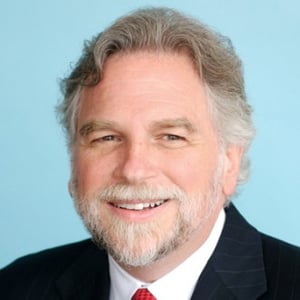
Shareholder, Greenberg Traurig LLP
Troy A. Eid focuses his litigation, mediation and transactional practice on government enforcement, investigations and compliance, environmental law, energy and natural resource development, and Federal Indian law and Native American and Alaska Native tribal law. Troy is a trusted advocate and mediator in the Rocky Mountain West and in federal, state and tribal trial and appellate courtrooms across the country.
Partner, Gibson, Dunn & Crutcher LLP
Randy M. Mastro, a partner in the New York office of Gibson, Dunn & Crutcher, is Co-Chair of the Firm’s Litigation Practice Group, which The American Lawyer has named “Litigation Department of the Year” three out of its last five competitions and a finalist five times in a row – both unprecedented achievements. He also serves on the Firm’s Management and Executive Committees.
Mr. Mastro routinely ranks among the nation’s leading litigators and trial lawyers in surveys of corporate counsel and other practitioners. Last year, Mr. Mastro was named “Trial Lawyer of the Year” by Chambers USA, a “Litigation Trailblazer” by The National Law Journal, and a “Trial Lawyer MVP” by Law360. Indeed, in each of the last four years, he has been nominated “Trial Lawyer of the Year” by Chambers USA or Benchmark or both, receiving top honors twice. The National Law Journal named him among the “100 Most Influential Lawyers in America,” recognizing him as one of the “100 lawyers in the United States who have shaped the legal world through their work,” and noting that “his ease in the courtroom, delivery of arguments and command of the law have made Randy one of the most in-demand attorneys in the country by big-name clients.” The American Lawyer cited him among “the best known, most-respected litigators in the country.” In Chambers USA, he is described as “one of the top litigators” and “trial lawyers” “in the country,” praised for his “exceptional public reputation” as a “tough, smart,” “outstanding” trial lawyer who is “in a class by himself,” “masters the facts of a case quicker than anyone I’ve ever met,” “delivers fantastically well in court,” “can take on anyone,” is “so persuasive,” and “has a great mind.” In The Legal 500—US Edition, he has been featured among the “Leading Trial Lawyers” in the country, with corporate counsel saying he is “immensely impressive,” “simply excellent,” “flawless,” “captivating,” “in a league of his own” in the courtroom, and “deserves an Academy Award” for “bringing a sense of drama and theater to his courtroom appearances.” Benchmark has described him as a “brilliant and effective litigator” who is “perennially revered” and “always brings a fresh perspective and will fight you to the end,” with peers noting, “You do not want to meet Randy down a dark alley, but you REALLY don’t want to meet him in a lighted courtroom,” and “I’ve seen him at work and I can only imagine that going against him must be like wrestling an alligator.” Benchmark also honored his achievements in “National Impact Cases” in 2015, 2017 and 2018. The New York Times has called him “the go-to lawyer for companies” suing the government, a “household name,” and a “fierce and combative litigator;” and The New Yorker has described him as a “merciless litigator,” “even by the pugilistic standards of the New York bar,” who “springs to life” and “is transfixing” in “the courtroom.”
Among many high-profile matters, Mr. Mastro won a two-month RICO trial barring the enforcement of a $9 billion Ecuadorian judgment against Chevron that The American Lawyer called “The Case of the Century.” Moreover, he won a month-long trial against the SEC, obtaining the dismissal of all charges against high-profile entrepreneur, Lynn Tilton, and thereby defeating the largest individual enforcement action the SEC ever brought before its in-house tribunal, where it typically wins 90 percent of the time. Mr. Mastro also led the successful effort to defeat New York City’s controversial West Side Stadium project, and he represented the State of New Jersey in conducting a high-profile investigation into allegations concerning the “Bridgegate” controversy. He has tried dozens of cases in private practice and as a federal prosecutor, and he has also argued more than 100 appeals in federal and state appellate courts throughout the country.
Mr. Mastro has represented such clients as AIG, Chevron, Amazon, Empire Blue Cross Blue Shield, Estee Lauder, Madison Square Garden, Cablevision, Dow Jones, Verizon, Dart, DraftKings, Home Depot, Daimler, Wynn, JPMorgan, GE Capital, Park Place/Caesar’s, Quest Diagnostics, IAC, Bear Stearns, Bank of New York Mellon, Empire Merchants, Edison Schools, Lynn Tilton, Peter Kalikow, Vornado, LeFrak Organization, Saks, Ziff Davis, UBS Financial Services, Octagon, Martina Hingis, Anna Kournikova, and Steffi Graf.
Before returning to Gibson Dunn in 1998, Mr. Mastro served as Mayor Rudolph Giuliani’s Chief of Staff and then as New York City’s Deputy Mayor for Operations. In that capacity, he was responsible for overseeing all of the City’s operating agencies and budget, and served as the Mayor’s chief liaison with elected officials. In the Mayor’s absence, he was authorized to act on the Mayor’s behalf. While in the Giuliani administration from 1994 to 1998, Mr. Mastro spearheaded City initiatives to remove organized crime from the Fulton Fish Market, private carting industry, and San Gennaro Festival. For two consecutive years, NY1-TV named Mr. Mastro one of City government’s “Winners of the Year,” and Manhattan File magazine featured him among the “45 Most Powerful New Yorkers 45 and Under.”
In the early 1990s, Mr. Mastro was a Gibson Dunn litigation partner. In 1990, he served as Associate Counsel on the Independent Counsel investigation of HUD Secretary Samuel Pierce. In 1991, he was appointed Special Master and Monitor of the assets of a Saudi tycoon implicated in the BCCI scandal.
From 1985 to 1989, Mr. Mastro served as Assistant United States Attorney and Deputy Chief of the Civil Division in the U.S. Attorney’s Office for the Southern District of New York, where he specialized in organized crime cases and spearheaded the federal government’s landmark racketeering suit that put the International Brotherhood of Teamsters into court supervision. Seven Days magazine named him one of “the 25 prosecutors and defenders other lawyers most admire, fear and talk about.” From 1982 to 1985, Mr. Mastro was a litigation associate at Cravath, Swaine & Moore, where he was part of the successful libel defense trial team in Westmoreland v. CBS. Before that, upon graduating cum laude from Yale College and the University of Pennsylvania Law School, where he was the school’s moot court champion, Mr. Mastro clerked for Justice Alan B. Handler of the New Jersey Supreme Court.
During his tenure as a federal prosecutor, Mr. Mastro received the Attorney General’s Distinguished Service Award, the John Marshall Award for Outstanding Legal Achievement, and the Director’s Award for Superior Performance, among other honors. Since then, he has been honored many times, receiving, for example, the Simon Rifkind Award from the Jewish Theological Seminary, the Civic Leadership Award from the Citizens Union of the City of New York, and the Lumbard Bowl, awarded annually by the U.S. Attorney for the Southern District of New York (in consultation with prior U.S. Attorneys) to distinguished alumni.
Mr. Mastro has taught as an adjunct professor at the University of Pennsylvania and Fordham Law Schools. He authored articles in the Federal Communications Law Journal, Fordham Law Review, University of Michigan Journal of Law Reform, and Seton Hall Law Review. His op-ed pieces have appeared in The New York Times, Daily News, and New York Post, and he also wrote for the Washington Post and Time. He co-authored the chapters, “White Collar Crime,” in Business and Commercial Litigation in Federal Courts, and, “Energy,” in Commercial Litigation in New York State Courts.
Mr. Mastro has been a member of the bars of New York, New Jersey, Pennsylvania, and many federal courts, including the U.S. Supreme Court. He chaired two New York City Charter Revision Commissions. In addition, Mr. Mastro serves as Chair of the Citizens Union of the City of New York, Co-Chair of the Hamptons International Film Festival, and Vice Chair of the Legal Aid Society of New York City, as well as on the Board of Overseers of the University of Pennsylvania Law School.
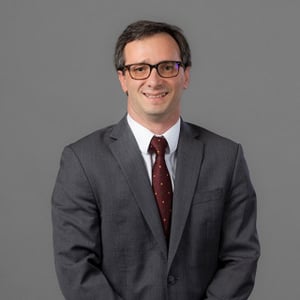
Assistant Professor of Law, George Mason University, Antonin Scalia Law School
Robert Leider is an Assistant Professor of Law at Antonin Scalia Law School, George Mason University. His scholarly interests are in criminal law, criminal procedure, and constitutional law, especially concerning questions about the use of force and the rule of law. He has written on the law of self-defense, the constitutional allocation of military power, and gun control. Among other places, he has published in the Florida Law Review (forthcoming), the Indiana Law Journal, and the Wall Street Journal.
Before joining Antonin Scalia Law School, Professor Leider was at Arnold & Porter in Washington, DC. He was previously with Mayer Brown LLP and was an Olin-Searle-Smith Fellow at the University of Pennsylvania Law School. He has clerked for Judge Diane S. Sykes, of the U.S. Court of Appeals for the Seventh Circuit, and Justice Clarence Thomas. Professor Leider earned a BA, summa cum laude, from The George Washington University, a JD from Yale Law School, and a PhD in Philosophy (dissertation defended with distinction) from Georgetown University. While at Yale, he served as an articles editor for the Yale Law Journal.
Professor Leider teaches criminal law and torts.
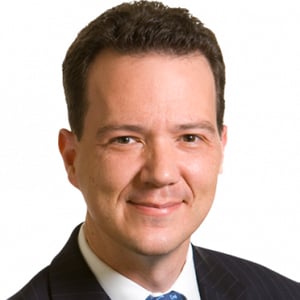
Senior Research Fellow in Anglo-American Relations, Margaret Thatcher Center for Freedom, The Heritage Foundation
Theodore "Ted" R. Bromund studies and writes on Anglo-American relations, U.S. and British relations with Europe and the European Union, America’s leadership role in the world, and international organizations and treaties as senior research fellow in The Heritage Foundation’s Margaret Thatcher Center for Freedom.
Bromund, who joined Heritage in 2008, previously served nine years as associate director of International Security Studies at Yale University, a center dedicated to the study and teaching of diplomatic history and grand strategy. He was a lecturer in history beginning in 1999, and in international affairs for the master of arts program beginning in 2004.
A columnist for Newsday, Forbes, and Great Britain’s Yorkshire Post, Bromund also writes regularly for National Review, The Weekly Standard, and FoxNews.com, and, in Britain, CapX. He has been interviewed or cited by BBC News, CBS News, Fox News Channel, CNN, Fox Business, Politifact, Radio Free Europe, The Christian Science Monitor, Time, and Financial Times, among others.
Besides contributing articles to scholarly journals, Bromund is the author of a chapter on former British Prime Minister Tony Blair and the fall of Iraqi dictator Saddam Hussein in the book The Blair Legacy: Politics, Policy, Governance, and Foreign Affairs (Palgrave Macmillan, 2009).
In 2013, Bromund was recognized by the Second Amendment Foundation as its Scholar of the Year for his analysis of the Arms Trade Treaty.
Bromund received his doctorate in history in 1999 from Yale. His thesis on Britain’s first application to the European Economic Community won the Samuel H. Beer Dissertation Prize from the American Political Science Association’s British Politics Group. In 2016, he received Heritage’s Joseph Shattan Award in recognition of the quality of his writing.
He is an adjunct professor of strategic studies in the Strategic Studies Program at the Johns Hopkins University School of Advanced International Studies, where he teaches courses on grand strategy. He also holds two master’s degrees in history from Yale as well as a bachelor of arts degree from Iowa’s Grinnell College.
A native of Wooster, Ohio, he currently resides in Washington, D.C.
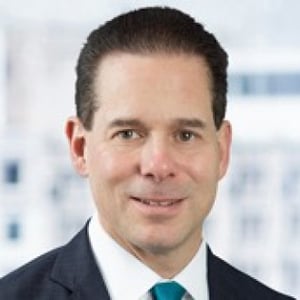
Partner, Baker & McKenzie LLP
Thomas Firestone represents clients in international white collar criminal investigations and compliance matters, including anti-corruption and US Foreign Corrupt Practices Act (FCPA), internal investigations and transactional due diligence. He is a member of the Firm's Global Compliance & Investigations Steering Committee. Prior to joining the Firm, Thomas spent 14 years at the US Department of Justice. He worked as an Assistant US Attorney in the Eastern District of New York where he prosecuted transnational organized crime cases. He also worked as Resident Legal Adviser and Acting Chief of the Law Enforcement Section at the US Embassy in Moscow. In the latter capacity, he facilitated US-Russian law enforcement cooperation, assisted the Russian government in drafting new criminal legislation, advised the US government on policy issues related to criminal justice in Russia and twice won the US State Department Superior Honor Award.
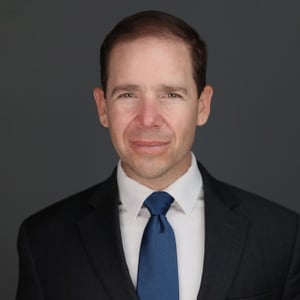
Founder and CEO, Lexpat Global Services
Adam Pearlman is the Founder and Chief Executive Officer of Lexpat Global Services. He is a National Security Law expert and a proven senior leader with experience across the U.S. Departments of Justice, Defense, and State, in the White House, and with the U.S. Federal Judiciary.
Before founding Lexpat, Mr. Pearlman served as the Senior Advisor for Legal Policy in the State Department’s Bureau of Counterterrorism. There, he counseled senior officials on matters covering the entire spectrum of programs and operations to counter terrorism and violent extremism. While participating in sensitive diplomatic engagements and helping to coordinate military operations, he also advised in the development of sanctions policy and initiatives to build legal and operational capacity in partner nations. Mr. Pearlman also managed the Bureau’s participation in federal litigation and led U.S. delegations in multilateral forums concerning criminal justice and rule of law. Separately, Mr. Pearlman supported the State Department’s Bureau of International Narcotics and Law Enforcement Affairs (INL) as the contracted Senior Justice and Rule of Law Advisor in Cabo Verde, Africa. There he was the chief implementer of a Foreign Assistance program that grew eight-fold during his tenure, building host nation capacity across the law enforcement, justice sector, rule of law, anti-money laundering, and corrections disciplines.
A former Associate Deputy General Counsel of the Department of Defense, Mr. Pearlman was agency counsel for complex civil and criminal national security matters in federal and military courts. He also led the Supreme Court and appellate unit of the team dedicated to litigating classified counterterrorism cases. His earlier service in the Department of Justice spanned four litigating divisions and the Office of the Deputy Attorney General. His diverse experience included reviewing complex international transactions and mergers, and advising on immigration removal proceedings, human rights abuses, and terrorist financing investigations. Mr. Pearlman also served with distinction in Iraq as an early advisor to the Iraqi High Tribunal’s prosecution of Saddam Hussein. He was a law clerk for The Honorable Royce C. Lamberth of the U.S. District Court for the District of Columbia, and during law school interned in the White House Counsel’s Office.
Mr. Pearlman is a Senior Fellow at the National Security Institute at George Mason University’s Antonin Scalia Law School, a member of the American Bar Association’s Advisory Committee on Law and National Security, and the Editor-in-Chief of the U.S. Intelligence Community Law Sourcebook. Previously, he has been a Term Member of the Council on Foreign Relations, National Security Fellow at the Foundation for Defense of Democracies, member of the ABA’s Africa Law Initiative Council and of the Center for Strategic & International Studies’ (CSIS) Project on Nuclear Issues, vice chairman of the ABA Section of International Law’s committees on national security, and aerospace and defense, and a liaison to the Board of Directors of the ABA’s Rule of Law Initiative. He has published articles in the Harvard National Security Journal, Stanford Law & Policy Review, Intelligence & National Security, The Foreign Service Journal, Lawfare, and many other outlets.
Mr. Pearlman earned his B.A., with honors, from UCLA, and his J.D., with honors, from The George Washington University Law School, where he was a member of the International Law Review. He also earned a Master of Science of Strategic Intelligence degree from the National Intelligence University, where he was the inaugural recipient of the Kornblum Award for national security law and ethics. Mr. Pearlman is a Certified Financial Crime Specialist and holds certificates in international human rights law from the University of Oxford and in anti-corruption law from American University’s Washington College of Law. He is admitted to the State Bars of California and Virginia, as well as to the Bar of the United States Supreme Court. He speaks and reads Portuguese at the intermediate level.
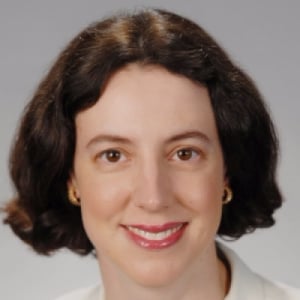
Donald Phillip Rothschild Research Professor, George Washington University Law School
Renée Lettow Lerner is Donald Phillip Rothschild Research Professor of Law at George Washington University Law School.
Professor Lerner works in the fields of U.S. and English legal history, civil and criminal procedure, and comparative law. She advises judges, lawyers, and government officials from the United States and countries in Europe, Latin America, and Asia about the differences between adversarial and nonadversarial legal systems.
She writes extensively about the history of American juries. Her work includes not only scholarly articles, but also online publications intended for a broader audience of legal professionals and the public. In many different settings, she has debated the role of juries with other academics and with lawyers. She has a book forthcoming with Oxford University Press in the Very Short Introduction Series entitled “The Jury.” She is also working on a book about the American civil jury, from the colonial period to the present.
She is the author, with John Langbein and Bruce Smith, of the book History of the Common Law: The Development of Anglo-American Legal Institutions (2009).
Her recent writings include a book review of Amalia D. Kessler’s Inventing American Exceptionalism: The Origins of American Adversarial Legal Culture, 1800-1877, 67 J. Legal Ed. 888 (2018); “How the Creation of Appellate Courts in England and the United States Limited Judicial Comment on Evidence to the Jury,” 40 Journal of the Legal Profession 215 (2016); “The Troublesome Inheritance of Americans in Magna Carta and Trial by Jury,” in Magna Carta and its Modern Legacy 77-98 (Robert Hazell and James Melton eds., Cambridge University Press 2015); and “The Failure of Originalism in Preserving Constitutional Rights to Civil Jury Trial,” 22 William & Mary Bill of Rights Journal 811 (2014).
Professor Lerner received an A.B. summa cum laude in history from Princeton University. She was a Rhodes Scholar at Oxford University, where she studied English legal history. At Yale Law School, she was Articles Editor of the Yale Law Journal. She served as a law clerk to Justice Anthony M. Kennedy of the U.S. Supreme Court and to Judge Stephen F. Williams of the U.S. Court of Appeals for the District of Columbia Circuit. From 2003 to 2005, she served as Deputy Assistant Attorney General in the Office of Legal Counsel at the U.S. Department of Justice.
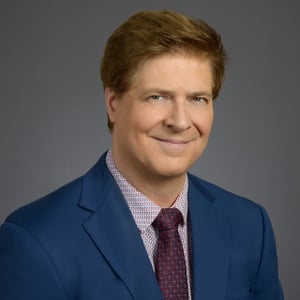
Senior Fellow, Ave Maria School of Law and Host of the Four Boxes Diner Second Amendment Channel
Mark W. Smith is Visiting Fellow in Pharmaceutical Public Policy and Law in the Department of Pharmacology at the University of Oxford; Presidential Scholar and a Senior Fellow in Law and Public Policy at The King’s College; and Distinguished Scholar and Senior Fellow of Law and Public Policy at the Ave Maria School of Law.
He is a constitutional attorney and Host of the Four Boxes Diner YouTube channel—which provides scholarly and historical analyses of the Second Amendment. Mark is also a New York Times bestselling author.
Donald Phillip Rothschild Research Professor, George Washington University Law School
Renée Lettow Lerner is Donald Phillip Rothschild Research Professor of Law at George Washington University Law School.
Professor Lerner works in the fields of U.S. and English legal history, civil and criminal procedure, and comparative law. She advises judges, lawyers, and government officials from the United States and countries in Europe, Latin America, and Asia about the differences between adversarial and nonadversarial legal systems.
She writes extensively about the history of American juries. Her work includes not only scholarly articles, but also online publications intended for a broader audience of legal professionals and the public. In many different settings, she has debated the role of juries with other academics and with lawyers. She has a book forthcoming with Oxford University Press in the Very Short Introduction Series entitled “The Jury.” She is also working on a book about the American civil jury, from the colonial period to the present.
She is the author, with John Langbein and Bruce Smith, of the book History of the Common Law: The Development of Anglo-American Legal Institutions (2009).
Her recent writings include a book review of Amalia D. Kessler’s Inventing American Exceptionalism: The Origins of American Adversarial Legal Culture, 1800-1877, 67 J. Legal Ed. 888 (2018); “How the Creation of Appellate Courts in England and the United States Limited Judicial Comment on Evidence to the Jury,” 40 Journal of the Legal Profession 215 (2016); “The Troublesome Inheritance of Americans in Magna Carta and Trial by Jury,” in Magna Carta and its Modern Legacy 77-98 (Robert Hazell and James Melton eds., Cambridge University Press 2015); and “The Failure of Originalism in Preserving Constitutional Rights to Civil Jury Trial,” 22 William & Mary Bill of Rights Journal 811 (2014).
Professor Lerner received an A.B. summa cum laude in history from Princeton University. She was a Rhodes Scholar at Oxford University, where she studied English legal history. At Yale Law School, she was Articles Editor of the Yale Law Journal. She served as a law clerk to Justice Anthony M. Kennedy of the U.S. Supreme Court and to Judge Stephen F. Williams of the U.S. Court of Appeals for the District of Columbia Circuit. From 2003 to 2005, she served as Deputy Assistant Attorney General in the Office of Legal Counsel at the U.S. Department of Justice.
Senior Fellow, Ave Maria School of Law and Host of the Four Boxes Diner Second Amendment Channel
Mark W. Smith is Visiting Fellow in Pharmaceutical Public Policy and Law in the Department of Pharmacology at the University of Oxford; Presidential Scholar and a Senior Fellow in Law and Public Policy at The King’s College; and Distinguished Scholar and Senior Fellow of Law and Public Policy at the Ave Maria School of Law.
He is a constitutional attorney and Host of the Four Boxes Diner YouTube channel—which provides scholarly and historical analyses of the Second Amendment. Mark is also a New York Times bestselling author.

Qualified Immunity In America: An Overview & Conversation [POLICYbrief]
Joanna C. Schwartz, Richard Schott
Short video featuring Joanna Schwartz and Richard Scott
Created by the Supreme Court in 1967, the legal doctrine of qualified immunity shields government...
Timbs v. Indiana - Post-Decision SCOTUScast
Christopher R. Green
SCOTUScast featuring Christopher Green
On February 20, 2019, the Supreme Court decided Timbs v. Indiana, a case involving the...
The False Claims Act: Who Is The Responsible Government Official?
Brandon Moss, Mark B. Sweet
This teleforum will discuss the Supreme Court argument in United States ex rel. Hunt v....
Carpenter v. Murphy - Post-Argument SCOTUScast
Troy A. Eid
SCOTUScast featuring Troy Eid
On November 27, 2018, the Supreme Court heard argument in Carpenter v. Murphy, a case...
A Texas Trade Secrets Case May Have Broader Implications for U.S. Companies
Randy M. Mastro
Last year, a jury in Texas awarded California-based startup HouseCanary a $706 million verdict, one...
United States v. Stitt and United States v. Sims - Post-Decision
Robert Leider
SCOTUScast featuring Robert Leider
On December 10, 2018, the Supreme Court decided the consolidated cases United States v. Stitt...
Topics
Parkland: One Year Later
Today marks the one year anniversary of the tragic school shooting in Parkland, Florida, that...
Understanding and Combating the Authoritarian Abuse of Interpol
Ted R. Bromund, Thomas Firestone, Adam R. Pearlman
The International Criminal Police Organization – officially ICPO-INTERPOL, and commonly known simply as Interpol –...
Lunch and Keynote Address by Renée Lerner
Renée Lettow Lerner, Mark W. Smith
The Second Amendment In The New Supreme Court
On January 15, 2019, the Federalist Society's Civil Rights and Criminal Law & Procedure Practice...
Lunch and Keynote Address by Renée Lerner
Renée Lettow Lerner, Mark W. Smith
The Second Amendment In The New Supreme Court
On January 15, 2019, the Federalist Society's Civil Rights and Criminal Law & Procedure Practice...