

Laurence A. Tisch Professor of Law and Director, Classical Liberal Institute, New York University School of Law; Director, Classical Liberal Institute, Civitas Institute University of Texas at Austin
Richard A. Epstein is the inaugural Laurence A. Tisch Professor of Law at NYU School of Law. Prior to his joining the faculty, he was a visiting law professor at NYU from 2007 through 2009. He served as the Peter and Kirstin Bedford Senior Fellow at the Hoover Institution from 2000 to 2024. Since 2024 to the present he is a senior lecturer at the Civitas Institute at the University of Texas—Austin. Epstein is also the James Parker Hall Distinguished Service Professor of Law Emeritus and a senior lecturer at the University of Chicago. His initial law school appointment was at the University of Southern California from 1968 to 1972. Epstein received an LL.D., h.c. from the University of Ghent, 2003. He has been a member of the American Academy of Arts and Sciences since 1985 and was a Senior Fellow of the Center for Clinical Medical Ethics at the University of Chicago Division of Biological Sciences, also from 1983. to 2022 He served as editor of the Journal of Legal Studies from 1981 to 1991, and of the Journal of Law and Economics from 1991-2001. From 2001 to 2010 he was a director of the John M. Olin Program in Law and Economics at the University of Chicago.
His newest book, The Myth of Birthright Citizenship: What the Fourteenth Amendment Really Says was published in 2026 (Encounter Books). Prior to that he has published many books including, The Dubious Morality of the Modern Administrative State (Roman & Littlefield 2020).Earlier he published th Classical Liberal Constitution: The Uncertain Quest for Limited Government (Harvard 2014) iHis previous books include Design for Liberty: Private Property, Public Administration and the Rule of Law (Harvard 2011); The Case Against the Employee Free Choice Act (Hoover 2009); Supreme Neglect: How to Revive the Constitutional Protection of Property Rights (Oxford 2008); Antitrust Decrees in Theory and Practice: Why Less is More (AEI 2007); Overdose: How Excessive Government Regulation Stifles Pharmaceutical Innovation (Yale University Press. 2006); How Progressives Rewrote the Constitution (Cato 2006); Cases and Materials on Torts (Aspen Law & Business; 8th ed. 2004); Skepticism and Freedom: A Modern Case for Classical Liberalism (University of Chicago, 2003); Torts (Aspen Law & Business 1999); Principles for a Free Society: Reconciling Individual Liberty with the Common Good (Perseus Books, 1998): Mortal Peril: Our Inalienable Rights to Health Care (Addison-Wesley, 1997); Simple Rules for a Complex World (Harvard, 1995); Bargaining With the State (Princeton, 1993); Forbidden Grounds: The Case Against Employment Discrimination Laws (Harvard , 1992); Takings: Private Property and the Power of Eminent Domain (Harvard, 1985); and Modern Products Liability Law (Greenwood Press, 1980). He has also edited(with Catherine M. Sharkey) Cases and Materials on the Law of Torts (10th edition 2012).
Professor Epstein has written numerous articles on a wide range of legal and interdisciplinary subjects. He has taught courses in administrative law, antitrust law, civil procedure, communications, constitutional law, contracts, corporations, criminal law, employment discrimination law, environmental law, food and drug law health law and policy, legal history, labor law, property, real estate development and finance, jurisprudence, labor law; land use planning, patents, individual, estate and corporate taxation, Roman Law; torts, and workers' compensation.
Professor Epstein also writes a regular column for Civitas Institute, which also sponsors his podcast, The Libertarian with Charles C.W. Cooke, and Law Talk, with Cooke and John Yoo. He also does a podcast with John Batchelor. And appears regularly on the Freedom File with Judge Andrew Napolitano.
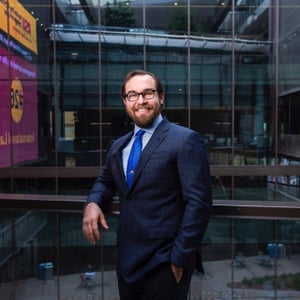
Symposium Chair, Arizona State Student Chapter
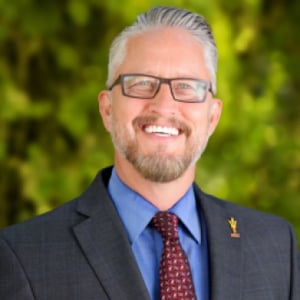
Dean, Arizona State University Sandra Day O'Connor College of Law
Douglas Sylvester is the 8th dean of the Sandra Day O’Connor College of Law at Arizona State University. Under his leadership, ASU Law reached historic heights ranked 27th in the nation (up from 40th in 2012, and 58th in 2008) and 9th among public law schools. From 2012-2017, the law school placed in the top 20 for employment (rising as high as #11 in 2014), hired more than 30 faculty members, and raised more than $70 million— twice the amount raised in the prior 45 years combined.
Professor Sylvester was also a driving force for the conceptualization and creation of the Beus Center for Law and Society in downtown Phoenix, which is now home to ASU Law and a number of other legal-related organizations including the innovative ASU Law Group and the Arizona Legal Center.
Before becoming dean, he served as associate dean for faculty research and development, responsible for building an environment that fosters faculty scholarship, organizing speaker series, mentoring junior faculty, and seeking innovative ways to increase the faculty's visibility.
In 2007, Professor Sylvester was appointed special consultant to a National Academy of Sciences panel charged with reforming the U.S. Census. He was the founding faculty director of the innovative Technology Ventures Clinic which introduces students to transactional legal practice in high-technology sectors. He also has been an expert witness in cases involving licensing, intellectual property and technology, and has advised numerous entrepreneurs in building their businesses.
Professor Sylvester has published, taught and lectured on issues of intellectual property law and commercialization, international law, emerging technologies and privacy. In 2006, he taught nanotechnology and the law, the first time such a course was offered in the country by full-time law faculty.
Prior to joining the ASU, Professor Sylvester was a Bigelow Fellow and lecturer-in-law at the University of Chicago and Northwestern University, an attorney in the Global e-Commerce Practice Group at Baker & McKenzie in Chicago, and a law clerk for U.S. District Judge C. Clyde Atkins in Florida.
Laurence A. Tisch Professor of Law and Director, Classical Liberal Institute, New York University School of Law; Director, Classical Liberal Institute, Civitas Institute University of Texas at Austin
Richard A. Epstein is the inaugural Laurence A. Tisch Professor of Law at NYU School of Law. Prior to his joining the faculty, he was a visiting law professor at NYU from 2007 through 2009. He served as the Peter and Kirstin Bedford Senior Fellow at the Hoover Institution from 2000 to 2024. Since 2024 to the present he is a senior lecturer at the Civitas Institute at the University of Texas—Austin. Epstein is also the James Parker Hall Distinguished Service Professor of Law Emeritus and a senior lecturer at the University of Chicago. His initial law school appointment was at the University of Southern California from 1968 to 1972. Epstein received an LL.D., h.c. from the University of Ghent, 2003. He has been a member of the American Academy of Arts and Sciences since 1985 and was a Senior Fellow of the Center for Clinical Medical Ethics at the University of Chicago Division of Biological Sciences, also from 1983. to 2022 He served as editor of the Journal of Legal Studies from 1981 to 1991, and of the Journal of Law and Economics from 1991-2001. From 2001 to 2010 he was a director of the John M. Olin Program in Law and Economics at the University of Chicago.
His newest book, The Myth of Birthright Citizenship: What the Fourteenth Amendment Really Says was published in 2026 (Encounter Books). Prior to that he has published many books including, The Dubious Morality of the Modern Administrative State (Roman & Littlefield 2020).Earlier he published th Classical Liberal Constitution: The Uncertain Quest for Limited Government (Harvard 2014) iHis previous books include Design for Liberty: Private Property, Public Administration and the Rule of Law (Harvard 2011); The Case Against the Employee Free Choice Act (Hoover 2009); Supreme Neglect: How to Revive the Constitutional Protection of Property Rights (Oxford 2008); Antitrust Decrees in Theory and Practice: Why Less is More (AEI 2007); Overdose: How Excessive Government Regulation Stifles Pharmaceutical Innovation (Yale University Press. 2006); How Progressives Rewrote the Constitution (Cato 2006); Cases and Materials on Torts (Aspen Law & Business; 8th ed. 2004); Skepticism and Freedom: A Modern Case for Classical Liberalism (University of Chicago, 2003); Torts (Aspen Law & Business 1999); Principles for a Free Society: Reconciling Individual Liberty with the Common Good (Perseus Books, 1998): Mortal Peril: Our Inalienable Rights to Health Care (Addison-Wesley, 1997); Simple Rules for a Complex World (Harvard, 1995); Bargaining With the State (Princeton, 1993); Forbidden Grounds: The Case Against Employment Discrimination Laws (Harvard , 1992); Takings: Private Property and the Power of Eminent Domain (Harvard, 1985); and Modern Products Liability Law (Greenwood Press, 1980). He has also edited(with Catherine M. Sharkey) Cases and Materials on the Law of Torts (10th edition 2012).
Professor Epstein has written numerous articles on a wide range of legal and interdisciplinary subjects. He has taught courses in administrative law, antitrust law, civil procedure, communications, constitutional law, contracts, corporations, criminal law, employment discrimination law, environmental law, food and drug law health law and policy, legal history, labor law, property, real estate development and finance, jurisprudence, labor law; land use planning, patents, individual, estate and corporate taxation, Roman Law; torts, and workers' compensation.
Professor Epstein also writes a regular column for Civitas Institute, which also sponsors his podcast, The Libertarian with Charles C.W. Cooke, and Law Talk, with Cooke and John Yoo. He also does a podcast with John Batchelor. And appears regularly on the Freedom File with Judge Andrew Napolitano.
Symposium Chair, Arizona State Student Chapter
Dean, Arizona State University Sandra Day O'Connor College of Law
Douglas Sylvester is the 8th dean of the Sandra Day O’Connor College of Law at Arizona State University. Under his leadership, ASU Law reached historic heights ranked 27th in the nation (up from 40th in 2012, and 58th in 2008) and 9th among public law schools. From 2012-2017, the law school placed in the top 20 for employment (rising as high as #11 in 2014), hired more than 30 faculty members, and raised more than $70 million— twice the amount raised in the prior 45 years combined.
Professor Sylvester was also a driving force for the conceptualization and creation of the Beus Center for Law and Society in downtown Phoenix, which is now home to ASU Law and a number of other legal-related organizations including the innovative ASU Law Group and the Arizona Legal Center.
Before becoming dean, he served as associate dean for faculty research and development, responsible for building an environment that fosters faculty scholarship, organizing speaker series, mentoring junior faculty, and seeking innovative ways to increase the faculty's visibility.
In 2007, Professor Sylvester was appointed special consultant to a National Academy of Sciences panel charged with reforming the U.S. Census. He was the founding faculty director of the innovative Technology Ventures Clinic which introduces students to transactional legal practice in high-technology sectors. He also has been an expert witness in cases involving licensing, intellectual property and technology, and has advised numerous entrepreneurs in building their businesses.
Professor Sylvester has published, taught and lectured on issues of intellectual property law and commercialization, international law, emerging technologies and privacy. In 2006, he taught nanotechnology and the law, the first time such a course was offered in the country by full-time law faculty.
Prior to joining the ASU, Professor Sylvester was a Bigelow Fellow and lecturer-in-law at the University of Chicago and Northwestern University, an attorney in the Global e-Commerce Practice Group at Baker & McKenzie in Chicago, and a law clerk for U.S. District Judge C. Clyde Atkins in Florida.
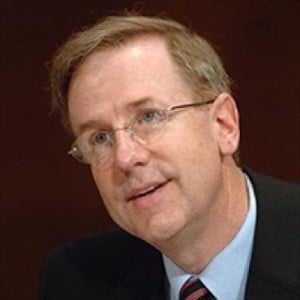
Board Member, Center for Equal Opportunity
Roger Clegg is a Board Member at and former President and General Counsel of the Center for Equal Opportunity. He focuses on legal issues arising from civil rights laws--including the regulatory impact on business and the problems in higher education created by affirmative action. A former Deputy Assistant Attorney General in the Reagan and Bush administrations, Clegg held the second highest positions in both the Civil Rights Division (1987-91) and in the Environment and Natural Resources Division (1991-93). He has held several other positions at the U.S. Justice Department, including Assistant to the Solicitor General (1985-87), Associate Deputy Attorney General (1984-85), and Acting Assistant Attorney General in the Office of Legal Policy (1984). Clegg is a graduate of Yale University Law School (1981).
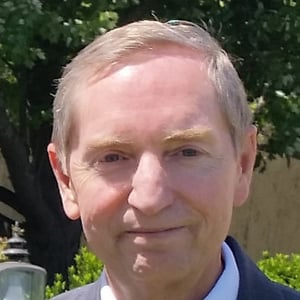
Legal Director & General Counsel, Criminal Justice Legal Foundation
Kent S. Scheidegger has been the Legal Director of the Criminal Justice Legal Foundation since December 1986. He also served as Chairman of the Criminal Law Practice Group of the Federalist Society 2003 to 2005. His articles on criminal and constitutional law have been published in law reviews, national legal publications, and congressional reports. Legal arguments authored by Mr. Scheidegger have been cited and incorporated in several precedent-setting United States Supreme Court decisions.
After receiving a degree in physics with honors from New Mexico State University in 1976, Mr. Scheidegger served for six years in the United States Air Force as a Nuclear Research Officer. He took his law degree with distinction from the University of the Pacific, McGeorge School of Law in 1982 and practiced civil law in Northern California. He was general counsel of California Cooler, Inc. from 1984 until 1986, when he joined the Foundation.
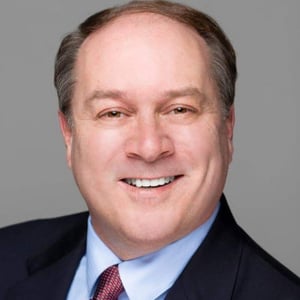
Of Counsel, Fisher & Phillips, LLP
Greg Grisham has over 25 years of successful experience counseling and representing employers in all aspects of workplace law in Tennessee and across the United States.
He has helped employers avoid claims, charges and lawsuits with a focus on preventative practices. Preventative practices include counseling in situations involving discipline, termination, demotion, promotion and other workplace changes in the terms and conditions of employment, harassment investigations, wage and hour compliance, FMLA Compliance, Reasonable Accommodation assessment, supervisor training and the review of employment policies and procedures. In addition, Greg's practice includes the representation of business entities subject to Title III of the Americans with Disabilities Act in Public Accommodation cases.
Greg has successfully litigated hundreds of administrative charges, employment lawsuits, and arbitration demands on behalf of employers, including federal and state law claims alleging discrimination, harassment, retaliation, wrongful termination, defamation, invasion of privacy, breach of contract, wage and hour violations and ERISA violations, among others. He also represents employers before the National Labor Relations Board in unfair labor practice proceedings. He represents employers in the enforcement of post-employment restrictive covenants such as non-compete, non-solicitation and non-disclosure agreements and related trade secret litigation. Greg's practice also includes the defense of property owners and property management companies in federal and state Housing Discrimination charges and litigation. He also advises Tennessee Public Charter Schools on education law and workplace compliance matters.
Greg has extensive experience working with insurance carriers and their insureds in the defense of EPLI claims. He is a regular speaker at public seminars on workplace law issues and has authored numerous articles on a variety of labor and employment law related topics.
Greg holds an AV Preeminent Peer Review rating from Martindale-Hubbell and has been selected for inclusion in Mid-South Super Lawyers and Best Lawyers in America for Employment Litigation-Management side. Greg was elected as a 2016 Fellow to the College of Labor and Employment Lawyers and has been selected to the “Top 20 Lawyers in Traditional Labor & Employment Law” list in conjunction with Human Resource Executive Magazine and LawDragon’s 2017 and 2018 “Most Powerful Employment Attorneys” lists and specialty guides. Greg was also named a Fellow in the American Bar Foundation in 2017.
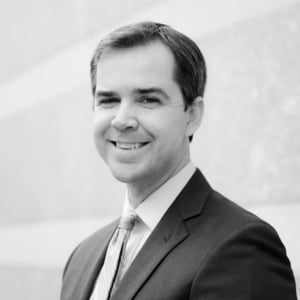
Vice President and Senior Counsel, The Becket Fund for Religious Liberty
Daniel Blomberg is vice president and senior counsel for Becket. Before joining Becket, he clerked for Chief Judge Alice M. Batchelder of the U.S. Court of Appeals for the Sixth Circuit and served as litigation counsel with the Alliance Defending Freedom. Daniel’s clients have included an international order of nuns, the world’s largest religious media organization, synagogues, members of the U.S. military, religious healthcare ministries, peaceful protestors, halfway houses, religious colleges, state legislators, homeless shelters, religious business owners, an art gallery, and churches. Daniel has represented a wide variety of faith groups, including Anglicans, Baptists, Catholics, Hindus, Hutterites, Jews, Lutherans, Mennonites, Muslims, Presbyterians, Russian Orthodox, and Sikhs. Cases on which he has served as counsel to a party include: Our Lady of Guadalupe v. Morrissey-Berru, 140 S. Ct. 2049 (2020); Roman Catholic Diocese of Brooklyn v. Cuomo, 141 S. Ct. 63 (2020); Zubik v. Burwell, 136 S. Ct. 1557 (2016); Little Sisters of the Poor v. Sebelius, 134 S. Ct. 1022 (2014); Wheaton College v. Burwell, 134 S. Ct. 2806 (2014); Fellowship of Christian Athletes v. SJUSD, 82 F.4th 664 (9th Cir. 2023) (en banc); Singh v. Berger, 56 F.4th 88 (D.C. Cir. 2022); Demkovich v. St. Andrew the Apostle Parish, 3 F.4th 968 (7th Cir. 2021) (en banc); Maxon v. Fuller Theological Seminary, 2021 WL 5882035 (9th Cir. 2021); Intervarsity Christian Fellowship/USA v. University of Iowa, 5 F.4th 855, 867 (8th Cir. 2021); Business Leaders in Christ v. University of Iowa, 991 F.3d 969 (8th Cir. 2021); Whole Woman’s Health v. Smith, 896 F.3d 362 (5th Cir. 2018); Lee v. Sixth Mount Zion Baptist Church, 903 F.3d 113 (3d Cir. 2018); Gagliardi v. TJCV, 889 F.3d 728 (11th Cir. 2018); Harvest Family Church v. FEMA, 2018 WL 386192 (5th Cir. 2018); Fratello v. Archdiocese of New York, 863 F.3d 190 (2d Cir. 2017); Eternal Word Television Network v. U.S. Dep’t of HHS, 756 F.3d 1339 (11th Cir. 2014); InterVarsity Christian Fellowship/USA v. Bd. of Governors of Wayne State Univ., 534 F. Supp. 3d 785 (E.D. Mich. 2021); and Singh v. Carter, 168 F. Supp. 3d 216 (D.D.C. 2016).
Daniel has been featured on CNN, Huffington Post Live, Fox News, EWTN Nightly News, and CBS Evening News.
He earned his J.D. from the University of South Carolina School of Law, graduating magna cum laude. While in law school, Daniel clerked for the South Carolina Attorney General’s Office, served on a South Carolina Supreme Court task force, and interned with Judge J. Michelle Childs of the Circuit Court for the Fifth Judicial Circuit as a part of the Judicial Observation and Education program. He is a Blackstone Fellow. Daniel received his undergraduate degree from Columbia International University. He and his wife have five children and too many animals.
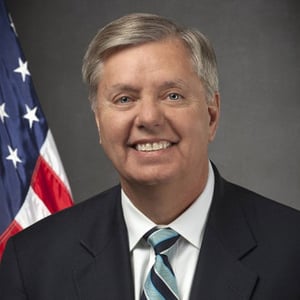
Senator from South Carolina, United States Senate
Senator Lindsey Graham was elected to the United States Senate in 2002 and was re-elected in 2008 and 2014. He became the first person in South Carolina history to garner over one million votes in the 2008 general election.
Prior to serving in the Senate, Graham was elected to the U.S. House of Representatives in 1994 as the first Republican from the Third Congressional District of South Carolina since 1877.
Before being elected to Congress, Graham compiled a distinguished record in the United States Air Force as he logged six-and-a-half years of service on active duty as an Air Force lawyer. From 1984-1988, he was assigned overseas and served at Rhein-Main Air Force Base in Germany. Upon leaving active duty Air Force in 1989, Graham joined the South Carolina Air National Guard where he served until 1995. During the first Gulf War in the early 90's, Graham was called to active duty and served state-side at McEntire Air National Guard Base as Staff Judge Advocate where he prepared members for deployment to the Gulf region.
In 1995, Graham joined the U.S. Air Force Reserves. During American military operations in Iraq and Afghanistan, Graham put his experience in military law to use pulling numerous short-term Reserve duties in both countries over congressional breaks and holidays.
Graham retired from the Air Force Reserves in June 2015 having served his country in uniform for 33 years. He retired at the rank of Colonel.
A native South Carolinian, Graham grew up in a blue collar family in the small town of Central where his parents ran a restaurant and pool hall. The first member of his family to go to college, Graham earned his undergraduate and law degrees from the University of South Carolina. He lives in Seneca and is a member of Corinth Baptist Church.

Senior Fellow, Texas Public Policy Foundation
As a senior fellow, Jacki brings expertise to the Life: Powered initiative at the Texas Public Policy Foundation. Currently the host of The Jacki Daily Show, she has had an impressive career in energy, law, and politics.
Most recently, Pick served as Chief Operating Officer for a free market think tank specializing in health care policy, entitlement reform, and energy policy. Previously, she served many years as legal counsel on Capitol Hill to the Chairman of the Subcommittee on the Constitution and the former Ranking Member of the Commercial and Administrative Law Subcommittee, advising on the oversight of federal agencies. Prior to her career in Washington, she worked as a litigator and as an Assistant Vice President for a national bank.
Prior to her legal career, Jacki served as the Public Relations Director for a statewide political organization.
Jacki studied Economics, Spanish, and World History at Marshall University (Society of Yeager Scholars), Oxford University in the United Kingdom, and the University of Zaragoza in Spain. She is an alumna of the Vanderbilt University Law School, where she served as the President of the law school’s Federalist Society chapter.
Jacki is from the Ohio River Valley, where the shale runs deep. She descends from a long line of energy workers, including roughnecks, railroaders, coal miners, and nuclear energy specialists.
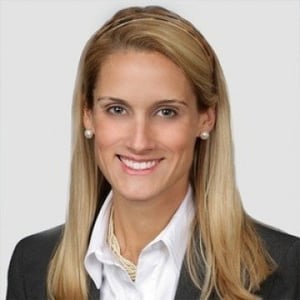
Partner, Wiley Rein
Brandon defends companies and their executives in complex civil and criminal cases involving alleged healthcare fraud, the False Claims Act (FCA), whistleblower allegations, the Foreign Corrupt Practices Act (FCPA), antitrust, regulatory violations, and contract and procurement fraud. She has extensive experience shepherding life sciences companies, government contractors, not-for-profits, and technology companies through internal investigations and responding to subpoenas and civil investigative demands (CIDs). She also advises a broad range of companies on compliance programs, privacy, telecommunications, compliance, Team Telecom, and new media issues.
Partner, Wiley Rein LLP
Mark represents government contractors and telecommunications companies facing federal investigations, whistleblower complaints, and civil enforcement actions. He navigates responses to civil investigative demands from the U.S. Department of Justice (DOJ) and Federal Trade Commission (FTC), as well as inquiries and subpoenas from the Federal Communications Commission (FCC), Inspectors General, and Congress. He also leads internal investigations for companies to assess potential misconduct by employees. Mark is a co-chair of Wiley Rein’s Communications Enforcement & Compliance Group.

Opening Remarks and Welcome to Arizona
Richard A. Epstein, Grant H. Frazier, Douglas Sylvester
2019 National Student Symposium
On March 15-16, 2019, the Federalist Society's student chapter at the ASU Sandra Day O'Connor...
Opening Remarks and Welcome to Arizona
Richard A. Epstein, Grant H. Frazier, Douglas Sylvester
2019 National Student Symposium
On March 15-16, 2019, the Federalist Society's student chapter at the ASU Sandra Day O'Connor...
Race In Admissions: Texas Tech Medical School
Roger B. Clegg
Civil Rights Practice Group and Regulatory Transparency Project Teleforum
The Texas Tech Medical School recently approved an agreement with the United States Department of...
Topics
Yale Law School Rosenkranz Originalism Conference Initiative Announced
Yale Law School recently announced a major new program on Originalism. Here is an excerpt...
Courthouse Steps Decision Teleforum: Bucklew v. Precythe
Kent Scheidegger
Criminal Law & Procedure Practice Group
Monday, April 1st, the Supreme Court ruled on the 8th amendment case Bucklew v. Precythe....
The Ministerial Exception After Hosanna-Tabor: Firmly Founded, Increasingly Refined
J. Gregory Grisham, Daniel Blomberg
Federalist Society Review, Volume 20
Note from the Editor: The Federalist Society takes no positions on particular legal and public...
Necessary & Proper Episode 40: Legislative Branch Review Keynote Speech by Senator Lindsey Graham
Lindsey Graham
On February 6, 2019, the Federalist Society's Article I Initiative and the Georgetown Student Chapter...
Pipelines and Eminent Domain [POLICYbrief]
Jacki Pick Deason
Short video featuring Jacki Deason
How can American oil and gas companies access and transport the valuable resources beneath the...
Can a New Establishment Clause Jurisprudence Succeed in Protecting Religious Minorities Where Lemon Has Failed?
Alexandra M. Lightfoot
Federalist Society Review, Volume 20
Note from the Editor: The Federalist Society takes no positions on particular legal and public...
The False Claims Act: Who Is The Responsible Government Official?
Brandon Moss, Mark B. Sweet
This teleforum will discuss the Supreme Court argument in United States ex rel. Hunt v....