
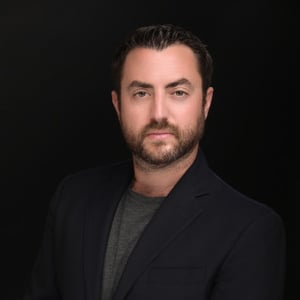
Newsweek Senior Editor-at-Large, Syndicated Columnist, Host of "The Josh Hammer Show," Article III Project Senior Counsel, Newsweek, Salem Media, Article III Project, David Horowitz Freedom Center
Josh Hammer is the senior editor-at-large of Newsweek and host of "The Josh Hammer Show," a podcast, a syndicated radio show, and TV program on Salem News Channel. A syndicated columnist through Creators Syndicate, Josh is a frequent pundit and essayist on political, legal, and cultural issues. He is also senior counsel for the Article III Project and Internet Accountability Project, as well as a Shillman Fellow with the David Horowitz Freedom Center and a fellow with the Palm Beach Freedom Institute.
An outspoken conservative, Josh opines on conservative intellectual trends, contemporary domestic and foreign policy debates, constitutional and legal issues, and the intersection of law, politics and culture. He has been published by many leading outlets, including the Los Angeles Times, the New York Post, Daily Mail, Newsweek, the Claremont Review of Books, National Affairs, American Affairs, The New Criterion, The National Interest, National Review, RealClearPolitics, First Things, City Journal, Public Discourse, Law & Liberty, Tablet Magazine, Deseret Magazine, Compact Magazine, Chronicles Magazine, The Spectator, The American Mind, The American Conservative, The European Conservative, American Greatness, American Compass, The Federalist, Blaze Media, TomKlingenstein.com, Townhall, The Daily Wire, The Daily Signal, The Daily Caller, The Epoch Times, Anchoring Truths, Fortune, Fox Business, The Jerusalem Post, The Times of Israel, The Forward, Jewish Telegraphic Agency and the Jewish Journal. He has also had legal scholarship published by the Harvard Journal of Law & Public Policy and the University of St. Thomas Law Journal.
Josh is a college campus speaker through Young America's Foundation and the Intercollegiate Studies Institute, and a law school campus speaker through the Federalist Society. Prior to Newsweek and The Daily Wire, where he was an editor, Josh worked at Kirkland & Ellis LLP and clerked for the Hon. James C. Ho on the U.S. Court of Appeals for the Fifth Circuit. Josh has also served as a John Marshall Fellow with the Claremont Institute and as a Fellow with the James Wilson Institute. He is the former host of "America on Trial with Josh Hammer," a one-season daily podcast with The First that covered the unique legal issues surrounding the 2024 presidential election.
Josh graduated from Duke University, where he majored in economics, and from the University of Chicago Law School. He lives in Florida, but remains an active member of the State Bar of Texas.
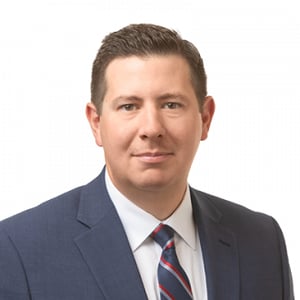
Senior Associate, Husch Blackwell
Dave guides clients through a wide range of complex public law litigation in state and federal courts.
Clients appreciate Dave’s experience serving in Nebraska’s Attorney General’s Office as Assistant Attorney General and as the state’s first Deputy Solicitor General; in the Civil Litigation Bureau; and in the Agriculture, Environment and Natural Resources Bureau. In these roles, he routinely handled high-profile matters at the trial and appellate levels in both state and federal courts including:
Dave maintains a robust appellate practice, counseling clients through all stages of appeals including briefing and oral argument. He has argued more than 20 civil appeals before the U.S. Court of Appeals for the Eighth Circuit, the Nebraska Supreme Court and the Nebraska Court of Appeals, obtaining favorable results in the overwhelming majority of those cases. He has a unique perspective on the importance of strategic amicus curiae support in the appellate process, having advised the Nebraska Attorney General on the state’s amicus participation and authorship in courts across the country.
He understands how regulatory agencies think – having helped develop and implement policy and guide governmental regulatory activities – and offers this insight to clients as they proactively approach compliance or navigate investigations.
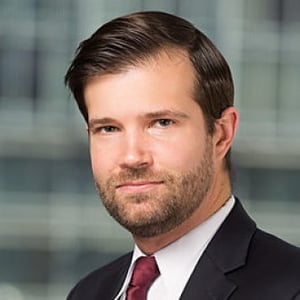
Research Fellow, CATO Institute
Jay Schweikert is a research fellow with the Cato Institute’s Project on Criminal Justice. His research and advocacy focuses on accountability for prosecutors and law enforcement, plea bargaining, Sixth Amendment trial rights, and the provision and structuring of indigent defense.
Before joining Cato, Schweikert spent four years doing civil and criminal litigation at Williams & Connolly LLP. He holds a JD from Harvard Law School, where he was an articles editor for the Harvard Law Review, and chaired the Harvard Federalist Society’s student colloquium program. Following law school, Schweikert clerked for Judge Diane Sykes of the U.S. Court of Appeals for the Seventh Circuit and Judge Laurence Silberman of the U.S. Court of Appeals for the DC Circuit.
He holds a BA in political science and economics from Yale University.
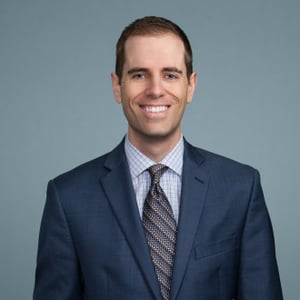
Senior Associate, Hilgers Graben PLLC
Trent represents sophisticated clients in civil litigation and appeals. His experience includes taking fact- and expert-witness depositions, assisting in fact development, document production, and witness preparation, and drafting and responding to a range of dispositive and non-dispositive motions. Besides his experience as an associate at two renowned law firms in Denver and Washington, D.C., Trent was a law clerk to The Honorable D. Brooks Smith on the U.S. Court of Appeals for the Third Circuit.
Trent lives in Lincoln with his wife and three children and enjoys cycling, trap shooting, and reading (especially American frontier novels).
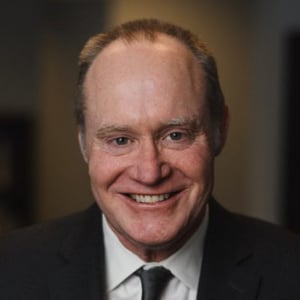
Chief Legal Officer & General Counsel, Americans United for Life
Steven H. Aden serves as Chief Legal Officer & General Counsel at Americans United for Life. Aden joined Americans United for Life in August 2017, overseeing all legal operations of America’s most effective pro-life organization. Aden is a highly experienced litigator, having appeared in court against Planned Parenthood and the abortion industry dozens of times and appointed by the attorneys general of six states to defend prolife laws. Mr. Aden secured court victories that upheld an Arizona law that resulted in six abortion businesses ceasing to offer abortion, applied Missouri’s abortion laws to chemical abortion and upheld the right of Louisiana regulators to shut down dangerous abortion facilities. A prolific author and analyst on sanctity of life issues and constitutional jurisprudence, Aden is admitted to the bars of the District of Columbia, Virginia, and Hawaii (inactive), and is a member of the bars of the U.S. Supreme Court and numerous federal circuit and district courts. He has practiced law since 1990 and earned his J.D. (cum laude) from Georgetown University Law Center and his B.A. from the University of Hawaii.
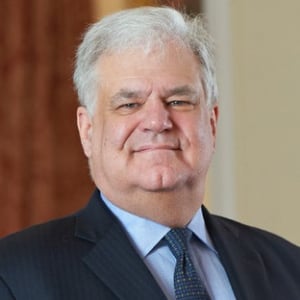
Stuyvesant P. Comfort Professor of Law; Director, Center for Financial Institutions; and Co-Director, Center for Civil Justice, New York University School of Law
Geoffrey Miller is an author or editor of a dozen books and more than 200 articles in the fields of financial institutions, contract law, corporate and securities law, constitutional law, civil procedure, legal history, jurisprudence, and ancient law. He has taught a wide range of subjects including law and economics, corporations, compliance and risk management, property, regulation of financial institutions, land development, securities law, the legal profession, and legal theory. Miller received his BA magna cum laude from Princeton in 1973 and his JD from Columbia in 1978, where he was a Stone Scholar and editor-in-chief of the Columbia Law Review. He clerked for Judge Carl McGowan of the US Court of Appeals for the District of Columbia Circuit and Justice Byron White of the US Supreme Court. After two years as an attorney adviser at the Office of Legal Counsel of the US Department of Justice and one year with a Washington, DC, law firm, he joined the faculty of the University of Chicago Law School in 1983 and NYU School of Law in 1995.
Miller has been a visiting professor or visiting scholar at Columbia University, Harvard University, University of Minnesota, University of Basel (Switzerland), University of Genoa (Italy), Collegio Carlo Alberto (Italy), Study Center Gerzensee (Switzerland), Vanderbilt University, University of St. Gallen (Switzerland), University of Frankfurt (Germany), University of Sydney (Australia), University of Auckland (New Zealand), and the Bank of Japan. Miller is a founder of the Society for Empirical Legal Studies, a scholarly organization devoted to promoting statistical and other empirical techniques in the study of legal institutions. He is founder and director of NYU School of Law’s Center for Financial Institutions, co-director of the Center for Civil Justice, co-founder of and Senior Academic Fellow at NYU's Program on Corporate Compliance and Enforcement, co-convener of the Global Economic Policy Forum, a member of the board of directors of State Farm Bank, and a fellow in the American Academy of Arts and Sciences.
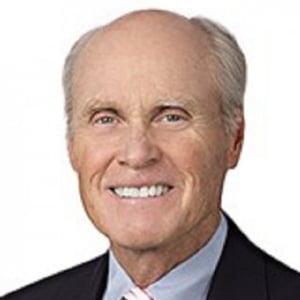
Former United States Assistant Attorney General, Civil Rights Division, United States Department of Justice
William Bradford served as the United States Assistant Attorney General for the Civil Rights Division from 1981 to 1988.
Reynolds was Senior Counsel in BakerBotts Antitrust and Competition division. He graduated with a LL.B. from Vanderbilt University Law School in 1967 where he was Order of the Coif and Editor-in-Chief of the Vanderbilt Law Review. In 1964, he received a B.A. from Yale University.
Reynolds passed away on September 14, 2019, in Seabrook Island, South Carolina at age 77.
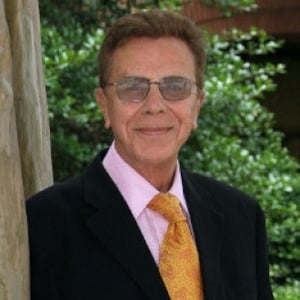
Professor of Law, Emeritus, Marshall-Wythe Law School at the College of William and Mary
William W. Van Alstyne, one of the nation's foremost constitutional law scholars, and William & Mary’s Lee Professor of Law from 2004 to 2012, died on January 29, 2019, in Southern California.
Professor Van Alstyne was appointed Lee Professor of Law at the Marshall-Wythe Law School at the College of William and Mary in 2004. He is a graduate of the University of Southern California (B.A. in philosophy, magna cum laude) and Stanford University Law School (J.D., Articles and Book Review Editor of The Stanford Law Review). Following his admission to the California Bar and brief service as Deputy Attorney General of California, he joined the Civil Rights Division of the U. S. Department of Justice handling voting rights cases in the South. After active duty with the U. S. Air Force, he was appointed to the law faculty of the Ohio State University, advancing to full professor in three years. Appointed to the Duke law faculty shortly thereafter, he was named to the William R. & Thomas S. Perkins Chair of Law in 1974.
Professor Van Alstyne’s professional writings have appeared during four decades in the principal law journals in the United States, with frequent republication in foreign journals. They address virtually every major subject in the field of constitutional law. His work has been cited in a large number of judicial opinions including those of the Supreme Court. The Journal of Legal Studies for January, 2000, named Professor Van Alstyne in the top forty most frequently cited legal scholars in the United States of the preceding half-century.
Professor Van Alstyne has also taught and given professional papers internationally, in Germany, Austria, and Denmark, in Chile, the former Soviet Union, China, Japan, Canada, and Australia. He has been a visiting faculty member on the law faculties of the University of Chicago, Stanford, California (Berkeley and UCLA), Pennsylvania, Michigan, and Illinois, a Fulbright Lecturer in Chile, a Senior Fellow at the Yale Law School, and a faculty fellow at the Hague International Court of Justice. He has appeared as counsel and as amicus curiae in constitutional litigation in the federal courts, including the Supreme Court. He has also appeared in numerous hearings before Senate and House Committees, on legislation affecting the separation of powers, war powers, constitutional amendments, impeachments, legislation affecting civil rights and civil liberties, and nominations to the Supreme Court.
In 1987, Professor Van Alstyne was selected in a poll of federal judges, lawyers, and academics by the New York Law Journal as one of three academics among "the ten most qualified" persons in the country for appointment to the Supreme Court, a distinction repeated in a similar poll by The American Lawyer, in 1991. Past National President of the American Association of University Professors, and former member of the National Board of Directors of the A.C.L.U., he was elected into the American Academy of Arts and Sciences in 1994.
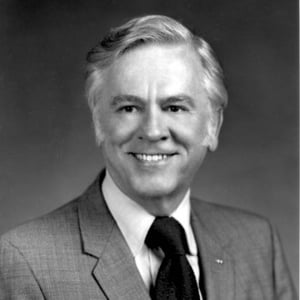
Former United States Representative, Florida
Charles Edward Bennett was a member of the United States House of Representatives from Jacksonville from 1949 to 1993. He was a Democrat.
He was born December 2, 1910 in Canton, New York and moved to Jacksonville by the end of his childhood. Bennett was an Eagle Scout and recipient of the Distinguished Eagle Scout Award from the Boy Scouts of America. He was a lawyer and a member of the United States Army during World War II before being elected to Congress from what was then the 2nd District. He was reelected 21 more times from this Jacksonville-based district. He rarely faced serious opposition even as Jacksonville fell under increasing Republican influence.
In 1951, he began proposing a code of ethics for government employees, nicknamed The Ten Commandments. After the Sherman-Adams Affair, the code was adopted as the first Code of ethics for Government Service in 1958. In 1954, he sponsored the bill that added the words “In God We Trust” to both the nation’s coins and currency.
Bennett died in Jacksonville on September 6, 2003 and is buried at Arlington National Cemetery. He is still the longest-serving member of either house of Congress in Florida’s history. The Charles E. Bennett Federal Building is named after him.
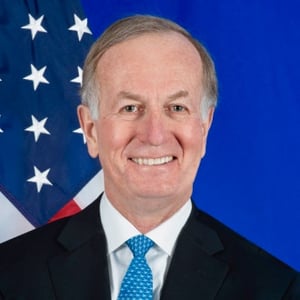
United States Ambassador to Australia
President Donald J. Trump nominated Ambassador Arthur B. (A.B.) Culvahouse Jr. to be the United States Ambassador to Australia on November 6, 2018. Confirmed by the U.S. Senate on January 2, 2019 by unanimous consent, he was formally sworn in by Vice President Mike Pence on February 19, 2019 and presented his credentials to the Governor-General, Sir Peter Cosgrove, on March 13, 2019.
Ambassador Culvahouse serves as the President’s personal representative to the government and people of Australia. He leads the U.S. Mission to Australia, which is comprised of the embassy in Canberra and three consulates in Melbourne, Sydney, and Perth.
Ambassador Culvahouse has a long and distinguished career. He is the former Chair of O’Melveny & Myers, an international law firm he was associated with for more than four decades. He began his career as Chief Legislative Assistant to United States Senator Howard H. Baker, Jr. and later served as White House Counsel to President Ronald Reagan. In 1989, President Reagan awarded Ambassador Culvahouse the Presidential Citizens’ Medal, an award to “recognize citizens who performed exemplary deeds of service for the country or their fellow citizens.” In December 1992, then-Secretary of Defense Dick Cheney awarded Ambassador Culvahouse the Defense Medal for Distinguished Public Service for his work on the Federal Advisory Committee on Nuclear Failsafe and Risk Reduction.
Both President Trump and the late-Senator John McCain tapped Ambassador Culvahouse to head the search to select their running mates.
Ambassador Culvahouse was raised in Ten Mile, Tennessee and attended the University of Tennessee and the New York University School of Law. He is the proud father of three accomplished daughters.
Former United States Representative, Florida
Charles Edward Bennett was a member of the United States House of Representatives from Jacksonville from 1949 to 1993. He was a Democrat.
He was born December 2, 1910 in Canton, New York and moved to Jacksonville by the end of his childhood. Bennett was an Eagle Scout and recipient of the Distinguished Eagle Scout Award from the Boy Scouts of America. He was a lawyer and a member of the United States Army during World War II before being elected to Congress from what was then the 2nd District. He was reelected 21 more times from this Jacksonville-based district. He rarely faced serious opposition even as Jacksonville fell under increasing Republican influence.
In 1951, he began proposing a code of ethics for government employees, nicknamed The Ten Commandments. After the Sherman-Adams Affair, the code was adopted as the first Code of ethics for Government Service in 1958. In 1954, he sponsored the bill that added the words “In God We Trust” to both the nation’s coins and currency.
Bennett died in Jacksonville on September 6, 2003 and is buried at Arlington National Cemetery. He is still the longest-serving member of either house of Congress in Florida’s history. The Charles E. Bennett Federal Building is named after him.
United States Ambassador to Australia
President Donald J. Trump nominated Ambassador Arthur B. (A.B.) Culvahouse Jr. to be the United States Ambassador to Australia on November 6, 2018. Confirmed by the U.S. Senate on January 2, 2019 by unanimous consent, he was formally sworn in by Vice President Mike Pence on February 19, 2019 and presented his credentials to the Governor-General, Sir Peter Cosgrove, on March 13, 2019.
Ambassador Culvahouse serves as the President’s personal representative to the government and people of Australia. He leads the U.S. Mission to Australia, which is comprised of the embassy in Canberra and three consulates in Melbourne, Sydney, and Perth.
Ambassador Culvahouse has a long and distinguished career. He is the former Chair of O’Melveny & Myers, an international law firm he was associated with for more than four decades. He began his career as Chief Legislative Assistant to United States Senator Howard H. Baker, Jr. and later served as White House Counsel to President Ronald Reagan. In 1989, President Reagan awarded Ambassador Culvahouse the Presidential Citizens’ Medal, an award to “recognize citizens who performed exemplary deeds of service for the country or their fellow citizens.” In December 1992, then-Secretary of Defense Dick Cheney awarded Ambassador Culvahouse the Defense Medal for Distinguished Public Service for his work on the Federal Advisory Committee on Nuclear Failsafe and Risk Reduction.
Both President Trump and the late-Senator John McCain tapped Ambassador Culvahouse to head the search to select their running mates.
Ambassador Culvahouse was raised in Ten Mile, Tennessee and attended the University of Tennessee and the New York University School of Law. He is the proud father of three accomplished daughters.
Stuyvesant P. Comfort Professor of Law; Director, Center for Financial Institutions; and Co-Director, Center for Civil Justice, New York University School of Law
Geoffrey Miller is an author or editor of a dozen books and more than 200 articles in the fields of financial institutions, contract law, corporate and securities law, constitutional law, civil procedure, legal history, jurisprudence, and ancient law. He has taught a wide range of subjects including law and economics, corporations, compliance and risk management, property, regulation of financial institutions, land development, securities law, the legal profession, and legal theory. Miller received his BA magna cum laude from Princeton in 1973 and his JD from Columbia in 1978, where he was a Stone Scholar and editor-in-chief of the Columbia Law Review. He clerked for Judge Carl McGowan of the US Court of Appeals for the District of Columbia Circuit and Justice Byron White of the US Supreme Court. After two years as an attorney adviser at the Office of Legal Counsel of the US Department of Justice and one year with a Washington, DC, law firm, he joined the faculty of the University of Chicago Law School in 1983 and NYU School of Law in 1995.
Miller has been a visiting professor or visiting scholar at Columbia University, Harvard University, University of Minnesota, University of Basel (Switzerland), University of Genoa (Italy), Collegio Carlo Alberto (Italy), Study Center Gerzensee (Switzerland), Vanderbilt University, University of St. Gallen (Switzerland), University of Frankfurt (Germany), University of Sydney (Australia), University of Auckland (New Zealand), and the Bank of Japan. Miller is a founder of the Society for Empirical Legal Studies, a scholarly organization devoted to promoting statistical and other empirical techniques in the study of legal institutions. He is founder and director of NYU School of Law’s Center for Financial Institutions, co-director of the Center for Civil Justice, co-founder of and Senior Academic Fellow at NYU's Program on Corporate Compliance and Enforcement, co-convener of the Global Economic Policy Forum, a member of the board of directors of State Farm Bank, and a fellow in the American Academy of Arts and Sciences.
Former United States Assistant Attorney General, Civil Rights Division, United States Department of Justice
William Bradford served as the United States Assistant Attorney General for the Civil Rights Division from 1981 to 1988.
Reynolds was Senior Counsel in BakerBotts Antitrust and Competition division. He graduated with a LL.B. from Vanderbilt University Law School in 1967 where he was Order of the Coif and Editor-in-Chief of the Vanderbilt Law Review. In 1964, he received a B.A. from Yale University.
Reynolds passed away on September 14, 2019, in Seabrook Island, South Carolina at age 77.
Professor of Law, Emeritus, Marshall-Wythe Law School at the College of William and Mary
William W. Van Alstyne, one of the nation's foremost constitutional law scholars, and William & Mary’s Lee Professor of Law from 2004 to 2012, died on January 29, 2019, in Southern California.
Professor Van Alstyne was appointed Lee Professor of Law at the Marshall-Wythe Law School at the College of William and Mary in 2004. He is a graduate of the University of Southern California (B.A. in philosophy, magna cum laude) and Stanford University Law School (J.D., Articles and Book Review Editor of The Stanford Law Review). Following his admission to the California Bar and brief service as Deputy Attorney General of California, he joined the Civil Rights Division of the U. S. Department of Justice handling voting rights cases in the South. After active duty with the U. S. Air Force, he was appointed to the law faculty of the Ohio State University, advancing to full professor in three years. Appointed to the Duke law faculty shortly thereafter, he was named to the William R. & Thomas S. Perkins Chair of Law in 1974.
Professor Van Alstyne’s professional writings have appeared during four decades in the principal law journals in the United States, with frequent republication in foreign journals. They address virtually every major subject in the field of constitutional law. His work has been cited in a large number of judicial opinions including those of the Supreme Court. The Journal of Legal Studies for January, 2000, named Professor Van Alstyne in the top forty most frequently cited legal scholars in the United States of the preceding half-century.
Professor Van Alstyne has also taught and given professional papers internationally, in Germany, Austria, and Denmark, in Chile, the former Soviet Union, China, Japan, Canada, and Australia. He has been a visiting faculty member on the law faculties of the University of Chicago, Stanford, California (Berkeley and UCLA), Pennsylvania, Michigan, and Illinois, a Fulbright Lecturer in Chile, a Senior Fellow at the Yale Law School, and a faculty fellow at the Hague International Court of Justice. He has appeared as counsel and as amicus curiae in constitutional litigation in the federal courts, including the Supreme Court. He has also appeared in numerous hearings before Senate and House Committees, on legislation affecting the separation of powers, war powers, constitutional amendments, impeachments, legislation affecting civil rights and civil liberties, and nominations to the Supreme Court.
In 1987, Professor Van Alstyne was selected in a poll of federal judges, lawyers, and academics by the New York Law Journal as one of three academics among "the ten most qualified" persons in the country for appointment to the Supreme Court, a distinction repeated in a similar poll by The American Lawyer, in 1991. Past National President of the American Association of University Professors, and former member of the National Board of Directors of the A.C.L.U., he was elected into the American Academy of Arts and Sciences in 1994.
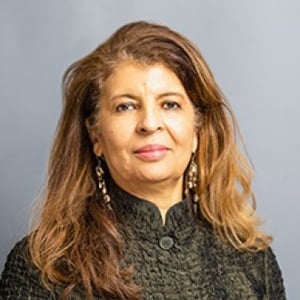
Professor of Law and Co-Director, Racial Justice Project, New York Law School
Penelope Andrews joined NYLS in January 2019 and teaches comparative and international law courses. She also serves as Co-Director of NYLS’s Racial Justice Project, focusing on international and South African issues.
Professor Andrews was the 2018–19 Sabbatical Scholar at the Center for the Study of Law and Culture at Columbia Law School. She previously completed two terms as Dean: From 2016 to 2018 as the first Black dean at the University of Cape Town Faculty of Law, and from 2012 to 2015 as the first female dean of Albany Law School in New York. She was previously the Associate Dean for Academic Affairs at the City University of New York (CUNY) School of Law and Director of International Programs at Valparaiso Law School.
She began her teaching career at La Trobe University in Melbourne, Australia, where she taught for eight years before moving to CUNY, where she was on the faculty for 15 years, teaching public international law, gender and law, race and law, comparative law, torts, and lawyering. She has also held visiting appointments at several law schools in the U.S. and internationally, including in South Africa, Canada and Australia. Professor Andrews received her B.A. and. LL.B. degrees from the University of KwaZulu-Natal (formerly University of Natal) in South Africa and an LL.M. from Columbia Law School.
Professor Andrews is active in international collaborative research and mentoring networks and is particularly committed to ensuring the relevance of law and society scholarship to academic communities in the global south and global north. She is an editor of the International Journal of Law in Context, the Human Rights and the Global Economy E-Journal, and the African Law E-Journal.
She has also published several books and articles that focus on comparative constitutional law, gender and racial equality, human rights—particularly the tension between respect for indigenous law and implementing broader human rights norms—the judiciary, and legal education. Her book From Cape Town to Kabul: Rethinking Strategies for Pursuing Women’s Human Rights was published in 2012. She publishes regularly in the popular media and on social media, focusing on issues of race, poverty, legal education, public interest litigation, and the ongoing challenges of transforming an economically unequal and racially divided society.
Professor Andrews’s focus on the judiciary in South Africa seeks to bridge the divide between theory and practice. She is a trainer for the Judicial Institute for Africa, focusing on opinion writing and communications skills for new and experienced judges. She also served as an Acting Judge of the North Gauteng High Court in Pretoria for the 2018 third term, presiding over criminal appeals, motion court, and civil trials. She has served as an arbitrator in hearings on racial discrimination in South Africa.
She has served on significant law school committees and the boards of public interest and human rights organizations, including the Africa Section of Human Rights Watch, South Africa Partners, the Legal Resources Center, and the National Center for Law and Economic Justice. Professor Andrews has received many awards for her work, including, in 2015, the National Bar Association’s International Award for her global human rights advocacy. In recognition of her human rights work, the University of KwaZulu-Natal provides an annual award in her name.
She will start her two-year term as the President of the Law and Society Association in June 2019.
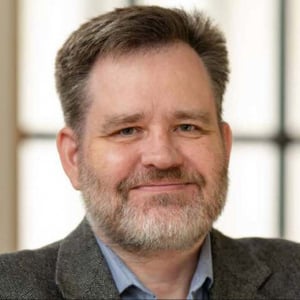
David Boies Professor of Law, Yale Law School
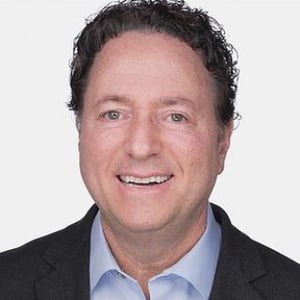
President, Committee for Justice
Curt Levey is President of the Committee For Justice, an organization devoted to advancing constitutionally limited government and individual liberty. He is a veteran of Supreme Court and other judicial confirmation battles and serves on the executive committee of the Federalist Society's Civil Rights Practice Group.
After graduating Harvard Law School with honors and clerking for the U.S. Court of Appeals for the Sixth Circuit, Mr. Levey served as Director of Legal & Public Affairs at the Center for Individual Rights (CIR). There he worked on landmark Supreme Court cases, including the University of Michigan affirmative action cases and the successful constitutional challenge to the Violence Against Women Act. After CIR, Mr. Levey headed the Title IX policy group at the U.S. Department of Education.
Before attending law school, Mr. Levey earned an M.S. and B.A. in computer science from Brown University and worked in the field of artificial intelligence (AI). He invented a new type of AI technology, for which he wrote a successful patent application.
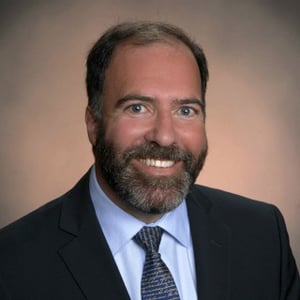
Professor of Law, Widener University Commonwealth Law School

Qualified Immunity: A Debate
Josh Hammer, Dave A. Lopez, Jay R. Schweikert, Trenton D. Tanner
Nebraska Lawyers Chapter
Created by the Supreme Court in 1967, the legal doctrine of qualified immunity shields government...
June Medical Services, LLC v. Russo - Post-Decision SCOTUScast
Steven H. Aden
featuring Steven H. Aden
On June 29, 2020, the Supreme Court issued its first major abortion decision on the...
Panel I: The President's Powers as Commander-in-Chief vs. Congress's War Power and Appropriations Power [Archive Collection]
Geoffrey P. Miller, Wm. Bradford Reynolds, William Van Alstyne, Charles E. Bennett, A.B. Culvahouse
Foreign Affairs and the Constitution
On November 6-7, 1987, The Federalist Society held a symposium at the Grand Hyatt Hotel...
Panel I: The President's Powers as Commander-in-Chief vs. Congress's War Power and Appropriations Power [Archive Collection]
Charles E. Bennett, A.B. Culvahouse, Geoffrey P. Miller, Wm. Bradford Reynolds, William Van Alstyne
Foreign Affairs and the Constitution
On November 6-7, 1987, The Federalist Society held a symposium at the Grand Hyatt Hotel...
Is Social Justice Just? The Moral Obligations of Social Justice [POLICYbrief]
Penelope Andrews
Short video featuring Penelope Andrews
Social justice is a disputed concept in law and philosophy. In this episode of POLICYbrief,...
Topics
The Founding Isn't The Problem — It's The Solution
Traditionally, the Fourth of July has been a day for thankful celebration of the precious...
What are the Limits of Federal Power During an Emergency? [POLICYbrief]
Keith E. Whittington
Short video featuring Keith Whittington
Does the Constitution limit the power of the federal government during emergencies just as it...
Topics
The Supreme Court Gets Espinoza Right
Yesterday's Supreme Court decision in Espinoza v. Montana Dept. of Revenue is a religious-freedom and...
Bostock and Title VII Cases - Post-Decision SCOTUScast
Curt Levey
featuring Curt Levey
On June 15, by a vote of 6-3 the Supreme Court released its decision in...
The National Popular Vote v. the Electoral College [POLICYbrief]
Michael R. Dimino
Short video featuring Michael Dimino
What is the National Popular Vote Compact and how would it affect the election of...