
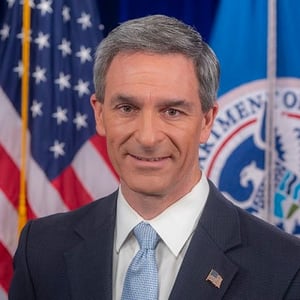
Former Acting Deputy Secretary, Department of Homeland Security
Senior Fellow for Homeland Security at The Center for Renewing America, Mr. Cuccinelli has been a trial and appellate litigator, including constitutional law, for over 25 years. Additionally, Mr. Cuccinelli served in state government in the Virginia State Senate from 2002-2010, and as Virginia’s Attorney General from 2010-2014. As Virginia’s Attorney General, Mr. Cuccinelli led national litigation against Obamacare and other illegal and unconstitutional federal overreach. He also led Virginia from being among the worst states in fighting human trafficking to becoming one of the best; and his successful prosecutorial efforts resulted in record enforcement against gangs, health care fraud and child predators, all while protecting life and constitutional rights.
Mr. Cuccinelli also served in the federal government, first as the Acting Director of
United States Citizenship & Immigration Services, and then as the Acting Deputy
Secretary for the Department of Homeland Security. During his tenure, Mr. Cuccinelli
was a leading spokesman for the administration on immigration, election security and
homeland security issues. He was responsible for planning and managing a budget of
over $50 billion per year, while serving as the chief operating officer for the Department
of the federal government responsible for responding to most forms of crises in the
United States. Mr. Cuccinelli was appointed by the President to serve as an original
member of the Coronavirus Task Force upon the emergence of the Covid-19 pandemic.
Following his time in federal service, Mr. Cuccinelli assumed leadership of the joint
Susan B. Anthony List/American Principles Project Election Transparency Initiative, in
which position Mr. Cuccinelli seeks to fend off a federal takeover of state elections while
at the same time advancing election reforms to achieve security, transparency and
accountability in our elections.
Mr. Cuccinelli continues to be a frequent media contributor on the wide array of
subjects in which he is an expert.
Mr. Cuccinelli and his wife, Teiro, grew up and live in Virginia and they have seven
children, two sons-in-law and most joyously of all – four grandchildren (so far).
In his spare time, Mr. Cuccinelli enjoys spending time with his family, reading, shooting,
playing ultimate frisbee and watching college basketball.

Dr. John Eastman is the former Henry Salvatori Professor of Law & Community Service and former Dean at Chapman University's Dale E. Fowler School of Law, where he had been a member of the faculty since 1999, specializing in Constitutional Law, Legal History, and Property. He is a founding director of the Center for Constitutional Jurisprudence, a public interest law firm affiliated with the Claremont Institute that he founded in 1999. He has a Ph.D. in Government from the Claremont Graduate School and a J.D. from the University of Chicago Law School, and a B.A. in Politics and Economics from the University of Dallas. He serves as the Chairman of the Board of the National Organization for Marriage.
Prior to joining the Chapman law faculty, Dr. Eastman served as a law clerk to the Honorable Clarence Thomas, Associate Justice, Supreme Court of the United States, and to the Honorable J. Michael Luttig, Judge, United States Court of Appeals for the Fourth Circuit and practiced law with the national law firm of Kirkland & Ellis. Dr. Eastman has also represented numerous clients in important constitutional law matters and has argued before the Supreme Court. On behalf of the Claremont Institute Center for Constitutional Jurisprudence, he has participated as amicus curiae before the Supreme Court of the United States, U.S. Courts of Appeals, and State Supreme Courts in more than one hundred cases of constitutional significance, including Boy Scouts of America v. Dale, Zelman v. Simmons-Harris (the school vouchers case), Kelo v. New London, Ct. (eminent domain), and Van Orden v. Perry (the 10 Commandments case). He has also appeared as an expert legal commentator on numerous television and radio programs, including C-SPAN, Fox News, PBS, NewsHour, and The O'Reilly Factor.
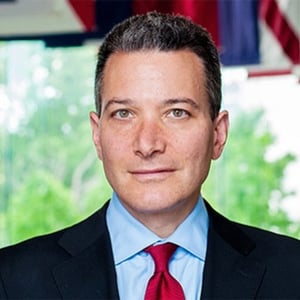
Senior Fellow, FIRE and CEO Emeritus, National Constitution Center
Jeffrey Rosen is a senior FIRE fellow as well as the host of “The Blessings of Liberty” podcast, presented by FIRE. He is also the CEO emeritus of the National Constitution Center, a professor of law at the George Washington University Law School, and a contributing editor of The Atlantic. He was previously the legal affairs editor of The New Republic and a staff writer for The New Yorker.
Rosen is the author of the New York Times bestsellers The Pursuit of Happiness and Conversations with RBG. His new book is The Pursuit of Liberty: How Hamilton vs. Jefferson Ignited the Lasting Battle Over Power in America.
Rosen is a graduate of Harvard College; Oxford University, where he was a Marshall Scholar; and Yale Law School. He is an elected member of the American Philosophical Society and the American Law Institute. In 2024, the French government recognized him as a Chevalier in the Ordre des Arts et des Lettres.
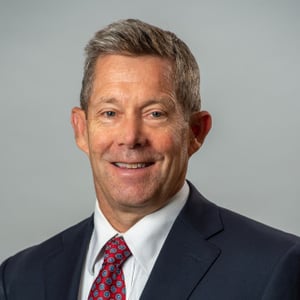
Chief Judge, United States Court of Appeals, Sixth Circuit
JEFFREY S. SUTTON is the Chief Judge of the United States Court of Appeals for the Sixth Circuit. He has served as Chair of the Federal Judicial Conference Committee on Rules of Practice and Procedure, Chair of the Advisory Committee on Appellate Rules, and Chair of the Supreme Court Fellows Commission. He currently serves as Chair of the Executive Committee of the Judicial Conference of the United States. Since 1993, Chief Judge Sutton has been an adjunct professor at The Ohio State University College of Law, where he teaches seminars on State Constitutional Law, the United States Supreme Court, and Appellate Advocacy. He also teaches a class on State Constitutional Law at Harvard Law School. Among other publications, he is the author of Who Decides? States as Laboratories of Constitutional Experimentation and 51 Imperfect Solutions: States and the Making of American Constitutional Law. He is the co-author of a casebook, State Constitutional Law: The Modern Experience, as well as The Law of Judicial Precedent. He is also the co-editor of The Essential Scalia: On the Constitution, the Courts, and the Rule of Law. In 2006, Chief Judge Sutton was elected to the American Law Institute, and in 2017 he was elected to its Council.
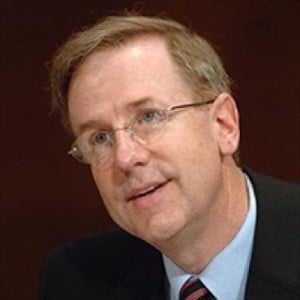
Board Member, Center for Equal Opportunity
Roger Clegg is a Board Member at and former President and General Counsel of the Center for Equal Opportunity. He focuses on legal issues arising from civil rights laws--including the regulatory impact on business and the problems in higher education created by affirmative action. A former Deputy Assistant Attorney General in the Reagan and Bush administrations, Clegg held the second highest positions in both the Civil Rights Division (1987-91) and in the Environment and Natural Resources Division (1991-93). He has held several other positions at the U.S. Justice Department, including Assistant to the Solicitor General (1985-87), Associate Deputy Attorney General (1984-85), and Acting Assistant Attorney General in the Office of Legal Policy (1984). Clegg is a graduate of Yale University Law School (1981).
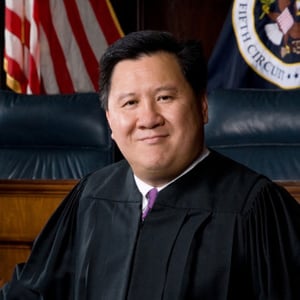
Judge, United States Court of Appeals, Fifth Circuit
James C. Ho is a Circuit Judge on the U.S. Court of Appeals for the Fifth Circuit. Before taking the bench on January 4, 2018, he was a partner and co-chair of the national Appellate and Constitutional Law practice group of Gibson, Dunn & Crutcher LLP.
As an appellate litigator for over a decade, including three years as the Solicitor General of Texas, Judge Ho presented 50 oral arguments in federal and state courts nationwide. He won numerous appeals, including three merits cases at the U.S. Supreme Court. He was routinely ranked among the nation’s leading lawyers by Benchmark, Chambers, Law360, The Legal 500, and The National Law Journal, among other publications. His work has been cited favorably by courts at every level of both the federal and state judiciaries. He won a Best Brief Award from the National Association of Attorneys General for every year that he served as solicitor general, and he is the only state solicitor general in history to be invited by the U.S. Supreme Court to express the views of a state.
Judge Ho has served in all three branches of the federal government. On the Senate Judiciary Committee, he served as chief counsel of the Subcommittees on the Constitution and Immigration under Senator John Cornyn. At the Justice Department, he served as Special Assistant to the Assistant Attorney General for Civil Rights and an attorney-advisor at the Office of Legal Counsel. He clerked for Judge Jerry E. Smith of the U.S. Court of Appeals for the Fifth Circuit and Justice Clarence Thomas of the U.S. Supreme Court.
His record of public service also includes appointments as vice chair of the Federal Judicial Evaluation Committee in Texas and co-chair of the National Asian Pacific American Bar Association Judiciary Committee, and as a member of the U.S. Magistrate Judge Merit Selection Panel for the Northern District of Texas, the U.S. delegation to the United Nations Committee on the Elimination of Racial Discrimination, and the Continuity of Government Commission.
In addition, Judge Ho has served as an Adjunct Professor of Law at the University of Texas School of Law, where he taught seminars on U.S. Supreme Court Litigation and Religious Liberty. He has authored numerous articles in respected law reviews nationwide, including an annual feature on exemplary judicial writing for The Green Bag Almanac & Reader. He previously served as senior editor of The Green Bag and as co-editor of Pub. L. Misc.
Judge Ho graduated from Stanford University with honors and a B.A. in Public Policy in 1995, and the University of Chicago Law School with high honors in 1999. Before law school, he was a legislative aide to California State Senator Quentin Kopp. He and his wife Allyson live in Dallas, Texas, with their twin daughter and son.
Attorney General, Kansas
Attorney General Kris Kobach was raised in Topeka, Kansas where he graduated from Washburn Rural High School. He completed his undergraduate studies in government at Harvard University, graduating first in his department and summa cum laude. A Marshall Scholarship recipient, he received his Ph.D. in politics from the University of Oxford. Kobach received his J.D. from Yale Law School, serving as notes development editor of the Yale Law Journal.
Kobach clerked for the Tenth Circuit Court of Appeals and shortly thereafter became a professor of constitutional law at the University of Missouri - Kansas City School of Law. Kobach received a White House Fellowship from President George W. Bush. He served in the United States Department of Justice under Attorney General John Ashcroft as Counsel to the Attorney General.
He has litigated some of the most high-profile cases in the country, including defending statutes and ordinances against the ACLU on multiple occasions. In 2012, Kobach brought the first challenge to President Obama’s DACA amnesty on behalf of 10 ICE agents. His victory in federal district court paved the way for Texas to defeat the Obama Justice Department in its litigation.
Kobach served as the 31st Kansas Secretary of State, 2011-2019. He lives near Lecompton with his wife, Heather, and their five children.
Counsel to the Firm, Cascadia Cross-Border Law
Margaret Stock focuses her practice on immigration and citizenship law. She is a nationally known expert on immigration and national security laws, and has testified regularly before Congressional committees on immigration, homeland security, and military matters. As a retired Lieutenant Colonel in the Military Police, U.S. Army Reserve, Margaret has extensive experience with U.S. military issues. She has also worked as a professor at the United States Military Academy at West Point, and she has served as an adjunct instructor at the University of Alaska. Margaret served as a member of the American Bar Association Commission on Immigration from 2008-2012. She regularly authors articles on military-related immigration issues, and is well-versed on “parole in place” for military family members and the Military Accessions Vital to the National Interest (“MAVNI”) Program. Margaret authored the book Immigration Law & the Military, which was published by the American Immigration Lawyers Association in 2012.
Board Member, Center for Equal Opportunity
Roger Clegg is a Board Member at and former President and General Counsel of the Center for Equal Opportunity. He focuses on legal issues arising from civil rights laws--including the regulatory impact on business and the problems in higher education created by affirmative action. A former Deputy Assistant Attorney General in the Reagan and Bush administrations, Clegg held the second highest positions in both the Civil Rights Division (1987-91) and in the Environment and Natural Resources Division (1991-93). He has held several other positions at the U.S. Justice Department, including Assistant to the Solicitor General (1985-87), Associate Deputy Attorney General (1984-85), and Acting Assistant Attorney General in the Office of Legal Policy (1984). Clegg is a graduate of Yale University Law School (1981).
Judge, United States Court of Appeals, Fifth Circuit
James C. Ho is a Circuit Judge on the U.S. Court of Appeals for the Fifth Circuit. Before taking the bench on January 4, 2018, he was a partner and co-chair of the national Appellate and Constitutional Law practice group of Gibson, Dunn & Crutcher LLP.
As an appellate litigator for over a decade, including three years as the Solicitor General of Texas, Judge Ho presented 50 oral arguments in federal and state courts nationwide. He won numerous appeals, including three merits cases at the U.S. Supreme Court. He was routinely ranked among the nation’s leading lawyers by Benchmark, Chambers, Law360, The Legal 500, and The National Law Journal, among other publications. His work has been cited favorably by courts at every level of both the federal and state judiciaries. He won a Best Brief Award from the National Association of Attorneys General for every year that he served as solicitor general, and he is the only state solicitor general in history to be invited by the U.S. Supreme Court to express the views of a state.
Judge Ho has served in all three branches of the federal government. On the Senate Judiciary Committee, he served as chief counsel of the Subcommittees on the Constitution and Immigration under Senator John Cornyn. At the Justice Department, he served as Special Assistant to the Assistant Attorney General for Civil Rights and an attorney-advisor at the Office of Legal Counsel. He clerked for Judge Jerry E. Smith of the U.S. Court of Appeals for the Fifth Circuit and Justice Clarence Thomas of the U.S. Supreme Court.
His record of public service also includes appointments as vice chair of the Federal Judicial Evaluation Committee in Texas and co-chair of the National Asian Pacific American Bar Association Judiciary Committee, and as a member of the U.S. Magistrate Judge Merit Selection Panel for the Northern District of Texas, the U.S. delegation to the United Nations Committee on the Elimination of Racial Discrimination, and the Continuity of Government Commission.
In addition, Judge Ho has served as an Adjunct Professor of Law at the University of Texas School of Law, where he taught seminars on U.S. Supreme Court Litigation and Religious Liberty. He has authored numerous articles in respected law reviews nationwide, including an annual feature on exemplary judicial writing for The Green Bag Almanac & Reader. He previously served as senior editor of The Green Bag and as co-editor of Pub. L. Misc.
Judge Ho graduated from Stanford University with honors and a B.A. in Public Policy in 1995, and the University of Chicago Law School with high honors in 1999. Before law school, he was a legislative aide to California State Senator Quentin Kopp. He and his wife Allyson live in Dallas, Texas, with their twin daughter and son.
Attorney General, Kansas
Attorney General Kris Kobach was raised in Topeka, Kansas where he graduated from Washburn Rural High School. He completed his undergraduate studies in government at Harvard University, graduating first in his department and summa cum laude. A Marshall Scholarship recipient, he received his Ph.D. in politics from the University of Oxford. Kobach received his J.D. from Yale Law School, serving as notes development editor of the Yale Law Journal.
Kobach clerked for the Tenth Circuit Court of Appeals and shortly thereafter became a professor of constitutional law at the University of Missouri - Kansas City School of Law. Kobach received a White House Fellowship from President George W. Bush. He served in the United States Department of Justice under Attorney General John Ashcroft as Counsel to the Attorney General.
He has litigated some of the most high-profile cases in the country, including defending statutes and ordinances against the ACLU on multiple occasions. In 2012, Kobach brought the first challenge to President Obama’s DACA amnesty on behalf of 10 ICE agents. His victory in federal district court paved the way for Texas to defeat the Obama Justice Department in its litigation.
Kobach served as the 31st Kansas Secretary of State, 2011-2019. He lives near Lecompton with his wife, Heather, and their five children.
Counsel to the Firm, Cascadia Cross-Border Law
Margaret Stock focuses her practice on immigration and citizenship law. She is a nationally known expert on immigration and national security laws, and has testified regularly before Congressional committees on immigration, homeland security, and military matters. As a retired Lieutenant Colonel in the Military Police, U.S. Army Reserve, Margaret has extensive experience with U.S. military issues. She has also worked as a professor at the United States Military Academy at West Point, and she has served as an adjunct instructor at the University of Alaska. Margaret served as a member of the American Bar Association Commission on Immigration from 2008-2012. She regularly authors articles on military-related immigration issues, and is well-versed on “parole in place” for military family members and the Military Accessions Vital to the National Interest (“MAVNI”) Program. Margaret authored the book Immigration Law & the Military, which was published by the American Immigration Lawyers Association in 2012.
David and Mary Harrison Distinguished Professor of Law Emeritus, University of Virginia School of Law
Lillian BeVier taught constitutional law (with special emphasis on First Amendment issues), intellectual property (trademark, copyright), real property and torts from 1973-2010 at the Law School, and now teaches a January Term course on judicial philosophy.
At Stanford Law School, BeVier was revising editor for the Stanford Law Review and a member of the Order of the Coif. Before coming to Virginia, she was associate professor of law at the University of Santa Clara Law School; practiced law with Spaeth Blase Valentine & Klein in Palo Alto, Calif.; served as research associate to Professor William F. Baxter at Stanford University Law School, working on the FAA-ABA study of the legal aspects of airport noise and the sonic boom; and was assistant to the general secretary and assistant staff legal counsel for Stanford University.
BeVier received the University of Virginia Alumni Association Distinguished Professor Award in 2006. The Raven Society elected her to membership in 1993 and honored her with the faculty award in 2010. She delivered the Henry Miller Memorial Lecture at Georgia State Law School in 2005, the Coen Memorial Lecture at the University of Colorado Law School in 2000, and the David C. Baum Lecture on Civil Rights and Civil Liberties at the University of Illinois Law School in 1996. In 1999, at the invitation of the Supreme Court Historical Society, she spoke to the Society on Free Expression in the Warren and Burger Courts. Suffolk University awarded her an honorary S.J.D. degree in 1998. In the fall of 2003, she was a visiting scholar at the National Constitution Center in Philadelphia.
Having been nominated by President Bush and confirmed by the Senate in 2003, she served as vice-chair of the Board of Directors of the Legal Services Corporation until 2009. She serves on the national Board of Visitors of the Federalist Society. Within the Charlottesville community, BeVier has served as chair of the Board of Trustees of St. Anne’s-Belfield School and of the Martha Jefferson Hospital. She is currently chair of the board of the Martha Jefferson Health Services Corporation and of Piedmont CASA (Court-Appointed Special Advocates).
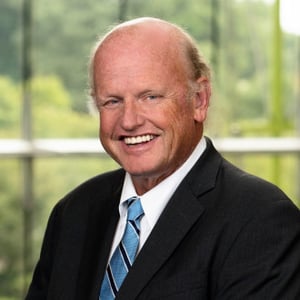
In his 35 years at the Justice Department and in private practice, Mike Carvin was one of the leading appellate and trial lawyers challenging state and federal regulations on constitutional and statutory grounds, with 10 Supreme Court arguments and numerous high-profile victories. In addition to his numerous cases in the United States Supreme Court, he argued in virtually every federal appeals court. His major cases include the recent constitutional challenge to the Affordable Care Act and the decisions invalidating Sarbanes-Oxley's accounting board, preventing the Justice Department from obtaining monetary relief against the tobacco industry under RICO, overturning the federal government's plan to statistically adjust the census, limiting the Justice Department's ability to create "majority-minority" districts, and upholding Proposition 209's ban on racial preferences in California.
Mike was one of the lead lawyers, and argued before the Florida Supreme Court, on behalf of George W. Bush in the 2000 presidential election Florida recount controversy. He also has represented state governments, financial institutions, telecommunications, and energy companies in "takings," First Amendment, civil rights, and statutory challenges to federal government actions.
President, Constitutional Accountability Center
Doug is founder and President of the Constitutional Accountability Center (CAC), a think tank, law firm and action center dedicated to fulfilling the progressive promise of our Constitution's text and history. He previously founded and directed Community Rights Counsel (CRC), CAC's predecessor organization. Doug has represented clients in state and federal appellate courts around the country and he has co-authored more than a dozen briefs filed before the U.S. Supreme Court. He is co-author of three books and lead author of numerous reports and studies. He launched and helped direct (with Earthjustice) the Judging the Environment Project, a comprehensive effort to highlight the environmental stakes in the future of the U.S. Supreme Court and appointments to the federal bench. Doug has appeared on television programs including Nightline, 20/20, Fox News Sunday, and World News Tonight, and radio broadcasts on NPR, CBS News, and Air America. His academic writings have appeared scholarly journals including the Virginia Law Review. His commentary has run in the New Republic, the American Prospect, Slate, and dozens of major papers including the Washington Post, USA Today, and the Los Angeles Times. Doug is a blogger on Huffington Post. Doug received his undergraduate and law degrees from the University of Virginia.
McSweeney, Crump Childress & Temple
Mr. McSweeney is engaged primarily in the practice of civil litigation. He has represented a wide range of parties during his decades of practice, including individuals, governmental bodies, civic organizations and business entities, both large and small. The matters that he has litigated have included constitutional, land use, environmental, antitrust, election and commercial law issues, among others.
His experience as a litigator has taken him to trial and appellate courts throughout Virginia and numerous other states and the District of Columbia. He has been a member of the Supreme Court of the United States since 1974, and has represented numerous clients in that Court.
He has served on numerous corporate boards. Mr. McSweeney has also been recognized by Virginia Business Magazine as one of Virginia's "Legal Elite" for 2007 in Civil Litigation and by Virgina Super Lawyers as a "Top 50 Super Lawyer" in General Litigation for 2009 and as a "Top 10 Super Lawyer" in Political Law for 2010.
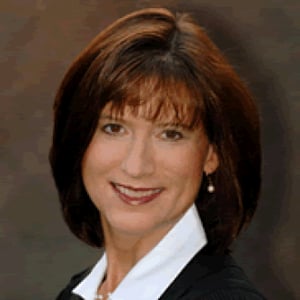
Judge, United States Court of Appeals, Seventh Circuit
Judge Sykes was nominated to the Seventh Circuit by President George W. Bush and confirmed by the Senate in 2004. Prior to her appointment to the federal bench, Judge Sykes served as a justice on the Wisconsin Supreme Court. Governor Tommy G. Thompson appointed her in September 1999 to fill a mid-term vacancy on the state supreme court, and she was elected to a full ten-year term in April 2000. From 1992-1999, Judge Sykes served on the state trial bench in Milwaukee County (elected in 1992 and re-elected in 1998). From 1985-1992, Judge Sykes practiced law with the Milwaukee firm of Whyte & Hirschboeck, S.C., and from 1984-1985, was a law clerk to Federal Judge Terence T. Evans.
Born and raised in the Milwaukee area, Judge Sykes earned a bachelor’s degree in journalism from Northwestern University in 1980 and a law degree from Marquette University Law School in 1984. Between college and law school, Judge Sykes worked as a reporter for The Milwaukee Journal.
Judge Sykes has two sons.
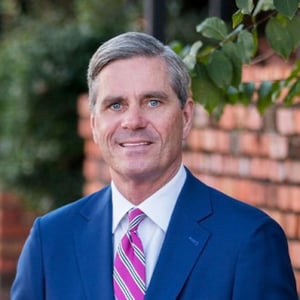
Shareholder, Beasley, Allen, Crow, Methvin, Portis & Miles, PC
Mr. Vance, a trial attorney from Montgomery, Alabama, is a specialist in the Consumer Fraud division of Beasley, Allen, Crow, Methvin, Portis & Miles, PC. He acts in behalf of individuals and small businesses against insurance companies and various other entities within the insurance industry.
Before coming to Beasley Allen, Mr. Vance was a partner at the Montgomery-based firm of Hawthorne, Hawthorne & Vance.
At AAJ, Mr. Vance serves on the Public Affairs Committee and formerly served a two-year term as a member of the Board of Directors for the Trial Lawyers for Public Justice, a national organization designed to promote a fair and impartial judicial system for all.
Mr. Vance has served as Vice President of the Montgomery County Bar Association and Treasurer of the Alabama Trial Lawyers Association. He was the president of the Young Lawyer's section of the Montgomery County Bar Association and a member of the Board of Directors of the Montgomery County Bar Association.
Mr. Vance attended the Jones School of Law at Faulkner University where he was elected president of the Student Bar Association and received the Advocacy Award as the outstanding graduate of his class in 1992. He also helped found the Jones School of Law Future Trial Lawyers Association. He received his undergraduate degree from Troy State University in 1987.
David and Mary Harrison Distinguished Professor of Law Emeritus, University of Virginia School of Law
Lillian BeVier taught constitutional law (with special emphasis on First Amendment issues), intellectual property (trademark, copyright), real property and torts from 1973-2010 at the Law School, and now teaches a January Term course on judicial philosophy.
At Stanford Law School, BeVier was revising editor for the Stanford Law Review and a member of the Order of the Coif. Before coming to Virginia, she was associate professor of law at the University of Santa Clara Law School; practiced law with Spaeth Blase Valentine & Klein in Palo Alto, Calif.; served as research associate to Professor William F. Baxter at Stanford University Law School, working on the FAA-ABA study of the legal aspects of airport noise and the sonic boom; and was assistant to the general secretary and assistant staff legal counsel for Stanford University.
BeVier received the University of Virginia Alumni Association Distinguished Professor Award in 2006. The Raven Society elected her to membership in 1993 and honored her with the faculty award in 2010. She delivered the Henry Miller Memorial Lecture at Georgia State Law School in 2005, the Coen Memorial Lecture at the University of Colorado Law School in 2000, and the David C. Baum Lecture on Civil Rights and Civil Liberties at the University of Illinois Law School in 1996. In 1999, at the invitation of the Supreme Court Historical Society, she spoke to the Society on Free Expression in the Warren and Burger Courts. Suffolk University awarded her an honorary S.J.D. degree in 1998. In the fall of 2003, she was a visiting scholar at the National Constitution Center in Philadelphia.
Having been nominated by President Bush and confirmed by the Senate in 2003, she served as vice-chair of the Board of Directors of the Legal Services Corporation until 2009. She serves on the national Board of Visitors of the Federalist Society. Within the Charlottesville community, BeVier has served as chair of the Board of Trustees of St. Anne’s-Belfield School and of the Martha Jefferson Hospital. She is currently chair of the board of the Martha Jefferson Health Services Corporation and of Piedmont CASA (Court-Appointed Special Advocates).
In his 35 years at the Justice Department and in private practice, Mike Carvin was one of the leading appellate and trial lawyers challenging state and federal regulations on constitutional and statutory grounds, with 10 Supreme Court arguments and numerous high-profile victories. In addition to his numerous cases in the United States Supreme Court, he argued in virtually every federal appeals court. His major cases include the recent constitutional challenge to the Affordable Care Act and the decisions invalidating Sarbanes-Oxley's accounting board, preventing the Justice Department from obtaining monetary relief against the tobacco industry under RICO, overturning the federal government's plan to statistically adjust the census, limiting the Justice Department's ability to create "majority-minority" districts, and upholding Proposition 209's ban on racial preferences in California.
Mike was one of the lead lawyers, and argued before the Florida Supreme Court, on behalf of George W. Bush in the 2000 presidential election Florida recount controversy. He also has represented state governments, financial institutions, telecommunications, and energy companies in "takings," First Amendment, civil rights, and statutory challenges to federal government actions.
President, Constitutional Accountability Center
Doug is founder and President of the Constitutional Accountability Center (CAC), a think tank, law firm and action center dedicated to fulfilling the progressive promise of our Constitution's text and history. He previously founded and directed Community Rights Counsel (CRC), CAC's predecessor organization. Doug has represented clients in state and federal appellate courts around the country and he has co-authored more than a dozen briefs filed before the U.S. Supreme Court. He is co-author of three books and lead author of numerous reports and studies. He launched and helped direct (with Earthjustice) the Judging the Environment Project, a comprehensive effort to highlight the environmental stakes in the future of the U.S. Supreme Court and appointments to the federal bench. Doug has appeared on television programs including Nightline, 20/20, Fox News Sunday, and World News Tonight, and radio broadcasts on NPR, CBS News, and Air America. His academic writings have appeared scholarly journals including the Virginia Law Review. His commentary has run in the New Republic, the American Prospect, Slate, and dozens of major papers including the Washington Post, USA Today, and the Los Angeles Times. Doug is a blogger on Huffington Post. Doug received his undergraduate and law degrees from the University of Virginia.
McSweeney, Crump Childress & Temple
Mr. McSweeney is engaged primarily in the practice of civil litigation. He has represented a wide range of parties during his decades of practice, including individuals, governmental bodies, civic organizations and business entities, both large and small. The matters that he has litigated have included constitutional, land use, environmental, antitrust, election and commercial law issues, among others.
His experience as a litigator has taken him to trial and appellate courts throughout Virginia and numerous other states and the District of Columbia. He has been a member of the Supreme Court of the United States since 1974, and has represented numerous clients in that Court.
He has served on numerous corporate boards. Mr. McSweeney has also been recognized by Virginia Business Magazine as one of Virginia's "Legal Elite" for 2007 in Civil Litigation and by Virgina Super Lawyers as a "Top 50 Super Lawyer" in General Litigation for 2009 and as a "Top 10 Super Lawyer" in Political Law for 2010.
Judge, United States Court of Appeals, Seventh Circuit
Judge Sykes was nominated to the Seventh Circuit by President George W. Bush and confirmed by the Senate in 2004. Prior to her appointment to the federal bench, Judge Sykes served as a justice on the Wisconsin Supreme Court. Governor Tommy G. Thompson appointed her in September 1999 to fill a mid-term vacancy on the state supreme court, and she was elected to a full ten-year term in April 2000. From 1992-1999, Judge Sykes served on the state trial bench in Milwaukee County (elected in 1992 and re-elected in 1998). From 1985-1992, Judge Sykes practiced law with the Milwaukee firm of Whyte & Hirschboeck, S.C., and from 1984-1985, was a law clerk to Federal Judge Terence T. Evans.
Born and raised in the Milwaukee area, Judge Sykes earned a bachelor’s degree in journalism from Northwestern University in 1980 and a law degree from Marquette University Law School in 1984. Between college and law school, Judge Sykes worked as a reporter for The Milwaukee Journal.
Judge Sykes has two sons.
Shareholder, Beasley, Allen, Crow, Methvin, Portis & Miles, PC
Mr. Vance, a trial attorney from Montgomery, Alabama, is a specialist in the Consumer Fraud division of Beasley, Allen, Crow, Methvin, Portis & Miles, PC. He acts in behalf of individuals and small businesses against insurance companies and various other entities within the insurance industry.
Before coming to Beasley Allen, Mr. Vance was a partner at the Montgomery-based firm of Hawthorne, Hawthorne & Vance.
At AAJ, Mr. Vance serves on the Public Affairs Committee and formerly served a two-year term as a member of the Board of Directors for the Trial Lawyers for Public Justice, a national organization designed to promote a fair and impartial judicial system for all.
Mr. Vance has served as Vice President of the Montgomery County Bar Association and Treasurer of the Alabama Trial Lawyers Association. He was the president of the Young Lawyer's section of the Montgomery County Bar Association and a member of the Board of Directors of the Montgomery County Bar Association.
Mr. Vance attended the Jones School of Law at Faulkner University where he was elected president of the Student Bar Association and received the Advocacy Award as the outstanding graduate of his class in 1992. He also helped found the Jones School of Law Future Trial Lawyers Association. He received his undergraduate degree from Troy State University in 1987.

Laurence A. Tisch Professor of Law and Director, Classical Liberal Institute, New York University School of Law; Director, Classical Liberal Institute, Civitas Institute University of Texas at Austin
Richard A. Epstein is the inaugural Laurence A. Tisch Professor of Law at NYU School of Law. Prior to his joining the faculty, he was a visiting law professor at NYU from 2007 through 2009. He served as the Peter and Kirstin Bedford Senior Fellow at the Hoover Institution from 2000 to 2024. Since 2024 to the present he is a senior lecturer at the Civitas Institute at the University of Texas—Austin. Epstein is also the James Parker Hall Distinguished Service Professor of Law Emeritus and a senior lecturer at the University of Chicago. His initial law school appointment was at the University of Southern California from 1968 to 1972. Epstein received an LL.D., h.c. from the University of Ghent, 2003. He has been a member of the American Academy of Arts and Sciences since 1985 and was a Senior Fellow of the Center for Clinical Medical Ethics at the University of Chicago Division of Biological Sciences, also from 1983. to 2022 He served as editor of the Journal of Legal Studies from 1981 to 1991, and of the Journal of Law and Economics from 1991-2001. From 2001 to 2010 he was a director of the John M. Olin Program in Law and Economics at the University of Chicago.
His newest book, The Myth of Birthright Citizenship: What the Fourteenth Amendment Really Says was published in 2026 (Encounter Books). Prior to that he has published many books including, The Dubious Morality of the Modern Administrative State (Roman & Littlefield 2020).Earlier he published th Classical Liberal Constitution: The Uncertain Quest for Limited Government (Harvard 2014) iHis previous books include Design for Liberty: Private Property, Public Administration and the Rule of Law (Harvard 2011); The Case Against the Employee Free Choice Act (Hoover 2009); Supreme Neglect: How to Revive the Constitutional Protection of Property Rights (Oxford 2008); Antitrust Decrees in Theory and Practice: Why Less is More (AEI 2007); Overdose: How Excessive Government Regulation Stifles Pharmaceutical Innovation (Yale University Press. 2006); How Progressives Rewrote the Constitution (Cato 2006); Cases and Materials on Torts (Aspen Law & Business; 8th ed. 2004); Skepticism and Freedom: A Modern Case for Classical Liberalism (University of Chicago, 2003); Torts (Aspen Law & Business 1999); Principles for a Free Society: Reconciling Individual Liberty with the Common Good (Perseus Books, 1998): Mortal Peril: Our Inalienable Rights to Health Care (Addison-Wesley, 1997); Simple Rules for a Complex World (Harvard, 1995); Bargaining With the State (Princeton, 1993); Forbidden Grounds: The Case Against Employment Discrimination Laws (Harvard , 1992); Takings: Private Property and the Power of Eminent Domain (Harvard, 1985); and Modern Products Liability Law (Greenwood Press, 1980). He has also edited(with Catherine M. Sharkey) Cases and Materials on the Law of Torts (10th edition 2012).
Professor Epstein has written numerous articles on a wide range of legal and interdisciplinary subjects. He has taught courses in administrative law, antitrust law, civil procedure, communications, constitutional law, contracts, corporations, criminal law, employment discrimination law, environmental law, food and drug law health law and policy, legal history, labor law, property, real estate development and finance, jurisprudence, labor law; land use planning, patents, individual, estate and corporate taxation, Roman Law; torts, and workers' compensation.
Professor Epstein also writes a regular column for Civitas Institute, which also sponsors his podcast, The Libertarian with Charles C.W. Cooke, and Law Talk, with Cooke and John Yoo. He also does a podcast with John Batchelor. And appears regularly on the Freedom File with Judge Andrew Napolitano.
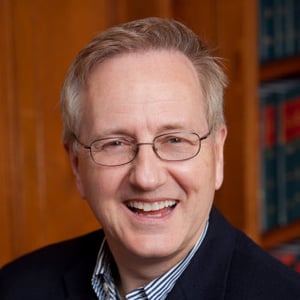
Alexander M. Bickel Professor of Public Law, Yale Law School
Degrees from Davidson College, B.A. summa cum laude, 1973; Harvard University, M.A., 1974; Yale Law School, J.D, 1978. Clerked for Edward Weinfeld, 1978-79; Attorney at Shea & Gardner, 1979-82; Law Professor since 1982, tenured at Georgetown and Yale, visiting professor at Stanford, NYU, Toronto, Harvard, Columbia, Penn, Fordham, Vanderbilt. Author of casebooks on legislation and sexuality, gender and law, as well as monographs on statutory interpretation and the rights of sexual and gender minorities. Author of dozens of articles, by one empirical count a top ten most cited law professors.
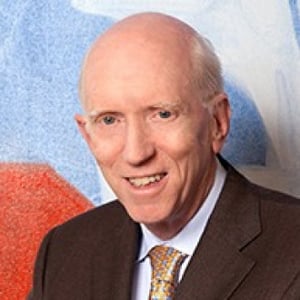
Partner, Friedman Kaplan Seiler & Adelman LLP
The Honorable Robert S. Smith (Ret.) is head of the firm’s appellate practice, and focuses on trials and appeals. Judge Smith joined Friedman Kaplan following his retirement as Associate Judge of the New York State Court of Appeals, New York’s highest court, where he served for more than a decade. During his time on the bench, he wrote scores of opinions and became well known for his judicial scholarship, insight, and intellectual rigor.
Prior to his time on the Court of Appeals, Judge Smith practiced law in New York City, and was a partner with Paul, Weiss, Rifkind, Wharton & Garrison for over 25 years. He has argued dozens of appeals before the federal and New York appellate courts, and two appeals before the United States Supreme Court. His trial experience in complex commercial cases is also extensive. He is a Fellow of the American College of Trial Lawyers.
Since joining Friedman Kaplan, Judge Smith has been active primarily in appeals, trial-level commercial litigation, expert witness testimony, and alternative dispute resolution.

Former President & CEO, The Federalist Society for Law and Public Policy Studies
Eugene B. Meyer, former President and CEO of the Federalist Society, has served as Executive Director, CEO, and/or President of the organization for more than 40 years. He is responsible for shepherding the organization from a small group of law students to a community of 90,000 lawyers, law students, academics, judges, and others interested in the rule of law. The Society now includes a Student Chapter at nearly every ABA-accredited law school in the country and Lawyers Chapters in 220 major cities across the nation. Gene earned his B.A. in history at Yale in 1975 and his M.A. in political science from the London School of Economics in 1976. Gene currently serves on the boards of the U.S. Chess Center, the Holman Foundation, the Sarah Scaife Foundation, and the advisory board of the Adam Smith Society. He holds the title of International Chess Master.
Laurence A. Tisch Professor of Law and Director, Classical Liberal Institute, New York University School of Law; Director, Classical Liberal Institute, Civitas Institute University of Texas at Austin
Richard A. Epstein is the inaugural Laurence A. Tisch Professor of Law at NYU School of Law. Prior to his joining the faculty, he was a visiting law professor at NYU from 2007 through 2009. He served as the Peter and Kirstin Bedford Senior Fellow at the Hoover Institution from 2000 to 2024. Since 2024 to the present he is a senior lecturer at the Civitas Institute at the University of Texas—Austin. Epstein is also the James Parker Hall Distinguished Service Professor of Law Emeritus and a senior lecturer at the University of Chicago. His initial law school appointment was at the University of Southern California from 1968 to 1972. Epstein received an LL.D., h.c. from the University of Ghent, 2003. He has been a member of the American Academy of Arts and Sciences since 1985 and was a Senior Fellow of the Center for Clinical Medical Ethics at the University of Chicago Division of Biological Sciences, also from 1983. to 2022 He served as editor of the Journal of Legal Studies from 1981 to 1991, and of the Journal of Law and Economics from 1991-2001. From 2001 to 2010 he was a director of the John M. Olin Program in Law and Economics at the University of Chicago.
His newest book, The Myth of Birthright Citizenship: What the Fourteenth Amendment Really Says was published in 2026 (Encounter Books). Prior to that he has published many books including, The Dubious Morality of the Modern Administrative State (Roman & Littlefield 2020).Earlier he published th Classical Liberal Constitution: The Uncertain Quest for Limited Government (Harvard 2014) iHis previous books include Design for Liberty: Private Property, Public Administration and the Rule of Law (Harvard 2011); The Case Against the Employee Free Choice Act (Hoover 2009); Supreme Neglect: How to Revive the Constitutional Protection of Property Rights (Oxford 2008); Antitrust Decrees in Theory and Practice: Why Less is More (AEI 2007); Overdose: How Excessive Government Regulation Stifles Pharmaceutical Innovation (Yale University Press. 2006); How Progressives Rewrote the Constitution (Cato 2006); Cases and Materials on Torts (Aspen Law & Business; 8th ed. 2004); Skepticism and Freedom: A Modern Case for Classical Liberalism (University of Chicago, 2003); Torts (Aspen Law & Business 1999); Principles for a Free Society: Reconciling Individual Liberty with the Common Good (Perseus Books, 1998): Mortal Peril: Our Inalienable Rights to Health Care (Addison-Wesley, 1997); Simple Rules for a Complex World (Harvard, 1995); Bargaining With the State (Princeton, 1993); Forbidden Grounds: The Case Against Employment Discrimination Laws (Harvard , 1992); Takings: Private Property and the Power of Eminent Domain (Harvard, 1985); and Modern Products Liability Law (Greenwood Press, 1980). He has also edited(with Catherine M. Sharkey) Cases and Materials on the Law of Torts (10th edition 2012).
Professor Epstein has written numerous articles on a wide range of legal and interdisciplinary subjects. He has taught courses in administrative law, antitrust law, civil procedure, communications, constitutional law, contracts, corporations, criminal law, employment discrimination law, environmental law, food and drug law health law and policy, legal history, labor law, property, real estate development and finance, jurisprudence, labor law; land use planning, patents, individual, estate and corporate taxation, Roman Law; torts, and workers' compensation.
Professor Epstein also writes a regular column for Civitas Institute, which also sponsors his podcast, The Libertarian with Charles C.W. Cooke, and Law Talk, with Cooke and John Yoo. He also does a podcast with John Batchelor. And appears regularly on the Freedom File with Judge Andrew Napolitano.
Alexander M. Bickel Professor of Public Law, Yale Law School
Degrees from Davidson College, B.A. summa cum laude, 1973; Harvard University, M.A., 1974; Yale Law School, J.D, 1978. Clerked for Edward Weinfeld, 1978-79; Attorney at Shea & Gardner, 1979-82; Law Professor since 1982, tenured at Georgetown and Yale, visiting professor at Stanford, NYU, Toronto, Harvard, Columbia, Penn, Fordham, Vanderbilt. Author of casebooks on legislation and sexuality, gender and law, as well as monographs on statutory interpretation and the rights of sexual and gender minorities. Author of dozens of articles, by one empirical count a top ten most cited law professors.
Partner, Friedman Kaplan Seiler & Adelman LLP
The Honorable Robert S. Smith (Ret.) is head of the firm’s appellate practice, and focuses on trials and appeals. Judge Smith joined Friedman Kaplan following his retirement as Associate Judge of the New York State Court of Appeals, New York’s highest court, where he served for more than a decade. During his time on the bench, he wrote scores of opinions and became well known for his judicial scholarship, insight, and intellectual rigor.
Prior to his time on the Court of Appeals, Judge Smith practiced law in New York City, and was a partner with Paul, Weiss, Rifkind, Wharton & Garrison for over 25 years. He has argued dozens of appeals before the federal and New York appellate courts, and two appeals before the United States Supreme Court. His trial experience in complex commercial cases is also extensive. He is a Fellow of the American College of Trial Lawyers.
Since joining Friedman Kaplan, Judge Smith has been active primarily in appeals, trial-level commercial litigation, expert witness testimony, and alternative dispute resolution.
Former President & CEO, The Federalist Society for Law and Public Policy Studies
Eugene B. Meyer, former President and CEO of the Federalist Society, has served as Executive Director, CEO, and/or President of the organization for more than 40 years. He is responsible for shepherding the organization from a small group of law students to a community of 90,000 lawyers, law students, academics, judges, and others interested in the rule of law. The Society now includes a Student Chapter at nearly every ABA-accredited law school in the country and Lawyers Chapters in 220 major cities across the nation. Gene earned his B.A. in history at Yale in 1975 and his M.A. in political science from the London School of Economics in 1976. Gene currently serves on the boards of the U.S. Chess Center, the Holman Foundation, the Sarah Scaife Foundation, and the advisory board of the Adam Smith Society. He holds the title of International Chess Master.
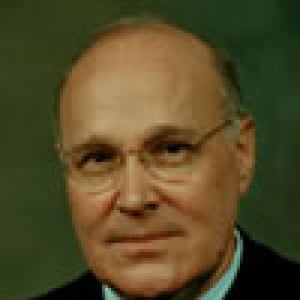
United States Court of Appeals, Second Circuit
Dennis Jacobs is the Chief Judge of the United States Court of Appeals for the Second Circuit. He became Chief Judge on October 1, 2006. At the time of his appointment in 1992, he was a partner in the New York law firm of Simpson Thacher & Bartlett.
Judge Jacobs received his B.A. degree from Queens College of the City University of New York in 1964; his M.A. degree from New York University in 1965; and his J.D. degree from the New York University School of Law in 1973.
Judge Jacobs was a lecturer in the English Department of Queens College of the City University of New York from 1967 until 1969. He was in private practice from 1973 with the New York law firm of Simpson, Thacher & Bartlett, serving as a partner there from 1980 until his judicial appointment.
In 1997-2004, Judge Jacobs was a member of the Committee on Judicial Resources of the Judicial Conference of the United States; starting in 1999 he was chair of that committee.
Judge Jacobs is a native of New York City.
Former President & CEO, The Federalist Society for Law and Public Policy Studies
Eugene B. Meyer, former President and CEO of the Federalist Society, has served as Executive Director, CEO, and/or President of the organization for more than 40 years. He is responsible for shepherding the organization from a small group of law students to a community of 90,000 lawyers, law students, academics, judges, and others interested in the rule of law. The Society now includes a Student Chapter at nearly every ABA-accredited law school in the country and Lawyers Chapters in 220 major cities across the nation. Gene earned his B.A. in history at Yale in 1975 and his M.A. in political science from the London School of Economics in 1976. Gene currently serves on the boards of the U.S. Chess Center, the Holman Foundation, the Sarah Scaife Foundation, and the advisory board of the Adam Smith Society. He holds the title of International Chess Master.
United States Court of Appeals, Second Circuit
Dennis Jacobs is the Chief Judge of the United States Court of Appeals for the Second Circuit. He became Chief Judge on October 1, 2006. At the time of his appointment in 1992, he was a partner in the New York law firm of Simpson Thacher & Bartlett.
Judge Jacobs received his B.A. degree from Queens College of the City University of New York in 1964; his M.A. degree from New York University in 1965; and his J.D. degree from the New York University School of Law in 1973.
Judge Jacobs was a lecturer in the English Department of Queens College of the City University of New York from 1967 until 1969. He was in private practice from 1973 with the New York law firm of Simpson, Thacher & Bartlett, serving as a partner there from 1980 until his judicial appointment.
In 1997-2004, Judge Jacobs was a member of the Committee on Judicial Resources of the Judicial Conference of the United States; starting in 1999 he was chair of that committee.
Judge Jacobs is a native of New York City.
Former President & CEO, The Federalist Society for Law and Public Policy Studies
Eugene B. Meyer, former President and CEO of the Federalist Society, has served as Executive Director, CEO, and/or President of the organization for more than 40 years. He is responsible for shepherding the organization from a small group of law students to a community of 90,000 lawyers, law students, academics, judges, and others interested in the rule of law. The Society now includes a Student Chapter at nearly every ABA-accredited law school in the country and Lawyers Chapters in 220 major cities across the nation. Gene earned his B.A. in history at Yale in 1975 and his M.A. in political science from the London School of Economics in 1976. Gene currently serves on the boards of the U.S. Chess Center, the Holman Foundation, the Sarah Scaife Foundation, and the advisory board of the Adam Smith Society. He holds the title of International Chess Master.
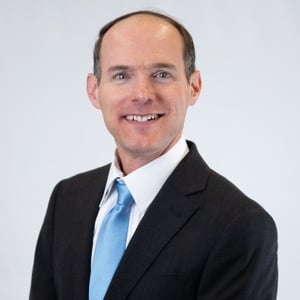
Associate Professor & Director, Constitutional Government Initiative, Wheatley Institute, Brigham Young University
James C. Phillips is the Constitutional Government Initiative Director and an associate professor at BYU’s Wheatley Institute. He is also a fellow with the UC-Berkeley School of Law’s Public Law and Policy Program and an academic affiliate with the D.C.-based law firm Schaerr|Jaffe. His scholarship has been cited by judges around the country, including at the U.S. Supreme Court, and has been covered in various media outlets, including the New York Times Magazine, USA Today, Reuters, CNN, and Fox News. He is a member of the Executive Committee of the Federalist Society's Religious Liberty Practice Group and the J. Reuben Clark Law Society Religious Liberty Committee.
Prior to joining Wheatley, Phillips was associate professor of law at Chapman University’s Fowler School of Law, where he taught Constitutional Law, Religion and the Constitution, Civil Procedure, Family Law, and Professional Responsibility and was named 1L Professor of the Year. Dr. Phillips has taught Administrative Law at BYU’s J. Reuben Clark Law School, where he also helped conceive and design the Corpus of Founding-Era American English. He was also a Non-resident Fellow with Stanford Law School’s Constitutional Law Center.
Dr. Phillips has published dozens of academic articles, primarily in law journals, but also communications, business, and history journals. His longer pieces have been published in, for example, the University of Pennsylvania Law Review, the Southern California Law Review, and the Harvard Journal of Law and Public Policy, and his shorter articles have been published in journals such as the Yale Law Journal Forum and the Duke Law Journal Online. Dr. Phillips has also written op-eds on constitutional issues for Newsweek, The Atlantic, the Los Angeles Times, the Orange County Register, Deseret News, and National Review.
Prior to his university posts, Dr. Phillips practiced law as a Constitutional Law Fellow for the Becket Fund for Religious Liberty and an associate for Kirton | McConkie. He has worked on dozens of cases at the U.S. Supreme Court, as well as cases in federal and state courts throughout the country. He is a member of the bar in Utah and D.C. He clerked for Judge Thomas B. Griffith on the U.S. Court of Appeal for the D.C. Circuit and for Justice Thomas R. Lee on the Utah Supreme Court. Dr. Phillips earned his JD, Order of the Coif, from UC-Berkeley’s School of Law, where he was a member of the California Law Review. He also has a PhD in Jurisprudence & Social Policy from UC-Berkeley, an M.A. in Mass Communication from BYU, and a B.A. in History from Arizona State University.

Senior Fellow and Director of Constitutional Studies, Manhattan Institute
Ilya Shapiro is a senior fellow and director of constitutional studies at the Manhattan Institute and a contributing editor of City Journal. Previously he was executive director and senior lecturer at the Georgetown Center for the Constitution, and before that a vice president of the Cato Institute.
Shapiro is the author of Lawless: The Miseducation of America’s Elites (2025) and Supreme Disorder: Judicial Nominations and the Politics of America’s Highest Court (2020), coauthor of Religious Liberties for Corporations? (2014), and editor of 11 volumes of the Cato Supreme Court Review (2008-18). He has contributed to a variety of academic, popular, and professional publications, including the Wall Street Journal, Harvard Journal of Law & Public Policy, Washington Post, Los Angeles Times, USA Today, National Review, and Newsweek. He also regularly provides commentary for various media outlets, writes the Shapiro’s Gavel newsletter on Substack, and once appeared on the Colbert Report.
Shapiro has testified many times before Congress and state legislatures and has filed more than 500 amicus curiae “friend of the court” briefs in the Supreme Court. He lectures regularly on behalf of the Federalist Society, is a member of the board of fellows of the Jewish Policy Center, was an inaugural Washington Fellow at the National Review Institute, and has been an adjunct law professor at the George Washington University and University of Mississippi. He is also the chairman of the board of advisers of the Mississippi Justice Institute, a barrister in the Edward Coke Appellate Inn of Court, and a former member of the Virginia Advisory Committee to the U.S. Commission on Civil Rights.
Earlier in his career, Shapiro was a special assistant/adviser to the Multi-National Force in Iraq on rule-of-law issues and practiced at Patton Boggs and Cleary Gottlieb. Before entering private practice, he clerked for Judge E. Grady Jolly of the U.S. Court of Appeals for the Fifth Circuit. He holds an AB from Princeton University, an MSc from the London School of Economics, and a JD from the University of Chicago Law School.
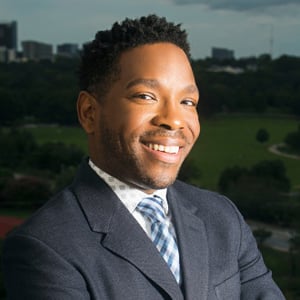
Professor of Law, Stanford University
Fred Smith Jr., JD ’07, is a Professor of Law at Stanford Law School and a leading scholar of the federal courts. His work on abstention, governmental immunities, and the allocation of power between state and federal courts has shaped contemporary debates over federal jurisdiction. This work has recovered histories that field had forgotten, and centered people the field’s doctrines had rendered invisible. He co-authors Federal Courts in Context (with Erwin Chemerinsky, Seth Davis, and Norman Spaulding) and Constitutional Torts, now in its sixth edition (with Sheldon Nahmod, Tom Eaton, Noah Smith-Drelich, and Michael Wells). He is also an important voice in the growing field of posthumous legal interests, where he created the first law school course of its kind.
His scholarship has appeared in the Harvard Law Review, Yale Law Journal, Stanford Law Review, Columbia Law Review, California Law Review, Michigan Law Review, New York University Law Review, and University of Chicago Law Review, among others. He lectures on these subjects across the United States and internationally, including in Istanbul, Shanghai, and Warsaw, and is regularly consulted as an expert by major media outlets, including CNN, CBS News, MSNBC, NPR, Time, The New York Times, and The Washington Post.
Smith clerked for Judge Myron Thompson (M.D. Ala.), Judge Barrington D. Parker Jr. (2d Cir.), and Justice Sonia Sotomayor (U.S. Supreme Court). He has held faculty positions at Berkeley Law and Emory Law and has been a visiting professor at the University of Chicago, Columbia, and Yale. At Emory, he was named Outstanding Professor of the Year in 2019, 2022, and 2023.
Smith serves as Board Chair of Lambda Legal, the nation’s oldest and largest legal organization dedicated to the civil rights of LGBTQ people. He also serves as an Associate Reporter for the American Law Institute’s Restatement of Constitutional Torts.

Federalism: Is There Any Remaining Limit to Federal Power?
Kenneth T. Cuccinelli, John C. Eastman, Jeffrey Rosen, Jeffrey S. Sutton
2010 National Lawyers Convention
Prof. John C. Eastman, Donald P. Kennedy Chair in Law, Director, Center for Constitutional Jurisprudence,...
Civil Rights: Immigration, the Arizona Statute, and E Pluribus Unum
Roger B. Clegg, James C. Ho, Kris W. Kobach, Margaret D. Stock
2010 National Lawyers Convention
Mr. Roger Clegg, President and General Counsel, Center for Equal Opportunity Hon. Kris W. Kobach, Daniel...
Civil Rights: Immigration, the Arizona Statute, and E Pluribus Unum
Roger B. Clegg, James C. Ho, Kris W. Kobach, Margaret D. Stock
2010 National Lawyers Convention
Mr. Roger Clegg, President and General Counsel, Center for Equal Opportunity Hon. Kris W. Kobach, Daniel...
Showcase Panel IV: Ideas for Structural Change: Term Limits, Reviving the Right to Civil Jury Trial, Moving Administrative Law Judges to Article III, and Others
Lillian R. BeVier, Michael A. Carvin, Douglas T. Kendall, Patrick McSweeney, Diane S. Sykes, Gibson Vance
2010 National Lawyers Convention
Are there structural ways that are practically plausible to limit or reduce the power of...
Showcase Panel IV: Ideas for Structural Change: Term Limits, Reviving the Right to Civil Jury Trial, Moving Administrative Law Judges to Article III, and Others
Lillian R. BeVier, Michael A. Carvin, Douglas T. Kendall, Patrick McSweeney, Diane S. Sykes, Gibson Vance
2010 National Lawyers Convention
Are there structural ways that are practically plausible to limit or reduce the power of...
Third Annual Rosenkranz Debate and Luncheon
Richard A. Epstein, William N. Eskridge, Robert S. Smith, Eugene B. Meyer
2010 National Lawyers Convention
A Debate on the Constitutionality of Proposition 8 Prof. Richard A. Epstein, Laurence A. Tisch...
Third Annual Rosenkranz Debate and Luncheon
Richard A. Epstein, William N. Eskridge, Robert S. Smith, Eugene B. Meyer
2010 National Lawyers Convention
A Debate on the Constitutionality of Proposition 8 Prof. Richard A. Epstein, Laurence A. Tisch...
10th Annual Barbara K. Olson Memorial Lecture
Dennis Jacobs, Eugene B. Meyer
2010 National Lawyers Convention
On September 11, 2001, at the age of 45 and at the height of her...
10th Annual Barbara K. Olson Memorial Lecture
Dennis Jacobs, Eugene B. Meyer
2010 National Lawyers Convention
On September 11, 2001, at the age of 45 and at the height of her...
The Impact of Judicial Activism on the Moral Character of Citizens
James C. Phillips, Ilya Shapiro, Fred Smith
UC Berkeley Student Chapter
On October 28, 2010, the UC Berkeley Student Chapter of the Federalist Society hosted this debate...