
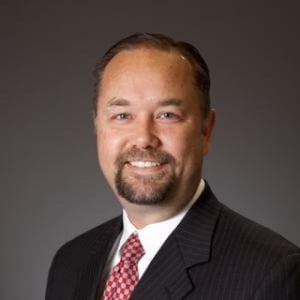
Senior Counsel, Director of Center for Academic Freedom, Alliance Defending Freedom
Tyson Langhofer serves as senior counsel and director of the Center for Academic Freedom with Alliance Defending Freedom.
Langhofer represents students and faculty at public high schools and colleges in defending their First Amendment rights. For example, in Denton v. Hecht, he successfully defended a Florida State University student after he was removed as Student Senate President simply for sharing his Catholic views in a private group chat. In Cross v. Loudoun County Public Schools, he successfully defended an elementary school gym teacher after the school suspended him for peacefully sharing his views on a proposed policy at a public school board meeting.
Langhofer has extensive experience in civil litigation and constitutional law. Before joining ADF, Langhofer was a partner with Stinson LLP, where he worked as a commercial litigation attorney from 2000 until he joined ADF in 2015.
Langhofer is Peer Review Rated AV® Preeminent in Martindale-Hubbell. He is a sought-after speaker on legal and cultural issues. He regularly comments on free speech issues in television, radio, and print media. He has appeared as a guest and written pieces for numerous major media outlets, including The Washington Post, The Washington Times, USA Today, Townhall, The Federalist, and The Daily Wire.
Langhofer earned his Juris Doctor from Regent University School of Law in 1999, graduating cum laude. Langhofer is admitted to practice in multiple states, the Supreme Court, and numerous federal district and appellate courts.
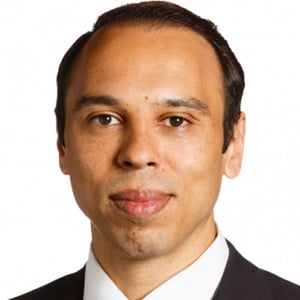
Vice President of Domestic and Economic Policy, The Heritage Foundation
Roger Severino is Vice President of Economic and Domestic Policy, and the Joseph C. and Elizabeth A. Anderlik Fellow at The Heritage Foundation.
Severino is a national authority on civil rights, conscience and religious freedom, the administrative state, and information privacy, particularly as applied to health care law and policy. Find his tweets at @RogerSeverino_.
Severino spearheaded the HHS Accountability Project while a Senior Fellow at EPPC from 2021 to 2023. Previously, Severino was Director of HHS’ Office for Civil Rights, where he led a team of over 250 staff enforcing our nation’s civil rights, conscience and religious freedom, and health information privacy laws. He served from 2017 to 2021 and was the longest-serving OCR director of the past three decades.
Prior to joining HHS, Severino served for two years as Director of the DeVos Center for Religion and Civil Society at Heritage, advocating for life, family, and religious-freedom policies. Before that, he was a trial attorney for seven years at the U.S. Department of Justice’s Civil Rights Division where he enforced the Fair Housing Act and the Civil Rights Act of 1964. Severino started his legal career at the Becket Fund for Religious Liberty, where he was Legal Counsel and Chief Operations Officer and defended the rights of people of all faiths under federal and international law.
Severino has been profiled in The New York Times, The Atlantic, The Wall Street Journal, and The Hill and has appeared on Fox News, CNN, MSNBC, NPR, and PBS, among others. In 2020, The New York Times dubbed him and his wife Carrie, “a conservative power couple” to be reckoned with.
Severino holds a JD from Harvard Law School, a master’s degree in public policy, with highest distinction, from Carnegie Mellon University, and a bachelor’s degree in business from the University of Southern California. He was appointed by President Trump to the Administrative Conference of the United States and is a member of the District of Columbia and the Commonwealth of Virginia bars.
As OCR director, Severino founded the federal government’s first division dedicated exclusively to conscience and religious freedom compliance and enforcement. He enforced the Weldon Amendment for the first time against a state (California) after it coerced families and religious organizations into paying for abortion insurance coverage, leading to a $200 million federal funding disallowance. He also enforced laws protecting pro-life pregnancy resource centers from discrimination by states hostile to their message and enforced laws prohibiting forced participation in abortions by medical professionals.
With respect to civil rights, Severino protected older persons and people with disabilities from being denied life-saving care due to discriminatory “quality of life” judgments, especially during the COVID-19 pandemic. He also achieved a landmark sexual harassment resolution with Michigan State University in the wake of the Larry Nassar sexual assault scandal and protected the rights of non-English speakers to have equal access to health and human services.
In the area of health privacy, he secured the largest HIPAA monetary settlement in history and achieved the largest number of enforcement resolutions both in a single year and across four years. He also facilitated the transformational use of Skype, Zoom, and Facetime for delivery of telehealth during the COVID-19 pandemic and beyond.
His regulatory reform activities resulted in a comprehensive conscience protection regulation and proposed a life-affirming disability rights regulation. He achieved regulatory savings of $3.6 billion in health care industry costs over five years and identified and proposed an additional $3.2 billion in cost savings from the repeal of ineffective and unnecessary regulatory burdens.
Severino is a Spanish speaker who teaches salsa and west coast swing in his spare time.
Senior Counsel, Director of Center for Academic Freedom, Alliance Defending Freedom
Tyson Langhofer serves as senior counsel and director of the Center for Academic Freedom with Alliance Defending Freedom.
Langhofer represents students and faculty at public high schools and colleges in defending their First Amendment rights. For example, in Denton v. Hecht, he successfully defended a Florida State University student after he was removed as Student Senate President simply for sharing his Catholic views in a private group chat. In Cross v. Loudoun County Public Schools, he successfully defended an elementary school gym teacher after the school suspended him for peacefully sharing his views on a proposed policy at a public school board meeting.
Langhofer has extensive experience in civil litigation and constitutional law. Before joining ADF, Langhofer was a partner with Stinson LLP, where he worked as a commercial litigation attorney from 2000 until he joined ADF in 2015.
Langhofer is Peer Review Rated AV® Preeminent in Martindale-Hubbell. He is a sought-after speaker on legal and cultural issues. He regularly comments on free speech issues in television, radio, and print media. He has appeared as a guest and written pieces for numerous major media outlets, including The Washington Post, The Washington Times, USA Today, Townhall, The Federalist, and The Daily Wire.
Langhofer earned his Juris Doctor from Regent University School of Law in 1999, graduating cum laude. Langhofer is admitted to practice in multiple states, the Supreme Court, and numerous federal district and appellate courts.
Vice President of Domestic and Economic Policy, The Heritage Foundation
Roger Severino is Vice President of Economic and Domestic Policy, and the Joseph C. and Elizabeth A. Anderlik Fellow at The Heritage Foundation.
Severino is a national authority on civil rights, conscience and religious freedom, the administrative state, and information privacy, particularly as applied to health care law and policy. Find his tweets at @RogerSeverino_.
Severino spearheaded the HHS Accountability Project while a Senior Fellow at EPPC from 2021 to 2023. Previously, Severino was Director of HHS’ Office for Civil Rights, where he led a team of over 250 staff enforcing our nation’s civil rights, conscience and religious freedom, and health information privacy laws. He served from 2017 to 2021 and was the longest-serving OCR director of the past three decades.
Prior to joining HHS, Severino served for two years as Director of the DeVos Center for Religion and Civil Society at Heritage, advocating for life, family, and religious-freedom policies. Before that, he was a trial attorney for seven years at the U.S. Department of Justice’s Civil Rights Division where he enforced the Fair Housing Act and the Civil Rights Act of 1964. Severino started his legal career at the Becket Fund for Religious Liberty, where he was Legal Counsel and Chief Operations Officer and defended the rights of people of all faiths under federal and international law.
Severino has been profiled in The New York Times, The Atlantic, The Wall Street Journal, and The Hill and has appeared on Fox News, CNN, MSNBC, NPR, and PBS, among others. In 2020, The New York Times dubbed him and his wife Carrie, “a conservative power couple” to be reckoned with.
Severino holds a JD from Harvard Law School, a master’s degree in public policy, with highest distinction, from Carnegie Mellon University, and a bachelor’s degree in business from the University of Southern California. He was appointed by President Trump to the Administrative Conference of the United States and is a member of the District of Columbia and the Commonwealth of Virginia bars.
As OCR director, Severino founded the federal government’s first division dedicated exclusively to conscience and religious freedom compliance and enforcement. He enforced the Weldon Amendment for the first time against a state (California) after it coerced families and religious organizations into paying for abortion insurance coverage, leading to a $200 million federal funding disallowance. He also enforced laws protecting pro-life pregnancy resource centers from discrimination by states hostile to their message and enforced laws prohibiting forced participation in abortions by medical professionals.
With respect to civil rights, Severino protected older persons and people with disabilities from being denied life-saving care due to discriminatory “quality of life” judgments, especially during the COVID-19 pandemic. He also achieved a landmark sexual harassment resolution with Michigan State University in the wake of the Larry Nassar sexual assault scandal and protected the rights of non-English speakers to have equal access to health and human services.
In the area of health privacy, he secured the largest HIPAA monetary settlement in history and achieved the largest number of enforcement resolutions both in a single year and across four years. He also facilitated the transformational use of Skype, Zoom, and Facetime for delivery of telehealth during the COVID-19 pandemic and beyond.
His regulatory reform activities resulted in a comprehensive conscience protection regulation and proposed a life-affirming disability rights regulation. He achieved regulatory savings of $3.6 billion in health care industry costs over five years and identified and proposed an additional $3.2 billion in cost savings from the repeal of ineffective and unnecessary regulatory burdens.
Severino is a Spanish speaker who teaches salsa and west coast swing in his spare time.
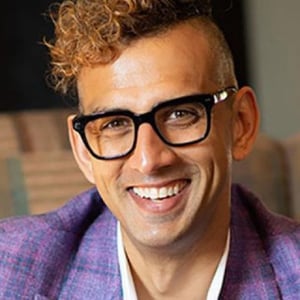
Pioneers Chair in Telecommunications, Penn State University
Dr. Christopher Ali is the Pioneers Chair in Telecommunications and a full professor of telecommunications in the Bellisario College. He is also an affiliate faculty with the College of Information, Science and Technology (IST) at Penn State. He holds a Ph.D. in communication studies from the Annenberg School for Communication at the University of Pennsylvania (2013). His research interests include media and telecommunications policy and regulation, broadband policy, critical political economy, critical geography, comparative media systems, qualitative research methods, media localism, and local news.
Ali uses critical, qualitative methods to research broadband policy, planning, deployment and digital equity in the United States. Presently, he has a series of projects dedicated to “broadband stories,” where he is researching how community-based stories can influence public policy. These projects form the basis of his forthcoming book, Where the wires end: Stories from the Digital Divide to be published in Spring 2027 with the University of Chicago Press. In 2026, Dr. Ali also completed a major grant funded research project for the Center for Rural Pennsylvania analyzing how the digital divide impacts rural first responders in the Commonwealth of Pennsylvania.
Dr. Ali is the author or editor of four books: "Public Service Media’s Contribution to Society"(Nordicom, 2023, with Prof. Dr. Manuel Puppis), "Farm Fresh Broadband: The Politics of Rural Connectivity" (MIT Press, 2021), "Media Localism: The Policies of Place" (University of Illinois Press, 2017), "Echoes of Gabriel Tarde: What we know better or different 100 years later" (USC Annenberg Press, 2014, with Drs. Elihu Katz and Joohan Kim).
Based on his expertise, Ali was called to testify before the Senate Commerce Committee in 2021 on broadband funding and policy programs. He has also briefed members of the House Democrats Task Force on Rural Broadband, the New York State Blue Ribbon Commission on Re-Imagining New York, the Federal Communications Commission, and has presented before numerous state and county governments.
Dr. Ali has published over two dozen peer reviewed articles in high-ranking academic journals including, The Journal of Communication, Communication Theory, Media Culture & Society, and Telecommunications Policy. His writing has also been published in Tech Policy Press, The New York Times, The Hill, Realtor Magazine, Law & Political Economy, Digital Beat, GovTech, Zocalo Public Square, the Canadian Broadcasting Corporation, Washington Monthly, Columbia Journalism Review, and The Conversation. He is a frequent press commentator on the subjects of broadband, media policy, and local news, with interviews in the Associated Press, Hollywood Reporter, Business Insider, Washington Post, Philadelphia Inquirer, Los Angeles Times, NPR, CNET, CBC, Bloomberg, and other major national and international news outlets.
Ali presently serves as the Associate Editor of the journal Communication Law & Policy. He also sits on the advisory board of the Centre County Film Festival.
Previously, he served as the Chair of the Communication Law and Policy Division of the International Communication Association (2021-2023) and was an advisor to the Virginia Joint Committee on Technology & Science. He has also served on the Federal Communication Commission’s Communication Equity and Diversity Council Working Group and was a board member of Charlottesville Tomorrow, a non-profit news organization in Charlottesville, Virginia.
Dr. Ali has held fellowships or grants from the Center for Rural Pennsylvania (2025), the Benton Institute for Broadband and Society (2019-2020), the Global Future Council of the World Economic Forum (2018), the Center for Advanced Research in Global Communications (CARGC) at the University of Pennsylvania (2017 & 2022), the Tow Center for Digital Journalism at Columbia University (2016-2017 & 2019-2021), the University of Fribourg in Fribourg Switzerland (2015), and the Social Sciences and Humanities Research Council of Canada (2011).
Ali is an award-winning scholar, having been honored with the 2024 Bellisario Alumni Association Teaching Excellence Award, the 2025 Dean’s Excellence Award for Research & Creative Accomplishment, and the 2025 Broadband Hero Award.
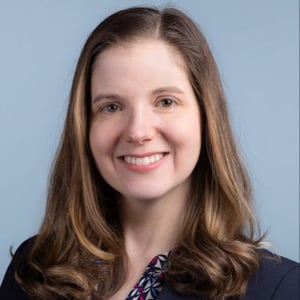
Vice President and Deputy Chief Counsel, U.S. Chamber Litigation Center, U.S. Chamber of Commerce
Jennifer B. Dickey is vice president and deputy chief counsel at the U.S. Chamber Litigation Center, the litigation arm of the U.S. Chamber of Commerce. Dickey handles a variety of litigation matters for the Chamber.
Dickey joined the Chamber following her service as Acting Assistant Attorney General and Principal Deputy Assistant Attorney General in the Civil Division at the U.S. Department of Justice. She also previously served as Deputy Associate Attorney General, providing strategic oversight of the Civil Division, Civil Rights Division, and Foreign Claims Settlement Commission, as well as Special Assistant to the President and Associate Counsel to the President. In the latter capacity, she provided legal advice on a wide array of executive actions and rulemakings, civil litigation, and judicial nominations.
Dickey also practiced law at Kirkland & Ellis LLP before her government service. She was a commercial and appellate litigator, representing businesses in federal and state courts.
Earlier in her career, Dickey served as a law clerk for the Honorable Clarence Thomas of the Supreme Court of the United States and the Honorable William H. Pryor Jr. of the United States Court of Appeals for the Eleventh Circuit.
Dickey earned her law degree magna cum laude from Duke University School of Law, where she was an Executive Editor of the Duke Law Journal, and her undergraduate degree magna cum laude from Dartmouth College.
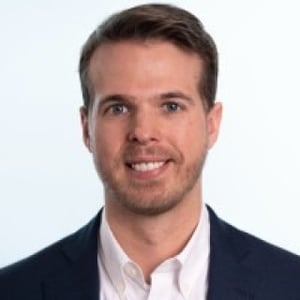
Counsel, U.S. House Energy and Commerce Committee
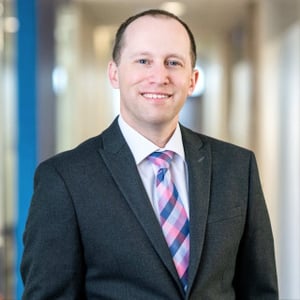
Partner, Wilkinson Barker Knauer, LLP
Dan leverages a deep understanding of telecommunications regulation and the broader legal landscape to help clients achieve their business goals. He provides practical and creative advice, develops persuasive policy advocacy, and represents clients in court appeals of agency matters. In an era in which courts play a larger role than ever in shaping regulation, Dan’s mix of legal depth, regulatory knowledge, and policymaking experience make him stand out.
His practice encompasses federal and state telecommunications regulation, emerging Internet issues, funding programs, online privacy frameworks, and consumer protection laws. He co-teaches a telecommunications law course at Georgetown Law School.
Prior to joining WBK, Dan spent eight years in leadership positions in the Federal Communications Commission’s Wireline Competition Bureau. There, Dan guided net neutrality and broadband infrastructure proceedings, implementation of caller ID authentication and the Robocall Mitigation Database, transaction reviews, and many other agency actions. He is especially proud of his contributions to establishing 988 as the three-digit code for the national suicide prevention hotline.
Today, courts make many of the most important decisions regarding agencies, and Dan regularly represents clients in court appeals concerning agency matters. He and the WBK team prevailed before the U.S. Supreme Court on behalf of industry associations in FCC v. Consumers’ Research, which affirmed the constitutionality of the Universal Service Fund.
Dan is a graduate of Yale University and Harvard Law School. Outside of work, Dan enjoys spending time with his kids, baking bread and cooking, playing card and board games, attempting to play sports, and science fiction/fantasy.
Pioneers Chair in Telecommunications, Penn State University
Dr. Christopher Ali is the Pioneers Chair in Telecommunications and a full professor of telecommunications in the Bellisario College. He is also an affiliate faculty with the College of Information, Science and Technology (IST) at Penn State. He holds a Ph.D. in communication studies from the Annenberg School for Communication at the University of Pennsylvania (2013). His research interests include media and telecommunications policy and regulation, broadband policy, critical political economy, critical geography, comparative media systems, qualitative research methods, media localism, and local news.
Ali uses critical, qualitative methods to research broadband policy, planning, deployment and digital equity in the United States. Presently, he has a series of projects dedicated to “broadband stories,” where he is researching how community-based stories can influence public policy. These projects form the basis of his forthcoming book, Where the wires end: Stories from the Digital Divide to be published in Spring 2027 with the University of Chicago Press. In 2026, Dr. Ali also completed a major grant funded research project for the Center for Rural Pennsylvania analyzing how the digital divide impacts rural first responders in the Commonwealth of Pennsylvania.
Dr. Ali is the author or editor of four books: "Public Service Media’s Contribution to Society"(Nordicom, 2023, with Prof. Dr. Manuel Puppis), "Farm Fresh Broadband: The Politics of Rural Connectivity" (MIT Press, 2021), "Media Localism: The Policies of Place" (University of Illinois Press, 2017), "Echoes of Gabriel Tarde: What we know better or different 100 years later" (USC Annenberg Press, 2014, with Drs. Elihu Katz and Joohan Kim).
Based on his expertise, Ali was called to testify before the Senate Commerce Committee in 2021 on broadband funding and policy programs. He has also briefed members of the House Democrats Task Force on Rural Broadband, the New York State Blue Ribbon Commission on Re-Imagining New York, the Federal Communications Commission, and has presented before numerous state and county governments.
Dr. Ali has published over two dozen peer reviewed articles in high-ranking academic journals including, The Journal of Communication, Communication Theory, Media Culture & Society, and Telecommunications Policy. His writing has also been published in Tech Policy Press, The New York Times, The Hill, Realtor Magazine, Law & Political Economy, Digital Beat, GovTech, Zocalo Public Square, the Canadian Broadcasting Corporation, Washington Monthly, Columbia Journalism Review, and The Conversation. He is a frequent press commentator on the subjects of broadband, media policy, and local news, with interviews in the Associated Press, Hollywood Reporter, Business Insider, Washington Post, Philadelphia Inquirer, Los Angeles Times, NPR, CNET, CBC, Bloomberg, and other major national and international news outlets.
Ali presently serves as the Associate Editor of the journal Communication Law & Policy. He also sits on the advisory board of the Centre County Film Festival.
Previously, he served as the Chair of the Communication Law and Policy Division of the International Communication Association (2021-2023) and was an advisor to the Virginia Joint Committee on Technology & Science. He has also served on the Federal Communication Commission’s Communication Equity and Diversity Council Working Group and was a board member of Charlottesville Tomorrow, a non-profit news organization in Charlottesville, Virginia.
Dr. Ali has held fellowships or grants from the Center for Rural Pennsylvania (2025), the Benton Institute for Broadband and Society (2019-2020), the Global Future Council of the World Economic Forum (2018), the Center for Advanced Research in Global Communications (CARGC) at the University of Pennsylvania (2017 & 2022), the Tow Center for Digital Journalism at Columbia University (2016-2017 & 2019-2021), the University of Fribourg in Fribourg Switzerland (2015), and the Social Sciences and Humanities Research Council of Canada (2011).
Ali is an award-winning scholar, having been honored with the 2024 Bellisario Alumni Association Teaching Excellence Award, the 2025 Dean’s Excellence Award for Research & Creative Accomplishment, and the 2025 Broadband Hero Award.
Vice President and Deputy Chief Counsel, U.S. Chamber Litigation Center, U.S. Chamber of Commerce
Jennifer B. Dickey is vice president and deputy chief counsel at the U.S. Chamber Litigation Center, the litigation arm of the U.S. Chamber of Commerce. Dickey handles a variety of litigation matters for the Chamber.
Dickey joined the Chamber following her service as Acting Assistant Attorney General and Principal Deputy Assistant Attorney General in the Civil Division at the U.S. Department of Justice. She also previously served as Deputy Associate Attorney General, providing strategic oversight of the Civil Division, Civil Rights Division, and Foreign Claims Settlement Commission, as well as Special Assistant to the President and Associate Counsel to the President. In the latter capacity, she provided legal advice on a wide array of executive actions and rulemakings, civil litigation, and judicial nominations.
Dickey also practiced law at Kirkland & Ellis LLP before her government service. She was a commercial and appellate litigator, representing businesses in federal and state courts.
Earlier in her career, Dickey served as a law clerk for the Honorable Clarence Thomas of the Supreme Court of the United States and the Honorable William H. Pryor Jr. of the United States Court of Appeals for the Eleventh Circuit.
Dickey earned her law degree magna cum laude from Duke University School of Law, where she was an Executive Editor of the Duke Law Journal, and her undergraduate degree magna cum laude from Dartmouth College.
Counsel, U.S. House Energy and Commerce Committee
Partner, Wilkinson Barker Knauer, LLP
Dan leverages a deep understanding of telecommunications regulation and the broader legal landscape to help clients achieve their business goals. He provides practical and creative advice, develops persuasive policy advocacy, and represents clients in court appeals of agency matters. In an era in which courts play a larger role than ever in shaping regulation, Dan’s mix of legal depth, regulatory knowledge, and policymaking experience make him stand out.
His practice encompasses federal and state telecommunications regulation, emerging Internet issues, funding programs, online privacy frameworks, and consumer protection laws. He co-teaches a telecommunications law course at Georgetown Law School.
Prior to joining WBK, Dan spent eight years in leadership positions in the Federal Communications Commission’s Wireline Competition Bureau. There, Dan guided net neutrality and broadband infrastructure proceedings, implementation of caller ID authentication and the Robocall Mitigation Database, transaction reviews, and many other agency actions. He is especially proud of his contributions to establishing 988 as the three-digit code for the national suicide prevention hotline.
Today, courts make many of the most important decisions regarding agencies, and Dan regularly represents clients in court appeals concerning agency matters. He and the WBK team prevailed before the U.S. Supreme Court on behalf of industry associations in FCC v. Consumers’ Research, which affirmed the constitutionality of the Universal Service Fund.
Dan is a graduate of Yale University and Harvard Law School. Outside of work, Dan enjoys spending time with his kids, baking bread and cooking, playing card and board games, attempting to play sports, and science fiction/fantasy.
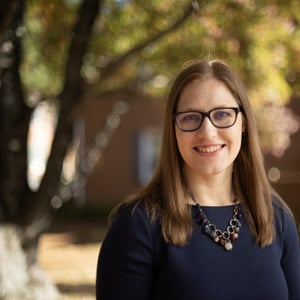
Fellow, Ethics and Public Policy Center
Rachel N. Morrison is an attorney and Fellow at the Ethics and Public Policy Center, where she directs EPPC’s Administrative State Accountability Project. Her legal and policy work focuses on religious liberty, health care rights of conscience, the right to life, nondiscrimination, and civil rights.
Before joining EPPC, Ms. Morrison served as an Attorney Advisor and Special Assistant to General Counsel Sharon Fast Gustafson at the Equal Employment Opportunity Commission (EEOC), where she focused on religious discrimination issues and was a member of the General Counsel’s Religious Discrimination Work Group. Before that, she served as Litigation Counsel for Americans United for Life and as a Constitutional Law Fellow at the Becket Fund for Religious Liberty, defending the right to life and religious freedom for all. She also clerked on the U.S. Court of Federal Claims.
Ms. Morrison’s legal analysis has been published in the Seton Hall Law Review, the Pepperdine Law Review, and the Ave Maria Law Review, as well as various other print media outlets.
Ms. Morrison earned her J.D., magna cum laude, from the Pepperdine University School of Law, where she was elected to the Order of the Coif and served as an editor for the Pepperdine Law Review and the Harvard Journal of Law & Public Policy. She received her B.A. in Mathematics and Speech Communication, summa cum laude, from Whitworth University (Spokane, WA). She is a member of the District of Columbia and the Washington State bars.
Ms. Morrison lives with her husband and daughter in Virginia.
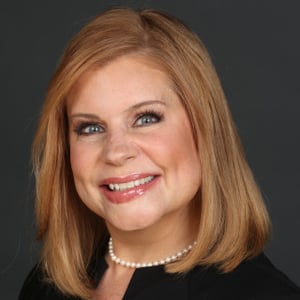
Vice President & Senior Legal Fellow, Defending Education
Sarah Parshall Perry is vice president and senior legal fellow at Defending Education.
Before coming to Defending Education, Sarah served as a Senior Legal Fellow for the Edwin Meese III Center for Legal and Judicial Studies, part of the Institute for Constitutional Government at Heritage, where her work centered on civil rights and the proper role of the courts.
Sarah joined Heritage after serving as Senior Counsel to the Assistant Secretary for Civil Rights at the U.S. Department of Education where she focused on policy reform, technical guidance, and the Office for Civil Rights’ (OCR) annual report to Congress. While at OCR, she was appointed by the Acting Assistant Secretary to co-chair the Employment Engagement, Diversity, & Inclusion Council and, in coordination with the Deputy Assistant Secretary for Enforcement oversee the hiring of dozens of attorneys for OCR’s 12 regional offices nationwide. Prior to her tenure at the Department of Education, she spent six years at the Family Research Council in Washington, D.C. where she was Senior Fellow for Education Reform and later, became the regular substitute host for the “Washington Watch” radio show. Her work at the Family Research Council also included the building and oversight of multiple policy coalitions geared toward the fight against antisemitism in academia, curbing tech censorship, and protecting religious liberty.
Before joining FRC, Sarah was in-house counsel and director of development for a Baltimore advertising agency, providing management of all new business transactions from pitch to contract execution for the multi-million-dollar enterprise. She began her practice at the litigation firm of Simms Showers, LLP where her work included Title VII employment discrimination, maritime/admiralty, and False Claims Act (“Qui Tam”) law. Sarah has a law degree from the University of Virginia School of Law, where she was an editor of the Virginia Journal of International Law, a recipient of the American Jurisprudence award, a Phi Delta Phi honor society member, and a student practitioner in the appellate litigation clinic where she argued before the 4th Circuit Court of Appeals. She holds a B.S. in Journalism with honors from Liberty University.
Her commentary and analysis have appeared in media outlets across the country, including the AP, BBC, Fox News, NPR, The Hill, Washington Post, Washington Times, and the New York Times. She is the mother of three children, and the author of just as many books on the trials and triumphs of parenting children on the autism spectrum. Sarah is a member of the Kirkpatrick Society at the American Enterprise Institute, and makes her home north of Baltimore, Maryland.
Fellow, Ethics and Public Policy Center
Rachel N. Morrison is an attorney and Fellow at the Ethics and Public Policy Center, where she directs EPPC’s Administrative State Accountability Project. Her legal and policy work focuses on religious liberty, health care rights of conscience, the right to life, nondiscrimination, and civil rights.
Before joining EPPC, Ms. Morrison served as an Attorney Advisor and Special Assistant to General Counsel Sharon Fast Gustafson at the Equal Employment Opportunity Commission (EEOC), where she focused on religious discrimination issues and was a member of the General Counsel’s Religious Discrimination Work Group. Before that, she served as Litigation Counsel for Americans United for Life and as a Constitutional Law Fellow at the Becket Fund for Religious Liberty, defending the right to life and religious freedom for all. She also clerked on the U.S. Court of Federal Claims.
Ms. Morrison’s legal analysis has been published in the Seton Hall Law Review, the Pepperdine Law Review, and the Ave Maria Law Review, as well as various other print media outlets.
Ms. Morrison earned her J.D., magna cum laude, from the Pepperdine University School of Law, where she was elected to the Order of the Coif and served as an editor for the Pepperdine Law Review and the Harvard Journal of Law & Public Policy. She received her B.A. in Mathematics and Speech Communication, summa cum laude, from Whitworth University (Spokane, WA). She is a member of the District of Columbia and the Washington State bars.
Ms. Morrison lives with her husband and daughter in Virginia.
Vice President & Senior Legal Fellow, Defending Education
Sarah Parshall Perry is vice president and senior legal fellow at Defending Education.
Before coming to Defending Education, Sarah served as a Senior Legal Fellow for the Edwin Meese III Center for Legal and Judicial Studies, part of the Institute for Constitutional Government at Heritage, where her work centered on civil rights and the proper role of the courts.
Sarah joined Heritage after serving as Senior Counsel to the Assistant Secretary for Civil Rights at the U.S. Department of Education where she focused on policy reform, technical guidance, and the Office for Civil Rights’ (OCR) annual report to Congress. While at OCR, she was appointed by the Acting Assistant Secretary to co-chair the Employment Engagement, Diversity, & Inclusion Council and, in coordination with the Deputy Assistant Secretary for Enforcement oversee the hiring of dozens of attorneys for OCR’s 12 regional offices nationwide. Prior to her tenure at the Department of Education, she spent six years at the Family Research Council in Washington, D.C. where she was Senior Fellow for Education Reform and later, became the regular substitute host for the “Washington Watch” radio show. Her work at the Family Research Council also included the building and oversight of multiple policy coalitions geared toward the fight against antisemitism in academia, curbing tech censorship, and protecting religious liberty.
Before joining FRC, Sarah was in-house counsel and director of development for a Baltimore advertising agency, providing management of all new business transactions from pitch to contract execution for the multi-million-dollar enterprise. She began her practice at the litigation firm of Simms Showers, LLP where her work included Title VII employment discrimination, maritime/admiralty, and False Claims Act (“Qui Tam”) law. Sarah has a law degree from the University of Virginia School of Law, where she was an editor of the Virginia Journal of International Law, a recipient of the American Jurisprudence award, a Phi Delta Phi honor society member, and a student practitioner in the appellate litigation clinic where she argued before the 4th Circuit Court of Appeals. She holds a B.S. in Journalism with honors from Liberty University.
Her commentary and analysis have appeared in media outlets across the country, including the AP, BBC, Fox News, NPR, The Hill, Washington Post, Washington Times, and the New York Times. She is the mother of three children, and the author of just as many books on the trials and triumphs of parenting children on the autism spectrum. Sarah is a member of the Kirkpatrick Society at the American Enterprise Institute, and makes her home north of Baltimore, Maryland.
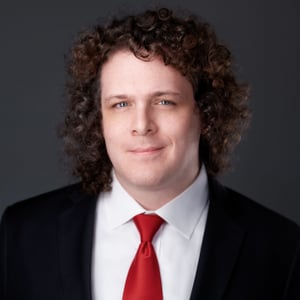
Professor of Law, South Texas College of Law Houston
Josh Blackman is a national thought leader on constitutional law and the United States Supreme Court. Josh’s work was quoted during two presidential impeachment trials. He has testified before Congress and advises federal and state lawmakers. Josh regularly appears on TV, including NBC, CBS, ABC, Fox, and the BBC. Josh is also a frequent guest on NPR and other syndicated radio programs. He has published commentaries in the New York Times, Wall Street Journal, Washington Post, and leading national publications.
Since 2012, Josh has served as a professor at the South Texas College of Law Houston. He holds the Centennial Chair of Constitutional Law. Josh is an Adjunct Fellow at the Manhattan Institute. Josh has written more than seven dozen law review articles that have been cited more than a thousand times. Josh was selected as the Jurist of the Year by the Texas Journal of Law & Public Policy, received the inaugural Meese III Originalism Award, and was awarded the Inaugural Joseph Story Award. Josh was selected by Forbes Magazine for the “30 Under 30” in Law and Policy. Josh is the President of the Harlan Institute, and founded FantasySCOTUS, the Internet’s Premier Supreme Court Fantasy League. He blogs at the Volokh Conspiracyand posts@JoshMBlackman.
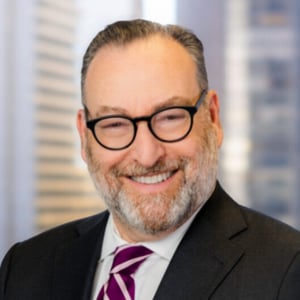
Founder, Chairman, and CEO, Louis D. Brandeis Center for Human Rights Under Law
Hon. Kenneth L. Marcus is an internationally recognized expert in civil and human rights, as well as a leader in the fight against anti-Semitism on and off university campuses. He is the Founder, Chairman, and CEO of The Louis D. Brandeis Center for Human Rights Under Law, the leading civil rights legal organization fighting against anti-Semitism. The New York Times has called him “The Man Who Helped Redefine Campus Anti-Semitism.” He been described, in that paper, as “the single most effective and respected force” to combat anti-Semitism.
During his public service career, Marcus served as Assistant U.S. Secretary of Education for Civil Rights; Staff Director at the U.S. Commission on Civil Rights; and General Deputy Assistant U.S. Secretary of Housing and Urban Development for Fair Housing and Equal Opportunity.
In academia, he serves as Professorial Lecturer in Law at George Washington University. He formerly held the Lillie and Nathan Ackerman Chair in Equality and Justice in America at the City University of New York’s Bernard M. Baruch College, served as Visiting Research Professor of Political Science at Yeshiva University, and was a Board of Visitors member George Mason University and Distinguished Senior Fellow at that university’s law school. He is a member of the editorial board of the Journal of Contemporary Antisemitism and previously served as Associate Editor of the Journal for the Study of Anti-Semitism.
Marcus is also author of The Definition of Anti-Semitism (Oxford University Press) and Jewish Identity and Civil Rights in America (Cambridge University Press). He has published widely in academic journals as well as in more popular venues such as The Wall Street Journal, Washington Post, Newsweek, USA Today, and Politico. He is a graduate of Williams College and the University of California at Berkeley School of Law.
Earlier in his career, he was a litigation partner in two major law firms, where he conducted complex commercial and constitutional litigation. He also serves as Chairman emeritus of the Executive Committee of the Federalist Society for Law & Public Policy Civil Rights Practice Group.
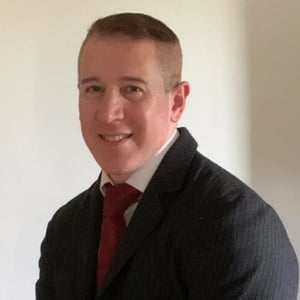
Associate Professor of Government; Pre-Law Advisor, Patrick Henry College
Professor of Law, South Texas College of Law Houston
Josh Blackman is a national thought leader on constitutional law and the United States Supreme Court. Josh’s work was quoted during two presidential impeachment trials. He has testified before Congress and advises federal and state lawmakers. Josh regularly appears on TV, including NBC, CBS, ABC, Fox, and the BBC. Josh is also a frequent guest on NPR and other syndicated radio programs. He has published commentaries in the New York Times, Wall Street Journal, Washington Post, and leading national publications.
Since 2012, Josh has served as a professor at the South Texas College of Law Houston. He holds the Centennial Chair of Constitutional Law. Josh is an Adjunct Fellow at the Manhattan Institute. Josh has written more than seven dozen law review articles that have been cited more than a thousand times. Josh was selected as the Jurist of the Year by the Texas Journal of Law & Public Policy, received the inaugural Meese III Originalism Award, and was awarded the Inaugural Joseph Story Award. Josh was selected by Forbes Magazine for the “30 Under 30” in Law and Policy. Josh is the President of the Harlan Institute, and founded FantasySCOTUS, the Internet’s Premier Supreme Court Fantasy League. He blogs at the Volokh Conspiracyand posts@JoshMBlackman.
Founder, Chairman, and CEO, Louis D. Brandeis Center for Human Rights Under Law
Hon. Kenneth L. Marcus is an internationally recognized expert in civil and human rights, as well as a leader in the fight against anti-Semitism on and off university campuses. He is the Founder, Chairman, and CEO of The Louis D. Brandeis Center for Human Rights Under Law, the leading civil rights legal organization fighting against anti-Semitism. The New York Times has called him “The Man Who Helped Redefine Campus Anti-Semitism.” He been described, in that paper, as “the single most effective and respected force” to combat anti-Semitism.
During his public service career, Marcus served as Assistant U.S. Secretary of Education for Civil Rights; Staff Director at the U.S. Commission on Civil Rights; and General Deputy Assistant U.S. Secretary of Housing and Urban Development for Fair Housing and Equal Opportunity.
In academia, he serves as Professorial Lecturer in Law at George Washington University. He formerly held the Lillie and Nathan Ackerman Chair in Equality and Justice in America at the City University of New York’s Bernard M. Baruch College, served as Visiting Research Professor of Political Science at Yeshiva University, and was a Board of Visitors member George Mason University and Distinguished Senior Fellow at that university’s law school. He is a member of the editorial board of the Journal of Contemporary Antisemitism and previously served as Associate Editor of the Journal for the Study of Anti-Semitism.
Marcus is also author of The Definition of Anti-Semitism (Oxford University Press) and Jewish Identity and Civil Rights in America (Cambridge University Press). He has published widely in academic journals as well as in more popular venues such as The Wall Street Journal, Washington Post, Newsweek, USA Today, and Politico. He is a graduate of Williams College and the University of California at Berkeley School of Law.
Earlier in his career, he was a litigation partner in two major law firms, where he conducted complex commercial and constitutional litigation. He also serves as Chairman emeritus of the Executive Committee of the Federalist Society for Law & Public Policy Civil Rights Practice Group.
Associate Professor of Government; Pre-Law Advisor, Patrick Henry College
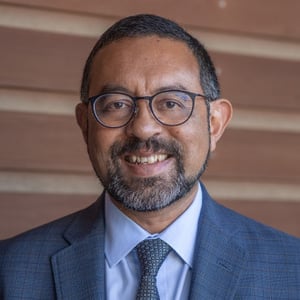
Boochever and Bird Distinguished Professor of Law, UC Davis School of Law
Ash Bhagwat joined the UC Davis School of Law faculty in 2011. Prior to joining UC Davis, he taught at UC Hastings College of the Law for seventeen years. Bhagwat is the author of The Myth of Rights, published by the Oxford University Press in 2010, as well as numerous books, articles, and book chapters on a wide variety of subjects, ranging from the structure of constitutional rights, to free speech law, to the California Electricity Crisis. Journals his articles have appeared in include the Yale Law Journal, the Supreme Court Review, the California Law Review, the Administrative Law Review, and the University of Illinois Law Review.
Bhagwat is a summa cum laude graduate of Yale University, where he received a B.A. with Honors in History. He is also a graduate of The University of Chicago Law School, where he served as Articles Editor of the University of Chicago Law Review. He then completed clerkships with Judge Richard A. Posner of the United States Court of Appeals for the Seventh Circuit, and Associate Justice Anthony M. Kennedy of the United States Supreme Court. Prior to joining the Hastings faculty, Bhagwat practiced appellate and regulatory law for two years in the Washington, D.C. offices of the Sidley & Austin law firm.
In May of 2011, Governor Jerry Brown appointed Bhagwat to serve on the Board of Governors of the California Independent System Operator, a public benefit corporation responsible for running the high-voltage electricity grid in California. In 2003, he was awarded the Rutter Award for Teaching Excellence at UC Hastings. Bhagwat is a member of the American Law Institute.
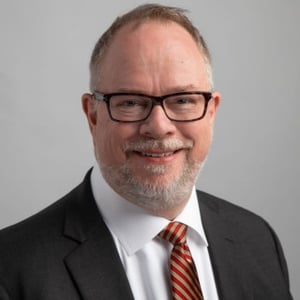
Managing Attorney of the Washington Office, Institute for Justice
William R. Maurer is the Managing Attorney of the Washington state office of the Institute for Justice, which engages in litigation in the areas of economic liberty, private property rights, educational choice, & freedom of speech.
Maurer is an advocate against the criminalization of poverty and the governmental use of the criminal and civil enforcement systems to raise revenue. He was lead counsel in a class action challenging the use of tickets to raise revenue in the city of Pagedale, Missouri. The suit resulted in a federal consent decree that reformed the city’s ticketing and municipal court system. He regularly speaks, teaches, and writes about the abuse of fines and fees in the criminal justice system. He was a participant in summits on taxation by citation put on by the White House and Department of Justice during the Obama Administration. His work on the issue includes serving as an advisory board member of the Fines and Fees Justice Center.
In addition to his work on criminal and civil justice reform, Maurer is a First Amendment litigator. In 2011, he successfully argued before the U.S. Supreme Court that Arizona’s punitive campaign financing regime was unconstitutional. Before the Washington Supreme Court, he successfully argued against efforts to classify radio commentary as a contribution under the state’s campaign finance law.
His cases and advocacy have been covered in the Washington Post, the New York Times, the Economist, the Wall Street Journal, and other major media outlets.
Maurer was named a “Washington Superlawyer” by Washington Law & Politics Magazine for several years. He is a chapter author in numerous legal reference works and has written several articles for law reviews and legal publications across the country.
Prior to joining IJ-WA, Maurer clerked for Washington Supreme Court Justice Richard Sanders and then practiced law at Perkins Coie LLP. Maurer received his law degree in 1994 from the University of Wisconsin – Madison, where he was an editor of the Wisconsin Law Review. He received his BA from Bard College in 1989.
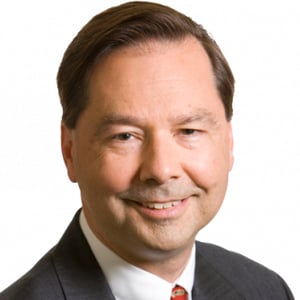
Senior Legal Fellow, Edwin Meese III Institute for the Rule of Law, Advancing American Freedom
Boochever and Bird Distinguished Professor of Law, UC Davis School of Law
Ash Bhagwat joined the UC Davis School of Law faculty in 2011. Prior to joining UC Davis, he taught at UC Hastings College of the Law for seventeen years. Bhagwat is the author of The Myth of Rights, published by the Oxford University Press in 2010, as well as numerous books, articles, and book chapters on a wide variety of subjects, ranging from the structure of constitutional rights, to free speech law, to the California Electricity Crisis. Journals his articles have appeared in include the Yale Law Journal, the Supreme Court Review, the California Law Review, the Administrative Law Review, and the University of Illinois Law Review.
Bhagwat is a summa cum laude graduate of Yale University, where he received a B.A. with Honors in History. He is also a graduate of The University of Chicago Law School, where he served as Articles Editor of the University of Chicago Law Review. He then completed clerkships with Judge Richard A. Posner of the United States Court of Appeals for the Seventh Circuit, and Associate Justice Anthony M. Kennedy of the United States Supreme Court. Prior to joining the Hastings faculty, Bhagwat practiced appellate and regulatory law for two years in the Washington, D.C. offices of the Sidley & Austin law firm.
In May of 2011, Governor Jerry Brown appointed Bhagwat to serve on the Board of Governors of the California Independent System Operator, a public benefit corporation responsible for running the high-voltage electricity grid in California. In 2003, he was awarded the Rutter Award for Teaching Excellence at UC Hastings. Bhagwat is a member of the American Law Institute.
Managing Attorney of the Washington Office, Institute for Justice
William R. Maurer is the Managing Attorney of the Washington state office of the Institute for Justice, which engages in litigation in the areas of economic liberty, private property rights, educational choice, & freedom of speech.
Maurer is an advocate against the criminalization of poverty and the governmental use of the criminal and civil enforcement systems to raise revenue. He was lead counsel in a class action challenging the use of tickets to raise revenue in the city of Pagedale, Missouri. The suit resulted in a federal consent decree that reformed the city’s ticketing and municipal court system. He regularly speaks, teaches, and writes about the abuse of fines and fees in the criminal justice system. He was a participant in summits on taxation by citation put on by the White House and Department of Justice during the Obama Administration. His work on the issue includes serving as an advisory board member of the Fines and Fees Justice Center.
In addition to his work on criminal and civil justice reform, Maurer is a First Amendment litigator. In 2011, he successfully argued before the U.S. Supreme Court that Arizona’s punitive campaign financing regime was unconstitutional. Before the Washington Supreme Court, he successfully argued against efforts to classify radio commentary as a contribution under the state’s campaign finance law.
His cases and advocacy have been covered in the Washington Post, the New York Times, the Economist, the Wall Street Journal, and other major media outlets.
Maurer was named a “Washington Superlawyer” by Washington Law & Politics Magazine for several years. He is a chapter author in numerous legal reference works and has written several articles for law reviews and legal publications across the country.
Prior to joining IJ-WA, Maurer clerked for Washington Supreme Court Justice Richard Sanders and then practiced law at Perkins Coie LLP. Maurer received his law degree in 1994 from the University of Wisconsin – Madison, where he was an editor of the Wisconsin Law Review. He received his BA from Bard College in 1989.
Senior Legal Fellow, Edwin Meese III Institute for the Rule of Law, Advancing American Freedom


Parental Rights and Public Schools: A Loudoun County Case Study
Tyson Langhofer, Ian Prior, Roger Severino
Public schools across the country are increasingly the site of debates over the role of...
Parental Rights and Public Schools: A Loudoun County Case Study
Tyson Langhofer, Ian Prior, Roger Severino
Public schools across the country are increasingly the site of debates over the role of...
Litigation Update: Minnesota Telecom Alliance v. FCC
Christopher Ali, Jennifer B. Dickey, Matthew Furlow, Daniel H. Kahn
The U.S. Court of Appeals for the Eighth Circuit recently vacated the Federal Communications Commission’s...
Litigation Update: Minnesota Telecom Alliance v. FCC
Christopher Ali, Jennifer B. Dickey, Matthew Furlow, Daniel H. Kahn
The U.S. Court of Appeals for the Eighth Circuit recently vacated the Federal Communications Commission’s...
From the Courthouse Steps: Little v. Hecox and West Virginia v. B.P.J.
Rachel N. Morrison, Sarah Parshall Perry
In the consolidated cases Little v. Hecox and West Virginia v. B.P.J., the Supreme Court...
From the Courthouse Steps: Little v. Hecox and West Virginia v. B.P.J.
Rachel N. Morrison, Sarah Parshall Perry
In the consolidated cases Little v. Hecox and West Virginia v. B.P.J., the Supreme Court...
No Enemies to the Right? Antisemitism and the Big Tent
Josh Blackman, Kenneth L. Marcus, Jesse Merriam
Following the October 2023 terrorist attacks in Israel, reports of antisemitism have risen across America....
No Enemies to the Right? Antisemitism and the Big Tent
Josh Blackman, Kenneth L. Marcus, Jesse Merriam
Following the October 2023 terrorist attacks in Israel, reports of antisemitism have risen across America....
Anonymity, Masking, and Civil Rights
Ashutosh Bhagwat, William R. Maurer, Hans A. Von Spakovsky
Since September 2025, California, Washington, and Oregon have barred federal agents from wearing masks. Other states...
Anonymity, Masking, and Civil Rights
Ashutosh Bhagwat, William R. Maurer, Hans A. Von Spakovsky
Since September 2025, California, Washington, and Oregon have barred federal agents from wearing masks. Other states...