
Can Social Media Companies Censor Lawmakers’ Accounts?
Two trends in social media law and policy are headed for conflict: Aggressive takedowns of...

The Regulatory Transparency Project was a nonprofit, nonpartisan effort dedicated to fostering discussion and a better understanding of regulatory policies.



Two trends in social media law and policy are headed for conflict: Aggressive takedowns of...

Matthew Feeney, Jennifer Hay, Jamil N. Jaffer, Margaret A. Peterlin
A Regulatory Transparency Project Webinar
In June, President Biden revoked a Trump-era executive order that sought to ban TikTok and...

A Regulatory Transparency Project Teleforum
The Bureau of Alcohol, Tobacco, Firearms, and Explosives (BATFE) in 2012 determined that forearm stabilizing...

Should “Big Tech” be required to contribute to the Universal Service Fund (USF) in order...
Lawrence Gostin, Luke A. Wake, Kimberly Hermann
Regulatory Transparency Project's Fourth Branch Podcast
In September 2020, the Centers for Disease Control and Prevention (CDC) issued its first nationwide...
Managing Partner, Boyden Gray PLLC
Michael Buschbacher is the managing partner of Boyden Gray PLLC. He represents public and private companies, trade associations, non-profits, and individuals in high-stakes litigation and administrative proceedings, with a particular focus on environmental and energy matters.
In addition to trial-level work, Mr. Buschbacher maintains an active appellate practice, both as merits counsel and as counsel for amici curiae. He has written amicus briefs quoted by the Seventh and Ninth Circuits. And his Supreme Court advocacy has been cited by The New Yorker, The New York Times, and E&E News. Mr. Buschbacher’s commentary on legal issues has been published in The Wall Street Journal, Newsweek, and The American Conservative.
Before joining the firm, Mr. Buschbacher served at the U.S. Department of Justice as counsel to the Assistant Attorney General for the Environment and Natural Resources Division. There, he advised senior Department leadership, served as the lead attorney on several lawsuits, and helped draft policy memoranda for the Department on the proper scope and procedure for environmental enforcement. Prior to serving in the government, Mr. Buschbacher was an associate in the D.C. office of Sidley Austin.
Mr. Buschbacher is a former clerk to Judge Alice M. Batchelder of the U.S. Court of Appeals for the Sixth Circuit and to Magistrate Judge Paul R. Cherry of the U.S. District Court for the Northern District of Indiana.
Mr. Buschbacher holds a B.A. in Music and Germanic Studies from Indiana University and a J.D., magna cum laude, from Notre Dame Law School.
Counsel, Sen. Schmitt and the Senate Judiciary Committee
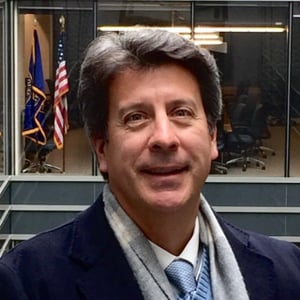
Senior Counsel, Committee on Oversight and Government Reform, U.S. House of Representatives
Daniel Flores is a Senior Counsel on the Republican staff of the Committee on Oversight and Government Reform, U.S. House of Representatives. Prior to his current position, he served in the House as Chief Counsel for the House Judiciary Committee's Subcommittee on Regulatory Reform, Commercial and Antitrust Law. Before coming to the House, he served as an Acting Associate Deputy General Counsel for the U.S. Environmental Protection Agency and in other roles in EPA's Office of General Counsel, as a Senior Trial Attorney for the U.S. Department of Justice, Environment and Natural Resources Division, and as an attorney in private practice in Washington, D.C. He serves as a House liaison to the Administrative Conference of the United States and has served on the Council of the American Bar Association’s Section on Administrative Law & Regulatory Practice.

Professor of Law, South Texas College of Law Houston
Josh Blackman is a national thought leader on constitutional law and the United States Supreme Court. Josh’s work was quoted during two presidential impeachment trials. He has testified before Congress and advises federal and state lawmakers. Josh regularly appears on TV, including NBC, CBS, ABC, Fox, and the BBC. Josh is also a frequent guest on NPR and other syndicated radio programs. He has published commentaries in the New York Times, Wall Street Journal, Washington Post, and leading national publications.
Since 2012, Josh has served as a professor at the South Texas College of Law Houston. He holds the Centennial Chair of Constitutional Law. Josh is an Adjunct Fellow at the Manhattan Institute. Josh has written more than seven dozen law review articles that have been cited more than a thousand times. Josh was selected as the Jurist of the Year by the Texas Journal of Law & Public Policy, received the inaugural Meese III Originalism Award, and was awarded the Inaugural Joseph Story Award. Josh was selected by Forbes Magazine for the “30 Under 30” in Law and Policy. Josh is the President of the Harlan Institute, and founded FantasySCOTUS, the Internet’s Premier Supreme Court Fantasy League. He blogs at the Volokh Conspiracyand posts@JoshMBlackman.
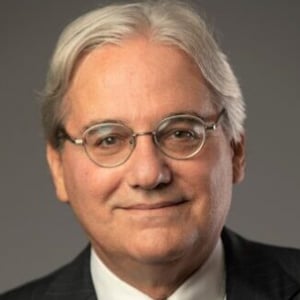
Clinical Professor of Law, Cornell Law School
William A. Jacobson is a Clinical Professor of Law and Director of the Securities Law Clinic.
He is a 1981 graduate of Hamilton College and a 1984 graduate of Harvard Law School. At Harvard he was Senior Editor of the Harvard International Law Journal and Director of Litigation for the Harvard Prison Legal Assistance Project.
Prior to joining the Cornell law faculty in 2007, Professor Jacobson had a highly successful civil litigation and arbitration practice in Providence, Rhode Island, concentrating in investment, employment, and business disputes in the securities industry, including many high profile cases reported in leading newspapers and magazines.
Professor Jacobson has argued cases in numerous federal and state courts, including the Courts of Appeal for the First, Fifth and Sixth Circuits, and the Rhode Island Supreme Court.
Professor Jacobson has a national reputation as a leading practitioner in securities arbitration. He was Treasurer, and is a former member of the Executive Committee and Board of Directors of the Public Investors Arbitration Bar Association, a professional organization of attorneys dedicated to protecting public investors. He frequently is quoted in national media on issues related to investment fraud and investor protection, and in the past has served as one of a small number of private practice attorneys who trained new arbitrators for the Financial Industry Regulatory Authority.
Professor Jacobson is co-author of the Securities Arbitration Desk Reference (Thomson-Reuters), updated annually.
Professor Jacobson also is the founder and publisher of Legal Insurrection, a popular politics and law website. He is frequently quoted in the media on political and legal topics, has authored many Op-Eds in major publications, and appears on television and radio to discuss politics and the law.
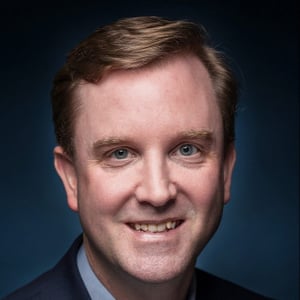
Vice President and Deputy Counsel, Wisconsin Institute for Law and Liberty
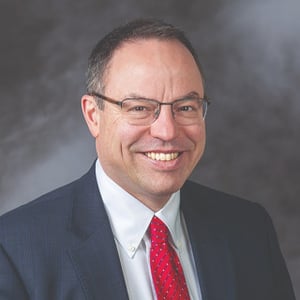
Professor of Law and J. Philip Johnson Faculty Fellow, University of North Dakota School of Law
Michael S. McGinniss is Professor of Law and J. Philip Johnson Faculty Fellow at the University of North Dakota School of Law, where he joined the faculty in 2010 and served as the Dean from 2019 to 2022. He chairs the executive committee for the Federalist Society's Practice Group on Professional Responsibility and Legal Education.
Before entering the legal academy, Professor McGinniss served for twelve years as a Disciplinary Counsel for the Supreme Court of Delaware. He currently teaches courses on Professional Responsibility, Advanced Legal Ethics, Civil Procedure, and Federal Courts. He also serves as Faculty Advisor for the North Dakota Law Review and the UND Law Federalist Society student chapter.
Professor McGinniss’ research and scholarship interests are wide-ranging and include lawyer and judicial ethics, lawyer discipline and regulation of the profession, constitutional law (especially First Amendment, separation of powers, and federalism), and cultural challenges faced by conservatives in the law schools and the legal profession. His most recent law review article, Declaring Independence to Secure Integrity: The Supreme Court Justices' Code of Conduct, was published in the Federalist Society Review. His article Expressing Conscience with Candor: Saint Thomas More and First Freedoms in the Legal Profession, was published in the Harvard Journal of Law & Public Policy.
Professor McGinniss has spoken to Federalist Society lawyer and student chapters across the country about judicial independence and ethics, especially relating to the federal courts and the United States Supreme Court Justices. In addition, he has spoken to several chapters about rising challenges to ideological diversity and targeting of conservative viewpoints in law schools and the legal profession. Although he is very pleased to speak on these and many other topics that may be of interest to lawyer and student chapters, in 2026-2027, he has particular interest in speaking on the topic “Lawyer Discipline as Political ‘Resistance’: Separation of Powers, Federalism, and the Rule of Law,” concerning his work-in-progress on the weaponization of professional disciplinary processes against conservative lawyers for political and ideological purposes.

Commissioner, U.S. Equal Employment Opportunity Commission

Founder, Chairman, and CEO, Louis D. Brandeis Center for Human Rights Under Law
Hon. Kenneth L. Marcus is an internationally recognized expert in civil and human rights, as well as a leader in the fight against anti-Semitism on and off university campuses. He is the Founder, Chairman, and CEO of The Louis D. Brandeis Center for Human Rights Under Law, the leading civil rights legal organization fighting against anti-Semitism. The New York Times has called him “The Man Who Helped Redefine Campus Anti-Semitism.” He been described, in that paper, as “the single most effective and respected force” to combat anti-Semitism.
During his public service career, Marcus served as Assistant U.S. Secretary of Education for Civil Rights; Staff Director at the U.S. Commission on Civil Rights; and General Deputy Assistant U.S. Secretary of Housing and Urban Development for Fair Housing and Equal Opportunity.
In academia, he serves as Professorial Lecturer in Law at George Washington University. He formerly held the Lillie and Nathan Ackerman Chair in Equality and Justice in America at the City University of New York’s Bernard M. Baruch College, served as Visiting Research Professor of Political Science at Yeshiva University, and was a Board of Visitors member George Mason University and Distinguished Senior Fellow at that university’s law school. He is a member of the editorial board of the Journal of Contemporary Antisemitism and previously served as Associate Editor of the Journal for the Study of Anti-Semitism.
Marcus is also author of The Definition of Anti-Semitism (Oxford University Press) and Jewish Identity and Civil Rights in America (Cambridge University Press). He has published widely in academic journals as well as in more popular venues such as The Wall Street Journal, Washington Post, Newsweek, USA Today, and Politico. He is a graduate of Williams College and the University of California at Berkeley School of Law.
Earlier in his career, he was a litigation partner in two major law firms, where he conducted complex commercial and constitutional litigation. He also serves as Chairman emeritus of the Executive Committee of the Federalist Society for Law & Public Policy Civil Rights Practice Group.
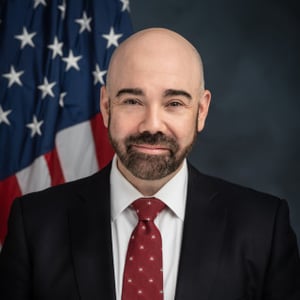
Assistant Secretary for Fair Housing and Equal Opportunity, United States Department of Housing and Urban Development
Craig Trainor is Assistant Secretary for Fair Housing and Equal Opportunity at the United States Department of Housing and Urban Development. President Trump nominated Mr. Trainor for this position on February 11, 2025, and the United States Senate confirmed him on October 7, 2025.
A “Day One” Trump-Vance Administration official, he previously served as Acting Assistant Secretary for Civil Rights and Principal Deputy Assistant Secretary for Civil Rights at the United States Department of Education, where he spearheaded the Department’s efforts to reorient America’s civil rights regime from an unjust spoils system to one that protects the rights of all Americans. Mr. Trainor’s February 14, 2025, “Dear Colleague” letter is widely considered the Trump Administration’s blueprint for enforcing civil rights laws and restoring the Constitution’s promise of equal protection.
Prior to serving in the Trump-Vance Administration, he was Senior Special Counsel with the United States House of Representatives Committee on the Judiciary under Chairman Jim Jordan (R-OH), and Senior Litigation Counsel with the America First Policy Institute under the Honorable Pam Bondi.
For over ten years, Mr. Trainor was a criminal defense and civil rights lawyer in New York City, litigating cases in New York state court and the United States District Court for the Southern and Eastern Districts of New York.
Prior to founding his law practice, he served as a New York City prosecutor, an associate attorney at a white collar criminal defense firm, and a law clerk to Chief Judge Frederick J. Scullin, Jr., United States District Court for the Northern District of New York.

Assistant Secretary for Civil Rights, U.S. Department of Agriculture
Devon Westhill is the Assistant Secretary for Civil Rights at the U.S. Department of Agriculture. The U.S. Senate confirmed President Donald Trump’s nomination of Westhill on October 7, 2025.
Westhill returns to the USDA where he previously headed the civil rights office as Deputy Assistant Secretary in President Trump’s first term. His previous government appointments also include service at the U.S. Department of Labor, liaison to the Administrative Conference of the U.S., and liaison to the White House Initiative on Historically Black Colleges and Universities. Prior to returning to government service, Westhill was President and General Counsel of a nonprofit civil rights organization.
Westhill has testified on civil rights matters before Congress, federal agencies, and as an expert witness in federal court. He has spoken hundreds of times at college campuses, conferences, and on radio and TV programs, and he is frequently quoted in print publications, and his writing has appeared in numerous national outlets. A U.S. Navy veteran, Westhill earned his BA from the University of North Carolina at Chapel Hill and his JD from the University of Florida.

Legal Fellow, Center for Constitutional Studies, Cato Institute
Brent Skorup is a legal fellow in the Cato Institute’s Robert A. Levy Center for Constitutional Studies.
Before joining Cato, he was a senior research fellow at the Mercatus Center at the George Mason University. His research areas include free speech, technology law, Fourth Amendment protections, regulation, and property law. Skorup has published pieces in economics and law journals and in popular media, including The Wall Street Journal, The New York Times, Bloomberg Law, Reuters, and Wired. He’s appeared as a TV and radio interview guest for news outlets like C‑SPAN, NPR, CBS News, ABC News, and CNBC Asia.
The Pennsylvania Supreme Court, a dissenting opinion at the Illinois Supreme Court, and the ALI's Restatement of the Law of Property have cited his legal research and he has testified as a technology and legal expert in legislative hearings in several states. Skorup has been appointed to several federal and state advisory bodies and he is currently a member of the Texas Advanced Air Mobility Advisory Committee.
Skorup has a BA in economics from Wheaton College and a law degree from the George Mason University School of Law, where he was articles editor for the Civil Rights Law Journal. He was a legal clerk at the FCC’s wireless bureau and Office of General Counsel and at the Energy and Commerce Committee in the U.S. House of Representatives.
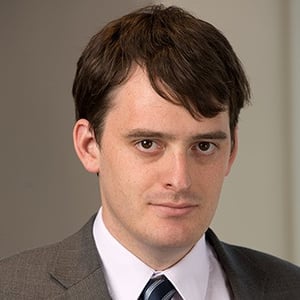
Head of Tech & Innovation, Centre for Policy Studies
Matthew Feeney is Head of Tech & Innovation at Centre for Policy Studies. Before joining CPS, Matthew was the director of Cato Institute’s Project on Emerging Technologies. His writing has appeared in The New York Times, The Washington Post, City A.M., and others. He received both his BA and MA in philosophy from the University of Reading.
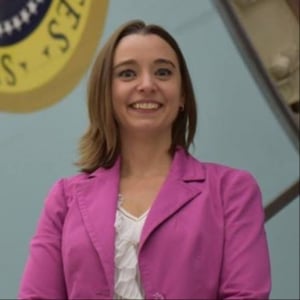
Senior Director for National Security Programs, DataRobot
Jennifer Hay currently serves as the Senior Director for National Security Programs at DataRobot. DataRobot is an end-to-end enterprise AI platform that automates and accelerates machine learning. At DataRobot, Jennifer manages the policy development and outreach efforts at the intersection of national security and AI technology. Jennifer also supports delivery projects to several Department of Defense and Intelligence Community customers, as well as with the participants in DataRobot’s AI for Good initiative.
Prior to joining DataRobot, Jennifer spent two decades working in various roles within the Department of Defense and the White House, including positions on the National Security Council staff, the immediate office of the Deputy Secretary of Defense, the Office of the Under Secretary of Defense for Intelligence, and the Defense Intelligence Agency.
Jennifer is a graduate of The George Washington University with an MA in International Affairs and Pepperdine University with a BA in Political Science.

Founder and Executive Director, National Security Institute; Assistant Professor of Law, Antonin Scalia Law School, George Mason University
Jamil N. Jaffer is the Founder and Executive Director of the National Security Institute at the Antonin Scalia Law School at George Mason University where he also serves as an Assistant Professor of Law, Director of the National Security Law and Policy Program, and Director of the Cyber, Intelligence, and National Security LLM Program. Jamil also teaches classes on counterterrorism, intelligence, surveillance, cybersecurity, and other national security matters, as well as a summer course held abroad with U.S. Supreme Court Justice Neil M. Gorsuch. Jamil is also affiliated with Stanford University’s Center for International Security and Cooperation and previously served as a Visiting Fellow at the Hoover Institution from 2016 to 2019.
Jamil is also a Venture Partner with Paladin Capital Group, where he assists the firm with investments across the full range of its themes and theses, including a focus on dual-use national security technologies. Jamil also serves on the board of directors of RangeForce, a cybersecurity training and readiness platform startup and Tozny, a digital identity startup, and on the advisory boards of U.S. Strategic Metals, North America’s largest primary producer of cobalt, a critical mineral used in EV batteries, aerospace, and other national security applications; and Constella Intelligence, a deep and dark web intelligence startup. Jamil also serves as an advisor to Beacon Global Strategies, a strategic advisory firm and Duco, a technology platform startup that connects corporations with geopolitical and international business experts. Jamil is also the managing director of Trigraph Caveat Capital, a private investment vehicle.
Among other things, Jamil currently serves on the Board of Directors for the Greater Washington Board of Trade, the Board of Advisors for the Global Cyber Alliance, and the Advisory Board of the Foundation for the Defense of Democracies’ Center on Cyber and Tech Innovation, the Executive Committee of the Reagan Institute Strategy Group. Jamil is also a Fellow at the Academy for Judaic, Christian, and Islamic Studies, an advisor to the Concordia Summit, and is a member of the Board of Directors for the Center for Intelligence Policy, the Board of Directors of Speech First, and the Executive Committee of the International Law and National Security Practice Group of the Federalist Society.
Immediately prior to his current positions, from 2015-2021, Jamil served as a senior business leader at IronNet Cybersecurity, helping take the company from a bootstrapped first-year technology products startup through two rounds of venture capital fundraising, growing from 40 employees to over 300, and through its listing on New York Stock Exchange. In his role as IronNet's Senior Vice President for Strategy, Partnerships & Corporate Development, Jamil worked directly for the co-CEOs of the company, Gen (ret.) Keith B. Alexander, the former Director of the National Security Agency and Founding Commander of U.S. Cyber Command, and Bill Welch, the former COO of Zscaler and Duo; in that role, Jamil led all of the company’s strategic and technology partnership efforts, including developing go-to-market and technology integration plans with some of the largest cloud platforms and cybersecurity companies in the market, evaluating potential acquisition targets, and developing overall corporate strategy and thought leadership around collective security and collaborative defense in the cyber arena.
Prior to his time at IronNet, Jamil served on the leadership team of the Senate Foreign Relations Committee as Chief Counsel and Senior Advisor under Chairman Bob Corker (R-TN), where he worked on key national security and foreign policy issues, including leading the drafting of the proposed Authorization for the Use of Military Force against ISIS in 2014 and 2015, the AUMF against Syria in 2013, and revisions to the 9/11 AUMF against al Qaeda. Jamil was also the lead architect of the Iran Nuclear Agreement Review Act and two sanctions laws against Russia for its first intervention in Ukraine.
Prior to joining SFRC, Jamil served as Senior Counsel to the House Permanent Select Committee on Intelligence under Chairman Mike Rogers (R-MI) where he led the committee’s oversight of NSA surveillance, NRO intelligence issues, and NGA analytic and collection matters, as well as intelligence community-wide counterterrorism issues. Jamil was also the lead architect of the Cyber Intelligence Sharing and Protection Act, the nation’s first cyber threat intelligence sharing legislation that was signed into law in 2015.
In the Bush Administration, Jamil served in the White House as an Associate Counsel to the President, handling Defense Department, State Department, and intelligence community matters, and serving as one of the White House Counsel’s primary representatives to the National Security Council Deputies Committee.
Prior to the White House, Jamil served on the leadership team of the Justice Department’s National Security Division as Counsel to the Assistant Attorney General for National Security, where he focused on counterterrorism and intelligence matters. At NSD, Jamil helped lead the division’s work on In re: Directives, the first ever two-party litigated matter in the FISA Court and the second case before the FISA Court of Review in its 30-year history. Jamil also led NSD’s efforts on the President’s Comprehensive National Cybersecurity Initiative (CNCI), including the drafting of NSPD-54/HSPD-23, and related classified matters, and advised the National Security Agency (NSA) and U.S. Cyber Command’s predecessor organization, the Joint Function Component Command for Network Warfare (JFCC-NW), on matters related to cyber intelligence collection and offensive cyber activities. For his work on these matters, Jamil was awarded the Assistant Attorney General’s Award for Special Initiative and was among the group of lawyers awarded the Director of National Intelligence’s 2008 Legal Award (Team of the Year – Cyber Legal).
Jamil also served in other positions in the Justice Department, including in the Office of Legal Policy, where he worked on the confirmations of Chief Justice John G. Roberts, Jr. and Justice Samuel A. Alito, Jr. to the United States Supreme Court.
Jamil also served as a lawyer in private practice at Kellogg Huber, a Washington, DC-based litigation boutique, as a policy advisor to Congressman Bob Goodlatte (R-VA), and as a staff member or senior advisor on a number of political campaigns, including two presidential campaigns and a presidential transition team. While in law school, Jamil was a member of the University of Chicago Law Review, managing editor of the Chicago Journal of International Law, and National Symposium Editor of the Harvard Journal of Law & Public Policy. Following law school, Jamil served as a law clerk to Judge Edith H. Jones of the United States Court of Appeals for the Fifth Circuit and, later in his career, as a law clerk to then-Judge Neil M. Gorsuch when he first joined the United States Court of Appeals for the Tenth Circuit as well as a law clerk to Justice Neil Gorsuch when he joined the U.S. Supreme Court.
Jamil has published multiple op-eds and academic articles on national security, foreign policy, cybersecurity, counterterrorism, encryption, and intelligence matters, and is the co-author of a book chapter with former NSA Director Gen. (Ret.) Keith B. Alexander on national security and the press in National Security, Leaks, and the Freedom of the Press: The Pentagon Papers Fifty Years On (2021) and a book chapter with former CIA Director Gen. (ret.) Mike Hayden on ISIS, al Qaeda, and other international terrorist groups in Choosing to Lead: American Foreign Policy for a Disordered World (2015). Jamil has also written book chapters on cybersecurity and surveillance, as well as op-eds and policy papers with former Attorney General Michael B. Mukasey, former National Counterterrorism Center Director Matt Olsen, and Congressman Mike Waltz (R-FL), among others.
Jamil has previously taught graduate-level courses in intelligence law and policy at George Washington University’s Elliott School of International Affairs and the National Intelligence University, served an outside advisor to the Cyberspace Solarium Commission, and has recently testified before committees of the U.S. Senate and House of Representatives on China, cybersecurity, counterterrorism, and other national security matters. Jamil has also recently appeared on a range of national television and radio outlets including CNN, Fox News, Fox Business, MSNBC, Bloomberg, PBS, Voice of America, and National Public Radio, and in various print and online publications, including the Wall Street Journal, New York Times, and the Washington Post on a range of national security matters including cybersecurity, counterterrorism, surveillance, encryption, privacy, and foreign policy issues.
Jamil holds degrees from UCLA (BA, cum laude), the University of Chicago Law School (JD, with honors), and the United States Naval War College (MA, with distinction).

Adjunct Lecturer, The Bush School of Government & Public Service, Texas A&M University
Margaret Peterlin has transitioned across industries and organizations, having served as a Senior Vice President at AT&T following her senior leader position at the U.S. Department of State as Chief of Staff to Secretary Rex Tillerson. Previously, she was as a global executive at Mars, Inc, co-led a large, federal agency, worked for both the Speaker, and the Majority Leader, of the House of Representatives, clerked for a U.S. Court of Appeals Judge, and served as a commissioned officer in the U.S. Navy. Having served in all three branches of the federal government, and in two, global companies, she is now spending time in academia.
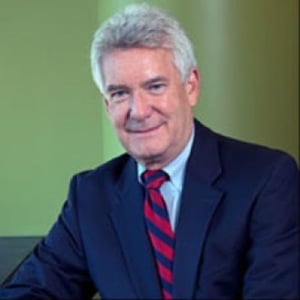
Professor of Practice and Director, Civic Leaders Center, Paul H. O’Neill School of Public and Environmental Affairs, Indiana University
Paul Helmke, former president and CEO of the Brady Center/Brady Campaign to Prevent Gun Violence and three-term mayor of Fort Wayne, Indiana, is a professor of practice at O'Neill School of Public and Environmental Affairs and the founding director of the Civic Leaders Living-Learning Center. Helmke's professional interests include law and public policy, civic education and participation, mayoral and nonprofit leadership, urban issues, and gun control. His experience on gun control issues lands him frequent mentions and interviews in national news stories and programs.
Born in Bloomington and raised in Fort Wayne, Helmke practiced law there for more than 14 years before winning an upset victory over a two-term incumbent mayor in 1987. During the 1990s, he was appointed to Federal cabinet advisory committees dealing with violence against women and school-to-work transitions. He served as president of the U. S. Conference of Mayors during his final term in office. In 1998, Helmke won the primary to be the Republican nominee for U. S. Senate in Indiana, but lost in the general election to former Governor Evan Bayh.
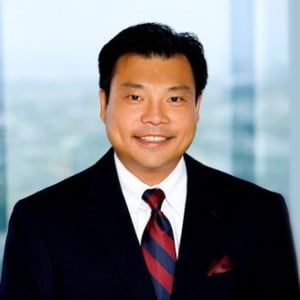
Attorney and Legal Commentator
John Shu is an attorney and legal commentator. His focus areas include constitutional law, securities & corporate law, antitrust law, administrative law, politics, and international affairs. Mr. Shu has lectured and published on a wide variety of issues.
Mr. Shu served President George H.W. Bush and President George W. Bush. He also served Judge Stanley Sporkin, U.S. District Court for the District of Columbia, who was Director of Enforcement at the U.S. Securities & Exchange Commission and General Counsel at the Central Intelligence Agency, and Judge Paul Roney, U.S. Court of Appeals for the Eleventh Circuit, who was Presiding Judge of the Foreign Intelligence Surveillance Court of Review.
Mr. Shu is a member of the National Committee on U.S. - China Relations, the Pacific Council on International Policy, and the Foreign Policy Association.
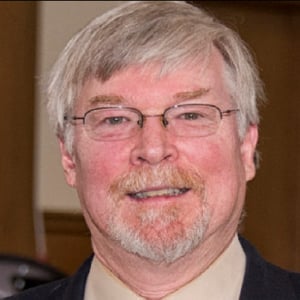
General Counsel, TechFreedom
James Dunstan serves as the General Counsel to TechFreedom. Jim has served as a Senior Adjunct Fellow to TechFreedom since its inception. Jim has more than 37 years of private practice experience in a technology-focused practice, including telecommunications, media, computer game, and outer space law. Jim spent 17 years at the telecom boutique firm Haley Bader & Potts (10 years in management), and headed the Telecommunications and Information Technology Group at Garvey, Schubert & Barer from 2000-2006. Jim founded his own firm, Mobius Legal Group, in 2010; he continues that private practice (on matters not in conflict with TechFreedom’s work) while serving as TechFreedom’s General Counsel.
Jim’s career includes being on the legal team that won the first cellular radio license for MCI in 1984, writing the constitutional challenge to the FCC’s Fairness Doctrine that took down the Doctrine in Syracuse Peace Council v. FCC, 867 F.2d 654 (1989), and helping shape the FCC’s children’s television rules on behalf of a client which produces the majority of educational programming for the major television networks. He litigated the first “virtual property” case and drafted and negotiated the first lease for a manned space station (Mir) as well as writing the first contract that was actually executed in outer space.
At TechFreedom, Jim’s substantive portfolio includes FCC regulation, the Children’s Online Protection and Privacy Act (COPPA), and all things outer space. As General Counsel, he oversees the entire legal team, and participates in TechFreedom’s robust appellate litigation team.
Jim was the 1978 Harry S. Truman Scholar from Arizona, is a graduate of Claremont McKenna College (1980), and the Georgetown University Law Center (1983). He is admitted to practice law in the District of Columbia and the Commonwealth of Virginia. Jim holds multiple patents for innovative computer input devices and has a number of patents pending in the field of computer game devices and methods. Jim is an avid musician, playing French horn in the Fairfax Wind Symphony, and with the Silver 5 Brass Quintet.
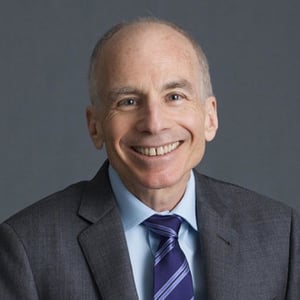
University Professor, Founding Linda D. & Timothy J. O’Neill Professor of Global Health Law, Faculty Director of O’Neill Institute for National & Global Health Law, Georgetown University, Director, World Health Organization Collaborating Center on Public Health Law & Human Rights
Lawrence O. Gostin is University Professor, Georgetown University’s highest academic rank conferred by the University President. Prof. Gostin directs the O’Neill Institute for National and Global Health Law and is the Founding O’Neill Chair in Global Health Law. He served as Associate Dean for Research at Georgetown Law from 2004 to 2008. He is Professor of Medicine at Georgetown University and Professor of Public Health at the Johns Hopkins University.
Prof. Gostin is the Director of the World Health Organization Collaborating Center on National and Global Health Law. The WHO Director-General has appointed Prof. Gostin to high-level positions, including the International Health Regulations (IHR) Roster of Experts and the Expert Advisory Panel on Mental Health. He served on the Director-General’s Advisory Committee on Reforming the World Health Organization, as well as numerous WHO expert advisory committees, including on the Pandemic Influenza Preparedness Framework, smallpox, genomic sequencing data, migrant health, and NCD prevention. He served on the WHO/Global Fund Blue Ribbon Expert Panel: The Equitable Access Initiative to develop a global health equity framework. He co-chairs the Lancet Commission on Global Health Law.
Professor Gostin served on two global commissions to report on the lessons learned from the 2015 West Africa Ebola epidemic. He was also senior advisor to the United Nations Secretary General’s post-Ebola Commission. He also served on the drafting team for the G-7 Summit in Tokyo 2016, focusing on global health security and Universal Health Coverage.
Prof. Gostin holds multiple international academic professorial appointments, including at Oxford University, the University of Witwatersrand (South Africa), and Melbourne University. Prof. Gostin served on the Governing Board of Directors of the Consortium of Universities for Global Health.
Prof. Gostin holds editorial appointments in leading academic journals throughout the world. He is the Legal and Global Health Correspondent for the Journal of the American Medical Association. He is also Founding Editor-in-Chief of Laws (an international open access law journal). He was formally the Editor-in-Chief of the Journal of Law, Medicine & Ethics.
Prof. Gostin holds four honorary degrees. In 1994, the Chancellor of the State University of New York conferred an Honorary Doctor of Laws Degree. In 2006, Her Majesty Queen Elizabeth II and the Vice Chancellor awarded Cardiff University’s (Wales) highest honor, an Honorary Fellow. In 2007, the Royal Institute of Public Health (United Kingdom) appointed Prof. Gostin as a Fellow of the Royal Society of Public Health (FRSPH). In 2012, the Chancellor of the University of Sydney – on the nomination of the Deans of the Law and Medical Schools – conferred a Doctor of Laws (honoris causa), presided by two Justices of Australia’s highest court—Justices Kirby and Haydon.
Prof. Gostin is an elected lifetime Member of the National Academy of Medicine/ National Academy of Sciences. He has served on the National Academy’s Board on Health Sciences Policy, the Board on Population Health, the Human Subjects Review Board, and the Committee on Science, Technology, and Law. He currently serves on the National Academies of Sciences Engineering, and Medicine, Board on Global Health. Gostin chaired the National Academy’s Committee on Global Solutions to Falsified, Substandard, and Counterfeit Medicines. He has chaired National Academy Committees on national preparedness for mass disasters, health informational privacy, public health genomics, and human subject research on prisoners.
Prof. Gostin is also a Member of the Council on Foreign Relations and Fellow of the Hastings Center. In 2016, President Obama appointed Prof. Gostin to a six-year term on the President’s National Cancer Advisory Board to advise the nation on cancer prevention, research, and policy. He also serves on the National Institutes of Health Director’s Advisory Committee on the ethics of public/private partnerships to end the opioid crisis.
Prof. Gostin has led major law reform initiatives in the U.S., including drafting the Model Emergency Health Powers Act (MEHPA) to combat bioterrorism (following the post-9/11 anthrax attacks) and the “Turning Point” Model State Public Health Act. He also spearheaded the World Health Organization and International Development Law Organization’s major report, Advancing the Right to Health: The Vital Role of Law.
Prof. Gostin’s proposal for a Framework Convention on Global Health – an international treaty ensuring the right to health – is now part of a global campaign, endorsed by the UN Secretary-General and Director of UNAIDS.
In the United Kingdom, Lawrence Gostin was the Legal Director of the National Association for Mental Health, Director of the National Council of Civil Liberties (the UK equivalent of the ACLU), and a Fellow at Oxford University. He helped draft the Mental Health Act (England and Wales) and brought landmark cases before the European Court of Human Rights.
Prof. Gostin’s books include: Public Health Law: Power, Duty, Restraint (University of California Press, 3rd ed., 2016); Public Health Law and Ethics: A Reader (University of California Press, 3rd ed., 2018); Human Rights in Global Health: Rights-Based Governance for a Globalizing World (Oxford University Press, 2018); Law and the Health System (Foundation Press, 2014); Principles of Mental Health Law & Practice (Oxford University Press, 2010).
Gostin’s classic text, Global Health Law (Harvard University Press, 2014) is read throughout the world—translated and published in both simplified and traditional Chinese, and in Spanish. Paul Farmer, Partners in Health, says of his book: Global Health Law is “more than the definitive book on a dynamic field. Gostin harnesses the power of international law and human rights as tools to close unconscionable health inequities — the injustices that burden marginalized populations throughout the world. Gostin presents a forceful vision, one that deserves a wide embrace.”
In a 2012 systematic empirical analysis of legal scholarship, independent researchers ranked Prof. Gostin 1st in the nation in productivity among all law professors, and 11th in in impact and influence. A 2017 and 2018 systematic empirical analysis ranked Prof. Gostin 1st in the nation for citations in health law.
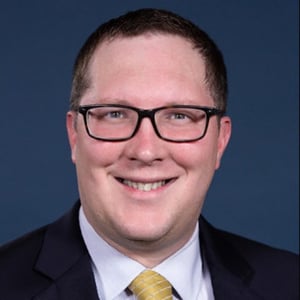
Attorney, Pacific Legal Foundation
Luke A. Wake is an attorney at the Pacific Legal Foundation. Prior to joining PLF, he was a senior staff attorney at the NFIB Small Business Legal Center.
Wake has particular expertise on environmental and land use issues, and has worked on numerous other constitutional issues and matters of importance to small business owners. He is an ardent defender of private property rights, which he believes are essential to the free enterprise system and the foundation of American liberty. As a strong advocate of individual rights and economic liberties, he has built his career defending small business interests.
Wake has focused on a whole host of issues, from employment law matters to regulatory compliance. In addition to serving as a resource for small business owners, Wake is committed to ensuring that the voice of small business is heard in the nation’s courts. As an appellate practitioner, Wake has focused particularly on informing the courts on matters of administrative law and on issues under the Fifth Amendment’s Takings Clause. He is also working to advance small business interests in law review articles, and was recently published in the Berkeley Journal of Law & Ecology. See R.S. Radford & Luke A. Wake, Deciphering and Extrapolating: Searching for Sense in Penn Central, 38 Ecology L.Q. 731, 746-747 (2011).
Before joining the Legal Center’s team, Wake completed a prestigious two-year fellowship as an attorney in the Pacific Legal Foundation’s College of Public Interest Law. Wake is a graduate of Case Western Reserve University School of Law in Cleveland Ohio, and is a member of the California Bar. He completed his undergraduate studies at Elon University in North Carolina in 2006 where he focused on political theory and corporate communications.

Executive Director, Southeastern Legal Foundation
Kimberly Hermann serves as Executive Director for Southeastern Legal Foundation.
Kim has worked with Southeastern Legal Foundation since 2009. Her belief in liberty and desire to serve started at a young age – instilled by her parents’ dedication to hard work, family values, and love for America.
After earning her undergraduate degree in Analytical Finance and graduate degree in Accounting from Wake Forest University, Kim worked as a licensed CPA with an international accounting firm. But her strong belief in individual liberty, the rule of law, and accountability in government led her to pursue a career in law. While in law school at Georgia State University College of Law, Kim served as a law clerk at SLF. After graduating, Kim worked at a private law firm in Atlanta where she specialized in financial and business litigation but continued to serve SLF in a pro bono capacity. In 2013, Kim returned to SLF full-time and is proud to dedicate her career to the freedom-based law movement.
Kim advances liberty through litigation in federal and state trial and appellate courts on issues ranging from government overreach, free speech, property rights, and economic liberty. In addition to representing clients, Kim testifies before state legislatures, drafts model legislation, and regularly publishes legal articles. Through SLF’s legal initiatives, she informs Americans about their constitutional rights, equipping them with the tools they need to stand up to government overreach. Her work and that of Southeastern Legal Foundation is regularly covered by national media and you will frequently hear or see her on radio, podcasts, and television.
Kim is an active member of the Federalist Society where she serves as an expert on the Federalist Society’s Civil Rights Executive Committee. She is also an active member of her community and when she isn’t fighting for liberty, you can find her at her children’s school or on the sports fields cheering them on. She lives in the Atlanta area with her husband and two children.