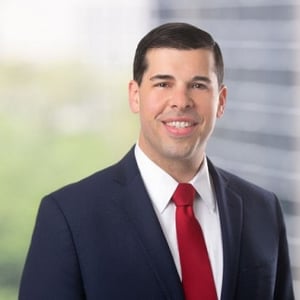
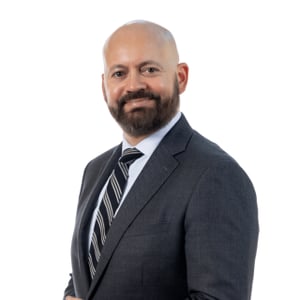
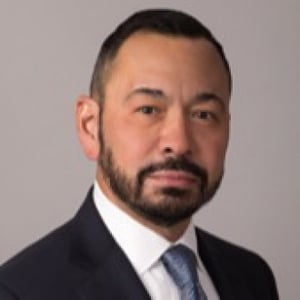
Jesse, the former third-ranking official at the U.S. Department of Justice, helps clients with their most difficult litigation and regulatory issues─whether that means defending against an enforcement action, pursuing high-stakes litigation and appeals, navigating regulatory thickets at federal and state agencies, or crafting a comprehensive strategy to manage a crisis. He approaches these problems with the knowledge gained both from his broad private-practice experience and from having served at the highest levels of federal and state government.
Jesse has experience across a range of substantive and regulatory areas. He has sued the federal government and has also been one of its top law-enforcement officials; he has represented states and has also navigated their regulatory agencies on behalf of clients; and he has represented companies in business disputes, both as defendants and plaintiffs.
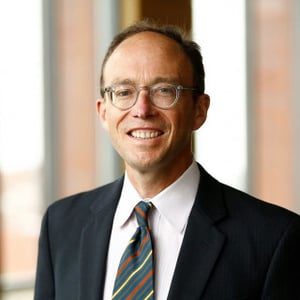
Before joining the firm, Jesse was the Acting Associate Attorney General at the United States Department of Justice. In that role, he oversaw the civil and criminal work of the Antitrust, Civil, Civil Rights, Environment and Natural Resources, and Tax Divisions. During Jesse’s tenure, the Associate’s office closely managed the Department’s most significant litigation, including matters involving large financial institutions, healthcare companies, automakers, energy companies, and state and local governments. In addition, Jesse served as Chair of DOJ’s Regulatory Reform Task Force and Vice Chair of DOJ’s Task Force on Market Integrity and Consumer Fraud. Jesse regularly provided legal and strategic advice to the highest-level decision makers in the federal government, including the Attorney General and Deputy Attorney General, general counsels across the spectrum of federal agencies, and White House officials.
Jesse served for three years as the secretary of Florida’s labor, economic-development, and land-use agency, the Florida Department of Economic Opportunity. Before that, he served as Governor (now Senator) Rick Scott’s general counsel.
Jesse maintains offices in both Washington D.C. and Florida. From Washington, he focuses on federal litigation and crisis management. In Florida, in addition to federal litigation, Jesse employs his knowledge of state government and regulation to help clients in courts across the state, from trial through the Florida Supreme Court.
Jesse currently serves on the Florida Supreme Court Judicial Nominating Commission, the body that provides the governor with nominees for appointment to the Florida Supreme Court. Jesse is also a fellow at the Center for the Study of the Administrative State at the Scalia Law School at George Mason University, where he writes and speaks about administrative law.
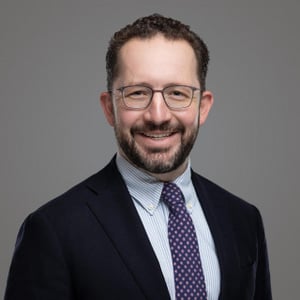
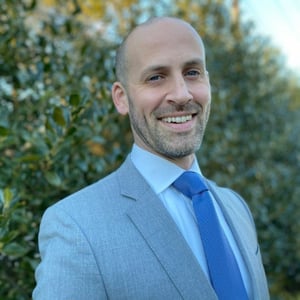
O.H. leads Alliance For Consumers, which fights to ensure that consumer protection efforts, class action lawsuits, and attorney general enforcement actions are consistent with the rule of law and benefit everyday consumers, not just class action lawyers and career bureaucrats.
His work with AFC builds off his time with the Arizona Attorney General's Office under Attorney General Mark Brnovich, where he not only defended constitutional questions and served as the State's lead counsel in the U.S. Supreme Court, but also had the privilege of leading Arizona's consumer protection lawsuit against Google over the tracking of consumers' location, and the successful case against Volkswagen over well-publicized diesel-related consumer deception.
O.H. is a 2010 graduate of Harvard Law School. Before joining Attorney General Brnovich in 2016, O.H. practiced at WilmerHale and Ropes & Gray in Boston and clerked for the Hon. J.L. Edmondson of the United States Court of Appeals for the Eleventh Circuit in Atlanta, Georgia.
Vice President for Litigation, Institute for Free Speech
Biography
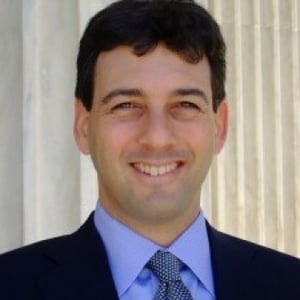
Alan joined the Institute for Free Speech as Vice President for Litigation in February 2021. In this role, Alan directs the Institute’s litigation and legal advocacy, leads our in-house legal team, and manages and works to expand our network of volunteer attorneys.
Prior to joining the Institute, Alan litigated complex federal matters for twenty years, in his own practice and as a partner in various Washington-area firms. He argued and won landmark constitutional cases in the United States Supreme Court and has appeared before numerous appellate and district courts throughout the country. Alan often speaks at law schools and continuing legal education seminars. He also teaches strategic/public interest litigation as an adjunct professor at the Georgetown University Law Center.
Alan began his career clerking for the Hon. Terrence W. Boyle, United States District Judge for the Eastern District of North Carolina. He has also served as a Deputy Attorney General for the State of California, a litigation associate at the Washington office of Sidley Austin, and as counsel to the United States Senate Judiciary Committee.
Alan earned his J.D. at Georgetown (1995) and his B.A. at Cornell University (1992). He is an active member in good standing of the Virginia, District of Columbia, and California bars, the Bar of the United States Supreme Court, and various federal appellate and district court bars.
Florida Office Managing Attorney, Institute for Justice
Biography
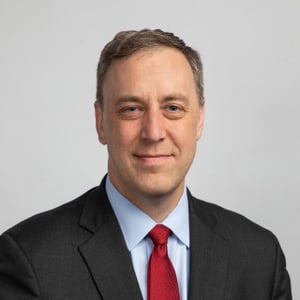
Justin Pearson is the Institute’s Florida Office Managing Attorney. He also coordinates aspects of the Institute’s national economic liberty efforts and personally directs IJ’s National Street Vending Initiative. Justin has devoted his career to vindicating the constitutional rights of small-business owners, and he has victoriously litigated on their behalf in trial and appellate courts across the nation.
Justin often wins in novel ways. He was the lead counsel in a federal appellate court victory vindicating the right of a Florida dairy creamery to tell the truth on its labels, which was the first victorious First Amendment challenge to a food standard of identity in U.S. history. His win against Little Rock’s ban on taxi competition was based on a provision in the Arkansas Constitution that had not been successfully relied upon in over half a century. And his victory against Fort Pierce’s food truck ban included the first preliminary injunction ever issued in this type of challenge anywhere in the nation.
In addition to litigation, Justin has testified to Florida Senate and House committees dozens of times, and provisions suggested by Justin have been enacted into law. The successful bills that Justin has actively supported include Florida’s 2021 cottage food, home-based business, and local occupational licensing reforms, Florida’s historic 2020 occupational licensing reform (which repealed the most occupational licensing barriers in U.S. history), Florida’s 2019 repeal of the certificate of need requirement for hospitals, Florida’s 2019 Fresh Start reform making it easier for individuals with criminal records to obtain employment, and Florida’s 2016 overhaul of its civil forfeiture laws.
Justin’s work has appeared in countless media outlets, and Justin has spoken to scores of law schools and attorney organizations across the nation. The law schools that have hosted Justin’s talks include Yale, the University of Chicago, Duke, NYU, Notre Dame, and the University of Michigan, among many others.
Prior to joining IJ, Justin founded and managed his own law practice to advocate for small-business owners, and Justin’s law practice was successful for many years before he made the decision to join IJ in 2012 to better fight against government power gone awry.
Justin received his law degree with honors from the University of Miami in 2002, where he was the Research and Writing Editor for, and was published in, the University of Miami Business Law Review. Justin received his undergraduate degree in business management from North Carolina State University. Justin has been honored by the Daily Business Review and Law.com for being one of South Florida’s “Most Effective Lawyers.”
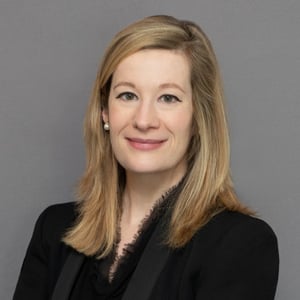
Sarah Harris is a partner in Williams & Connolly’s Supreme Court and Appellate practice, where she represents clients in high-stakes appeals in the U.S. Supreme Court and federal and state appellate courts across the country. She has argued five cases before the U.S. Supreme Court, and she has presented many arguments in federal courts of appeals and state appellate courts. Her cases have run the gamut of substantive areas, including constitutional law—especially First Amendment and separation-of-powers issues—as well as administrative law, arbitration, class actions, antitrust, False Claims Act litigation, commercial litigation, and federal civil procedure.
Sarah is widely recognized for her appellate advocacy. Chambers USA has recognized her as “Up and Coming” in Appellate Law. She has been named to Bloomberg Law’s 40 Under 40 list of top lawyers nationwide and to Benchmark Litigation’s “40 & Under Hot List,” as well as a an appellate “Rising Star” by The National Law Journal and Law360, a “Next Generation Lawyer” by The Legal 500, and as one of Bloomberg Law’s “Five Fresh Faces to Know in Appellate.”
Sarah clerked for Justice Clarence Thomas on the Supreme Court of the United States, Judge Laurence Silberman on the United States Court of Appeals for the D.C. Circuit, and Judge Sandra Lynch on the United States Court of Appeals for the First Circuit. Before joining Williams & Connolly, she served as a Deputy Assistant Attorney General in the Department of Justice’s Office of Legal Counsel.
Sarah received her undergraduate degree summa cum laude from Princeton University, and her J.D. magna cum laude from Harvard Law School. She also holds a Ph.D. and M. Phil. from the University of Cambridge.
Professor of Legal Studies & Business Ethics, The Wharton School, The University of Pennsylvania
Biography
David Zaring’s scholarship addresses administrative and regulatory law from an international perspective. Professor Zaring comes to the business school from the Washington & Lee University School of Law. At Washington & Lee, he was an assistant professor and Alumni Faculty Fellow from 2005 to 2007. He had previously served as Acting Assistant Professor in the Lawyering Program at New York University School of Law from 2002 to 2005, and as a visiting professor at Vanderbilt Law School in the fall of 2007. After graduating magna cum laude from Harvard Law School, Professor Zaring clerked for Chief Judge William Matthew Byrne Jr. of the U.S. District Court for the Central District of California and then for Judge Judith Rogers on the US. Court of Appeals for the D.C. Circuit. He served as a trial attorney for the U.S. Department of Justice in the Federal Programs Branch of the Civil Division and as a special assistant to the General Counsel in the U.S. Department of Housing and Urban Development before entering the academy.
Professor of Law, University of Michigan Law School
Biography
Prof. Samuel Bagenstos, who serves as professor of law, specializes in civil rights law, public law, and litigation. From 2009-2011, he was a political appointee in the U.S. Department of Justice, where he served as the Principal Deputy Assistant Attorney General for Civil Rights, the number-two official in the Civil Rights Division. His accomplishments included the promulgation of the 2010 Americans with Disabilities Act regulations—the first comprehensive update of those regulations since they were first promulgated in 1991—and the reinvigoration of the Civil Rights Division's enforcement of the Supreme Court's decision in Olmstead v. L.C., which guarantees people with disabilities the right to live and receive services in the most integrated setting appropriate. He led the negotiations of significant Olmstead v. L.C., which guarantees people with disabilities the right to live and receive services in the most integrated setting appropriate. He led the negotiations of significant Olmsteadsettlements with the states of Delaware and Georgia, which guarantee appropriate, community-based services to thousands of people with disabilities. He also personally argued major cases in federal district courts and courts of appeals.
As an academic, Prof. Bagenstos has published articles in journals such as the Yale Law Journal, the Columbia Law Review, the California Law Review, the Virginia Law Review, and many others. He also has published two books: Law and the Contradictions of the Disability Rights Movement (2009, Yale University Press); and Disability Rights Law: Cases and Materials (2010, Foundation Press). In his "spare time," Prof. Bagenstos remains an active appellate and Supreme Court litigator in civil rights and federalism cases. In one of the most notable cases he has argued, United States v. Georgia, 546 U.S. 151 (2006), the U.S. Supreme Court upheld, as applied to his client's case, the constitutionality of Title II of the Americans with Disabilities Act. Prof. Bagenstos has also testified before Congress on several occasions, including in support of the Fair Pay Restoration Act, the ADA Amendments Act, the Employment Non-Discrimination Act, and the Convention on the Elimination of All Forms of Discrimination Against Women, as well as on the application of the ADA to advancing technology and the problem of mental illness in prisons.
Prior to joining the Michigan Law faculty, Prof. Bagenstos was a professor of law, and, from 2007 to 2008, also associate dean for research and faculty development at Washington University School of Law. He has been on the faculty of Harvard Law School, and was a visiting professor at UCLA School of Law. He clerked for Judge Stephen Reinhardt on the Ninth Circuit for one year, and then joined the Civil Rights Division of the U.S. Department of Justice. Following that position, he served as law clerk for Justice Ruth Bader Ginsburg of the U.S. Supreme Court. In 1993, Prof. Bagenstos earned his JD, magna cum laude, from Harvard, where he received the Fay Diploma and was articles office co-chair for the Harvard Law Review.
Chief Judge, United States Court of Appeals, Sixth Circuit
Biography
JEFFREY S. SUTTON is the Chief Judge of the United States Court of Appeals for the Sixth Circuit. He has served as Chair of the Federal Judicial Conference Committee on Rules of Practice and Procedure, Chair of the Advisory Committee on Appellate Rules, and Chair of the Supreme Court Fellows Commission. He currently serves as Chair of the Executive Committee of the Judicial Conference of the United States. Since 1993, Chief Judge Sutton has been an adjunct professor at The Ohio State University College of Law, where he teaches seminars on State Constitutional Law, the United States Supreme Court, and Appellate Advocacy. He also teaches a class on State Constitutional Law at Harvard Law School. Among other publications, he is the author of Who Decides? States as Laboratories of Constitutional Experimentation and 51 Imperfect Solutions: States and the Making of American Constitutional Law. He is the co-author of a casebook, State Constitutional Law: The Modern Experience, as well as The Law of Judicial Precedent. He is also the co-editor of The Essential Scalia: On the Constitution, the Courts, and the Rule of Law. In 2006, Chief Judge Sutton was elected to the American Law Institute, and in 2017 he was elected to its Council.
The New York Times recognized Scott A. Keller as a “legal heavyweight,” who “is praised by opponents as a formidable advocate.”
Mr. Keller has argued 12 cases before the U.S. Supreme Court and 12 cases before the Texas Supreme Court. He is the only practicing lawyer to have argued at least 10 cases in both courts. Mr. Keller frequently represents parties in high stakes appeals, and he has argued many cases in federal courts of appeals throughout the nation. He has earned individual accolades from Lawdragon 500 Leading Litigators in America, Chambers, Legal 500, The American Lawyer, The National Law Journal, Law360, Super Lawyers, The Best Lawyers in America, and other publications.
Before founding Lehotsky Keller Cohn LLP, Mr. Keller headed Baker Botts LLP’s Supreme Court Practice. He also has significant experience at the highest levels in all three branches of government. Mr. Keller served as the Solicitor General of Texas, the State’s chief appellate litigator. He was U.S. Senator Ted Cruz’s chief counsel on the Senate Judiciary Committee. Mr. Keller was a law clerk for Justice Anthony Kennedy of the Supreme Court of the United States and Chief Judge Alex Kozinski of the U.S. Court of Appeals for the Ninth Circuit. He was also a Bristow Fellow in the U.S. Department of Justice’s Office of the Solicitor General.
Mr. Keller represents clients in cases where public communications strategy is crucial, and he has made numerous media appearances in major outlets such as The New York Times, The Wall Street Journal, BBC, Fox News, NPR, and Politico. As a sought after speaker and writer, Mr. Keller’s articles have appeared in the Stanford Law Review, Virginia Law Review, and Texas Law Review. He has also served as an adjunct professor of constitutional litigation, Supreme Court practice, and federal courts at the University of Texas School of Law.
Milton R. Underwood Chair in Free Enterprise, Vanderbilt University Law School
Biography
Brian Fitzpatrick is the Milton R. Underwood Chair in Free Enterprise and Professor of Law at Vanderbilt Law School, where his research focuses on class action litigation, federal courts, judicial selection, and constitutional law. He is best known for his empirical studies of class action settlements as well as his book The Conservative Case for Class Actions (University of Chicago Press, 2019). Professor Fitzpatrick joined Vanderbilt's law faculty in 2007 after serving as the John M. Olin Fellow at New York University School of Law. He graduated first in his class from Harvard Law School and went on to clerk for Judge Diarmuid O'Scannlain on the U.S. Court of Appeals for the Ninth Circuit and Justice Antonin Scalia on the U.S. Supreme Court. After his clerkships, Professor Fitzpatrick practiced commercial and appellate litigation for several years at Sidley Austin in Washington, D.C., and served as Special Counsel for Supreme Court Nominations to U.S. Senator John Cornyn. Before earning his law degree, Fitzpatrick graduated summa cum laude with a bachelor's of science in chemical engineering from the University of Notre Dame. He has received the Hall-Hartman Outstanding Professor Award, which recognizes excellence in classroom teaching, for his Civil Procedure and Federal Courts courses.
Miguel A. Estrada is a partner in the Washington, D.C. office of Gibson, Dunn & Crutcher.
Mr. Estrada has represented clients before federal and state courts throughout the country in a broad range of matters. He has argued 24 cases before the United States Supreme Court, and briefed many others. He has also argued dozens of appeals in the lower federal courts.
Best Lawyers® recognized Mr. Estrada as a 2020 Lawyer of the Year in Intellectual Property Litigation and as a Lawyer of the Year in Appellate Practice. He has been recognized by Benchmark Litigation as a 2020 U.S. Appellate Litigation “Star”. In 2014, The American Lawyer named Mr. Estrada a “Litigator of the Year,” praising his “brains and tenacity” and noting he is the lawyer to call for “a tough, potentially unwinnable case.” From 2014-2021, Chambers & Partners has named him as one of a handful of attorneys that it ranked in the top tier among the nation’s leading appellate lawyers. Chambers & Partners noted that “clients are impressed by his intellect and ability, with one saying, ‘His papers are just blindingly clear in what they say and devastating in how they marshal the arguments.’” The Atlantic described his oral argument in a 2014 high-profile separation-of-powers case as “one of the most dazzling arguments the marble chamber has heard in many years.”
Mr. Estrada was selected by his peers for inclusion in the 2020 edition of The Best Lawyers in America® in the area of Appellate Law, in addition to previous recognition by the publication in the specialties of Bet-the-Company Litigation, Commercial Litigation and Criminal Defense: White Collar, Intellectual Property Litigation, and Regulatory Enforcement Litigation in the areas of SEC, Telecom, and Energy. In 2017, he was elected as a member of the American Law Institute. In 2021, Mr. Estrada was named among the Lawdragon 500 Leading Lawyers in America. In 2004, Legal Times named him one of the top 12 appellate litigators in the D.C. area, noting that “people who follow appellate practice in Washington have known for several years that Estrada . . . is one of the best around.” Also in 2004, Washingtonian Magazine named him one of the top constitutional law lawyers “who could become one of the legends of the Supreme Court bar.”
Mr. Estrada joined Gibson Dunn in 1997, after serving for five years as Assistant to the Solicitor General of the United States. He previously served as Assistant U.S. Attorney and Deputy Chief of the Appellate Section, U.S. Attorney’s Office, Southern District of New York. In those capacities, Mr. Estrada represented the government in numerous jury trials and in many appeals before the U.S. Court of Appeals for the Second Circuit. Before joining the U.S. Attorney’s Office, Mr. Estrada practiced corporate law in New York with Wachtell, Lipton, Rosen & Katz.
Mr. Estrada is a Trustee of the Supreme Court Historical Society. He was formerly a member of the Board of Visitors of Harvard Law School.
Mr. Estrada served as a law clerk to the Honorable Anthony M. Kennedy in the U.S. Supreme Court from 1988 to 1989 and to the Honorable Amalya L. Kearse in the U.S. Court of Appeals for the Second Circuit from 1986 to 1987. He received a J.D. degree magna cum laude in 1986 from Harvard Law School, where he was editor of the Harvard Law Review. Mr. Estrada graduated with an A.B. degree magna cum laude and Phi Beta Kappa in 1983 from Columbia College, New York. He is fluent in Spanish and proficient in French.
Representative Supreme Court matters include:
In National Labor Relations Board v. Noel Canning (2014), he represented the Republican caucus of the United States Senate in successfully urging the invalidation of the President’s recess appointments to the National Labor Relation Board.
In Comcast Corp. v. Behrend (2013), he persuaded the Court to grant review of, and then reverse by a 5-4 vote, a certified antitrust class seeking $2.6 billion in damages.
In Black v. United States (2010), he represented media magnate Conrad M. Black in securing Court review and reversal of multiple convictions under the “honest services” provisions of the federal mail and wire fraud statutes.Based on his arguments, the Supreme Court significantly narrowed the scope of conduct that can be prosecuted as “honest services” fraud.
In Laboratory Corporation of America Holdings v. Metabolite Laboratories, Inc. (2006), he persuaded the Court to leave undisturbed a Federal Circuit ruling upholding the validity of a two-step process patent setting forth a method for diagnosing vitamin deficiencies.
In Northern Insurance Co. of New York v. Chatham County (2006), he persuaded the Court to rule unanimously that counties are not entitled to invoke sovereign immunity in admiralty actions.
In Aetna v. Davila Health (2004), he persuaded the Court to rule unanimously that federal law preempts state laws that give patients the right to sue managed care organizations.
In Strickler v. Greene (1999), he argued on behalf of a death row inmate pro bono in a challenge to his conviction and sentence.
In 2011, the Supreme Court appointed Mr. Estrada to brief and argue two criminal cases –Dorsey v. United States and Hill v. United States – in which the Solicitor General declined to defend the judgments of the court of appeals. Mr. Estrada was appointed to argue the position that the Solicitor General had declined to defend.
Mr. Estrada was also part of the team that successfully presented then Governor Bush’s position to the Supreme Court in Bush v. Gore (2000). Other cases that Mr. Estrada handled in the Supreme Court include Granholm v. Heald (2005) (dormant Commerce Clause and Twenty-First Amendment), Vermont Agency of Natural Resources v. United States ex rel. Stevens (2000) (False Claims Act, Article III standing and Eleventh Amendment immunity), Old Chief v. United States (1997) (rules of evidence), United States v. Mezzanatto (1995) (evidence and plea bargaining), United States v. Robertson (1995) (constitutional limits on Congress’s Commerce Clause powers), Citizens Bank of Maryland v. Strumpf (1995) (bankruptcy law), and NOW, Inc. v. Scheidler (1994) (RICO).
Recent Court of Appeals matters include:
In re Engle Cases, 767 F.3d 1082 (11th Cir. 2014): upholding dismissal of over 700 individual cases for pervasive pleading deficiencies.
Coquina Invs. V. TD Bank, N.A., 760 F.3d 1300 (11th Cir. 2014): upholding jury verdict and sanctions in fraud case arising out of a Ponzi scheme.
FERC v. JPMorgan Ventures Energy Corp. (D.C. Cir. 2013): argued two appeals on discovery issues arising out of FERC’s investigation of alleged market manipulation; the investigation was closed by settlement before decisions were issued.
Espenscheid v. DirectSat USA, LLC, 705 F.3d 770 (2013): rejecting class certification and collective-action treatment for overtime claims.
Comcast Cable Communications, LLC v. FCC, 717 F.3d 982 (D.C. Cir. 2013): reversing FCC decision in program-carriage case.
Georgia Pacific Consumer Prods. v. von Drehle, 710 F.3d 527 (4th Cir. 2013): reversing JNOV in trademark infringement case.
Fox v. FCC, 613 F.3d 317 (2d Cir. 2010): invalidating FCC’s indecency policy under vagueness doctrine.
In addition, Mr. Estrada is lead appellate counsel to Vivendi S.A. in two securities-fraud appeals from jury verdicts that are currently pending in the Second Circuit, and to the National Association of Broadcasters in a challenge to certain procedures promulgated by the FCC in connection with the upcoming Spectrum Auction. Mr. Estrada also recently presented argument before the D.C. Circuit on behalf of the tobacco industry in a first amendment challenge to certain compelled disclosures that were imposed as part of the government’s long-running civil RICO case against the industry.
Other matters:
In 2014, Mr. Estrada represented a large financial institution in a tax dispute with the Commonwealth of Puerto Rico, and was part of a team that prevailed in a bench trial.
In 2013, Mr. Estrada represented the CEO of PokerStars, the largest online poker card-room in the world, in settling civil-forfeiture claims by the U.S. Attorney for the Southern District of New York.
From 2004 to 2009, Mr. Estrada defended Cessna in federal court litigation arising out of the largest airline disaster in Italian history, ultimately securing dismissal of most of the claims.
From 1999 to 2005, Mr. Estrada was a lead attorney for Aetna in dozens of class actions against the managed care industry that the Judicial Panel for Multidistrict Litigation consolidated in the United States District Court for the Southern District of Florida (MDL No. 1334).