Judge, United States Court of Appeals, Third Circuit
Biography
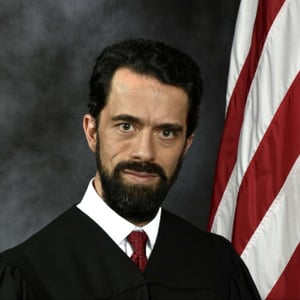
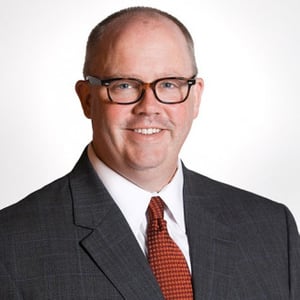
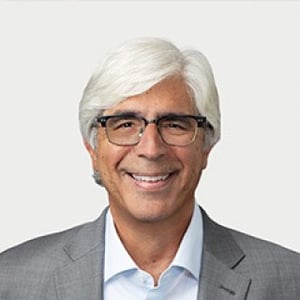
Stephanos Bibas is a judge on the U.S. Court of Appeals for the Third Circuit. Judge Bibas was previously a professor of law and criminology at the University of Pennsylvania Law School. As director of the Penn Law Supreme Court Clinic, he argued six cases before the Supreme Court of the United States and filed briefs in dozens of others. He graduated summa cum laude and Phi Beta Kappa from Columbia University in 1989 with a B.A. in political theory and from Oxford University in 1991 with a B.A. in jurisprudence. He then earned his J.D. from Yale Law School in 1994.
After graduating from Yale Law, Judge Bibas clerked for Judge Patrick Higginbotham of the U.S. Court of Appeals for the Fifth Circuit and Justice Anthony Kennedy on the Supreme Court and was a litigation associate at Covington & Burling LLP in Washington, D.C. Thereafter, Judge Bibas served as an Assistant U.S. Attorney in the Southern District of New York, where he successfully prosecuted the world’s leading expert in Tiffany stained glass for hiring a grave robber to steal priceless Tiffany windows from cemeteries. Before his tenure at Penn Law, Judge Bibas taught at the University of Chicago Law School and the University of Iowa College of Law and was a research fellow at Yale Law School. He has published two books and seventy scholarly articles.
Professor of Law and Assistant Director, Criminal Justice Center, University of Florida Levin College of Law
Biography
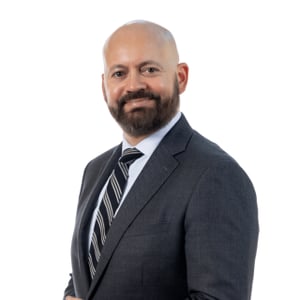
Professor Stinneford teaches and writes about legal ethics, criminal law, criminal procedure, and constitutional law. His work has been cited by the United States Supreme Court, several state supreme courts and federal courts of appeal, and numerous scholars. It has published in numerous scholarly journals including the Georgetown Law Journal, the Northwestern University Law Review, the Virginia Law Review, the Notre Dame Law Review, and the William & Mary Law Review. The Stanford-Yale Junior faculty forum selected one of his articles as the best paper in the category of Constitutional History, and the AALS Criminal Justice Section named another article as the best paper in its Junior Scholars Paper Competition. In the fall of 2015, he was a Visiting Scholar at the Georgetown Law Center, Center for the Constitution.
Before joining the Florida faculty in 2009, Stinneford clerked for the Hon. James Moran of the United States District Court for the Northern District of Illinois, served as an Assistant United States Attorney, and practiced law with Winston & Strawn in Chicago. Stinneford teaches first-year courses in Criminal Law and Constitutional Law, and upper-level courses in Professional Responsibility, Criminal Procedure, Federal Criminal Law, Law & Literature, and White Collar Crime.
Former Congressman, United States House of Representatives
Biography
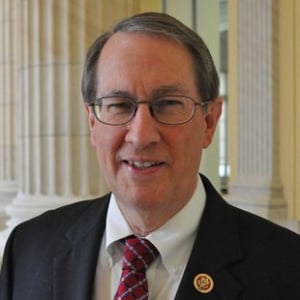
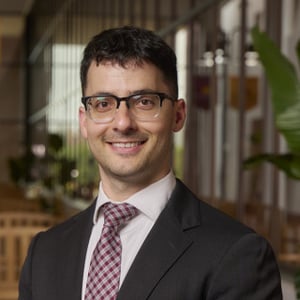
Bob Goodlatte served in the United States House of Representatives representing Virginia's 6th congressional district for 13 terms.
Goodlatte’s service to the people of the Sixth District began in 1977 when he became District Director for former Congressman Caldwell Butler. He served in this position for two years until 1979, and was responsible for helping folks across the District seeking assistance with or encountering problems from various federal agencies. In 1979, he founded his own private law practice in Roanoke. Later, he was a partner in the law firm of Bird, Kinder and Huffman, working there from 1981 until taking office.
Rep. Goodlatte was first elected to serve as Chairman of the House Judiciary Committee in the 113th Congress. He was the first Judiciary Committee Chairman from Virginia in the last 125 years. Rep. Goodlatte was an active Member of the Judiciary Committee since arriving in Congress, serving in a variety of leadership positions on the Committee including taking the lead on many intellectual property issues. During his time in Congress, Rep. Goodlatte made a name for himself as a leader on Internet and technology issues. He was Co-Chair of the Congressional Internet Caucus and the International Creativity and Theft-Prevention Caucus.
Rep. Goodlatte is a graduate of Washington and Lee University School of Law, and his undergraduate degree in Government was earned at Bates College in Lewiston, Maine.
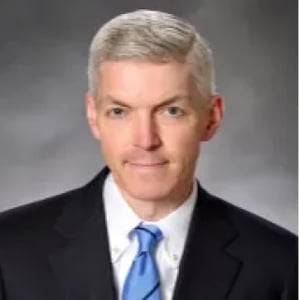
Matthew R. A. Heiman joined the Company in May 2026 and has served as the Company’s Chief Legal Officer and Corporate Secretary since June 2026. As Chief Legal Officer, Mr. Heiman is responsible for all legal functions for Gates, including securities and corporate governance, M&A, litigation, commercial, regulatory, compliance, patents and trademarks, real estate, employment and labor, sustainability and environmental matters. Prior to joining Gates, Mr. Heiman held senior legal leadership roles at Waystar, where he served as Chief Legal & Administrative Officer from 2023 to 2025 and as General Counsel and Corporate Secretary from 2020 to 2023. Prior to that, he was with Johnson Controls, where he served as Vice President, Corporate Secretary, and Associate General Counsel. Mr. Heiman has been a Senior Fellow for the National Security Institute at George Mason University’s Antonin Scalia School of Law since 2018.
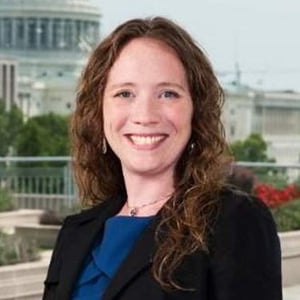
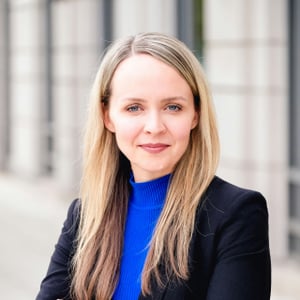
Annie Donaldson Talley is Partner at Luther Strange and Associates. She recently departed the White House after serving as Deputy Assistant to the President and Deputy Counsel to the President. Over the past four years, she provided outside counsel to the Donald J. Trump for President campaign; helped stand up and manage the White House Counsel’s Office; interfaced with agencies across the federal government; and advised the President of the United States, White House Counsel, Chief of Staff and other senior staff across the Executive Office of the President on a broad range of issues from regulatory reform to executive nominations to the day-to-day issues facing the Administration.
Prior to her White House service, Annie Donaldson Talley counseled clients in the non-profit, for-profit, political, and government sectors, as well as high-profile individuals in private practice at Jones Day and Patton Boggs. She provided strategic counseling to clients structuring their affairs to ensure compliance with a web of state and federal laws and represented clients in complex, multi-faceted investigations, leading teams navigating issues of intense public scrutiny.
Annie Donaldson Talley is also a veteran of three presidential campaigns and served in state government. She holds a B.A., summa cum laude, from the University of Alabama and a J.D. from Harvard Law School, where she served on the Harvard Law Review. She lives in Montgomery, Alabama with her husband, Brett.
Leon Meltzer Professor of Law and Professor of Philosophy, University of Pennsylvania Law School
Biography
Mitchell Berman is the Richard Dale Endowed Chair in Law, and Professor of Philosophy, at the University of Texas at Austin, where he teaches and writes in a variety of fields of legal theory, specializing in American constitutional theory, the philosophy of criminal law, and the jurisprudence of sport. A Co-Director of the Law School's Law and Philosophy Program, he is also a past recipient of the Texas Exes Teaching Excellence Award.
Professor Berman grew up in New York City, and earned his A.B. from Harvard and a J.D. and M.A. in political science from the University of Michigan. Before joining the Texas faculty in 1998, he clerked for the Hon. J. Dickson Phillips, Jr. of the U.S. Court of Appeals for the Fourth Circuit and practiced law with Jenner & Block in Washington, D.C. He has been Visiting Professor at the law schools of the University of Michigan and the University of Chicago.
Laurence A. Tisch Professor of Law and Director, Classical Liberal Institute, New York University School of Law; Director, Classical Liberal Institute, Civitas Institute University of Texas at Austin
Biography
Richard A. Epstein is the Laurence A. Tisch Professor of Law, at New York University, a senior research fellow at the Civitas Institute at the University of Texas Austin, and a senior Lecturer, the University of Chicago. He received an LL.D., h.c . from the University of Ghent, 2003 , and an LLD h.c . from the University of Siegen in 2018 and the Bradley Prize in 2011. He has been a member of the American Academy of Arts and Sciences since 1985. He has edited both the Journal of Legal Studies (1981-1991) and the Journal of Law and Economics (1991-2001). He is also a founder and director of the Classical Liberal Institute at NYU Law School. His most recent book is The Classical Liberal Constitution: The Uncertain Quest for Limited Government (2014). His other books include Takings: Private Property and the Power of Eminent Domain ( 1985); Bargaining with the State (1993); Simple Rules for a Complex World (1995); Principles for a Free Society: Reconciling Individual Liberty and the Common Good (1998); Skepticism and Freedom: A Modern Theory of Classical Liberalism (2003); Design for Liberty: Private Property, Public Administration and the Rule of Law (2011), and most recently, The Myth of Birthright citizenship—and Beyond (2026). He has taught courses in , administrative law, antitrust, constitutional, contracts, environmental law, land use planning; real property, torts and water law. He has written and spoken extensively on a wide range of topics, and is writes a regular column for Defining Ideas.
Theodore J. Boutrous, Jr. is a partner in the Los Angeles office of Gibson Dunn and one of the nation’s leading litigators. He is a member of the American Law Institute and a Fellow of the American Academy of Appellate Lawyers.
As The New York Times has noted, Mr. Boutrous has “a long history of pushing the courts and the public to see the bigger picture on heated issues.” The American Lawyer named Mr. Boutrous the 2019 “Litigator of the Year, Grand Prize Winner” and the Los Angeles and San Francisco Daily Journals in 2021 named him a “Top Lawyer of the Decade.” According to The National Law Journal, which in 2013 named him one of the “100 Most Influential Lawyers in America,” he “is known for his wise, strategic advice to clients in crisis and is a media law star.”
Mr. Boutrous has represented clients in federal and state appellate courts throughout the nation in a wide spectrum of cases, and he is currently serving as Co-Chair of the firm's First Amendment and Free Expression Practice Group. He has argued hundreds of appeals, including before the Supreme Court of the United States, 12 different federal circuit courts of appeals, and 12 different state supreme courts (including 14 arguments in the California Supreme Court), and he has led a multitude of other complex civil, constitutional and criminal matters. Mr. Boutrous has successfully persuaded courts to overturn some of the largest jury verdicts and class actions in history, and prevailed in many cutting-edge cases. In 2011, he successfully represented Walmart before the Supreme Court of the United States in the Dukes case, which unanimously reversed what had been the largest employment class action in history and established important standards governing class actions (Wal-Mart Stores, Inc. v. Dukes). In 2013, he successfully represented the prevailing party in obtaining a unanimous Supreme Court decision enforcing the Class Action Fairness Act (Standard Fire Insurance Co. v. Knowles). Also in 2013, Mr. Boutrous successfully represented plaintiffs in the Supreme Court in a case invalidating California’s prohibition on same-sex marriage, Proposition 8 (Hollingsworth v. Perry), in which he also served as one of the lead trial lawyers and architects of the legal strategy that led to this landmark victory. In 2018, Mr. Boutrous successfully represented CNN and its reporter Jim Acosta in bringing First Amendment and due process claims against then-President Donald Trump and other White House officials, forcing the White House to restore Mr. Acosta’s press credentials. “Litigators of the Week: Gibson Dunn’s Two Teds Score for the Free Press,” The AmLaw Litigation Daily (November 30, 2018). And in 2021, he secured a major victory for Hewlett-Packard Company when the California Court of Appeal affirmed a more than $3 billion verdict in HP’s long-running contract dispute with Oracle Corporation. “Litigators of the Week: Gibson Dunn Protects Its $3B Trial Win for HP Against Oracle on Appeal,” The AmLaw Litigation Daily (June 18, 2021).
As both a crisis management strategist and a seasoned appellate and media lawyer, Mr. Boutrous has extensive experience handling high-profile litigation, media relations and media legal issues. He routinely advises clients in planning how to respond, and in responding, to crises and other especially significant legal problems that attract the media spotlight.
Mr. Boutrous has also received the 2021 Freedom of the Press Award from the Reporters Committee for Freedom of the Press and the Distinguished Leadership Award from PEN America in 2019 for his leadership in advancing First Amendment rights and protecting freedom of expression. As The Hollywood Reporter noted in naming him to its 2022 “Power Lawyers” list, “When issues of free speech are in play, Boutrous is the attorney on speed dial.” Hollywood’s Top 100 Attorneys (March 2022). Mr. Boutrous was also named a “First Amendment Rights Trailblazer” by The National Law Journal in 2020.
Numerous profiles of Mr. Boutrous and his practice have appeared in the media. Prominent mentions include: “Mr. Boutrous, You Have 4 Minutes’: On Rebuttal With Ted Boutrous of Gibson Dunn,” The AmLaw Litigation Daily (August 25, 2022); “Litigator of the Week: How Gibson Dunn Helped Hit Print on Mary Trump’s Best-Seller,” The AmLaw Litigation Daily (July 17, 2020); “Litigation Department of the Year,” The American Lawyer (January 2020); “Litigator of the Week: Gibson Dunn’s Theodore Boutrous Jr. Scores Another Win for the Fourth Estate,”The AmLaw Litigation Daily (September 6, 2019); “Lawyer of the week: Theodore Boutrous Jr, attorney in White House press pass victory,” The Times of London (November 29, 2018); Ted Boutrous, CNN’s Champion, Is Fired Up,” Law.com (November 30, 2018); “Litigator of the Week: From Zero to Hero in Seven Days” The AmLaw Litigation Daily (April 27, 2017); “Litigator of the Week” The AmLaw Litigation Daily (September 8, 2016); “Practice Group Performs In Spotlight and Under Pressure,” Los Angeles and San Francisco Daily Journal (March 14, 2012); “Litigator of the Week,” The AmLaw Litigation Daily (June 23, 2011); “Lawyer of the Week,” The Times of London (June 30, 2011); “Appellate Lawyer of the Week,” National Law Journal (March 23, 2011); “Litigation Department of the Year,” The American Lawyer (January 2016); “Litigation Department of the Year,” The American Lawyer (January 2012); “Litigation Department of the Year,” The American Lawyer (January 2010); and “He’s a Hired Gun of the Highest Caliber,” The Los Angeles Times (June 24, 2007).
In 2025, The Daily Journal recognized Mr. Boutrous with its inaugural Distinguished Counsel award, which honors lawyers “whose consistent excellence and enduring influence in California’s legal community have earned them a place among the Top 100 lawyers for 15 years or more,” and has repeatedly named him to its list of “Top 100 Lawyers” and “Leading Commercial Litigators” in California for over two decades. The Hollywood Reporter, featuring him in Power Lawyers 2021: Hollywood’s Top 100 Attorneys, declared that “Boutrous is there when an industry’s future rides on a big argument.” He has been named a California “Litigation Star” in Benchmark Litigation, as well as a “National Practice Area Star.” Chambers USA ranks him as a leading lawyer in five different categories, describing him as “an absolute star,” with clients praising his skills as “an amazing orator” and his “incredible knack of picking the winning argument and his oral advocacy skills are peerless. He picks the right point in response to every question without even blinking.” The Legal 500 named Mr. Boutrous a “Leading Lawyer” for Supreme Court and Appellate litigation, calling him a “renowned advocate” and “the preeminent authority on punitive damages defenses in the U.S.” Lawdragon recognizes Mr. Boutrous as one of its distinguished "Lawdragon Legends," an honor reserved for those who have appeared in Lawdragon's guide at least ten times since its inception in 2005. Over the years, he has been named to the following Lawdragon lists: 500 Leading Litigators in America, Leading Global Litigators, 500 Leading Lawyers in America, 500 Leading Global Entertainment, Sports & Media Lawyers, 500 Global Leaders in Crisis Management, and 100 Leading AI & Tech Legal Advisors.
Mr. Boutrous is a frequent commentator on legal issues. His articles include: Spare the ‘Dreamers’ a Nightmare by According Them Due Process,” The Wall Street Journal (May 2, 2017); “Poor Children Need a New Brown v. Board of Education,” The Wall Street Journal (August 28, 2016); “A First Amendment Blind Spot,” The Wall Street Journal (May 27, 2014); “California Kids Go to Court to Demand a Good Education,” The Wall Street Journal (January 28, 2014); “A Radical Departure on Press Freedom,” The Wall Street Journal (May 23, 2013); “A Killer’s Notebook, a Reporter’s Rights,” The New York Times (April 9, 2013); and “Broadcast ‘Indecency’ on Trial,” The Wall Street Journal (January 17, 2012).
Mr. Boutrous is a member of the Steering Committee of the Reporters Committee for Freedom of the Press and was a recipient of its 2021 Freedom of the Press Awards. He also sits on the Advisory Board of the International Women’s Media Foundation, which named him its 2015 Leadership Honoree. In addition, he is a member of the Advisory Board of the United States Court of Appeals for the Ninth Circuit, which advises the Chief Judge on matters related to the effective administration of the courts in the Ninth Circuit.
Mr. Boutrous received his law degree, summa cum laude, from the University of San Diego School of Law in 1987, where he was Valedictorian and Editor-in-Chief of the San Diego Law Review.
Mr. Boutrous is admitted to practice in California, New York, and the District of Columbia.
Milton R. Underwood Chair in Free Enterprise, Vanderbilt University Law School
Biography
Brian Fitzpatrick is the Milton R. Underwood Chair in Free Enterprise and Professor of Law at Vanderbilt Law School, where his research focuses on class action litigation, federal courts, judicial selection, and constitutional law. He is best known for his empirical studies of class action settlements as well as his book The Conservative Case for Class Actions (University of Chicago Press, 2019). Professor Fitzpatrick joined Vanderbilt's law faculty in 2007 after serving as the John M. Olin Fellow at New York University School of Law. He graduated first in his class from Harvard Law School and went on to clerk for Judge Diarmuid O'Scannlain on the U.S. Court of Appeals for the Ninth Circuit and Justice Antonin Scalia on the U.S. Supreme Court. After his clerkships, Professor Fitzpatrick practiced commercial and appellate litigation for several years at Sidley Austin in Washington, D.C., and served as Special Counsel for Supreme Court Nominations to U.S. Senator John Cornyn. Before earning his law degree, Fitzpatrick graduated summa cum laude with a bachelor's of science in chemical engineering from the University of Notre Dame. He has received the Hall-Hartman Outstanding Professor Award, which recognizes excellence in classroom teaching, for his Civil Procedure and Federal Courts courses.
Ilan Wurman is the Julius E. Davis Professor of Law at the University of Minnesota, where he teaches administrative law and constitutional law. He previously taught at Arizona State University. He writes primarily on the Fourteenth Amendment, administrative law, separation of powers, and constitutionalism. His academic writing has appeared in the Yale Law Journal, the Stanford Law Review, the University of Chicago Law Review, the University of Pennsylvania Law Review, the Virginia Law Review, the Duke Law Journal, the Minnesota Law Review, the Notre Dame Law Review, and the Texas Law Review among other journals.
Professor Wurman is the author of a casebook, Administrative Law Theory and Fundamentals: An Integrated Approach (Foundation Press 2d ed. 2024). He is also the author of A Debt Against the Living: An Introduction to Originalism (Cambridge 2017), and The Second Founding: An Introduction to the Fourteenth Amendment (Cambridge 2020). His next book, The Constitution of 1789: A New Introduction, is also forthcoming with Cambridge University Press.
Professor Wurman practices law with the firm Tully Bailey. He has litigated a variety of administrative law and constitutional law cases, including cases involving COVID-19 restrictions, transmission lines, and Appointments Clause challenges. He also devised winning public nuisance theories to force city governments to address the increasingly challenging public camping crises throughout the country.
Professor of Law and Faculty Director for the Georgetown Center for the Constitution, Georgetown University Law Center
Biography
Stephanie Barclay is a Professor of Law at Georgetown Law School, and the Faculty Director of the Georgetown Center for the Constitution. Her research focuses on the role our different democratic institutions play in protecting minority rights, particularly at the intersection of free speech and religious exercise. Barclay‘s work is published or is forthcoming in leading journals such as the Harvard Law Review, the Chicago Law Review, the University of Pennsylvania Law Review, and the Yale Law Journal Forum. One of her articles was also selected for the 2020 Stanford/Harvard/Yale Junior Faculty Forum. Her work has been featured in many media outlets, including The New York Times, The Wall Street Journal, The Washington Post, USA Today, Bloomberg BNA, The Hill, and Law 360. And her work has also been cited by the U.S. Supreme Court.
Prior to joining Georgetown, Barclay was twice voted Professor of the Year. Barclay has also litigated constitutional cases at both the trial and appellate level, including before the U.S. Supreme Court. Barclay served as a law clerk to Judge N. Randy Smith on the U.S. Court of Appeals for the Ninth Circuit, and to Justice Neil M. Gorsuch of the U.S. Supreme Court.
Barclay is a Faculty Affiliate at the Constitutional Law Center at Stanford Law School; and she is a Nootbaar Fellow at the Nootbaar Institute on Law, Religion, and Ethics at Pepperdine University. She currently serves as the Chair for the AALS Law and Religion Section and as a Member of the Executive Committee for the AALS Constitutional Law Section. She graduated summa cum laude from BYU Law School, where she was elected to the Order of the Coif. She is completing a Ph.D. in Law at Oxford University as a Clarendon Scholar and a Tang Scholar.
Clinical Professor of Law, University of Arizona, James E. Rogers College of Law
Biography
Tessa L. Dysart is the Assistant Director of Legal Writing and Associate Clinical Professor of Law at the University of Arizona, James E. Rogers College of Law. With the Hon. Leslie H. Southwick of the United States Court of Appeals for the Fifth Circuit, she co-authored the third edition of Winning on Appeal: Better Briefs and Oral Arguments. She manages the Appellate Advocacy Blog, writes on human trafficking and constitutional law, and lectures nationally on developing effective state anti-trafficking laws.
Professor Dysart is a graduate of Willamette University and Harvard Law School. She clerked for the Hon. Dennis W. Shedd of the United States Court of Appeals for the Fourth Circuit. Her practice experience includes working for the United States Department of Justice Office of Legal Policy and the Senate Judiciary Committee. Prior to joining the College of Law faculty she taught appellate advocacy and constitutional law courses at Regent University School of Law, where she coached award-winning moot court teams and advised the program to a national ranking.