Distinguished Senior Fellow and Antonin Scalia Chair in Constitutional Studies, Ethics and Public Policy Center
Biography
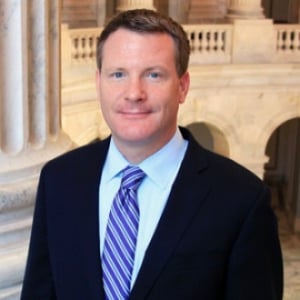
Edward Whelan is a Distinguished Senior Fellow of the Ethics and Public Policy Center and holds EPPC’s Antonin Scalia Chair in Constitutional Studies. He is the longest-serving President in EPPC’s history, having held that position from March 2004 through January 2021.
Mr. Whelan directs EPPC’s program on The Constitution, the Courts, and the Culture. His areas of expertise include constitutional law and the judicial confirmation process. As a contributor to National Review Online’s Bench Memos blog, he has been a leading commentator on nominations to the Supreme Court and the lower courts and on issues of constitutional law. He has written essays and op-eds for leading newspapers—including the Wall Street Journal, the New York Times, and the Washington Post—opinion journals, and academic symposia and law reviews. The National Law Journal has named Mr. Whelan among its “Champions and Visionaries” in the practice of law in D.C.
Mr. Whelan is co-editor of three volumes of Supreme Court Justice Antonin Scalia’s work: Scalia Speaks: Reflections on Law, Faith, and Life Well Lived (Crown Forum, 2017), a New York Times bestselling collection of speeches by Justice Scalia; On Faith: Lessons from an American Believer (Crown Forum, 2019), a collection of Justice Scalia’s writings on faith and religion; and The Essential Scalia: On the Constitution, the Courts, and the Rule of Law (Crown Forum, 2020), a collection of Justice Scalia’s views on legal issues.
Mr. Whelan, a lawyer and a former law clerk to Justice Scalia, has served in positions of responsibility in all three branches of the federal government. From just before the terrorist attacks of September 11, 2001, until joining EPPC in 2004, Mr. Whelan was the Principal Deputy Assistant Attorney General for the Office of Legal Counsel in the U.S. Department of Justice. In that capacity, he advised the White House Counsel’s Office, the Attorney General and other senior DOJ officials, and departments and agencies throughout the executive branch on difficult and sensitive legal questions. Mr. Whelan previously served on Capitol Hill as General Counsel to the U.S. Senate Committee on the Judiciary. In addition to clerking for Justice Scalia, he was a law clerk to Judge J. Clifford Wallace of the U.S. Court of Appeals for the Ninth Circuit.
In 1981 Mr. Whelan graduated with honors from Harvard College and was inducted into Phi Beta Kappa. He received his J.D. magna cum laude in 1985 from Harvard Law School, where he was a member of the Board of Editors of the Harvard Law Review.
For more on Mr. Whelan’s background, see this interview.
Mike Davis, the former Chief Counsel for Nominations to Senate Judiciary Chairman Chuck Grassley, is the founder and president of the Article III Project (A3P). A3P defends constitutionalist judges and the rule of law. Davis also leads the Internet Accountability Project (IAP), an advocacy organization fighting to rein in Big Tech, along with the Unsilenced Majority, an organization dedicated to opposing Cancel Culture and fighting back against the woke mob and their enablers.
As Chief Counsel for Nominations, Davis advised Chairman Grassley and other senators on the confirmation of federal judges and senior Executive Branch appointees, serving as staff lead for 30 hearings and 41 markup meetings. He oversaw the floor votes for 278 nominees, including the confirmations of Justice Brett Kavanaugh and the record number of circuit judges confirmed during President Trump’s first two years in office.
Davis has served in all three branches of the federal government, including for President George W. Bush, the Justice Department, House Speaker Newt Gingrich, and current Supreme Court Justice Neil Gorsuch. Davis also led the outside support team for Justice Gorsuch’s successful confirmation to the Supreme Court.
Before returning to public service in 2017, Davis spent nearly ten years as a civil litigator in Denver, working at one of the largest law firms in the world and one of the top-ranked law firms in Colorado before running his own law practice for more than five years.
Davis is from Des Moines, Iowa. He received his Bachelor of Arts in 2000 and Juris Doctor in 2004, both from the University of Iowa. In 2017, Davis received Iowa Law’s “Emerging Leader Award.” Davis also serves on the University of Iowa Political Science Advisory Board.
Grosscurth Professor of Law, University of Louisville
Biography
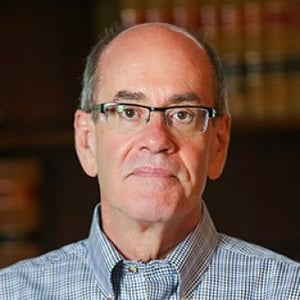
John Cross joined the Louisville faculty in 1987 after several years in private practice in Minneapolis. Since coming to Louisville, he has taught and published in a wide variety of areas, ranging from the first-year course in Civil Procedure to Animal Law. In recent years, however, he has increasingly focused his efforts in two broad areas: intellectual property law (both domestic and international), and the law governing court systems (Civil Procedure, Conflicts, Federal Jurisdiction, and Comparative Systems). Because of his exemplary work in the intellectual property field, Cross was named the Grosscurth Chair in Law in 2005.
His teaching interests reflect this same focus. He currently oversees the intellectual property curriculum at Louisville, and teaches many of the courses in that curriculum, including the Intellectual Property Survey, Trademark Law, Intellectual Property and Competition, Authors' and Performers' Rights, International Intellectual Property Law, Law and Computers, and Design Protection Law. He also continues to teach courses in court law, especially the first-year Civil Procedure Course and the capstone course in Federal Jurisdiction.
Cross' recent research parallels his teaching. This work has delved into various issues - both historic and contemporary - in intellectual property. For example, a recent article argues for the abolition of the current dual system of federal and state trademark law, proposing a unitary system in its place. Another article, published in a South African journal and reprinted in a German publication, argues that it is feasible to use an intellectual property model to protect folklore and traditional scientific knowledge. John is also a co-author of a casebook for the first year Civil Procedure course, along with Les Abramson at Louisville and Ellen Deason at Ohio State.
Because of the broad scope of Cross' research, his work has been recognized both in the United States and abroad. Most significantly, in 2006 he was awarded the degree of Doctor of Laws H.C. from the University of Turku in Finland, in recognition of his significant contributions to legal scholarship. He has also received two Fulbright awards (the maximum allowable), one in Finland (1995), the other in Ireland (2000). John has been invited to teach classes and/or give lectures in a number of foreign locales, including institutions in Argentina, Canada, Germany, England, Finland, Japan, the Netherlands, Norway, South Africa, and Sweden. In January of 2008, he was a visiting professor at the University of Western Ontario.
Pravel, Hewitt, Kimball and Kreiger Professorial Lecturer in Intellectual Property and Patent Law, George Washington University Law School
Biography
Ralph Oman practices and teaches copyright law at The George Washington University Law School as the Pravel Professorial Lecturer in Intellectual Property and Patent law. He also serves as a Fellow on the faculty of the law school’s Creative and Innovative Economy Center. He has taught at The George Washington University Law School since 1993. From 1994 to 2008, he was counsel to the international law firm, Dechert LLP. He has more than 36 years of experience in intellectual property law and legislation.
Before entering private practice in 1994, Mr. Oman was the register of copyrights of the United States (1985-93), the chief government official charged with administering the national copyright law. During his tenure as register, he helped move the United States into the Berne Convention for the Protection of Literary and Artistic Works, the oldest and most prestigious international copyright treaty, a goal sought by U.S. Registers for 100 years.
Prior to his appointment as register, Mr. Oman served as chief counsel for the Senate Subcommittee on Patents, Copyrights, and Trademarks of the U.S. Senate Judiciary Committee. In his total of 10 years on Capitol Hill working for Senator Hugh Scott of Pennsylvania and Senator Charles McCurdy Mathias of Maryland, he participated directly in many legislative enactments, most notably the 1976 revision of the copyright law. In 2002 he received the Jefferson Medal in recognition of his lifelong contribution to strong intellectual property protection.
Mr. Oman continues to promote intellectual property protection. He often serves in judicial proceedings as an expert witness, and he lectures frequently at venues around the world.
At Georgetown University Law Center, Mr. Oman served as executive editor of the Journal of International Law. After law school, he clerked for the Honorable C. Stanley Blair of the U.S. District Court for the District of Maryland. Prior to law school, Mr. Oman was a Naval Flight Officer, and he spent two tours of duty in Vietnam with his squadron. He was also a Foreign Service Officer and served as the U.S. Vice Consul in the Eastern Province of Saudi Arabia.
Steven’s extensive background in IP law and policy began as an attorney for the U.S. Senate Judiciary Committee, after which, he served as senior counsel for Policy and International Affairs at the U.S. Copyright Office and then as Chief Intellectual Property Counsel for the Global Intellectual Property Center of the U.S. Chamber of Commerce. Before co-founding RightsClick, he started the IP consultancy Sentinel Worldwide, and teaches copyright law at George Washington University Law School.
Alston & Bird Professor of Law, Duke University School of Law
Biography
Professor Young teaches constitutional law, federal courts, and foreign relations law. He is one of the nation's leading authorities on the constitutional law of federalism, having written extensively on the Rehnquist Court's "Federalist Revival" and the difficulties confronting courts as they seek to draw lines between national and state authority. He also is an active commentator on foreign relations law, where he focuses on the interaction between domestic and supranational courts and the application of international law by domestic courts. Professor Young also writes on constitutional interpretation and constitutional theory. He has been known to dabble in maritime law and comparative constitutional law.
A native of Abilene, Texas, Professor Young joined the Duke Law faculty in 2008, after serving as the Charles Alan Wright Chair in Federal Courts at the University of Texas at Austin School of Law, where he had taught since 1999. He graduated from Dartmouth College in 1990 and Harvard Law School in 1993. After law school, he served as a law clerk to Judge Michael Boudin of the 1st U.S. Circuit Court of Appeals (1993-94) and to Justice David Souter of the U.S. Supreme Court (1995-96). Professor Young practiced law at Cohan, Simpson, Cowlishaw, & Wulff in Dallas, Texas (1994-95) and at Covington & Burling in Washington, D.C. (1996-98), where he specialized in appellate litigation. He has also been a visiting professor at Harvard Law School (2004-05) and Villanova University School of Law (1998-99), as well as an adjunct professor at Georgetown University Law Center (1997).
Elected to the American Law Institute in 2006, Professor Young is an active participant in both public and private litigation in his areas of interest. He has been the principal author of amicus briefs on behalf of leading constitutional scholars in several recent Supreme Court cases, including Medellin v. Texas(concerning presidential power and the authority of the International Court of Justice over domestic courts) and Gonzales v. Raich (concerning federal power to regulate medical marijuana).
Laurence A. Tisch Professor of Law and Director, Classical Liberal Institute, New York University School of Law; Director, Classical Liberal Institute, Civitas Institute University of Texas at Austin
Biography
Richard A. Epstein is the Laurence A. Tisch Professor of Law, at New York University, a senior research fellow at the Civitas Institute at the University of Texas Austin, and a senior Lecturer, the University of Chicago. He received an LL.D., h.c . from the University of Ghent, 2003 , and an LLD h.c . from the University of Siegen in 2018 and the Bradley Prize in 2011. He has been a member of the American Academy of Arts and Sciences since 1985. He has edited both the Journal of Legal Studies (1981-1991) and the Journal of Law and Economics (1991-2001). He is also a founder and director of the Classical Liberal Institute at NYU Law School. His most recent book is The Classical Liberal Constitution: The Uncertain Quest for Limited Government (2014). His other books include Takings: Private Property and the Power of Eminent Domain ( 1985); Bargaining with the State (1993); Simple Rules for a Complex World (1995); Principles for a Free Society: Reconciling Individual Liberty and the Common Good (1998); Skepticism and Freedom: A Modern Theory of Classical Liberalism (2003); Design for Liberty: Private Property, Public Administration and the Rule of Law (2011), and most recently, The Myth of Birthright citizenship—and Beyond (2026). He has taught courses in , administrative law, antitrust, constitutional, contracts, environmental law, land use planning; real property, torts and water law. He has written and spoken extensively on a wide range of topics, and is writes a regular column for Defining Ideas.
Visiting Assistant Professor of Law, Chicago-Kent College of Law
Biography
Professor Kreis joined the Chicago-Kent faculty in 2016 from the University of Georgia, where he recently completed a Ph.D. in political science and public administration. While working toward his Ph.D., he was an instructor at the University of Georgia (2014–16), a visiting lecturer at Georgia State University (2013–16), and a visiting scholar-in-residence at Emory University School of Law (2013). During his time at the University of Georgia, he earned four prestigious teaching awards. In 2016, Professor Kreis was recognized as one of the up-and-coming academics in family law by the University of Illinois College of Law's Family Law and Policy Program, which named him a Harry Krause Emerging Scholar. He teaches legal writing at Chicago-Kent.
Professor Kreis' research focuses on the law's treatment of vulnerable persons, especially with respect to lesbian, gay, bisexual, and transgender individuals. His research lies primarily in the areas of family law, employment discrimination, and religious liberty. His other scholarly interests include legislation/regulation, torts, civil rights, legal history, legal ethics, and judicial institutions.
Professor Kreis has published articles in several law reviews, including the Illinois Law Review, William & Mary Bill of Rights Journal, Georgetown Journal of Gender and the Law, New York University Review of Law & Social Change, Emory Law Journal Online, and Yale Law Journal Online. He has also contributed many articles to popular newspapers and blogs, such as the Atlanta Journal-Constitution, USA Today, Indianapolis Star, Huffington Post, Richmond Times Dispatch, Slate, SCOTUSBlog, and Election Law Blog.
Active in law reform efforts, Professor Kreis has served as a consultant on cases and legislation related to same-sex marriage in several states and has testified numerous times before the Georgia General Assembly about issues related to marriage equality, civil rights, employment discrimination, LGBT rights, and the Georgia Religious Freedom Restoration Act. Professor Kreis has also partnered with state chapters of the American Civil Liberties Union and Lambda Legal to study pressing legal challenges facing the LGBT community. From 2012 to 2014, he was political co-chair for the Atlanta Steering Committee of the Human Rights Campaign, an organization that advocates for LGBT civil rights. With the Human Rights Campaign, Professor Kreis helped to assess federal judiciary nominees' qualifications and to strategize efforts concerning judicial nominees before the Senate Judiciary Committee.
In addition to his Ph.D., Professor Kreis earned a law degree from Washington and Lee University School of Law, where he mentored new students as a Frederic Kirgis Fellow and was named a Local Government Attorneys of Virginia Scholar. Professor Kreis graduated with distinction from the University of North Carolina at Chapel Hill with a bachelor's degree in political science.
Professor of Law, South Texas College of Law Houston
Biography
Josh Blackman is a national thought leader on constitutional law and the United States Supreme Court. Josh’s work was quoted during two presidential impeachment trials. He has testified before Congress and advises federal and state lawmakers. Josh regularly appears on TV, including NBC, CBS, ABC, Fox, and the BBC. Josh is also a frequent guest on NPR and other syndicated radio programs. He has published commentaries in the New York Times, Wall Street Journal, Washington Post, and leading national publications.
Since 2012, Josh has served as a professor at the South Texas College of Law Houston. He holds the Centennial Chair of Constitutional Law. Josh is an Adjunct Fellow at the Manhattan Institute. Josh has written more than seven dozen law review articles that have been cited more than a thousand times. Josh was selected as the Jurist of the Year by the Texas Journal of Law & Public Policy, received the inaugural Meese III Originalism Award, and was awarded the Inaugural Joseph Story Award. Josh was selected by Forbes Magazine for the “30 Under 30” in Law and Policy. Josh is the President of the Harlan Institute, and founded FantasySCOTUS, the Internet’s Premier Supreme Court Fantasy League. He blogs at the Volokh Conspiracyand posts@JoshMBlackman.
John Marshall Harlan II Professor of Law Emerita, New York Law School; Former President, American Civil Liberties Union
Biography
Nadine Strossen, New York Law School Professor Emerita and Senior Fellow at FIRE (the Foundation for Individual Rights and Expression), was national President of the American Civil Liberties Union from 1991 to 2008. An internationally acclaimed free speech scholar and advocate, who regularly addresses diverse audiences and provides media commentary around the world, Strossen is also the Host and Project Consultant for Free To Speak, a 3-hour documentary film series distributed on public television in 2023. Her books about free speech include: Free Speech: What Everyone Needs to Know® (Oxford University Press 2023); HATE: Why We Should Resist It with Free Speech, Not Censorship (Oxford University Press 2018); and Defending Pornography: Free Speech, Sex, and the Fight for Women’s Rights (Scribner 1995), which was republished with a new Preface in 2024 as part of the NYU Classics Series. Her many honors and awards include the National Coalition Against Censorship’s Judy Blume Lifetime Achievement Award for Free Speech. She serves on the Advisory Boards of several organizations that do free speech work, including: ACLU, Academic Freedom Alliance, Foundation Against Intolerance and Racism (FAIR), Heterodox Academy, National Coalition Against Censorship, and the University of Austin.
While at Becket, Luke has argued and won precedent-setting cases in the Third, Fifth, Seventh, Ninth, and Eleventh Circuits, and has helped Becket win four major Supreme Court cases in the last seven years: including victories for the Little Sisters of the Poor and Hobby Lobby against the contraception mandate, a victory for a Muslim prisoner under the Religious Land Use and Institutionalized Persons Act, and a unanimous victory in the Supreme Court’s first decision ever on the ministerial exception, which The Wall Street Journal called one of “the most important religious liberty cases in a half century.”
He frequently discusses religious freedom on networks such as CNN, Fox News, ABC, and NPR, and in publications like the Wall Street Journal, USA Today, and New York Times magazine. He also serves as an adjunct professor at the University of Utah S.J. Quinney College of Law, where he teaches constitutional law.
Before joining Becket, he clerked for Judge Michael W. McConnell on the U.S. Court of Appeals for the Tenth Circuit and graduated from the University of Chicago Law School with high honors as a member of the Law Review and the Order of the Coif.
Clint Bolick was appointed by Governor Doug Ducey in January 2016 to serve on the Arizona Supreme Court and was retained by the voters in 2018 and 2024.
Prior to joining the Court, Justice Bolick litigated constitutional cases in state and federal courts from coast to coast, including the U.S. Supreme Court. Among other positions, he served as Vice President for Litigation at the Goldwater Institute and as Co-founder and Vice President for Litigation at the Institute for Justice. He has litigated in support of school choice, freedom of enterprise, private property rights, freedom of speech, and federalism, and against racial classifications and government subsidies.
Justice Bolick received his Juris Doctor degree from the University of California at Davis, where he has been recognized as a distinguished alumnus, and his Bachelor of Arts degree magna cum laude from Drew University. He serves as a research fellow with the Hoover Institution. Among other honors, he was named one of the 90 Greatest DC Lawyers in the Last 30 Years by Legal Times in 2008, received a Bradley Prize in 2006, and was recognized as one of the nation’s three lawyers of the year by American Lawyer in 2002 for his successful defense of school vouchers in Zelman v. Simmons-Harris.
Justice Bolick is a prolific author of a dozen books and hundreds of articles. Among his most recent books are Unshackled: Freeing America’s K-12 Education System: Immigration Wars: Forging an American Solution, co-authored with former Florida Governor Jeb Bush; and David’s Hammer: The Case for an Activist Judiciary. Bolick serves as an adjunct professor of constitutional law at Arizona State University’s Sandra Day O’Connor School of Law and has served as a lecturer at Harvard University’s John F. Kennedy School of Government.
Acting Assistant Commissioner of Customs and Border Protection, Office of Professional Responsibility, U.S. Department of Homeland Security
Biography
Brian M. Fish is currently the Senior Advisor to the General Counsel at the Department of Homeland Security where he works on immigration and law enforcement issues. Previously, he was a trial attorney with the United States Immigration and Customs Enforcement, where he represented the Department of Homeland Security in removal hearings before the U.S. Immigration Court. Additionally, he was a Special Assistant United States Attorney and a Baltimore City homicide prosecutor. He is a member of the Federalist Society's Criminal Law & Procedure Practice Group Executive Committee and the President of its Baltimore Lawyers Chapter. He earned his B.A. from LaSalle University in 1992 and his J.D. from Loyola University New Orleans School of Law in 1998.
Deputy Director of the Thomas A. Roe Institute for Economic Policy Studies and Herbert and Joyce Morgan Fellow in Energy and Environmental Policy, The Heritage Foundation
Biography
Nicolas (Nick) Loris, an economist, focuses on energy, environmental, and regulatory issues as the Deputy Director of the Thomas A. Roe Institute for Economic Policy Studies and Herbert and Joyce Morgan fellow at The Heritage Foundation.
Loris studies and writes about energy supplies, energy prices, and other economic effects of environmental policies and regulations, including climate change legislation, energy efficiency mandates, and energy subsidies.
He also covers coal, oil, natural gas, nuclear gas, and renewable energy policy and articulates the benefits of free market environmentalism.
Loris has testified before House and Senate committees. He has been published and quoted in major newspapers such as The Wall Street Journal and The New York Times. His radio and television appearances include CNN, Fox News Channel, MSNBC, and National Public Radio.
He is a prolific contributor to the energy and environment section of The Daily Signal, Heritage’s multimedia news organization.
Loris was promoted to research fellow in March 2016. He had been a senior policy analyst since 2013, and was named Morgan fellow the year before. The fellowship was endowed by retired real estate developer Herbert Morgan and his late wife, Joyce, of Arlington, Va., longtime proponents of free enterprise and limited government.
Before joining Heritage in 2007, Loris was an associate at the Charles G. Koch Charitable Foundation, immersing himself for a year in a market-based management program.
He received his master's degree in economics from George Mason University in Fairfax, Va. He holds a bachelor's degree in economics, finance, and political science from Albright College in Reading, Pa.
Loris, who was born and grew up in Quakertown, Pa., currently resides in Washington, D.C.
Director, Center for International Trade and Economics and Mark A. Kolokotrones Fellow in Economic Freedom, The Heritage Foundation
Biography
Terry Miller champions free markets as director of two of The Heritage Foundation’s key research centers, Data Analysis and Trade and Economics, and as the think tank’s Mark A. Kolokotrones fellow in economic freedom.
At the Center for Trade and Economics, Miller focuses on research into how free markets and international trade foster economic growth around the world. He is editor of a signature Heritage publication, the annual Index of Economic Freedom.
At the Center for Data Analysis, Miller oversees the statistical and econometric modeling that underpins the think tank’s wide-ranging research programs.
Both centers are part of Heritage’s Institute for Economic Freedom and Opportunity.
Before joining Heritage in 2007 as director of the Center for Trade and Economics, Miller had a distinguished career in the U.S. Foreign Service. In 2006, he was appointed as an ambassador to the United Nations and U.S. representative on the U.N.’s Economic and Social Council.
Miller previously served at the State Department as deputy assistant secretary for economic and global issues. He headed offices at State devoted to the promotion of human rights, social issues, development and trade.
Overseas, Miller served in Italy, France, Barbados and New Zealand. He headed the U.S. observer mission to the U.N. Educational, Scientific and Cultural Organization (UNESCO).
Miller did both his undergraduate studies in government and his graduate studies in economics at the University of Texas in Austin.
He and his wife, the former opera singer Deborah Miller, have three children.
Director, Free Trade Initiative, National Taxpayers Union
Biography
Bryan Riley is Director of NTU’s Free Trade Initiative.
Bryan’s background includes years of research on the impact trade has on people in the United States. He has led grassroots campaigns in support of initiatives like the North American Free Trade Agreement (NAFTA) and in opposition to special-interest efforts to get the government to pick winners and losers in the U.S. economy.
Bryan has been quoted in publications including the Washington Post, the New York Times, and the Wall Street Journal. He is also an in-demand speaker who travels the country explaining the benefits international trade and investment bring to Americans.
Bryan Riley grew up in Manhattan, Kansas. He holds a bachelor’s degree in economics from Kansas State University and a master’s degree in economics from the University of Southern California.
Bryan first came to Washington, DC as an NTU intern during the Reagan administration, and he continues to champion President Reagan’s pro-trade vision for America.