

This event has concluded.
COVID-19 Restrictions: A Moderated Conversation
Temple Student Chapter
Klein Hall Room K2A1719 N Broad St
Philadelphia, PA 19122

Here are the latest events.



Partner, Troutman Pepper Locke LLP
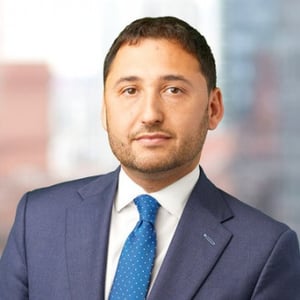
Misha leads Troutman Peppers' national appellate and Supreme Court practice. Most recently, he successfully obtained orders from the Supreme Court blocking an unconstitutional restriction on places of worship, as well as overturning a lower court order that had blocked several state election laws. He has also argued and prevailed before the Supreme Court in Gill v. Whitford, one of the most significant redistricting cases in decades, as well as Murr v. Wisconsin, a high-stakes regulatory taking case.
Before joining Troutman, Misha served as Solicitor General of the State of Wisconsin. Misha previously served as a law clerk for the Honorable Anthony M. Kennedy of the Supreme Court, Janice Rogers Brown of the D.C. Circuit, and Alex Kozinski of the 9th Circuit. He graduated from Georgetown University Law Center, where he was President of the Federalist Society Chapter.
Professor of Law, University of Wyoming College of Law
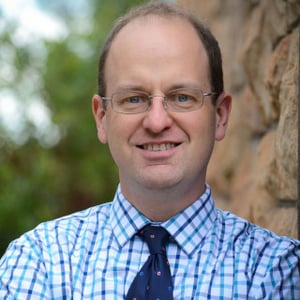
George Mocsary is an expert in corporate and small-business law, and the law of firearms.
Currently, he is Professor of Law, Founder & Director of Firearms Research Center, and Director of the Business Planning Practicum and at the University of Wyoming College of Law.
Professor Mocsary teaches and writes about Agency & Partnership, Contracts, Corporations, Securities Regulation, the Second Amendment, and Firearms Law, including the intersection of Firearms Law and private law. He is a co-author of Firearms Law and the Second Amendment: Regulation, Rights, and Policy (3rd ed. 2021), the first casebook on this topic.
Prior to his appointment at Wyoming, he served as an Associate Professor of Law at the Southern Illinois University School of Law and spent two years as a Visiting Assistant Professor at the University of Connecticut School of Law. He practiced corporate and bankruptcy law at Cravath, Swaine and Moore in New York, and clerked for the Honorable Harris L. Hartz of the U.S. Court of Appeals for the Tenth Circuit.
Professor Mocsary holds a J.D. from Fordham Law School and an M.B.A. from the University of Rochester Simon School of Business. At Fordham, he graduated first in his class, and served as Notes and Articles Editor of the Fordham Law Review. He has published in the George Washington Law Review, George Mason Law Review, Fordham Law Review, Duke Law Journal Online, and other journals. His work has been cited by the Supreme Court of the United States, several U.S. Courts of Appeals, the Supreme Court of Illinois, the Delaware Court of Chancery, and other courts.

Professor Emeritus, Paul M. Hebert Law Center, Louisiana State University
In memoriam
Dr. John Baker is Professor Emeritus of Law, and previously the Dale E. Bennett Professor of Law, at Louisiana State University Law School. He is currently Visiting Professor at Peking University School of Transnational Law (via Zoom) and has been Visiting Professor at The Center for the Constitution, Georgetown Law School (2013-2020). He has also been a Visiting Fellow at Oriel College, the University of Oxford (2012-2014) and taught at Blackfriars Hall, Oxford in 2014. Dr. Baker has also been an adjunct Fellow at the Heritage Foundation (Spring, 2008) and a Distinguished Scholar at the Catholic University of America Law School (2011-12). He has taught at Tulane Law School, George Mason Law School, Pepperdine Law School, New York Law School, Hong Kong University, and the University of Dallas, School of Management and also taught and/or lectured in 17 foreign countries. Notable among his foreign visits are the
following: Visiting Professor at the University of Lyon III (France) (1999-2011); Visiting Professor at the Universidad de los Andes, Chile (2012), as a Fulbright Specialist (2006); and a Fulbright Scholar at various universities in the Philippines. Dr. Baker received his J.D., with honors, from the University of Michigan Law School and his B.A., magna cum laude, from the University of Dallas. He also earned a Ph.D. in Political Thought from the University of London. Baker has taught over a dozen different subjects, mostly courses in public law. His main areas of interest are Constitutional Law (particularly federalism and separation of powers), Criminal Law, Anti-Terrorism Law, International Law, Health Care Law, Mediation, and Comparative Law.
In addition to law review articles and book chapters, Dr. Baker’s academic publications include Hall's Criminal Law: Cases and Materials (with Benson, Force and George; 5th ed. Michie, 1993); An Introduction to the Law of the United States (ed. with Levasseur; University Press of America, 1992). He has also published on Forbes.com, FoxNews.com, in The Washington Times, and a number of times in The Wall Street Journal. He argues in federal court, including two oral arguments in the U.S. Supreme Court. For many years, he co-taught courses for the Federalist Society on separation of powers with the late Supreme Court Justice Antonin Scalia. In September 2016, he co-taught a Supreme Court seminar in China with Justice Samuel Alito. Following law school, he served as a law clerk in federal district court and as an assistant district attorney in New Orleans before joining LSU in 1975. While a professor, he has been as a consultant to USAID, USIA (since rolled into the State Department), the Justice Department, the U.S. Senate Judiciary Subcommittee on Separation of Powers, and the Office of Planning in the White House. He served on an ABA Task Force which issued the report, The Federalization of Crime (1998) and later as a consultant to the “Bi-Partisan Task Force on the Over- federalization of Crime” (2012-2014) created by the U.S. House Judiciary Subcommittee on Crime. Dr. Baker was a co-founder of the first iteration (1995) of Stratfor Inc., a global intelligence agency. He co-authored its first book: The Intelligence Edge (with Friedman, Friedman and Chapman; Crown Books/Random House 1997). In 2022, he began a short, weekly video podcast available on YouTube and Rumble, The Baker Brief.
Director, Center for Legal Policy, Manhattan Institute for Policy Research
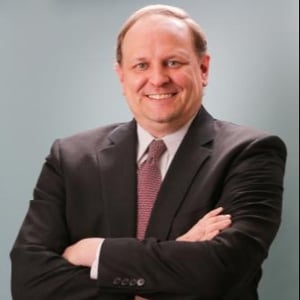
James R. Copland is a senior fellow at the Manhattan Institute and director of Legal Policy. In those roles, he develops and communicates novel, sound ideas on how to improve America’s civil- and criminal-justice systems. His forthcoming book, The Unelected: How an Unaccountable Elite is Governing America (Encounter Books) will be released on September 8, 2020. He has testified before Congress as well as state and municipal legislatures; and has authored many policy briefs, book chapters, articles and opinion pieces in a variety of publications, including the Harvard Business Law Review and Yale Journal on Regulation, the Wall Street Journal, National Law Journal, and USA Today. Copland speaks regularly on civil- and criminal-justice issues; has made hundreds of media appearances in such outlets as PBS, Fox News, MSNBC, CNBC, Fox Business, Bloomberg, C-Span, and NPR; and is frequently cited in news articles in the New York Times, Washington Post, The Economist, and Forbes. In 2011 and 2012, he was named to the National Association of Corporate Directors “Directorship 100” list, which designates the individuals most influential over U.S. corporate governance.
Prior to joining MI, Copland was a management consultant with McKinsey and Company in New York. Earlier, he was a law clerk for Ralph K. Winter on the U.S. Court of Appeals for the Second Circuit. Copland has been a director of two privately held manufacturing companies since 1997 and has served on many public and nonprofit boards. He holds a J.D. and an M.B.A. from Yale, where he was an Olin Fellow in Law and Economics; an M.Sc. in the politics of the world economy from the London School of Economics; and a B.A. in economics from the University of North Carolina at Chapel Hill, where he was a Morehead Scholar.
Partner, Williams & Connolly
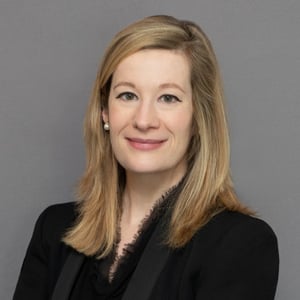
Sarah Harris is a partner in Williams & Connolly’s Supreme Court and Appellate practice, where she represents clients in high-stakes appeals in the U.S. Supreme Court and federal and state appellate courts across the country. She has argued five cases before the U.S. Supreme Court, and she has presented many arguments in federal courts of appeals and state appellate courts. Her cases have run the gamut of substantive areas, including constitutional law—especially First Amendment and separation-of-powers issues—as well as administrative law, arbitration, class actions, antitrust, False Claims Act litigation, commercial litigation, and federal civil procedure.
Sarah is widely recognized for her appellate advocacy. Chambers USA has recognized her as “Up and Coming” in Appellate Law. She has been named to Bloomberg Law’s 40 Under 40 list of top lawyers nationwide and to Benchmark Litigation’s “40 & Under Hot List,” as well as a an appellate “Rising Star” by The National Law Journal and Law360, a “Next Generation Lawyer” by The Legal 500, and as one of Bloomberg Law’s “Five Fresh Faces to Know in Appellate.”
Sarah clerked for Justice Clarence Thomas on the Supreme Court of the United States, Judge Laurence Silberman on the United States Court of Appeals for the D.C. Circuit, and Judge Sandra Lynch on the United States Court of Appeals for the First Circuit. Before joining Williams & Connolly, she served as a Deputy Assistant Attorney General in the Department of Justice’s Office of Legal Counsel.
Sarah received her undergraduate degree summa cum laude from Princeton University, and her J.D. magna cum laude from Harvard Law School. She also holds a Ph.D. and M. Phil. from the University of Cambridge.
Professor of Law, New York University School of Law
Troy McKenzie joined the faculty of New York University School of Law in 2007. His scholarly interests include bankruptcy, civil procedure, complex litigation, and the federal courts. He earned a bachelor's degree in chemical engineering in 1997 from Princeton University and his law degree in 2000 from NYU, where he was an executive editor of the NYU Law Review and a member of the Order of the Coif. After law school, he served as a law clerk to Judge Pierre N. Leval of the U.S. Court of Appeals for the Second Circuit and Justice John Paul Stevens of the Supreme Court of the United States. Before joining the NYU faculty, McKenzie was a litigation associate for four years at Debevoise & Plimpton in New York. His article "Judicial Independence, Autonomy, and the Bankruptcy Courts" recently appeared in the Stanford Law Review (2010).

Judge, United States Court of Appeals, Second Circuit
Judge Menashi was appointed to the U.S. Court of Appeals for the Second Circuit on November 14, 2019. Previously, he served as special assistant and associate counsel to the President in the White House and as acting general counsel at the U.S. Department of Education. He was assistant professor of law at Scalia Law School, George Mason University, where he taught administrative law and civil procedure, and a research fellow at New York University School of Law and Georgetown University Law Center. He was also a partner at Kirkland & Ellis LLP in New York, where he practiced appellate and commercial litigation, and served as a law clerk to Justice Samuel Alito on the Supreme Court of the United States and to Judge Douglas Ginsburg on the U.S. Court of Appeals for the District of Columbia Circuit. He graduated from Stanford Law School, where he was elected to Order of the Coif and served as senior articles editor of the Stanford Law Review, and from Dartmouth College, where he was elected to Phi Beta Kappa.

Senior Fellow and Director of Constitutional Studies, Manhattan Institute
Ilya Shapiro is a senior fellow and director of constitutional studies at the Manhattan Institute and a contributing editor of City Journal. Previously he was executive director and senior lecturer at the Georgetown Center for the Constitution, and before that a vice president of the Cato Institute.
Shapiro is the author of Lawless: The Miseducation of America’s Elites (2025) and Supreme Disorder: Judicial Nominations and the Politics of America’s Highest Court (2020), coauthor of Religious Liberties for Corporations? (2014), and editor of 11 volumes of the Cato Supreme Court Review (2008-18). He has contributed to a variety of academic, popular, and professional publications, including the Wall Street Journal, Harvard Journal of Law & Public Policy, Washington Post, Los Angeles Times, USA Today, National Review, and Newsweek. He also regularly provides commentary for various media outlets, writes the Shapiro’s Gavel newsletter on Substack, and once appeared on the Colbert Report.
Shapiro has testified many times before Congress and state legislatures and has filed more than 500 amicus curiae “friend of the court” briefs in the Supreme Court. He lectures regularly on behalf of the Federalist Society, is a member of the board of fellows of the Jewish Policy Center, was an inaugural Washington Fellow at the National Review Institute, and has been an adjunct law professor at the George Washington University and University of Mississippi. He is also the chairman of the board of advisers of the Mississippi Justice Institute, a barrister in the Edward Coke Appellate Inn of Court, and a former member of the Virginia Advisory Committee to the U.S. Commission on Civil Rights.
Earlier in his career, Shapiro was a special assistant/adviser to the Multi-National Force in Iraq on rule-of-law issues and practiced at Patton Boggs and Cleary Gottlieb. Before entering private practice, he clerked for Judge E. Grady Jolly of the U.S. Court of Appeals for the Fifth Circuit. He holds an AB from Princeton University, an MSc from the London School of Economics, and a JD from the University of Chicago Law School.
Edward Rood Eminent Scholar Chair, Professor of Law, and Senior Fellow, Hamilton Center for Classical and Civic Education, University of Florida Levin College of Law
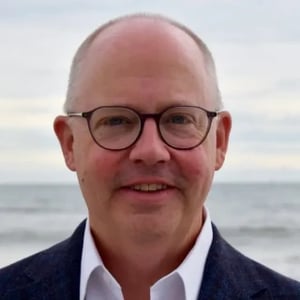
Professor Stinneford researches, teaches, and consults about legal ethics, criminal law, criminal procedure, and constitutional law. His work has been cited by the United States Supreme Court, several state supreme courts and federal courts of appeal, and numerous scholars. It has been published in numerous scholarly journals including the Georgetown Law Journal, the Northwestern University Law Review, the Virginia Law Review, the Notre Dame Law Review, and the William & Mary Law Review. The Stanford-Yale Junior faculty forum selected one of his articles as the best paper in the category of Constitutional History, and the AALS Criminal Justice Section named another article as the best paper in its Junior Scholars Paper Competition. In the fall of 2015, he was a Visiting Scholar at the Georgetown Law Center, Center for the Constitution.
John Stinneford was the inaugural Director and serves as a Senior Fellow of the Hamilton Center for Classical and Civic Education at the University of Florida. The Hamilton Center is a new academic unit whose mission is to promote civic education and civic discourse and to foster intellectual diversity. Its core purpose is to help students develop the knowledge, habits of thought, analytical skills, and character to be citizens and leaders in a free society. It will do so through curriculum, public programming, and (in conjunction with the Florida Department of Education) teacher training. Its curriculum will focus primarily on the Western intellectual tradition and the American founding.
Before joining the Florida faculty in 2009, Stinneford clerked for the Hon. James Moran of the United States District Court for the Northern District of Illinois, served as an Assistant United States Attorney, and practiced law with Winston & Strawn in Chicago. Stinneford teaches first-year courses in Criminal Law and Constitutional Law, and upper-level courses in Professional Responsibility, Criminal Procedure, Federal Criminal Law, Law & Literature, and White Collar Crime.

Senior Vice President for Legal Studies, Cato Institute
Clark Neily is senior vice president for legal studies at the Cato Institute. His areas of interest include constitutional law, overcriminalization, civil forfeiture, police accountability, and gun rights. Neily is the author of Terms of Engagement: How Our Courts Should Enforce the Constitution’s Promise of Limited Government. His writing has appeared in the Wall Street Journal, Forbes, and National Review Online, as well as various law reviews, including the Harvard Journal of Law and Public Policy, George Mason Law Review, Georgetown Journal of Law and Public Policy, NYU Journal of Law and Liberty, and Texas Review of Law and Politics. Neily is a frequent guest speaker and lecturer for the Federalist Society, Institute for Humane Studies, and American Constitution Society.
Before joining Cato in 2017, Neily was a senior attorney and constitutional litigator at the Institute for Justice and director of the Institute’s Center for Judicial Engagement. He is also an adjunct professor at the University of Texas School of Law, where he teaches constitutional litigation and public-interest law.
Neily served as co-counsel in District of Columbia v. Heller, the historic case in which the Supreme Court held for the first time that the Second Amendment protects an individual right to own a gun for self-defense.
Neily began his legal career as a law clerk to Judge Royce Lamberth on the U.S. District Court for the District of Columbia. After that he spent four years in the trial department of the Dallas-based firm Thompson & Knight. Neily received his undergraduate and law degrees from the University of Texas, where he was Chief Articles Editor of the Texas Law Review.

U.S. Court of Federal Claims and Jurist-In-Residence Professor of Law, The University of Akron School of Law
Judge Ryan T. Holte was sworn in as a judge on the United States Court of Federal Claims in July 2019. Prior to confirmation he served as the David L. Brennan Professor of Law and Director of the Center for Intellectual Property Law and Technology at The University of Akron School of Law (2017-2019) and an assistant professor of law at Southern Illinois University School of Law (2013-2017). Judge Holte has written and presented widely on patent law subjects and empirical legal studies of Federal Circuit and district court patent law cases. His most recent articles were published in the Iowa Law Review (2019), George Mason Law Review (2018), and Washington Law Review (2017).
In practice, Judge Holte served for six years as general counsel and partner of an electrical engineering technology company and is co-inventor of multiple patents related to Systems and Methods for Countering Satellite-Navigated Munitions. Prior to entering academia, Judge Holte practiced as a litigation attorney at the Federal Trade Commission and an associate in the Intellectual Property Practice Group at Jones Day. Prior to practice, he served as a law clerk to Judge Stanley F. Birch, Jr. on the United States Court of Appeals for the Eleventh Circuit and as a law clerk to Judge Loren A. Smith on the United States Court of Federal Claims.
Judge Holte received his JD from the University of California Davis School of Law and his BS, magna cum laude, in engineering from the California Maritime Academy where he was a First Class graduate of the Corps of Cadets Third Engineering Division and sailed as a U.S. Merchant Marine oiler.

Professor of Law, Antonin Scalia Law School, George Mason University
Adam Mossoff is Professor of Law at Antonin Scalia Law School, George Mason University. He has published extensively on why patents, copyrights, and other intellectual property rights have been—and should be—legally secured to innovators and creators as property rights. His scholarship has been relied on by the United States Supreme Court, by lower federal courts, and by U.S. federal agencies. He has been invited to testify numerous times before the U.S. Senate and the House of Representatives on intellectual property legislation. His writings on intellectual property policy have also appeared in the Wall Street Journal, New York Times, Forbes, Investors Business Daily, and in other media outlets. His journal articles can be downloaded here.
Professor Mossoff is a longstanding member of the Executive Committee of the Intellectual Property Practice Group of the Federalist Society, on which he served as Chairperson from 2016-2018, and he is Chair of the Intellectual Property Working Group of the Regulatory Transparency Project of the Federalist Society. He is a Senior Fellow and Chair of the Forum for Intellectual Property at the Hudson Institute, a Visiting Intellectual Property Fellow at the Heritage Foundation, and a member of the Board of Directors of the Center for Intellectual Property Understanding. He is a member of the Intellectual Property Rights Policy Committee of ANSI and he has served as Chair and Vice-Chair of the Intellectual Property Committee of the IEEE-USA, on which he remains a member in good standing.

Senior Legal Fellow, Edwin Meese III Institute for the Rule of Law, Advancing American Freedom
Senior Fellow and Director of Constitutional Studies, Manhattan Institute
Ilya Shapiro is a senior fellow and director of constitutional studies at the Manhattan Institute and a contributing editor of City Journal. Previously he was executive director and senior lecturer at the Georgetown Center for the Constitution, and before that a vice president of the Cato Institute.
Shapiro is the author of Lawless: The Miseducation of America’s Elites (2025) and Supreme Disorder: Judicial Nominations and the Politics of America’s Highest Court (2020), coauthor of Religious Liberties for Corporations? (2014), and editor of 11 volumes of the Cato Supreme Court Review (2008-18). He has contributed to a variety of academic, popular, and professional publications, including the Wall Street Journal, Harvard Journal of Law & Public Policy, Washington Post, Los Angeles Times, USA Today, National Review, and Newsweek. He also regularly provides commentary for various media outlets, writes the Shapiro’s Gavel newsletter on Substack, and once appeared on the Colbert Report.
Shapiro has testified many times before Congress and state legislatures and has filed more than 500 amicus curiae “friend of the court” briefs in the Supreme Court. He lectures regularly on behalf of the Federalist Society, is a member of the board of fellows of the Jewish Policy Center, was an inaugural Washington Fellow at the National Review Institute, and has been an adjunct law professor at the George Washington University and University of Mississippi. He is also the chairman of the board of advisers of the Mississippi Justice Institute, a barrister in the Edward Coke Appellate Inn of Court, and a former member of the Virginia Advisory Committee to the U.S. Commission on Civil Rights.
Earlier in his career, Shapiro was a special assistant/adviser to the Multi-National Force in Iraq on rule-of-law issues and practiced at Patton Boggs and Cleary Gottlieb. Before entering private practice, he clerked for Judge E. Grady Jolly of the U.S. Court of Appeals for the Fifth Circuit. He holds an AB from Princeton University, an MSc from the London School of Economics, and a JD from the University of Chicago Law School.

Professor of Law and Director of the Center for Intellectual Property Law, Maurice A. Deane School of Law at Hofstra University
Professor Manta teaches intellectual property law subjects. Her research examines the intersection between intellectual property law and social science, with a focus on psychology. She has most recently written about the hedonic value of trademarks and its legal implications, the problem of cognitive bias in copyright infringement litigation, price discrimination through software licensing in the age of the Internet of Things, and the role of criminal sanctions in intellectual property. Professor Manta has published or has forthcoming work in the Emory Law Journal, William & Mary Law Review, Iowa Law Review, Alabama Law Review, Boston College Law Review, Ohio State Law Journal, Washington and Lee Law Review, Harvard Journal of Law & Technology, Stanford Technology Law Review, Florida Law Review, Arizona Law Review, and Cornell Law Review Online, among others. She is also a co-author for a forthcoming textbook on criminal law issues in intellectual property. Professor Manta has further been a guest blogger for PrawfsBlawg and for Concurring Opinions. In 2014, she received the Lawrence A. Stessin Prize for Outstanding Scholarly Publications, which is awarded to two junior faculty members across all disciplines at Hofstra University.
Before joining the law school faculty in 2012, Professor Manta was an Assistant Professor of Law at the Case Western Reserve University School of Law. She was a Bigelow Teaching Fellow and Lecturer in Law at the University of Chicago Law School from 2007 to 2009. Professor Manta has also served on the faculties of Brooklyn Law School, The George Washington University School of Law, and the University of Arkansas at Little Rock William H. Bowen School of Law. She clerked for Judge Morris S. Arnold on the U.S. Court of Appeals for the Eighth Circuit for the 2006-2007 term.
While earning her J.D. at Yale Law School, Professor Manta was the grand prize winner of the Foley & Lardner LLP Intellectual Property Writing Competition. She also served as tributes editor of the Yale Law Journal, articles editor of the Yale Law & Policy Review, and editor of the Yale Journal on Regulation. She graduated magna cum laude from Yale University with a B.A. in psychology.