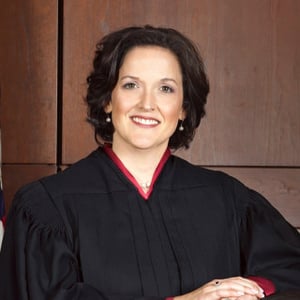
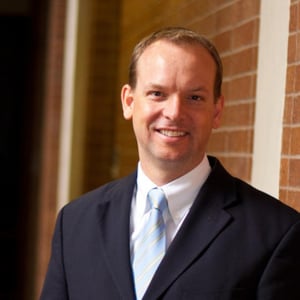
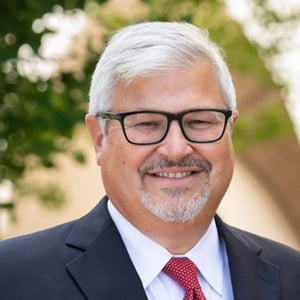
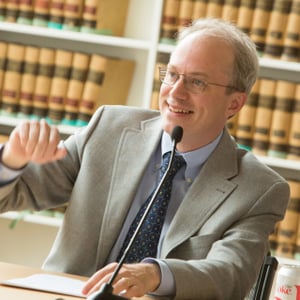
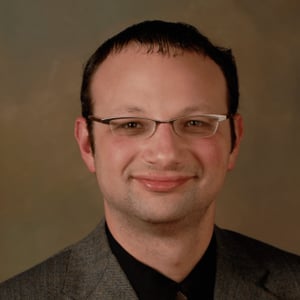
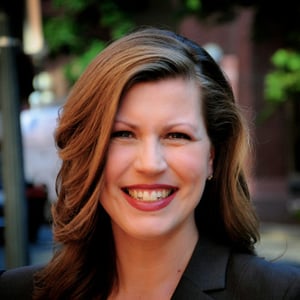
Judge, United States District Court, Eastern District of Missouri
Biography
Judge Pitlyk received her law degree from Yale Law School, after earning her undergraduate degree from Boston College and master’s degrees from Georgetown University and the Katholieke Universiteit Leuven in Belgium, where she studied as a Fulbright Scholar. Immediately before taking the bench, Judge Pitlyk served as Special Counsel for the Thomas More Society, a national public interest law firm. Before TMS, she spent several years at a small civil litigation boutique in St. Louis, MO, after starting her career at Covington & Burling in Washington, DC. From 2010 to 2011, she clerked for the Honorable Brett M. Kavanaugh, then a Circuit Judge on the United States Court of Appeals for the District of Columbia Circuit. Judge Pitlyk was sworn in as a District Judge for the Eastern District of Missouri on December 6, 2019.
William A. Jacobson is a Clinical Professor of Law and Director of the Securities Law Clinic.
He is a 1981 graduate of Hamilton College and a 1984 graduate of Harvard Law School. At Harvard he was Senior Editor of the Harvard International Law Journal and Director of Litigation for the Harvard Prison Legal Assistance Project.
Prior to joining the Cornell law faculty in 2007, Professor Jacobson had a highly successful civil litigation and arbitration practice in Providence, Rhode Island, concentrating in investment, employment, and business disputes in the securities industry, including many high profile cases reported in leading newspapers and magazines.
Professor Jacobson has argued cases in numerous federal and state courts, including the Courts of Appeal for the First, Fifth and Sixth Circuits, and the Rhode Island Supreme Court.
Professor Jacobson has a national reputation as a leading practitioner in securities arbitration. He was Treasurer, and is a former member of the Executive Committee and Board of Directors of the Public Investors Arbitration Bar Association, a professional organization of attorneys dedicated to protecting public investors. He frequently is quoted in national media on issues related to investment fraud and investor protection, and in the past has served as one of a small number of private practice attorneys who trained new arbitrators for the Financial Industry Regulatory Authority.
Professor Jacobson is co-author of the Securities Arbitration Desk Reference (Thomson-Reuters), updated annually.
Professor Jacobson also is the founder and publisher of Legal Insurrection, a popular politics and law website. He is frequently quoted in the media on political and legal topics, has authored many Op-Eds in major publications, and appears on television and radio to discuss politics and the law.
George C. Dix Professor in Constitutional Law, Northwestern University Pritzker School of Law
Biography
John O. McGinnis is a graduate of Harvard College and Harvard Law School where he was an editor of the Harvard Law Review. He also has an MA degree from Balliol College, Oxford, in philosophy and theology. Professor McGinnis clerked on the U.S. Court of Appeals for the District of Columbia. From 1987 to 1991, he was deputy assistant attorney general in the Office of Legal Counsel at the Department of Justice. He is the author of Accelerating Democracy: Transforming Government Through Technology (Princeton 2013) and Originalism and the Good Constitution (Harvard 2013) (with M. Rappaport). He is a past winner of the Paul Bator award given by the Federalist Society to an outstanding academic under 40. He has been listed by the United States on the roster of panelists who may be called upon to decide World Trade Organization Disputes.
Sterling and Eleanor Colton Endowed Chair in Law; Associate Director, International Center for Law and Religion Studies, BYU Law
Biography
Professor Moore is a scholar of foreign relations law, international law, international human rights, and international development. His publications have appeared in the Harvard, Columbia, Virginia, and Northwestern Law Reviews, among others. Professor Moore has taught international law, international human rights, U.S. foreign relations law, civil procedure, legal scholarship, a plenary powers colloquium, and an international religious freedom clinic. As a teacher, he has been recognized with the University's R. Wayne Hansen Teaching and Learning Fellowship, the BYU Law Alumni Association Teacher of the Year Award, and the Student Bar Association First Year Professor of the Year Award. He is a member of the American Law Institute.
As a human rights expert, Professor Moore serves on the Organization for Security and Cooperation in Europe’s Moscow Mechanism. In 2020, he was elected to a brief term on the Human Rights Committee, a body of independent experts that oversees states’ compliance with the International Covenant on Civil and Political Rights. Professor Moore also serves as an Associate Director of the International Center for Law and Religion Studies, which seeks to secure the blessings of religious freedom and belief for everyone.
Between 2017 and 2019, Professor Moore served, variously, as the Acting Deputy Administrator and General Counsel of the U.S. Agency for International Development, the federal government’s lead agency for international development and humanitarian assistance. From 2016 to 2017, he was the Associate Dean for Research and Academic Affairs at Brigham Young University Law School. He was a Visiting Professor at the George Washington University Law School from 2008 to 2009.
Before joining BYU, Professor Moore clerked for Justice Samuel A. Alito, Jr. during the U.S. Supreme Court’s 2007 Term. From 2003 to 2007, Professor Moore was an assistant and then associate professor at the University of Kentucky College of Law. He arrived at the University of Kentucky after researching and teaching at the University of Chicago Law School as an Olin Fellow from 2001 to 2003. From 2000 to 2001, Professor Moore clerked for Judge Samuel A. Alito, Jr. on the U.S. Court of Appeals for the Third Circuit. From 1996 to 2000, he was an Honor Program trial attorney at the U.S. Department of Justice, Civil Division, Federal Programs Branch.
Professor Moore is a summa cum laude graduate of Brigham Young University Law School, where he served as Editor in Chief of the Law Review and graduated first in his class. He received his BA from Brigham Young University, where he was a Benson scholar and graduated summa cum laude, with University Honors, and as co-valedictorian of his college. He and his wife Natalie are the parents of seven wonderful children.
Jack Goldsmith is the Learned Hand Professor of Law at Harvard Law School, a non-resident Senior Fellow at the American Enterprise Institute, and co-founder of Lawfare. He teaches and writes about presidential power, national security law, federal courts, conflict of laws, international law, and internet law. Before coming to Harvard, Professor Goldsmith served as Assistant Attorney General, Office of Legal Counsel from 2003-2004, and Special Counsel to the Department of Defense from 2002-2003. He was a Professor at the University of Chicago Law School from 1997-2002, and at the University of Virginia School of Law from 1994-1997. Before entering the academy, Professor Goldsmith was an associate at Covington & Burling in Washington, D.C., from 1992-1994. He clerked for Supreme Court Justice Anthony M. Kennedy from 1990-1991, for Court of Appeals Judge J. Harvie Wilkinson from 1989-1990, and for Judge George Aldrich on the Iran-U.S. Claims Tribunal from 1991-1992. Professor Goldsmith received a B.A. from Washington and Lee University, a B.A. and M.A. from Oxford University, and a J.D. from Yale Law School.
John H. Watson Professor of Law, Harvard Law School
Speaker Information
Marc Levin
Chief Policy Counsel, Council on Criminal Justice and Senior Advisor, Right on Crime
Biography
Marc A. Levin is the Chief Policy Counsel for the Council on Criminal Justice (counciloncj.org) and Senior Advisor for Right on Crime.
An attorney and accomplished author on legal and public policy issues, Marc began the Foundation’s criminal justice program in 2005. This work contributed to nationally praised policy changes that have been followed by dramatic declines in crime and incarceration in Texas. Building on this success, in 2010, Levin developed the concept for the Right on Crime initiative, a TPPF project in partnership with Prison Fellowship and the American Conservative Union Foundation. Right on Crime has become the national clearinghouse for conservative criminal justice reforms and has contributed to the adoption of policies in dozens of states that fight crime, support victims, and protect taxpayers.
In 2014, Levin was named one of the “Politico 50” in the magazine’s annual “list of thinkers, doers, and dreamers who really matter in this age of gridlock and dysfunction.”
Marc has testified on criminal justice policy on four occasions before Congress and has testified before legislatures in states including Texas, Nevada, Kansas, Wisconsin, and California. He also has met personally with leaders such as U.S. Presidents, Speakers of the House, and the Justice Commtitee of the United Kingdom Parliament to share his ideas on criminal justice reform. In 2007, he was honored in a resolution unanimously passed by the Texas House of Representatives that stated, “Mr. Levin’s intellect is unparalleled and his research is impeccable.”
Since 2005, Marc has published dozens of policy papers on topics such as sentencing, probation, parole, reentry, and overcriminalization which are available on the TPPF website. Levin’s articles on law and public policy have been featured in publications such as the Wall Street Journal, USA Today, Texas Review of Law & Politics, National Law Journal, New York Daily News, Jerusalem Post, Toronto Star, Atlanta Journal-Constitution, Philadelphia Inquirer, San Francisco Chronicle, Washington Times, Los Angeles Daily Journal, Charlotte Observer, Dallas Morning News, Houston Chronicle, Austin American-Statesman, San Antonio Express-News and Reason Magazine.
In 1999, Marc graduated with honors from the University of Texas with a B.A. in Plan II Honors and Government. In 2002, Marc received his J.D. with honors from the University of Texas School of Law. Marc was a Charles G. Koch Summer Fellow in 1996. He served as a law clerk to Judge Will Garwood on the U.S. Court of Appeals for the Fifth Circuit and Staff Attorney at the Texas Supreme Court.
Chief Judge, United States Court of Appeals, Sixth Circuit
Biography
JEFFREY S. SUTTON is the Chief Judge of the United States Court of Appeals for the Sixth Circuit. He has served as Chair of the Federal Judicial Conference Committee on Rules of Practice and Procedure, Chair of the Advisory Committee on Appellate Rules, and Chair of the Supreme Court Fellows Commission. He currently serves as Chair of the Executive Committee of the Judicial Conference of the United States. Since 1993, Chief Judge Sutton has been an adjunct professor at The Ohio State University College of Law, where he teaches seminars on State Constitutional Law, the United States Supreme Court, and Appellate Advocacy. He also teaches a class on State Constitutional Law at Harvard Law School. Among other publications, he is the author of Who Decides? States as Laboratories of Constitutional Experimentation and 51 Imperfect Solutions: States and the Making of American Constitutional Law. He is the co-author of a casebook, State Constitutional Law: The Modern Experience, as well as The Law of Judicial Precedent. He is also the co-editor of The Essential Scalia: On the Constitution, the Courts, and the Rule of Law. In 2006, Chief Judge Sutton was elected to the American Law Institute, and in 2017 he was elected to its Council.
Harry Kalven, Jr. Professor of Law & Faculty Director, Constitutional Law Institute, University of Chicago Law School
Biography
William Baude is a Professor of Law and the Faculty Director of the Constitutional Law Institute at the University of Chicago Law School, where he teaches federal courts, constitutional law, and conflict of laws. His current research interests include different aspects of the Fourteenth Amendment (particularly both Section One and Section Three) and the nature of judicial discretion.
Among his other activities Baude is: the co-editor of two textbooks, The Constitution of the United States and Hart & Wechsler's Federal Courts in the Federal System; an Affiliated Scholar at the Center for the Study of Constitutional Originalism; a founding member of the Academic Freedom Alliance; a member of the American Law Institute; an occasional blogger at The Volokh Conspiracy; and a podcaster on Divided Argument. He also recently served on the Presidential Commission on the Supreme Court of the United States.
Professor Baude received his BS in Mathematics from the University of Chicago and his JD from Yale Law School. He then clerked for then-Judge Michael McConnell on the United States Court of Appeals, and Chief Justice John Roberts on the United States Supreme Court. Before joining the Chicago faculty, he was a fellow at the Stanford Constitutional Law Center, and a lawyer in Washington, DC.
Senior Fellow and Director of Constitutional Studies, Manhattan Institute
Biography
Ilya Shapiro is a senior fellow and director of constitutional studies at the Manhattan Institute and a contributing editor of City Journal. Previously he was executive director and senior lecturer at the Georgetown Center for the Constitution, and before that a vice president of the Cato Institute.
Shapiro has testified many times before Congress and state legislatures and has filed more than 500 amicus curiae “friend of the court” briefs in the Supreme Court. He lectures regularly on behalf of the Federalist Society, is a member of the board of fellows of the Jewish Policy Center, was an inaugural Washington Fellow at the National Review Institute, and has been an adjunct law professor at the George Washington University and University of Mississippi. He is also the chairman of the board of advisers of the Mississippi Justice Institute, a barrister in the Edward Coke Appellate Inn of Court, and a former member of the Virginia Advisory Committee to the U.S. Commission on Civil Rights.
Earlier in his career, Shapiro was a special assistant/adviser to the Multi-National Force in Iraq on rule-of-law issues and practiced at Patton Boggs and Cleary Gottlieb. Before entering private practice, he clerked for Judge E. Grady Jolly of the U.S. Court of Appeals for the Fifth Circuit. He holds an AB from Princeton University, an MSc from the London School of Economics, and a JD from the University of Chicago Law School.
Akhil Reed Amar is Sterling Professor of Law and Political Science at Yale University, where he teaches constitutional law in both Yale College and Yale Law School. After graduating from Yale College, summa cum laude, in 1980 and from Yale Law School in 1984, and clerking for Judge (later Justice) Stephen Breyer, Amar joined the Yale faculty in 1985 at the age of 26. He is Yale’s only living professor to have won the University’s unofficial triple crown — the Sterling Chair for scholarship, the DeVane Medal for teaching, and the Lamar Award for alumni service.
Amar’s work has won awards from both the American Bar Association and the Federalist Society, and he has been cited by Supreme Court justices across the spectrum in more than 50 cases — tops among scholars under age 70. According to both Fred Shapiro’s landmark 2021 study of lifetime scholarly citations and Heinonline’s most recent tabulation of lifetime law-review citations, Amar is America’s second most-cited legal scholar still under age 70. He is a member of the American Academy of Arts and Sciences and has written widely for popular publications, including The New York Times, The Washington Post, The Wall Street Journal, Time, and The Atlantic. He was an informal consultant to the popular TV show The West Wing and his scholarship has been showcased on many broadcasts, including The Colbert Report, Morning Joe, AC360, Velshi, Fox News @ Night with Shannon Bream, Fareed Zakaria GPS, Erin Burnett Outfront, and Constitution USA with Peter Sagal.
He is the author of more than a hundred law review articles and several books, including The Bill of Rights (1998 — winner of the Yale University Press Governors’ Award), America’s Constitution (2005 — winner of the ABA’s Silver Gavel Award), America’s Unwritten Constitution (2012 — named one of the year’s 100 best nonfiction books by The Washington Post), and The Constitution Today (2016 — named one of the year’s top ten nonfiction books by Time magazine). The first volume of his ambitious trilogy on American constitutional history from the Founding to the present, The Words That Made Us: America’s Constitutional Conversation, 1760-1840, came out in May 2021. The second volume, Born Equal: Remaking America’s Constitution, 1840-1920, will be published in September 2025 and is already available for pre-order. All together, his nonfiction books have won two starred reviews from Publishers Weekly and three starred reviews from Kirkus—tops, it is believed, among legal scholars under age 70. Together with Vikram David Amar (YLS ’88), he has a bi-weekly column on the Supreme Court on the distinguished website SCOTUSblog. Along with Andy Lipka, he co-hosts a popular and free weekly podcast, Amarica’s Constitution, whose listeners are eligible for CLE credit in most American jurisdictions. A wide assortment of his articles and op-eds and video links to many of his public lectures and free online courses may be found at akhilamar.com.
Mr. Strawbridge provides clients with advice and representation at the pre-litigation, trial, and appellate stages. He has represented a broad range of individual and institutional clients on matters of constitutional law, financial and securities regulation, environmental laws, complex commercial disputes, and consumer protection statutes. His experience includes arbitrations, trial and appellate litigation, and administrative and regulatory proceedings.
Mr. Strawbridge served as a law clerk to Supreme Court Justice Clarence Thomas, Judge Morris Sheppard Arnold of the United States Court of Appeals for the Eighth Circuit, and Justice Howard Dana of the Supreme Judicial Court of Maine. Previously, Mr. Strawbridge was a partner at two large international law firms. He worked as a newspaper reporter for four years before attending law school. Mr. Strawbridge is an adjunct professor for the Supreme Court Clinic at the Antonin Scalia Law School at George Mason University.
Mr. Strawbridge earned a Bachelor of Journalism from the University of Missouri, and his J.D. summa cum laude from Creighton University School of Law. Mr. Strawbridge is a member of the Maine and Massachusetts bars.
Senior Counsel, The Becket Fund for Religious Liberty
Biography
Senior Counsel Hannah Smith joined Becket in 2007 following two clerkships at the U.S. Supreme Court for Justices Clarence Thomas and Samuel A. Alito, Jr.
Ms. Smith was a member of the Becket legal team that secured victories in key U.S. Supreme Court religious liberty cases, including Holt v. Hobbs, 574 U.S. ___ (Jan. 20, 2015), where a unanimous Court held in an opinion authored by Justice Alito that the Religious Land Use and Institutionalized Persons Act requires prison officials to accommodate peaceful expressions of religious devotion; Burwell v. Hobby Lobby, 134 S. Ct. 2751 (June 30, 2014), where the Court held in a 5-4 opinion authored by Justice Alito that family-owned businesses enjoy religious liberty rights under the Religious Freedom Restoration Act and that the HHS mandate violated the Act; and Hosanna-Tabor Evangelical Lutheran Church and School v. EEOC, 132 S. Ct. 694 (2012), where a unanimous Court held in an opinion authored by Chief Justice Roberts that the “ministerial exception” under the First Amendment protects a church’s right to choose its own ministers.
Ms. Smith contributed to Becket's Supreme Court filings in Little Sisters of the Poor v. Burwell (2015); Houston Baptist University v. Burwell (2015); Stormans v. Wiesman (2015); Michigan Catholic Conference v. Burwell (2015); Obergefell v. Hodges (2015); University of Notre Dame v. Burwell (2014); Wheaton College v. Burwell, 134 S. Ct. 2806 (2014); Little Sisters of the Poor v. Sebelius, 134 S. Ct. 1022 (2014); Bronx Household of Faith v. New York City Board of Education (2014), Elmbrook School District v. Doe (2014), Big Sky Colony v. Montana Department of Labor and Industry (2013), Sossamon v. Texas (2011), Arizona Christian School Tuition Association v. Winn (2011), Bronx Household of Faith v. New York City Board of Education (2011), Utah Highway Patrol Association v. American Atheists (2011), Christian Legal Society v. Martinez (2010), and Salazar v. Buono (2010).
Ms. Smith has been featured on CNN, Fox News, The O'Reilly Factor, The Sean Hannity Show, C-Span, EWTN, Al Jazeera America, the Wall Street Journal, the Washington Post, the Los Angeles Times, U.S. News and World Report, the Associated Press, National Review Online, Bloomberg News, NPR, BBC, the Laura Ingraham Show, the Rush Limbaugh Show, the Hugh Hewitt Show, BYU Radio, and many other publications and radio shows. She has been invited to speak on religious liberty at Harvard Law School, Princeton University, Stanford Law School, University of Pennsylvania Law School, Southern Methodist University Law School, Brigham Young University Law School, American University Washington College of the Law, and Central European University. And she has given briefings on religious liberty issues at the U.S. Capitol, the State Department, the Heritage Foundation, the Ethics and Public Policy Center, the Federalist Society for Law and Public Policy Studies, the American Bar Association, and the National Constitution Center.
Ms. Smith received her B.A. from Princeton University, concentrating in the Woodrow Wilson School of Public and International Affairs. She graduated with honors from Brigham Young University Law School and was elected to the Order of the Coif. She served as Executive Editor of the BYU Law Review, as a research assistant for the BYU International Center for Law and Religion Studies, and as president of the BYU Federalist Society. BYU awarded her its Alumni Achievement Award for her work in the defense of religious freedom. Ms. Smith also received the J. Reuben Clark Law Society's Women-in-Law Leadership Award for her national leadership in defending religious liberty and advancing the contributions of Mormon women to the law.
Following law school and in between clerkships, she was an associate in private practice at Williams & Connolly and Sidley Austin in Washington D.C., representing clients before state and federal courts and the U.S. Supreme Court in civil, criminal, and constitutional cases. Her private practice religious liberty work included the U.S. Supreme Court petition for certiorari in Corporation of the Presiding Bishop of the Church of Jesus Christ of Latter-day Saints v. First Unitarian Church of Salt Lake City (2003), as well as matters on behalf of Brigham Young University, the Church of Jesus Christ of Latter-day Saints, and the Roman Catholic Archdiocese of Washington D.C.
Ms. Smith served as a full-time volunteer missionary for the Church of Jesus Christ of Latter-day Saints in France and Switzerland. She currently serves as a member of the J. Reuben Clark Law Society International Board and as a member of the Deseret News Editorial Advisory Board. She writes on religious liberty issues in the Deseret News. Hannah and her husband John are happily married with 4 wonderful children.