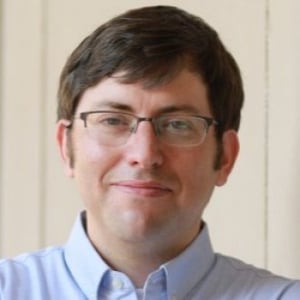
Senior fellow, Manhattan Institute; Columnist, Wall Street Journal
Biography
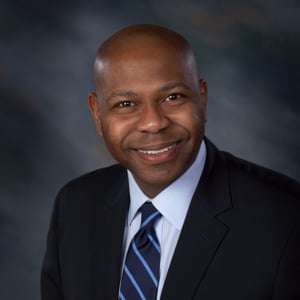
Jason Riley is a senior fellow at the Manhattan Institute and a columnist for the Wall Street Journal, where he worked for more than 20 years writing opinion pieces on politics, economics, education, immigration and race, among other subjects. He’s also a commentator for Fox News, where he’s appeared for more than a decade.
After joining the Journal in 1994, he was named a senior editorial page writer in 2000 and a member of the Editorial Board in 2005. He joined the Manhattan Institute in 2015. In 2008 he published Let Them In, which argues for a more free-market oriented U.S. immigration policy. His second book, Please Stop Helping Us, which is about the track record of government efforts to help the black underclass, was published in 2014. His most recent book, False Black Power?, is an assessment of why black political success has not translated into more black economic success and was published in June.
Born in Buffalo, N.Y., Mr. Riley earned a bachelor's degree in English from the State University of New York at Buffalo. He has also worked for USA Today and the Buffalo News. He lives in suburban New York City.
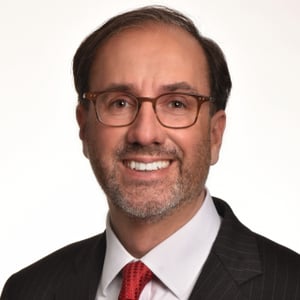
Robert Alt is the President and Chief Executive Officer of The Buckeye Institute where he has catalyzed exponential growth since he took the organization’s helm in 2012. He has since founded Buckeye’s renowned Economic Research Center and established its impactful Legal Center.
Alt is a distinguished scholar and attorney with particular expertise in legal policy, criminal justice, national security, and constitutional law. He previously worked for former U.S. Attorney General Edwin Meese III, regularly provides commentary on television and radio programs, and his writings have appeared in countless outlets.
In 2004, Alt spent five months in Iraq as an embedded war correspondent.
Alt has testified before Congress multiple times—including at the confirmation hearings for U.S. Supreme Court Justice Elena Kagan—the Federal Election Commission regarding matters of constitutional and administrative law, and numerous state legislatures.
Alt serves as an officer on the boards of The Philadelphia Society and the Federalist Society’s Columbus Lawyers Chapter. He taught national security law, criminal law, and legislation at Case Western Reserve University School of Law, as well as constitutional law and political parties and interest groups at Ashland University.
Alt earned his Doctor of Law degree from The University of Chicago Law School, where he was Symposium Editor and the winner of the Mulroy Prize for Excellence in Appellate Advocacy as well as research assistant to Professor Richard Epstein. Following law school, he clerked for Judge Alice Batchelder on the U.S. Court of Appeals for the Sixth Circuit. Alt graduated with his Bachelor of Arts in philosophy and political science magna cum laude from Azusa Pacific University where he also won the Outstanding Senior Award in Political Science.
Alt is an accomplished high-altitude alpinist and endurance athlete who has successfully climbed 6.75 of the famed Seven Summits of the World including Mount Everest. He is the creator of PROFOUND CLIMBING™ and a frequent speaker across the country and around the world on legal and public policy topics as well as effective leadership, management, decision-making, and teamwork in contexts ranging from extraordinary life/death situations to ordinary professional/business settings.
Professor of Law and Associate Dean, Boston College Law School; Nonresident Senior Fellow, American Enterprise Institute, Boston College Law School
Biography
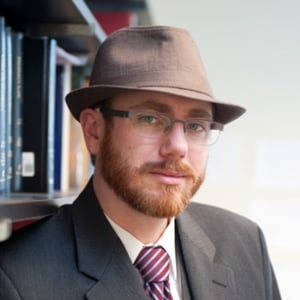
Professor Lyons is a Professor and Associate Dean at Boston College Law School. He specializes in telecommunications and tech policy, energy, and administrative law. Before joining the faculty, he practiced at the firm of Munger, Tolles and Olson in Los Angeles. He also clerked for the Judge Cynthia Holcomb Hall of the Ninth Circuit Court of Appeals.
Professor Lyons is also a Nonresident Senior Fellow at the American Enterprise Institute, where he has written over 250 blog posts on tech policy issues, including net neutrality, telecommunications regulation, First Amendment issues with tech regulation, and generative AI.
Jeremy Kidd graduated in 2007 with honors from George Mason University School of Law, where he was Executive Editor for the Journal of Law, Economics & Policy. He holds a BA in economics and political science and a Ph.D. in economics from Utah State University.
After law school, he practiced as a real estate associate with Ballard Spahr Andrews & Ingersoll in Washington, D.C. and later as a litigation associate with Strong & Hanni in Salt Lake City, Utah. He clerked for the Honorable Ted Stewart on the U.S. District Court for the District of Utah and the Honorable Alice Batchelder, Chief Judge of the U.S. Court of Appeals for the Sixth Circuit.
Professor Kidd's primary teaching interests are in the areas of business associations, torts, contracts, and law and economics. He was a Visiting Assistant Professor at George Mason University School of Law and has taught courses in business law and economics at Utah State University and Weber State University.
Laurence A. Tisch Professor of Law and Director, Classical Liberal Institute, New York University School of Law; Senior Fellow, The Civitas Institute, University of Texas at Austin
Biography
Richard A. Epstein is the inaugural Laurence A. Tisch Professor of Law at NYU School of Law. Prior to his joining the faculty, he was a visiting law professor at NYU from 2007 through 2009. He served as the Peter and Kirstin Bedford Senior Fellow at the Hoover Institution from 2000 to 2024. Since 2024 to the present he is a senior lecturer at the Civitas Institute at the University of Texas—Austin. Epstein is also the James Parker Hall Distinguished Service Professor of Law Emeritus and a senior lecturer at the University of Chicago. His initial law school appointment was at the University of Southern California from 1968 to 1972. Epstein received an LL.D., h.c. from the University of Ghent, 2003. He has been a member of the American Academy of Arts and Sciences since 1985 and was a Senior Fellow of the Center for Clinical Medical Ethics at the University of Chicago Division of Biological Sciences, also from 1983. to 2022 He served as editor of the Journal of Legal Studies from 1981 to 1991, and of the Journal of Law and Economics from 1991-2001. From 2001 to 2010 he was a director of the John M. Olin Program in Law and Economics at the University of Chicago.
His newest book, The Myth of Birthright Citizenship: What the Fourteenth Amendment Really Says was published in 2026 (Encounter Books). Prior to that he has published many books including, The Dubious Morality of the Modern Administrative State (Roman & Littlefield 2020).Earlier he published th Classical Liberal Constitution: The Uncertain Quest for Limited Government (Harvard 2014) iHis previous books include Design for Liberty: Private Property, Public Administration and the Rule of Law (Harvard 2011); The Case Against the Employee Free Choice Act (Hoover 2009); Supreme Neglect: How to Revive the Constitutional Protection of Property Rights (Oxford 2008); Antitrust Decrees in Theory and Practice: Why Less is More (AEI 2007); Overdose: How Excessive Government Regulation Stifles Pharmaceutical Innovation (Yale University Press. 2006); How Progressives Rewrote the Constitution (Cato 2006); Cases and Materials on Torts (Aspen Law & Business; 8th ed. 2004); Skepticism and Freedom: A Modern Case for Classical Liberalism (University of Chicago, 2003); Torts (Aspen Law & Business 1999); Principles for a Free Society: Reconciling Individual Liberty with the Common Good (Perseus Books, 1998): Mortal Peril: Our Inalienable Rights to Health Care (Addison-Wesley, 1997); Simple Rules for a Complex World (Harvard, 1995); Bargaining With the State (Princeton, 1993); Forbidden Grounds: The Case Against Employment Discrimination Laws (Harvard , 1992); Takings: Private Property and the Power of Eminent Domain (Harvard, 1985); and Modern Products Liability Law (Greenwood Press, 1980). He has also edited(with Catherine M. Sharkey) Cases and Materials on the Law of Torts (10th edition 2012).
Professor Epstein has written numerous articles on a wide range of legal and interdisciplinary subjects. He has taught courses in administrative law, antitrust law, civil procedure, communications, constitutional law, contracts, corporations, criminal law, employment discrimination law, environmental law, food and drug law health law and policy, legal history, labor law, property, real estate development and finance, jurisprudence, labor law; land use planning, patents, individual, estate and corporate taxation, Roman Law; torts, and workers' compensation.
Professor Epstein also writes a regular column for Civitas Institute, which also sponsors his podcast, The Libertarian with Charles C.W. Cooke, and Law Talk, with Cooke and John Yoo. He also does a podcast with John Batchelor. And appears regularly on the Freedom File with Judge Andrew Napolitano.
James G. Phillipp Professor of Law, University of Michigan Law School
Biography
Julian Davis Mortenson writes on constitutional and international law. His current book project—The Founders' President (under contract, Harvard University Press)—develops a comprehensive account of presidential power at the American Founding. He is also co-authoring a new constitutional law casebook, scheduled for publication by Foundation Press in 2020.
Professor Mortenson is an award-winning teacher and an active litigator. Representative constitutional matters include his work as lead counsel in a pre-Obergefell suit that required Michigan to recognize the marriages of more than 300 same-sex couples; his representation of discharged military service members challenging the "Don't Ask, Don't Tell" law; and his work as one of the principal drafters of the merits briefs in the landmark case Boumediene v. Bush, which secured the right of Guantanamo detainees to challenge their incarceration. He regularly litigates complex transnational matters in the U.S. courts, and has served as arbitrator, counsel, and expert witness in a wide variety of commercial and investor-state disputes.
Before joining the faculty, Professor Mortenson worked at the law firm WilmerHale, in the President's Office of the International Criminal Tribunal for the former Yugoslavia, and as a law clerk for both Justice David H. Souter and The Hon. J. Harvie Wilkinson III. Prior to law school, he was a management consultant with a client portfolio spanning the finance, manufacturing, oil and gas, and information technology industries. Professor Mortenson was salutatorian of his class at Stanford Law School and received an AB in history, summa cum laude, from Harvard College.
Julius E. Davis Professor of Law, University of Minnesota Law School
Biography
Ilan Wurman is the Julius E. Davis Professor of Law at the University of Minnesota, where he teaches administrative law and constitutional law. He previously taught at Arizona State University. He writes primarily on the Fourteenth Amendment, administrative law, separation of powers, and constitutionalism. His academic writing has appeared in the Yale Law Journal, the Stanford Law Review, the University of Chicago Law Review, the University of Pennsylvania Law Review, the Virginia Law Review, the Duke Law Journal, the Minnesota Law Review, the Notre Dame Law Review, and the Texas Law Review among other journals.
Professor Wurman is the author of the new book The Constitution of 1789: A New Introduction (Cambridge 2026). His previous books include A Debt Against the Living: An Introduction to Originalism (Cambridge 2017), and The Second Founding: An Introduction to the Fourteenth Amendment (Cambridge 2020). He is also the author of the casebook, Administrative Law Theory and Fundamentals: An Integrated Approach (Foundation Press 3d ed. 2025).
Professor Wurman practices law with the firm Tully Bailey. He has litigated a variety of administrative law and constitutional law cases, including cases involving COVID-19 restrictions, transmission lines, and Appointments Clause challenges. He also devised winning public nuisance theories to force city governments to address the increasingly challenging public camping crises throughout the country.
Justice Jimmy Blacklock was appointed to the Texas Supreme Court in January 2018 by Governor Greg Abbott. Before that, Jimmy served as Governor Abbott’s General Counsel and in the Attorney General’s Office under then-AG Abbott. While at the AG’s Office, he handled appeals and trials of constitutional cases in state and federal court involving matters such as federalism, religious liberty, and the separation of powers. As Deputy Attorney General for Legal Counsel, he oversaw the Open Records and Opinions divisions of the AG’s Office. Earlier in his career, Jimmy was appointed by President George W. Bush to serve in the Civil Rights Division of the U.S. Department of Justice, and he worked in private practice in Houston and Austin. He clerked for Judge Jerry Smith on the U.S. Court of Appeals for the 5th Circuit after graduating from U.T.-Austin (B.A., Plan II/History) and Yale Law School. He was born in Houston and now lives in Austin with his wife and three daughters.
Justice Thurgood Marshall Distinguished Professor of Law, University of Virginia School of Law
Biography
Brandon L. Garrett joined the law faculty in 2005. His research and teaching interests include criminal procedure, wrongful convictions, habeas corpus, corporate crime, scientific evidence, civil rights, civil procedure and constitutional law. Garrett’s recent research includes studies of DNA exonerations and organizational prosecutions. The research web pages below provide data related to those studies.
Garrett’s recent book examining corporate prosecutions, titled “Too Big to Jail: How Prosecutors Compromise with Corporations,” was published by Harvard University Press in Fall 2014. Translations are forthcoming in Spain and Taiwan. A new book titled “End of its Rope: How Killing the Death Penalty Can Revive Criminal Justice,” examining the implications of the decline of the death penalty, is forthcoming in Fall 2017 from Harvard University Press. In 2011, Harvard University Press published Garrett’s book, "Convicting the Innocent: Where Criminal Prosecutions Go Wrong," examining the cases of the first 250 people to be exonerated by DNA testing. That book was the subject of a symposium issue in New England Law Review, and received an A.B.A. Silver Gavel Award, Honorable Mention, and a Constitutional Commentary Award. It was translated for editions in China, Japan and Taiwan. In 2013, Foundation Press published Garrett’s casebook, “Federal Habeas Corpus: Executive Detention and Post-Conviction Litigation,” co-authored with Lee Kovarsky. Garrett’s work has been widely cited by courts, including the U.S. Supreme Court, lower federal courts, state supreme courts, and courts in other countries, such as the Supreme Courts of Canada and Israel. Garrett also frequently speaks about criminal justice matters before legislative and policymaking bodies, groups of practicing lawyers, law enforcement, and to local and national media.
Garrett attended Columbia Law School, where he was an articles editor of the Columbia Law Review and a Kent Scholar. After graduating, he clerked for the Hon. Pierre N. Leval of the U.S. Court of Appeals for the Second Circuit. He then worked as an associate at Neufeld, Scheck & Brustin LLP in New York City.
Senior Vice President for Legal Studies, Cato Institute
Biography
Clark Neily is senior vice president for legal studies at the Cato Institute. His areas of interest include constitutional law, overcriminalization, civil forfeiture, police accountability, and gun rights. Neily is the author of Terms of Engagement: How Our Courts Should Enforce the Constitution’s Promise of Limited Government. His writing has appeared in the Wall Street Journal, Forbes, and National Review Online, as well as various law reviews, including the Harvard Journal of Law and Public Policy, George Mason Law Review, Georgetown Journal of Law and Public Policy, NYU Journal of Law and Liberty, and Texas Review of Law and Politics. Neily is a frequent guest speaker and lecturer for the Federalist Society, Institute for Humane Studies, and American Constitution Society.
Before joining Cato in 2017, Neily was a senior attorney and constitutional litigator at the Institute for Justice and director of the Institute’s Center for Judicial Engagement. He is also an adjunct professor at the University of Texas School of Law, where he teaches constitutional litigation and public-interest law.
Neily served as co-counsel in District of Columbia v. Heller, the historic case in which the Supreme Court held for the first time that the Second Amendment protects an individual right to own a gun for self-defense.
Neily began his legal career as a law clerk to Judge Royce Lamberth on the U.S. District Court for the District of Columbia. After that he spent four years in the trial department of the Dallas-based firm Thompson & Knight. Neily received his undergraduate and law degrees from the University of Texas, where he was Chief Articles Editor of the Texas Law Review.
Judge, United States Court of Appeals, Third Circuit
Biography
Stephanos Bibas is a judge on the U.S. Court of Appeals for the Third Circuit. Judge Bibas was previously a professor of law and criminology at the University of Pennsylvania Law School. As director of the Penn Law Supreme Court Clinic, he argued six cases before the Supreme Court of the United States and filed briefs in dozens of others. He graduated summa cum laude and Phi Beta Kappa from Columbia University in 1989 with a B.A. in political theory and from Oxford University in 1991 with a B.A. in jurisprudence. He then earned his J.D. from Yale Law School in 1994.
After graduating from Yale Law, Judge Bibas clerked for Judge Patrick Higginbotham of the U.S. Court of Appeals for the Fifth Circuit and Justice Anthony Kennedy on the Supreme Court and was a litigation associate at Covington & Burling LLP in Washington, D.C. Thereafter, Judge Bibas served as an Assistant U.S. Attorney in the Southern District of New York, where he successfully prosecuted the world’s leading expert in Tiffany stained glass for hiring a grave robber to steal priceless Tiffany windows from cemeteries. Before his tenure at Penn Law, Judge Bibas taught at the University of Chicago Law School and the University of Iowa College of Law and was a research fellow at Yale Law School. He has published two books and seventy scholarly articles.
Joel B. Piassick Research Professor of Law, University of Virginia School of Law
Biography
Richard M. Re’s primary research and teaching interests are in criminal procedure, federal courts and constitutional law. He joined Virginia’s faculty in 2020 after serving on the faculty of the UCLA School of Law.
Re’s 2016 article, “Narrowing Supreme Court Precedent From Below” received the annual prize from the AALS Federal Courts Section for the best paper on federal courts by an untenured professor. In 2017, the law school's graduating class selected Re as Professor of the Year. And during the oral argument in Hughes v. United States (2018), the justices of the U.S. Supreme Court discussed Re’s amicus brief criticizing the Marks rule.
Re earned an A.B. in social studies from Harvard University and an M.Phil. in political thought and intellectual history from the University of Cambridge. He received his J.D. from Yale Law School. After law school, Re clerked for Judge Brett M. Kavanaugh of the U.S. Court of Appeals for the D.C. Circuit and then for Justice Anthony M. Kennedy of the Supreme Court of the United States. Re also worked as an Honors Program attorney in the Criminal Appellate Section of the U.S. Department of Justice and practiced law at a firm in Washington, D.C.
Re is also a member of PrawfsBlawg and maintains his own blog, Re’s Judicata.