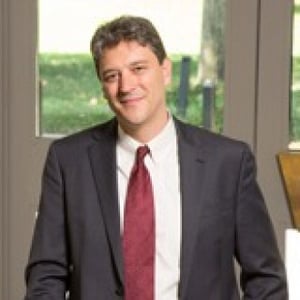
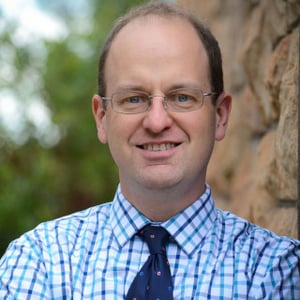
Senior Fellow and Director of Constitutional Studies, Manhattan Institute
Biography
Ilya Shapiro is a senior fellow and director of constitutional studies at the Manhattan Institute and a contributing editor of City Journal. Previously he was executive director and senior lecturer at the Georgetown Center for the Constitution, and before that a vice president of the Cato Institute.
Shapiro has testified many times before Congress and state legislatures and has filed more than 500 amicus curiae “friend of the court” briefs in the Supreme Court. He lectures regularly on behalf of the Federalist Society, is a member of the board of fellows of the Jewish Policy Center, was an inaugural Washington Fellow at the National Review Institute, and has been an adjunct law professor at the George Washington University and University of Mississippi. He is also the chairman of the board of advisers of the Mississippi Justice Institute, a barrister in the Edward Coke Appellate Inn of Court, and a former member of the Virginia Advisory Committee to the U.S. Commission on Civil Rights.
Earlier in his career, Shapiro was a special assistant/adviser to the Multi-National Force in Iraq on rule-of-law issues and practiced at Patton Boggs and Cleary Gottlieb. Before entering private practice, he clerked for Judge E. Grady Jolly of the U.S. Court of Appeals for the Fifth Circuit. He holds an AB from Princeton University, an MSc from the London School of Economics, and a JD from the University of Chicago Law School.
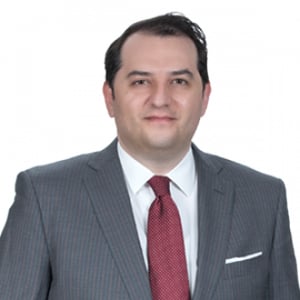
John P. Murphy Foundation Professor of Law and Associate Dean for External Engagement, University of Notre Dame Law School
Biography
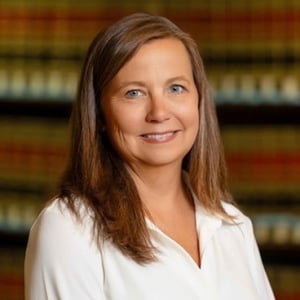
Nicole Stelle Garnett is the John P. Murphy Foundation Professor of Law at Notre Dame Law School, where she also serves as the Associate Dean for External Engagement and directs the Notre Dame Education Law Project. Her teaching and research focus on education law and policy, religious liberty, and topics related to property law (especially land use and urban development policies). In addition to dozens of articles on these subjects, she is the author of Lost Classroom, Lost Community: Catholic Schools' Importance in Urban America (University of Chicago Press, 2014) and Ordering the City: Land Use, Policing and the Restoration of Urban America (Yale University Press, 2009).
Garnett received her B.A. with distinction in Political Science from Stanford University and her J.D. from Yale Law School. After law school, she clerked for the Honorable Morris S. Arnold of the United States Court of Appeals for the Eighth Circuit and for Associate Justice Clarence Thomas of the Supreme Court of the United States. Before joining the law school faculty in 1999, she worked for two years as a staff attorney at the Institute for Justice, a non-profit public-interest law firm in Washington, D.C., where she helped to defend the constitutionality of the nation's first private-school-choice programs.
At Notre Dame, Garnett is a faculty fellow in the Institute for Educational Initiatives, Kellogg Institute for International Studies, Fitzgerald Institute for Real Estate, and deNicola Center for Ethics and Culture. She also is an elected member of the American Law Institute and a Senior Fellow at the Manhattan Institute.
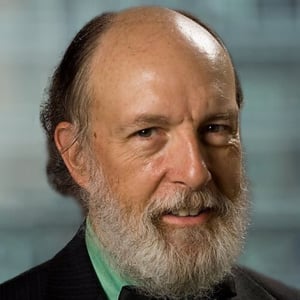
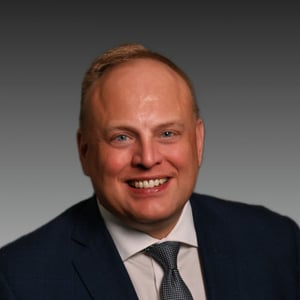
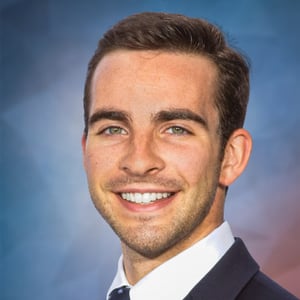
Adam Griffin is a graduate of the University of North Carolina School of Law. During law school, he served as a research assistant to Professor Stephen E. Sachs and UNC Law Dean Martin Brinkley. After law school, Adam spent two years litigating for liberty at the Institute for Justice as an inaugural Law and Liberty Fellow. He then served as a law clerk to Chief Judge Richard E. Myers in the United States District Court for the Eastern District of North Carolina, and previously worked at Pacific Legal Foundation and the Civil Rights Division of the Department of Justice.
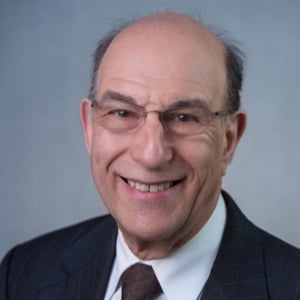
Richard Rothstein is a Distinguished Fellow of the Economic Policy Institute and a Senior Fellow (emeritus) at the Thurgood Marshall Institute of the NAACP Legal Defense Fund. He is the author of The Color of Law: A Forgotten History of How Our Government Segregated America, which recovers a forgotten history of how federal, state, and local policy explicitly segregated metropolitan areas nationwide, creating racially homogenous neighborhoods in patterns that violate the Constitution and require remediation. He is also the author of many other articles and books on race and education, which can be found on his web page at the Economic Policy Institute: http://www.epi.org/people/richard-rothstein/. Previous influential books include Class and Schools: Using Social, Economic and Educational Reform to Close the Black–White Achievement Gap and Grading Education: Getting Accountability Right. He welcomes questions and comments at riroth@epi.org.
Elisabeth H. and Granville S. Ridley Jr. Chair in Law, Vanderbilt University Law School
Biography
Christopher Serkin teaches and writes about land use and property law. His provocative scholarship addresses local governments, property theory, the Takings Clause, land use regulations and eminent domain. His articles have appeared in the Chicago, Columbia, Michigan, New York University, Notre Dame and Northwestern University law reviews, among others. He is the author of The Law of Property, a Concept and Insights book published in 2013, and a co-editor of a leading casebook, Land Use Controls (5th edition, 2020) with Robert Ellickson, Vicki Been and Roderick Hills. Professor Serkin was the law school's associate dean for academic affairs from 2019 to 2021 and its associate dean for research from 2015 to 2017. Before joining Vanderbilt’s law faculty, Serkin taught at Brooklyn Law School from 2005-13. He has been a visiting professor at the University of Pennsylvania, the University of Chicago, and New York University. He began his academic career at New York University School of Law, where he taught for two years as an acting assistant professor in its Lawyering Program. After earning his J.D. at the University of Michigan School of Law, where he was a Clarence Darrow Scholar, Dean Serkin was a law clerk for Judge John M. Walker Jr. of the U.S. Court of Appeals for the Second Circuit and for Judge J. Garvan Murtha of the U.S. District Court for the District of Vermont. Before joining the legal academy, he practiced law as an associate with Davis Polk & Wardwell.
Executive Vice President and Director of Litigation, EdChoice Legal Advocates
Biography
Before founding a public interest law firm at EdChoice, Tom Fisher served as Indiana’s first Solicitor General from 2005-2023. Fisher has argued dozens of high-profile cases before both the Indiana Supreme Court and the Seventh Circuit U.S. Court of Appeals and five cases before the U.S. Supreme Court. A two-time recipient of the National Association of Attorneys General Best Brief Award, Fisher is a Fellow of the American Academy of Appellate Lawyers and a Sagamore of the Wabash. Fisher is a graduate of Wabash College and Indiana University Maurer School of Law, where he serves as an Adjunct Professor of Law.
Solicitor General, Mississippi Attorney General's Office
Biography
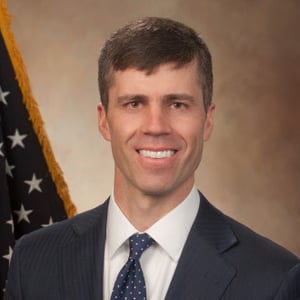
Scott G. Stewart is the Solicitor General of Mississippi. He has litigated and presented oral argument in the U.S. Supreme Court, in all regional federal courts of appeals, and in trial-level courts across the country. Stewart previously served as a Deputy Assistant Attorney General in the U.S. Department of Justice and worked in private practice as a litigator. He served as a law clerk to Justice Clarence Thomas of the Supreme Court of the United States and to Judge Diarmuid F. O’Scannlain of the U.S. Court of Appeals for the Ninth Circuit. Stewart graduated from Princeton University and Stanford Law School.
Judge, United States District Court, Northern District of Alabama
Biography
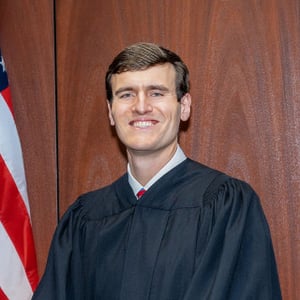
Edmund LaCour serves as a district judge on the United States District Court for the Northern District of Alabama. Before joining the court, he served as the Solicitor General of Alabama, overseeing the State’s appellate litigation before the federal courts of appeals, Alabama Supreme Court, and United States Supreme Court. In that role, he argued three times before the United States Supreme Court and multiple times before the Eleventh Circuit, Alabama Supreme Court, and federal district courts.
Before joining the Alabama Attorney General’s Office, Judge LaCour was a partner at the DC office of Kirkland & Ellis LLP, where he represented numerous clients before the Supreme Court, courts of appeals, and trial courts. Before joining Kirkland, he practiced at Bancroft PLLC in Washington, DC, and Baker Botts LLP in Houston, Texas.
Judge LaCour clerked for The Honorable William H. Pryor Jr. of the U.S. Court of Appeals for the Eleventh Circuit. Judge LaCour earned his Bachelor of Arts, summa cum laude, from Birmingham-Southern College, his M. Phil. from Trinity College Dublin, and his juris doctorate from Yale Law School.
Professor of Law, University of Wyoming College of Law
Biography
George Mocsary is an expert in corporate and small-business law, and the law of firearms.
Currently, he is Professor of Law, Founder & Director of Firearms Research Center, and Director of the Business Planning Practicum and at the University of Wyoming College of Law.
Professor Mocsary teaches and writes about Agency & Partnership, Contracts, Corporations, Securities Regulation, the Second Amendment, and Firearms Law, including the intersection of Firearms Law and private law. He is a co-author of Firearms Law and the Second Amendment: Regulation, Rights, and Policy (3rd ed. 2021), the first casebook on this topic.
Prior to his appointment at Wyoming, he served as an Associate Professor of Law at the Southern Illinois University School of Law and spent two years as a Visiting Assistant Professor at the University of Connecticut School of Law. He practiced corporate and bankruptcy law at Cravath, Swaine and Moore in New York, and clerked for the Honorable Harris L. Hartz of the U.S. Court of Appeals for the Tenth Circuit.
Professor Mocsary holds a J.D. from Fordham Law School and an M.B.A. from the University of Rochester Simon School of Business. At Fordham, he graduated first in his class, and served as Notes and Articles Editor of the Fordham Law Review. He has published in the George Washington Law Review, George Mason Law Review, Fordham Law Review, Duke Law Journal Online, and other journals. His work has been cited by the Supreme Court of the United States, several U.S. Courts of Appeals, the Supreme Court of Illinois, the Delaware Court of Chancery, and other courts.
Joe Jacquot is a business litigation shareholder at Gunster who focuses his practice on representing clients in complex state matters involving litigation and appellate work, as well as counseling companies on various regulatory issues. Having served in high-level public sector positions, Joe is dedicated to bringing his insight and experience with judicial and government systems to help clients navigate the same.
Joe served as the general counsel to Florida Governor Ron DeSantis, from the Governor’s inauguration in January 2019 through October 2020. In this capacity, Joe was responsible for all litigation and legal matters of the Governor and state executive agencies. Joe handled cases on behalf of the Governor and his administration before federal and state courts, including five matters before the Florida Supreme Court on matters of statewide significance.
Joe led the Governor’s legal team through the COVID-19 pandemic, including drafting and implementing the Governor’s executive orders including the reopening plan. Joe served as the chief ethics officer for the Governor including advising on Florida’s public records and public meeting laws. He also oversaw the Governor’s judicial appointment process which resulted in seating five justices to the Florida Supreme Court and more than 100 judges to lower courts.
From 2007-2010, Joe served as Florida’s chief deputy attorney general, during which he successfully argued before the U.S. Supreme Court in the Miranda rights case, Florida v. Powell. After this public service, and prior to his general counsel role with the Governor, he was a litigation partner at a national law firm, leading the firm’s State Attorneys General practice handling antitrust, consumer protection and other enforcement actions and worked as a senior vice president and counsel to a publicly traded mortgage-industry company in Jacksonville.
Earlier in his career, he served as the deputy chief counsel for the U.S. Senate Judiciary Committee, managing the confirmations of Chief Justice John Roberts and Justice Samuel Alito. Joe earned his undergraduate degree at the University of Virginia and his law degree at the University of Florida Levin College of Law. He also served as a lieutenant in the U.S. Navy.
Britt Whitesell Biles is a trial lawyer and a partner in the Business Litigation Group. Resident in the firm’s Washington, D.C. office, Britt has extensive experience at the highest levels of the federal government, having served in senior legal roles at the U.S. Securities and Exchange Commission (SEC), the White House, and the U.S. Small Business Administration (SBA). She has nearly two decades of experience representing and advising clients in high-stakes government investigations and bet-the-company litigation.
Most recently, Britt served as the General Counsel of the SBA. She was appointed in 2020 to manage the immense and unprecedented legal needs that arose from the SBA’s role as a lead agency in the federal government’s economic response to COVID-19; the Agency was under intense pressure to implement and administer trillion-dollar loan and grant programs established by the CARES Act and faced unparalleled levels of scrutiny from Congress, the media, and the public. As the SBA’s chief legal officer and third-highest-ranking official, Britt led the SBA’s legal function, managing 140 lawyers and staff across the country.
Britt was the principal legal advisor to the Administrator on the CARES Act and related legislation. She supervised the drafting of regulations and guidance that implemented the Paycheck Protection Program and designed key aspects of the loan review and forgiveness process. She worked closely with senior officials across the federal government to establish data-sharing and cooperation agreements to facilitate the investigation and prosecution of fraud and abuse in the COVID-19 loan and grant programs. Britt oversaw the litigation of cases arising under the CARES Act and devised the SBA’s strategy for responding to oversight, audits, and inquiries. She regularly counseled senior Agency officials in connection with Congressional testimony and briefings, including before the House Committee on Oversight and Reform, the House and Senate Small Business Committees, the House Financial Services Committee, and the House Select Subcommittee on the Coronavirus Crisis. In addition to acting as a legal advisor, Britt performed a crisis management role, advising the SBA on its communications strategy and engagement with external stakeholders. Britt, along with her staff in the Office of General Counsel, received the 2020 Administrator’s Award for Outstanding Achievement.
Before she was appointed General Counsel of the SBA, Britt served as a Special Assistant to the President and Associate White House Counsel. During her tenure at the White House, she provided legal advice on financial regulation and reform, consumer protection, privacy, transportation, and congressional oversight matters. She also was the White House’s legal liaison to the Departments of Treasury, Transportation, and Housing and Urban Development, as well as independent financial services and consumer protection agencies, including the SEC, the Federal Trade Commission (FTC), and the Consumer Financial Protection Bureau.
Britt also recently held a senior enforcement position at the SEC. As Assistant Chief Litigation Counsel, she investigated and litigated securities matters involving insider trading, cybersecurity, accounting and disclosure fraud, registered and unregistered securities offerings, market abuses, the Foreign Corrupt Practices Act, broker-dealers, investment advisors, and other regulated entities. Her cases involved millions of dollars in civil monetary penalties and disgorgement. She routinely worked with the Federal Bureau of Investigation, the Department of Justice (DOJ), and U.S. Attorneys’ Offices on parallel criminal proceedings. Britt also worked with international authorities, handling significant cross-border enforcement actions involving China, Macau, India, and Eastern Europe.
During her time at the SEC, Britt investigated and litigated many of the Commission’s most significant cases. In 2017, she received the Chairman’s Award for Excellence for leading the litigation in SEC v. Hong, a ground-breaking case in which Chinese nationals were charged with insider trading in connection with a cyber-attack on two New York law firms. The case received international attention because it demonstrated the reach of the SEC’s enforcement program as the SEC recovered illegal trading profits from foreign defendants who lived abroad and carried out their illegal scheme without entering the United States. Britt also twice received the Division of Enforcement Director’s Award for making outstanding contributions to the enforcement of the federal securities laws — in 2015, for her work on an $80-million-variable-annuity-fraud case, and again in 2016, for her work on a conflict-of-interest case against one of the world’s largest asset managers and its chief compliance officer.
In addition to serving in senior legal roles in the federal government, Britt was a partner at a global law firm and a Washington, D.C. litigation boutique. She represented high-profile individuals and public and private companies in the financial services, healthcare, pharmaceutical, defense, communications, government contracting, technology, manufacturing, and entertainment industries. She defended clients in investigations and enforcement matters by Congress, the DOJ, the SEC, the FTC, the Federal Deposit Insurance Corporation, and various state attorneys general. She also represented clients in commercial litigation, including securities, contract, cybersecurity, data privacy, defamation, consumer protection, unfair competition, professional liability, environmental, and product liability cases. An experienced trial lawyer, Britt litigated in state and federal courts nationwide. She presented cases to arbitrators and mediators. Britt also was a lecturing fellow at Duke University School of Law, teaching a course on electronic discovery.
Britt began her law career as a federal appellate clerk for the Honorable Julia Smith Gibbons on the U.S. Court of Appeals for the Sixth Circuit, after graduating magna cum laude from Duke University School of Law and being elected to the Order of the Coif.
Luke Cass defends corporations and individuals in connection with a variety of federal criminal allegations, including health care fraud, conspiracy, mail and wire fraud, embezzlement, bank fraud, and money laundering. He also conducts proactive, internal investigations related to bribery, misbranding, and the Foreign Corrupt Practices Act (FCPA). Luke served as a federal prosecutor for over a decade and has significant experience with white collar investigations and has litigated federal appellate and district court cases throughout the United States.
Previously, Luke worked as a Senior Trial Attorney with the Public Integrity Section of the U.S. Department of Justice’s Criminal Division where he handled public corruption investigations and prosecutions of elected, appointed, and career government officials. Luke served as an Assistant United States Attorney in the Financial Fraud and Corruption Unit of the U.S. Attorney’s Office for the District of Puerto Rico before working at the DOJ in Washington. In addition to Luke's extensive federal trial experience, he has also briefed and argued numerous appeals before the U.S. Court of Appeals for the First Circuit. He also clerked in the United States District Court for the Eastern District of New York.
As a result of his experience, Luke is well qualified to counsel clients in nearly every aspect of complex white collar matters involving both the public and private sectors.
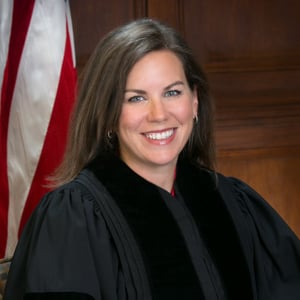
Judge, United States Court of Appeals, Eleventh Circuit
Biography
Britt C. Grant is a judge on the U.S. Court of Appeals for the Eleventh Circuit. Judge Grant was appointed to the federal bench in August 2018 after serving as a Justice on the Supreme Court of Georgia. Prior to her judicial appointment, she served as the Solicitor General of Georgia and practiced in the Washington, D.C. office of Kirkland & Ellis. Upon graduation from law school, Judge Grant served as a law clerk to then-Judge Brett M. Kavanaugh of the U.S. Court of Appeals for the District of Columbia Circuit. She earned her J.D., with distinction, from Stanford Law School, where she was the Co-Founder of the Stanford National Security and the Law Society, and the President of the Stanford Law chapter of the Federalist Society. Before enrolling in law school, Judge Grant served in The White House in a variety of domestic policy roles as well as on the staff of Congressman Nathan Deal. Judge Grant earned her B.A., summa cum laude, from Wake Forest University, where she was inducted into Phi Beta Kappa. She now lives in Atlanta, Georgia with her husband and three children.