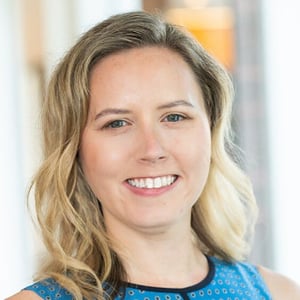
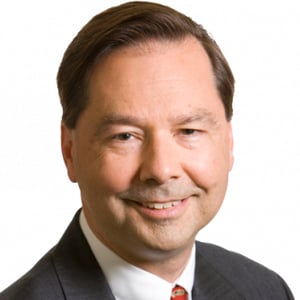
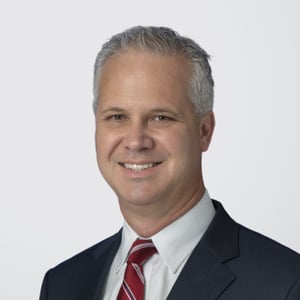
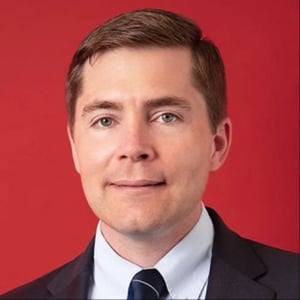
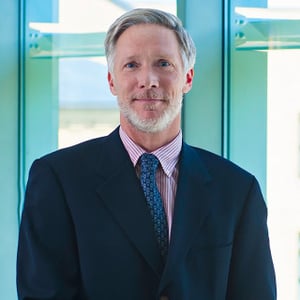
Jennifer’s research focuses on the intersection of emerging technology and law with a particular interest in the interactions between technology and the administrative state. Her work covers topics including judicial deference, liability protection for Internet platforms, autonomous vehicles and other disruptive transportation technologies, the regulation of data privacy, and the benefits of technology and innovation. Her work has appeared in USA Today, the Chicago Tribune, the New York Daily News, the Sacramento Bee, the Washington Times, Real Clear Policy, and U.S. News and World Report. Jennifer has a JD from the University of Alabama School of Law and a BA in political science at Wellesley College.
Legal Fellow, Center for Constitutional Studies, Cato Institute
Biography
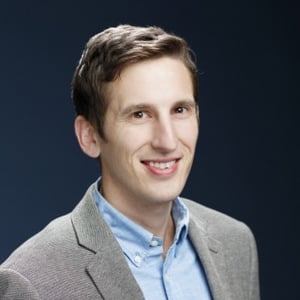
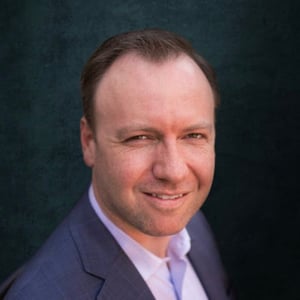
Brent Skorup is a legal fellow in the Cato Institute’s Robert A. Levy Center for Constitutional Studies.
Before joining Cato, he was a senior research fellow at the Mercatus Center at the George Mason University. His research areas include free speech, technology law, Fourth Amendment protections, regulation, and property law. Skorup has published pieces in economics and law journals and in popular media, including The Wall Street Journal, The New York Times, Bloomberg Law, Reuters, and Wired. He’s appeared as a TV and radio interview guest for news outlets like C‑SPAN, NPR, CBS News, ABC News, and CNBC Asia.
The Pennsylvania Supreme Court, a dissenting opinion at the Illinois Supreme Court, and the ALI's Restatement of the Law of Property have cited his legal research and he has testified as a technology and legal expert in legislative hearings in several states. Skorup has been appointed to several federal and state advisory bodies and he is currently a member of the Texas Advanced Air Mobility Advisory Committee.
Skorup has a BA in economics from Wheaton College and a law degree from the George Mason University School of Law, where he was articles editor for the Civil Rights Law Journal. He was a legal clerk at the FCC’s wireless bureau and Office of General Counsel and at the Energy and Commerce Committee in the U.S. House of Representatives.
Deputy Secretary of Agriculture, U.S. Department of Agriculture
Biography
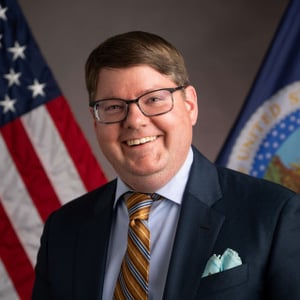
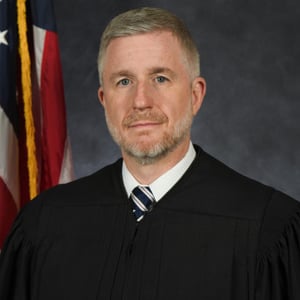
Judge Stephen Alexander Vaden was appointed as the Deputy Secretary of the U.S. Department of Agriculture on July 7, 2025. Alongside Secretary Brooke L. Rollins, Deputy Secretary Vaden leads the Department’s operations and implements policies that support America’s food and farm systems. A native of Union City, Tennessee, Deputy Secretary Vaden brings expertise in agricultural policy, law, and rural development. Previously, he served as a judge on the U.S. Court of International Trade and as General Counsel of USDA. Throughout Deputy Secretary Vaden’s time as General Counsel, he led successful Supreme Court litigation, advanced regulatory reform, and supported the implementation of the 2018 Farm Bill. He is a graduate of Yale Law School and Vanderbilt University. A public servant with strong agricultural roots, Deputy Secretary Vaden is committed to revitalizing rural America and ensuring an abundant, affordable, and safe U.S. food supply.
Senior Legal Fellow, Edwin Meese III Institute for the Rule of Law, Advancing American Freedom
Biography
Hans A. von Spakovsky is a leading national expert on a wide range of legal and constitutional issues, including civil rights, elections, the First Amendment, immigration, executive authority, the rule of law, and government reform.
He is the former Senior Legal Fellow and Manager of the Election Law Reform Initiative in the Edwin Meese III Center for Legal & Judicial Studies at The Heritage Foundation.
He is a former member of President Donald Trump’s Advisory Commission on Election Integrity. From 2006 to 2007, von Spakovsky was a member of the Federal Election Commission. He served as Counsel to the Assistant Attorney General for Civil Rights at the U.S. Department of Justice from 2002 to 2005. Prior to entering public service, Hans von Spakovsky worked for 17 years as a government affairs consultant, in a corporate legal department, and in private practice.
He is a 1984 graduate of the Vanderbilt University School of Law and received a B.S. from the Massachusetts Institute of Technology in 1981, which he attended on a National Merit Scholarship. He is Chairman of the Board of Trustees of the Public Interest Legal Foundation.
He is the 2016 winner of the Drs. W. Glenn and Rita Ricardo Campbell Award from the Heritage Foundation and received Meritorious Service Awards from the U.S. Department of Justice in 2003, 2004, and 2005.
von Spakovsky is the coauthor of “Who’s Counting? How Fraudsters and Bureaucrats Put Your Vote at Risk” (Encounter 2012) and “Obama’s Enforcer: Eric Holder’s Justice Department” (HarperCollins/Broadside 2014). His 2011 series “Every Single One” at PJ Media was nominated for a Pulitzer Prize and his articles have appeared in Fox News, National Review Online, and the Wall Street Journal.
Chief Legal Officer and Policy Director, Cicero Institute
Biography
Jonathan Wolfson is the Chief Legal Officer and Policy Director at the Cicero Institute. Before joining Cicero, he led the Policy Office at the U.S. Department of Labor where he managed DOL's deregulatory efforts and oversaw DOL's internal policy development think tank. He previously was a litigator and regulatory attorney at an international law firm representing clients before state and federal courts across the country. Following law school he served as a law clerk to The Honorable Edith Brown Clement of the U.S. Court of Appeals for the Fifth Circuit. Before law school, Jonathan was a policy analyst at the White House Council of Economic Advisers.
Jonathan received an A.B. in Economics from Washington University in St. Louis and a J.D. from the University of Virginia School of Law, where he was an Olin Law and Economic Fellow and won the John M. Olin Prize for best original law and economics research.
Professor of Law, Widener University Commonwealth Law School
Biography
Michael R. Dimino is a Professor of Law at Widener University Commonwealth Law School, where he teaches and writes in a wide variety of subjects, including constitutional law and election law. Professor Dimino graduated from the State University of New York at Buffalo and Harvard Law School, and served as Articles Editor of the Harvard Journal of Law & Public Policy. Professor Dimino served as Chief Clerk to Associate Judge Albert Rosenblatt of the New York State Court of Appeals, and then clerked for Senior Circuit Judge Laurence Silberman of the United States Court of Appeals for the District of Columbia Circuit and Judge Paul Friedman of the United States District Court for the District of Columbia. Professor Dimino is a two-time recipient of Widener’s Faculty Scholarship Award, a three-time recipient of Widener’s Outstanding Professor Award, an elected member of the American Law Institute, and a Fulbright scholar. He has authored or co-authored several articles and six books, including Voting Rights and Election Law (4th ed. forthcoming); Understanding Election Law and Voting Rights (2d ed. 2026); and Congressional Investigations and Oversight (2d ed. 2023). In his spare time, Professor Dimino referees hockey.
Vice Dean, Clinical Professor of Law, and Judge Leonard I. Garth, Rutgers-Newark Law
Biography
Speaker Information
Paul B. Matey
Judge, United States Court of Appeals, Third Circuit
Biography
Judge Paul Matey was appointed to the United States Court of Appeals for the Third Circuit in 2019 by President Trump.
Before his judicial service, Judge Matey was a partner at Lowenstein Sandler in New Jersey where he practiced complex commercial litigation and criminal defense. Earlier, Judge Matey was the Senior Vice President, General Counsel and Secretary for University Hospital Newark, an academic medical center and teaching hospital.
He also served as the Deputy Chief Counsel to Governor Chris Christie, and as an Assistant United States Attorney in the District of New Jersey, where he was awarded the Justice Department’s Director’s Award for Superior Performance. He also practiced at the Washington D.C. firm of Kellogg, Hansen, Todd, Figel & Frederick, and served as a law clerk to judges on the United States Court of Appeals for the Third Circuit and the United States District Court for the District of New Jersey.
He earned his bachelor’s degree from the University of Scranton, a Jesuit University, in 1993, and his juris doctorate, summa cum laude, from Seton Hall University School of Law in 2001, where he served as Editor-in-Chief of the Seton Hall Law Review.
In 2019, Judge Matey was elected to membership in the American Law Institute and, since 2020, has lectured on administrative law and the American legal history at Seton Hall.
Keith E. Whittington is the David Boies Professor of Law at Yale Law School. He is the faculty director of the Center for Academic Freedom and Free Speech at Yale. Prior to joining Yale, Professor Whittington was the William Nelson Cromwell Professor of Politics at Princeton University. He writes about American constitutional law, politics and history and American political thought. He has been a visiting professor at the University of Texas School of Law, is a member of the American Academy of the Arts and Sciences, and served on the Presidential Commission on the Supreme Court of the United States. He did his undergraduate work at the University of Texas at Austin and completed his Ph.D. in political science at Yale University. His books include Constitutional Interpretation: Textual Meaning, Original Intent, and Judicial Review. His most recent books include You Can't Teach That! The Battle over University Classrooms and Repugnant Laws: Judicial Review of Acts of Congress from the Founding to the Present.
Bob Barr represented the 7th District of Georgia in the U. S. House of Representatives from 1995 to 2003, and now practices law in Atlanta, Georgia, where he serves as chairman of the state’s Judicial Qualifications Commission. Bob also chairs Liberty Guard, Inc. a non-profit and non-partisan organization dedicated to protecting individual liberty. He also heads a consulting firm, Liberty Strategies, Inc., and is a registered Mediator and Arbitrator. Bob has taught constitutional law at Atlanta’s John Marshall Law School and government at Kennesaw State University.
Bob is a member of the Board of Directors for the National Rifle Association, and serves on the Board of the Interactive College of Technology. He is a member of Tau Kappa Epsilon Fraternity.
From 2003 to 2008, Bob occupied the 21st Century Liberties Chair for Freedom and Privacy at the American Conservative Union. He served as a member of The Constitution Project’s Initiative on Liberty and Security, and from 2003 to 2005 was a member of a project at Harvard University’s Kennedy School of Government addressing matters of privacy and security. Barr has served as an advisory board member for Privacy International, headquartered in London, and was labeled “Mr. Privacy” by former New York Times columnist William Safire. He was the Libertarian Party nominee for President in 2008.
Bob has appeared on virtually every major cable and network television program dealing with public policy matters. He writes regularly for Townhall.com, The Daily Caller, and The Marietta Daily Journal, and has been a columnist and blogger for the Atlanta Journal-Constitution. He writes occasional pieces for other publications and hosts a regular podcast, “Bob Barr’s Laws of the Universe.” He is the author of three books: “The Meaning of Is: The Squandered Impeachment and Wasted Legacy of William Jefferson Clinton,” “Patriot Nation: Bob Barr’s Laws of the Universe Volume One,” and “Lessons in Liberty.”
Bob was appointed by President Reagan as the United States Attorney for the Northern District of Georgia (1986-90), served as President of Southeastern Legal Foundation from 1990-91, and was an official with the CIA from 1971-78. Additionally, he has served as a member of U.S. delegations at several United Nations conferences on firearms.
Bob Barr was awarded his law degree from Georgetown University, his master’s degree from The George Washington University, and his bachelor’s degree from the University of Southern California. He and his wife Jeri live in Smyrna, Georgia just outside Atlanta.
Before coming to MSU College of Law, Professor Kalt worked at the Washington D.C. office of Sidley and Austin in one of the top appellate law practices in the country. He earned his juris doctor from Yale Law School, where he was an editor on the Yale Law Journal. After law school, he served as a law clerk for the Honorable Danny J. Boggs, U.S. Court of Appeals for the 6th Circuit. Professor Kalt’s research focuses on structural constitutional law and juries. At MSU Law, Professor Kalt teaches Constitutional Law, Torts, and Administrative Law.
J.D. Yale Law School, 1997; A.B., with Highest Distinction, University of Michigan, 1994
Tony Francois is experienced in Water and Real Property Law, Land Use and Zoning, Environmental Regulation, Natural Resources Development, Agricultural Law, and Constitutional Law. He has represented homeowners, builders, farmers and ranchers, trade associations, and water districts in administrative, civil, and criminal proceedings before state and federal administrative agencies and state and federal trial and appellate courts. He is a member of the California State Bar and the Northern, Eastern, and Central Districts of California and the Districts of New Mexico and North Dakota, and has litigated cases in federal courts in California, Oregon, Washington, Idaho, Montana, Nevada, Arizona, New Mexico, Colorado, North and South Dakota, Minnesota, Massachusetts, Maryland, South Carolina, and the District of Columbia, as well as the Sixth, Eighth, Ninth, and Tenth Circuit Courts of Appeals. He has appeared before the Supreme Courts of California, Idaho, Nevada, and the United States.
Prior to attending law school, he served as an infantry officer in the United States Army, and was stationed in the former West Germany during the fall of the Berlin Wall.
Tony was an Attorney at Pacific Legal Foundation from 2012 to 2021. He was a lobbyist for 10 years, first with California Farm Bureau Federation from 2003 to 2007, and then with KP Public Affairs from 2007 to 2012. He was an attorney at McQuaid, Bedford & Van Zandt in San Francisco from 1999 – 2003.
Mr. Leopold is a Partner with the law firm of Hunton Andrews Kurth in Washington, DC. He is the former Senate-confirmed general counsel of the U.S. EPA from 2018-2020, and he previously was a litigator at the U.S. Department of Justice, Environment and Natural Resources Division form 2007-2013. As EPA General Counsel, he counseled on the development and defense of EPA’s most significant rulemakings, including the Affordable Clean Energy Rule, the Navigable Waters Protection Rule, and the Safe Affordable Fuel‐Efficient (SAFE) Vehicles Rule, as well as several pesticide actions. He was personally involved in defending EPA in litigation, including the County of Maui v. Hawaii Wildlife Fund in the U.S. Supreme Court. Mr. Leopold’s prior government service also includes working in Florida as general counsel of the Florida Department of Environmental Protection. He now represents clients in regulatory advocacy before federal agencies, litigates federal environmental actions, and defends clients with EPA enforcement issues.
Damien Schiff is a senior attorney at Pacific Legal Foundation. He leads its environmental practice group, a unique initiative that draws broadly from PLF’s expertise and success in property rights and separation of powers litigation. Over the years, Damien has represented hundreds of landowners and property rights advocates to defend their liberties against heavy-handed and unwarranted environmental and land-use regulation. His litigation experience includes Sackett v. U.S. Environmental Protection Agency, a groundbreaking decision in which the U.S. Supreme Court upheld the right of landowners to challenge Clean Water Act compliance orders issued by EPA, and Contoski v. Norton, PLF’s successful effort to force the federal government to make good on its promise to delist the bald eagle from the Endangered Species Act.
He obtained his law degree magna cum laude from the University of San Diego School of Law, and his undergraduate degree magna cum laude from Georgetown University. While at USD, he was a research assistant for Professor Bernard Siegan, a leading constitutional theorist and advocate for property rights and economic liberty. Immediately prior to joining PLF, Damien clerked for Judge (and former PLF attorney) Victor Wolski of the United States Court of Federal Claims. Damien credits the mentoring and examples of Professor Siegan and Judge Wolski for his decision to pursue a career in liberty-based public interest litigation.
Damien lives in Sacramento with his wife, two young sons, four chickens, and a cat named Princess. In his off hours he enjoys stamp collecting, Gregorian chant, and martinis—preferably at the same time.
Director of the Program on Environmental and Energy Law, Assistant Dean of Adjunct Faculty Affairs, and Fellow in Environmental Law, American University Washington College of Law
Biography
William Snape has litigated a number of environmental and related cases in federal court, and argued Center for Biological Diversity v. Interior at the DC Circuit, which rejected the federal government’s plan for oil and gas drilling off the coast of Alaska in part because of climate change concerns. Snape is the author of numerous articles on natural resource issues, including the book Biodiversity and the Law published by Island Press. His public interest work currently focuses upon environmental justice advocacy at the state level, serving as board general counsel to the United States Climate Action Network, and litigating an active federal docket under the Freedom of Information Act (FOIA). In Summer 2020, Snape was named director of WCL’s Program on Environmental and Energy Law (PEEL).