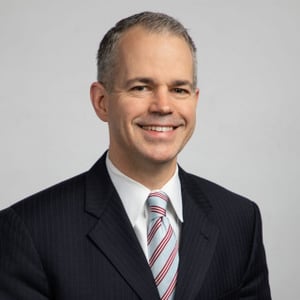
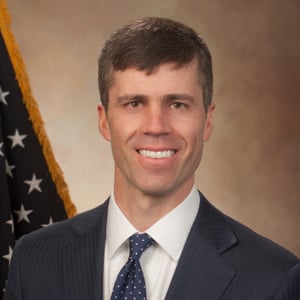
Michael Bindas is a senior attorney with the Institute for Justice (IJ) and leads IJ’s educational choice team. In this role, he oversees a talented group of IJ attorneys who help policymakers design constitutionally defensible educational choice programs and who defend educational choice programs in courtrooms nationwide. He joined IJ in 2005.
Michael was part of IJ’s litigation team in Espinoza v. Montana Department of Revenue, in which the U.S. Supreme Court held the exclusion of religious options from Montana’s educational choice program unconstitutional, and he led IJ’s defense of the Choice Scholarship Program for elementary and secondary students in Douglas County, Colorado. He also successfully challenged Washington’s denial of special education services to children in religious schools, as well as the state’s exclusion of sectarian options from its state work study program. Currently, he leads IJ’s team in Carson v. Makin, challenging Maine’s exclusion of religious options from its educational choice program.
Prior to leading IJ’s educational choice team, Michael litigated extensively to secure economic liberty, property rights, and freedom of speech throughout the nation. He was counsel of record at the U.S. Supreme Court for Kimbrough Fine Wine & Spirits in Tennessee Wine and Spirits Retailers Association v. Thomas, a successful challenge to Tennessee’s durational residency requirements for retail liquor licenses. He also led successful challenges to the municipal sign codes of St. Louis, Mo. and Norfolk, Va., after those cities attempted to silence protests of their abusive eminent domain practices.
Prior to joining IJ, Michael spent three years as an attorney with Perkins Coie LLP. He is a former law clerk to Judge Rhesa Hawkins Barksdale of the U.S. Court of Appeals for the Fifth Circuit and served as an engineer officer in the United States Army and Pennsylvania Army National Guard before beginning his legal career.
Michael received his law degree cum laude from the University of Pennsylvania Law School in 2001, where he served as Articles Editor for the Journal of Constitutional Law and was elected to the Order of the Coif. He received his undergraduate degree from the United States Military Academy at West Point in 1995.
Fox Family Pavilion Distinguished Scholar in Residence, University of Pennsylvania
Biography
MARCI A. HAMILTON is a Fox Family Pavilion Distinguished Scholar in Residence in the Program for Research on Religion and Urban Civil Society at the University of Pennsylvania. She is also the founder, CEO, and Academic Director of CHILD USA, www.childusa.org, a 501(c)(3) nonprofit academic think tank at the University of Pennsylvania dedicated to interdisciplinary, evidence-based research to prevent child abuse and neglect. Before joining the program on religion at Penn, Professor Hamilton was the Paul R. Verkuil Chair in Public Law at Benjamin N. Cardozo School of Law, Yeshiva University.
Hamilton is the leading public intellectual critic of extreme religious liberty and its impact on vulnerable populations including children, LGBTQ, and women. The author of God vs. the Gavel: The Perils of Extreme Religious Liberty (Cambridge University Press), which was nominated for a Pulitzer Prize, she is also a columnist for Verdict on Justia.com. Hamilton successfully challenged the constitutionality of the Religious Freedom Restoration Act (“RFRA”) at the Supreme Court in Boerne v. Flores (1997), and defeated the RFRA claim brought by the Archdiocese of Milwaukee against hundreds of child sex abuse survivors in Committee of Unsecured Creditors v. Listecki (7th Cir. 2015).
Drawing on her experience studying and advising in cases involving clergy sex abuse, Hamilton is the leading expert on child sex abuse statutes of limitations and has submitted testimony and advised legislators in every state where significant reform has occurred. She is the author of Justice Denied: What America Must Do to Protect Its Children (Cambridge University Press), which advocates for the elimination of child sex abuse statutes of limitations. She has also filed countless pro bono amicus briefs for the protection of children at the United States Supreme Court and the state supreme courts. Her textbook, Children and the Law, co-authored with Martin Gardner, will be published Fall 2017 by Carolina Academic Press, formerly Lexis/Nexis.
Hamilton clerked for United States Supreme Court Justice Sandra Day O’Connor and Judge Edward R. Becker of the United States Court of Appeals for the Third Circuit.
Hamilton has been honored with the 2016 Voice Today, Voice of Gratitude Award; the 2015 Religious Liberty Award, American Humanist Association; the 2014 Freethought Heroine Award; the National Crime Victim Bar Association’s Frank Carrington Champion of Civil Justice Award, 2012; the E. Nathaniel Gates Award for outstanding public advocacy and scholarship, 2008; and selected as a Pennsylvania Woman of the Year Award, 2012, among others. She is also frequently quoted in the national media on RFRA, RLUIPA, First Amendment, clergy sex abuse, and statute of limitations issues.
Professor Hamilton is a graduate of Vanderbilt University, B.A., summa cum laude; Pennsylvania State University, M.A. (English, fiction writing, High Honors); M.A. (Philosophy); and the University of Pennsylvania School of Law, J.D., magna cum laude, where she served as Editor-in-Chief of the University of Pennsylvania Law Review. She is a member of Phi Beta Kappa and Order of the Coif.
Senior Associate Chief Counsel, U.S. Chamber of Commerce Litigation Center
Biography
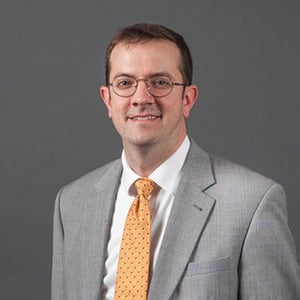
Jonathan Urick is senior associate chief counsel at the U.S. Chamber Litigation Center, the litigation arm of the U.S. Chamber of Commerce. Urick handles a variety of litigation matters for the Chamber.
Urick rejoined the Chamber after helping launch the national litigation boutique Lehotsky Keller LLP, where he represented large corporations and trade associations as one of the firm’s early partners. He previously served as senior counsel for the Chamber Litigation Center, primarily covering arbitration and class-action issues.
Before his first stint at the Chamber, Urick practiced law at McGuireWoods LLP on the firm’s appeals and issues team. With a diverse commercial-litigation practice focused on appeals and dispositive motions, Urick represented a variety of businesses across federal and state courts.
Urick served as a law clerk at all three levels of the federal judiciary: For Justices Antonin Scalia and Clarence Thomas of the U.S. Supreme Court, Judge Jeffrey Sutton of the U.S. Court of Appeals for the Sixth Circuit, and Judge Amul Thapar, then a judge on the U.S. District Court for the Eastern District of Kentucky.
Urick graduated Order of the Coif from the University of Virginia School of Law, where he served as Articles Development Editor of the Virginia Law Review. He received his undergraduate degree in economics from the University of Delaware.
Solicitor General, Mississippi Attorney General's Office
Biography
Scott G. Stewart is the Solicitor General of Mississippi. He has litigated and presented oral argument in the U.S. Supreme Court, in all regional federal courts of appeals, and in trial-level courts across the country. Stewart previously served as a Deputy Assistant Attorney General in the U.S. Department of Justice and worked in private practice as a litigator. He served as a law clerk to Justice Clarence Thomas of the Supreme Court of the United States and to Judge Diarmuid F. O’Scannlain of the U.S. Court of Appeals for the Ninth Circuit. Stewart graduated from Princeton University and Stanford Law School.
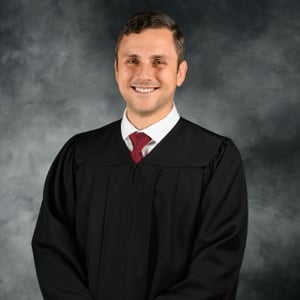
In April 2023, Judge Jordan E. Pratt was commissioned as a member of the Florida Fifth District Court of Appeal following his appointment by Governor Ron DeSantis.
Before joining the court, Judge Pratt worked as senior counsel at First Liberty Institute and served in various roles in state and federal government: as senior counsel in the U.S. Department of Justice, deputy general counsel in the U.S. Small Business Administration, and deputy solicitor general in the Florida Office of the Attorney General. As a deputy solicitor general, he defended significant Florida legislation and executive actions at every level of the state and federal court systems, with successful arguments before the U.S. Court of Appeals for the Eleventh Circuit, the Florida Supreme Court, and Florida’s First District Court of Appeal.
Judge Pratt graduated as a co-valedictorian of his undergraduate class at the University of Florida. He then received his J.D., magna cum laude, from the University of Florida College of Law, where he was a law review editor and president of the school’s Federalist Society and Christian Legal Society chapters. During law school, he interned for the Hon. Jeffrey S. Sutton on the U.S. Court of Appeals for the Sixth Circuit.
After his graduation from law school, Judge Pratt served as a law clerk to the Hon. Harvey E. Schlesinger on the U.S. District Court for the Middle District of Florida, Jacksonville Division. He then clerked for the Hon. Jennifer W. Elrod on the U.S. Court of Appeals for the Fifth Circuit.
Judge Pratt has held several fellowships, including an Olin–Searle Fellowship at Florida State University’s College of Law, and has published scholarship in the Tennessee Law Review, the Nebraska Law Review, and the Mississippi Law Journal. He is a member of the Federalist Society for Law & Public Policy Studies, and he has held several leadership roles in the organization, including service as president of its Tallahassee Lawyers Chapter from 2016 to 2019.
Matt Kuhn serves as the Solicitor General of Kentucky. As Solicitor General, he oversees the office's civil and criminal appellate litigation and supervises the office's filing of amicus briefs. Since joining the Attorney General's office, he has argued in the Supreme Court of the United States, the United States Court of Appeals for the Sixth Circuit, and the Supreme Court of Kentucky. Before joining the Attorney General's office, he served as Chief Deputy General Counsel to the Governor of Kentucky. He also worked in private practice at Jones Day in Washington, D.C. and Stoll Keenon Ogden in Louisville, and served as a law clerk for Judge Raymond Gruender of the United States Court of Appeals for the Eighth Circuit. He is a graduate of Furman University and Columbia Law School.
Head of U.S. Policy and Strategic Advocacy, Electric Coin Company
Biography
Paul Brigner is the Head of U.S. Policy and Strategic Advocacy at the Electric Coin Company. He has served in senior level technology policy and government relations roles for the last eighteen years with another ten years of hands-on technical experience at the beginning his career after serving in the United States Army.
He holds an MBA from the McDonough School of Business at Georgetown University and a JD from the Georgetown University Law Center. He received a Bachelors degree from Stephen F. Austin State University where he was named the Outstanding Computer Science Graduate.
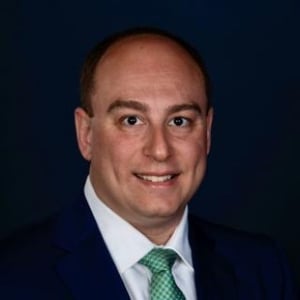
Michael Mosier is General Counsel at Espresso Systems, which is developing configurable privacy for digital assets with decentralized private computation. He served as Acting Director, Deputy Director, and the first Digital Innovation Officer of the U.S. Treasury’s Financial Crimes Enforcement Network (FinCEN). He also was Counselor (for Cybersecurity & Emerging Technology) to the Deputy Secretary of the Treasury.
Previously, Michael was Chief Technical Counsel at Chainalysis; an Associate Director of Treasury’s Office of Foreign Assets Control; a Deputy Chief at the Department of Justice’s Money Laundering Section; and White House National Security Council Director for Transnational Organized Crime. He began his public service with the Manhattan District Attorney’s Office and has been an adjunct professor at Georgetown University Law Center.
Associate Professor of Law, Antonin Scalia Law School, George Mason University
Biography
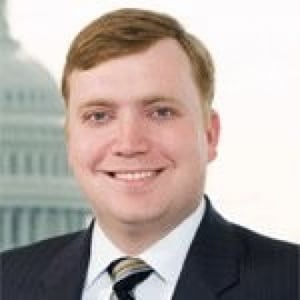
Associate Professor of Law J.W. Verret joined the Antonin Scalia Law School, George Mason University faculty in 2008. In 2013, he took leave for two years to serve as the Chief Economist and Senior Counsel for the U.S. House Committee on Financial Services. He received his JD and MA in Public Policy from Harvard Law School and the Harvard Kennedy School of Government, respectively, in 2006. While in law school, Professor Verret served an Olin Fellowship in Law and Economics at the Harvard Program on Corporate Governance under the guidance of Prof. Lucian Bebchuk.
Professor Verret then served as a law clerk for Vice-Chancellor John W. Noble of the Delaware Court of Chancery. Prior to joining the faculty at Scalia Law, Professor Verret was an associate in the SEC Enforcement Defense Practice Group at Skadden, Arps in Washington, D.C. He has written extensively on corporate law topics, including Delaware's Guidance, co-written with Chief Justice Myron T. Steele of the Delaware Supreme Court. His academic work has been featured in the Yale Journal on Regulation, The Business Lawyer, the Delaware Journal of Corporate Law, the Stanford Law Review, the University of Pennsylvania Journal of Business Law, and the Virginia Law and Business Review. Professor Verret was selected by the Northwestern Law School Searle Center on Law, Regulation, and Economic Growth for a 2009-2010 Searle-Kaufmann Research Fellowship.
Professor Verret is also a Senior Scholar at the Mercatus Center Working Group on Financial Markets, where he regularly briefs Congressional staff, members of Congress, SEC Commissioners and other financial regulatory agencies on financial regulation topics. He also directs the Corporate Federalism Initiative, where he obtains research grants for a network of students and faculty scholars who study the division between states and the federal government as sources of corporate law. Professor Verret has been invited to testify before various House and Senate Committees four times during the financial crisis of 2009 regarding all of the central provisions of the Obama Administration's 2009 financial regulatory reform proposals. For a full list of Professor Verret's C-Span appearances, including testimony before the U.S. House of Representatives and the U.S. Senate, see http://www.c-spanvideo.org/jwverret.
Professor Verret has been an invited panelist for various television appearances, including an interview on The NewsHour with Jim Lehrer. Professor Verret has been quoted in various media on financial regulation and corporate law topics, including the New York Times, CNN Money, the CNN Political Ticker, CNBC, ABC News, Investor's Business Daily, ESPN.com, The American Banker, The American Lawyer, The Huffington Post, CBS.com, and AP News. Professor Verret's op-eds have been featured in Forbes, The Chicago Tribune, The Orange County Register, and The Wall Street Journal. Professor Verret is also a regular guest contributor to three of the most noted corporate law and financial regulation law blogs: the Harvard Law School Corporate Governance and Financial Regulation Forum, Deallawyers.com, and The Conglomerate.
Professor of Legal Studies and Business Ethics at the Wharton School, University of Pennsylvania
Biography
Kevin Werbach is a professor of Legal Studies and Business Ethics at the Wharton School, University of Pennsylvania, and formerly Counsel for New Technology Policy at the U.S. Federal Communications Commission, Werbach has spent the past two decades exploring major trends at the intersection of the Internet, digital media, and communications. He served on the Obama Administration's Presidential Transition Team and founded the Supernova Group, a technology consulting firm, which organized the CEO-level Supernova technology conference. He also created one of the most successful massive open online courses, with nearly half a million enrollments. He was named Wharton's first-ever Iron Prof in 2010.
Werbach has published four books, including The Blockchain and the New Architecture of Trust, For the Win: The Power of Gamification and Game Thinking in Business, Education, Government, and Social Impact, and After the Digital Tornado: Networks, Algorithms, Humanity.
Earlier in his career, he edited the influential technology newsletter Release 1.0, and helped develop the U.S. Government's Internet and e-commerce policies in the Clinton Administration
Secretary Spencer Abraham is Chairman & CEO of The Abraham Group.
He served as the tenth Secretary of Energy of United States from 2001-2005. He helped President George W. Bush devise America’s first national energy plan in over a decade and oversaw its implementation. As part of this plan, he led efforts to broaden America’s international energy partnerships as well as forge closer ties to key oil producing nations.
Secretary Abraham has been a close observer of world energy markets, and under his leadership the Department of Energy conducted a number of important short and long-term studies of world oil, gas, electricity and other markets.
According to the Presidential Management Agenda scorecard, the Department of Energy went from “worst to first” of well-run agencies under Secretary Abraham’s leadership.
Prior to being a Cabinet Member, Secretary Abraham served as an effective and highly productive U.S. Senator from Michigan for six years. In the Senate, he was a member of the Senate Commerce, Judiciary and Budget Committees and served as chairman of the Senate Immigration Subcommittee and the Senate Commerce Subcommittee on Manufacturing and Competitiveness. He was also a senior official in the Administration of former President George H.W. Bush as Deputy Chief of Staff to the Vice President.
Secretary Abraham is a member of the Board of Directors of Occidental Petroleum, NRG Energy, PBF Energy, Uranium Energy Corp and Two Harbors Investment Corporation.
In addition, he is a frequent commentator on FOX News, CNN and Bloomberg TV as well as a periodic contributor of op-ed articles to the Financial Times, The Wall Street Journal, The Washington Post, The Weekly Standard and other publications.
Spencer Abraham and his wife, Jane, are the parents of adult children. He holds a law degree from Harvard University, where he co-founded the Federalist Society, and is a native of East Lansing, Michigan.
Judge, United States Court of Appeals, Eleventh Circuit
Biography
Britt C. Grant is a judge on the U.S. Court of Appeals for the Eleventh Circuit. Judge Grant was appointed to the federal bench in August 2018 after serving as a Justice on the Supreme Court of Georgia. Prior to her judicial appointment, she served as the Solicitor General of Georgia and practiced in the Washington, D.C. office of Kirkland & Ellis. Upon graduation from law school, Judge Grant served as a law clerk to then-Judge Brett M. Kavanaugh of the U.S. Court of Appeals for the District of Columbia Circuit. She earned her J.D., with distinction, from Stanford Law School, where she was the Co-Founder of the Stanford National Security and the Law Society, and the President of the Stanford Law chapter of the Federalist Society. Before enrolling in law school, Judge Grant served in The White House in a variety of domestic policy roles as well as on the staff of Congressman Nathan Deal. Judge Grant earned her B.A., summa cum laude, from Wake Forest University, where she was inducted into Phi Beta Kappa. She now lives in Atlanta, Georgia with her husband and three children.
Justice Sarah Hawkins Warren was appointed to the Supreme Court of Georgia by Governor Nathan Deal and was sworn in on September 17, 2018. She previously served as Solicitor General for the State of Georgia under Attorney General Chris Carr.
Justice Warren earned a B.A. in Public Policy and Spanish, magna cum laude, from Duke University. After graduation, Justice Warren served as Deputy Press Secretary for the White House Office of Management and Budget.
Justice Warren received her J.D., magna cum laude, from Duke University School of Law, where she served as Editor in Chief of Law and Contemporary Problems and on the Executive Committee of the Federalist Society.
Following her graduation from law school, Justice Warren served as a law clerk to then-Chief Judge J.L. Edmondson of the United States Court of Appeals for the Eleventh Circuit and to the Honorable Richard J. Leon of the United States District Court for the District of Columbia. She also practiced as a litigation partner at Kirkland & Ellis LLP in Washington, D.C., where she represented clients before state and federal courts and was outside counsel to Georgia in Florida v. Georgia, No. 142 Original (United States Supreme Court).
In 2015, Justice Warren and her family returned home to Georgia, where she began service in the Office of Attorney General Sam Olens as Deputy Solicitor General and Special Counsel for Water Litigation. In January 2017, she was appointed Solicitor General by Attorney General Chris Carr, and in that role served as the chief appellate lawyer for the State of Georgia and the primary constitutional law advisor to the Attorney General. As Solicitor General, Justice Warren represented Georgia in multi-state litigation and in appeals before state and federal courts, including in an argument before the United States Supreme Court.
Justice Warren currently serves on the Duke Law School Board of Visitors, the Berry College Board of Trustees, and the Advisory Board for the Atlanta Lawyers Chapter of the Federalist Society. She lives in Atlanta with her husband, Blaise, and their three children.