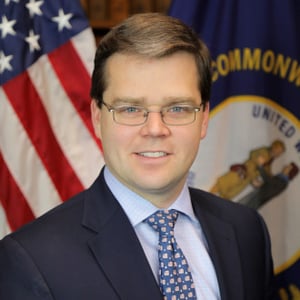
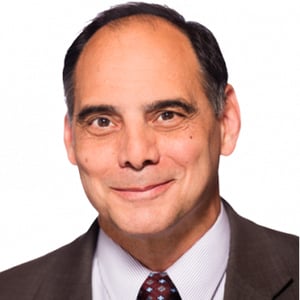
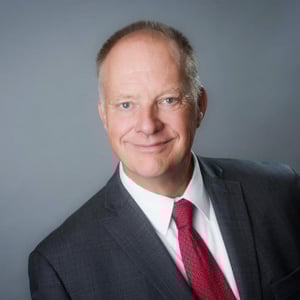
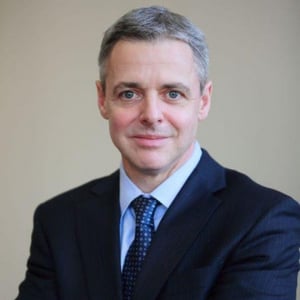
United States District Judge, Eastern District of Kentucky
Biography
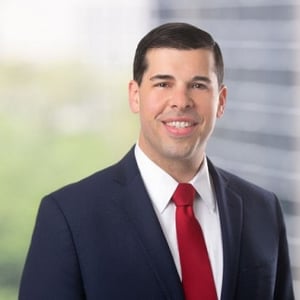
Chad served as solicitor general from 2019 to 2021, overseeing all civil and criminal appellate litigation involving the commonwealth, and leading a team of nearly 30 appellate lawyers.
Chad has also served as the chief deputy general counsel (2015-2019) to the governor of Kentucky. In that role, he represented the governor in litigation and advised the governor and other executive branch officials on a wide variety of legal and policy issues.
After graduating law school, he clerked for Judge John M. Rogers on the US Court of Appeals for the Sixth Circuit, and also for Judge Amul R. Thapar on the US District Court for the Eastern District of Kentucky.
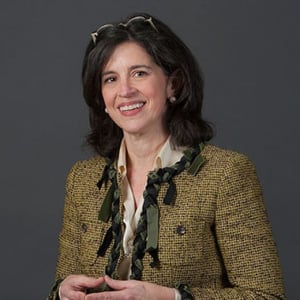
Professor of Law, Antonin Scalia Law School, George Mason University
Biography
Helen Alvaré is a Professor of Law at Antonin Scalia Law School, George Mason University, where she teaches Family Law, Law and Religion, and Property Law. She publishes on matters concerning marriage, parenting, non-marital households, and the First Amendment religion clauses. She is faculty advisor to the law school’s Civil Rights Law Journal, and the Latino/a Law Student Association, a Member of the Holy See’s Dicastery for Laity, Family and Life (Vatican City), a board member of Catholic Relief Services, a member of the Executive Committee of the AALS’ Section on Law and Religion, and an ABC news consultant. She cooperates with the Permanent Observer Mission of the Holy See to the United Nations as a speaker and a delegate to various United Nations conferences concerning women and the family.
In addition to her books, and her publications in law reviews and other academic journals, Professor Alvaré publishes regularly in news outlets including the New York Times, the Washington Post, the Huffington Post, and CNN.com. She also speaks at academic and professional conferences in the United States, Europe, Latin America and Australia.
Prior to joining the faculty of Scalia Law, Professor Alvaré taught at the Columbus School of Law at the Catholic University of America; represented the U.S. Conference of Catholic Bishops before legislative bodies, academic audiences and the media; and was a litigation attorney for the Philadelphia law firm of Stradley, Ronon, Stevens & Young.
Professor Alvaré received her law degree from Cornell University School of Law and her master’s degree in Systematic Theology from the Catholic University of America.
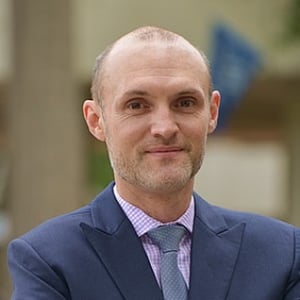
Associate Professor of Law, Washington and Lee University School of Law
Biography
Alan M. Trammell teaches and writes primarily in the fields of civil procedure, federal courts, constitutional law, and conflict of laws. He is recognized as one of the leading authorities on universal injunctions and has been invited to present his research at numerous conferences, on podcasts, and in popular media. His scholarship has appeared in the Columbia Law Review, the Virginia Law Review, the Cornell Law Review, the Texas Law Review, and the Vanderbilt Law Review.
Before joining the W&L faculty in 2020, Professor Trammell taught as an Assistant Professor at the University of Arkansas (Fayetteville). He has also served as an Associate-in-Law at Columbia Law School and a Visiting Assistant Professor at Brooklyn Law School, where the student body selected him as Professor of the Year in 2014.
Professor Trammell earned his law degree from the University of Virginia where he was a Hardy Cross Dillard Scholar and served as Articles Development Editor of the Virginia Law Review. After graduation, he clerked for the Honorable Stephen F. Williams of the U.S. Court of Appeals for the D.C. Circuit and the Honorable Theodor Meron of the International Criminal Tribunal for the former Yugoslavia in The Hague (Netherlands). He then spent three years as a litigation associate at the firm now known as Kellogg, Hansen, Todd, Figel & Frederick PLLC in Washington, D.C.
Before law school, he received a bachelor's degree from Wake Forest University and master's degrees from the London School of Economics & Political Science and Oxford University, where he studied as a Marshall Scholar.
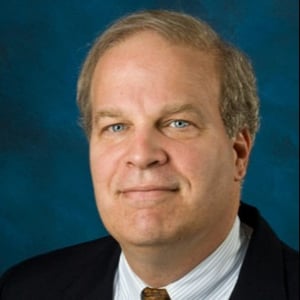
James Wilson Endowed Professor, Pepperdine University
Biography
In law school, Robert Pushaw served as Notes Editor of the Yale Law Journal and received an Olin Foundation Fellowship. After graduation, he clerked for Judge James Buckley of the US Court of Appeals for the DC Circuit, then worked as an employment lawyer for Davis Wright Tremaine in Seattle.
Joining the University of Missouri School of Law faculty in 1992, Professor Pushaw taught Constitutional Law, Federal Courts and Contracts. In 1998, he won the Blackwell Sanders Distinguished Faculty Achievement Award as the law school's top teacher. In 2000, Pushaw received the William Kemper Fellowship for Teaching Excellence, the University of Missouri's highest teaching honor. He came to Pepperdine in 2001, and won the School of Law's Annual Teaching Award in 2007.
T. Terrell Sessums and Gerald Sohn Professor in Constitutional Law, University of Florida Levin College of Law
Biography
Professor Wright joined the Levin College of Law in 1998 and serves as the T. Terrell Sessums and Gerald Sohn Professor in Constitutional Law. At UF Law she has taught various subjects including, constitutional law, property, trusts and estates, legal history, feminist theory, constitutional law of property, and theories of property. As a legal historian, her research has delved into 19th century English divorce and marriage law, 19th century American property rights involving railroads and utilities, and women’s rights and constitutional protections in the 19th and early 20th centuries. She has written extensively, including several book chapters, on recreational trails and rails-to-trails conversions, on the history of English family law, on the Equal Rights Amendment, on constitutional takings law, on the logistics of drone delivery systems, and on the necessity for legal reforms in intestacy and probate law to better address land loss and the heirs’ property problem. Professor Wright has written dozens of articles, published in journals as diverse as the Iowa Law Review, the William & Mary Bill of Rights Journal, the Columbia Journal of Gender and the Law, Environmental Law, the Wisconsin Law Review, the Australia Journal of Legal History and Hawwa: Journal of Women of the Middle East and the Islamic world. She has written two chapters, on transfer-on-death deeds and on rail-trail conversions, for the preeminent property treatise, Powell on Real Property. And her empirical work on testate and intestate distributions has earned her a grant from the ACTEC foundation, as well as acclaim in the probate and trusts field. Her articles have tackled child custody in England; religion, law and women’s rights in India; the ratification issues in the Equal Rights Amendment; and the property rights in a drone delivery highway. She has authored a popular Trusts and Estates casebook and co-authored a skills book for introducing students to the practice of trusts and estates and a chapter in a forthcoming Disaster Law Handbook. Her most recent book is on the noted Chancery case in which the Romantic poet, Percy Bysshe Shelley, lost custody of his children because of his revolutionary and atheistic writings. And her work has been cited by the U.S. Supreme Court and numerous federal and state courts.
Wright has taught at the Arizona State University Law School, Indiana University School of Law at Indianapolis, and Georgetown Law Center. She received a B.A. in English Literature from Cornell University, an M.A. in English Literature from the University of Arizona, an M.A. in Liberal Education from St. John’s College, a J.D. from Cornell University, and a Ph.D. in Political Science from Johns Hopkins University. She is also serving as the co-director of the Center for Governmental Responsibility, the largest and oldest public policy law center in Florida.
Jesse, the former third-ranking official at the U.S. Department of Justice, helps clients with their most difficult litigation and regulatory issues─whether that means defending against an enforcement action, pursuing high-stakes litigation and appeals, navigating regulatory thickets at federal and state agencies, or crafting a comprehensive strategy to manage a crisis. He approaches these problems with the knowledge gained both from his broad private-practice experience and from having served at the highest levels of federal and state government.
Jesse has experience across a range of substantive and regulatory areas. He has sued the federal government and has also been one of its top law-enforcement officials; he has represented states and has also navigated their regulatory agencies on behalf of clients; and he has represented companies in business disputes, both as defendants and plaintiffs.
Before joining the firm, Jesse was the Acting Associate Attorney General at the United States Department of Justice. In that role, he oversaw the civil and criminal work of the Antitrust, Civil, Civil Rights, Environment and Natural Resources, and Tax Divisions. During Jesse’s tenure, the Associate’s office closely managed the Department’s most significant litigation, including matters involving large financial institutions, healthcare companies, automakers, energy companies, and state and local governments. In addition, Jesse served as Chair of DOJ’s Regulatory Reform Task Force and Vice Chair of DOJ’s Task Force on Market Integrity and Consumer Fraud. Jesse regularly provided legal and strategic advice to the highest-level decision makers in the federal government, including the Attorney General and Deputy Attorney General, general counsels across the spectrum of federal agencies, and White House officials.
Jesse served for three years as the secretary of Florida’s labor, economic-development, and land-use agency, the Florida Department of Economic Opportunity. Before that, he served as Governor (now Senator) Rick Scott’s general counsel.
Jesse maintains offices in both Washington D.C. and Florida. From Washington, he focuses on federal litigation and crisis management. In Florida, in addition to federal litigation, Jesse employs his knowledge of state government and regulation to help clients in courts across the state, from trial through the Florida Supreme Court.
Jesse currently serves on the Florida Supreme Court Judicial Nominating Commission, the body that provides the governor with nominees for appointment to the Florida Supreme Court. Jesse is also a fellow at the Center for the Study of the Administrative State at the Scalia Law School at George Mason University, where he writes and speaks about administrative law.
Tocqueville Associate Professor Department of Political Science and Concurrent Associate Professor of Law, University of Notre Dame Law School
Biography
Vincent Phillip Muñoz is the Tocqueville Associate Professor of Religion & Public Life in the Department of Political Science at the University of Notre Dame. He is the founding director of Notre Dame's undergraduate minor in Constitutional Studies and directs Notre Dame's Tocqueville Program for Inquiry into Religion and Public Life.
Muñoz writes and teaches across the fields of constitutional law, American politics, and political philosophy with a focus on religious liberty and the American Founding. His first book, God and the Founders: Madison, Washington, and Jefferson (Cambridge University Press, 2009) won the Hubert Morken Award from the American Political Science Association for the best publication on religion and politics in 2009 and 2010. His First Amendment church-state case reader, Religious Liberty and the American Supreme Court: The Essential Cases and Documents (Rowman & Littlefield) was first published in 2013 (revised edition, 2015) and is being used at Notre Dame and other leading universities.
Muñoz's current project is a scholarly monograph on the natural right of religious liberty and the original meaning of the First Amendment's Religion Clauses. Articles from that project have appeared in American Political Science Review, The Harvard Journal of Law and Public Policy, Notre Dame Law Review, American Political Thought, and the University of Pennsylvania's Journal of Constitutional Law.
Judge, United States Court of Appeals, Fifth Circuit
Biography
Judge Duncan received his B.A. from Louisiana State University in 1994, his J.D. from the Paul M. Hebert Law Center at Louisiana State University in 1997, and his LL.M. from Columbia Law School in 2004.
After graduating from law school, he clerked for Louisiana-based Circuit Judge John Malcolm Duhé Jr. of the United States Court of Appeals for the Fifth Circuit.
From 2008–2012, Duncan served as Appellate Chief for Louisiana's Attorney General's office. From 2012–2014, he served as general counsel of the Becket Fund for Religious Liberty. From 2004-2008, he was an assistant professor of law at the University of Mississippi School of Law.
Before becoming a judge, Duncan practiced at the Washington, D.C. firm of Schaerr Duncan LLP, where he was a founding partner. He was appointed by President Trump to the United States Court of Appeals for the Fifth Circuit on May 1, 2018.
Senior Legal Fellow and Manager, National Security Law Program, The Heritage Foundation
Biography
Charles “Cully” Stimson is a widely recognized expert in national security, homeland security, crime control, drug policy and immigration. A senior legal fellow at The Heritage Foundation since 2007, Stimson became Manager of the National Security Law Program in Heritage’s Institute for Constitutional Government in April 2013 after serving as Heritage’s chief of staff for a year.
Stimson writes and lectures on policy issues such as the law of armed conflict, terrorist detainee policy and interrogations, the Geneva Conventions, military commissions, the Patriot Act and FISA, criminal law and the death penalty, immigration and the war on drugs. As chief of staff to then-Heritage President Edwin J. Feulner, he was a key adviser on public policy matters as well as manager of Feulner’s office staff and Heritage’s day-to-day operations.
Stimson’s many research papers, op-eds and articles include special reports such as “Adult Time for Adult Crime,” a comprehensive study on the constitutionality of life sentences for teen-age murderers, and Sexual Assault in the Military: Understanding the Problem and How to Fix It, a ground-breaking paper detailing the inner workings of the military justice system compared to its civilian counterpart. His work on criminal and immigration law has been cited in briefs before the U.S. Supreme Court.
He testifies before the U.S. Senate and House on national security issues, and recently testified before the Senate Armed Services Committee on the Law of Armed Conflict, Law of War, and the 2001 Authorization for Use of Military Force.
Before joining the think tank in 2007, Stimson served as Deputy Assistant Secretary of Defense for Detainee Affairs. He advised then-Secretaries of Defense Donald Rumsfeld and Robert Gates and coordinated the Pentagon’s global detention policy and operations, including at Guantanamo Bay and in Iraq and Afghanistan. He was chairman of detainee-related panels such as the Defense Senior Leadership Oversight Committee, and the Special Detainee Follow Up Group. He represented the United States before the U.N. in Geneva, Switzerland in May 2006 where he led the DOD delegation in defense of the United States’ Second Period Report on the Convention Against Torture.
An accomplished trial lawyer, Stimson worked as a prosecutor at the local, state and federal levels, where he concentrated on violent crimes such as homicide, sexual assault and domestic violence. A third generation naval officer, Cully also served as a military prosecutor, defense counsel, and recently served as Deputy Chief Judge of the Navy-Marine Corps Trial Judiciary. He continues to serve, with the rank of Captain, as the Commanding Officer of the Preliminary Hearing Unit.
Stimson’s thousands of media interviews and appearances include Fox News Channel, MSNBC, CNN, BBC, NPR and C-SPAN. He has been quoted by most major newspapers, including The Washington Post, Wall Street Journal, New York Times, Los Angeles Times, and London Times.
A businessman and educator by training, Stimson is Vice Chairman of his family’s commercial real estate company in Seattle. Before 9/11, he was a Vice President at a New York-based global financial services and insurance brokerage firm where ran the private equity mergers and acquisitions D.C. operation.
Stimson holds a law degree from the George Mason University School of Law, where he later taught as an Adjunct Professor of Law. He is a graduate of Kenyon College, where he was Captain of the men’s varsity soccer team and an All-Conference player. He also studied at Harvard and Exeter universities. An avid soccer player and triathlete, he serves as Chairman of the Board of the United States Soccer Foundation, the charitable giving arm of U.S. Soccer.
Vice President, Kathryn and Shelby Cullom Davis Institute for National Security and Foreign Policy, and the E. W. Richardson Fellow, The Heritage Foundation
Biography
James Jay Carafano, a leading expert in national security and foreign policy challenges, is the vice president of Heritage's Kathryn and Shelby Cullom Davis Institute for National Security and Foreign Policy and the E. W. Richardson Fellow.
Carafano is an accomplished historian and teacher as well as a prolific writer and researcher. His most recent publication is an e-book, “Surviving the End”, which addresses emergency preparedness. He also authored “Wiki at War: Conflict in a Socially Networked World” (Texas A&M University Press, 2012), a survey of the revolutionary impact of the Internet age on national security. He was selected from thousands to speak on cyber warfare at the 2014 South by Southwest (SXSW) Interactive Conference in Austin, Texas, the nation’s premier tech and social media conference.
Before assuming responsibility for Heritage’s entire defense and foreign policy team in December 2012, Carafano had served as deputy director of the Davis Institute as well as director of its Douglas and Sarah Allison Center for Foreign Policy Studies since 2009.
His recent research has focused on developing the national security required to secure the long-term interests of the United States -- protecting the public, providing for economic growth and preserving civil liberties.
He is editor of a book series, The Changing Face of War, which examines how emerging political, social, economic and cultural trends will affect the nature of armed conflict. From 2012 to 2014, he served on the Homeland Security Advisory Council convened by the secretary of the U.S. Department of Homeland Security.
Carafano, a 25-year Army veteran with a master’s and doctorate from Georgetown University, joined Heritage in 2003 as a senior research fellow in homeland security and missile defense. He worked with Kim R. Holmes, his predecessor as vice president and director of Davis Institute, to produce Heritage’s groundbreaking documentary film “33 Minutes: Protecting America in the New Missile Age.”
Carafano now directs Heritage's team of foreign and defense policy experts in three centers on the front lines of international affairs: the Allison Center, the Asian Studies Center, the Margaret Thatcher Center for Freedom, and the Center for National Defense.
Carafano also is president of a nonprofit organization, Esprit de Corps, which educates the public about veteran affairs. In this capacity he co-produced and co-wrote the documentary “Veteran Nation,” an official selection of the 2013 G.I. Film Festival.
Before coming to Heritage, Carafano was a senior fellow at the Center for Strategic and Budgetary Assessments, a Washington policy institute dedicated to defense issues.
In his Army career, Carafano rose to the rank of lieutenant colonel. He served in Europe, Korea and the United States. His assignments included head speechwriter for the Army Chief of Staff, the service's highest-ranking officer. Before retiring, Carafano was executive editor of Joint Force Quarterly, the Defense Department's premiere professional military journal.
A graduate of West Point, Carafano holds a master's degree and a doctorate from Georgetown University as well as a master's degree in strategy from the U.S. Army War College.
He is an adjunct professor at Georgetown University and serves as a visiting professor at National Defense University. He currently sits on the Board of Advisors for Daniel Morgan Academy. He previously served as an assistant professor at the U.S. Military Academy in West Point, N.Y., and as director of military studies at the Army's Center of Military History. He taught at Mount Saint Mary College in New York and was a fleet professor at the U.S. Naval War College.
He is the co-author with Paul Rosenzweig of Winning the Long War: Lessons from the Cold War for Defeating Terrorism and Preserving Freedom (2005). The authors, first to coin the term “the long war,” argued that a successful strategy requires a balance of prudent military and security measures, continued economic growth, zealous protection of civil liberties and prevailing in the “war of ideas” against terrorist ideologies.
Carafano also co-authored a textbook, Homeland Security (McGraw-Hill, second edition 2012), designed as a practical introduction to everyday life in the era of terrorism. The textbook addresses such key details as the roles of first responders and volunteers, family preparedness techniques and in-depth looks at weapons of mass destruction.
His other works include Private Sector/Public Wars: Contracting in Combat--Iraq, Afghanistan and Future Conflicts (2008); G.I. Ingenuity: Improvisation, Technology and Winning World War II (2006); Waltzing Into the Cold War (2002); and After D-Day (2000), a Military Book Club main selection.
As an expert on foreign affairs, defense, intelligence and homeland security issues, Carafano has testified many times before Congress.
He is a regular guest analyst for the major U.S. network and cable television news organizations, from ABC to Fox to MSNBC to PBS, as well as such outlets as National Public Radio, Pajamas TV, Voice of America and the History Channel. From SkyNews to Al Jazeera, he also has appeared on TV news programs originating in Australia, Austria, Canada, China, Estonia, France, Great Britain, Greece, Hong Kong, Ireland, Iran, Japan, Norway, Poland, Portugal, Russia, Spain, Sweden and Vietnam.
Carafano’s op-ed columns and commentary are published widely, including the Baltimore Sun, Boston Globe, New York Post, Philadelphia Inquirer, USA Today and Washington Times in addition to Forbes.
He served on the board of trustees of the Marine Corps University Foundation and advisory boards for the West Point Center of Oral History, the Hamilton Society, the Spirit of America, and the Operation Renewed Hope Foundation, which serves homeless veterans. He formerly was a senior fellow at George Washington University's Homeland Security Policy Institute. He also previously served on the congressionally-mandated Advisory Panel on Department of Defense Capabilities for Support of Civil Authorities, the National Academy's Board on Army Science and Technology and the Department of the Army Historical Advisory Committee.
In 2005, he received Heritage's prestigious W. Glenn and Rita Ricardo Campbell Award. The honor goes to the staff member determined to have made “an outstanding contribution to the analysis and promotion of the free society.”
Former Minnesota Supreme Court Justice Barry Anderson is a 1976 graduate of Gustavus Adolphus College in St. Peter, Minnesota and a 1979 graduate of the University of Minnesota Law School. He was a member of the Minnesota Court of Appeals from August 1998 until his appointment to the Supreme Court. He was sworn in and joined the court on October 13, 2004, and served through to his retirement on May 10, 2024.
He previously was a partner in the Minneapolis and Hutchinson law firm of Arnold, Anderson & Dove, PLLP, and also served the City of Hutchinson as City Attorney from 1987 to 1998. He is certified by the Minnesota State Bar Association as a civil trial specialist.
Justice Anderson’s background includes substantial public service including as a board member and chair of variety of community organizations including service clubs, task forces and a local public access channel as well as a wide variety of other community activities.
Justice Anderson also served on the Minnesota Judicial Council, the managing body for the Minnesota Judicial Branch. He is also a frequent contributor to continuing legal education efforts on both appellate advocacy issues as well as general trial practice.
Judge, United States Court of Appeals, Sixth Circuit
Biography
Raymond M. Kethledge is a Circuit Judge on the United States Court of Appeals for the Sixth Circuit, to which he was appointed on July 8, 2008. He received his BA in history from the University of Michigan in 1989, and his JD from the University of Michigan Law School in 1993. He clerked for Justice Anthony Kennedy of the United States Supreme Court and Judge Ralph B. Guy, Jr. of the United States Court of Appeals for the Sixth Circuit. He also worked in the United States Senate and later, with two partners, founded a boutique litigation firm, now known as Bush Seyferth PLLC, in Troy, Michigan. His practice there included a broad mix of trial-court, appellate, and class-action litigation.