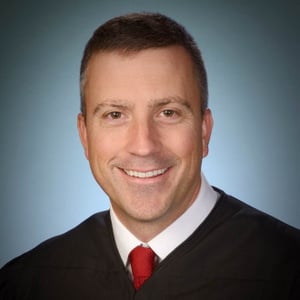
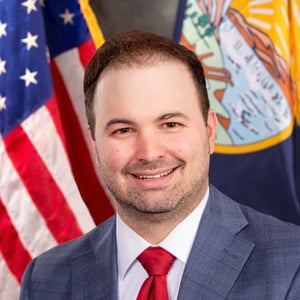
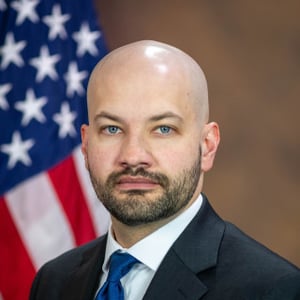
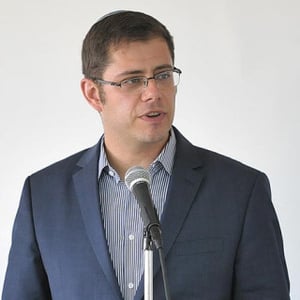
Vice President and Director of Litigation, EdChoice
Biography
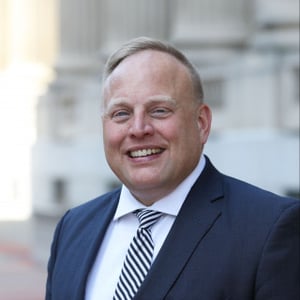
Thomas M. Fisher served as a Deputy Attorney General for 22 years and as Indiana’s first Solicitor General from 2005-2023. In that role he handled high profile litigation for the State, defended state statutes against constitutional attack, advised the Attorney General on a range of legal policy issues, and managed the State’s U.S. Supreme Court docket. A two-time recipient of the National Association of Attorneys General Best Brief Award, Fisher has argued five times before the High Court.
His U.S. Supreme Court experience also includes authorship of dozens of cert-stage and merits-stage amicus curiae briefs on a wide range of issues. In addition, Fisher has argued dozens of important and high-profile cases before both the Indiana Supreme Court and the Seventh Circuit U.S. Court of Appeals. Fisher is a Fellow of the American Academy of Appellate Lawyers and was recently named a Sagamore of the Wabash by Governor Eric Holcomb.
A native Hoosier, Fisher is a graduate of Wabash College and Indiana University Maurer School of Law, where he serves as an Adjunct Professor of Law.
Senior Vice President, Strategic Initiatives & Special Counsel to the President, Alliance Defending Freedom
Biography
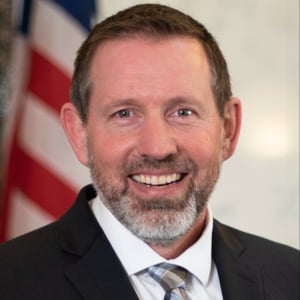
Ryan Bangert serves as senior vice president for strategic initiatives and special counsel to the president at Alliance Defending Freedom. He oversees ADF’s regulatory practice, government relations, and corporate engagement teams. He also advises executive leadership with strategic initiatives and appears as counsel for ADF clients.
Before joining ADF, Bangert served as deputy first assistant attorney general and deputy for legal counsel in the office of the Texas attorney general. In those roles, he oversaw the state’s Special Litigation Unit, which handled critical litigation against the federal government, and oversaw multiple divisions within the office. Prior to that, he served as deputy for civil litigation for Missouri Attorney General Josh Hawley, overseeing the state’s civil litigation divisions, including the consumer protection and antitrust divisions, with over 200 attorneys and staff. During his time in government service, Bangert handled a diverse array of matters involving Big Tech, election law, civil rights, multistate antitrust and consumer protection investigations, and many other issues.
Prior to his government service, Bangert was a litigation partner at Baker Botts L.L.P., where he was a member of the firm’s commercial litigation and appellate practice sections. A seasoned trial attorney, The Texas Lawyer ranked the verdict Bangert achieved in the Janvey v. Maldonado case as the #1 verdict in the securities category for 2015-2019, and The National Law Journal ranked it in its “Top 100 Verdicts of 2015.” He was named a “Texas Rising Star” for multiple years by Texas Lawyer and Law and Politics magazines. While at Baker Botts, he was a volunteer attorney for ADF and served as amicus counsel in numerous cases, including Trinity Lutheran v. Comer and Salazar v. Buono, receiving the firm’s Opus Justitae Award in recognition of his outstanding commitment to pro bono service.
Bangert earned his J.D. from Southern Methodist University, where he was a Hatton Sumner’s scholar and graduated first in his class. He also participated in ADF’s Blackstone program and is a Blackstone Fellow. Following law school, he clerked for the Honorable Patrick E. Higginbotham on the Fifth Circuit Court of Appeals.
Bangert is a member of the Philadelphia Society and Federalist Society. He is admitted to practice law in Texas, California (inactive), Missouri (inactive), the U.S. Supreme Court and numerous federal district and appellate courts. A frequent op-ed contributor, his work has appeared in National Review, Daily Wire, The Hill, Washington Examiner, The Federalist, Fox News, and RealClear Religion. He speaks nationally on constitutional, cultural, and religious liberty issues.
James Burnham is the General Counsel of xAi and X. Before his current role, James served as Managing Partner of King Street Legal, PLLC (which he founded), and recently served for six months as the General Counsel for the Department of Government Efficiency. In his role at DOGE, James designed the legal structure of DOGE, advised DOGE personnel on policy initiatives across the Executive Branch, and supervised dozens of DOGE-related lawsuits against the Executive Branch – many of which DOGE won at the United States Supreme Court. Before founding King Street Legal, James was a litigation partner at Jones Day, a senior official in the Department of Justice's Civil Division and Office of the Attorney General, and a Senior Associate Counsel to the President. James also clerked for Justice Neil Gorsuch on the Supreme Court and Judge Alex Kozinski on the U.S. Court of Appeals for the Ninth Circuit. He graduated with high honors from the University of Chicago Law School and earned his bachelor's degree at the University of Texas at Austin. James is also the President of Vallecito Capital, LLC, a mission-driven litigation fund that ensures meritorious litigation does not falter due to lack of resources.
John S. Battle Professor of Law, University of Virginia School of Law
Biography
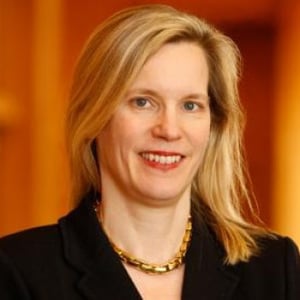
Julia D. Mahoney teaches courses in property, government finance, constitutional law and nonprofit organizations. A graduate of Yale Law School, she joined the University of Virginia faculty as an associate professor in 1999 and is now John S. Battle Professor of Law. She has also taught at the University of Southern California Law School and the University of Chicago Law School, and before entering the legal academy, practiced law at the New York firm Wachtell, Lipton, Rosen & Katz. Her scholarly articles include works on land preservation, eminent domain, health care reform and property rights in human biological materials.
New York Alumni Chancellor's Chair in Law, Vanderbilt University Law School
Biography
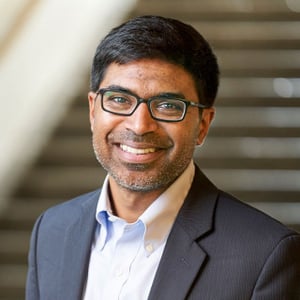
Ganesh Sitaraman teaches and writes about constitutional law, the regulatory state, economic policy, democracy and foreign affairs. He joined the Vanderbilt Law faculty in 2011 and was named to the New York Alumni Chancellor's Chair in Law in 2021.
Sitaraman’s most recent book is The Great Democracy: How to Fix Our Politics, Unrig the Economy, and Unite America (Basic Books, 2019). He is also the co-author, with Anne Alstott, of The Public Option (Harvard Univ. Press, 2019), and the author of The Crisis of the Middle-Class Constitution: Why Economic Inequality Threatens Our Republic (Alfred A. Knopf, 2017), which was one of The New York Times’ 100 notable books of 2017, and The Counterinsurgent’s Constitution: Law in the Age of Small Wars (Oxford University Press, 2012), which won the 2013 Palmer Civil Liberties Prize.
Sitaraman is a public member of the Administrative Conference of the United States, a member of the American Law Institute, a senior fellow at the Center for American Progress, and a co-founder of the Great Democracy Initiative. He serves on the boards of The American Prospect, the American Constitution Society, and Foreign Policy for America. Sitaraman was also a longtime adviser to Elizabeth Warren, including serving as a senior adviser on her 2020 presidential campaign, her senior counsel in the Senate, and her policy director during her 2012 Senate campaign. He has been profiled in The New York Times and Politico for his work at the nexus of politics and ideas.
In 2018, Sitaraman was awarded an Andrew Carnegie Fellowship, and at Vanderbilt, he has been awarded a Chancellor’s Award for Research and a Chancellor’s Faculty Fellowship. In 2016, he was a visiting assistant professor at Yale Law School. Before joining Vanderbilt, Sitaraman was the Public Law Fellow and a lecturer at Harvard Law School, a research fellow at the Counterinsurgency Training Center – Afghanistan in Kabul, and a law clerk for Judge Stephen F. Williams on the U.S. Court of Appeals for the D.C. Circuit.
An Eagle Scout and a Truman Scholar, he earned his A.B. in government magna cum laude from Harvard College, a master’s degree in political thought from Emmanuel College, Cambridge, where he was the Lionel de Jersey Harvard Scholar, and his J.D. magna cum laude from Harvard Law School, where he was an editor of the Harvard Law Review.
Zephyr Teachout is a Professor at Law at Fordham Law School where she focuses on the intersection of corporate power and political power. She teaches corporations, election law, antitrust, and prosecuting white collar crime. Her most recent book, Break 'em Up (2020), makes a case for reimagining the relationship between democracy and antimonopoly law. Her prior book, Corruption in America (2014), argued that the American constitutional system has an embedded anti-corruption principle that has been discarded by the modern Court. Her public writings have appeared in the New York Times, Foreign Affairs, New York Review of Books, Washington Post, The Nation and The New Republic. In 2021, she took a leave to work as Special Advisor and Senior Counsel for Economic Justice at the New York Attorney General's Office. Before Law School, Zephyr Teachout had a career as a digital consultant and nonprofit entrepreneur, and represented clients on death row in North Carolina. She was a Law Clerk to then-Chief Judge Edward R. Becker., of the U.S. Court of Appeals for the Third Circuit.
Senior Vice President for Legal Studies, Cato Institute
Biography
Clark Neily is senior vice president for legal studies at the Cato Institute. His areas of interest include constitutional law, overcriminalization, civil forfeiture, police accountability, and gun rights. Neily is the author of Terms of Engagement: How Our Courts Should Enforce the Constitution’s Promise of Limited Government. His writing has appeared in the Wall Street Journal, Forbes, and National Review Online, as well as various law reviews, including the Harvard Journal of Law and Public Policy, George Mason Law Review, Georgetown Journal of Law and Public Policy, NYU Journal of Law and Liberty, and Texas Review of Law and Politics. Neily is a frequent guest speaker and lecturer for the Federalist Society, Institute for Humane Studies, and American Constitution Society.
Before joining Cato in 2017, Neily was a senior attorney and constitutional litigator at the Institute for Justice and director of the Institute’s Center for Judicial Engagement. He is also an adjunct professor at the University of Texas School of Law, where he teaches constitutional litigation and public-interest law.
Neily served as co-counsel in District of Columbia v. Heller, the historic case in which the Supreme Court held for the first time that the Second Amendment protects an individual right to own a gun for self-defense.
Neily began his legal career as a law clerk to Judge Royce Lamberth on the U.S. District Court for the District of Columbia. After that he spent four years in the trial department of the Dallas-based firm Thompson & Knight. Neily received his undergraduate and law degrees from the University of Texas, where he was Chief Articles Editor of the Texas Law Review.
Judge, United States District Court, Eastern District of Missouri
Biography
Stephen R. Clark the chief United States district judge for the Eastern District of Missouri. He was appointed to the bench by President Trump in 2018 and became the chief judge in 2022. Prior to serving on the court, Judge Clark was the founder and managing partner of the Runnymede Law Group in St. Louis, Missouri, from 2008 to 2019. He also served as the president of the Federalist Society’s St. Louis Lawyers Chapter.
Judge, United States Court of Appeals, Ninth Circuit
Biography
Lawrence VanDyke serves as a circuit judge on the U.S. Court of Appeals for the Ninth Circuit. Prior to that appointment in January 2020, he served as a Deputy Assistant Attorney General in the Environment and Natural Resources Division of the United States Department of Justice. Before that, he served consecutively as the Solicitor General of two western states – Nevada and Montana. At the beginning of his legal career, he worked as an attorney in the Appellate and Constitutional Issues practice group at Gibson Dunn & Crutcher, LLP.
Judge VanDyke received his law degree magna cum laude from Harvard Law School, where he was an editor on the Harvard Law Review. He has engineering and theology undergraduate degrees and a masters degree in engineering management. He served as a law clerk to the Honorable Janice Rogers Brown of the United States Court of Appeals for the District of Columbia Circuit. Judge VanDyke and his wife Cheryl live in Reno, Nevada, and they have three children.
Judge, United States Court of Appeals, Sixth Circuit
Biography
John K. Bush is a Circuit Judge on the United States Court of Appeals for the Sixth Circuit. His chambers are in Louisville, Kentucky. Prior to joining the court, Judge Bush was a partner in the Louisville office of Bingham Greenebaum Doll LLP, where he also was co-chair of the firm’s litigation department. He began his legal practice in the Washington, D.C. office of Gibson Dunn & Crutcher LLP.
Judge Bush served as a law clerk for Judge J. Smith Henley of the United States Court of Appeals for the Eighth Circuit. He was graduated summa cum laude from Vanderbilt University in 1986, and cum laude from Harvard Law School in 1989.
Judge, United States District Court, District of Columbia
Biography
Judge Trevor N. McFadden was appointed to the United States District Court for the District of Columbia in 2017. He received his B.A. in 2001 from Wheaton College, IL, magna cum laude. In 2006, he received his J.D. from the University of Virginia School of Law, where he graduated Order of the Coif and was an editor for the Virginia Law Review.
Following graduation from law school, Judge McFadden clerked for Judge Steven Colloton, U.S. Court of Appeals for the Eighth Circuit. He then joined the U.S. Department of Justice, where he served as Counsel to the Deputy Attorney General and as Assistant U.S. Attorney in the District of Columbia. Judge McFadden subsequently became a partner at Baker & McKenzie LLP in Washington, DC, where he focused on white collar investigations. He is also co-author of a treatise, Corporate Settlement Tools: DPAs, NPAs, and Cooperation Agreements.
After four years in private practice, Judge McFadden returned to the U.S. Department of Justice, where he was Deputy Assistant Attorney General and acted as the second-in-command of the Department's Criminal Division. As Deputy Assistant Attorney General, he managed the Division's Fraud and Appellate Sections.
Judge McFadden also has extensive experience in law enforcement. He served as an officer with the Fairfax County, VA, Police Department and as a deputy sheriff in Madison County, VA.
Allison Hayward most recently served as the Head of Case Selection at the Oversight Board. Previously, she was a Commissioner at the California Fair Political Practices Commission, a Board Member at the Office of Congressional Ethics, and an Assistant Professor of Law at George Mason University School of Law. She also previously worked as Chief of Staff and Counsel in the office of Federal Election Commission Commissioner Bradley A. Smith and practiced election law in California and in Washington DC.
In 1994-1995, Professor Hayward was a judicial clerk for the Honorable Danny J. Boggs, United States Court of Appeal for the Sixth Circuit.
She is a member of the State Bar of California and the District of Columbia Bar.
Solicitor General, Montana Attorney General's Office
Biography
Christian is currently Solicitor General of Montana, where he serves as the chief litigator and principal legal advisor to Montana Attorney General Austin Knudsen. In that capacity, he manages litigation before the federal district courts, courts of appeal, and the United States Supreme Court, as well as the Montana Supreme Court. He previously served in the Trump Administration as Senior Counsel to the Assistant Secretary for Civil Rights at the U.S. Department of Education. Prior to government service, he was a public interest constitutional litigator at Mountain States Legal Foundation and a fellow at the Institute for Justice. He clerked for Justice Caleb Stegall on the Kansas Supreme Court. He also served as Director of Publications for the Federalist Society's national headquarters.
Christian earned his B.A. in Political Science in 2009 from the University of Pennsylvania before attending the University of Kansas School of Law. Christian is admitted to practice law in Kansas and Montana. A Kansas native, he is a die-hard fan of the Kansas Jayhawks, Kansas City Chiefs, and Kansas City Royals.
Christian is a member of the Federalism & Separation of Powers Practice Group's Executive Committee.
Deputy Assistant Attorney General, U.S. Department of Justice
Biography
Eric Hamilton serves as the Deputy Assistant Attorney General for the Federal Programs Branch of the Civil Division. He previously served as the Solicitor General for the State of Nebraska and as an Assistant Solicitor General in the Texas Attorney General’s Office. During the first Trump Administration, Eric worked as an Associate Counsel to the President in the Office of White House Counsel. Earlier in his career, he was in private practice in Washington, D.C. and clerked for Judge Thomas M. Hardiman on the U.S. Court of Appeals for the Third Circuit.
Eric is a graduate of Stanford Law School, where he served on the Stanford Law Review. He holds an undergraduate degree from the University of Nebraska-Lincoln.
Solicitor General, Iowa Office of the Attorney General
Biography
Eric Wessan serves as Iowa’s Solicitor General in the Iowa Attorney General’s Office. In that role, Wessan leads Iowa’s litigation before State and federal appellate courts, including the Iowa and U.S. Supreme Courts. Before that role, Wessan worked on complex commercial litigation at two large law firms in Chicago. Wessan also served as a law clerk for the Honorable James C. Ho on the U.S. Court of Appeals for the Fifth Circuit and for the Honorable John F. Kness on the U.S. District Court for the Northern District of Illinois. Wessan is a graduate of the University of Chicago Law School, with honors, and of the University of Chicago.
Professor of Law and Director, Center for the Middle East and International Law, George Mason University Antonin Scalia Law School
Biography
Professor of Law Eugene Kontorovich is one of the world’s preeminent experts on universal jurisdiction and maritime piracy, as well as international law and the Israel-Arab conflict. He is also the Director of Scalia Law School's Center for the Middle East and International Law. Professor Kontorovich joined the Scalia Law School from Northwestern University Pritzker School of Law where he was a Professor of Law from 2011 to 2018 and an Associate Professor from 2007 to 2011. Previously, he was a Visiting Professor at the University of Chicago from 2005 to 2007 and an Assistant Professor at George Mason School of Law from 2003 to 2007.
Professor Kontorovich has published over thirty major scholarly articles and book chapters in leading law reviews and peer-reviewed journals in the United States and Europe, including the American Journal of International Law, International Review of Law & Economics, Stanford Law Review, California Law Review, University of Pennsylvania Law Review, and Virginia Law Review. His scholarship has been cited in leading foreign relations and international law
His expertise is often sought out and quoted by major news organizations such the New York Times, Wall Street Journal, NPR News, The New Yorker, Los Angeles Times, and numerous television and radio programs. Prof. Kontorovich’s popular writings have appeared in the New York Times, Wall Street Journal, Los Angeles Times, POLITICO, Commentary, Haaretz, and numerous other leading publications. He is also a regular contributor to the Washington Post’s Volokh Conspiracy legal blog.
He attended the University of Chicago for college and law school. After law school, he clerked for Judge Richard Posner on the United States Court of Appeals for the Seventh Circuit. He has been honored with a fellowship at the Institute for Advanced Study in Princeton, in 2011-12, and with the Federalist Society’s prestigious Bator Award, given annually to a young scholar (under 40), for outstanding scholarship and teaching.