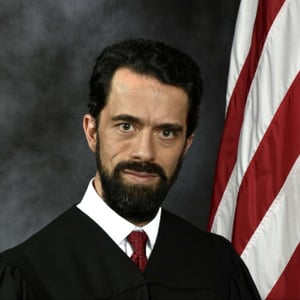
Paul served as the 43rd Solicitor General of the United States from June 2005 until June 2008. Before his confirmation as Solicitor General, he served as Acting Solicitor General for nearly a year and as Principal Deputy Solicitor General for over three years.
Paul has argued over 100 cases before the United States Supreme Court, including McConnell v. FEC, Tennessee v. Lane, United States v. Booker, MGM v. Grokster, Hobby Lobby v. Burwell, Epic Systems Corp. v. Lewis, Rucho v. Common Cause, Facebook v. Duguid, and TransUnion v. Ramirez. Paul has argued more Supreme Court cases since 2000 than any lawyer in or out of government. He has also argued many important cases in the lower courts, including Walker v. Cheney, United States v. Moussaoui and NFL v. Brady.
Paul’s practice focuses on appellate matters, constitutional litigation and strategic counseling. He represents a broad array of clients in the Supreme Court and in federal and state appellate courts. Last year, for example, he successfully argued Supreme Court cases involving significant issues of energy regulation, statutory interpretation, state sovereign immunity and Article III standing, and successfully argued a trademark appeal in the Fourth Circuit, and a constitutional appeal before the en banc Eleventh Circuit.
Paul focuses on high-stakes appeals. In recent years, he successfully defended a $1.2 billion jury verdict for clients in a Tenth Circuit case, while securing the reversal of an over $2 billion jury verdict for another client in the Seventh Circuit and the approval of a nearly $1 billion dollar class action settlement in the Third Circuit. He has initiated major administrative law challenges and constitutional litigation against the federal government, such as the successful challenge to the HHS drug-pricing rule and threatened challenges that led to the withdrawal of the Treasury Department’s proposed cryptocurrency regulations. He also counsels clients on a variety of strategic legal questions, whether arising from pending legislation, government inquiries or ongoing litigation.
Paul has undertaken substantial pro bono engagements in the Supreme Court, such as twice successfully representing the defendant in Bond v. United States and successfully representing the Omaha Tribe in Nebraska v. Parker, the guardian ad litem in Adoptive Couple v. Baby Girl, the defendant in Sekhar v. United States, a high school football coach in Kennedy v. Bremerton, and the Little Sisters of the Poor. Paul’s pro bono representation also precipitated the federal government’s confession of error in United States v. Rojas.
Following law school, Paul clerked for Judge Laurence H. Silberman of the U.S. Court of Appeals for the D.C. Circuit and for Associate Justice Antonin Scalia of the U.S. Supreme Court. After his clerkships, he went on to serve as Chief Counsel of the U.S. Senate Subcommittee on the Constitution, Federalism and Property Rights.
Paul is a Distinguished Lecturer in Law at the Georgetown University Law Center, where he has taught in various capacities since 1998. He also serves as a Senior Fellow of the Law Center’s Supreme Court Institute. He is the Justice Joseph Story Distinguished Practitioner in Residence at the Gray Center at Scalia Law School.
Presiding Judge Stephen Louis A. Dillard was appointed as the 73rd judge of the Court of Appeals of the State of Georgia on November 1, 2010 by Governor Sonny Perdue. Prior to his appointment, Judge Dillard was in private practice with James, Bates, Pope & Spivey in Macon, serving as chairman of the firm’s appellate practice group. Judge Dillard was elected and then reelected by his fellow Georgians in 2012, 2018, and 2024. On July 1, 2017, Judge Dillard was sworn in as the 30th Chief Judge of the Court of Appeals of Georgia for a two-year term that ended on June 30, 2019. He currently serves as the presiding judge of the Court’s Fourth Division, and will begin serving as the presiding judge of the Court’s Third Division in 2026.
Judge Dillard was born in Nashville, Tennessee on November 13, 1969. He attended and graduated from Hillwood High School in Nashville, Tennessee; Samford University (B.A. 1992); Mississippi College School of Law (J.D., cum laude, 1996); and Duke University School of Law (LL.M., Judicial Studies, 2025). In college, Judge Dillard was a member of The Sigma Chi Fraternity and Omicron Delta Kappa. He was also given the Evelyn Meadows Historical Essay Award, as well as the William McMillian Rogers Colonial Dames Overall Essay Award, for “The Tempting of America to be America: Alexander Hamilton and the Federalist Papers.” During law school, Judge Dillard was a member of the Moot Court Board and received the Judge Robert G. Gillespie Outstanding Achievement in Appellate Advocacy Award, as well as the American Jurisprudence Award in Appellate Advocacy. He also served as president of the Mississippi College Chapter of the Federalist Society for Law and Public Policy Studies.
After graduating from law school, Judge Dillard joined the Macon law firm of Stone and Baxter, where he practiced from 1996 until 2001. In September 2001, he left private practice for a two-year period to serve as a law clerk at the U.S. Court of Appeals for the Seventh Circuit for Judge Daniel A. Manion (who was appointed by President Ronald W. Reagan in 1986 and served until 2022). In September 2003, Judge Dillard joined James Bates as of counsel, specialized in appellate practice and complex litigation, and served as chairperson of the firm’s appellate practice group. While in practice, he received an AV® Preeminent™ Peer-Review Rating from Martindale-Hubbell and was named by Super Lawyers as one of Georgia’s “rising stars.”
Additionally, Judge Dillard was appointed by Governor Sonny Perdue to the Judicial Nominating Commission and the Public Defender Selection Panel for the Macon Judicial Circuit. He has published scholarly essays in the Encyclopedia of Civil Liberties, the Encyclopedia of Great American Judges, the Encyclopedia of Great American Lawyers, Judicature, the Green Bag Almanac & Reader, the Journal of Appellate Practice & Process, as well as two articles in the Mercer Law Review regarding the inner workings and culture of the Court of Appeals of the State of Georgia. He was also a participating lawyer with the Criminal Justice Act Appellate Panel for the U.S. Court of Appeals for the Eleventh Circuit, handling pro bono publico appeals for indigent individuals. Judge Dillard is a member of the State Bar of Georgia’s Appellate Practice and Judicial Sections, the Macon Bar Association, the Atlanta Bar Association, the Lawyers Club of Atlanta, the Saint Thomas More Society, the Judge Clarence Cooper American Inn of Court, the Logan E. Bleckley American Inn of Court, the William Augustus Bootle American Inn of Court, the Federalist Society for Law and Public Policy Studies, the Palaver Club of Macon, and the Samford Bulldog Club. He also has served as a mentor for The Appellate Project, which is “focused on empowering law students of color to pursue appellate work.”
Since joining the Court of Appeals, Judge Dillard has spoken to numerous organizations, participated in countless state and national seminars, held a wide variety of leadership positions, and received many awards. In 2025, one of Judge Dillard’s opinions—his concurrence in Board of Commissioners of Brantley County v. Brantley County Development Partners LLC et al.—was selected by The Green Bag Almanac and Reader as one of its works of “exemplary writing.” Judge Dillard was also named as the Milvain Chair in Advocacy by the University of Calgary Law Faculty that year, and he is the first American jurist and 43rd person to ever receive this honor. In 2024, Judge Dillard was appointed by Chief Justice Michael P. Boggs as co-chair of the Supreme Court of Georgia’s Study Committee on Legal Regulatory Reform, joined The Legal Accountability Project’s Advisory Board, and also gave the “Last Senior Lecture” to the Samford University Class of 2024. In 2023, Judge Dillard began serving his second term on Samford University’s Board of Overseers, and started the L.L.M. program for Judicial Studies at the Duke University School of Law. In 2022, he began serving on the Communications Committee of the Council of Chief Judges of the State Courts of Appeal. In 2021, Judge Dillard was given the “Significant Sig” award by The Sigma Chi Fraternity (one of its highest honors), which “recognizes those alumni members whose exemplary achievements in their fields of endeavor have brought great honor and prestige to the name of Sigma Chi.” He also began serving that year on the Dean Search Committee for Samford University’s Cumberland School of Law, and completed his work on that committee in April 2022. In 2020, Judge Dillard began serving his second two-year term as the president of the Samford University Alumni Association, a three-year term on Samford University’s Board of Overseers, as an advisor to the Pi Chapter of The Sigma Chi Fraternity at Samford University, and as a member of the Samford University Presidential Search Committee and the Samford University Task Force on Racial Justice. He was also given the Distinguished Judicial Service Award that year by the Young Lawyers Division of the State Bar of Georgia for the second time in his career. In 2019, Judge Dillard began teaching Appellate Practice and Procedure at Mercer University Law School and joined the National Advisory Board for The Constitutional Sources Project (“ConSource”), an organization dedicated to increasing access to and understanding of the United States Constitution and its history and creation. He was also named that year as the “Tweeter Laureate” of Georgia by the Georgia House of Representatives, as one of Atlanta’s 500 most powerful leaders by Atlanta Magazine, and as “Best Social Mediator” by the Fulton County Daily Report. In 2018, Judge Dillard began serving his first two-year term as president of the Samford University Alumni Association, as well as a member of the Samford University Athletic Director’s Cabinet. He also began his service that year as a member of the Supreme Court of Georgia’s Justice for Children Committee. In 2017, Judge Dillard was named Samford University’s “Alumnus of the Year,” which is the highest honor the university bestows on its graduates. In 2016, Judge Dillard began serving a two-year term as president of Samford University’s Atlanta Alumni chapter. He was also appointed that year as the co-chairperson of the Georgia Judicial Council’s Strategic Plan Standing Committee, and as a member of the Council’s Standing Committee on Technology. Finally, he was also named Samford University’s 2016 “Featured Alumnus” for the Howard College of Arts and Sciences. In 2015, Judge Dillard was appointed by Governor Nathan Deal to the Georgia Appellate Jurisdiction Review Commission. He was also appointed that year to serve on the Georgia Judicial Council, and as the chairperson of the Court Reporting Matters Committee. In 2014, Judge Dillard was named the “State Judge of the Year” by his alma mater, the Mississippi College School of Law, for his outstanding judicial service; and he also received the “Fastcase 50” award, which honors leaders in the world of law, scholarship, and legal technology. In 2013, Judge Dillard was awarded the Distinguished Judicial Service Award by the Young Lawyers Division of the State Bar of Georgia, recognizing his outstanding service on the bench and commitment to improving the practice of law. In 2012, Judge Dillard was appointed to the Code of Judicial Conduct Review Committee by Chief Judge John J. Ellington, and he also began serving as the special consultant to the Georgia High School Mock Trial Committee.
Among his many accomplishments in leadership at the Court of Appeals, Judge Dillard restructured the Court’s Central Staff Attorney Office, advocated for and implemented livestreaming and archiving of the Court’s oral arguments, helped design and shepherd a complete overhaul of the Court’s operational structure, had the primary responsibility for overseeing the Court’s move to the Nathan Deal Judicial Center (during his time as chief judge), drafted numerous Court rules (including the rule abolishing “physical precedent”) and IOM revisions, and lead the implementation of the Court’s transition to its first typography change in twenty years (i.e., the “Equity” font). Finally, he created, designed, and continues to oversee the Judge Herbert E. Phipps Fellowship program in partnership with Morehouse College.
Judge Dillard is married to the former Krista McDaniel, and they have three children. He is a parishioner of Saint Joseph Catholic Church and the former president of the School Board for Saint Joseph’s Catholic School.
Chip Pickering has been CEO of INCOMPAS since January 2014. During that time, INCOMPAS has achieved significant growth with leading internet, backbone, business broadband, wireless, and international companies. Under his leadership, INCOMPAS has led numerous public policy campaigns promoting competition through an open internet and in the business broadband market.
Pickering was a six-term Congressman representing Mississippi’s Third District. During his time in the House, he served on the Energy & Commerce Committee, where he was vice chairman from 2002 to 2006 and a member of the Telecommunications Subcommittee.
He also was co-chairman and founder of the Congressional Wireless Caucus and an assistant minority whip of the House. Previously, Chip worked for Sen. Trent Lott (R-Miss.) and served as a staff member on the Senate Commerce Committee, where he helped shape the Telecommunications Act of 1996.
Because of his role in drafting the 1996 Act, he became well known as a Congressional leader on telecommunications issues. While in Congress, Chip served as chair of the subcommittee overseeing the transition to the commercial internet, the establishment of domain names, registries, and internet governance. He also successfully led a bipartisan legislative effort to codify net neutrality principles through the House in 2006.
Prior to joining INCOMPAS, Chip was a partner with Capitol Resources LLC, a public affairs and government relations firm, where he represented an array of telecom clients, including wireless, cable and competitive broadband providers, as well as non-profits and companies specializing in education, energy, technology and defense.