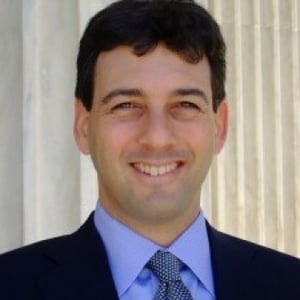
E. Claiborne Robins Distinguished Chair in Law, University of Richmond School of Law
Biography
Professor Kurt Lash teaches and writes about constitutional law. Founder and director of the Richmond Program on the American Constitution, Professor Lash has published widely on the subjects of constitutional law and constitutional history, including The Fourteenth Amendment and the Privileges or Immunities of American Citizenship (Cambridge University Press, 2014), The Lost History of the Ninth Amendment (Oxford University Press, 2009), and The American First Amendment in the Twenty-first Century: Cases and Materials(with William W. Van Alstyne) (5th ed., Foundation Press, 2014). An elected member of the American Law Institute, Professor Lash’s work has appeared in numerous legal journals including the Stanford Law Journal, Georgetown Law Journal, Virginia Law Review, andNotre Dame Law Review. He has been a visiting professor at Northwestern University School of Law and is the former director of the University of Illinois College of Law Program in Constitutional Theory, History, and Law.
Roger Pilon is the Cato’s Institute’s vice president for legal affairs, the founding director of Cato’s Robert A. Levy Center for Constitutional Studies, the inaugural holder of Cato’s B. Kenneth Simon Chair in Constitutional Studies, and the founding publisher of the Cato Supreme Court Review.
Prior to joining Cato, Pilon held five senior posts in the Reagan administration, including at State and Justice, and was a national fellow at Stanford’s Hoover Institution. In 1989 the Bicentennial Commission presented him with its Benjamin Franklin Award for excellence in writing on the U.S. Constitution. In 2001 Columbia University’s School of General Studies awarded him its Alumni Medal of Distinction. Pilon lectures and debates at universities and law schools across the country and testifies often before Congress.
His writing has appeared in the Wall Street Journal, the Washington Post, the New York Times, the Los Angeles Times, Legal Times, National Law Journal, Harvard Journal of Law and Public Policy, Stanford Law and Policy Review, and elsewhere. He has appeared on ABC’s Nightline, CBS’s 60 Minutes II, Fox News Channel, NPR, CNN, MSNBC, CNBC, C-SPAN, and other media.
Pilon holds a BA from Columbia University, an MA and a PhD from the University of Chicago, and a JD from the George Washington University School of Law.
Judge, United States Court of Appeals, District of Columbia Circuit
Biography
Judge Katsas was appointed to the D.C. Circuit in December 2017. He graduated from Princeton University and Harvard Law School, where he was an executive editor on the Harvard Law Review. Between 1989 and 1992, he served as a law clerk to Judge Edward Becker on the Third Circuit, to then-Judge Clarence Thomas on the D.C. Circuit, and to Justice Thomas on the Supreme Court. Between 1992 and 2001, he was an associate and then partner in the Washington office of Jones Day, where he specialized in appellate and complex civil litigation. Between 2001 and 2009, he served in many senior positions in the Department of Justice, including as Assistant Attorney General for the Civil Division and as Acting Associate Attorney General. In 2009, he returned to Jones Day. From January to December 2017, he served as Deputy Assistant to the President and Deputy Counsel to the President.
Before joining the bench, Judge Katsas argued more than 75 appeals, including three cases in the Supreme Court, 13 cases in the D.C. Circuit, and cases in every other federal court of appeals. By appointment of the Chief Justice, he served on the Advisory Committee on Appellate Rules from 2013 to 2017. In 2016, he was elected to membership in the American Academy of Appellate Lawyers.
Co-Founder, Trustee, and Legal Advisor, Reason Foundation and Ge, Individual Rights Foundation
Biography
Manuel "Manny" Klausner was one of the founding partners in Reason Enterprises, which began publishing Reason magazine in 1971, three years after the publication's creation. He became editor in the summer of 1972 and a senior editor in June 1978. In 1978 he co-founded the Reason Foundation with Tibor Machan and Bob Poole. He remains on the board of the Reason Foundation today, is a stalwart supporter of the Federalist Society, and a libertarian lawyer extraordinaire.
Thomas M. Siebel Senior Fellow, The Hoover Institution, Stanford University; Gary T. Schwartz Distinguished Professor of Law Emeritus, UCLA School of Law
Biography
Eugene Volokh is the Thomas M. Siebel Senior Fellow at the Hoover Institution (Stanford), as well as the Gary T. Schwartz Distinguished Professor of Law Emeritus and Distinguished Research Professor at UCLA School of Law. He recently retired from teaching at UCLA, after 30 years there, and is now focusing on research.
Volokh is the author of the textbooks The First Amendment and Related Statutes (8th ed. 2023), and Academic Legal Writing (5th ed. 2016), as well as over 100 academic law journal articles, mostly on First Amendment law. He is a member of The American Law Institute; the editor-in-chief of the Journal of Free Speech Law; and the creator and coauthor of The Volokh Conspiracy, a leading legal blog founded in 2002 (hosted at the Washington Post from 2014 to 2017 and now at Reason Magazine).
Doy & Dee Henley Chair and Distinguished Professor of Jurisprude, Chapman University Dale E. Fowler School of Law
Biography
Ronald D. Rotunda was the Doy & Dee Henley Chair and Distinguished Professor of Jurisprudence, at Chapman University, the Dale E. Fowler School of Law. He joined the faculty in 2008. Before that, he was University Professor and Professor of Law at George Mason University School of Law. From 2002 to 2006, he was the George Mason University Foundation Professor of Law. Before that, he was the Albert E. Jenner, Jr. Professor of Law, at the University of Illinois. He was a magna cum laude graduate of both Harvard College and Harvard Law School, where he was a member of Harvard Law Review. He joined the University of Illinois faculty in 1974 after clerking for Judge Walter R. Mansfield of the United States Court of Appeals for the Second Circuit, practicing law in Washington, D.C., and serving as assistant majority counsel for the Senate Watergate Committee. He has co-authored the most widely used course book on legal ethics, Problems and Materials on Professional Responsibility(Foundation Press, 12th ed. 2014) and was the author of a leading course book on constitutional law, Modern Constitutional Law (West Academic Co., 11th ed. 2015)(Abridged & Unabridged editions). He was the coauthor of, Legal Ethics: The Lawyer's Deskbook on Professional Responsibility (ABA- West/Thompson Reuters Publishing, St. Paul, Minnesota, 2016-2017 ed.) (Jointly published by the ABA and West/Thompson Reuters Publishing) (with John Dzienkowski). Rotunda also co-authored (with John Nowak) the six-volume Treatise on Constitutional Law (West/Thompson Reuters Publishing, 5th ed. 2012)(with annual updates), and a one volume Treatise on Constitutional Law (West Academic, 8th ed. 2010). He was also the author of several other books and more than 500 articles in various law reviews, journals, newspapers, and books in this country and abroad. His works have been translated into French, Portuguese German, Romanian, Czech, Russian, Japanese, and Korean. These books and articles have been cited more than 2000 times by law reviews, by state and federal courts at every level, from trial courts to the U.S. Supreme Court, and by foreign courts in Europe, Africa, Asia, and South America. He has been interviewed on radio and television on legal issues, both in this country and abroad. In 1993 he was the Constitutional Law Adviser to the Supreme National Council of Cambodia and assisted that country in writing its first democratic constitution. He has consulted with various new democracies in Eastern Europe and the former Soviet Union, including Moldova, Romania, and Ukraine, on their proposed constitutions and judicial codes. He chaired the subcommittee that drafted the American Bar Association's Model Rules for Lawyer Disciplinary Enforcement; was a member of the Publications Board of the A.B.A. Center for Professional Responsibility from 1994 to 2016; was a member of the A.B.A. Standing Committee on Professional Discipline (1991-1997); and was Liaison to the A.B.A. Standing Committee on Ethics and Professional Responsibility (1994-1997). He was a Fulbright Professor in Venezuela in 1986 and a Fulbright Research Scholar in Italy in 1981. In 1996 he assisted the Czech Republic in drafting the first Rules of Ethics for lawyers in that country. During the Spring, 1999 semester, he was Visiting Professor at the University of Alabama School of Law, holding the John S. Stone Endowed Chair of Law. During the summer and fall of 2000, he was the Visiting Senior Fellow in Constitutional Studies at the Cato Institute, in Washington, DC. In the fall of 2001, he was visiting professor at George Mason University School of Law. During November-December, 2002, he was Visiting Scholar, Katholieke Universiteit Leuven, Faculty of Law, Leuven, Belgium. In May, 2004, and December, 2005, he was visiting lecturer at the Institute of Law and Economics, Institut für Recht und Ökonomik, at the University of Hamburg. From early June 2004 to May 2005, he was the Special Counsel to the Department of Defense. He was on the Panel of Contributing Editors that produced, Black's Law Dictionary (West/Thompson Reuters Publishing, 8th ed. 2004; Thomson-Reuters, 10th ed. 2014). From 2005-2006, he was a member of the Task Force on Judicial Functions of the Commission on Virginia Courts in the 21st Century: To Benefit All, to Exclude None.
In May, 2000, American Law Media, publisher of The American Lawyer, the National Law Journal, and the Legal Times picked Professor Rotunda as one of the ten most influential Illinois Lawyers. Also in 2000, a lengthy study that the University of Chicago Press published, which sought to determine the influence, productivity, and reputations of law professors over the last several decades, listed Professor Rotunda as the 17th highest in the nation. The 2002-2003 New Educational Quality Ranking of U.S. Law Schools (EQR) [the last year for which such records are available] ranks Professor Rotunda as the eleventh most cited of all law faculty in the United States. Seehttp://www.leiterrankings.com/faculty/2002faculty_impact_cites.shtml.
In July, 2007, he was one of the main speakers at the International Judicial Conference hosted by the United States Embassy, the Supreme Court of Latvia, and the Latvian Ministry of Justice. The other main speakers were Justice Samuel Alito, the President of Latvia, the Prime Minister of Latvia, the Chief Justice of Latvia, and the Minister of Justice of Latvia. On February 27, 2008, President George W. Bush nominated Ronald D. Rotunda to become a member of the Privacy and Civil Liberties Oversight Board (PCLOB) for an initial four-year term and sent his nomination to the Senate Committee on Homeland Security and Governmental Affairs for confirmation hearings on the nominees. He was selected the Best Lawyer in Washington, DC, in 2009 in Ethics and Professional Responsibility Law, as published in November 2008 in the Washington Post in association with the Legal Times. When he moved to California, he was also selected as one of the Best Lawyers in Southern California, in 2009, 2010, 2011, 2012, 2013, 2014, 2015, 2016, 2017, also in Ethics and Professional Responsibility Law as published in the Los Angeles Times, U.S. News, and American Law Media. On June 17, 2009, he became a Commissioner of the Fair Political Practices Commission, a state regulatory agency (analogous to the Federal Election Commission) that is California's independent political watchdog. He served until January 31, 2013, when his term expired. In 2012, he became a Distinguished International Research Fellow at the World Engagement Institute, a non-profit, multidisciplinary and academically-based non-governmental organization with the mission to facilitate professional global engagement for international development and poverty reduction http://www.weinstitute.org/fellows.html. In 2012, Chapman University honored him with The Chapman University Excellence In Scholarly/Creative Work Award, 2011-2012. Since 2014, he has been a member of the Editorial Board of, The International Journal of Sustainable Human Security (IJSHS), a peer-reviewed publication of the World Engagement Institute (WEI). Rotunda was a Member of the Editorial Board of ABA's Journal of Legal Education (2014 to 2016).
Vice President for Litigation, Institute for Free Speech
Biography
Alan joined the Institute for Free Speech as Vice President for Litigation in February 2021. In this role, Alan directs the Institute’s litigation and legal advocacy, leads our in-house legal team, and manages and works to expand our network of volunteer attorneys.
Prior to joining the Institute, Alan litigated complex federal matters for twenty years, in his own practice and as a partner in various Washington-area firms. He argued and won landmark constitutional cases in the United States Supreme Court and has appeared before numerous appellate and district courts throughout the country. Alan often speaks at law schools and continuing legal education seminars. He also teaches strategic/public interest litigation as an adjunct professor at the Georgetown University Law Center.
Alan began his career clerking for the Hon. Terrence W. Boyle, United States District Judge for the Eastern District of North Carolina. He has also served as a Deputy Attorney General for the State of California, a litigation associate at the Washington office of Sidley Austin, and as counsel to the United States Senate Judiciary Committee.
Alan earned his J.D. at Georgetown (1995) and his B.A. at Cornell University (1992). He is an active member in good standing of the Virginia, District of Columbia, and California bars, the Bar of the United States Supreme Court, and various federal appellate and district court bars.