

This event has concluded.
A Conversation on Administrative Law
Yale Student Chapter
Yale Law School127 Wall St
New Haven, CT 06511

Here are the latest events.






Judge, U.S. Court of Appeals for the Third Circuit
Hon. Jennifer Mascott served as Associate Professor of Law and Director of the Separation of Powers Institute at The Catholic University of America’s Columbus School of Law before her appointment to the federal bench. On July 16, 2025, President Donald J. Trump nominated her to the U.S. Court of Appeals for the Third Circuit (Delaware), and she was confirmed on October 9, 2025.
Prior to her confirmation, Judge Mascott wrote extensively in administrative and constitutional law, statutory interpretation, and the separation of powers. Her scholarship—published in leading journals including the Stanford Law Review, Notre Dame Law Review, and Supreme Court Review—was cited by the U.S. Supreme Court and multiple federal courts. She also contributed Supreme Court commentary for NBC Universal.
Before joining Catholic Law, she was an Assistant Professor and Co-Director of The C. Boyden Gray Center at George Mason University’s Antonin Scalia Law School. In 2022 she became co-author of Beermann, Cass & Diver’s Administrative Law: Cases and Materials (9th ed.). In 2023 she received the Justice Joseph Story Award for excellence in scholarship, teaching, and advancing the rule of law.
Judge Mascott also served as a Council Member of the ABA’s Administrative Law Section and as a Public Member of the Administrative Conference of the United States. She frequently testified before Congress on executive power, regulatory reform, and judicial jurisdiction, and participated in multiple Supreme Court confirmation hearings.
From 2019 to 2021, she took leave from academia to serve as Deputy Assistant Attorney General in the Department of Justice’s Office of Legal Counsel and later as Associate Deputy Attorney General, where she argued federal cases and assisted with Justice Amy Coney Barrett’s confirmation. Earlier in her career, she clerked for Justice Clarence Thomas and for then-Judge Brett M. Kavanaugh on the D.C. Circuit.
Judge Mascott earned her J.D. summa cum laude from the George Washington University Law School and her B.A. from the same institution.
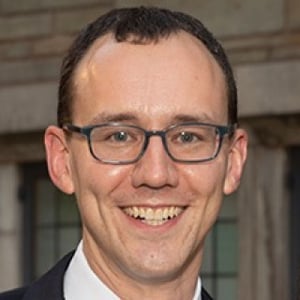
William K. Townsend Professor of Law, Yale Law School
Nicholas R. Parrillo is Townsend Professor of Law at Yale, with a secondary appointment as Professor of History. His research and teaching focus on administrative law and government bureaucracy and extend to legal history, remedies, and legislation. He has received the ABA’s award for the year’s best scholarship in administrative law and the Law and Society Association’s Hurst Prize for the year’s best book in legal history.
Parrillo’s Yale Law Journal article finding new originalist evidence of broad congressional delegations to agencies was discussed in the Solicitor General’s winning brief in the Supreme Court’s latest nondelegation case and in the en banc 5th Circuit opinion in that case. His Harvard Law Review article on how the judiciary handles the federal government’s disobedience to court orders has been discussed in The Washington Post, The Wall Street Journal, and The New York Times. Parrillo also authored a study that provided the empirical basis for best practices adopted by the Administrative Conference of the United States (ACUS) on the federal government’s ubiquitous but controversial use of guidance documents. Peer scholars at Jotwell, in selecting the “best new scholarship” in law, selected each of these three publications (one of them twice). Parrillo’s most recent article, invited for GW’s annual administrative law issue, reveals and analyzes dramatic variation among industries in their willingness to sue their federal health-and-safety regulators.
Parrillo has testified before Congress, been quoted by the Supreme Court, is a senior fellow of ACUS, and has been an instructor at the New York Historical Society’s graduate institute and an invited speaker before the 2nd Circuit Judicial Conference, the U.S. Department of Justice (in 2019 and again in 2024), the ACLU’s national legal staff, and the Federalist Society’s national convention (two times). He is a recipient of the Law School’s annual teaching award.

Professor of Law, University of Michigan Law School
Christopher J. Walker is a Professor of Law at the University of Michigan. Prior to joining Michigan law faculty in 2022, he spent a decade teaching at The Ohio State University Moritz College of Law. He previously clerked for Justice Anthony Kennedy of the U.S. Supreme Court, worked on the Civil Appellate Staff at the U.S. Department of Justice, and served on the Senate Judiciary Committee staff for the Gorsuch Supreme Court confirmation. Professor Walker’s research focuses on administrative law, regulation, and law and policy at the agency level. Outside the law school, he chaired the American Bar Association’s Section of Administrative Law and Regulatory Practice in 2020-21 and served as one of forty Public Members of the Administrative Conference of the United States from 2016-2022, and he continues to serve in both organizations in various capacities. He also works of counsel at the U.S. Chamber Litigation Center. In 2022, he received the Federalist Society’s Joseph Story Award.

University Professor of Law and Executive Director, Liberty & Law Center, Antonin Scalia Law School, George Mason University
David Bernstein holds a University Professorship chair at the Antonin Scalia Law School, where he has been teaching since 1995. He has also been a visiting professor at the University of Michigan, Georgetown University, William & Mary, Brooklyn Law School, the University of Turin, and Hebrew University. Professor Bernstein teaches Constitutional Law, Evidence, and Products Liability.
A prolific author, Professor Bernstein often challenges the conventional wisdom with prodigious research and sharp, original analysis. He is the author of five books, and coauthor of two more. Professor Bernstein’s book Rehabilitating Lochner was praised across the political spectrum as “intellectual history in its highest form,” a “fresh perspective and a cogent analysis,” “delightful and informative,” “sharp and iconoclastic,” and “a terrific work of historical revisionism.” Columnist George Will praised Bernstein’s most recent book, Classified, The Untold Story of Racial Classification in America, as “perhaps the most consequential American book of 2022.”
Professor Bernstein has also written dozens of articles and essays published in major law reviews, including the California Law Review, Columbia Law Review, Michigan Law Review, and Yale Law Journal. An article he coauthored, Defending Daubert: It’s Time to Amend Federal Rule of Evidence 702, directly inspired a pending amendment to Rule 702.
Professor Bernstein blogs at the Instapundit.com, the Times of Israel, and the Volokh Conspiracy. He is a graduate of the Yale Law School, where he was senior editor of the Yale Law Journal and a John M. Olin Fellow in Law, Economics, and Public Policy.
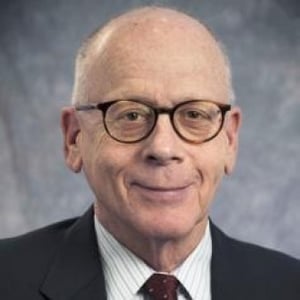
William B. Graham Distinguished Service Professor of Law, University of Chicago Law School
Saul Levmore came to the Law School from the University of Virginia. He was the Dean of the University of Chicago Law School from 2001 to 2009, and is the William B. Graham Distinguished Service Professor of Law. He has been a visiting professor at Yale, Harvard, Michigan, and Northwestern. He has taught and written about torts, corporations, copyright, non-profit organizations, comparative law, public choice, corporate tax, commercial law, insurance, and contracts. He is a member of the American Academy of Arts and Sciences, a past president of the American Law Deans Association, and a past trustee of the Law School Admissions Council and of the Skadden Foundation. He is currently the President of the American Law and Economics Association. Away from law, he has been an advisor on corporate governance issues and on development strategies and although his work continues to be related to law and economics, and especially public choice, across many fields he has also written books on aging and on games and puzzles.
Andy Grewal joined the Iowa faculty in 2011. Prior to joining the Iowa faculty, Professor Grewal taught at Arizona State University.
Professor Grewal’s scholarly interests relate to tax law, administrative law, statutory interpretation, and constitutional law. He has testified in Congress on tax administration issues, and his scholarship in that area has formed the basis for several taxpayer challenges to the Treasury's regulatory authority, including in cases before several United States Circuit Courts of Appeal. The United States Supreme Court cited Professor Grewal in a case involving a complex tax shelter, and the United States Tax Court heavily relied on his regulatory interpretation scholarship in an opinion issued by the full court. Professor Grewal’s research on constitutional issues related to the Trump Administration has been cited or discussed in numerous national publications, and he frequently writes about current legal controversies at Notice & Comment, the blog of the Yale Journal on Regulation.
Before joining the academy, Professor Grewal practiced in the Washington, D.C. office of Skadden, Arps, Slate, Meagher & Flom, where he worked on a variety of matters related to international tax planning, tax policy, and mergers & acquisitions. He received his J.D. from the University of Michigan, where he was a Contributing Editor on the Michigan Law Review and was awarded the Richard Katcher Senior Tax Prize. After law school, he received a full merit scholarship to attend Georgetown University as a Graduate Tax Fellow, and was awarded an LL.M. in taxation with honors.
Andy S. Grewal is an Associate Professor at the University of Iowa College of Law . He was formerly an associate in the Washington office of Skadden, Arps, Slate, Meagher & Flom LLP. From 2005 to 2006, he was a Graduate Tax Scholar at Georgetown University, where he earned an LL.M in taxation, with distinction. Professor Grewal received his J.D., cum laude, from the University of Michigan Law School, where he was a contributing editor of the Michigan Law Review and received the Richard Katcher Senior Tax Prize, and his B.A. in economics from Williams College.
Georgetown University Law Center (LL.M., 2006)
The University of Michigan Law School (J.D., 2005)
Williams College (B.A., 2002)

Partner, Horvitz & Levy LLP
Jeremy Rosen is nationally renowned for his proficiency in numerous issues arising under the First Amendment and California’s anti-SLAPP law. Using that knowledge, Jeremy has helped a wide variety of clients – including churches, private businesses, and individuals – defeat lawsuits that seek to impose liability on clients for exercising their rights of petition, free speech, and free exercise of religion. He has also handled hundreds of appeals in numerous appellate courts, including the Ninth Circuit Court of Appeals, the California Supreme Court, and California’s intermediate appellate courts. In addition to First Amendment and anti-SLAPP cases, his cases have involved numerous important issues regarding anti-trust, class actions, wage and hour law, employment law, breach of contract, California’s Unfair Competition Law, CEQA, the enforceability of arbitration clauses, hospital peer review, the scope of public employee whistleblower protection, and the application of the primary assumption of risk doctrine.
Jeremy is a partner at the firm, which he joined in 2001. He is a California State Bar Certified Appellate Specialist and a member of the California Academy of Appellate Lawyers.
Jeremy directed the Pepperdine University School of Law Ninth Circuit Appellate Advocacy Clinic for 6 years. The Clinic represents individuals in the Ninth Circuit who are identified by the court as needing pro bono counsel. Jeremy also previously served a three-year term where he was appointed by the Ninth Circuit to serve as one of 18 appellate lawyer representatives to the court.
Jeremy is a member of the National Chamber Litigation Center’s California Litigation Advisory Committee. Before joining the firm, Jeremy was a Litigation Associate with Munger, Tolles & Olson.
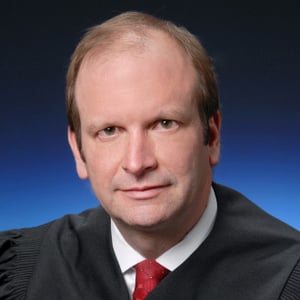
Associate Justice, Supreme Court of Ohio
Justice Pat DeWine began his six-year term on the Supreme Court of Ohio on Jan. 2, 2017, following his statewide election in November 2016. An excellent writer, Justice DeWine is known for the quality and thoroughness of his legal opinions. His opinions reflect his strong belief in judicial restraint and his respect for the constitutional roles of the other coequal branches of government.
Justice DeWine has served at all levels of the Ohio judiciary. Prior to his election to the Supreme Court, Justice DeWine served for four years on the First District Court of Appeals, and prior to that, for four years on the Hamilton County Common Pleas Court.
Justice DeWine has a strong commitment to furthering the rule of law through education. He is an adjunct professorat the University of Cincinnati College of Law where he teaches Appellate Practice and Procedure. In addition, he has taught undergraduate courses at the University of Cincinnati in Ohio Government & Politics and American Courts.
Justice DeWine has strong academic credentials. He graduated from the University of Michigan Law School in the top ten percent of his class with Order of the Coif honors. As an undergraduate student at Miami University, he maintained a perfect 4.0 grade point average and received summa cum laude honors. He was also a member of the Varsity Track and Cross Country teams.
After law school, he was selected for a clerkship on United States Court of Appeals for the Sixth Circuit. He served under the Honorable David A. Nelson, who had been appointed to the Sixth Circuit by President Ronald Reagan.
Justice DeWine understands the litigant’s perspective, having practiced law for 13 years with one of Cincinnati’s top law firms, Keating, Muething & Klekamp. He represented clients in appellate matters in Ohio and in federal courts across the country. He handled a diverse range of litigation matters, including mass tort bankruptcies, securities fraud litigation, and constitutional issues.
Other Public Service
Justice DeWine brings a unique perspective to the bench because of his public service as a County Commissioner and a member of Cincinnati City Council.
As a member of the Hamilton County Board of Commissioners, he focused on reforming County government, lowering the tax burden, eliminating unnecessary bureaucracy and promoting public safety. He led the citizens referendum that ultimately repealed the nearly $1 billion sales tax increase that was enacted by his colleagues on the Commission. The Reason Foundation named him an “Innovator in Action,” along with such leaders as Rudy Giuliani and Jeb Bush, for his efforts to reform County government.
On Cincinnati City Council, he was known as a taxpayer watchdog, successfully rooting out wasteful spending and abuse in city government. He helped eliminate unnecessary regulations, led the effort to crack down on quality of life issues affecting city neighborhoods and created a development fund that leveraged private capital to spur new housing development downtown and across city neighborhoods. He also led the Issue Four charter change that created a more accountable city government by allowing the city to hire the most qualified individuals for key positions in city government.
He was a founder of the Build Cincinnati reform group that successfully passed a charter amendment to allow Cincinnati voters to directly elect the Mayor.athon.

Founder and Partner, Dowd Scheffel PLLC
Matthew Dowd focuses his skills on complex appellate and trial litigation, with an emphasis on patent and intellectual property issues. Through his years of practice, Mr. Dowd has successfully worked on numerous high-stakes and eclectic legal matters, focusing primarily on all stages of complex patent matters (AIA proceedings, litigation, prosecution, and counseling). Mr. Dowd's expertise and leadership are regularly consulted, as he is frequently asked to comment in the press on leading intellectual property issues.
Mr. Dowd has substantial experience with Hatch-Waxman litigation, including all stages of opinion analysis, litigation, and appeals. His technical background in medicinal chemistry is ideally suited for litigating pharmaceutical patents. He has represented clients in a range of trial forums for patent disputes, such as the Eastern District of Texas and the District of Delaware, as well as the Patent Trial and Appeal Board at the USPTO.
He has argued and briefed numerous appeals before the U.S. Court of Appeals for the Federal Circuit and other courts involving issues such as patent law, Hatch-Waxman, administrative law, Fifth Amendment takings, contract claims, government employment issues, and criminal law. In 2018, Mr. Dowd is co-counsel with the Hon. Richard Posner (ret.) of U.S. Court of Appeals for the Seventh Circuit in an appeal before the U.S. Court of Appeals for the Fourth Circuit.
In 2013, Mr. Dowd represented Nobel Laureate James Watson, co-discoverer of the DNA double helix, as amicus curiae in the groundbreaking 2013 Supreme Court gene patent case. Mr. Dowd has over 15 years of experience representing clients before the U.S. Patent and Trademark Office.
Mr. Dowd is also well-known for his successful pro bono representation in the "free-range kids" case. The case was widely reported in the national, local, and international news.
Mr. Dowd attended The George Washington University Law School, graduating with high honors and being awarded Order of the Coif. While attending law school and before, Mr. Dowd worked full-time as a registered patent agent at the renowned IP boutique Sterne, Kessler, Goldstein & Fox.
After law school, Mr. Dowd clerked for the Honorable Paul R. Michel, Chief Judge (ret.) of the U.S. Court of Appeals for the Federal Circuit. While a law clerk, Mr. Dowd gained an insider's perspective on the appellate process. Understanding the appellate process is critical to maximizing success at the earlier stages of a case.
Mr. Dowd is currently appointed as a Professorial Lecturer in Law at The George Washington University Law School. He teaches appellate advocacy and is the coach for the student moot court team for the AIPLA Giles Sutherland Rich Moot Court Competition.
Prior to his legal career, Mr. Dowd spent four years in a Ph.D. program in medical chemistry, studying organic chemistry, pharmacology, and pharmaceutical drug design. During his Ph.D. program, Mr. Dowd's research discovered a novel structure-activity relationship for nicotinic ligands with potential utility in treating Alzheimer's and Parkinson's diseases. Mr. Dowd attended The College of William and Mary, in Williamsburg, VA, and Regis High School in New York City.

Principal, Knowles Intellectual Property Strategies
Sherry M. Knowles is an intellectual property attorney with 30 years of experience in global corporate and private practice, and is a member of the inaugural class of the IPWatchdog Masters™ Hall of Fame.
Currently the Principal of Knowles Intellectual Property Strategies, Ms. Knowles was the Senior Vice President and Chief Patent Counsel at GlaxoSmithKline from 2006-2010, where she served as the worldwide head of patents for all litigation and transactional matters, and managed a global department of over 200 people in 12 offices. At GSK, Ms. Knowles was a member of the Scientific Advisory Board, the Technology Investment Board, the Product Management Board, the Legal Management Team and she led the Global Patents Executive Team.
Ms. Knowles played a key role in the case of GlaxoSmithKline and Tafas v. Dudas, 541 F. Supp. 2d 805 (E.D. Va. 2008). On October 9, 2007, GSK became the first and only company in the US to file a lawsuit to challenge the Final Rules published by the US Patent and Trademark Office on August 7, 2007. During the course of litigation, 20 amicus briefs were filed by parties in support of GSK and Dr. Tafas, including from the AIPLA, PhRMA, BIO, IPO, Washington Legal Foundation and CropLife America. The litigation concluded in October 2009, when David Kappos made the decision to withdraw the contested regulations and GSK agreed to join with the PTO in a motion to dismiss all litigation.
In 2008, Managing IP Magazine named Ms. Knowles one of the top 10 most influential people in Intellectual Property, referring to her as a “Patent Owner’s Advocate.” In 2010, the New Jersey Intellectual Property Lawyers Association awarded GSK, with Ms. Knowles as the representative, the Jefferson Medal for exceptional contribution to Intellectual Property. In 2010, Managing IP Magazine named the GSK Global Patent Team the “In-House IP Team of the Year” for 2009 for the constructive approach to IP in the developing world, the engagement with public policy in Europe and the successful resolution of the USPTO rules matter in the US.
In November 2011, Intellectual Asset Management Magazine listed Ms. Knowles among the top fifty key individuals, companies and institutions that have shaped the IP marketplace in the last eight years. Ms. Knowles is also listed in the IAM 250 “World’s Leading IP Strategists,” published by IAM Magazine in 2011, the IAM 300 “World’s Leading IP Strategists,” published by IAM Magazine in 2012, 2013, 2014, 2015, 2016 and 2017 as well as the IAM 1000 “World’s Leading Patent Professionals” in 2015, 2016 and 2017. She was also included in the list of Top 250 Women in IP by Managing IP Magazine in 2014, Managing IP’s 2016 and 2017 list of “IP Stars”.
Ms. Knowles was Chair of the IP Subcommittee of PhRMA in 2008, and Chair Emeritus of the PhRMA IP Subcommittees in 2009 and 2010. From 2006-2010, she was a member of InterPat, which is the association of Chief Patent Counsels of the major pharmaceutical companies, and from 2008-2010 was a member of the Executive Committee of InterPat. She was the Chair of the work stream on data exclusivity for InterPat from 2006-2010.
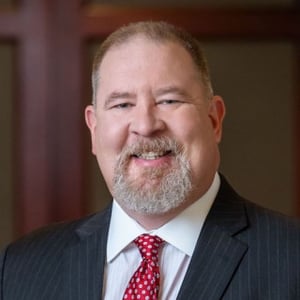
President & CEO, IPWatchdog, Inc.
Gene Quinn is a patent attorney and a leading commentator on patent law and innovation policy. Mr. Quinn has twice been named one of the top 50 most influential people in IP by Managing IP Magazine, in both 2014 and 2019. From 2017-2023, Mr. Quinn has also been recognized by IAM Magazine as one of the top 300 IP strategists in the world, and in 2021 he was recognized by IAM in their inaugural Strategy 300 Global Leaders list.
Mr. Quinn founded IPWatchdog.com in 1999, and he is currently President & CEO of IPWatchdog, Inc. According to IAM Magazine, Mr. Quinn “has reshaped the IP debate in the United States in a way that has forced policy makers to carefully consider the macroeconomic effects of IP law and its potential to drive innovation and economic activity.”
Regarded as an expert on software patentability and U.S. patent procedure, Mr. Quinn has advised inventors, entrepreneurs and start-up businesses throughout the U.S. and around the world. He consults with attorneys facing peculiar procedural issues at the Patent Office, advises investors and executives on patent law changes and pending litigation matters, and has represented patent practitioners before the Office of Enrollment & Discipline.
Mr. Quinn began his career as a litigator handling a variety of civil litigation matters, and he has been a patent attorney for nearly two decades. He has previously taught a variety of intellectual property courses at the law school level, teaching courses such as patent law, patent claim drafting, patent prosecution, copyright law, trademark law and introduction to intellectual property at Syracuse University College of Law, Temple University School of Law, The University of Toledo College of Law, the University of New Hampshire School of Law, the John Marshall Law School (Chicago) and Whittier Law School. Since 2000 Mr. Quinn has also taught the leading patent bar review course in the nation.
Mr. Quinn is admitted to practice law in New Hampshire, is a Registered Patent Attorney licensed to practice before the United States Patent Office and is also admitted to practice before the United States Court of Appeals for the Federal Circuit.
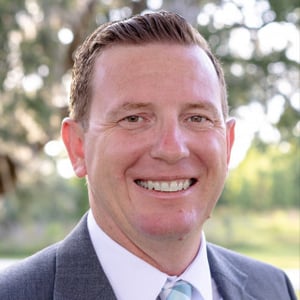
Managing Attorney, Rogitz & Associates
John M. Rogitz is an IAM 300 World-Leading IP Strategist and second-generation patent attorney that currently serves as Managing Attorney at Rogitz & Associates. He is also a member of the IPWatchdog Advisory Committee and an adjunct professor at Trinity Law School. In addition, John recently served on the Executive Committee of the IP Section of the California Lawyers Association (2023-2025) and co-founded CLA’s AI Interest Group.
As Managing Attorney at Rogitz & Associates, John manages the firm’s day-to-day operations and many of the firm’s clients. He is a registered patent attorney specializing in patent preparation and prosecution in a range of technologies including artificial intelligence, robotics, autonomous vehicles, extended reality, video games, Internet of things (IoT), blockchain, fintech, rules-based software, computer hardware, medical devices, and other electrical and mechanical inventions. His clients range from startups and independent inventors to Fortune 500 companies. Before joining Rogitz & Associates, John was engaged in civil litigation at the Watkins Firm, a San Diego-based law firm.
John teaches all types of IP at Trinity Law School and has also taught IP at the undergraduate level. He writes for IPWatchdog, America’s leading patent law publication, and has also been published by IP Today, IP Magazine, and others. John regularly speaks to trade groups like the National Association of Patent Practitioners and Licensing Executives Society. Prior to practicing law, John worked in industry as a web developer.
John received his J.D. in 2009 from California Western School of Law, where he was selected for the Dean’s List and served as President of the Student Intellectual Property Law Association. John studied physics at Loyola Marymount University where, among other activities, he wrote for the school newspaper and participated in various philanthropic endeavors.

Professor of Law, DePaul University College of Law
Joshua D. Sarnoff is a professor of law at DePaul University and a faculty member in and former director of the Center for Intellectual Property Law & Information Technology (CIPLIT®). He teaches patent law, advanced patent law, administrative law, law and climate change, and other intellectual property law courses. He was previously a professor at the Washington College of Law, American University, in the Glushko-Samuelson Intellectual Property Law Clinic, and at the University of Arizona College of Law. In academic year 2014-2015, Professor Sarnoff was a Thomas A. Edison Distinguished Scholar at the United States Patent and Trademark Office. He is a registered patent attorney and a member of the bars of Washington D.C. and California, a former member of the board of governors of the Federal Circuit Bar Association, and a member of the boards of directors and advisory boards of various nonprofit organizations. He has written numerous articles and book chapters on patent law and climate change and has been involved in a wide range of intellectual property legal and policy disputes. He has submitted testimony on domestic patent law reform bills, has filed numerous amicus briefs in the United States Supreme Court and in the U.S. Court of Appeals for the Federal Circuit on important patent law issues, has been a pro bono mediator for the Federal Circuit, and has been a consultant to the United Nations Conference on Trade and Development on international intellectual property, trade and environmental issues. Professor Sarnoff was formerly in the private practice of intellectual property, environmental, and food and drug law in Washington, D.C. He received his BS from MIT and JD from Stanford.

Vice President for Legal Affairs, Goldwater Institute
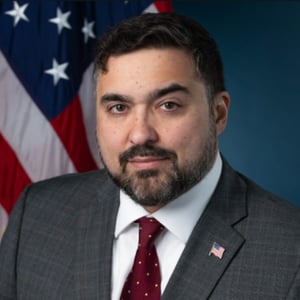
United States Attorney, Southern District of Texas

Deputy Chief of Appeals, U.S. Attorney's Office for the Eastern District of New York
Saritha Komatireddy is Deputy Chief of Appeals at the U.S. Attorney's Office for the Eastern District of New York. She previously served as Chief of International Narcotics and Money Laundering, Deputy Chief of General Crimes, Computer Hacking and Intellectual Property Coordinator, and as an Assistant U.S. Attorney in the Office's National Security and Cybercrime Section. Komatireddy has tried eight federal criminal trials and has argued more than a dozen cases before the U.S. Court of Appeals for the Second Circuit. She has received numerous awards for her work as a federal prosecutor, including three Attorney General’s Awards, two True American Hero Awards, and the Federal Law Enforcement Foundation Prosecutor of the Year Award.
From 2023-2024, Komatireddy served as the Chief of Staff of the Drug Enforcement Administration.
Previously, Komatireddy practiced law at Kellogg, Huber, Hansen, Todd, Evans & Figel P.L.L.C. in Washington, D.C., and was Counsel to the National Commission on the BP Deepwater Horizon Oil Spill and Offshore Drilling. She clerked for the Honorable Brett M. Kavanaugh on the U.S. Court of Appeals for the D.C. Circuit.
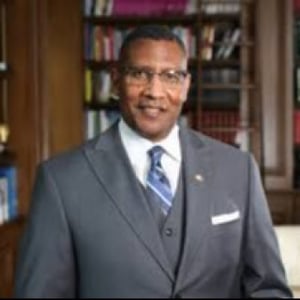
Director, Booker T. Washington Initiative and Senior Fellow for Urban Education
Richard A. Johnson, Ed.D., is the director of the Texas Public Policy Foundation’s Booker T. Washington Initiative, which examines the effects of public policy on African-American communities.
Previously, Johnson served as a chief of staff in both municipal and state governments. As chief of staff for a Houston City Council member, he played a significant role in drafting and navigating policies related to public safety, public works, and housing and community development. During the 85th and 86th Texas Legislatures, he served as a chief of staff and a senior policy analyst for a House member and worked on education, public safety, healthcare, and workforce development legislation.
An educator for more than 20 years, Johnson has extensive experience in teaching and research. He worked as a research assistant at the University of Texas Mental Science Institute, studying the efficacy of counseling and pharmacological therapy on cocaine and heroin addicts. He began counseling inner-city adolescent males and founded an academy for troubled boys which provided education, discipline, and residential substance abuse treatment. In 2007 he began teaching and researching in the areas of psychology and academic performance.
A Texas native, Johnson has an Ed.D. in education administration and an M.A. in clinical psychology from Texas Southern University. He received a B.A. in history and government from Wiley College.
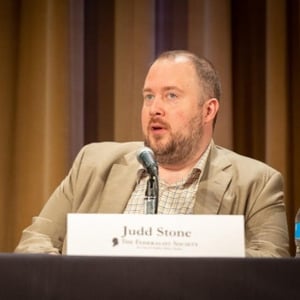
Stone Hilton, Founding Partner
A founding partner of Stone Hilton, Judd Stone is well respected both in Texas and across the nation as an insightful and tenacious appellate litigator. A lifelong Texan, Judd has argued dozens of appeals in both federal and state court, including arguing eight cases before the United States Supreme Court.
Judd began his legal career clerking for United States Supreme Court Justice Antonin Scalia and Fifth Circuit Chief Judge Edith H. Jones. With a J.D. from Northwestern University School of Law where he graduated first in his class, Judd's academic and professional credentials place him among the most distinguished lawyers in the profession. At the helm of countless major legal battles and emergency appeals for the State of Texas, Judd's deep understanding of the law and persuasive advocacy have been instrumental in shaping legal precedents. His tenure as the Solicitor General of Texas is a testament to his expertise and the trust placed in him by high-ranking state officials. Judd's strategic prowess extends beyond the courtroom; his advisory roles have made him a respected figure among policymakers.
His contributions to Stone Hilton and the legal community are characterized by his meticulous approach to cases, his acumen as a counselor, and his unwavering commitment to justice. As a partner at Stone Hilton, Judd continues to apply his formidable talents to advocate for his clients with the utmost dedication and to uphold the pillars of integrity and excellence that the firm stands for.