

This event has concluded.

Here are the latest events.




Senior Fellow, Cato Institute
Doug Bandow is a senior fellow at the Cato Institute, specializing in foreign policy and civil liberties. He worked as special assistant to President Reagan and editor of the political magazine Inquiry. He writes regularly for leading publications such as Fortune magazine, National Interest, Wall Street Journal, and Washington Times. Bandow speaks frequently at academic conferences, on college campuses, and to business groups. Bandow has been a regular commentator on ABC, CBS, NBC, CNN, Fox News Channel, and MSNBC. He holds a J.D. from Stanford University.
General Counsel, James Madison Center for Free Speech
Professor of Law and Dean Emeritus, Sandra Day O'Connor College of Law at Arizona State University
Paul Bender is professor of law and dean emeritus for the Sandra Day O'Connor College of Law. He teaches courses on U.S. and Arizona constitutional law. He has written extensively about constitutional law, intellectual property and Indian law, and is coauthor of the two-volume casebook/treatise, Political and Civil Rights in the United States. Professor Bender has argued more than 20 cases before the U.S. Supreme Court, and actively participates in constitutional litigation in federal and state courts.
Professor Bender served as dean of the College of Law from 1984-1989, during which time he was instrumental in starting its Indian Legal Program. Prior to joining the College faculty, he was law clerk to 2nd U.S. Circuit Court of Appeals Judge Learned Hand and to U.S. Supreme Court Justice Felix Frankfurter, and spent 24 years as a faculty member at the University of Pennsylvania Law School. Professor Bender served as Principal Deputy Solicitor General of the United States from 1993-1997, with responsibility for Supreme Court and federal appellate litigation in the areas of civil rights, race and sex discrimination, freedom of speech and religion, and tort claims against the federal government.
Professor Bender has served as a member of the Hopi Tribe’s Court of Appeals, and is currently Chief Justice of the Fort McDowell Nation Supreme Court, and the San Carlos Apache Court of Appeals.
Justice, Supreme Court of Arizona
Clint Bolick was appointed by Governor Doug Ducey in January 2016 to serve on the Arizona Supreme Court and was retained by the voters in 2018 and 2024.
Prior to joining the Court, Justice Bolick litigated constitutional cases in state and federal courts from coast to coast, including the U.S. Supreme Court. Among other positions, he served as Vice President for Litigation at the Goldwater Institute and as Co-founder and Vice President for Litigation at the Institute for Justice. He has litigated in support of school choice, freedom of enterprise, private property rights, freedom of speech, and federalism, and against racial classifications and government subsidies.
Justice Bolick received his Juris Doctor degree from the University of California at Davis, where he has been recognized as a distinguished alumnus, and his Bachelor of Arts degree magna cum laude from Drew University. He serves as a research fellow with the Hoover Institution. Among other honors, he was named one of the 90 Greatest DC Lawyers in the Last 30 Years by Legal Times in 2008, received a Bradley Prize in 2006, and was recognized as one of the nation’s three lawyers of the year by American Lawyer in 2002 for his successful defense of school vouchers in Zelman v. Simmons-Harris.
Justice Bolick is a prolific author of a dozen books and hundreds of articles. Among his most recent books are Unshackled: Freeing America’s K-12 Education System: Immigration Wars: Forging an American Solution, co-authored with former Florida Governor Jeb Bush; and David’s Hammer: The Case for an Activist Judiciary. Bolick serves as an adjunct professor of constitutional law at Arizona State University’s Sandra Day O’Connor School of Law and has served as a lecturer at Harvard University’s John F. Kennedy School of Government.

Partner, Clement & Murphy, PLLC
Paul served as the 43rd Solicitor General of the United States from June 2005 until June 2008. Before his confirmation as Solicitor General, he served as Acting Solicitor General for nearly a year and as Principal Deputy Solicitor General for over three years.
Paul has argued over 100 cases before the United States Supreme Court, including McConnell v. FEC, Tennessee v. Lane, United States v. Booker, MGM v. Grokster, Hobby Lobby v. Burwell, Epic Systems Corp. v. Lewis, Rucho v. Common Cause, Facebook v. Duguid, and TransUnion v. Ramirez. Paul has argued more Supreme Court cases since 2000 than any lawyer in or out of government. He has also argued many important cases in the lower courts, including Walker v. Cheney, United States v. Moussaoui and NFL v. Brady.
Paul’s practice focuses on appellate matters, constitutional litigation and strategic counseling. He represents a broad array of clients in the Supreme Court and in federal and state appellate courts. Last year, for example, he successfully argued Supreme Court cases involving significant issues of energy regulation, statutory interpretation, state sovereign immunity and Article III standing, and successfully argued a trademark appeal in the Fourth Circuit, and a constitutional appeal before the en banc Eleventh Circuit.
Paul focuses on high-stakes appeals. In recent years, he successfully defended a $1.2 billion jury verdict for clients in a Tenth Circuit case, while securing the reversal of an over $2 billion jury verdict for another client in the Seventh Circuit and the approval of a nearly $1 billion dollar class action settlement in the Third Circuit. He has initiated major administrative law challenges and constitutional litigation against the federal government, such as the successful challenge to the HHS drug-pricing rule and threatened challenges that led to the withdrawal of the Treasury Department’s proposed cryptocurrency regulations. He also counsels clients on a variety of strategic legal questions, whether arising from pending legislation, government inquiries or ongoing litigation.
Paul has undertaken substantial pro bono engagements in the Supreme Court, such as twice successfully representing the defendant in Bond v. United States and successfully representing the Omaha Tribe in Nebraska v. Parker, the guardian ad litem in Adoptive Couple v. Baby Girl, the defendant in Sekhar v. United States, a high school football coach in Kennedy v. Bremerton, and the Little Sisters of the Poor. Paul’s pro bono representation also precipitated the federal government’s confession of error in United States v. Rojas.
Following law school, Paul clerked for Judge Laurence H. Silberman of the U.S. Court of Appeals for the D.C. Circuit and for Associate Justice Antonin Scalia of the U.S. Supreme Court. After his clerkships, he went on to serve as Chief Counsel of the U.S. Senate Subcommittee on the Constitution, Federalism and Property Rights.
Paul is a Distinguished Lecturer in Law at the Georgetown University Law Center, where he has taught in various capacities since 1998. He also serves as a Senior Fellow of the Law Center’s Supreme Court Institute. He is the Justice Joseph Story Distinguished Practitioner in Residence at the Gray Center at Scalia Law School.
Professor of Law and Dean Emeritus, Sandra Day O'Connor College of Law at Arizona State University
Paul Bender is professor of law and dean emeritus for the Sandra Day O'Connor College of Law. He teaches courses on U.S. and Arizona constitutional law. He has written extensively about constitutional law, intellectual property and Indian law, and is coauthor of the two-volume casebook/treatise, Political and Civil Rights in the United States. Professor Bender has argued more than 20 cases before the U.S. Supreme Court, and actively participates in constitutional litigation in federal and state courts.
Professor Bender served as dean of the College of Law from 1984-1989, during which time he was instrumental in starting its Indian Legal Program. Prior to joining the College faculty, he was law clerk to 2nd U.S. Circuit Court of Appeals Judge Learned Hand and to U.S. Supreme Court Justice Felix Frankfurter, and spent 24 years as a faculty member at the University of Pennsylvania Law School. Professor Bender served as Principal Deputy Solicitor General of the United States from 1993-1997, with responsibility for Supreme Court and federal appellate litigation in the areas of civil rights, race and sex discrimination, freedom of speech and religion, and tort claims against the federal government.
Professor Bender has served as a member of the Hopi Tribe’s Court of Appeals, and is currently Chief Justice of the Fort McDowell Nation Supreme Court, and the San Carlos Apache Court of Appeals.
Justice, Supreme Court of Arizona
Clint Bolick was appointed by Governor Doug Ducey in January 2016 to serve on the Arizona Supreme Court and was retained by the voters in 2018 and 2024.
Prior to joining the Court, Justice Bolick litigated constitutional cases in state and federal courts from coast to coast, including the U.S. Supreme Court. Among other positions, he served as Vice President for Litigation at the Goldwater Institute and as Co-founder and Vice President for Litigation at the Institute for Justice. He has litigated in support of school choice, freedom of enterprise, private property rights, freedom of speech, and federalism, and against racial classifications and government subsidies.
Justice Bolick received his Juris Doctor degree from the University of California at Davis, where he has been recognized as a distinguished alumnus, and his Bachelor of Arts degree magna cum laude from Drew University. He serves as a research fellow with the Hoover Institution. Among other honors, he was named one of the 90 Greatest DC Lawyers in the Last 30 Years by Legal Times in 2008, received a Bradley Prize in 2006, and was recognized as one of the nation’s three lawyers of the year by American Lawyer in 2002 for his successful defense of school vouchers in Zelman v. Simmons-Harris.
Justice Bolick is a prolific author of a dozen books and hundreds of articles. Among his most recent books are Unshackled: Freeing America’s K-12 Education System: Immigration Wars: Forging an American Solution, co-authored with former Florida Governor Jeb Bush; and David’s Hammer: The Case for an Activist Judiciary. Bolick serves as an adjunct professor of constitutional law at Arizona State University’s Sandra Day O’Connor School of Law and has served as a lecturer at Harvard University’s John F. Kennedy School of Government.

Senior Fellow and Director of Constitutional Studies, Manhattan Institute
Ilya Shapiro is a senior fellow and director of constitutional studies at the Manhattan Institute and a contributing editor of City Journal. Previously he was executive director and senior lecturer at the Georgetown Center for the Constitution, and before that a vice president of the Cato Institute.
Shapiro is the author of Lawless: The Miseducation of America’s Elites (2025) and Supreme Disorder: Judicial Nominations and the Politics of America’s Highest Court (2020), coauthor of Religious Liberties for Corporations? (2014), and editor of 11 volumes of the Cato Supreme Court Review (2008-18). He has contributed to a variety of academic, popular, and professional publications, including the Wall Street Journal, Harvard Journal of Law & Public Policy, Washington Post, Los Angeles Times, USA Today, National Review, and Newsweek. He also regularly provides commentary for various media outlets, writes the Shapiro’s Gavel newsletter on Substack, and once appeared on the Colbert Report.
Shapiro has testified many times before Congress and state legislatures and has filed more than 500 amicus curiae “friend of the court” briefs in the Supreme Court. He lectures regularly on behalf of the Federalist Society, is a member of the board of fellows of the Jewish Policy Center, was an inaugural Washington Fellow at the National Review Institute, and has been an adjunct law professor at the George Washington University and University of Mississippi. He is also the chairman of the board of advisers of the Mississippi Justice Institute, a barrister in the Edward Coke Appellate Inn of Court, and a former member of the Virginia Advisory Committee to the U.S. Commission on Civil Rights.
Earlier in his career, Shapiro was a special assistant/adviser to the Multi-National Force in Iraq on rule-of-law issues and practiced at Patton Boggs and Cleary Gottlieb. Before entering private practice, he clerked for Judge E. Grady Jolly of the U.S. Court of Appeals for the Fifth Circuit. He holds an AB from Princeton University, an MSc from the London School of Economics, and a JD from the University of Chicago Law School.
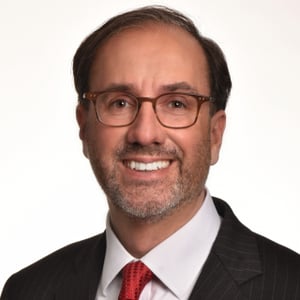
President and CEO, The Buckeye Institute
Robert Alt is the President and Chief Executive Officer of The Buckeye Institute where he has catalyzed exponential growth since he took the organization’s helm in 2012. He has since founded Buckeye’s renowned Economic Research Center and established its impactful Legal Center.
Alt is a distinguished scholar and attorney with particular expertise in legal policy, criminal justice, national security, and constitutional law. He previously worked for former U.S. Attorney General Edwin Meese III, regularly provides commentary on television and radio programs, and his writings have appeared in countless outlets.
In 2004, Alt spent five months in Iraq as an embedded war correspondent.
Alt has testified before Congress multiple times—including at the confirmation hearings for U.S. Supreme Court Justice Elena Kagan—the Federal Election Commission regarding matters of constitutional and administrative law, and numerous state legislatures.
Alt serves as an officer on the boards of The Philadelphia Society and the Federalist Society’s Columbus Lawyers Chapter. He taught national security law, criminal law, and legislation at Case Western Reserve University School of Law, as well as constitutional law and political parties and interest groups at Ashland University.
Alt earned his Doctor of Law degree from The University of Chicago Law School, where he was Symposium Editor and the winner of the Mulroy Prize for Excellence in Appellate Advocacy as well as research assistant to Professor Richard Epstein. Following law school, he clerked for Judge Alice Batchelder on the U.S. Court of Appeals for the Sixth Circuit. Alt graduated with his Bachelor of Arts in philosophy and political science magna cum laude from Azusa Pacific University where he also won the Outstanding Senior Award in Political Science.
Alt is an accomplished high-altitude alpinist and endurance athlete who has successfully climbed 6.75 of the famed Seven Summits of the World including Mount Everest. He is the creator of PROFOUND CLIMBING™ and a frequent speaker across the country and around the world on legal and public policy topics as well as effective leadership, management, decision-making, and teamwork in contexts ranging from extraordinary life/death situations to ordinary professional/business settings.
Newton D. Baker/Baker and Hostetler Chair of Law, Capital University Law School
Mark R. Brown was born in Louisville, Kentucky and graduated from the University of Louisville School of Law (1984). He has a B.S. from the University of Dayton (1981). Following graduation from the University of Louisville, Professor Brown earned his LL.M. at the University of Illinois (1988). He clerked for the Honorable Harry W. Wellford, Judge of the United States Court of Appeals for the Sixth Circuit (1984-1985). Also, he served as a Judicial Fellow at the Supreme Court of the United States (October Term 1993) under the Chief Justice of the United States. Professor Brown currently holds the Newton D. Baker/Baker & Hostetler Chair at Capital University. He has also taught at Stetson University, the University of Illinois, the Ohio State University, and Florida State University.
University of Southern California, Gould School of Law

Dr. John Eastman is the former Henry Salvatori Professor of Law & Community Service and former Dean at Chapman University's Dale E. Fowler School of Law, where he had been a member of the faculty since 1999, specializing in Constitutional Law, Legal History, and Property. He is a founding director of the Center for Constitutional Jurisprudence, a public interest law firm affiliated with the Claremont Institute that he founded in 1999. He has a Ph.D. in Government from the Claremont Graduate School and a J.D. from the University of Chicago Law School, and a B.A. in Politics and Economics from the University of Dallas. He serves as the Chairman of the Board of the National Organization for Marriage.
Prior to joining the Chapman law faculty, Dr. Eastman served as a law clerk to the Honorable Clarence Thomas, Associate Justice, Supreme Court of the United States, and to the Honorable J. Michael Luttig, Judge, United States Court of Appeals for the Fourth Circuit and practiced law with the national law firm of Kirkland & Ellis. Dr. Eastman has also represented numerous clients in important constitutional law matters and has argued before the Supreme Court. On behalf of the Claremont Institute Center for Constitutional Jurisprudence, he has participated as amicus curiae before the Supreme Court of the United States, U.S. Courts of Appeals, and State Supreme Courts in more than one hundred cases of constitutional significance, including Boy Scouts of America v. Dale, Zelman v. Simmons-Harris (the school vouchers case), Kelo v. New London, Ct. (eminent domain), and Van Orden v. Perry (the 10 Commandments case). He has also appeared as an expert legal commentator on numerous television and radio programs, including C-SPAN, Fox News, PBS, NewsHour, and The O'Reilly Factor.
Partner, Clement & Murphy, PLLC
Paul served as the 43rd Solicitor General of the United States from June 2005 until June 2008. Before his confirmation as Solicitor General, he served as Acting Solicitor General for nearly a year and as Principal Deputy Solicitor General for over three years.
Paul has argued over 100 cases before the United States Supreme Court, including McConnell v. FEC, Tennessee v. Lane, United States v. Booker, MGM v. Grokster, Hobby Lobby v. Burwell, Epic Systems Corp. v. Lewis, Rucho v. Common Cause, Facebook v. Duguid, and TransUnion v. Ramirez. Paul has argued more Supreme Court cases since 2000 than any lawyer in or out of government. He has also argued many important cases in the lower courts, including Walker v. Cheney, United States v. Moussaoui and NFL v. Brady.
Paul’s practice focuses on appellate matters, constitutional litigation and strategic counseling. He represents a broad array of clients in the Supreme Court and in federal and state appellate courts. Last year, for example, he successfully argued Supreme Court cases involving significant issues of energy regulation, statutory interpretation, state sovereign immunity and Article III standing, and successfully argued a trademark appeal in the Fourth Circuit, and a constitutional appeal before the en banc Eleventh Circuit.
Paul focuses on high-stakes appeals. In recent years, he successfully defended a $1.2 billion jury verdict for clients in a Tenth Circuit case, while securing the reversal of an over $2 billion jury verdict for another client in the Seventh Circuit and the approval of a nearly $1 billion dollar class action settlement in the Third Circuit. He has initiated major administrative law challenges and constitutional litigation against the federal government, such as the successful challenge to the HHS drug-pricing rule and threatened challenges that led to the withdrawal of the Treasury Department’s proposed cryptocurrency regulations. He also counsels clients on a variety of strategic legal questions, whether arising from pending legislation, government inquiries or ongoing litigation.
Paul has undertaken substantial pro bono engagements in the Supreme Court, such as twice successfully representing the defendant in Bond v. United States and successfully representing the Omaha Tribe in Nebraska v. Parker, the guardian ad litem in Adoptive Couple v. Baby Girl, the defendant in Sekhar v. United States, a high school football coach in Kennedy v. Bremerton, and the Little Sisters of the Poor. Paul’s pro bono representation also precipitated the federal government’s confession of error in United States v. Rojas.
Following law school, Paul clerked for Judge Laurence H. Silberman of the U.S. Court of Appeals for the D.C. Circuit and for Associate Justice Antonin Scalia of the U.S. Supreme Court. After his clerkships, he went on to serve as Chief Counsel of the U.S. Senate Subcommittee on the Constitution, Federalism and Property Rights.
Paul is a Distinguished Lecturer in Law at the Georgetown University Law Center, where he has taught in various capacities since 1998. He also serves as a Senior Fellow of the Law Center’s Supreme Court Institute. He is the Justice Joseph Story Distinguished Practitioner in Residence at the Gray Center at Scalia Law School.
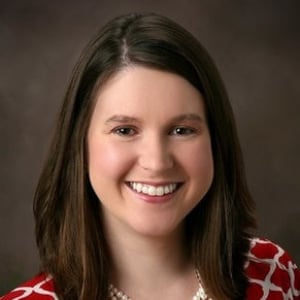
Attorney, Lobbyist & Communications Professional, Kelchen Consulting
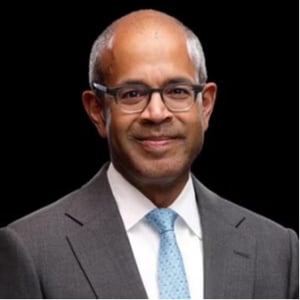
Partner, Davis Polk & Wardwell LLP
Kannon is the head of our Supreme Court & Appellate practice. He has argued 39 cases before the U.S. Supreme Court and has argued more than 150 appeals in courts across the country, including every federal court of appeals and numerous state courts.
Kannon is ranked as a “Star Individual” in appellate law by Chambers USA, where a client notes, “It’s hard to think of enough superlatives to describe his talent, his judgment, his ability, his experience – he is as good as it gets.” Legal 500 U.S. recognizes Kannon in its Hall of Fame for appellate work. A client shares, “His work is the best in the business, and he is a wonderful human being in addition to being a world-class appellate litigator.”
In 2024 and 2022, Kannon was a finalist for the American Lawyer’s “Litigator of the Year” award. He was named “Appellate Litigator of the Year” by Benchmark Litigation in 2021 and was a 2026 finalist for that recognition.
Before entering private practice, Kannon served as an Assistant to the Solicitor General at the U.S. Department of Justice.